2026 Nuffield NZ Farming Scholarship. Apply by 17 August 2025. Read More...

Apply for 2026 Nuffield NZ Farming Scholarship by 17 August 2025. More details...

Help us grow Nuffield – 2024 and beyond.

Nuffield Scholars belong to a unique, vibrant, and strong community that continues to create positive change in our Food and Fibre Sector and country.

Increasingly there will be a need for leaders here in New Zealand who have an ability to think critically, who can generate insight and who have a global perspective.

So, tell us about the talented people you know in your industry or region you think have the potential to grow further as a leader. Or suggest they apply.

If you do have someone in mind, they don’t have to be ready to apply for a Scholarship in 2024, but they should be the people you think have the potential to be a Nuffield Scholar at some point in the future.

Tell us about them, so we can tell them about Nuffield. You can email us at nuffield@ruralleaders.co.nz or quickly fill out a form here.

If the talented person you have in mind is you, even better.
Nuffield and a healthy dose of self-confidence are a good fit. Register your interest today to receive an application form and to keep up to date on the programme.

Register your interest now.

A Rural Leaders Agribusiness Summit Summary.

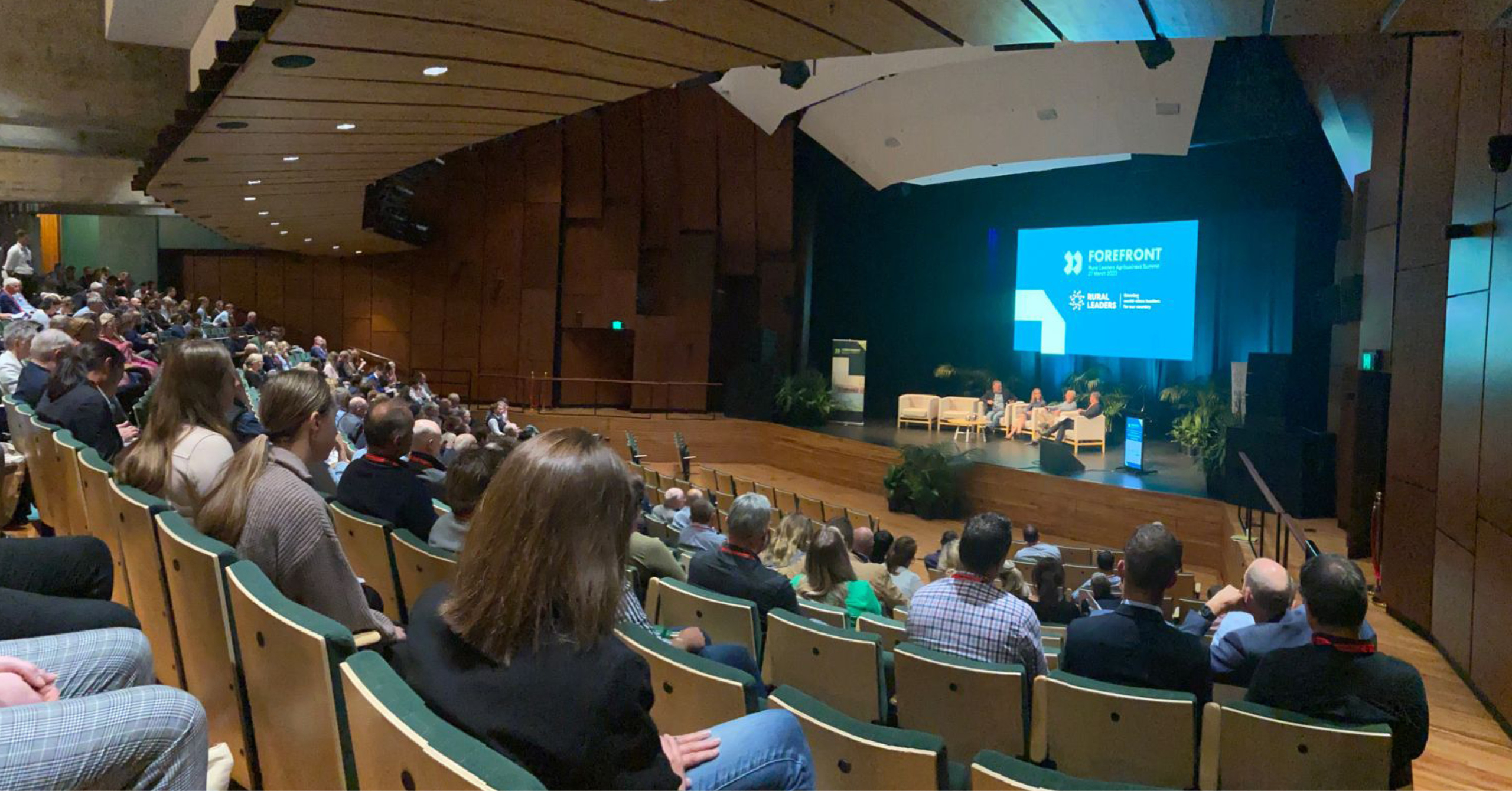
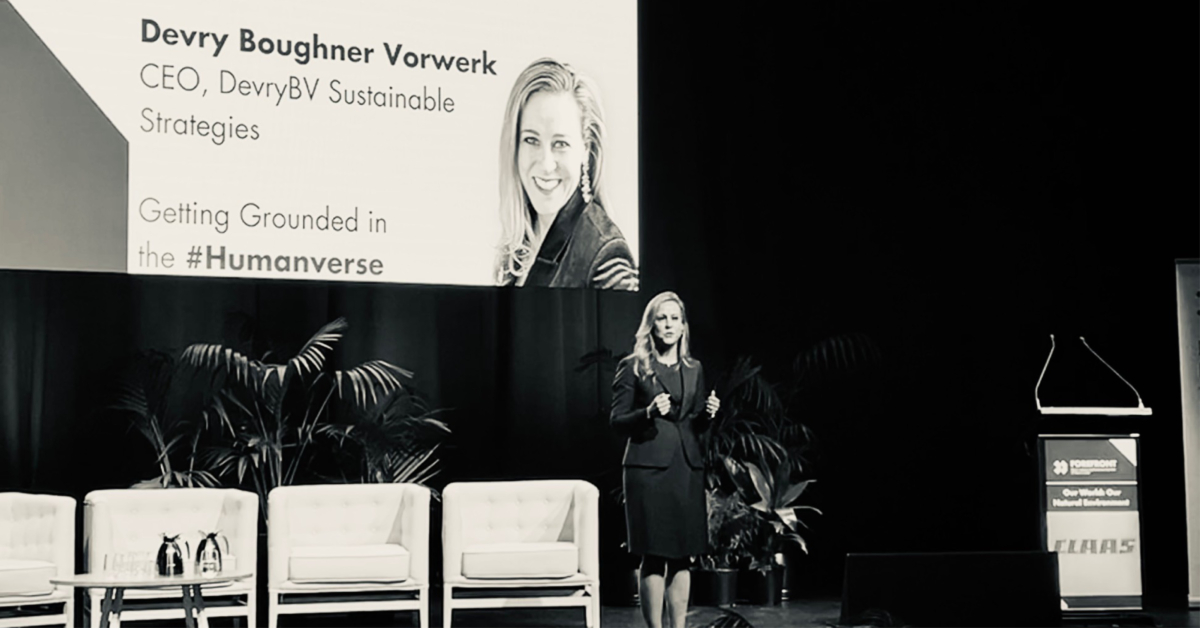
By the time 2023 Rural Leaders Agribusiness Summit attendees heard from Devry Boughner Vorwerk, she had spent two days visiting local farming operations and attending functions on the Nuffield Triennial Conference’s opening weekend. There was also an interview with Rural Exchange – REX too. 

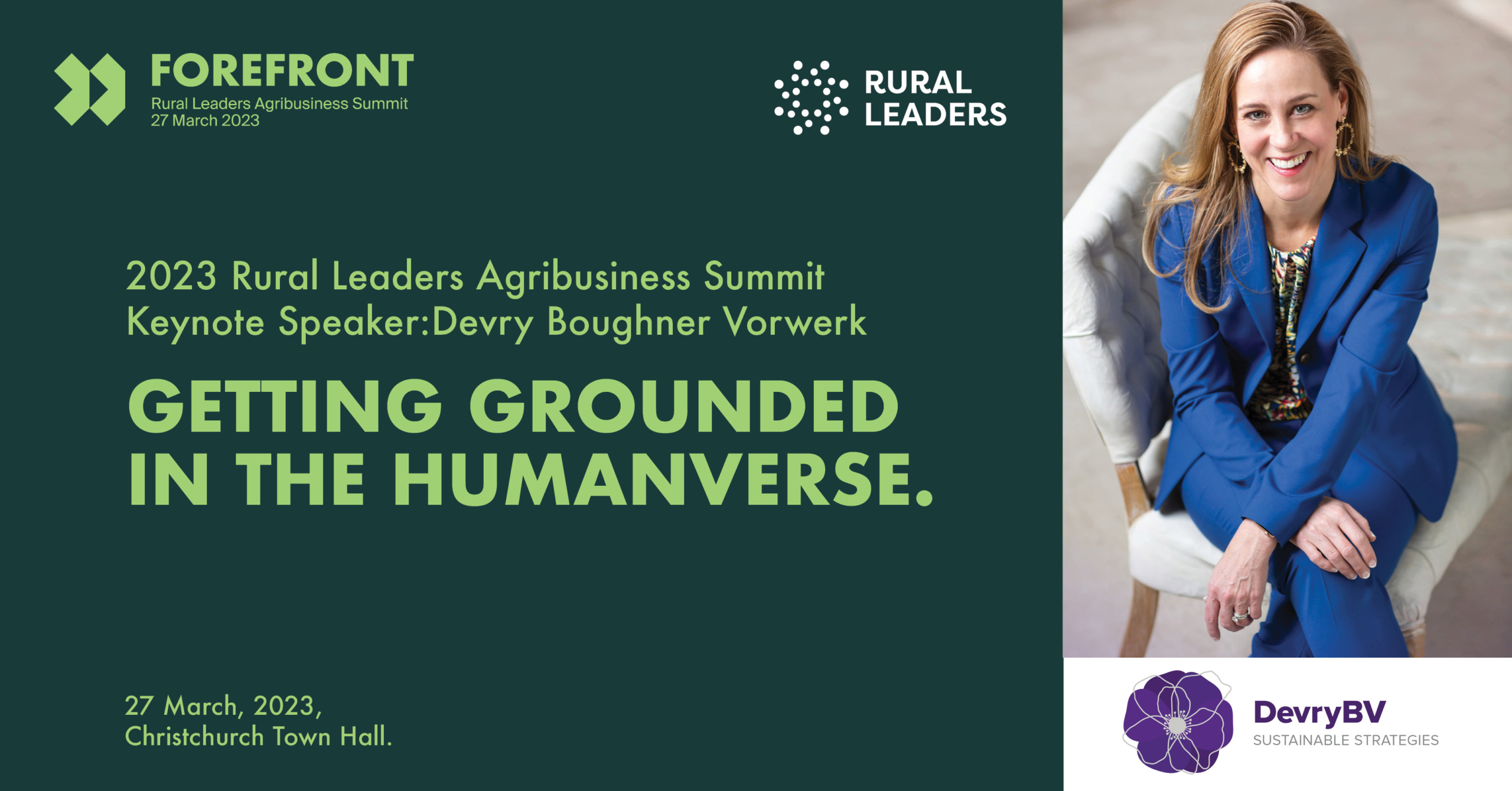
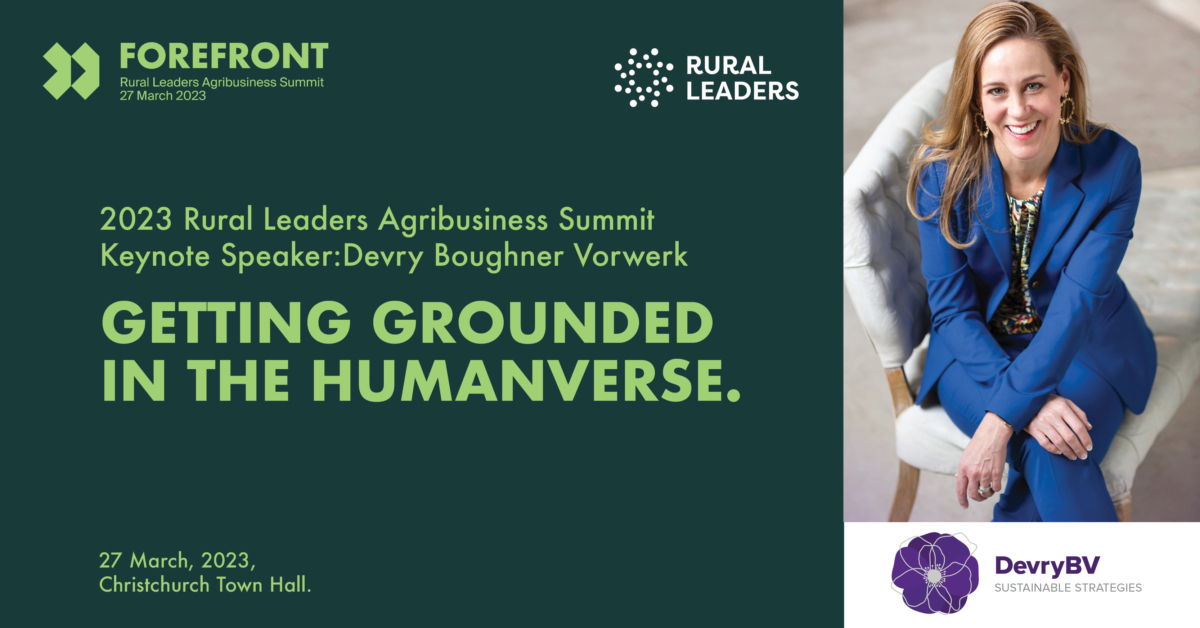
As Keynote Speaker at Monday’s Summit, Devry helped set the tone of the day, with ‘Getting Grounded in the Humanverse’. The Humanverse, as Devry explained it, is this, 

“The Humanverse challenges us to remain focused on the human condition and to end human suffering.” 

It does this by “…disrupting today’s business practices, profit models, static industry infrastructure, organisational cultures and designs, investment strategies, leadership decisions, public policies, and all other underlying factors impacting food security and nature, to ensure that humanity flourishes now and into future generations.” 

You can learn more about the Humanverse by listening to March’s Ideas that Grow Podcast. Or, take a look at a recent post below. In the lead up to the Summit, Devry outlined the concept stating that [in the Humanverse], 

“We’re not anti-technology. We are not anti-capitalism. We are pro-humanity.” 

Here’s a recent LinkedIn post giving more detail

Devry’s talk was pitched well and provided a plausible and actionable reframe of the ‘how do we do this’? 
 
What is humanity asking of you? What are people asking of you? What is nature asking of you? 
 
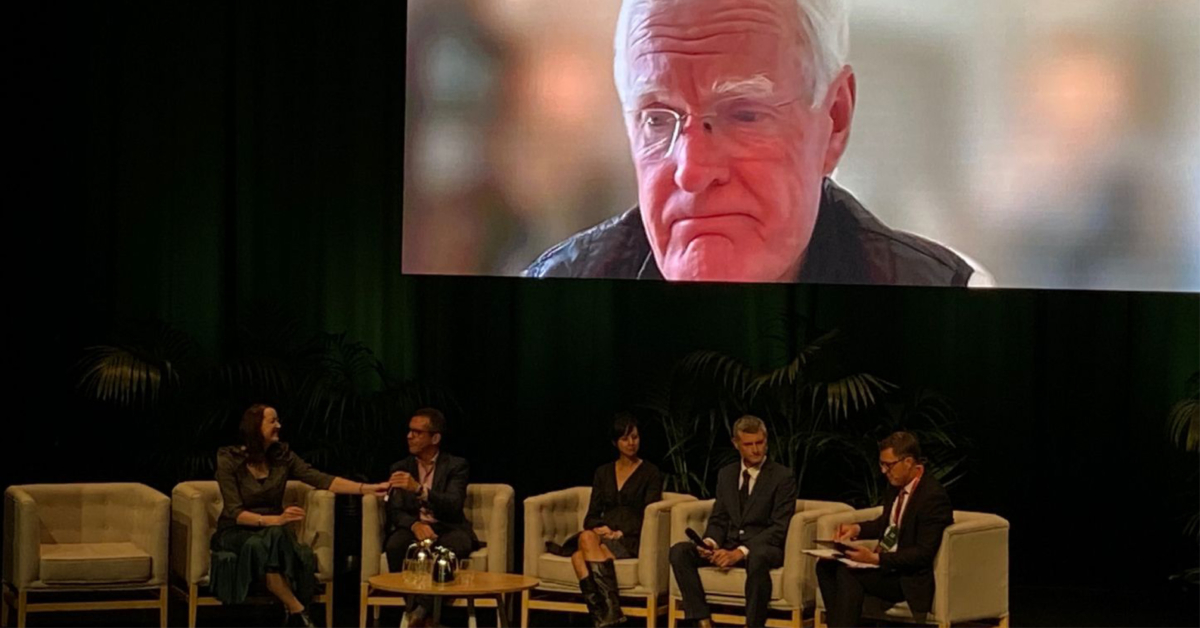
Here’s a breakdown of the Summit’s speakers through the posts and thoughts of those in the audience.  

Our World: Our Natural Environment.

Erica van Reenen: Climate Change 101. 

Erica bravely stepped into the programme after a speaker withdrew at the last-minute. Erica delivered a fantastic talk, summed up in a post by Ariana Estoras here, 

“Erica put the extensive facts on the table on what farmers have to work with to lower methane emissions (not a lot, yet), in a compelling and pragmatic way without any spin or agenda. Except to remind us all that there is still a long way to go and we need to be bold and brave and stay the journey together. 

Ka mau te wehi e hoa!” 

Karin Stark: The Power of On-Farm Renewables. 

Karin flew in from Australia to deliver an excellent talk on the role of on-farm renewables in reducing energy costs and emissions. It was a strong example of the real solutions that underpinned the Summit. 

Tom Sturgess: Balancing the Needs. 

Tom discussed the importance of embracing global challenges through conversation, innovation, and collaboration, as well as changing behaviour at scale.  

As Olivia Weatherburn summed up in a post, 

“Tom Sturgess, owner of Lone Star Farms and founder of methane mitigation ventures, woke us up with his insightful and to the point thoughts on food production and emission reductions. ‘We can do this but let’s use the science.’” 

And Penny Clark-Hall offered her take out too, quoting Tom in a post, 

“We can do it without gutting the Ag sector. History has shown it comes down to the consumer, their perception, and desires.” 

Simon Love enjoyed this quote from Tom, on his focus on on-farm sustainability: “It’s good for the animals – they have a lovely life. Except one bad day…” 

Volker Kuntzsch: Algae and the Blue Wave Economy. 

Volker spoke about the potential value of algae and the sustainability opportunities that lie within our oceans which make up an unbelievable 96% of our economic zone. 

Penny Clark-Hall quoted Volker in a post, “We’ve got an indigenous knowledge base which is amazing.”   

Our People: Consumer Trends and Trade.

Vangelis Vitalis: New Zealand Agriculture and Global Trade. 

Discussing a global view of trade, from a New Zealand perspective, Vangelis delivered an informative talk. Penny Clark-Hall’s key take out, in her post, “The environment is featuring strongly in FTA’s and we need a China+ strategy.”

Simon Love enjoyed this quote from Vangelis Vitalis on maintaining and growing our exports through sustainable practices:  

“Doing nothing is not an option, and we have to be able to prove that we’re taking action”.

Lain Jager: GM and the Future of Agriculture. 

Lain looked at the current conversation on alternative proteins, innovation and genetic technology. Within that, where the opportunities are and the critical conversations required to grow value for New Zealand’s Food and Fibre Sector. 

Penny Clark-Hall posted a quote of Lain’s, “Our sector is like a big dining room where we have the privilege of knowing everyone.” 

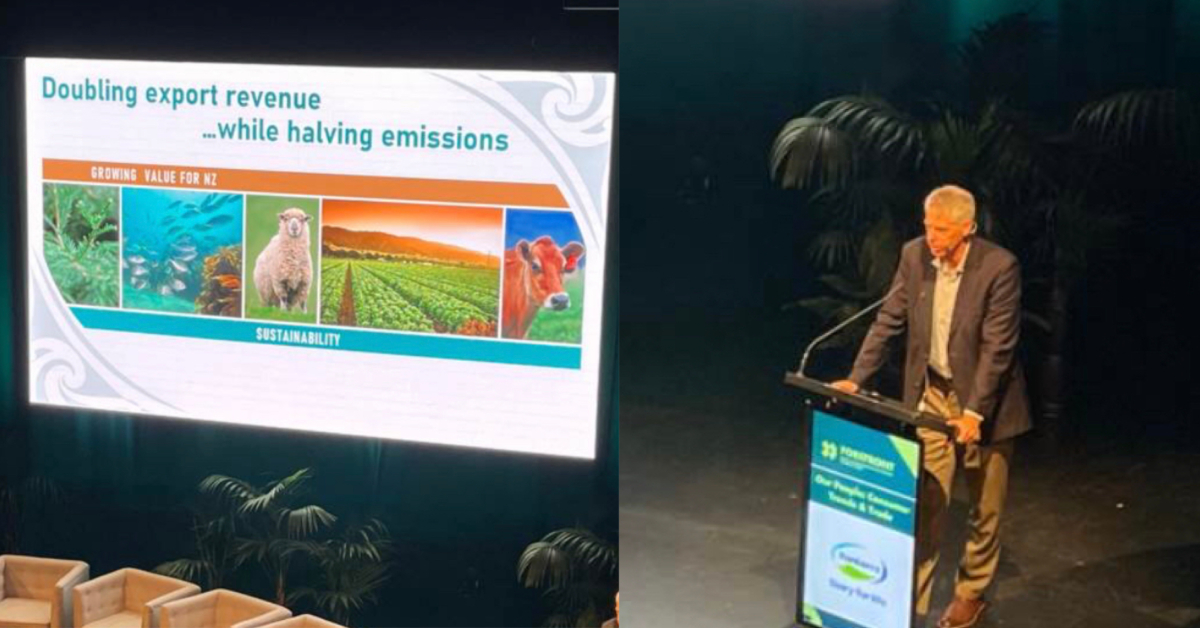
Lain also issued a challenge, captured in an image by Hamish Marr. 

‘Doubling export revenue – while halving emissions.’ 

Emma Parsons: Managing Sustainability and Change. 

Emma discussed how customers are playing a greater influence on what happens behind the farm gate and how farmers can and need to adapt to changing customer expectations.  

On Emma’s talk, Penny Clark-Hall posted her take-out, 

“What is good for the environment needs to be good for the farmer and the cow.”  

David Foote: Alternative Sources of Capital for Food and Fibre. 

Chairman of the Australian Cattle Council, David talked about how businesses in the food and agriculture industries access capital. 

On the business of running a farming operation, we love this quote from David,  

“The best form of fertiliser for a farm is the owner’s boots.”  

Our Future: Entrepreneurship and Leadership.

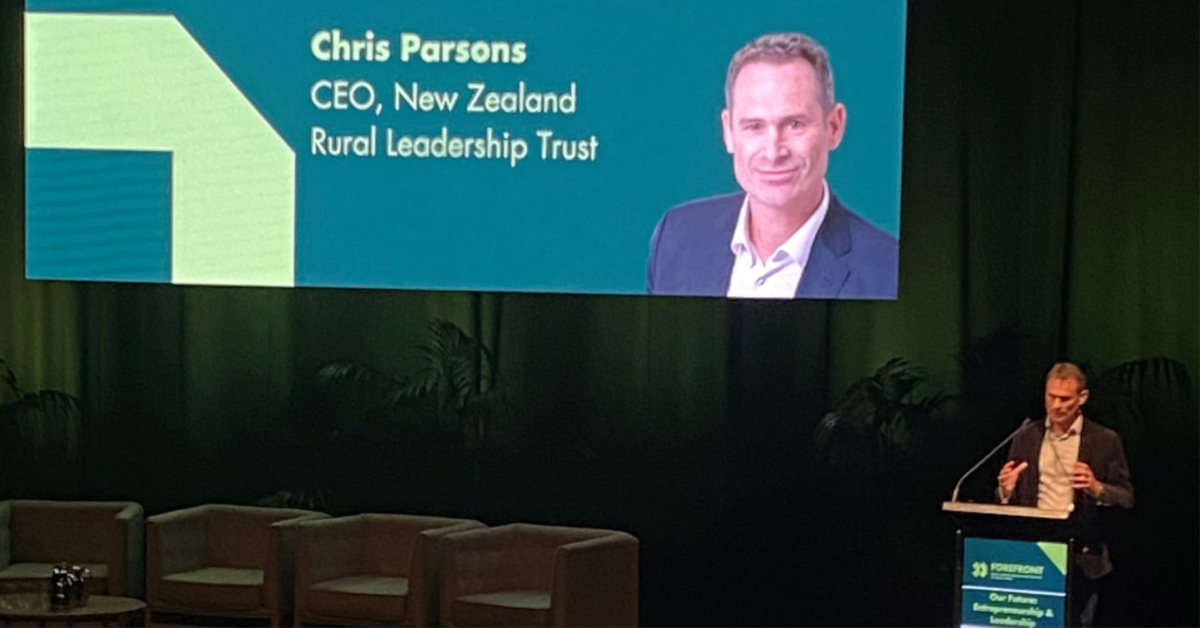
Chris Parsons: Developing our Future Leaders.

Chris spoke about the current state of leadership development in New Zealand’s Food and Fibre Sector. He drew on some of the findings from recent research conducted between Rural Leaders and the Food and Fibre Cove.  

Chris also discussed the roles of Kellogg and Nuffield on rural leadership.  

Penny Clark-Hall’s key take-out from this talk was, “The real value of leadership is to unleash the potential of others. [We need to] Move from an ego-system to an eco-system.” 

Olivia Weatherburn added a quote from Chris in her summary of his talk, “‘We need to grow people like we grow hoggets’, nurture them from the start, unleash their power and build on their potential.’” 

John Penno: Innovation and Entrepreneurship 

In a post Olivia Weatherburn said, “John Penno from Leaft Foods highlighted the importance of holding our decisions up to the lens of climate change as it isn’t going to go away and every decision will influence it.” 

John’s work in developing Rubisco Protein Concentrate from the leaves of common forage crops, is another tangible example of real solutions in practice.  

Mark MacLeod-Smith: Modern farming – Thinking Differently. 

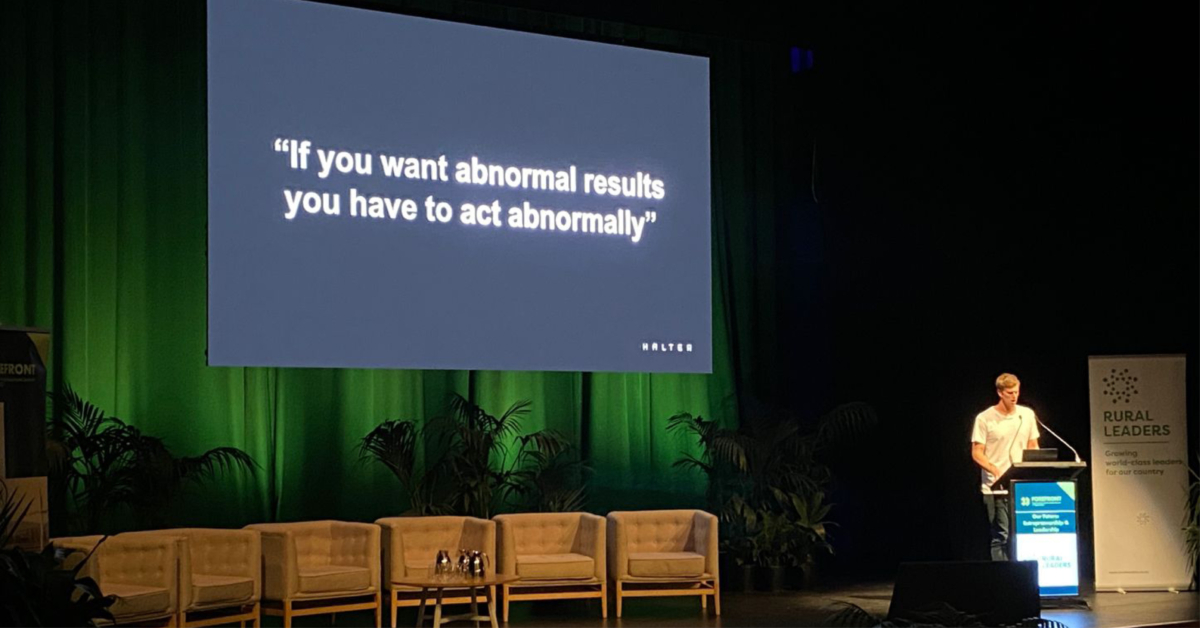
Mark MacLeod-Smith, CEO of Halter, talked about modern methods of farming and their role in simplifying farming while also combating issues like climate change. 

A key take out from Mark’s talk, for Penny Clark-Hall was, 

“If you want abnormal results you have to act abnormally.”

Dr Ellen Joan Nelson: The Future of Work. 

Dr Ellen Joan Nelson spoke about her research and ideas on the future of work in New Zealand and further afield.  

As Olivia Weatherburn eloquently summed up in a post,  

“Dr Nelson was a bundle of energy and passion that just jumped off the stage at us. 

She highlighted that if you give leaders belonging, autonomy and purpose they will have the ability to be authentic and authentic leaders are the best leaders because they are themselves.” 

Julia Jones: Working Together for the Greater Good. 

Julia spoke about collaboration in order to meet customer needs and sustainability goals while remaining profitable. 

Olivia Weatherburn neatly sums up her talk in a post, 

“…the powerhouse known as Julia Jones gave everyone’s abs a workout with her to the point yet humorous and thought provoking talk. It’s pretty simple, ‘…Life is not fair get over it and get on with it. Support people on how not to fear change. If you’re driving the fear then you are not leading.’” 

And from Julia herself, in a post-Summit post on her talk, here are three key points,  

“😥 Life isn’t an eternal road of joy, (be super boring if it was). Shit really does happen, pretending it doesn’t, or trying to side step it never ends well. Trust me it’s good for the soul to hit it head on sometimes. 

🤷‍♀️ If we want to attract talent into your sectors, let’s not spend 90% of the time complaining about it. It’s cool to be honest about some challenges but there is a fine line between complaining and explaining. 

💨 It’s healthy to vent but be aware of the impact your venting is having on those around you. If you are reinforcing fear you are not leading.” 

In summing up the entire 2023 Rural Leaders Agribusiness Summit. 

In a post by Emily Walker, the top takeaways for her were: 

The time to change is now. To get to where we need to and want to be is going to require radically different action.

Take people on the journey, tell the story, empower teams and communities. Be transparent, evidence-based, share the data. (This applies locally, nationally and to our international customers).

Get out of the ruck and into the helicopter.

Simon Love gave this summation in a post-Summit post, 

“The conference on Monday was an incredible line-up of speakers. A couple of highlights for me were the infectious energy (and to-the-point language) of both Tom Sturgess, and Julia Jones, the insights from Mark MacLeod-Smith into Halter’s journey, and Dr Ellen Joan Nelson’s insight of belonging, autonomy and purpose being at the core of a healthy and exciting workplace.” 

And the final word to Julia Jones,  

“Thanks for this opportunity Rural Leaders to be part of this event, it was such a special gift to make a pig of myself at the trough of knowledge is hugely appreciated. Lessons galore were gleaned from speakers and attendees a like 🙏”  

Alumni in the Spotlight. Lucie Douma, 2022 Nuffield Scholar

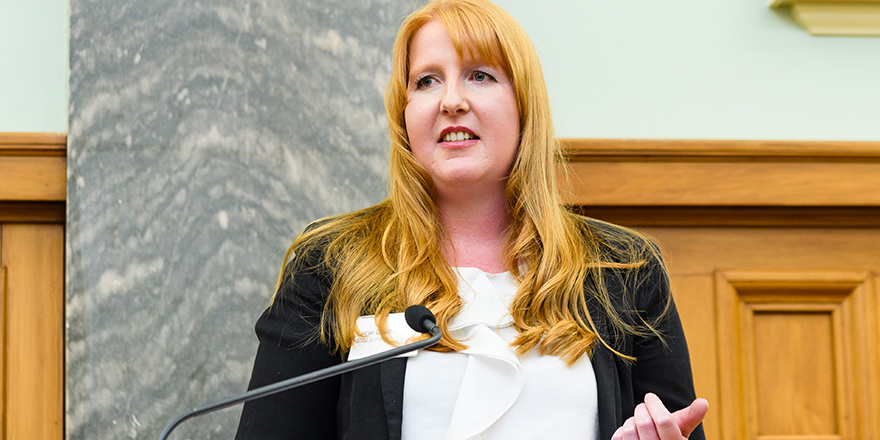
Lucy Douma speaking at Nuffield Awards

Lucie Douma and her fellow 2022 Scholars have, or are right now completing their final research reports. Between Nuffield travel and work commitments, Lucie found time to do a webinar for AgriTech New Zealand in early February.  

The webinar was called ‘Global AgriFutures Insights – How can NZ respond to overseas trends?’  

As well as a Nuffield Scholar Lucie Douma, is the Ministry for Primary Industry’s Covid Recovery and Supply Chain Manager. 

For the webinar, Lucie drew on her recent travel abroad as part of her Nuffield Scholarship – particularly in North America where food security issues are causing shifts away from food production. 

Here’s the full article by Elaine Fisher for Dairy Exporter. 

Cyber-attacks, theft of crops, access to water, climate change and labour are among the issues causing some North American farmers and growers to change their land use away from food production. 

That was among findings outlined in an AgriTech NZ webinar presented in February by Lucie Douma, 2022 Nuffield New Zealand Farming Scholar and Ministry for Primary Industry’s Covid recovery and supply chain manager. 

Hosted by Kylie Horomia, community engagement manager for AgriTech New Zealand, the webinar was called Global AgriFutures Insights – How can NZ respond to overseas trends? During the on-line session, attended by rural professionals, Lucie outlined the findings of her recent visits to North America, UK and Europe.  

Cyber-attacks had the potential to disrupt the sowing of crops by machinery using GPS navigation in North America’s ‘Corn Belt’. “All the planting is done over an intense three-week period, using GPS so a cyber-attack which disrupted that, would mean a reduction in corn and soy yields.  

“The US government is looking closely at how susceptible that industry is to cyber-attacks and how to protect it,” Lucie said. 

Some growers of high value crops were employing ex-navy Seals as security guards after cases of cartels moving in at night before harvest, to strip trees of crops like pistachio nuts or harvest cannabis, she said. 

By far the biggest threat was lack of water, especially in California, which is the USA’s largest producer of food, growing two thirds of North America’s nuts and one third of its fresh vegetables. 

 However, its climate was changing, and Lucie said access to water is of increased concern. “I spent time in the San Joaquin Valley which is an important food and grape growing area.  

“The region, which is in a flood plain, does not get a lot of rain but does get a lot of fog close to the coast. Growers rely on water from snow melt in the Sierra Nevada Ranges. Snow forms giant reservoirs, providing water when it slowly melts but, partly because of the forest fires in the mountains and climate change, snow is not settling and is melting a lot quicker than usual. 

“The region has experienced three years of drought and how to manage water is a major issue. Each county within California manages its own water allocation in an individualistic approach which doesn’t account for growers further down the supply.   

“Up to 40% of the land is flood irrigated with river water. One of the reasons is to recharge the land but there’s an economic reason too as it could cost up to $US400 more per acre for mechanical irrigation. However, flood irrigation is not a good way to manage water, with much of it evaporating.”   

Lucie said water restrictions were among the reasons some growers, including Woolf Farms, were converting some of their land to other uses. “Woolf Farms, which has 25,000 acres of land and grows tomatoes and almonds, is moving to non-food crops, carbon sequestration and solar energy.”

Among the options are drought-tolerant crops such as agave, the feedstock for products like tequila and mezcal. Woolf Farms also has plans to convert former cropland to solar installation. Lucie says the company was not alone in seeking alternatives to high-cost food production.

“Stuart Woolf thinks that in the next few years, he will stop growing on 30 to 40% of his land. If this happens on scale in California, some figures show that in the next few years up to one tenth of the land or half a million acres will not be used for food production by 2040.” 

That posed a huge food security threat for North America and ways to address it included vertical farming under which crops grow in vertically stacked layers, often in controlled environments and soilless techniques such as hydroponics. 

Lucie saw similar trends in energy and food farming in the Netherlands where wind and solar generators are interspaced alongside crops. 

There were however, marked differences in public attitudes to farmers and farming between North America, UK and Europe. 

“In North America people are proud of farmers and farming and the quality of food produced. Some restaurants even showcase food from specific regions with the provenance stories of where it is produced and by who.”   

In Europe, including the Netherlands and UK, the impact of Covid isolation, social media and tv channels like Netflix showing a one-sided aspect of farming, had had a huge impact on public perception. 
“Many farmers are not proud to be farming any more. They don’t want their children going into farming and are planning exit strategies which is sad to see.  

“In the UK there has been a big rise in activism with environmental, vegan and animal welfare groups sharing resources to have a powerful impact on public perception. We saw something of that in New Zealand with activist group slashing tyres of people driving utes.   

“In New Zealand we need to support our farmers and growers who are under a lot of pressure including from water challenges and adverse weather events.” 

Labour costs and supply were issues common to New Zealand, California, Scotland and Europe Lucie said. The availability of cheap labour had been impacted by the Covid pandemic and in Scotland, also by Brexit, where farmers were now relying on a domestic labour force, which often proved unreliable. 

This had added impetus to the need for innovation, including robotic harvesting and this was an area New Zealand tech companies could benefit from, she said. 
However, New Zealand tech companies should not try to ‘go it alone’. Her recommendation was to work globally and build relationships with other countries and tech companies to meet the needs of a rapidly changing world.  

Lucie said New Zealand should focus on producing high quality, premium foods for the world, rather than compete in the commodity space. She also believed the dairy and meat industry had a strong future. 

“It’s my personal view that animal farming is not a sunset industry. Its future is as a niche industry in the premium space. People may not be able to afford to eat meat every day, but meat will not go away. Humans have eaten meat ever since we were on the planet.” 

California’s Top 10 Agricultural Commodities

California produces more than 400 commodities, accounting for a third of the country’s vegetables and three-quarters of the country’s fruits and nuts. California’s top 10 valued commodities for the 2021 crop year were: 

  • Dairy Products, Milk — $7.57 billion 
  • Grapes — $5.23 billion 
  • Almonds — $5.03 billion 
  • Cattle and Calves — $3.11 billion 
  • Strawberries — $3.02 billion 
  • Pistachios — $2.91 billion 
  • Lettuce — $2.03 billion 
  • Tomatoes — $1.18 billion 
  • Walnuts — $1.02 billion 
  • Rice — $1.00 billion 

(Source: California Department of Food and Agriculture)   

Nuffield Scholars on the move. 

With Scholar research reports coming in and travel itineraries being finalised, the first half of 2023 is a busy period for Nuffield – and there’s the Nuffield Triennial in the mix for Scholars too.  

The higher than usual activity for Scholars in 2023 is because Rural Leaders and Nuffield are in catch-up mode. The backlog of COVID disrupted plans plays out this year. 

We share a quick breakdown of upcoming key moments for Nuffield, including travel for 2020, 2021, 2022 and 2023 Nuffield Scholars. 

2020 Scholars 

One Scholar to complete their Global Focus Programme (GFP) and international travel. 

2021 Scholars

Daniel Eb, David Eade and Ben Anderson will all begin their GFP mid-year. 

2022 Scholars

Anthony Taueki will do his Contemporary Scholars Conference (CSC) in Vancouver 10 March. Anthony will also do his GFP in March, starting with the Nuffield Triennial. 

Parmindar Singh does her GFP in June. 

Lucie Douma also does her GFP in June.  

2023 Scholars 

All 2023 Scholars will do the CSC in Vancouver 10 March. 

Kylie Leonard and Matt Iremonger will begin their GFP in March, beginning with the Nuffield Triennial. 

James Allen and Kerry Worsnop will do their GFP in September/October. 

2023 Scholar research reports are due in March 2024.

That’s eleven Global Focus Programmes for 2023, when a normal year might be six.

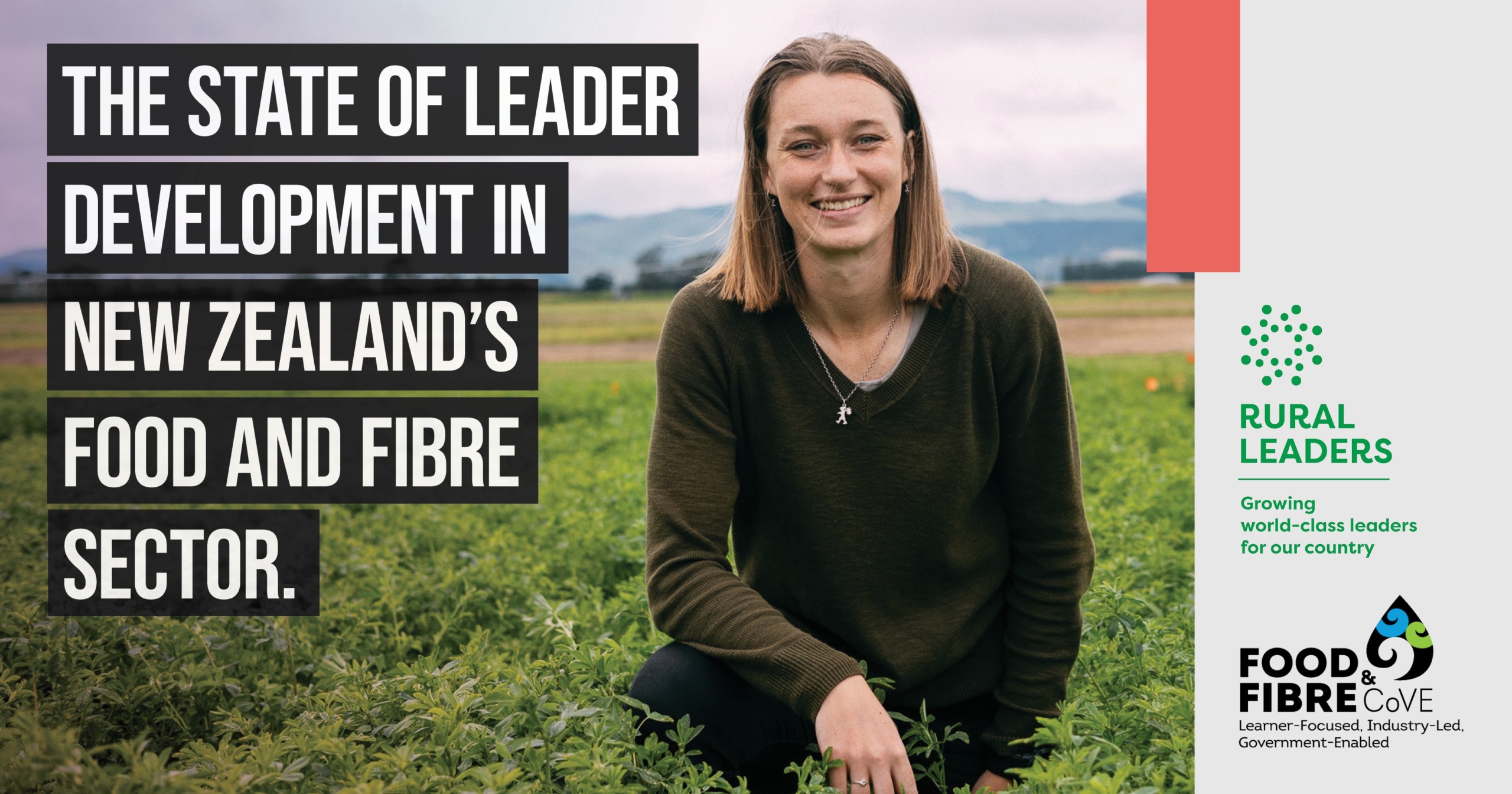
The state of leadership development in New Zealand’s Food and Fibre Sector. 

In August 2022, The Food and Fibre Centre of Vocational Excellence (FFCoVE) requested the New Zealand Rural Leadership Trust conduct research into the current state of leader development in the Food and Fibre sector. 

Click on the image to access the report.

The Food and Fibre sector includes the primary production industries (other than mining) and the related processing industries. It also includes service industries along the value chain from producer to final consumer, including providers of transport, storage, distribution, marketing, and sales.  

Working with sector stakeholders, the project will collaboratively define, design and develop an integrated approach tailored to Food and Fibre to help establish leadership development pathways for our people to grow and succeed. 

Interviews have and continue to be conducted, along with focus groups. The research rigour ensures perspectives are fully understood from across the span, strata, and demography of the sector.  

Interviews have also been conducted with United Kingdom and Australian counterparts, and conversations with selected individuals outside of the sector. Most of the interviews were with people in senior roles.  

The first report is now complete. It delivers findings on the state of leadership development in our Food and Fibre sector. The report suggests six principles of leadership that are relevant to the sector. 

You can read the full report at the link at the top of this article.

The second phase of the research will seek wider perspectives. To achieve this the research team will run several focus groups during March and April.  

We’ll keep you posted on the research as it progresses.

Olivia Weatherburn joins NZRLT Board as Associate Trustee. 

Olivia Weatherburn
Olivia Weatherburn

The NZRLT Board and Leadership Team are pleased to announce Olivia Weatherburn’s (Nee Ross) appointment as Associate Trustee. Olivia replaces Albert ‘Alby’ Hanson. We’ll share more on Alby’s positive and valuable contribution to the board in next month’s Rural Leader. 

Olivia joins Kate Scott, Chair, Michael Tayler, Rebecca Hyde and Craig Mckenzie, Trustees, and Hamish Fraser, Independent Trustee.  

In the appointment Kate Scott said, “We’re pleased to welcome Olivia to the NZRLT board. Olivia will bring a deep connection to the sector and a passion for the development of people.” 

Olivia is based in Southland living on a 700ha sheep and beef operation supporting her husband. 

“I am a farmer, rural professional and all-round advocate for the rural sector and its people. I see the opportunities as endless and am honoured and excited to be part of the red meat and wider food and fibre sector.” 

“Throughout my community roles with both New Zealand Young Farmers, Lions International, and day-to-day role at Beef + Lamb New Zealand (B+LNZ), I meet many people who have been positively impacted by the New Zealand Rural Leadership Trust and the programmes they deliver.”  

“I see the confidence and drive it gives our future leaders. In 2017 I was also privileged to complete the Kellogg Rural Leadership Programme and the outcomes from the experience and learnings have and continue to open doors for me”, says Olivia. 

An Associate Trustee role is for one year. It offers valuable governance in practice experience to those appointed, while providing the opportunity to contribute to the Board’s objectives and to the wider sector in a meaningful way. 

Olivia’s first official board meeting will be 19 April. 

Rural Leaders Agribusiness Summit: One day, 12+ speakers, and a Town Hall full of Food and Fibre leaders.

With the Summit less than a month away now, registrations are strong, and the speakers, host, panellists and organising team, are set to deliver a stand out day for our sector.

On Monday, 27 March, The Christchurch Town Hall will see food and fibre leaders, agribusiness professionals and growers from all over New Zealand, get together with international agriculture delegates and speakers.

Here’s a summary of the day, which includes a couple of new speakers since the last update.

Welcome Scene Setting

Snapshotting the imperative for change and the opportunities landscape – supercharging the discussions to come.

Devry Boughner Vorwerk CEO, DevryBV Sustainable Strategies

Embracing change while balancing shareholder and stakeholder expectations. To set the scene for the day, Devry’s Keynote piece ‘Getting grounded in the humanverse’, will outline the mechanisms to succeed where geopolitical volatility, climate change, and societal expectations are putting pressure on traditional business models.

Our World: Our Natural Environment (10am-11:45am)

Speakers: Tom Sturgess, Volker Knutzsch, Karin Stark, Harry Clark.

Exploring leadership and innovation in the advancement and restoration of the natural resources critical to the future of agribusiness.

This stream will showcase champions nurturing and restoring our environment while remaining profitable, and early adopters building their business toward a carbon neutral future. It will also provide an oversight of the role of the public sector in delving outcomes for the natural environment, while touching on how NZ is shaping its future in the agriculture, food and fibre sector.

Our People: Consumer Trends & Trade (12:45pm – 2:30pm)

Speakers: Vangelis Vitalis, Lain Jager, Emma Parsons, Mark Foote, Anna Benny.

Businesses responding to the unstoppable international trends of power shifting to the consumer, business models being challenged, and the eastern movement of the world’s economic centre of gravity.

Our Future: Entrepreneurship & Leadership (3pm – 4:30pm)

Speakers: Julia Jones, Marl McLeod-Smith, Dr Ellen Joan Nelson, Angus Brown.

Concentrating on the future social, economic, and environmental wellbeing of agribusiness.

This stream will traverse the areas where value will be derived in generations to come, showcasing world-leading business exemplars and responsive new business models.

Presenters from a wide range of industries will show how economic viability will be the key to family business succession and intergenerational business value growth.

Consolidation and Wrap Up

A consolidation of discussions and a focus on the key takeaways and action commitments. Presented by panel and interviews from Corin Dann, Master of Ceremonies.

Learnings of agri-food and consumer businesses front footing the challenges of changing demographics, food trends and fads, and changes in consumer values.

To secure your seat for the Summit today, head to
https://ruralleaders.co.nz/rural-leaders-international-summit-day/

Changes at the helm of the New Zealand Rural Leadership Trust.

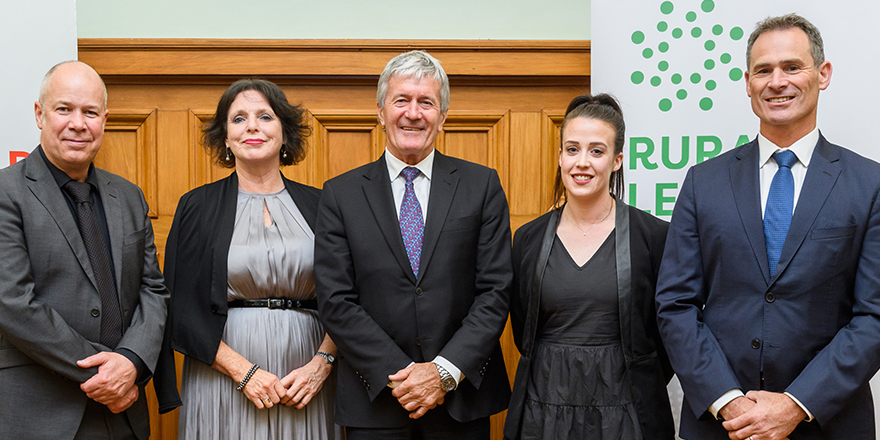
New Zealand rural Leadership team 2022
From left: Matt Hampton, Lisa Rogers, Hon Damien O'Connor, Annie Chant, Chris Parsons

Chris Parsons, CEO Rural Leaders has resigned after three years leading the Trust. Chris will take up a role with MyFarm Investments in May, where he will work closely with former NZRLT Chair and MyFarm CEO, Andrew Watters.

Under Chris’s leadership, characterised by strong purpose and gentle (but persuasive) direction, Rural Leaders has enjoyed a busy, effective and stimulating period of achievement.

“Chris’s contribution to NZRLT has been significant and impactful. Chris has helped to shape our purpose and contribute to growing world class leaders for New Zealand.

Under his leadership we have navigated many trying circumstances, including a global pandemic, but have emerged with a clear understanding of the needs of future leaders,” said Kate Scott, NZRLT Chair.

Here are some of the successes Chris has generated over the last three years. We have grouped these across four key areas: Programme Innovations, Projects, Presence and Partnerships, and Thought Leadership.

Programme Innovations

  • Kellogg PG Cert through Lincoln and RPL through Massey and Lincoln (96% uptake and 63 PG Certs awarded in the first 18 months).
  • Value Chain Innovation Programme, with Lincoln – to increase the entrepreneurial capabilities within the sector and to extend NZ Rural Leader’s impact.
  • undaunted by Covid, NZRLT actually increased the number of Kellogg Scholars and ran two regionally located programmes to increase the rural leadership bench in our regions.
  • Introduced geopolitics into Kellogg to better equip Scholars for a changing global environment.
  • Revitalised the Nuffield Scholarship, including a full review of the selection criteria.

Projects

  • Mackenzie Study, a world-class longitudinal study on the impact on NZ made by Nuffield and Kellogg Scholars over the last 72 years.
  • High-Performance Study with Lincoln University on behalf of MPI
  • Commissioned by the Food and Fibre CoVE to complete a major body of work to design an ecosystem for leadership development in NZ Food and Fibre Sector.

Presence and Partnerships

  • MoU with Massey, Lincoln and AGMARDT
    finalists in the inaugural B+LNZ & Rabobank people development awards.
  • Forged a relationship with the Australian Rural Leadership Foundation.
  • Built a closer working relationship with AWDT
    developed several regional partnerships (Whangarei A&P, Whanganui and Partners) to promote regional leadership growth.

Promote Thought Leadership

  • Established the Ideas that Grow podcast, hosted by AgriHQ to promote the thought leadership of our Scholars.
  • Established the Kellogg Insights Series that takes gives a thematic summary of Kellogg reports (eg Horticulture, dairy, Māori Agri business).
  • Upgraded the website and lifted the report quality to make Scholars thought leadership more accessible.

The Rural Leaders Team continue to build on many of these achievements. Chris, the NZRLT Board and leadership team have set into motion several initiatives set to generate further positive outcomes in the near future.

On the strong foundations Chris has helped set, we will continue to deliver outstanding leadership for the sector and look forward continuing to work alongside Chris in his new role,” added Kate Scott, NZRLT Chair.

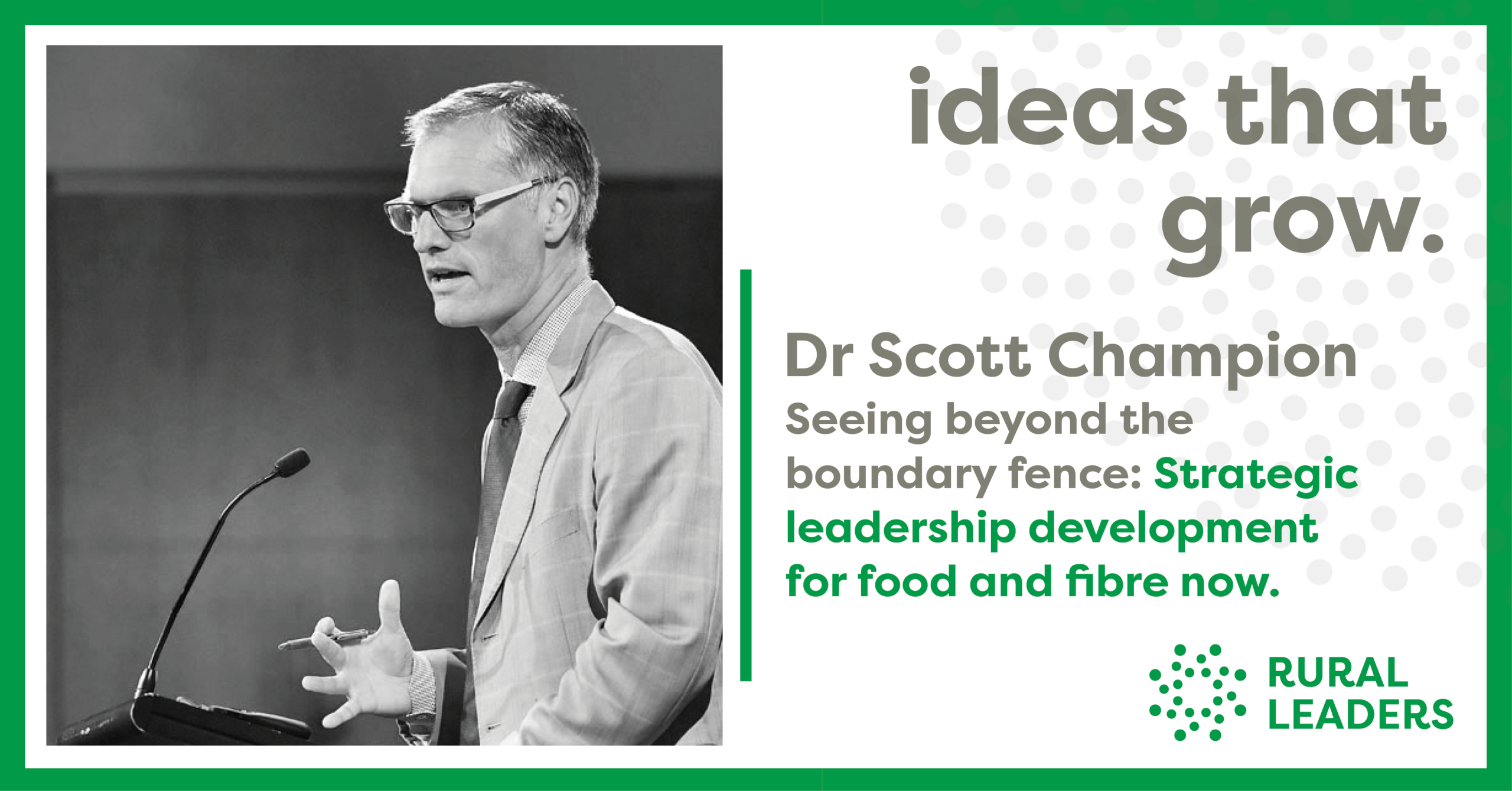
Dr Scott Champion – Seeing beyond the boundary fence: Strategic leadership development for Food and Fibre now.

Dr Scott Champion has a wealth of sector knowledge, gained not just from tenures at the top of organisations such as Beef+LambNZ, but from possessing a genuine passion for helping our rural leaders grow. 

As Facilitator and Programme Director of the Kellogg Rural Leadership Programme, Scott plays a vital role lifting rural leadership capability. 

Bryan Gibson – Managing Editor of Farmer’s Weekly.

Welcome to the ‘Ideas that Grow’ podcast. I’m Bryan Gibson, Managing Editor of Farmers Weekly. With me today is Dr Scott Champion, who is the programme leader for Kellogg. G’day, Scott. How’s it going? 

Scott Champion – Facilitator and Programme Director of the Kellogg Rural Leadership Programme

Yeah good thanks Bryan. Great to be with you. 

Bryan: We often talk to the scholars themselves about their individual research projects, but with the Kellogg Programme, you’re in charge of running the programme as a whole. How long have you been with Rural Leaders?

Running the Kellogg Rural Leadership Programme – what’s involved.

Scott: I’ve been running the programme for about five years now and had actually spoken at the programme as a guest speaker prior to that. So it’s been a real delight to be involved over the last five years. And it’s a programme now that’s been going for close on 50 years and has put through over 1000 graduates in that time. 

Bryan: What’s involved in running the programme? Obviously, there’s attracting people to get involved, there’s organising their meetings and get-togethers and what they’re going to study and marking assignments. What else is there? 

Scott: The focus really, from my time as course director, is on the face to face interaction and the way we connect between what we call phases. So the programme itself is divided into three of these phases.  

The Kellogg Programme’s three phases – Phase One.

Scott: The first one is nine days long, second one is five days long, and then the third one is five days long. So they’re quite intense, particularly that first phase, across the nine days. So we run two programmes a year.  
 
Each programme has about 24 participants. Sometimes it’s a little bit less, sometimes it’s a little bit more. And the focus in each of those, really the nine day intense phase one, is all about getting to understand concepts of leadership. Where also we use the analogy of a toolbox. We’re trying to give our Kellogg participants tools that they can use to go out and be more effective and contribute both into their own businesses or the business that they work in, but also in the sector more broadly.  
 
We think about things like presentation skills, leadership models, and tools. And then also in that first phase, we’re trying to introduce them into aspects of the different components of the broader food and fibre sector that they might not be aware of. 
 
For example, if you work in Horticulture, giving you an opportunity to understand what are the big picture issues that are happening in dairy and vice versa across that sort of plethora of industries that are operating in New Zealand. So that’s our focus around phase one.  

Kellogg Phase Two.

Phase two is completely different. We come to Wellington, so I should say phase one and phase three are both typically held at Lincoln.

We come to Wellington for phase two, and that’s all about the economy, politics, and concepts of influence, models of government communications, the role of media, things like that.  

Kellogg Phase Three.

Then in phase three, we come back to Lincoln again. I think you might have mentioned earlier, the Kellogg Scholars are undertaking a project through the five or six months that they’re on the Kellogg Programme and that’s on a topic of their own choosing.

It’s quite a significant piece of work and they’re presenting those back to the group. We also get some industry people coming along to those presentations and then we tie the programme together. So that’s the broader structure across the five or six months of the Kellogg Programme. 
 
Bryan: So someone turning up, as a newly minted Kellogg Scholar, and that first phase one, those nine days, it’s sort of full on workshops and a lot of listening and a lot of talking, and you bring together people from all around the Sector, and all around the country into that?  

What to expect on Kellogg.

Scott: Absolutely. We’re deliberately trying to do that and to get a real mix of different industries. So one of the things we’re trying to do is expose people beyond the boundaries of their day to day and give them an opportunity to think more broadly. So that’s pretty important to us.

It’s really interesting when you talk to the Kellogg Scholars at the end of the programme about what’s been most valuable. One of the things that they often talk about is the fact that they got to understand things outside the boundaries of the industry they typically work in.  
 
What many of these people will do is they’ll be in that transition from technical roles to general management and focusing more on people and managing teams and those sorts of things. So creating that broader understanding and giving them an opportunity to think beyond their technical skill set is one of the things that we’re really trying to do. But the first nine days is quite full on. It’s a real immersion. 

One of the things we try to do is have lots of speakers coming to present. We might have Chairs or CEOs or Directors, quite senior people from around the sector and make sure in those sessions we’re opening up lots of time for discussion and Q and A. It’s not just that monologue from the front.

One of the things I always say, is at the start of phase one, that you’re going to learn as much from one another as you do from those that you hear presenting at the front of the room. 

The Kellogg Final Research Project.

Bryan: Do people applying to be Kellogg Scholars have an idea in mind of what they’re going to do their project on, or are those formed as the programme goes forward? 
 
Scott: I guess the answer to that question is yes and no. So we do get Kelloggers to think about their project topic prior to joining us in Phase One. We kicked off a couple of weeks ago, and we actually ran a video conference prior to the start of the face to face programme to give them an opportunity to get more information on the nature of their projects, to do a bit of thinking about what they wanted to focus on when they came into Phase One.  
 
Some of the conversations we have around project topics happen here. But often what people do is they’ve got a broad idea of the area that they want to work in, but as they get exposed to some of the content in Phase One, even as we head sometimes towards phase two, they’ll refine the topic, narrow it down, and get more focus. I think the answer, Bryan, is yes, they do. But often the interactions with one another, the interactions with the content, will help refine that and give it a real impact as they go through the programme. 
 
Bryan: I’ve interviewed 20 or 30 of the Rural Leaders Scholars and a number of them said to me, I had what I thought was a fantastic idea for the project and after sitting through this or talking to one of my fellow Scholars, I realised that my angle was wrong and it went this way – and it was much better for it. 
 
Scott: Absolutely. And you’re right, that’s often a point of feedback, and we talked about that at the start, just saying, this is probably going to happen and that’s fine. Be aware that your topic might change and shift a bit as you go through and you learn more and you start to think about things from other perspectives you might not have been exposed to before.

The Kellogg Rural Leadership Programme and the Nuffield New Zealand Farming Scholarship. What are the differences?

Bryan: Maybe it may not be clear to some, but what is the difference between a Kellogg and a Nuffield Scholarship?
 
Scott: Sure, it’s a great question which we get asked all the time. They’re quite different programmes. So the Nuffield Programme is a year-long experience. It’s individually directed.  
 
The Nuffield Scholars are really focusing on a project topic and then designing their own experiences – gathering information and data as they write the report. So there’s a report that comes out of a Nuffield Scholarship as well. They design that themselves in conjunction with the trust and mentors that they’ve put together.  Obviously, travel is a big component of a Nuffield. So going offshore, immersing in other agri-contexts is a really key part and has always been a key part of Nuffield.  
 
The Kellogg Programme is six months long and more structured in the sense that we are running the phases I described previously. Where we have content that we’re putting in front of Kelloggers and getting them to think about and interact with. And their project is obviously shorter in duration and more compact in terms of what’s required. So Kellogg is more structured and shorter.  

Scott: They’re different rather than staircasing one way or the other. In fact, recently we’ve had someone who had previously done a Nuffield Scholarship, come back and do the Kellogg Programme. There have been a number of people who’ve done Kellogg Programmes and then gone on to do Nuffield Scholarships. So, different in scope and focus, and I guess, the degree of self-direction that there is in them. 

What academic support is available to Kellogg Scholars?

Bryan: I guess there are lots and lots of people in the food and fibre sector who would get really excited about leadership training and being in the room with all these people. They might be a bit daunted by the sort of academic aspect of putting together a large project. Is there support for that and how academic are they? How does that work? 
 
Scott: There is support, absolutely. So I’m really fortunate to have a colleague, Dr Patrick Aldwell, who was previously one of the Deans at Lincoln. Patrick is involved in the programme. He was the Course Director prior to me and he still looks after the project component. Patrick’s enormously experienced in the sector, but also in terms of just how do you do a really good piece of research?  
 
One of the things we say to our Kellogg Scholars is, look, you might not have done one of these before, and actually, you might not have to do another report like this again.  
 
If you think about the core skillset that we’re trying to encourage you to experience and build into your toolkit, it’s about how do you identify a really great problem?

How do you define a solid research question or a problem definition around that?

How do you go out and collect data and talk to people and assemble information to analyse that? And then, how do you craft a really compelling response to what it is that you’ve been working on over the last six months and to respond to that research question? 
 
If you can generalise those skills, they can be used in a really significant array of different contexts, whether that’s a family, farming or growing business. Whether that’s working with a bunch of colleagues, whether that’s reporting up to a management team, a senior leadership team, or a board. That logic and argument is something we’re really trying to give people an opportunity to experience.  

Yes, lots of support, and I think, as we say, even if you haven’t done it before, and even if you’re not doing it again, there are really core skills here about logic and how you create really compelling arguments to have impact and influence as well. 

Kellogg Programme Director Scott Champion – background.

Bryan: Now, you yourself have a background in academic study, and you’ve been at the top of industry good groups in New Zealand. Tell us a little bit about how your journey to where you are now. 

Scott: As you can probably tell, I’m an Australian from the accent, which hasn’t faded. I’ve been here for about 20 years now, so I’m a city kid who did agriculture, sort of stumbled across agriculture when I was trying to work out what I wanted to do when I finished school.

I’ve just had a really wonderful professional career and opportunities to date. I love the broader food and fibre sector and have had fabulous experiences here in New Zealand. I did an undergraduate degree at the University of New South Wales in Sydney and it’s actually a programme that doesn’t exist anymore. It was called Wool and Animal Science. It had a sort of a textile component – as well as an Ag component.  

My technical background is in wool and I then did a PhD in Animal nutrition and ended teaching after that in the School of Agriculture at the University of Tasmania in Hobart.

The school had lots of really close connections with industry and Tasmania’s economy was a lot like New Zealand’s. Very food and fibre dependent. I was teaching Animal Nutrition and Physiology and Introduction to Ag and Hort. I did that for six years.  

New Zealand and the path to Kellogg.

Scott: I then came across here to New Zealand to work for the New Zealand Merino Company, as Research, Development and Product Innovation Manager. I had four and a half years there. Again, wonderful experience working with a great bunch of people who were doing interesting things and really trying to think about Merino fibre in a different way and that tight connection to growers.  
 
Then I went to the industry body, which was then Meat and Wool New Zealand, which then became Beef+LambNZ. I had ten years there. I had a GM role, looking after policy and promotion, and then the last seven and a half years as CEO.

Then almost seven years ago now, we started a little consulting practise called Primary Purpose. There are three of us in the business. We describe ourselves as sort of a niche research, advisory and analytics firm, working across food and fibre in New Zealand.

So, yeah, we work across all of the sort of major industries and then for about probably a quarter to a third of my time, is the Kellogg work. So it’s a lovely mix. 
 
Bryan: Now, having led Beef+LambNZ for quite a long time and then being away from it for a while, what are your thoughts on the industry group’s advocacy efforts in the last few years and do you think the criticism of them is valid? 

Common challenges beyond the boundary fence.

Scott: I’ve been thinking about this a bit lately having had a number of conversations with people, that in my time, so almost seven years ago I left, a lot of the focus was around productivity improvement.

In my time with Beef and Lamb, I think from memory, it was the 2006/2007 season, was sort of the worst year in 50 years in real terms for profitability in the sheep and beef sector.  
 
So that’s, how do we stay profitable as individual farming businesses and how do we stay in the game? The challenges around that was a real theme that ran through my time there. One of the things that really strikes me now is, we look at the dominant conversations that hit the front pages of your publications, and we talk about them in the Kellogg Programme too.  
 
There are these big cross sector issues around environment, animal welfare, social licence and all of the different components of that. How do we maintain that social licence with the public onshore and offshore in our export markets to continue to be able to export and deliver the products that people want? 
 
It’s a really significant shift. The boundaries of the problems now and the things that we talk about, they don’t line up with the boundaries of an individual business. They don’t stop at an individual farm or an orchard’s fence line. How you deal with that is quite challenging. The ability of the sectors to work with one another and operate with one another, I think is really critical. 

We’ve seen various models and approaches like that developed over the last while. That feels like it’s quite different to what it was ten years ago, 15 years ago, in terms of what’s required, in terms of focus, but also at an individual farm and business level. Of course, there’s still the requirement to make those individual productivity improvements and to focus on the business and stay in the game.  

So one of the things that has been pretty challenging, both for individual businesses, and for the service sector and also for the industry bodies, is it’s an ‘and’ conversation as well as supporting individual businesses to continue to improve. We have to connect across the sector to address these big cross sector issues as well. So it’s a pretty full agenda.

Gaining perspectives on the sector’s big challenges with Kellogg.

Bryan: I think that point you made about these issues being far wider than the boundary fence is quite important, because I almost feel that if more in the industry did the Kellogg Programme, they’d realise at the moment, a lot seem to take the ‘my farm’ attitude to an all of world issue.

Whereas if you had a more holistic view of what consumers are feeling overseas, the social licence position in New Zealand, then there would be a different perspective on things. 
 
Scott: Yes. I think one of the responses we often get, and we run a little activity on the last day of the Kellogg Programme with a conversation about what was most valuable to you as you’ve gone through the programme. One of the responses we’ll often get from participants is ‘I got insights into other sectors beyond my own and I learnt that I can generalise and they’re actually dealing with many of the same issues that I am’.  
 
So the context might be different if I go from horticulture, to dairy, to sheep and beef, to forestry, whatever it might be. But if I push that level up, that issue up, and think about it at a slightly more strategic level, there are really similar things here that we’re trying to grapple with.

I think when you do that, it does give you opportunity to connect with others, to get different insights, to think about things in different ways.  
 
So, in terms of the context of the Kellogg Programme, what we’re trying to do with our 50 or so Scholars each year, is to get them to think about ‘how do I look across to other sectors and other places and beyond the boundaries of food and fibre as well other things going on in tech or manufacturing or whatever it might be.

Where I go, the context is a bit different, but actually, there’s an analogy there. There’s something I could really learn from that. I think about how to adapt it. I might be able to bring it back into my own context and do something a bit better, or a bit faster, or with a bit more impact, or whatever. 

The Kellogg Programme in 2023.

Bryan: All right, so two and intakes a year into the Kellogg Programme. So I guess you’ve got another cohort kicking off mid-year, is that right? 

Scott: Yeah, sometimes three intakes, but that’s right. We kicked off our last programme two or three weeks ago, last week of January, first week of February. That programme goes through to July, and actually we start our second programme of the year just before we finish our first programme of the year. So we’ll have a programme running from mid-June through to the end of November. Applications are closing, I think about 16 April, for that second programme of the year. 

Bryan: So anyone interested can get all the details on the Rural Leaders website, I guess? 

Scott: Absolutely. If they go and have a look at the Rural Leaders website, they’ll see some blue coloured links there through into the Kellogg Programme, and that will give them all the details.  

Thanks for listening to ‘Ideas that Grow’ the Rural Leaders Podcast in partnership with Massey and Lincoln Universities, and Agmardt. This podcast was presented by Farmers Weekly.

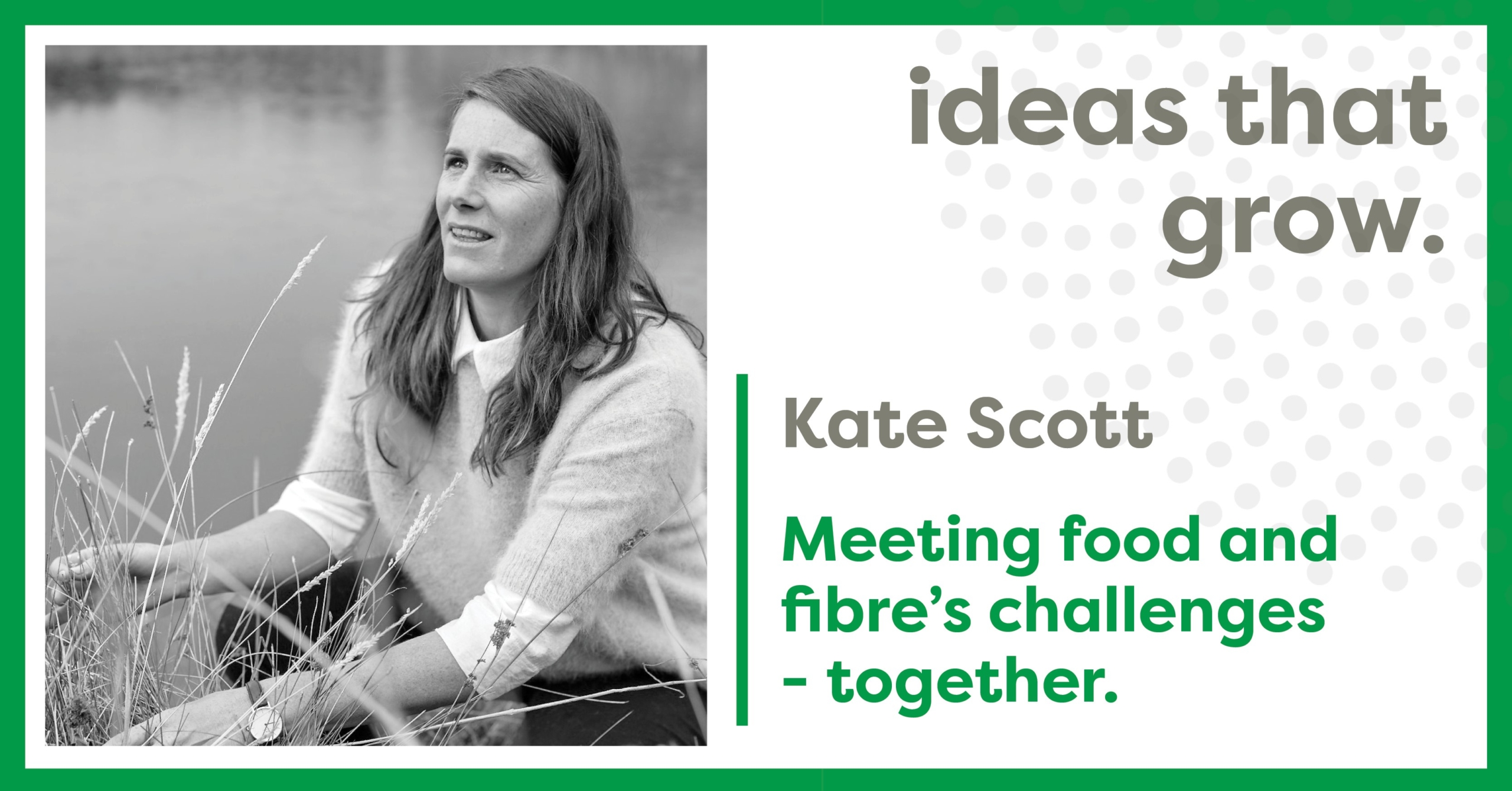
Kate Scott: Meeting food and fibre’s challenges, together.

Kate Scott is a 2018 Nuffield Scholar and Chair of the Board of the New Zealand Rural Leadership Trust and is part of the team behind Forefront: 2023 Rural Leaders Agribusiness Summit and its line up of speakers and panelists.

Pulling together a speaker ensemble of this calibre has been no easy task, but as Kate explains the chance to bring industry together for one day – makes the effort well worthwhile. 

Forefront, the Summit theme, will focus on those businesses making change now – those providing solutions to the sector’s and the world’s biggest agribusiness challenges and opportunities.

Forefront - Rural Leaders Agribusiness Summit

Bryan Gibson – Managing Editor of Farmer’s Weekly.

I’m Bryan Gibson, Managing Editor of Farmers Weekly. And with me I have my first repeat visitor to the podcast, Kate Scott. How’s it going?

Kate Scott – 2018 Nuffield Scholar and Chair of the Board of Rural Leaders.

I’m good. Thank you, Bryan. And yourself?

The 2023 Rural Leaders Agribusiness Summit - Together for a day.

Bryan: Yeah, really good. So, today we’re here to talk about the upcoming Rural Leaders Agribusiness Summit, which is at the Christchurch Town Hall on the 27 March. Kate, you’ve been involved in putting this together.

Kate: Yes, I have. There’s a great team of people have been working hard to bring not only the one-day, Rural Leaders Agribusiness Summit together, but also the Nuffield Triennial Conference together too.

We started planning this event back in 2020, but we were a casualty of Covid like many events. And so, we’re now looking forward to March when we can host our Summit. It’s going to be amazing to not only welcome some of our international guests who will be attending the as part of their involvement with the Nuffield Triennial, but also really looking forward to getting a broad and diverse range of New Zealand farmers, agribusiness and rural professionals along to hear our great line up speak at the Agribusiness Summit.

Bryan: Now, when we talked a while back, your [Nuffield] research was on the evolution of New Zealand farming into a more sustainable place and I guess that’s something that’s going to be a focus of the [Summit] day, isn’t it?

Challenges and opportunities in a fast-changing world.

Kate:  Yeah, it is. And it will probably be of interest to some of the listeners that we’ve chosen to theme our conference for the day ‘Forefront’.

The reason behind choosing Forefront was about not only getting in front of all the challenges that the primary sector are facing, but also looking at it through a lens of opportunity.

How can we be at the front of this change and find ways to innovate and take advantage of a changing world? I guess that’s then gone on to help us to create the speaker themes for the conference.

Summit day themes and speakers – Our World.

Kate:  We’ve split the day into three broad topic areas. The first is taking a more global picture. It’s called Our World. Here we’re talking about some of those big challenges in our natural environment.

We’ve got some speakers touching on climate change. Doctor Harry Clark will share his incredible breadth of knowledge [on climate change] with us.

We’ve got a speaker talking to us about the role of solar, particularly from a farming perspective – a woman by the name of Karin Stark. Karin and her husband farm in Australia. She’s done a lot of work using solar energy and developing solar panels within their farming business and how they integrate that more generally. So that’s going to be an interesting part of that first Our World theme.

Then we also have a speaker talking about the opportunity the sea brings and how we utilise our oceans as a resource and as an opportunity to grow our primary sector.

Summit day themes and speakers – Our People.

Kate:  Then we move into our second, which is Our People. That will look at consumer trends and trade. I guess we’ve seen a massive shift in international trends and how that’s changed over the last few years, particularly on the back of COVID and what other trends might emerge around the agrifood and the consumer side of things.

So, to help us to understand both the challenges and the opportunities there, we have Vengalis Vitalis who many of you will know as our Deputy Secretary of Trade here in New Zealand. He’ll be talking about a global view of trade from a New Zealand perspective.

We have Lain Jager joining us to talk about what the role of future food and genetic modification might mean for food production in New Zealand. Then we’ve also got Emma Parsons from Fonterra who’s going to be talking to us about what Fonterra see from that consumer trends and trade perspective. Already a great line-up of speakers.

Summit day themes and speakers – Our Future.

Kate:  Our last session for the day is called Our Future. We’re wanting to try to change that up a little bit. So, we’ve got four or five speakers who are going to talk for a shorter period of time – a little bit snappier – talking about all those opportunities around entrepreneurship, leadership, the future, social, economic and environmental wellbeing.

We have Traci Houpapa talking to us about future leadership and a Te Ao Maori perspective – and possible new business models. We have Angus Brown from Arepa, Mark McLeod Smith from Halter, and we also have Dr Ellen Nelson, who will be talking to us about the future of work.

I’ve just given you a big download of the programme! But it’s exciting to have a broad range of topics and people to be able to come together to look at our sector in a positive light. To take some motivation and opportunity to challenge what we’re doing, look for what’s new and the what next? for our sector.

Bryan:  It’s great that with the world opened up again, getting some of these global perspectives on the shared challenges that agriculture faces. Some of those people will be in the room. Sometimes these changing consumer perceptions, along with the ins-and-outs of trade deals and that sort of thing, sometimes is second hand knowledge to a lot of the agricultural community here – so it’s good to get a view from the ground, but a different ground.

Devry Boughner Vorwerk - Rural Leaders Agribusiness Summit Keynote Speaker.

Kate:  Exactly. I think it’s an integral part of what we do, but unless we’re actively doing it, it’s almost one of those back-end functions. We don’t always think about these things if we’re down on the farm driving our tractor or milking our cows.

To that point, our keynote speaker is a woman by the name of Devry Boughner Vorwerk. Devry is coming out to see us from the States and she has amazing background in terms of having been Chief Communications Officer and Global Head of Corporate Affairs at Cargill.

She has her own sustainability entrepreneurship business and is going to be talking big picture setting for us around international business and development. She’s going to be able to do an amazing job of setting the scene initially and then helping us to draw in all the pieces of the puzzle as we hear from our other speakers throughout the course of the day.

Bryan:  I did some reading on her earlier in the week and sounds like she’s going to bring some real amazing insight. I mean, Cargill is one of the biggest meat producers in the United States – and then she moved to, I think, Grubhub for a while, didn’t she?

Kate:  That’s my understanding as well. And then having done both that policy side of things and the international business, I’m really looking forward to hearing Devry speak. The fact that she’ll be able to join us in person is really a good outcome given only a few years ago we were having to cancel the Summit.

Bryan:  In that last session too, when we talk about challenges, quite rightly, I guess people often see that as cost and loss of opportunity. But in fact, there are people out there capitalising on meeting those challenges and there’s going to be some real-world examples of how you can do that.

Kate:  Listeners may have heard of Ellen Nelson through her role in helping to secure places for the Afghani refugees last year. Ellen has done a world of research into the way in which we work. She challenges us to think about can we look at the world with ‘can we work school hours’?

Ellen has some interesting insights on how we leverage a lot of our mums and dads who might want to actually be able to work different hours, and how do we do that within our farming business? So, a slightly different perspective, but one that is as applicable to agriculture as any other sector.

Open to farmers, growers, agribusiness professionals and anyone who cares about the future of food and fibre.

Bryan:   So, what sort of people are you hoping to attract?

Kate:  We’re open to all comers, but we’re keen to make sure that our on-the-ground farmers have the opportunity to attend. I guess one of the reasons we decided to make the Summit a one-day event was that we know how difficult it is for people to get off their farm for too long. We’re wanting our farmers to come. We’ve had a great number of registrations already, as you’d expect.

We’ve got a bunch of our agribusiness representatives from our food companies, from other consultancies, we’ve got bankers, we’ve got some of our more senior leaders from government organisations. A real cross section of our sector. I think that’s where we’re trying to go – that the more views and perspectives we can get in the room, the greater the conversation and the questions.

One of the key things that we wanted to be able to do through the Summit was to provide the platform for a safe and robust conversation, where when you break out from morning tea, you can pick up one of these interesting topics that we would have heard about, talk to some people about their views and get the conversation going.

So, trying to kickstart the conversations on some of these big topics.

Bryan:  And of course, everything will be kept on time, on track and on message from some pretty cool people running the show.

Bringing the Summit to life and the sector together.

Kate:  Yes, we have got Corin Dann, an experienced journalist most will probably have heard of through the National Program – on breakfast in the mornings. Corin has very kindly agreed to come and facilitate our sessions for the day. A big part of the sessions will be the panel discussions and the conversations.

At the end of the day, we’re going to have a wrap up session where we get Devry back on stage with our other guests and Corin, to have an in-depth conversation around what’s happening, what the future looks like and the opportunities.

[From] the back end, the chair of the Summit, Murray King, and a small committee of volunteers will all be working hard in the to make sure people are well fed and well-watered, and that everything is kept to time.

For those who haven’t been to an event at the Town Hall in Christchurch before, one of the highlights is always the food. They do a great job there of showcasing local produce – they try to support their local Canterbury growers. The food is also something that’s always good to look forward to in those events.

Bryan:  The building itself is something quite special. It’s such a wonderful piece of architecture.

Kate:  It is iconic, so it’s great.

Bryan:  And there’s a dinner.

The Rural Leaders Agribusiness Summit Dinner.

Kate:  Yes, we have a dinner that will be hosted after the Summit. So, there are still some tickets available for that, although they are selling out very fast. The dinner will allow people to come together and to take the conversation to that next step. We will also be joined at the dinner by Minister O’Connor, who is going to be speaking. And we have some evening entertainment from Te Radar.

Another exciting part of the Summit is that it will include our international Nuffield guests who are actually going to be here in New Zealand as part of a ten day conference – where we kick off on the Saturday or the Friday night actually, prior to the Summit. It’s a bit of a traveling trip from Canterbury all the way [down the South Island] and finishing in Queenstown the following weekend. So, it’ll be a great opportunity to connect with a wide audience from around the globe.

Bryan:  Excellent. Well, that sounds [like] something for everyone to think about attending. How do people go about getting tickets if they’re interested?

Kate:  Yeah, go and have a look on the Rural Leaders website. There’s a big headline that flashes up that says Forefront. Click on that to head to the registration page to attend the Summit and/or the Dinner.