
2026 Nuffield NZ Farming Scholarship. Apply by 17 August 2025. Read More...

Apply for 2026 Nuffield NZ Farming Scholarship by 17 August 2025. More details...

Process mapping within farm consultancy.

Executive summary

Producing food and fibre is complex and will only get more complex in the future. The rural professional support network required has increased in both number and complexity. In a farm consultancy sense, this increase in complexity and work demand creates opportunity to expand business and offer high value expert advice.

Farm consultancy is unique in that the advice sought is often highly customised and depends on a huge number of biological, human and climatic factors. The experiential learning required to provide sound advice takes decades to develop, however, with the everchanging consultancy landscape, there is no longer years available to craft each skill before offering services therefore the methods for shortening this experiential must be explored.

Process mapping is a method used to document the method of turning inputs in to outputs and is utilised in many industries to standardise outcomes and reduce human resource requirements, however little information is available on the possibility of utilising process mapping as a tool within farm consultancy. The purpose of this project is to investigate how process mapping could be used in farm consultancy, and from the findings establish a method for creating a process map which could be applied in a case study setting.
A literature review was undertaken to establish the what, why, who, how and limitations of process mapping for a range of industries. This literature was analysed to obtain key themes to create a method for developing a process map. This method was then applied to a farm consultancy case study which was reflected on to provide recommendations and compare with findings from the literature.

Key Findings:

The application of process mapping in other service industries has been successful in showing improvements across business, customer satisfaction and employee satisfaction metrics, indicating potential benefits that could be obtained through process mapping in a farm consultancy business.

Analysis of the literature provided a framework for establishing a method to process map which could be used in farm consultancy. 12 key steps in process map design have been documented as a framework in this report.

The case study developed based on the process developed indicates many strengths and opportunities for process mapping in a farm consultancy business echoing the benefits seen in other industries. Although there are significant benefits and opportunities to process mapping, there are also weaknesses, threats and risks.

Producing food and fibre is complex and will only get more complex in the future. The rural professional support network required has increased in both number and complexity. In a farm consultancy sense, this increase in complexity and work demand creates opportunity to expand business and offer high value expert advice.

Farm consultancy is unique in that the advice sought is often highly customised and depends on a huge number of biological, human and climatic factors. The experiential learning required to provide sound advice takes decades to develop, however, with the everchanging consultancy landscape, there is no longer years available to craft each skill before offering services therefore the methods for shortening this experiential must be explored.

Process mapping is a method used to document the method of turning inputs in to outputs and is utilised in many industries to standardise outcomes and reduce human resource requirements, however little information is available on the possibility of utilising process mapping as a tool within farm consultancy. The purpose of this project is to investigate how process mapping could be used in farm consultancy, and from the findings establish a method for creating a process map which could be applied in a case study setting.

A literature review was undertaken to establish the what, why, who, how and limitations of process mapping for a range of industries. This literature was analysed to obtain key themes to create a method for developing a process map. This method was then applied to a farm consultancy case study which was reflected on to provide recommendations and compare with findings from the literature.

Key Findings:

  • The application of process mapping in other service industries has been successful in showing improvements across business, customer satisfaction and employee satisfaction metrics, indicating potential benefits that could be obtained through process mapping in a farm consultancy business.
  • Analysis of the literature provided a framework for establishing a method to process map which could be used in farm consultancy. 12 key steps in process map design have been documented as a framework in this report.
  • The case study developed based on the process developed indicates many strengths and opportunities for process mapping in a farm consultancy business echoing the benefits seen in other industries. Although there are significant benefits and opportunities to process mapping, there are also weaknesses, threats and risks.

Key Recommendations:

  • Get started: although a sound process map is required, the key to efficiency finding is to start with a process, and then continually improve the process over time.
  • Of the 12 steps to developing a process map, it is recommended emphasis be placed on ensuring clarity of the purpose of the process map, ensuring all stakeholders have input, developing KPI’s and providing a framework for continuous improvement.
  • There are strengths and opportunities identified in this report which could be beneficial to a farm consultancy, awareness and development of strategies to overcome the weaknesses and threats documented is fundamental as part of any process mapping undertaken to ensure business objectives continue to be met.

Chris Beatson
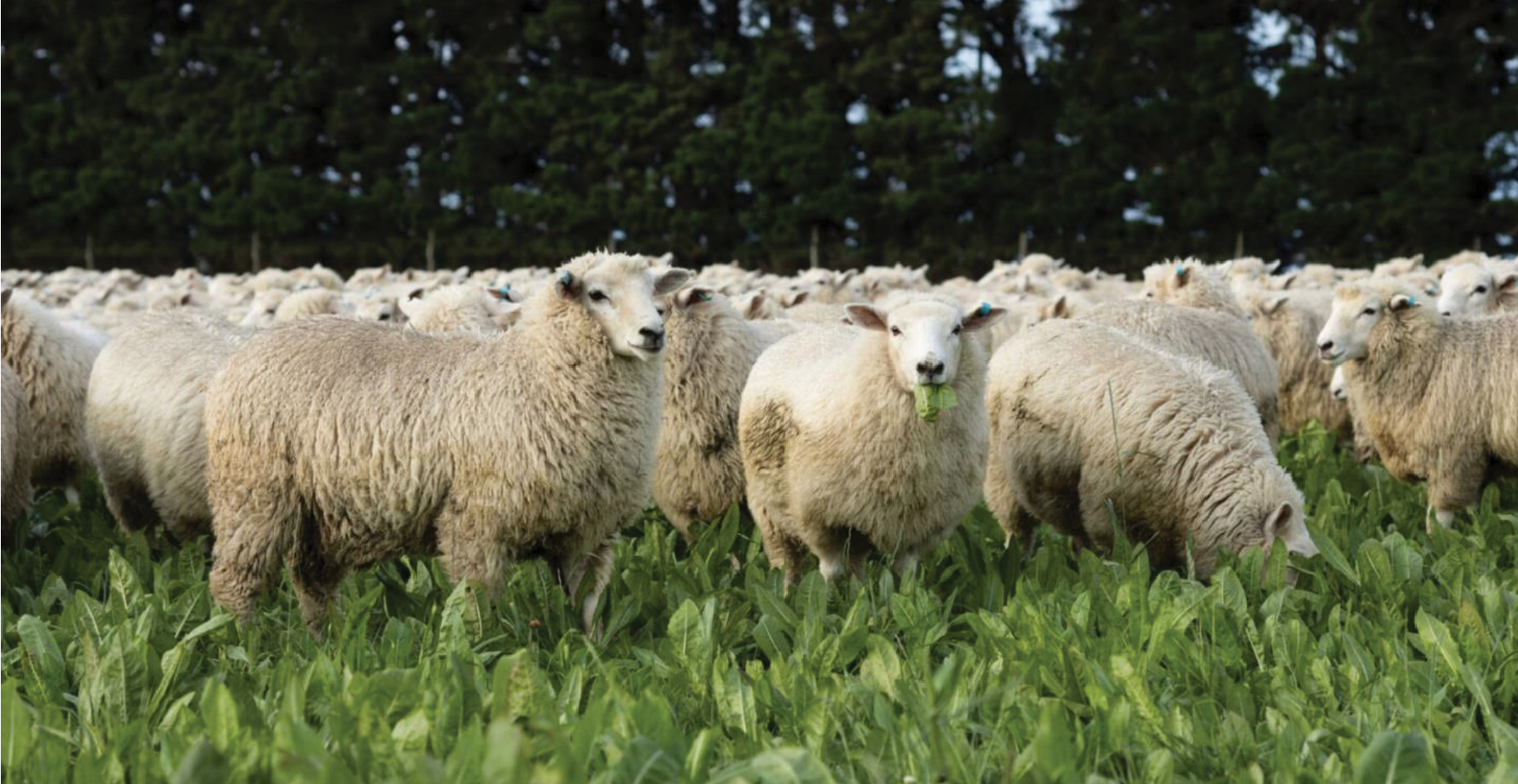
From supply chain to value chain. Understanding the mindset needed to transition for lamb producers.

Executive summary

Disruption has become a constant condition of doing business. The businesses that are more likely to thrive are those that can not only respond by adapting to continuous change but also become the drivers of that change.

The landscape of farming in New Zealand is evolving. Previously it has relied on low-cost competitive advantage. This has been achieved by either increasing productivity or reducing costs, but it is now becoming more difficult to maintain this. Adding value to the lamb that we produce is seen as a way to adapt to this change and is seen as a pathway forward for lamb producers.

This report seeks to understand some of the existing lamb-selling strategies and the mindset of lamb producers. It then examines how to change from a supply chain strategy to a value chain strategy and what that means for the farmer.

A literature review was undertaken to further understand the research topic. Nineteen semi-structured interviews were undertaken with participants either connected to the Lumina Lamb programme or with a deep understanding of value chains.

Some lamb producers have the same selling strategy that they have always employed whilst others are naturally curious and seeking opportunities, to increase returns and build resilience which leads them to be attracted to a customer-led value chain. This relates fundamentally to a farmer’s mindset and the reason ‘why’. Which was driven by an understanding of the customer, the chef.
Lumina Farmers valued their connection with the chefs. The key to Lumina’s success today is based on communication and transparency of the whole value chain and the ability for farmers to be part of a producer group with similar values.

Farmers valued the connection with other like-minded farmers, the collaboration and opportunity to learn from each other, were powerful, motivating and encouraged farmers to join the Lumina programme. To enable this change, the use of incentives in areas that need behavioural change that benefit the whole value chain would be the biggest challenge for growth.

Recommendations

This report outlines recommendations for companies trying to transition from producing a commodity product to a premium product. Some of these findings will be directed at the Lumina programme, but the concept will have relevance to other sectors and programmes.
To achieve the organisation’s goals Lumina leaders, need to:

1. Actively seek to understand the farmer’s current selling strategy and their mindset.

When looking to bring new farmers into the Lumina programme, the initial focus of the discussion should be to get an understanding of the farmer’s existing selling policies and why their motivations for choosing that strategy. The transition to supplying a premium product could require a change in values and mindset by the farmer.

2. Connect the farmer to the Customer.

Build an attractive connection between Lumina farmers and their customer.

3. Utilise the power of the champions in the Lumina community.

Encourage interaction amongst the farmers of the group, express the benefits of collaboration, to build on the strength that the Programme already has.

Champion farmers as Lumina ambassadors, which will create an environment of excellence.

4. Develop a Road Map for farmers to understand the pathway into the Lumina programme.

Outline the different pathways on how to join the Lumina programme with clear systems in place that outline the requirements and identify the risks and opportunities. And expectations?

Matt Smith, Matthew

Is it worth it? Costs and benefits of reducing greenhouse gas emissions on sheep and beef farms.

Executive summary

Why should sheep and beef farmers decrease their on-farm greenhouse emissions and what is the cost in doing so?

Climate change is directly linked to greenhouse gas emissions and is something that cannot be ignored. Major weather events, affecting the primary sector have highlighted the need for change. 50% of NZ emissions come from the agriculture sector, but at what cost will emissions reduction have on the farmer? Will the potential economic benefits outweigh the costs of current mitigation methods?

This report seeks to inform sheep and beef farmers, which of the current mitigation methods have the least effect on profitability and what economic benefits they may gain in doing so. The focus is on the cost and benefits of on-farm profitability, so concentrates on costs, income streams and potential premiums linked to the reduction of on-farm emissions.

Scenario analysis has been used to model greenhouse gas reduction methods that are currently available on sheep and beef properties, other literature was reviewed to compare methodology and results. A literature review was also used to assess benefits of reducing emissions.

While planting forestry offsets and reducing stocking rates are the mostly available methods, the scenario analysis also explored a combination of both, combined with increases in reproductive rates of the remaining stock units on hand.

Plantation forestry is an opportunity for sheep and beef farmers to use lesser productive areas of their property and along with reducing emissions, provides another revenue stream.

Reducing stocking rates is a solution which requires little initial investment but unless production per head is increased, has a large impact on profitability. A combination of forestry and reduced stocking rates, has the largest emissions reduction but the potential earnings from forestry will not be realised unless production has been increased. This may be unachievable depending on the underlying features of the property.

The demand for reduced emissions is mainly from leadership in organisations such as governments, processors and banks. This is driven by obligations to provide feedback to stakeholders on environmental objectives and align with targets of the Paris Agreement. There is no huge demand for low-emissions meat from consumers as they place greater importance on other factors such as the quality of meat.

An introduction of an on-farm emissions levy or introduction of Agriculture in the emissions trading scheme, in order for NZ to achieve their Paris Agreement obligations would be the greatest incentive to currently reduce emissions.
Based on the analysis, it is recommended that the following is taken into consideration when adopting a method to reduce on-farm emissions:

  • the saving of an emissions levy that the method would provide;
  • if the cost of the mitigation method is more than the expected emissions levy price;
  • reviewing the cost of mitigation on the basis of kilogram of meat produced on farm to determine what premium would be required;
  • if planting forestry, assessment of the expected return on investment and minimum return per hectare required to achieve this;
  • if reducing stocking rates, the ability and extra costs of increasing production per head;
  • demand for reduced emissions from organisations that directly affect the farm business, and
  • consumer demand for low emissions products and their willingness to pay a premium.

Tim Bathgate

Growers feeling fleeced. How might the market price improve for strong wool growers?

Executive summary

New Zealand farming is synonymous with sheep. Their naturally grown fleece has many unique attributes that make it a “super-fibre”, but competition from synthetic fibres has seen a decline in the popularity of wool over the last fifty years, as synthetics are cheaper to produce and consistently perform well in manufacturing.

Wool used to be the main income stream for sheep and beef farmers and strong wool now is currently a net loss for growers. Sheep still need to be shorn for the health of the animal but considering all the additional costs of doing business these days, removing wool from their business is a choice many are considering.

For generations, New Zealand growers have developed sheep genetics that yield a high quality and quantity of wool and this report highlights the opportunities and markets that still exist and are developing that need their wool clip.

Purpose of report.

The purpose of this report is to understand the structure of the New Zealand strong wool industry. To understand how the market price is determined for strong wool, an industry analysis is conducted, the driving forces influencing the wool market pricing are identified and the opportunities and challenges facing the industry are discussed with a focus on the grower.

This report is aimed at the next generation of decision-makers on sheep and beef farms to inform them of the market opportunities that exist for strong wool and recommend how might the market price improve for strong wool.

Methodology.

A mixed qualitative research approach is used including Content analysis, through a literature review, Semi-structured interviews with fifteen industry stakeholders, and Thematic analysis used to evaluate insights from the interviews. Discussion of the profitability and competitiveness of the New Zealand strong wool industry is completed using Porter’s Five Forces and PESTEL model.

Analysis and Discussion.

Analysis of the themes from interviews and literature found prioritizing quality, collaboration, promotion, environmental sustainability, and global market engagement will pave the way for improved market prices.

  • There is a consumer trend towards natural fibre solutions over plastics and synthetics.
  • There is a demand for quality New Zealand strong wool, and it is well-suited for carpet manufacturing.
  • Competitive rivalry is high within the strong wool industry and profitability is low.
  • There are many other uses for strong wool, and these are increasing as growers and businesses innovate by solving problems with natural fibres, none of which are currently consuming a significant volume to influence the market demand.
  • Quality strong wool will sell well, but to what degree? that is influenced by the additional value created through collaboration with businesses well connected to the consumer.


Recommendations.

  1. Growers to ensure a quality clip is produced and well prepared for sale.
  2. Growers to collaborate with other wool suppliers and supply chain partners. This is key to creating additional value and a unique value proposition with their strong wool clip.
  3. All stakeholders are responsible for promoting wool and its advantages to consumers.

Annabel Barnett

Climate resilience. How might we build resilience with kiwifruit growers in a changing climate?

Executive summary

The kiwifruit industry is New Zealand’s largest horticultural exporter, responsible for 40% of all horticultural revenue (Aitken & Warrington, 2021) and in 2021, celebrated a record-breaking harvest exceeding $4 billion of global revenue (Burke, 2023). The impacts of climate change are being felt in the industry and will continue to have an impact on kiwifruit growing seasons into the future.

The purpose of this report is to collate scientific climate change data, analyse the likely impact this will have on key kiwifruit growing regions and summarise strategies to help kiwifruit growers build climate change resilience.

The aims of this report are to:

  • Outline the likely impacts of climate change for New Zealand.
  • Understand the current impacts of climate change on kiwifruit growers and where the greatest risks are for the future.
  • Provide recommendations that will help build resilience and give growers confidence going forward.

The methodology for this report was based on the three-legged stool model. This included conducting a literature review, semi-structured interviews, and a thematic analysis to discover new knowledge to help build climate change resilience amongst kiwifruit growers.
The four main areas of climate change impact are:

  1. Average temperatures are set to increase.
  2. Minimum temperatures are set to increase.
  3. Average rainfall (precipitation) will be varied across the regions. The upper North Island is likely to become dryer.
  4. Hot days (>25 oC) are likely to become more frequent with impacts posing a moderate risk.

These climate change impacts will have two major impacts on the kiwifruit industry. Firstly, there will be a decrease in winter chill hours, directly affecting the number of flower buds produced. Secondly, there may be a shift in suitable kiwifruit growing regions due to increasing temperatures. Regions that were formerly too cold and presented frost risk, may become more suitable than current regions.

The findings from semi-structured interviews and thematic analysis identified the following recommendations to help growers build climate change resilience:

  1. Growers should work to become financially resilient by building reserves for responding to future climate change events.
  2. Prior to purchasing a new orchard, due diligence should include climate change impacts.
  3. Climate change is not a static problem. Adaptability is an essential attribute for growers to maintain their climate change resilience.
  4. Collaboration will be key in responding to climate change. Growers, postharvest and Zespri all have their part to play.

Transparency of data from postharvest and Zespri is needed to give growers confidence in the longevity of the kiwifruit industry.

Bryce Morrison

Genetic Technologies and the Effect on New Zealand’s Dairy Farmers

Executive summary

New Zealand’s dairy industry is strategically important to New Zealand. Dairy generates $25.7b in exports, or 1 in every 4 dollars which has grown by $7.9b since 2019. It is a cornerstone employer in many regions, with 55,000 employees’ nationally, considerable wage growth, and is a top 10 purchaser across dozens of industries. (Stats NZ – Sense Partners 2023).

Despite dairy farming’s economic importance, New Zealand has strict controls regarding the use and development of genetic technologies that are readily available around the globe, which could further advance the industry.

The aims of this report are to:

  • Outline the potential opportunities for genetic technologies for New Zealand’s Dairy Farmers.
  • Understand the potential risks or threats of genetic technology use in New Zealand.
  • Help to inform dairy farmers on genetic technologies.

The methodology for this report was the joint analysis method. This included conducting a literature review and semi structured interviews to build knowledge on genetic technologies and what implications those could have on the end user – the farmer.

Genetic technology is a broad topic, covering transgenesis or genetic modification, as well as new breeding technologies which is targeted gene editing using site directed nucleases resulting in gene deletion, modification, or gene insertion. Application of these technologies are broad; however, this report serves to focus on plants for animal feed such as grasses, legumes, and brassicas.

The findings from the literature review and semi structured interviews identified the following recommendations that could help farmers improve across the board, including increased output and productivity, improved environmental outcomes, animal wellbeing and financial benefits.

  • New Zealand needs a science based, consistent approach to regulating genetic technologies. This will need to evolve as the science develops and evolves.
  • Risks need to be balanced against benefits and ensure adequate testing is undertaken before commercial use. This should include flow on effects and animal health monitoring for plant breeding.
  • The right plant breeding programs need to be prioritised first.
  • Incremental gains are powerful in the long run, but New Zealand needs to adopt genetic technologies now.

Due to the economic value of the dairy industry, if farmers prosper there can be an expectation that regional economies will be positively affected, median wages for dairy workers will rise, and local input purchasing will rise with this.

Scott Armer

Commercialisation learnings for Agritech

Executive summary

There is a growing global demand for agritech to solve major global issues, such as climate change, water use and quality, and increased yields from food and fibre to feed the world’s population.

Whilst New Zealand has a proud history of primary sector innovation, there are only a handful of agritech companies of international significance. The 2020 Aotearoa Agritech Unleashed Report opined; “Compared to our international peers we are punching below our weight in our relative economic value and export earnings from agritech”.

What can New Zealand agritech companies do better to commercialise their innovations to grow the sector, but ultimately to help solve these global challenges and in the process advance New Zealand’s international competitiveness in primary production and grow our export earnings.

This report has undertaken to seek learnings and insights of what successful commercialisation of innovation looks like and apply this to a New Zealand agritech context to present key denominators for successful commercialisation of agritech.

The study completed literature reviews of academic, industry and business publications across innovation and agritech, together with semi-structured interviews with New Zealand agritech practitioners.

Thematic Analysis was applied to the body of research and interviews to capture the Key Findings and related Recommendations as follows:

1. Engage in Critical Self-Assessment:

Critically evaluating whether the agritech founder has a minimum viable product with initial customers to get to the start line. To be commercially successful at scale requires ongoing discipline for critical self-assessment of:

  • Total addressable market; develop a clear understanding at the outset of the addressable market, validating the innovation to that addressable market, what investment is required and the profit model.
  • Founders’ skills, traits and shortcomings; actively build a team with complementary skills and capabilities requiring the right industry and functional expertise (technical, operational, commercial and financial) with an ability to execute.

2. Value Proposition:

Develop and define a clear and (relatively) material value proposition for the adopters of the innovative solution. The Founders need to be focused on delivering a client solution (not an innovation).

3. Business Model:

Bring together the component parts to execute the commercialisation growth, including:

  • Product and market lifecycle; recognise and plan for the innovation to evolve from the initial core product and early adopter market to an augmented solution delivered and serviced for a mainstream market which requires active planning for channel to market, wrap-around solution, communication strategies and services model.
  • Resources; The resources required to execute, not just the team and governance, but broader relationships, suppliers, channel partners, components, facilities etc.
  • Profit Model & Capital structure; continually evaluate the commercial model and align with a fit for purpose capital structure. If external capital is required to support the company to break-even, then ensure that “smart” capital is pursued with the right industry experience and networks for execution.

The approach and recommendations have been brought together into a Framework of Key Denominators to Enhance Successful Commercialisation of Agritech (show in Figure 11 of the report).

The key themes, or denominators are all inter-related, they cannot be approached or applied in isolation. The framework is not a one-size-fits-all but a valuable roadmap to be evaluated and adapted for each unique agritech innovation and market opportunity.

Murray Dyer

Julia Galwey. By-product to buy product – Pearl Veal NZ.

An innovation story that covers the journey from an idea to the challenges of development, and to implementation. Julia Galwey, 2020 Kellogg Scholar, talks about Pearl Veal NZ, a new sustainable utilisation of the bobby calf resource.

Pearl Veal NZ was the winner of the Silver Fern Farms Market Leader Award at the 2023 Beef+LambNZ Awards in mid October.

Listen to Julia’s podcast here or read the transcript below.

Bryan GibsonManaging Editor of Farmer’s Weekly.

Kia Ora, you’ve joined the Ideas That Grow podcast, brought to you by Rural Leaders. In this series, we’ll be drawing on insights from innovative rural leaders to help plant ideas that grow so our regions can flourish. Ideas that Grow is presented in association with Farmers Weekly.

My name is Bryan Gibson, Managing Editor of Farmers Weekly and this week I am talking to the recent winner of the Market Leader Award at the Beef and Lamb New Zealand Awards, Julia Galwey.

Bryan Gibson:
G’day Julia, how’s it going?

Julia Galwey, 2020 Kellogg Scholar and Co-Founder Pearl Veal:
Good, thank you Bryan. How are you?

BG: Pretty good, where are you calling from today?

JG: I am calling from my home office in Christchurch.

BG: Nice. Have you been getting all the wind we’ve been getting up here?

JG: Yeah, it’s been pretty mixed bag at the moment. Very much spring weather.

Winning at the Beef+LambNZ Awards.

BG: Yeah. Now, it was a pretty big time for you, the Beef and LambNZ Awards.

JG: Yeah, it was pretty neat for Pearl Veal to be recognised at such a wonderful event. Just have an evening of celebrating lots of positive things happening in the industry with the various finalists and category winners. A big thank you to Beef and LambNZ for hosting the event, and also to Silver Fern Farms for sponsoring the market leader category.

BG: Yeah. Now, can you just tell us a bit about your background in the food and fibre sector?

Background - Julia Galwey, 2020 Kellogg Scholar.

JG: Sure. I grew up on a sheep and beef and deer farm near Fairlie in South Canterbury. Then I headed off to Lincoln to do an Ag Science degree. Following that, I had six years in the agribusiness team for ANZCO Foods based in Ashburton, which was a neat team to be involved in, and a really varied role, that got me going in the meat industry.

Then in 2018, Alan McDermott and myself, we set up Agri-Food Strategy, which is our own agribusiness consultancy company. It focuses on working with farmers and agribusinesses to address strategic challenges and opportunities. I guess, again, it’s been pretty varied in terms of the work I’ve been involved with in that space.

BG: Now, you took on a Kellogg Scholarship in 2020, which, of course, was the year of the lockdown, if I remember correctly. You chose to do it on a value chain for veal. What made you think of that subject?

Kellogg research into the potential of the bobby calf resource.

JG: Good question. Yeah, I guess the idea to look at this for my report was just being around the meat industry and the bobby calf topic continues to come up in conversations. There just wasn’t really a lot of information that I could see here in New Zealand in terms of looking at older veal animals as an option for this resource, a by-product of the dairy industry. I didn’t really want to focus on the discussion or debate around the bobby calves themselves. I did for some context in my report, but I just wanted to focus on looking at one potential solution or opportunity for utilising some of that resource.

BG: Then, of course, it’s one thing to write a report about this stuff, but you carried that on and started a business. How did that get off the ground?

JG: I guess while I was doing my research report, there’s a few things that came up in terms of some learnings and drivers or motivators. One of them was probably around learning how much of a bigger risk the bobby calf thing was here in New Zealand. Especially compared to other countries in terms of the scale, with our couple of million versus Australia would be the next biggest, at around 400,000.

The report highlighted we were out there on our own in terms of how big of an issue it might be going forward. Some of that, was a bit of a driver. I learned a bit around the varying types of veal markets that there were internationally and saw some opportunity, but I really struggled to find any information on pasture-fed veal systems.

So, it became obvious that maybe there was an opportunity for New Zealand to diversify in terms of our offering in the veal space with what we’ve got here. Also, in terms of some of those credence attributes – pasture-fed, free-range, rather than copying some of the international veal systems.

From research to innovation.

As I was doing the report, Alan McDermott, who’s my business partner, was keen to have a go. We could test out what opportunity there really might be. I mean, it’s all very well, like you say, writing a report, but you just must have a go to see whether something might work or not. Halfway through my project, that’s what we started doing.

We had a quick brainstorm for a name so we could get a company set up. There are quite a few negative connotations around the name ‘veal’, which I learned a bit about while I was doing my report, in terms of some of the historic practices that used to happen in terms of how veal was raised internationally.

There was, I guess, some questions around whether we should even call it veal or not. But we talked to a few chefs, and they pointed out that we need to call it what it is. That’s what they know it is. A lot of them have trained internationally and used it before, so just stick with what it is, but make sure you build a story you can underpin your brand with. We sourced some under 12 months of age, a whole 12 of them, and found a processor that was happy to process them for us.

We set up cut specs and went along to the plant to see how it would go and then started sending some products to chefs to see what they thought. We had a development chef that we were introduced to through a contact, and he kindly took us around Wellington for a couple of days. He introduced us to a few chefs and helped us learn how that world works in terms of getting into restaurants and talking to chefs – and how to get on their menus.

Building scale.

The feedback on the product was great. We started working with the team at Synlait, including one of my fellow Kellogg cohort members, which was quite cool. They’ve been supportive in what we were trying to do and helped us connect with some of their dairy farm suppliers who were keen to give it a go and rear some calves. It’s been a nice fit for us to work with the Synlait team and some of their suppliers.

BG: How difficult is that process? You’ve got a prototype product and you’ve started with a small number of animals to begin with, then you’ve got to scale that up to something that’s a viable business. What’s the process there?

JG: It’s one of the trickier things to balance. It’s a bit of a chicken and egg in terms of you’re not quite sure in terms of what market you’ve got, but you need to get enough product that you’ve got enough to supply to a restaurant to put it on their menu. Yeah, it is a difficult balance, and some of that is just to take a risk. I guess for us, one of the things that we were quite focused on was building around the story and attributes we wanted to go around our brand. With some of that starting with animal welfare for us in producing the best calf possible.

The rearing regime and how it works.

There’s quite a lot of challenge in terms of veal as anything must be produced before the calf is 12-months old, so a lot of the challenge is around getting it to grow as fast as possible and to reach a heavy weight in that time. It needs a good start in life as a calf, to be able to do that. Some of our system was built around a particular rearing regime in terms of good colostrum.

Then we only use whole fresh milk rather than milk powder, which has had a lot of the good bits taken out of it. Milk is what’s designed for the calf, so let’s just give it that and obviously some pasture as well. But because of that rearing regime, we can’t just go out and get any calf on the market.

It starts right from the start in terms of what we’ve built to underpin our brand. That also is a little bit harder in terms of, like you say, we’re planning what we need over a year in advance, and you don’t necessarily know what your market is then. A bit of risk, I guess, and just a balance of starting smallish so that you learn the risks, learn the things you need to iron out as you go.

BG: Getting back to your rearing regime, that must mean you need to work pretty closely with the farmers who are actually doing this stuff?

Collaborating for success.

JG: Definitely. I think the other thing in that space is the Synlait farms that we’re working with are all certified ‘Lead with Pride’, which again, helps underpin animal welfare and the colostrum management. Obviously, our contracts have got the rearing regime outlined in them, and we talk them through what that looks like and why. We also don’t have meal as part of our rearing regime. Part of that is around wanting to remain grain-free, so 100% pasture-fed and antibiotic-free, so that we can look at going into the US market in time.

Again, it’s the whole fresh milk, no meal. It is a bit of a change to how calves are traditionally reared here. We’ve got to work closely with the farmers on what that looks like. We’re thankful for those first few farms that were willing to take a bit of a risk and rear and finish calves for us.

We were a couple of random people saying, here, we want to contract you to rear these calves in a particular way and finish them through to an age and weight that’s not traditional here. They had to trust a bit that we would take them when we said we would and have a processor to process them and pay them.

I guess that’s probably also part of what’s been quite helpful working within the Synlait team. That helped farmers have a go. There’s just some great farmers out there that are keen to try something different and learn with us, which has been nice.

BG: Yeah. Now, who are you selling to now? What are your export markets, or locally?

JG: Currently, we are pretty much mostly domestic market into high-end restaurants. We’ve just started doing a little bit into some smaller retailers here, and we’ve just started a little bit of export.

BG: Now, obviously, the bobby calf issue is one that New Zealand’s farming industry is grappling with. Do you see this type of initiative as part of a solution?

A new veal value chain.

JG: Yeah, I mean, the bobby calf issue is obviously a big social license to operate topic in the dairy industry, and it’s a pretty tricky thing to navigate with the views of community here and also our customers and consumers globally.

I guess we just have to keep asking ourselves if we’ve got practices that we’re comfortable and being transparent about, and if not, then what are our opportunities and solutions to do something differently? I guess that’s really what we’re trying to do with Pearl Veal is.

I don’t like to focus too much on the bobby calf aspect of it. But more the opportunity that exists to take some of that resource and add value to produce a really quality veal-based product with a story and a brand that’s underpinned by animal welfare standards and a pasture-based system that we believe in. We’re proud to share with chefs and customers and consumers here.

BG: Of course, back to where this all started, the Kellogg Programme –  how did you find it? Is it something you’d recommend to others who were thinking about doing it?

The Kellogg Rural Leadership Programme - where it started.

JG: Yeah, absolutely. It was such a good course and I guess a real opportunity to network too. We had such a great cohort of people. It was a good cross-sector group of people. You get to meet people that you wouldn’t normally be working with and the people and the speakers that come in are incredible. It really broadens your thinking and opens your networks and I would highly recommend it to anyone considering it.

That’s why I did it. It’s something that once people have done it, they’re always recommending to anyone that hasn’t. If you get that opportunity, jump at it. I think it’s one of those things that probably never feels like the right time when you’re in your working career because you’re always busy or home life as well. You just have to jump in and do it.

BG: Thanks for listening to Ideas that Grow, a Rural Leaders podcast in partnership with Massey and Lincoln Universities, AGMARDT and FoodHQ. This podcast was presented by Farmers Weekly.

For more information on Rural Leaders, the Nuffield New Zealand Farming Scholarships, the Kellogg Rural Leadership Programme, or the Value Chain Innovation Programme, please visit ruralleaders.co.nz

Field notes from the 2023 Value Chain Innovation Programme.

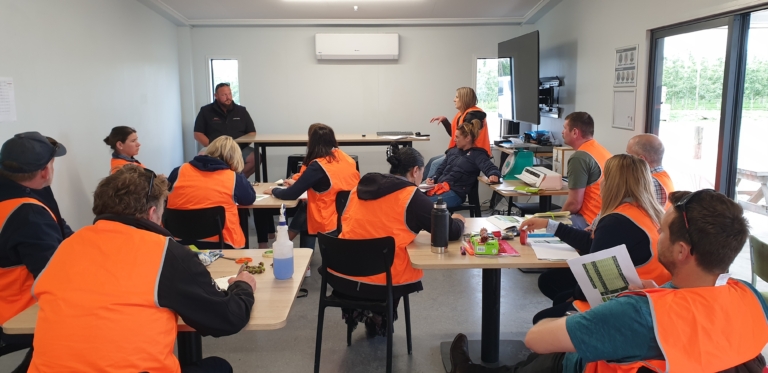
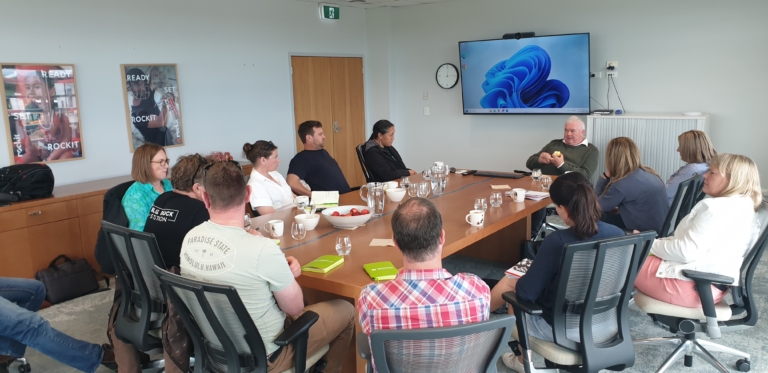
Just over two weeks ago a group of people from across New Zealand came together in Auckland for a week of visits to operations within four key value chains – Dairy, Red Meat, Apple and Kiwifruit.

Any one of the twenty-two Value Chain Innovation Programme visits seen in isolation, would generate plenty of ‘aha moments’. To run four value chains in their entirety was quite something else. It’s what makes this programme work so remarkably well.

The level of access to the leaders, founders, operators met on the Programme created the feeling you were often being ‘let in’ on some extraordinary insights. This made possible by the understanding that Chatham House Rules apply.

In this article we share ‘field notes’ from the perspective of the people who were there.

Jesamine Wanoa, also wrote a post a day while on the Programme and offers her unique perspective as a specialist grower of native NZ plants and owner-operator of Tangikaroro Native Nursery.

Rachel Baker, was one of the four 2024 Nuffield Scholars on the Programme. We share her post-programme post. Rachel is a Farmer and Portfolio Manager of MyFarm Investments’ Hawke’s Bay apple syndicates.

Jesamine

12.11.23
Day 1 – Jesamine Wanoa:

Good first day, departing at 1pm from Auckland Airport to Hamilton.

Instantly connected with two Ngāi Tahu women, and enjoyed deepening my understanding of the three disciplines of value chain models, and seeing the potential for where Ngāti Porou might adapt a model to suit our purposes. A good overall general structural framework for navigating this journey with.

Thank you Hamish and Phil for both leading and Co-facilitating, and Matt and all my colleagues on this journey with me. What a talented bunch!

I’m so excited to finally be here growing our network and understanding together. Thank you my whanau back in Te Araroa and in Tuwakamana for this opportunity.

13.11.23
Day 2 – Jesamine:

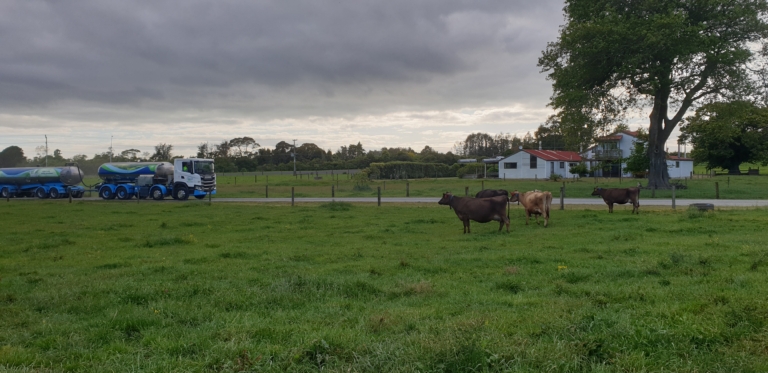
Visited Te Rapa Farm (Fonterra Farm Source) and witnessed milk testing technology at Fonterra today, as well as cheese and dry milk powder production. Then visited the cold store facility prior to export. Every truck bringing in product must meet a standard of cleanliness! Amazing 40 ton forklifts that lift 28 ton crates.

Additional field notes:
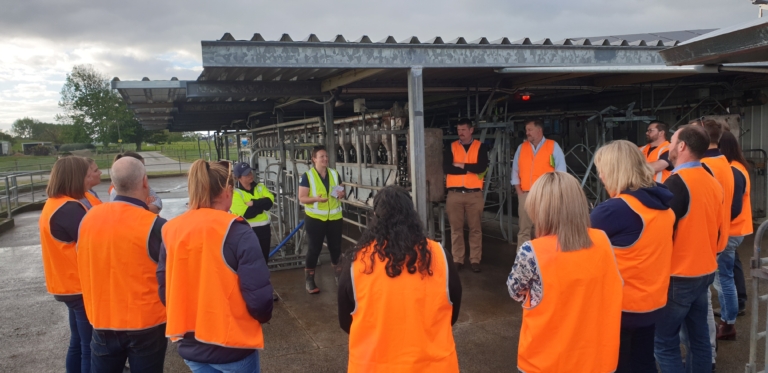
First stop was a Fonterra Farm Source working dairy unit, where new on-farm technologies and innovation are trialled for wider rollout.

We explored MilkTestNZ, where milk samples from 10,000 dairy farms are tested every day in a remarkable feat of logistics and efficiency.

Then we moved to Fonterra’s impressive distribution centre, to LIC and DairyNZ where senior leaders spoke with us directly. And the NZ cream on top – a visit to Zenders Cafe, run by three sisters who grew up on a Dutch dairy farm.

14.11.23
Day 3 – Jesamine:

I was very impressed with our host Hayden’s approach. Hayden works with Robotics Plus. The ability of Robotics Plus to recognise where their strengths lie in solving problems, helps them then play between the flags of those strengths, to produce customer-focused solutions.

Their model allows for collaboration with other partners, who hold expertise in other areas of the value chain outside these flags, to create a solution fit for purpose to meet the client’s needs. Ka mau te wehi!

My take-away from this visit, is that it’s critical to customer trust and confidence to be transparent about what you’re skilled in, and then decide what components for the solution should be out-sourced to business partners who are better positioned to meet those requirements.

This collaborative approach towards knowledge sharing to solve the customer’s problem, allows business partners to use their unique skillsets to support you and your customer’s business, and vice-versa.

This model is so efficient and utilises a strong collaborative network approach that puts the customer at the centre – and is future focused. Everyone on the workshop floor understands that culture from apprentice to Manager. Everyone has genuinely taken ownership of their part in the value chain, creating an incredibly innovative and creative work environment that’s a safe space for developing their talent.

After Robotics Plus, the Ports of Tauranga. The volume and variety of export that goes through this space is mind boggling! It requires every individual on-site to be committed to best practice in terms of biosecurity and health and safety.

There are layer upon layer of control measures needed, not just to keep you safe on this extremely busy port, but to keep you alive! We saw here the forestry logs, and the automated Robotic Plus technology used, to measure each log’s length, diameter and therefore weight.

The next visit was at Zespri, who have shifted over time from being supported by government entities, to now leading and supporting our government on the international stage. Such is the success of their approach, which is thorough but future focused, with the consumer always front of mind.

Also invited to speak were KVH (Kiwifruit Vine Health), who focus on NZ’s biosecurity response. KVH anticipates future threats before they hit NZ, to mitigate and minimise their impact. Again, another visionary entity, who like Zespri and NZKGI (NZ Kiwifruit Grower’s Incorporated), were willing to share material in their presentations today, and made the process of choosing the kind of model that would be a good fit for Te Tairāwhiti easy.

I express my sincere gratitude to all the above businesses for their kindness in opening themselves up to our questions, and for their generosity in sharing their answers. I have found today absolutely invaluable. Kei te mihi tino nui ki a koutou.

Additional field notes:
Port of Tauranga Ltd, the largest of NZ’s 13 ports. An impressive operation to see firsthand – 80% of NZ kiwifruit exports, 70% meat exports, and a total of 24.7 million tonnes moved through the Port last year.

Next stop, hearing from senior leaders at Zespri, KVH and NZKGI in Mt Maunganui – a collaborative model combining single point of entry via Zespri, strong advocacy via NZKGI and world-class biosecurity from KVH.

15.11.23
Day 4 – Jesamine:

We started the day with Plant and food research, who perform a critical service in protecting our horticultural industries like Zespri. They have a pioneer research team working on taonga foods. I’ll share about this at a future date. So exciting!

We then left for Trevelyan, who are a legacy NZ company that’s been around for eons. Time critical performance schedules for grading, sorting and packing, to get produce exported to their international market.

Then we had the pleasure of a walk through an A Class nursery, Southern Cross Horticulture. An awesome set up that’s got so much to offer in specialist knowledge for growing Kiwifruit.

Additional field notes:
Day four, continued the kiwifruit value chain. First stop – the Kiwifruit Breeding Centre, a collaboration between Plant and Food Research and Zespri. KBC finds out what growers need in a cultivar and then deliver through accelerated research.

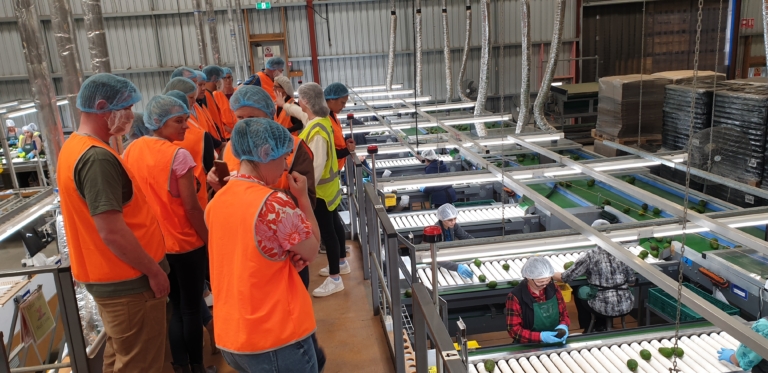
Then onto the Te Puke based Trevelyan’s, an independent, family-run, single-site kiwifruit and avocado packhouse – and NZ’s largest. It has a 50+ year history and has family values woven through all facets of the operation.

Southern Cross Horticulture – orchard developers, cropping and orchard management. We saw a perfectly constructed system, consistently delivering the perfect plant.

Finally to Pāmu’s Wairakei Estate to complete the dairy value chain. We heard from senior leadership on Pāmu’s dairy beef, organic dairy, winter milking, A2 and deer milk, and pastoral business mix, as well as an extensive sustainability strategy on all 112 Pamu farms.

16.11.23
Day 5 – Jesamine:

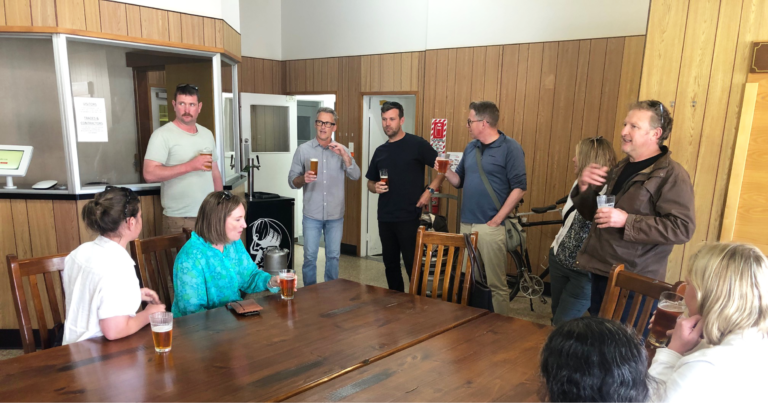
Today I broke my ‘beer drinker virginity’ with a tall glass of Gizzy Gold! Thank you Gerard and Jason from First Light for treating the local pub as your classroom 😀. By embracing a real world approach, (the course) allows us as participants to get up close and personal with export industry leaders, in their mix and mingle comfort zones, which in NZ is the local pub.

However, before we got to the pub, we visited Lochinver, a huge farm with huge stock numbers. The value chain here is commodity based, which is very different from that of First Light.

Aside from livestock, I can see huge potential in the land itself here, and the still untapped natural resources of native plant seed harvesting and propagation, and gourmet food developed from wild Canadian Geese. The geese are a pest here, that could add economic value as meat. However, that would require a shift in mindset which may not suit their current customer focus.

So what I learned from First Light is that different value chains will have a different focus depending on who they identify as their customers, which can be at different ratios for customer groups, with strategies to cater to each of those customer groups.

Additional field notes:
“We’re driven by growth, but by growth in value.” Jason, First Light Foods.

Jesamine:
Being able to forecast how the dynamics in the make-up of that customer group will change over time is key to longevity. Looking after every step of your product’s journey from farm gate (nursery) to the customer, while never losing your “story” and point of difference, is also a skillset NZ is leading in, but can always improve on.

Additional field notes:
“I’d rather stab myself in the stomach than lose a point of difference.” Jason, First Light Foods.

Jesamine:
The journey from Lochniver to Napier took our team through Eskdale Valley, where a colleague walked us through the disaster as she experienced it. What we saw, the impact on the land, the homes and the lives of locals was incredibly sobering. To say that the people here are resilient is an understatement.

Upon reaching Napier, prior to meeting the owner operators of First Light, we had the privilege of meeting Gourmet Direct, who BBQ cooked delicious samples of Rose Veal for us, and believe me, it’s to die for! It’s the one thing that both Gourmet Direct and Zespri got right. They both show-cased their product for us to taste test. That’s a mark of confidence that’s earned each of them a 10/10 in my book.

I loved Kate and Perry’s “who and why” story for their value chain. The success of it will be significantly influenced by how well that story is communicated both locally and internationally. (I shared an idea. I hope they use it).

Additional field notes:
Lochinver Station kicked off day five on the Value Chain Innovation Programme. 13,000ha’s of mostly sheep and beef finishing.

Next stop was one of New Zealand’s first direct to consumer online perishables retailers, Gourmet Direct. Owned line, Rose Veal, sees animals raised in pasture to 8 Months. No hormones, antibiotics or palm kernel are fed.

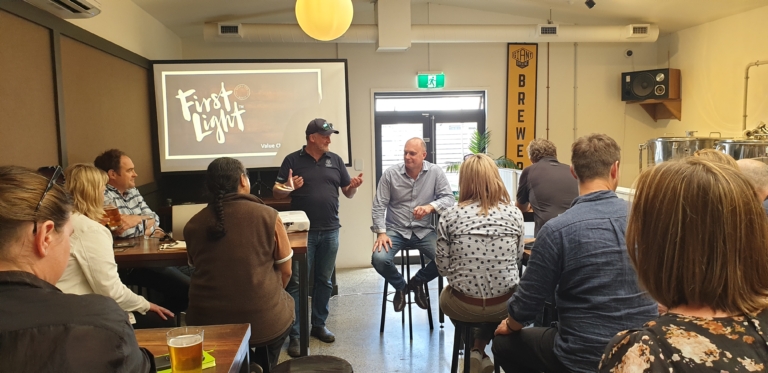
First Light Foods’ founders hosted an inspiring discussion at Havelock North’s Giant Brewery. First Light continues to show how to produce the highest quality grass-fed wagyu and farm-raised venison.


17.11.23
Day 6 – Jesamine.

Today we visited Turners & Growers, Rockit and Mr. Apple. So in a nutshell, apples were the food of choice for the day. We also were introduced to a newly created beer, one of my course colleagues produced. I’ll wait until he launches it first though, before I mention the name. My Dad would absolutely love it.

We saw the differences in the value chain models employed by each of NZ’s top apple growing companies. We also touched on the impact of Climate-change, Covid, Delta, War, Government, and building human capacity, and how that looks for each group.

I met people today, who are not just international superstars in the horticultural and agricultural space, I also witnessed trail blazers passing on the torch to a group of passionate, driven and motivated visionaries – my colleagues. It’s humbling to meet local NZ giants, who understand the international market place so well, they can put you at ease, while describing their story in a way that makes it easy to digest.

There were times I could enjoy bite-size pieces, and there were times I knew I just had to live in the moment and absorb whatever I could. The thing I felt grateful for, was that the way they told their story allowed me to feel I was sharing in it. The quality and callibre of leadership in the room amongst my colleagues, meant that I was learning from the questions they asked and the answers we all received as a result.

I hope they in turn, were able to take away something from the answers to my questions. I’m really proud of all our NZ apple exporters. Thank you for your commitment to lifting our country’s economic future up to where it needs to be on the world stage. Tautoko!

My last point, is that the style of teaching in this course, requires you to have an appetite for the market place, regardless of what your focus is in your given industry. You can’t wait to be spoon fed. You have to be proactive, to stretch yourself – at times painfully – outside your comfort zone. That in itself, is a very important characteristic in the market place, which changes shape often. Adapt or die is a loud enough message here.

Fortune favours future-focused visionaries, who appreciate the value of our own authentic story, to share in a new way on the world stage for everyone to enjoy. It’s our point of difference, that makes us the premium product, and therefore the premium price point.

Additional field notes:
Day six, T&G Innovation Orchard. This vertically integrated continuous improvement model covers research, growing, sales and marketing.

Next was Rockit Global, where we spoke with one of New Zealand’s most experienced, accomplished, and humble sector leaders.

Rockit was a clever apple waiting for an idea to fall on it. And, the idea that landed turned out to be rather big; apples in a tube, sold at service stations – and a huge export earner too. It’s a story that “…neatly blends FMCG requirements with fruit realities.”

The final visit Mr Apple, export 25% of the New Zealand’s apple crop around the world and follow a philosophy of “…discipline not control…”

To end the day, programme participant Carlos Bagrie kindly shared the first pull of his fantastic new beer in the hi-tech brewery it was made in.

18.11.23
Day 7 – Jesamine.

The opportunity to see Craigmore Orchards today, was an experience that will stay with me for a long time. Simply because of the sheer size and scale of the operation. There are literally tons of apples taken from here to international markets, with most being IP branded to specific companies.

The fascinating thing about the apple industry, is the collaboration between growers supplying the market. Growers are both transparent and supportive of one another. Working together lifts the standard on both the domestic and international front, because best practice outcomes add value to the market’s perception of NZ apples as a “trusted source”. This perception of us as a trusted source, is what allows us to trade our NZ apples (in competition with other international growers like Chile 🇨🇱, USA 🇺🇸, etc.) at a premium price.

Our country’s leadership in the apple industry, regard people as a valuable asset to be invested in, developed, and up-skilled. The apple capital of NZ is Hawkes Bay, where staff retention can be a challenge. So this approach is pivotal to this industry’s survival and success. There are good success stories with migrant workers, which has benefitted our local retail in Hawkes Bay, and the families of these workers in the Pacific.

Out of all the apple brands out there, Rockit, Mr Apple and Turners & Growers lead in this space. Thank you everyone for your enormous generosity towards our group, who will one day be your future industry leaders.

Additional field notes:
The last day of the Programme – Craigmore Orchard, producing 2500 tonnes a year. The Orchard’s leader has a passion for people, “…along with locking up great IP … good social practices will be something that differentiates NZ Horticulture.”

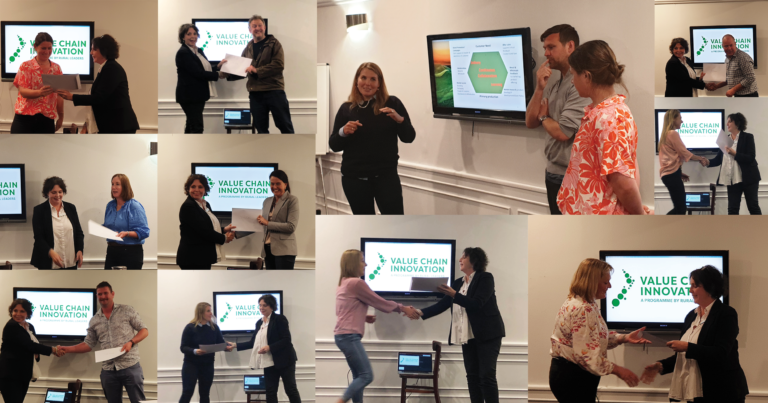
The day ended with Lisa Rogers, Rural Leader’s CEO, and facilitators Hamish Gow and Phil Morrison chairing participant preso’s before a final dinner together.

A truly inspiring and informative value chain experience, where sharp ideas, insights, new connections and friendships have been made.

Good things.

Summary – Jesamine.

The Rural Leaders Value Chain Innovation Programme: If there is one word that springs to mind to describe this course, it would be “access”. Access to a wider vision for understanding the same landscape. Access to business models that can shift you from a business transaction to a business relationship with other entities. Access to incredible industry giants who I believe genuinely care about “our country”.

The second word is “relationships”. The wealth of “industry know how” across the horticultural and agricultural sectors became available to other course participants and I, because of the relationship “Rural Leaders” has with industry gurus in their field of expertise.

So then after having found access to these relationships, the question is now, “Where to from here?”

My experiences have re-shaped my vision. I arrived in this space believing I would discover a value model that I could take home, adapt and bend into a Maori framework to create a “Maori Rural Leaders Value Chain Programme” for Ngati Porou. What I realised by day 1, is that this approach would rob my own people of the huge value that is found in the interactions between Pakeha, Maori and Tauiwi course participants in this space.

The learning in these interactions is just as valuable as the knowledge gleaned from sitting face to face at the table with industry experts, and the mentoring by course leaders.

Although my Koro, Ben Wanoa was a farmer, as was his father Rev. Matauru Wanoa, I myself had no experience of farming other than to feed Papa’s chooks as an 8 year old from the wool-shed platform. Listening to the calibre of questions issued by my Pakeha colleagues working in dairy and beef, to CEOs, Chairpersons, Managers and the like, gave me a greater appreciation of their huge concern for the horticultural and agricultural industries in Aotearoa-NZ.

There were also Ngai Tahu women leaders present as course participants, whose skill and expertise were wonderful to witness. I believe my own questions and answers had some impact, even if I hadn’t intended to challenge the CEO of Rural Leaders.

When I was asked, “What do you think is the biggest impediment to Maori accessing this course?” I plainly answered, “Money. I have heard my Pakeha colleagues share about the very real hardships they have faced with Covid, weather events, government and industry bodies. If they’re operating at 60% with all they have access to, then my people who have no access, are operating at 40% or less.

We can’t say NZ’s the best in the world if we’re operating at 40/60. We’re only the best when we’re all operating at 100% in total. To get there we can’t operate as ‘them’ and ‘us’ on the world stage. There has to be just ‘us’ if we’re going to compete as a country against international competitors. The 100% lift we’re looking for with resource allocation, must be right across the sector to get prime product status for all of NZ. Rural Leaders are acting on this.

Rachel-B

Rachel Baker – via LinkedIn.

Last week I toured the North Island exploring NZ food sectors on the Value Chain Innovation Programme delivered by Rural Leaders and facilitated by Hamish Gow from Lincoln University.

This is a truly outstanding programme. Learning as a group from each other, while being connected with the leaders, innovators and rockstars of businesses in dairy, red meat, kiwifruit, apple and logistics, and doing a deep dive into each.

It continually struck me over the week that as a food producing nation, we trade on trust. Trust in relationships (many buyers were customers of 20+ years), the quality of product (rigorous grade standards, consistency), how it is produced (sustainability, transparency) and who produces it (farmers and growers behind the product). Trust must ultimately reach and deliver to what our customer wants. Customer-led value chains knew their customer profile intimately.

Taste was talked about a lot. “People buy with their eyes. Marketing will get you the first sale, but taste will ensure you get the repeat customer.” We put this to the test with Zespri SunGold, Rockit apples, Rose veal and a soon-to-be released craft beer.

Other observations were that while NZ’s seasonality plays to our farmer/grower strengths, on the flipside it has the potential to erode value with uncontrolled volumes and inconsistency of product.

Capitalisation of some value chains is needed to manage future planned volume increases, and to fund innovation and technology advancement – in a capital constrained environment, where will this come from, and how will it be prioritised?

Every value chain required more highly skilled and trainable people. Those with seasonal staff celebrated and individualised them, which is not often highlighted when politicised. Our education system needs to be geared to advance our primary sector, yet some tertiaries are reducing their focus on ag/hort, science and food…

Much “thought for food” and “food for thought”…!

Thank you to all who generously hosted our tour group and to Nuffield NZ for giving me a thought provoking and inspiring opportunity.

Follow Jesamine Wanoa on LinkedIn here.

Follow Rachel Baker on LinkedIn here.

Register your interest in the next Value Chain Innovation Programme here.

The 50th Kellogg Rural Leadership Programme graduates.

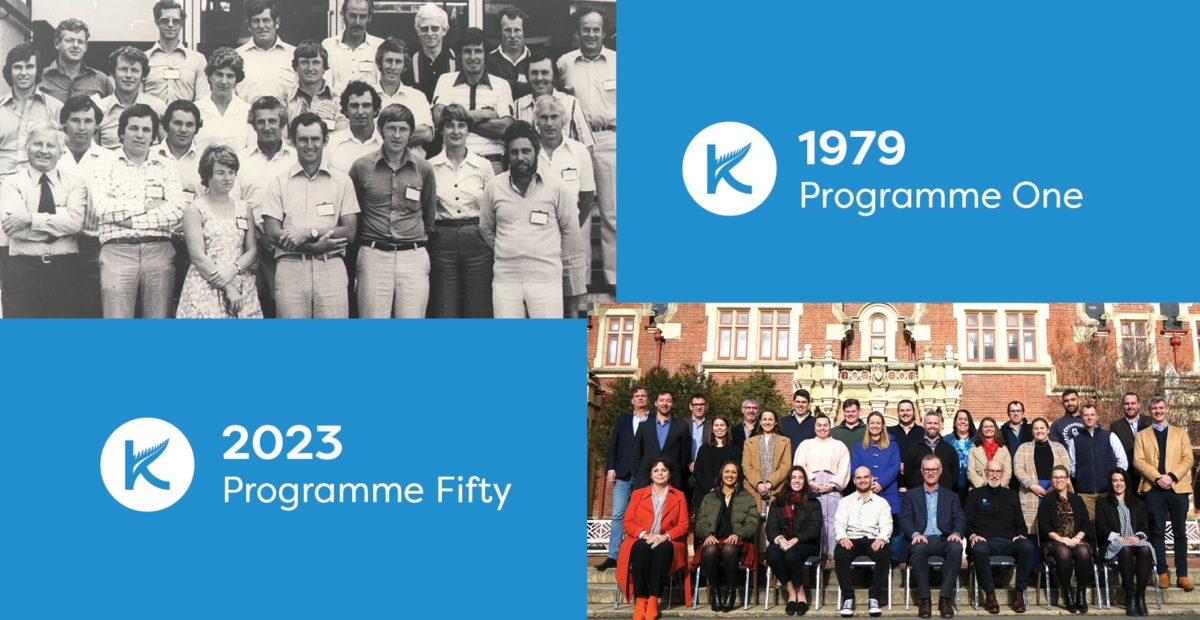
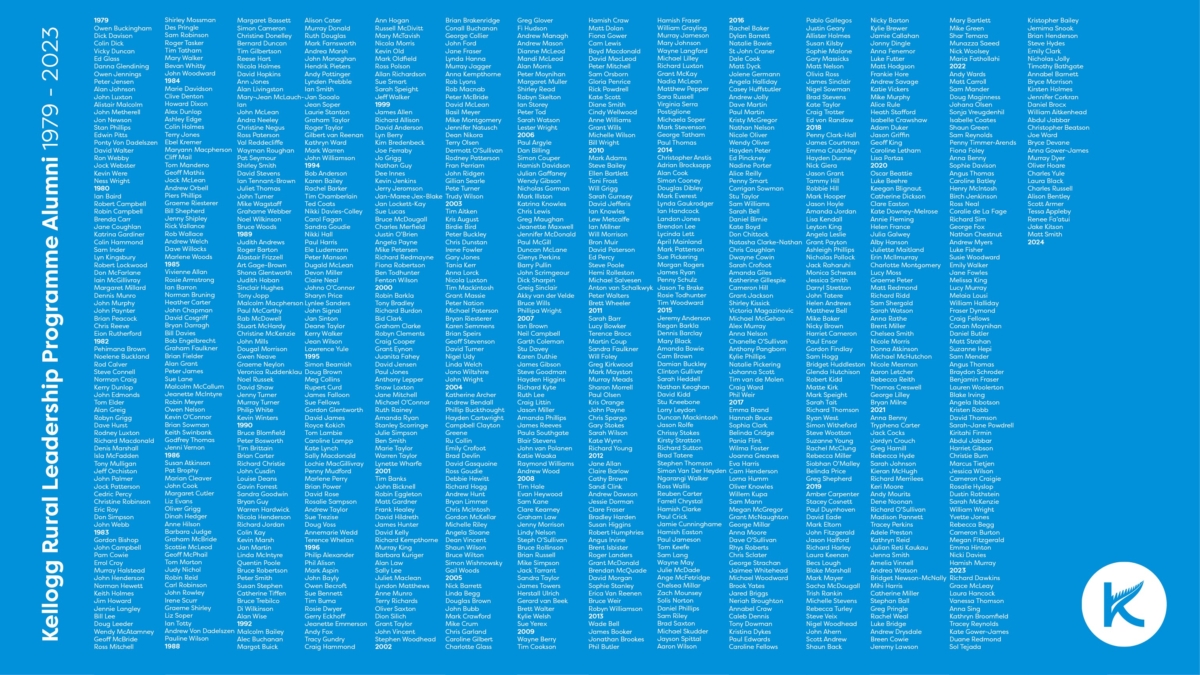
With Alumni now numbering 1075, the Kellogg Rural Leadership Programme has had a long and rich history of leadership capability lift across the food and fibre sector.

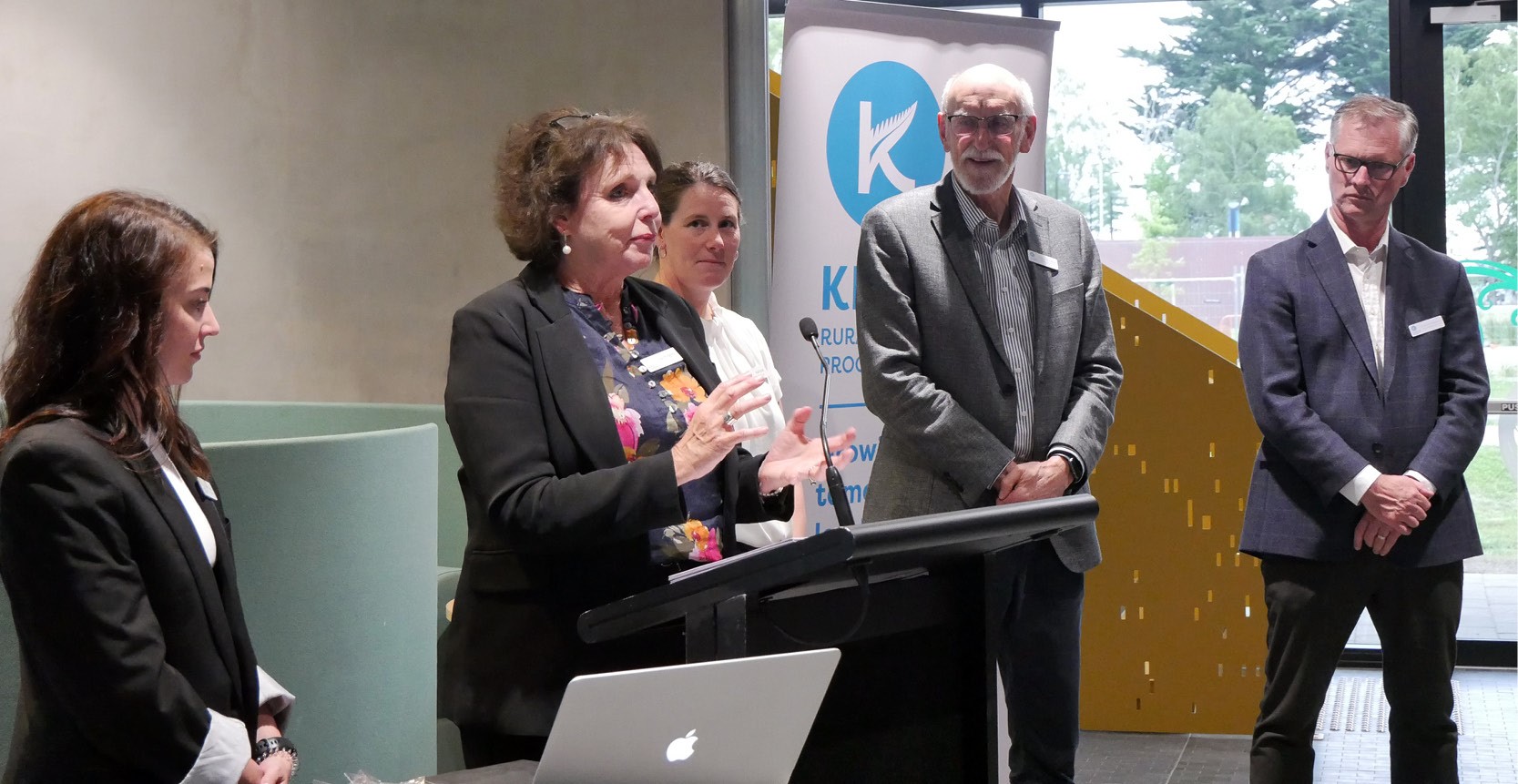
To celebrate the 50th cohort’s graduation, the collective impact of alumni, and the Programme’s history, the NZ Rural Leadership Trust (Rural Leaders) hosted an event at Lincoln University’s Waimarie Building.

Kate Scott, Lisa Rogers and Dr Patrick Aldwell, spoke at the event, with Dr Aldwell sharing more the Programme’s genesis. 

Serial impact.

The William Keith Kellogg Foundation (WKKF) was established in 1930 as a philanthropic organisation, running alongside the Kellogg’s Breakfast Cereal Company (Kellogg’s).

William Keith Kellogg initially set up Kellogg’s to support his brother’s business – a sanitarium.

Over his lifetime (1860-1951), William donated nearly $70m in stock to the WKKF, as he put it “to help people help themselves.” He wanted to equip people with the knowledge and solutions for better health and wellbeing outcomes.

He left simple instructions to future trustees and staff, “…use the WKKF’s money to promote the health, wellbeing and happiness of children.”

Incidentally, Kellogg’s has recently been rebranded ‘Kellanova’ in New Zealand and Australia, while in North America the brand will appear as WK Kellogg and Co. on supermarket shelves.

1075 Kellogg Scholars since 1979.

Eventually, part of the WKKF’s grants were used to establish rural leadership programmes in the US, Australia, and NZ.

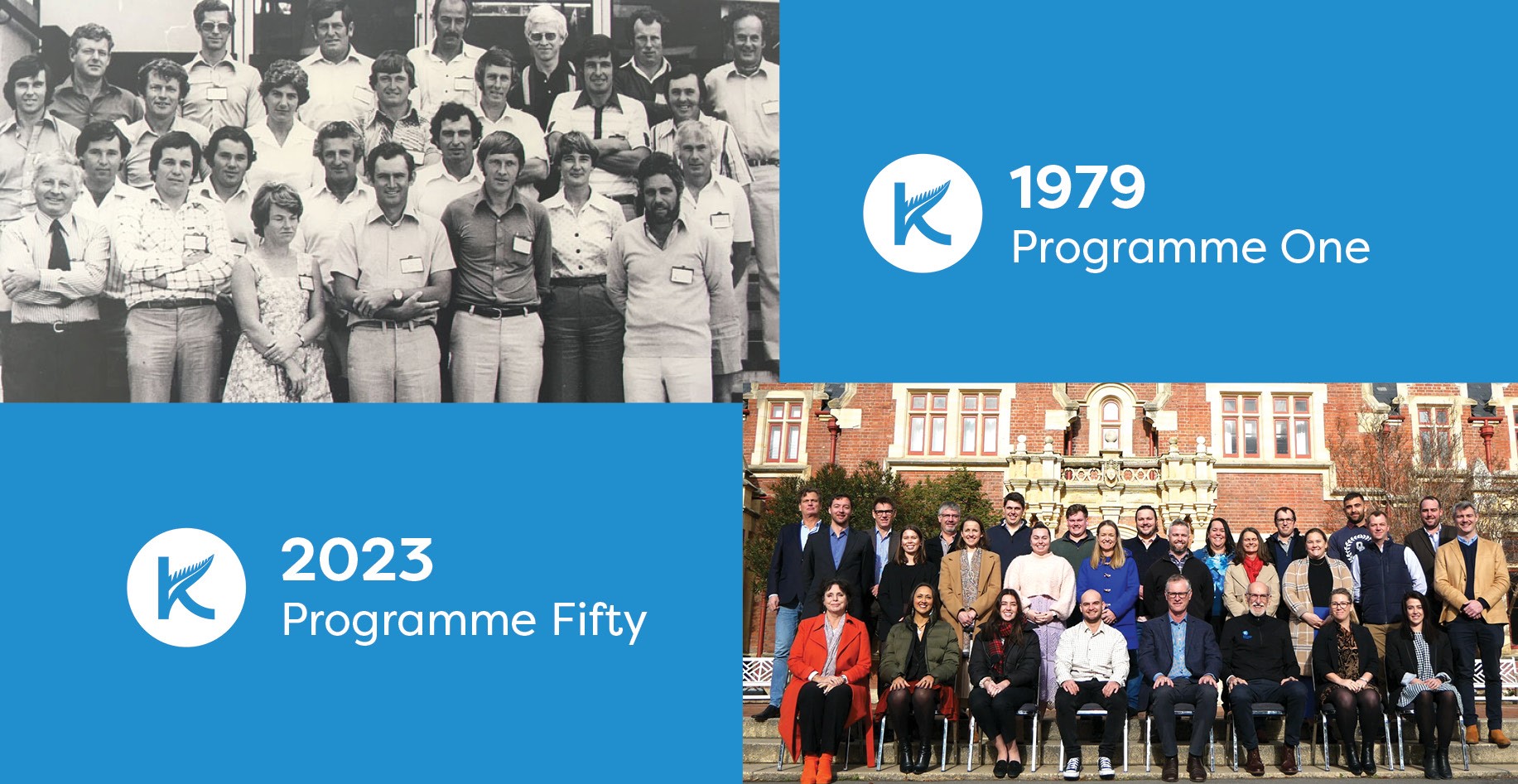
One bold individual, John Pryde, CE of Federated Farmers 1964-1975 and Lincoln University Senior Fellow 1975-1991, persistently tried to set up a Rural Leadership Programme, finally succeeding in 1979 with funding from the WKKF for the first five years for a programme.

Since 1979 the Kellogg Rural Leadership Programme has helped deepen leadership capability in industries across our sector – and since 2017 it has been delivered by the New Zealand Rural Leadership Trust (Rural Leaders).

Thanks to the additional support of Rural Leaders’ investing partners, New Zealand Food and Fibre has more capable, and purpose driven people. 1075 of these individuals are Kellogg alumni. 

Celebrating the Kellogg Programme’s impact.

As the Mackenzie Study has shown, the impact Kellogg alumni have made, and continue to make, cannot be underestimated. In fact, we thought it was something well worth celebrating. And so we did.

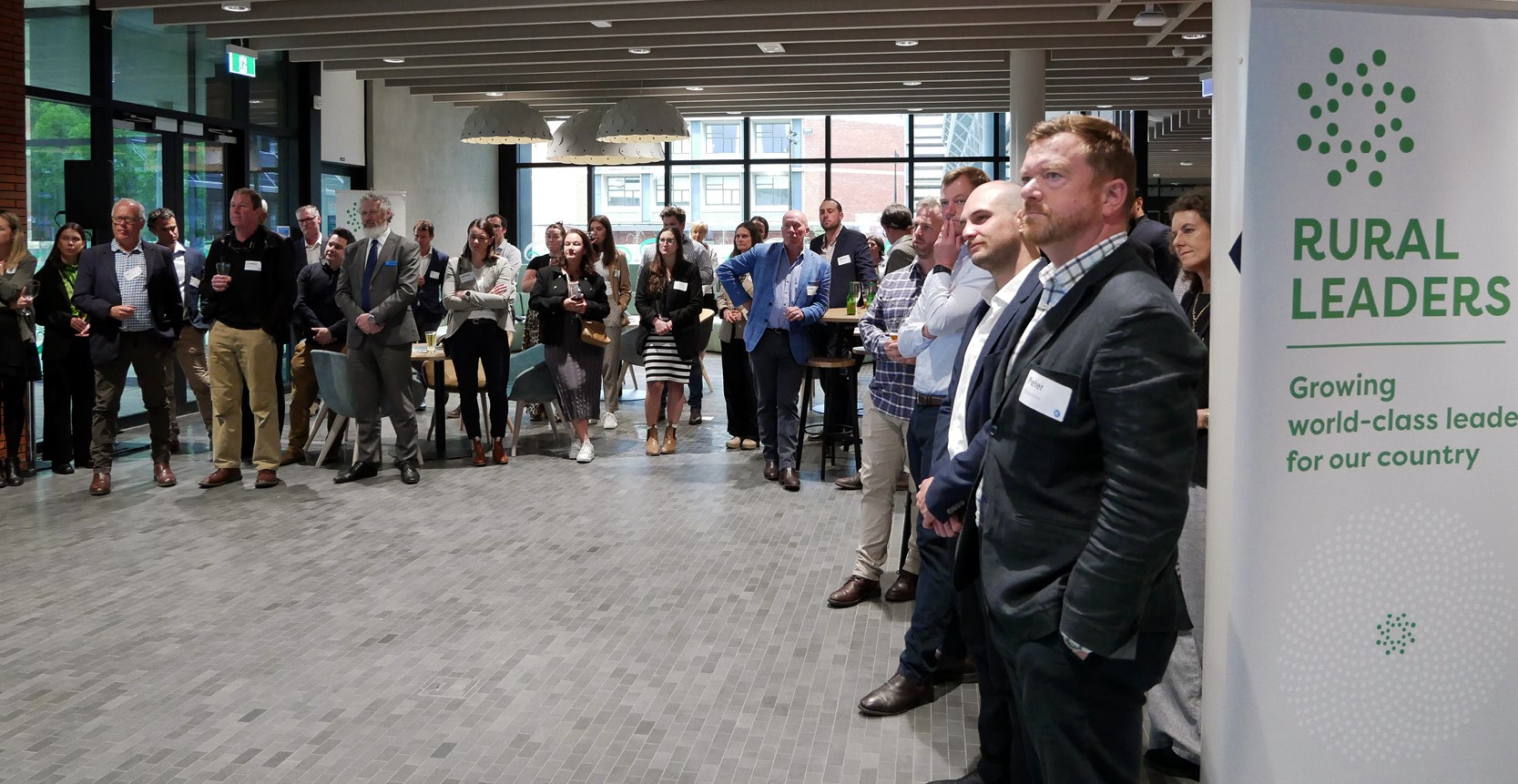
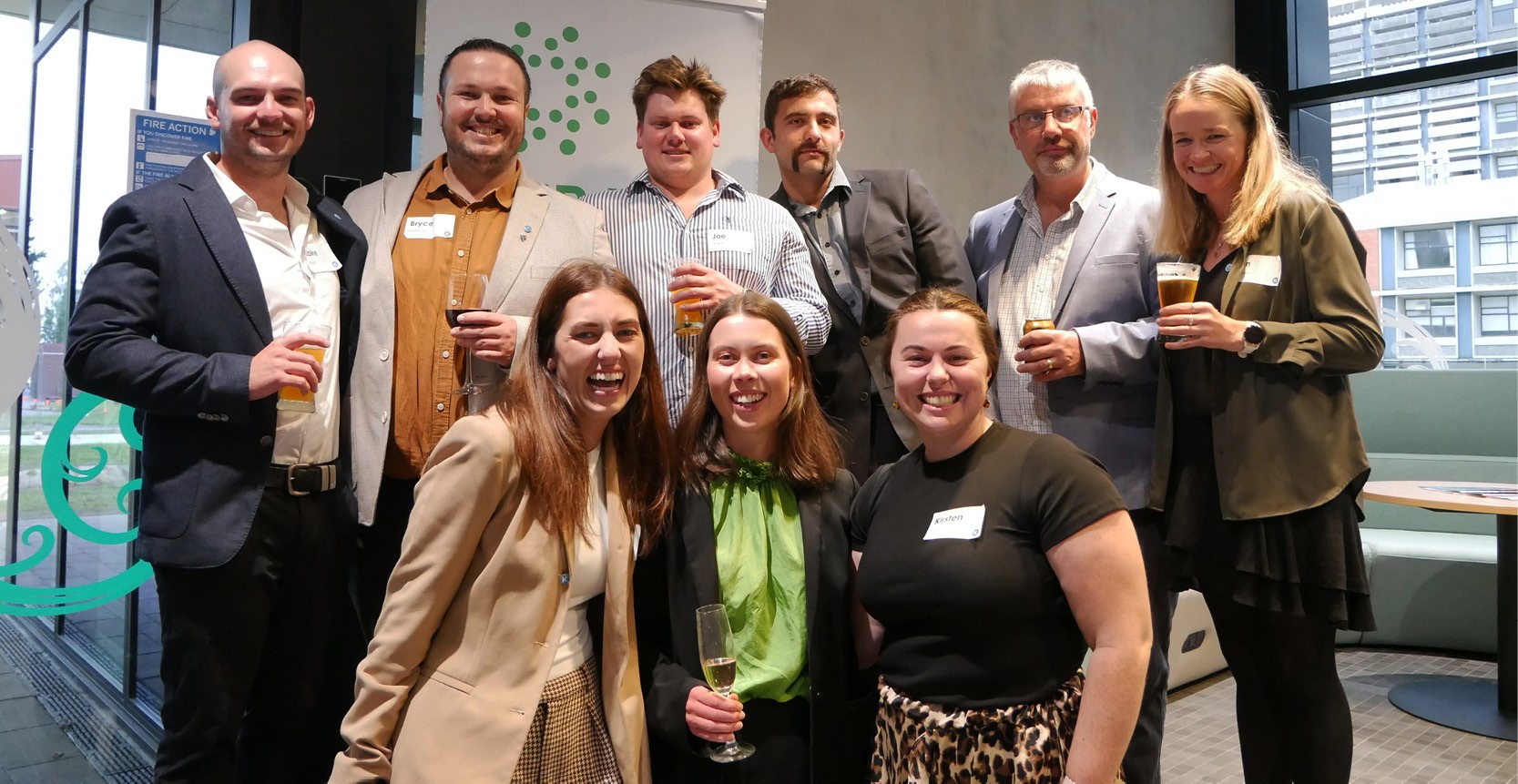
About 80 alumni, investing partners and industry leaders came together on Thursday 30 November to celebrate not only the 50th Kellogg cohort’s graduation, but also the rich history of the Programme and the collective impact of Kellogg alumni.

Kate Scott, NZ Rural Leadership Trust Chair, opened by defining the the two types of future leaders Ta Tipene O’Regan believed we would see, “…

Future takers who accept the future for what it is, feeling powerless to change what will be, and allowing today’s realities to obscure tomorrow’s potential, ready to respond to change; and future makers who shape the future by reading the signs, determined to create future spaces for people to excel, undaunted by today’s problems, and ready to lead change.”

Kate Scott drew on the powerful demonstration of achievement and impact catalogued by the Mackenzie Study and closed her speech by challenging the graduates gathered to become future leaders, “…ask yourself; how will I unleash the potential in others so that we can grow rural leaders together?”

Dr Patrick Aldwell, who has a long history of involvement with Kellogg spoke passionately of the Programme’s history, especially of William K Kellogg’s desire to ‘help people help themselves’. “May you have the skills, confidence, awareness and networks to take the next step, no matter what that may be. I congratulate you on your Kellogg achievements…”, Dr Aldwell said in closing.

Lisa Rogers, Rural Leaders CEO, gave a note of thanks to partners, the board and industry before leading the awarding of the certificates for the 50th Kellogg cohort. 

Pictured below – the alumni list.