2026 Nuffield NZ Farming Scholarship. Apply by 17 August 2025. Read More...

Apply for 2026 Nuffield NZ Farming Scholarship by 17 August 2025. More details...

Social licence to operate or licence to produce – Kate Scott 2018

I was interested by the fact that many felt that New Zealand was perhaps the country feeling some of the most significant scrutiny, with a few people commenting on the fact that New Zealand’s farmers are now considered to be on the table of social standing at about the same level as the politicians.
By Kate Scott, 2018 Nuffield New Zealand Scholar

It’s not every day you walk into a room of 80 odd people and the entire room is abuzz with chatter, where people come together with a common and passionate link – agriculture and food. It’s also not every day that you get to attend the Contemporary Scholars Conference (CSC) as a Nuffield Scholar.

This year we were able to travel to the proverbial home of agriculture, the Netherlands for a week of immersion in all things Nuffield, including the opportunity to hear from some great speakers, to enter into some challenging debates, see some of the amazing opportunities that the Netherlands have to grow food, as well as to hear about the challenges that the Netherlands is facing in the agriculture space. It was however surprising that despite the Netherlands producing approximately 12 billion litres of milk per year that it was not overly easy to find fresh milk for your cuppa tea!
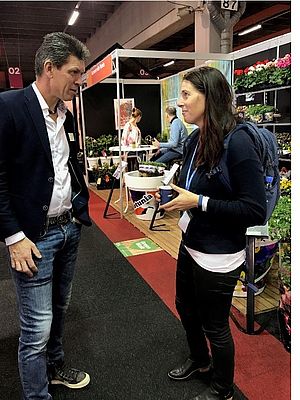
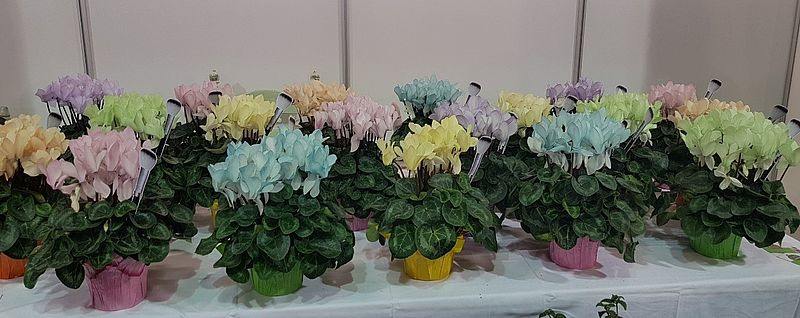
A couple of highlights included the opportunity to cycle to the farm of 2015 Scholar Gerjan Snippe where we were able to see the inner workings of Biobrass their organic cooperative farming business, and for me a highlight was also being able to attend the Royal Holland Flower Market, a modest 270ha area of land dedicated entirely to the selling and distribution of flowers and plants! (the inside tip for those of you interested in flowers, is that ‘pastel’ colours are on trend for the coming seasons).

It was also a great opportunity to visit the recently opened World Horticulture Centre, which was a great example of collaborative use of space between industry, education and research to advance development in the Horticulture sector.  The Netherlands is truly world leading when it comes to horticulture and their ability to grow an abundance of food and produce, especially from a relatively small footprint.

I was also given the opportunity to participate in a panel discussion on the ‘future of agriculture 2030’ from a New Zealand perspective. This enabled me to reflect on where we are at the moment, and what the opportunities might be for New Zealand in the future. One of the key things that came to mind for me was that there is a clear need for us to have an agriculture strategy, and that we need to focus on having the hard conversations so that there is a path forward for NZ to be the most environmentally friendly farming nation in the world. The opportunity is there for us as the leaders in the agriculture sector to seize, but we need to be brave enough to start the conversation.

Despite a jammed packed schedule at the CSC, there was also opportunity to observe some commonality amongst the various countries represented including the increasing disconnect between rural and urban communities, leading to a number of discussions around ‘social licence to operate’ or ‘licence to produce’. I was interested by the fact that many felt that NZ was perhaps the country feeling some of the most significant scrutiny, with a few people commenting on the fact that New Zealand’s farmers are now considered to be on the table of social standing at about the same level as the politicians.

There was also a lot of talk about the vegan movement, which I observed as creating a lot of angst for some amongst the room. However, where some see this as a threat to the agriculture sector, I see it as an opportunity. I don’t believe we are going to change the views of those who are so strongly engrained in their vegan view of the world, but I also don’t see that there will be a move to the majority of people choosing to be vegans (certainly not in the short to medium term).
The opportunity to focus on providing good quality, nutritious food which is known to be safe, exceeds animal welfare requirements and growing in an environmentally sustainable way is where we need to be spending our time. Those nations who can move quickly towards providing this certainty, traceability and confidence in their food, stand to prosper from the increasing knowledge that food consumers have. I believe New Zealand has the ability to lead this space.

After having spent the week in the Netherlands I am still firmly of the view that New Zealand is still at the leading edge in many aspects, and that if we can foster a collaborative approach to managing the effects of agriculture, that our future will continue to prosper as an agricultural leading nation.
Global Focus Programme – Simon Cook 2018

The last 6 weeks just seems like a blur of Airports, planes, busses, hotel rooms and most importantly an incredibly diverse sometimes extraordinary string of farms and the people for whom that is their passion and livelihood.

The key word in that is passion, everywhere we went to we met farmers who loved what they did. The common theme was you don’t get into agriculture because you want to make money, you get into agriculture because you love working the land and the outdoor lifestyle that comes with it.

Our first stop was in Singapore where we not only caught up with our own GFP group but the 2 other GFP’s travelling at the same time. When we departed Singapore, while we headed to India, one GFP would head towards China and the other towards Japan only to all meet again in Washington DC 5 weeks later. Singapore has no agriculture of its own but has become a hub for commerce and trade throughout Asia so our meetings were about giving us an overview of agriculture in Asia in general.

India was everything I expected and more, the heat, the noise, the sheer mass of population, but it did also surprise and delight. Away from the cities there are some truly beautiful parts of India, they just take a bit more effort to get to. One of these places is Yercaud. From Chennai we had to fly an hour to a small airport that had only 1 flight a day, and then we had to drive for several hours up a twisting mountain road, but the trip was absolutely worth it and the destination was one of the highlights of India for me.

It was also disappointing to see a country with fantastic natural resources and the ability to grow almost anything, stifled by tradition and corruption, totally unwilling to confront unsustainable practices. In an effort to become self sufficient India is promoting growing rice in Northern India in areas that are just not suitable for rice production. The result is a huge drain on the underground aquifer to flood irrigate vast areas, the result is levels in the aquifer are dropping by 1.5 meters a year. That same aquifer is the only water source for the villages as well and at this rate it is estimated it will run dry in around 10 years.

It was hard to know what to take from what we saw in the Middle East other than if you have unlimited funds you can do whatever you want even in a desert. The wealth being invested in trying to gain some level of food security and self sufficiency is staggering. This was typified by a dairy production facility in Qatar. Our guide had been there last year to visit a small sheep milking facility. 12 months later where there had been dessert was now a facility milking 8,000 cows. 3,000 of those cows had been airfreighted in between daily milking with the balance shipped in calf so they were in production shortly after arriving.

The time spent in France and Belgium reflected the uncertainty being driven by Brexit and the threat the breakup may pose to wider farming subsidies that had become a crutch for many farmers. The greatest threat to farming in Europe is from the urban population who have no understanding of farming. The influence being exerted on politicians by the anti farming NGO’s is starting to become overwhelming. It’s a stark reminder of the path dairy in New Zealand is on and the need to be open and educate people on farming practices that whilst on face value may not seem pretty, are actually done for valid reasons with the animals welfare in mind.

We arrived in Washington DC at a fascinating point in time with the highly divisive Trump administration only recently announcing the tariff war with China. There was a general feeling of uncertainty how it would play out, but one thing was clear, that retaliatory tariff’s from China would hurt American Farmers. It was interesting to see the recent announcement of subsidies to help farmers cope with the impacts of his policy. As Republican Senator Ben Sasse put it, Trump isn’t making America great again, he is making it 1929. There is a huge groundswell of support for Trump within the farming community, even with the threats tariffs place over them. Trumps efforts to “drain the swamp” and shake up the establishment are resonating and his popularity at grassroots level seems to be increasing. Now, if only they could delete his twitter account…

Alabama proved to be a bit of a surprise with an extremely diverse agricultural industry. The properties we visited were some of the leading in the state, but were all heavily invested in using modern practices and technology to maximise what they were producing. The greatest surprise was probably the amount of land that is locked up in old family trusts with just about every operation heavily reliant on leasing land as none was available to buy.

At this point there seems to be no concern about loss of agricultural land to urban growth and water is not currently regulated or a major issue of concern. Other than the availability of land to buy, the greatest concern seems to be labour with a heavy reliance on imported labour from Mexico under the H2A scheme which is very similar to our RSE program in New Zealand.

As I have just completed the GFP in July and submitted this report on final stages of GFP, I will need to digest the insights and learning from this 6 week experience.

What should Wal Footrot do: An investigation into potential exit strategy for owners in the sheep and beef sector.

Executive Summary

  • The purpose of this study is to look at what options exist for owners of farm businesses in the sheep/beef sector to ‘exit’ either; their role or ownership in the business. This is not an investigation into the overall succession topic, more a look at one of the key parts of the process.
  • Where are we today
    • The ownership base of the farming businesses in the New Zealand Red Meat sector are getting older. They say with age comes experience, but in this case, it is not a good thing.
    • As the owners get older that are not planning any better , and making it harder for the next generation to get a step on the management and ownership rungs of the ladder.
    • At the same time, we are seeing only small improvements in profits when compared to value of the land that those profits are generated from.
  • Navigation is not easy The family business is complicated, especially as it gets larger and intergenerational. This does not include the increasing pressure that gets applied for the cost of compliance and larger variations in climate. Every business owner is in a different position, but they are getting older and need to act to drive our industry forward.
  • It is possible Families and owners have navigated, and are navigating their ways through this exit and succession road. It can be done, there are options . Everyone is different and often big decisions must be made.
  • The options exist , whether it be: Change the existing model , or Lease out , or Sell or Equity partnerships . There are options that are all better than Status Quo. Follow the suggestions and take some advice.
  • There are people to help – it may cost, but what is the cost of doing no thing ? Use the family, friends, mentors, professionals like valuers, advisors, lawyers and accountants to help by discussing the issues and determining the best way forward.
  • Use a ‘Mantra’ or guidelines to assist in the journey. OODA may be suit – Observe, Orient, Decide , Act. Or the

3 questions –

  1. Where are you and how did you get here?
  2. Where are you heading, do you want to go there? If not, then where?
  3. What must you do different or better and learn, to get there?

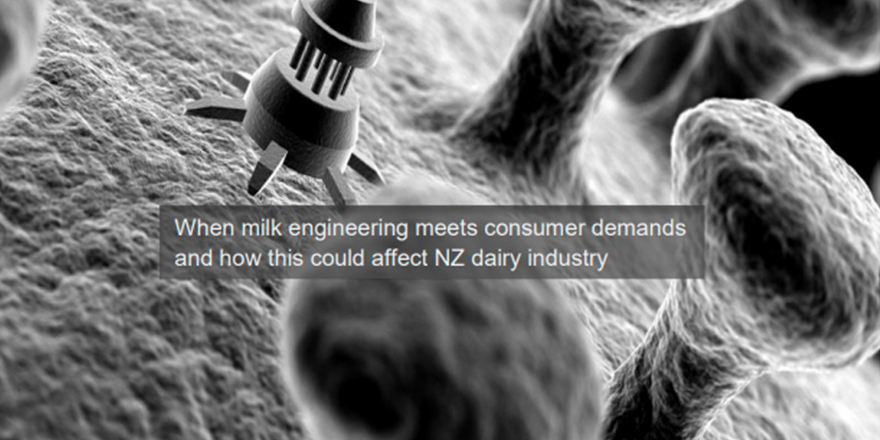
When milk engineering meets consumer demands and how this could affect the NZ dairy industry.

Executive summary

“If anybody anywhere in the world can use small amounts of energy, water and nutrients to create the same quality food as we can here then why would anyone buy from New Zealand?” That’s the question that Lance Wiggs director of several New Zealand high-growth companies (www.lancewiggs.com) asked to his readers back in February 2016. Health, lifestyles, animal welfare, sustainability and environmental concerns are motivating consumers to lean towards milk alternatives. Today, there are many startups (new entrants) from Silicon Valley and from all around the world, creating food innovations every day. New companies are producing traditional agri-food locally, in non-conventional ways using less energy, water, nutrients and pesticides; and are animal-free.

New Zealand dairy companies are focused on producing high quality food and value-added products to keep, and gain more, competitive advantage in an increasingly tough global market. The truth is that without leading edge: agritech, biotechnology, environmentally friendly practices and well supported innovative businesses, it will be very challenging to stay competitive in the decades to come.

The aim of this report is to create awareness around new milk alternatives and to better understand how they could affect the New Zealand dairy industry.

“We can’t afford not to be part of the food revolution, if we are not aware of what other people are doing we can’t be an effective competitor in any market.”

This report is based on literature review, conversations with people working in the dairy sector and a survey created to assess the general knowledge around new milk alternatives.

Leading the change or being forced to change, that will be a key decision that New Zealand dairy is going to face in the years to come. The dairy industry in New Zealand must embrace new food technology so it could be prepared to take advantage of the new opportunities presented.

The findings and observation of this report are: animal’s milk substitutes like soy, almond, rice, coconut milk, etc. have steadily grown in popularity, although none of these alternatives has been disruptive to the dairy industry. Now, there are game changing new options, improved alternatives to cow’s milk making their way to the markets. Bioengineered milk, plant-based milk manufactured using Artificial Intelligence and milk made from yellow peas are all rapidly rising on the horizon (intriguingly, Silicon Valley’s horizon always seems to be brighter than others). Food-tech startups are attracting a lot of attention nowadays, money is not an issue for most of them, they could potentially disrupt dairy markets globally and change the New Zealand dairy industry as we know it.


New Zealand’s future role in the global protein market.

Executive Summary

Change is constant and the change of pace for the global supply of protein and its make up is going to alter considerable over the next 20 years. Alternative protein sources such as through the rise of plant based and synthetic meat products will take place of the current traditional commodity meat market across the globe. The methods have been developed and the only current restriction is scalability of production and market acceptance. As technology advances, this scalability will improve and eventually become at least cost neutral to traditional sources pf protein production. As and when this occurs is somewhat academic and will be up for debate but nevertheless it will happen and eventually significantly undercut these prominent markets resulting in significant deterioration in the manufacturing beef market such as bull beef and cull cows. Market acceptance of course is also a major challenge currently but through advanced marketing campaigns, increased urbanization and skepticism of the traditional methods of protein production, this too won’t be major issue in years to come.

This report attempts to briefly summarize the existing companies which are in the alternative protein or synthetic protein markets and identify timing when they expect to be selling their products into the global market. Currently, they tend to be targeting premium consumers themselves but as supply issues are lessened with improved scalability, their market objectives will change to suit. There are wide ranging calls for the New Zealand animal protein production industry to improve its marketing campaign to tell the New Zealand story. This is a story of clean, green production – one where animal welfare and environmental considerations are paramount. This story will be important for the discerning premium consumer – one whom understands the role of pastoral agriculture and looks to consume premium products, at will at their social and family gatherings. In addition to this, this report tries to ascertain other premiere market opportunities; these are areas of production of nutraceutical and medicinal food products which are nutritionally wholesome for people on the go, foods which supply 100% of an individual’s protein, mineral or vitamin requirements . As health and science continues to improve, people will continue to live to older ages resulting in a need to supply medicinal food groups – food which makes a person healthier thereby in time largely eliminating ‘ambulance at the bottom of the cliff’ health services until later and later life. Another significant market opportunity is the supply of easy to consume snack food groups, our lives continue to get busier therefore eating three times a day can be considered as a chore and minimized so to spend more time doing activities we want to do. There is a requirement to coerce elements of the New Zealand supply chain to agree to a consensus in terms of this story and market to the globe as a New Zealand brand initiative. This is a necessary step in order to make connections with the premium consumers of the future – primarily millennials and Generation X’s as well as pediatric care and infant specialties. Our future as an industry will be in the production of high end consumable products which attain a premium for the discerning consumer, this is especially as these alternative protein production companies increase supply and progressively take market share of the commodity supply chains.

Collaboration through the Cervena appellation.

Executive Summary

An industry founded by entrepreneurs and innovators, the deer industry is relatively young. Farming the most recently domesticated animals, deer farmers have experienced all of the highs and lows that markets can deliver. With boom and bust cycles a regular occurrence, industry leaders developed a strategy to create an appellation for premium New Zealand Venison – Cervena. These leaders were visionary in many respects with both a sound structure and an intense focus on quality, Cervena has emerged as a model to admire and aspire to.

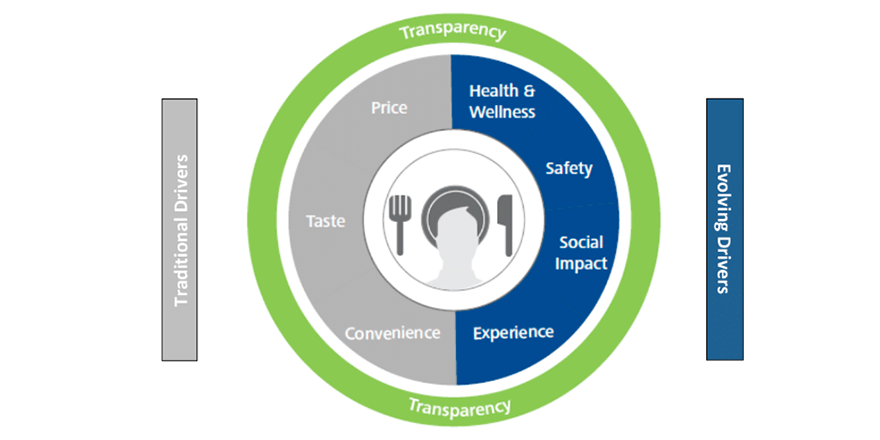
Collaboration is at the core of the appellation which extends both vertically and horizontally within the value chain. Cervena provides the platform for the consistent brand message, collaborative behavior and loyalty that ultimately generates a premium for farmer suppliers inside the farm gate. Cervena is not a whole of industry appellation and has very strict guidelines as to specifications that a product must meet to be branded. In this way it varies from other NZ industries which exhibit this marketing strategy such as Zespri with Kiwifruit. Appellations have been used through history and the designers of Cervena drew inspiration from the European guilds which successfully created localized monopolies which could set and maintained standards for the quality of goods and the integrity of trading practices in that industry, the guilds worked to maintain stable prices for their goods and commodities; and they sought to control town or city governments in order to further the interests of the guild members and achieve their economic objectives. All of which was developed and utilized through the 11th – 16th century in Europe. Further inspiration was drawn from the sparkling wine appellation – Champagne. Delivering value to the farmers who invest levies into the appellation is the ultimate goal by way of developing and growing new and existing markets for premium NZ venison. Drivers of the consumer decision have seen a change from taste, value and price to a real focus on quality, food safety, social impact and experience. The provenance of our food is paramount to the consumer and can only be delivered by a robust quality assurance and traceability program. Cervena delivers that assurance of a consistent premium product that can be eaten the world over at any time of the year. Cervena has a natural fit with the broader NZInc market strategies and messaging to the world.

Cervena sales into the US have recently become the largest export market by both value and volume, replacing Germany as the top export market for NZ venison. Cervena is certainly delivering on its core goals and we are entering into a golden era of venison pricing driven in part by limited supply but predominantly because of an appellation and collaboration throughout the industry.

New Zealand land tenure is holding back the success of agriculture

Executive Summary

It is naïve and self-centered to even consider our selves the owners of land. Land has existed for millennia before we “own” it, and will continue to exist for millennia after we no longer “own” it. We are simply occupiers, users and stewards of it for a fleeting time. Current land stewards should undertake succession planning, rather than attempt to leave a legacy on the land.

There is a fundamental flaw in the tenure of land in New Zealand, with the current model of farm ownership resulting in land ownership becoming concentrated in fewer hands, and increasing barriers to new entrants wanting to enter the industry

. Land tenure in New Zealand is largely based on United Kingdom freehold principles. There is a strong bias towards land tenure by people that inhabit and use the land, whether it be farming on their own account, or making it available as leasehold to others to farm it.

Our desire to own land is related to our fundamental desire to own where we live. For typical New Zealand farmers land tenure means solely the ownership or rental of land. This simple view of land tenure has become outdated. It is interesting to note that New Zealand already embraces a novel form of land tenure, being the global exemplar of share farming through the variable order share milking system.

We need to develop land tenure models to include various forms of joint ventures to enable new entrants and young farmers to climb onto the farming ladder. Using these different models will encourage innovation, entrepreneurship, expansion and acceptable succession within the industry, ensuring a sustainable future for the farmer and the next generation. New entrants and first-generation farmers are vital to the success of any country’s agricultural industry.

Māori entering farming in New Zealand also have the challenges of raising working capital on collectively owned Māori land; the need to rebuild sustainable Māori rural communities; and managing small blocks of land scattered throughout a region. New Zealand farmers need to stop family land being sold from one generation to the next, continuously loading debt on the next generation and resulting in continual profit for off shore banks. As New Zeal and matures, land sales will become less common, with families leasing land across generations, and tenant farming of this land will become more common.

State owned Landcorp farms are marginally profitable, and should be transferred to a land trust to be made available to new entrants to the industry. New Zealand should allow sales of farmland to overseas purchasers, providing there are strong controls around the management of the farmland after the sale.

A well-structured Capital Gains Tax should be implemented to attempt and reduce the continual trading of land, and encourage land to be valued on its productive capacity. This will help stop the situation facing South Island dairy farmers where they are attempting to be profitable on $80,000 per hectare land while facing increasing environmental pressures.

By embracing change in New Zealand farmland tenure, the industry will future proof itself and make farming more accessible for new entrants to engage in, driving greater innovation and early adoption of techniques but also through providing a dynamism by an intensive striving for efficiency.

Joining the family: Attributes to support integration into a family farm business.

Executive Summary

Family farming businesses contribute to a large proportion of the total number of agricultural businesses in New Zealand. But given the level of their significance very little focus is put on how family businesses function to remain harmonious, strengthen and grow. The small amount talked about is largely focused on governance and succession planning and predominately from the perspective of the older generation. This report looks at the family business from a different angle, that of a new family member joining a family business as a daughter or son in-law to understand what attributes are required to successfully integrate into a family farm business.

Initial research and articles relating to in-law integration into a family business identified that limited attention especially in a farming context has been placed on the role and impact both to the individual, family and business but recognised it was a unique and challenging position. Further reading specific to in-law relationships in an overseas farming context followed by identification of factors that contribute to effective and happy families influenced my direction and focus. The aspects needed by the individual daughter or son in-law and how the overall family functions.

The true learning really happened at the interview stage when four family members and three professionals shared their experiences, knowledge and insight into what contributed to smooth integration. Many of the research themes were echoed by the participants but what really stood out was the commitment required and that integrating into a family business is a journey that one is on for a life time. Becoming part of a family and business is a constant evolution and involves continual learning and application.

For that reason, the attributes which have been identified in this report are timeless and can be adopted at any stage of the journey. At the heart is to remain values focused – living a life aligned to what is important to you. Second, to maintain a strong and connected spouse relationship. From there stems prioritising understanding time, developing conversational confidence, remaining agile, practicing self-care, having fun and being creative and recognising change can start with you.

The attributes of joining a family business are aimed at supporting those assuming the daughter or son in-law role but to achieve a truly harmonious integration into a family business it takes commitment from all the family members. I there for believe many if not all these attributes are worthy of attention by all kinfolk involved.

My wish is this report ignites a willingness to create a culture that focuses on commitment, support and encouragement towards and within family farm businesses to ensure they remain sustainable and harmonious now and for future generations.

Hi-Tech humanitarianism: tech adoption on farm.

Executive Summary

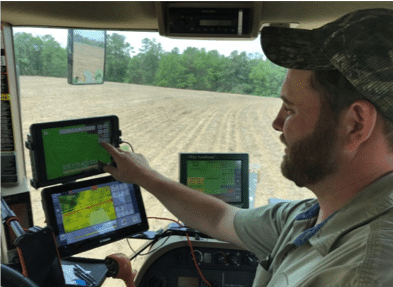
Adoption of digital technology on farm has been largely for business as usual activities that are a “nice to have” aspect rather than a “must have”. In the future agribusinesses will use digital technology to lower operating costs, increase productivity and expand to new markets or develop new product offerings.

The aim of this study is to discuss the six emerging technologies and what this means for farmers. The technologies covered are Artificial Intelligence (AI), Virtual Reality (VR), Augmented Reality (AR), Internet of things (IoT), Blockchain and Quantum computing. The underlying principles, for how they the technologies work and practical applications in the field of agriculture.

It is my opinion that to maintain a competitive advantage in the wake of Agriculture 2.0 technology, which focuses on automation of tasks for efficiency and productivity, the discussion needs to be much larger than what gadgets have come out and how they will improve our productivity. Digital technology is table stakes. While technology is no substitute for the human element, when used strategically and appropriately, it helps overcome hurdles and brings farmers and consumers together for the greater good of both.

My analysis of the literature and in my experience working on New Zealand farms has shown that a deliberate, conscious decision to use technology has to be made from the top down. New skills and attributes must be developed. These include: creativity, agility and adaptability, critical thinking and problem solving. Important conclusions from this study are that farmers should be:

• Having the right learning environment and a positive attitude towards technology.

• Learning from other sectors and nations that have adopted and implemented technology successfully and applying learnings.

• Proactively involved in coming up with solutions to their own problems and working alongside solution providers to refine these solutions.

• Lifting the profile of on farm innovation for the greater good and industry wide application.

• Embracing diversity of thought and exploring new ways of doing things on farm all the way along the supply chain. As business models, economics, and skill requirements shift, we could well see major changes in top positions, at both the company and regional levels.

Synthetic proteins. What will consumers be eating in the future and are our food producers aware.

Executive Summary

Synthetic meat, cultured meat, artificial protein. Many of us have heard the terms but what do they mean? More importantly do our food producers know what they mean and what impact they may have on them?

New Zealand’s place in the world’s meat supply has always been at the premium end. We are not high-volume suppliers. We offer something different; our food producers care about their animals, their health, the land and the fine people who are the caretakers of it.

This report surveys seventeen farmers to answer the question, is there enough information available for our food producers and to gauge what further information is required.

The questions cover a range of topics to gauge farmer awareness of the synthetic protein industry and how this may affect them.

Also included is an historical overview from the inception of this technology through to predictions for the future. Information on the key companies involved completes this study.

Key findings:

1) Our Food producers feel that they do not have enough information readily available. Information is available online. However, it requires effort to sort through the content!

2) Synthetic proteins are not currently seen as a high risk to our food producers. Other risks such as political and environmental influences feature highly.

3) Innovation in this sector is happening very quickly. New information is available daily and it’s difficult to stay ahead.

4) Many producers see the introduction of synthetic protein as an opportunity and are looking to push the benefits of our sustainably produced, grass-fed premium products.