2026 Nuffield NZ Farming Scholarship. Apply by 17 August 2025. Read More...

Apply for 2026 Nuffield NZ Farming Scholarship by 17 August 2025. More details...

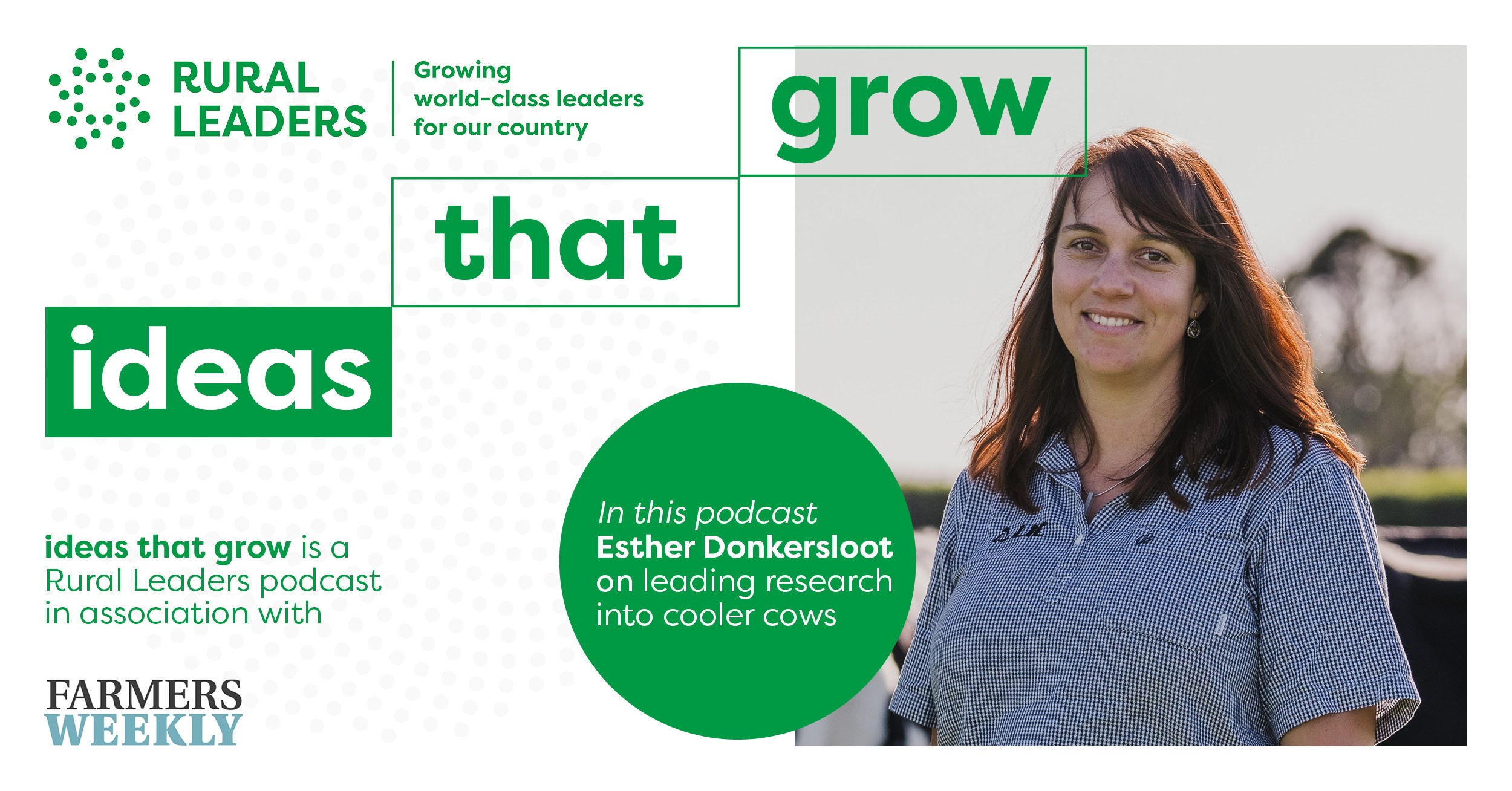
Esther Donkersloot on leading research into cooler cows.

In this podcast, Esther Donkersloot, 2024 Kellogg Scholar, talks to Bryan Gibson, Managing Editor at Farmers Weekly, about her research with LIC on breeding heat tolerant cows.

Esther came to New Zealand to do her Masters’ thesis and never left. Good thing too. Having studied at the prestigious Wageningen University, she has steadily built a career looking into better genetic outcomes for our dairy herd – especially as the planet gets warmer.

Along with her research at LIC, Esther discusses her Kellogg report insights on genetics’ social licence to operate.

Listen to the podcast here.

Bryan GibsonManaging Editor of Farmer’s Weekly.
You’ve joined Rural Leaders’ Ideas That Grow podcast. In this series, we’ll be drawing on insights from innovative rural leaders to help plant ideas that grow so our regions can flourish. Ideas that Grow is presented in association with Farmers Weekly.

Bryan Gibson, Managing Editor of Farmers Weekly.
You’re with Ideas That Grow, the Rural Leaders podcast. I am Farmers Weekly Managing Editor, Bryan Gibson. This week, our special guest is Esther Donkersloot, who is a recent Kellogg Scholar and works with LIC. G’day Esther, how’s it going?

Esther Donkersloot, 2024 Kellogg Scholar, Scientist LIC.
ED: Yeah, really good thank you.

BG: I usually start these conversations by just getting a bit of life history, I guess. Now, you’ve come a long way to your life in New Zealand and your role at LIC.

The Netherlands’ loss, New Zealand’s gain.

ED: Yeah, this was an overseas experience for six months that turned out to be a bit of a life move to the other side of the world. So, my background is Dutch. I grew up in rural Netherlands, and I was always very interested in doing my master’s thesis somewhere else. Just by chance, I ended up in New Zealand with LIC, and have been here for 10 years now. So yeah, it’s been great.

BG: I understand you went to Wageningen, if I say that correctly.

ED: Yeah, it’s a tricky one. Wageningen University research centre. It was very close to home for me, probably about 20ks away from where I grew up. I I studied animal sciences there. Wageningen University is our main agricultural university in the Netherlands. It’s a highly regarded university, and it’s all around food, sustainability, and environment studies.

BG: Yeah, I used to work at Massey University, and they had a lot of partnerships with that university, and I always wanted to go and visit because it just sounded like an amazing place, that food valley environment.

ED: It’s an interesting place because it’s actually a very small town that the University is based in. So the town is the University, and it’s the combined effort of the University side as well as a big arm for research, which is a great environment to learn in. Definitely look back at it very fondly.

BG: So you came over here to do your master’s?

ED: To do my master’s thesis yeah. In our master’s, we had the opportunity to either do two thesis or to do a thesis inside an internship. I did two thesis. So, it took away the opportunity to learn outside of the University. I was still keen to get my main thesis done in a company somewhere else. By chance, my professor did his PhD with our head of research at LIC, Richard Spellman.

So, I ended up with the chance to do my (main) thesis over here in New Zealand with LIC, on gestation length. And then from there, I just enjoyed it so much that I rolled into a temporary contract, then a fixed-term contract. Now I’m well and truly settled in.

LIC research into heat stress in cattle.

BG: I understand your role here now is related to heat stress in cattle.

ED: Yes. I started my career with LIC in animal evaluation, and then had a little time in our international team. I got the opportunity to travel around a bit and learn a lot more about dairy around the world. I then came back to the research and development team to lead the Slick Heat Tolerant Breeding Programme, which I’ve been doing for the last six and a half years, alongside my colleagues. Nothing in research is ever an individual piece. It’s always a team effort.

BG: Could you just tell us a little bit about the work you do and why it’s important? I mean, we know things are warming up, so I guess it’s finding ways to get genetic markers for animals that are more tolerant of the warming world.

ED: Exactly. We found the slick gene. The slick is a dominant gene that we found in the Senepol breed in 2014. It is originally a beef breed from the Caribbean. Then we started the breeding programme to incorporate that into our New Zealand dairy animals.

Back then in 2014, the focus was very much around the potential of this gene for international, knowing that a lot of our dairy still comes out of tropical environments, and this is a huge opportunity for growth.

Then when we started to focus a lot more on environment and climate change, we changed the breeding objective to focus on what this gene could do for New Zealand. Because especially here in New Zealand, where animals are outside 24/7, we don’t have the opportunity to shelter them so much from heat stress as they would be in barn-based systems. So the opportunity of having a genetic solution was just amazing.

So, we started incorporating it by just traditional breeding into our crossbred animals in LIC with the hope of launching this as a commercial product in 2029.

BG: Obviously, a lot of this stuff goes above my head, but I do know that when you’re looking at these genes for certain traits, the first thing you’ve got to look at is, does it cancel out other traits you’re after as well? Like, I guess, milk production and mastitis tolerance, that sort of thing.

ED: Yes, absolutely. I’ve been leading the breeding side, where we’ve been trying to dilute this beef breed that we got the gene originally from, into our dairy animals. We’re trying to get the genetic merit and the genetic gain up to be producing milk and getting all those traits that we require for our New Zealand dairy systems.

Then alongside, my colleague has been looking at the effects of this specific gene, not just on heat tolerance, because we know that it does create a benefit for heat tolerance, but also what could this mean to the cold sensitivity of these animals?

We’ve been doing some research ourselves as well as a project in collaboration with Lincoln University, to understand, especially in calves, when they’re born in winter here in New Zealand or very early spring, what this gene would mean to them. Because we know it did create a shorter hair coat.

We found there’s been no negative consequences to this gene, and we’re hoping to publish some of this data very early in 2025. It’s very important for us that we make sure that before we commercialise, especially knowing that we’re on a seasonal system here, once it’s out there, you can’t control what animals are being born. So, we need to totally understand everything we need to know about this gene and making sure there’s no negative consequences.

BG: Well, we look forward to reading some of your research findings and then seeing some of this technology hit the market.

ED: Yeah, it’s a super exciting project. Having being part of it now for this last six and a half years, we just see these animals produce more and more. It’s so exciting to follow them from the sideline and being able to do research on them in different locations in New Zealand.

Kellogg research into genetics’ social licence to operate.

BG: If that didn’t sound like a lot of work, you were part of the first cohort of Kellogg Scholars this year.

ED: Yeah. I was part of Cohort 51, and lucky enough to be there on an LIC Scholarship.

BG: Oh, nice. Tell us a little bit about what you focused your scholarship studies on.

ED: Yeah, that’s an interesting one. Being a scientist, doing social science in leadership is quite different to my normal day-to-day activities. But what I was interested in is this aspect of this term ‘social licence to operate’ and how that applied to my area of expertise, which is genetics.

I was keen to understand how people were, first of all, to learn from other technologies. Other examples of things out there that we can learn from how people discovered and built this social licence to operate. Then understanding how people felt about genetics and what that social licence looked like. That was the main focus of my Kellogg Individual Research Project.

BG: I’m a journalist, and that seems very newsworthy because in New Zealand we’re right in the middle of having a rethink of our gene editing laws. One of the big issues that we’re all grappling with is, even though you can do it, should you? That comes down to social licence. It comes down to the marketing of your food story and all that thing, doesn’t it?

ED: Yeah. Part of why I was really interested doing this is that I felt quite often that social licence or that public perspective always came in during the commercialisation stage, and not that much during the research stage. But especially when you’re in a cooperative like LIC, everything we do is returning value to our farmers. If it doesn’t tick that social licence box, we need to pivot.

For me, it was how do we bring that conversation all the way through our research phases, from brainstorming to commercialisation? And then how do we also keep a finger on the pulse? How do we understand that the market is reacting to when we have a product in market? Because as you know, things change.

We’re living in a world where everything is changing faster than ever. So we can’t just put a product out there and just assume everything is all right. So, how do we do that? And who do we involve? Who are our stakeholders? And how do we carry that as an industry? Big questions.

BG: Oh, big questions. Did you manage to come up with some insight about how the licence was going for genetic technology?

The Kellogg research insights.

ED: It was a big question. I only scraped the surface. But one of the things that, first of all, really captured me, all the stakeholders I talked to were very passionate about genetics. Everybody understands the value of it, and it’s something that’s a cumulative that we can create and maintain. But not everybody felt like they were part of the conversation. So there’s definitely work to do there.

Then it brought up a lot of conversations around New Zealand Inc. How can we collectively take responsibility of all the aspects of our dairy towards not just our direct community here in New Zealand, but also our consumers overseas? That was really fascinating. Also, one of the other things that came up was the term ‘trust’. How do we build trust? But also what level of transparency do we get down to?

As I said, I’m Dutch. I like to think I’m a very open and almost, oversharing person. For me, a big learning curve was that sometimes by creating almost too much transparency, you actually raise more questions, or you highlight probably the negatives a bit too much. How do you balance that?

By building that trust, having transparency, but not oversharing where you just create confusion. There was some really interesting learnings in there.

BG: I was going to ask that because you’re uniquely placed to give insight into things. The Netherlands is one of the big food tech, animal production powerhouses of the world. I guess the general population on the street probably has a pretty fair idea about what’s going on over there. I wondered how it differed from New Zealand.

ED: Probably not at all. I would think that there’s a closer connection here to our farming communities just because a lot more people live rural. There’s a real urban-rural divide in the Netherlands, where a lot of people probably wouldn’t really understand where their food is coming from.

Then for me as well, I was very interested in that stakeholder piece around consumer versus customer, versus your direct community. But because we’re an export country here in New Zealand, what does that look like and how do we do that? In the Netherlands, it’s similar. Here, people feel very connected to farmers. They see it on their way to school, they see it on their way to work. Probably not so much in the Netherlands.

Food security and farming systems – Netherlands vs New Zealand.

BG: That’s interesting. I guess another thing to think about is that because we export so much of our food, we kind of don’t have the same food security concerns that places like the Netherlands do, and who have relatively recent major issues in terms of keeping everyone fed.

ED: Absolutely. Animal health as well, and diseases, things like that. This is a very different ball game. That’s what makes it so fascinating to be here in New Zealand. Also just the seasonal pasture system, I think it’s absolutely fantastic what we’re doing here and how we convert our basics into profit.

But at the same time, it brings its own challenges. As I mentioned before, when we have a product like genetics going out and it’s being used in spring, next year, we get millions of calves, and it could be thousands of the same sire line, for example.

That brings very different complex systems with it than we have in Netherlands where you have barn-based systems and you get a calf every second or third day. It’s just absolutely fascinating to compare the systems and understand the strengths and weaknesses.

Connecting with the Kellogg network.

BG: How did you find the Kellogg programme on the whole? It’s quite a big deal. There’s a bit of work involved. Of course, you’ve got cohort of people doing it with you.

ED: You walk in that room the first day and you get really bad imposter syndrome. Being a scientist, I’m like, wow, there’s all these leaders here in the room, what am I doing here? But I think the beauty of Kellogg is not just the content and the amazing speakers you get, but it is that cohort.

Just being able to banter with others, understand what they do, what drives them, understand their farming systems or their organisations. Especially for somebody like me that didn’t grow up in this industry. It was really important to set those networks and understand a bit more about the drivers of other people on the course.

BG: You’re here in Aotearoa to stay, you reckon?

ED: Yeah, I am a permanent resident. I’m living just outside of Te Awamutu rurally, so absolutely here to stay.

BG: It’s been great chatting to you, Esther. All the best for the rest of your work there at LIC.

Thanks for listening to Ideas That Grow, a Rural Leaders podcast presented in association with Farmers Weekly.

For more information on Rural Leaders, the Nuffield New Zealand Farming Scholarships, the Kellogg Rural Leadership Programme, the Engage Programme, or the Value Chain Innovation Programme, please visit ruralleaders.co.nz
DairyNZ and Rural Leaders renew Strategic Partnership.

The New Zealand Rural Leadership Trust (Rural Leaders) is pleased to announce the renewal of its Strategic Partnership agreement with DairyNZ.

This latest partnership renewal follows a long-standing relationship with DairyNZ that dates to 2017.

The new agreement means we can continue to help build stronger, more capable dairy industry leaders and in-turn contribute to meeting DairyNZ’s new strategic priorities: accelerating on-farm productivity, powering more adaptable and resilient farms, and enabling sustainable and competitive dairying.

Much of this is underpinned not just by world-leading research and advocacy, but also by fostering evermore capable leadership capability.

DairyNZ’s high-impact partnerships make the most of the Food and Fibre sector’s expertise, connections and strengths. They help to expand their knowledge, access greater resources, and ultimately better meet the needs of New Zealand dairy farmers. We’re proud to play a part in this positive and purposeful ecosystem of change.

The partnership supports Rural Leaders’ purpose to grow world-class leaders for our country. We do this by delivering several of the sector’s most highly regarded and trusted leadership programmes.

DairyNZ CEO, Campbell Parker’s involvement with Rural Leaders is often as a popular speaker on the Kellogg Rural Leadership Programme. During these sessions Kellogg scholars learn about DairyNZ’s strategy and enduring value to the sector. They also want to know about Campbell’s own leadership journey, experiences and insights.

Rural Leaders, like DairyNZ, believe dairy has a strong and positive future and we are proud to partner with this key organisation and the industry it supports.

(Pictured – Campbell Parker, DairyNZ CEO, and Lisa Rogers, Rural Leaders’ CEO).


Time for a change? How contract milking supports the progression of NZ dairy farmers.

Executive summary

The current contract milking business model is no longer effective as a progression pathway in the NZ dairy industry. Research shows that 27% of contract milkers would be financially better off as a manager (Lee, 2024). This is an alarming amount and provides minimal incentive or ability for our farmers to progress within the industry.

Throughout the literature reviewed for this project, there is some slight variation in people’s opinions regarding contract milking and its place in the business structure. This is primarily due to publications regarding contract milking, often coming from the voices of high-level corporates and rural professionals and seldom from contract milkers out in the field experiencing the highs and lows of the contract milking business model.

For business people, who would invest significant money and time and shift their family to go into business with someone they have only met for maybe two hours? The answer is very few if any, so why are contract milkers going into business under these conditions? Therefore, this project addresses whether the current business model of contract milking is fit for purpose and how it enables progression.

The key findings from this project are;

  • There is a large skills gap for a large proportion of people taking the step to contract milking well before they are ready. To upskill, currently, the formal training available for farmers entering contract milking is unaffordable, challenging to access, and not timely according to events occurring on-farm.
  • A role that bridges the gap between a manager and a herd-owning share milker is needed. This role needs to be a win-win for all parties involved.
  • The views of farm owners, contract milkers, and rural professionals interviewed for this project are all very similar, and they feel that contract milking is a real issue in the industry that needs reviewing. The key findings of what needs to be reviewed within the current contract milking business model are:
    • a) the relationship between the farm owner and contract milker frequently breaks down due to a misalignment of values and expectations, which begins at the recruitment stage.
    • b) Contract milkers need to be paid a premium above what a manager of the same scale farm would receive to compensate for the risks involved in being self-employed.
    • c) there are many options to reward contract milkers other than monetary that supports the growth and progression of the contract milker.
    • d) the lack of legal protection for contract milkers, particularly when compared to a VOSM who is protected under the Sharemilking Act 1937. This was seen as an issue as the responsibilities of a CM and VOSM are equal, therefore, should have the same protection.
  • The critical components of a role that would benefit both the farm owner and contract milker are legal protection, the need for a premium, clarity within contracts, fair compensation, professionalisation, ownership and autonomy.
  • When looking into the business structures in the Australian dairy industry and the absence of contract milking within it, the concerns raised in relation to CM are the precise issues New Zealand’s dairy industry is having with it. For example, small unviable positions, ‘sham’ contracts, and the unclear and risk of whether the role is one of an employee or a contractor.

Just some of the recommendations made as a result of this research are to:

  • Dissolve the title and role of contract milker. Following this, there will be a blending of the good points from the current variable order sharemilking and contract milking agreements, which will help form a new role that will be more suited to the current climate of dairy farming and encourage progression and retention within the industry. Additionally, a new name for the new role will be created, which could be titled an ‘Operational Sharemilker’ or ‘Business Sharemilker’.
  • The addition of the word ‘sharemilker’ into the title of the new role is essential to ensure inclusion and coverage under the Sharemilker Act, which is a crucial piece of legislation to support both the sharemilker and the farm owner.

Ashlea Kowalski

Algeria – New Zealand – Nations turning liquid commodities into economic prosperity.

Executive summary

This report comprehensively analyses Algeria’s dairy market and its significance as a major importer of New Zealand’s dairy products, particularly Whole Milk Powder (WMP). Algeria purchased NZ$1,053,749,827 worth of New Zealand dairy products, in the year ending March 2024, positioning it as New Zealand’s second-largest buyer, of dairy products globally after China. Algeria’s demand for WMP, highlights its status as the second largest importer of this product globally. Algeria relies on milk powder imports to meet 45% of its domestic demand, due to limitations in domestic production capacity.

Algeria, the largest country in North Africa, gained independence from France in 1962, and boasts rich hydrocarbon resources, constituting 93% of its export earnings. Algeria has a population of 44-47 million, with 50% under the age of 30, underscores a youthful demographic, that drives consumption patterns and economic dynamics.

This report aims to assess New Zealand’s potential to enhance its dairy exports to Algeria, and identify opportunities for value-addition in the export process.

Methodology

A literature review was conducted to understand the Algerian dairy market. Supplemented by seven semi-structured interviews, with key stakeholders in New Zealand’s dairy industry participants, involved in trade with Algeria.

Analysis

The Algerian market relies heavily on imported dairy products, primarily whole milk powder reconstituted into milk, and other consumer-ready products. Importers operate under government quotas, issued by the Algerian Dairy Buying Agency, known as ‘Office National Interprofessional du Lait et de Produits Laitiers’ (ONIL), facilitating global tenders, including bids from New Zealand companies.

Key Findings

Algeria purchased NZ$1,053,749,827 of New Zealand dairy products year ending March 2024. Making Algeria, New Zealand’s second-largest buyer of dairy products.
Algeria is the second largest importer of Whole Milk Powder globally, importing 45% of its domestic demand due to limited local production capabilities.
Algerians consume 201kg of dairy per capita annually, significantly higher than the global average of 90kg.

Recommendations

  • Establish a local presence in Algeria through an agent to facilitate business engagements and navigate regulatory frameworks effectively.
  • Explore opportunities for value-addition beyond commodity exports by leveraging New Zealand’s expertise in Agri-tech services and food processing to provide integrated services via expertise in irrigation, genetics, milk processing, agri-tech software, et cetera.
  • Build strategic initiatives to enhance market presence and explore value-added services can further strengthen New Zealand’s position in Algeria’s dairy sector.

Sophia Hunt

Is a more holistic approach to risk management and risk identification needed on Canterbury dairy farms?

Executive summary

This report examines risk management practices on Canterbury dairy farms and explores whether there is a need for the development of an Enterprise Risk Management (ERM) framework specific to the dairy sector.

The report also identifies the supply of diesel to farms as critical to ensuring business continuity after an adverse weather event or seismic natural disaster. It studies the likelihood of an earthquake on the Alpine Fault on New Zealand’s South Island, or a tsunami caused by a rupture in the Hikurangi subduction zone off the east coast of the North Island. The report also considers the supply of diesel in New Zealand and looks at a number of factors that might disrupt the diesel supply chain.

2.1 Just some of this report’s Key Findings are:

  1. Dairy farms in Canterbury are heavily reliant on diesel generators for electricity backup, with most farms having at best a month’s supply of diesel to maintain operations.
  2. The likelihood of a significant earthquake (M8+ or more) at the southwestern end of the Alpine Fault is statistically relevant with one researcher estimating the probability of a rupture of this magnitude within the next fifty years at approximately thirty percent. In this circumstance, Canterbury’s roading and transport infrastructure is likely to be significantly compromised.
  3. Similarly, Canterbury’s ports are susceptible to both near source tsunami and distant source tsunami potentially damaging fuel import terminals at Lyttelton and Timaru.
  4. The COVID-19 pandemic and incidents like the Suez Canal blockage have highlighted vulnerabilities in international supply chains, leading to increased costs and delays for New Zealand.
  5. The closure of the Marsden Point oil refinery in 2022 has reduced New Zealand’s flexibility in fuel supply and increased its vulnerability to supply chain disruptions and global security threats.

2.2 Just some of this report’s Recommendations are:

  1. On farm – for farmers regular refilling of the diesel tank is important. Most farmers are on a regular fuel distribution route managed by their fuel supply company. Remote monitoring might also be an option for farmers who use a lot of diesel and need more regular topping up.
  2. On farm – where the well for stock water is close to the dairy shed, the pump could be run from the same electricity mains switchboard as the dairy shed to minimise the need to have a second generator to run a stock-water pump.
  3. Generation technology – farmers looking at their back-up electricity supply options could look at new generation technologies, such as PV solar and batteries, which are becoming more affordable and provide the farm with a layer of generation capacity that doesn’t rely on off-farm inputs such as diesel.
  4. AF8 and SAFER – given the high probability of a significant rupture of the Alpine Fault, it would be prudent for the New Zealand Government and local councils to continue its research and preparedness training alongside local councils and other relevant statutory bodies. Possibly, Tsunami should also be taken into account during these planning and training exercises.
  5. ERM research – there is need for further research into the topic of risk management on farm, and the need for the development of an ERM framework for dairy farms and potentially the wider farming community.

Peter Saunders

Navigating genetic technology – supporting dairy farmers through regulatory reform and adoption.

Executive summary

Background
There have been significant advancements in genetic technology over the last ten years. Modern genetic technology is now more precise and capable of producing genetically modified organisms with changes similar to those that could have been achieved naturally. The world is responding to these advancements, prompting many countries to adopt more liberal and precise regulatory frameworks.

New Zealand is one of these countries and is now beginning its own regulatory reform process. New Zealand aims to use this reform to harness these technological advancements to improve agricultural productivity, sustainability, and competitiveness in global markets. However, these advancements also bring complexities and challenges that must be carefully managed through regulation and surrounding processes and mechanisms to ensure their safe and effective implementation.

Aims and Objectives
To navigate these complexities and ensure a smooth transition, this work aims to identify possible actions and strategies to support New Zealand dairy farmers as modern genetic technology becomes permissible on farms.

Methodology
This research involved a literature review and seven semi-structured interviews with dairy farmers. The literature review primarily focused on documented impacts from modern genetic technology use overseas and the actions and strategies taken to mitigate these impacts. The interviews were conducted with a range of participants, covering small- to large-scale dairy operations, and a variety of views on the use of genetic technology. The interview data was analysed using thematic analysis. These findings were compared and evaluated against the literature review to develop the key findings.

Key Findings
The data collected from the literature review and interviews were analysed and found:

  • Regulatory reform is needed to keep pace with technological advancements and meet international standards. However, consideration should be given to ensuring that regulations are not more permissive than those of our key markets.
  • Collaborative governance and inclusive decision-making are critical, particularly integrating farmers’ practical knowledge to create effective and trusted policies.
  • Farmers require effective coexistence measures and regulatory alignment with export market standards to mitigate economic impact.
  • Farmers and industry will need certainty and clarity about genetic technology’s impacts in a New Zealand-specific context.
  • Clear communication and collaboration between government, industry, and research institutions, along with robust education and training programs, are essential for effective technology adoption.
  • A gradual and controlled approach to adopting genetic technology, starting with low-risk modifications, can build knowledge, capabilities, and trust.


Recommendations for Decision-Makers:

  1. Foster collaboration and inclusive decision-making: Create a regulatory environment incorporating diverse perspectives and building public trust. Consider establishing a semi-independent body or commission to ensure all stakeholders, including farmers, scientists, consumers, and Maori, have input in the regulatory reform process.
  2. Develop coexistence measures: Work closely with stakeholder groups to develop and enforce mandatory coexistence measures such as buffer zones and isolation distances.
  3. Enhance farmer education and support: Invest in demonstration farms, early adopter programs, and robust extension services to provide hands-on training and support.
  4. Ensure clear and transparent communication: Build public and market confidence in using modern genetic technology through consistent and accurate information dissemination. This may require a unified communication strategy involving government, industry, and research institutions to clearly explain genetic technology’s benefits, risks, and regulatory requirements.
  5. Align market differentiation with export markets: Align New Zealand’s labelling and standards for GM products with those of major export markets to facilitate trade and avoid market access issues.
  6. Gradual and controlled adoption strategy: Start with low-risk applications of genetic technology, such as those with environmental or biosecurity benefits, and gradually expand to more complex modifications.

Sophie MacAskill

The power of stakeholder engagement to establish a social licence to operate – perspectives from dairy technologies.

Executive summary

The New Zealand dairy sector constantly researches new products and technology for improved efficiency to sustainably meet growing production demands with fewer resources. The assessment of the value of innovation is no longer determined by monetary gains alone; the public perception of the innovation and its impact on the sector’s social licence to operate (SLO) are paramount in the current climate.
This project aims to bring attention to the importance of stakeholder engagement during the research and development phases of a dairy technology or product. The focus is twofold: first, what can we learn from the commercialisation of wearable technologies, and second, what perspectives and opinions do stakeholders have on genetic dairy technologies? The research question guiding this study is: How do we ensure that current and future genetic dairy technologies and products establish and maintain their social licence to deliver to their full potential?

A literature review was conducted to gain insights into the “What”: social licence to operate, by the “How”: stakeholder engagement, for the “Why”: genetic dairy technologies. The literature review also defines the background of cow wearables to demonstrate this technology’s use as a case study. Nineteen semi-structured interviews were carried out, four of which were conducted with wearable company representatives, aiming to gather qualitative data regarding companies’ product commercialisation and stakeholder engagement. The other fifteen interviews were with stakeholders investigating the SLO of four genetic dairy technologies.

The findings from the literature review and interviews showed that concerns and priorities of the New Zealand dairy industry are representative of all stakeholders in the supply chain, but awareness and perspectives on genetic dairy technologies vary widely. Stakeholders have shown a genuine interest in genetic dairy technologies and the desire to be more actively involved. The Responsible Innovation (RI) framework could be utilised to involve stakeholders in the research of genetic dairy technologies, while acknowledging the future uncertainty and risks associated with genetic research. Additionally, an independent party to promote genetic dairy technology and its SLO must be considered.

Recommendations for Research Institutes:

  • Share research projects and questions with the wider NZ sector early to create the potential for feedback. Options to do this could be as simple as a quarterly newsletter.
  • Review current stakeholder engagement practices during product development and investigate ways to build stage-gates to include reflection and opportunities to improve.
  • Build an open and responsible research platform by taking stakeholders along on the research journey – _create promoters.
  • Create a governance structure that balances the legal, economic, and social licence of genetic dairy technology post-commercialisation to ensure a desirable long-term impact on the NZ dairy sector.

Recommendations for Stakeholders:

  • Support the research and development of dairy technologies, through building networks and seeking active involvement in those technologies that have the potential to influence the SLO of your core business.
  • Build capabilities, like stakeholder groups or committees, to tackle wider SLO questions as a group of stakeholders by sharing responsibilities and perspectives.
  • Facilitate open and unbiased conversations to capture perspectives and beliefs and create collaboration opportunities.


Esther Donkersloot

What’s the beef? Opportunities for beef on dairy in New Zealand.

Over 2 million calves are produced from the dairy herd in NZ every year, some are either retained for herd replacements, or are raised and finished on dry stock farms. However, approximately 1.8 million non-replacement or bobby calves are slaughtered annually at 4-7 days of age.

The opportunity for beef on dairy is to shift the value chain from dysfunctional to functional. If the end product has a greater value, then financial participation and therefore functionality increases for all activities involved in creating, rearing, growing, processing, marketing, and delivering a beef product to the end consumer from the dairy industry.

Financial effectiveness is the fundamental aspect throughout any value chain, facilitating the flow of resources, transactions, and incentives at each stage.

Unless there is more money for the end product of non-replacement calves, the value chain will continue to focus on cost minimisation of the calf as a by-product of milk production.

Money saves the bobby calf, but to realise more value with the consumer a successful beef on dairy value chain requires several key changes that contribute to delivering a product that has a higher value to the consumer, and increased effectiveness and efficiency.

  1. Understand the Customer Needs: Grain fed is often a customer preference, especially in Asia markets. Short fed grain finished beef could be an opportunity to align the value chain activities with customer requirements. Grain fed also creates products that deliver value and meet customer demands of product consistency and reliable supply effectively.
  2. Improve Integration and Coordination of Farming Systems: This involves seamless communication, collaboration, and synchronization of activities to ensure smooth flow and timely delivery of products or services, dairy farms, rearers growers and finishers.
  3. Efficiency and Cost Optimisation: Using genetics designed to minimize costs and maximize efficiency at every stage of beef production optimises resource utilisation to achieve production cost advantages.
  4. Sustainability: The opportunity to communicate and validate existing environmental, social, and governance (ESG) factors of a low carbon beef sales platform to deliver value to the consumer.
  5. Technology: Meat grading is critical to improve value, give visibility and confidence of product quality and consistency of eating experience for the consumer.
  6. Continuous Improvement and Innovation: marketing and branding of beef on dairy needs to continuously seek ways to introduce new digital transaction functions, and data analysis to optimise processes, and innovate across all stages of the value chain.

By shifting from a production driven to a consumer demanded beef on dairy value chain there is a prospect to enhance value and provide an opportunity for beef on dairy and the non-replacement dairy calf.

Keywords for Search: Matt Iremonger

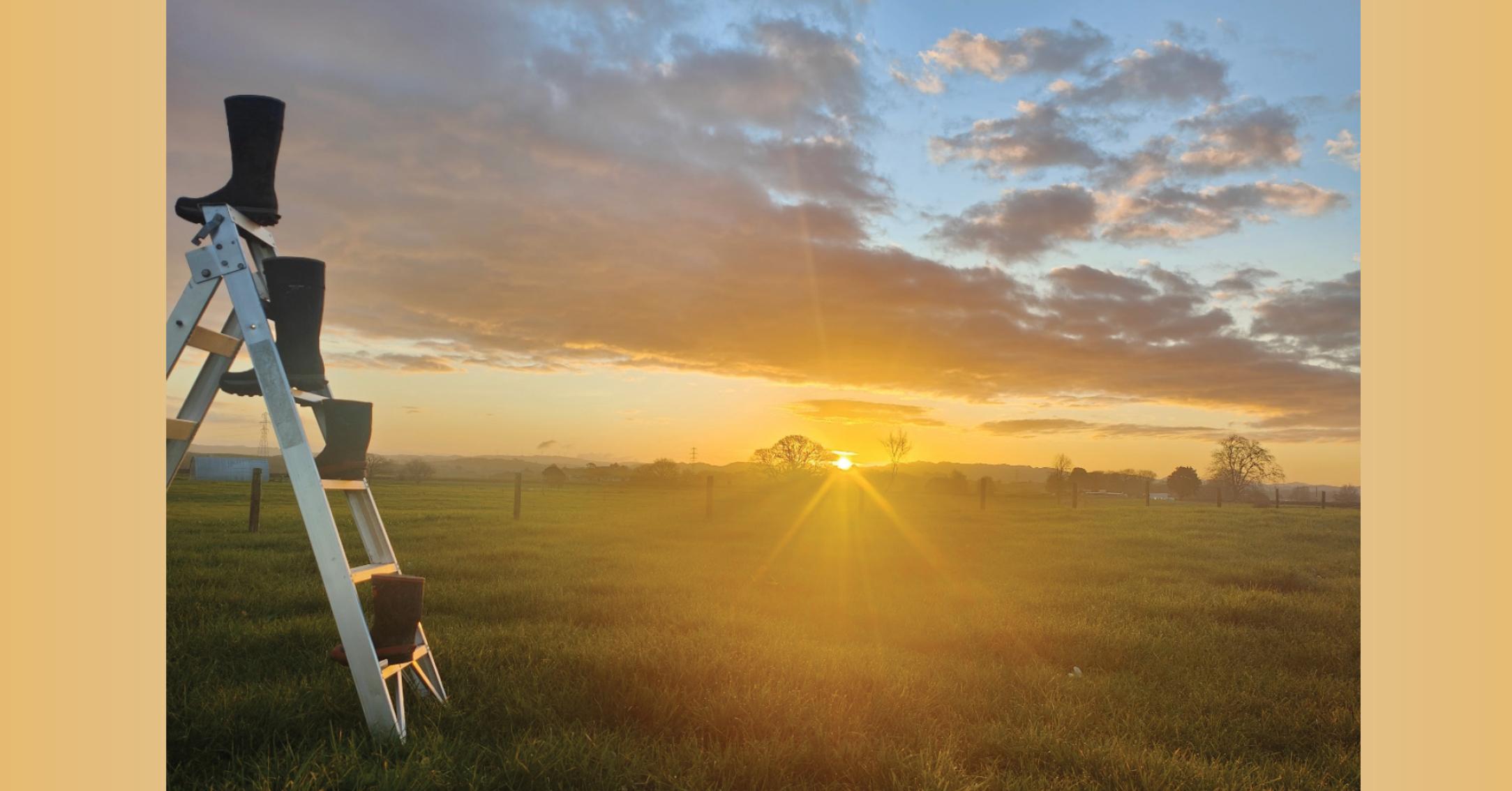
Boots on the ground are part of the solution. Transitioning agriculture towards sustainability together.

A reduction of Greenhouse gases is being demanded through our value chains. Farmers need to be at the table of change, not on the menu. The boots on the ground are part of the solution and need to be part of discussions and decisions. Farmers must remain profitable to enable change.

In the aftermath of the World Wars, nations prioritised food security and production, leading to increased international trade. Post-COVID, global discussions now revolve around food and fuel security, climate improvements, and sustainability. Agriculture is recognised as crucial in finding solutions to these challenges, with responsibility extending throughout the entire value chain, not just to farmers. Trade plays a pivotal role in resource sharing and environmental sustainability, exemplified by New Zealand’s dairy industry, which exports 95% of its products.

However, the dairy industry faces environmental pressures, both domestically and internationally. Successful mitigation programs emphasise voluntary, trusted, and measurable approaches, such as those seen in the Catskills Watershed and Arla’s 80-point programme.

To avoid dairy becoming the new coal and instead be part of the climate solution, financial solutions driven by Environmental, Social, and Governance (ESG) targets are crucial. Companies setting ESG targets are viewed as more successful and profitable, leading to increased access to capital. Green loan funds globally highlight the growing importance of sustainability in business.

Consumers’ demands for greenhouse gas reductions are not met with a willingness to pay, but rather through pressure from ESG stakeholders, investors, and employees. Market and capital access is now contingent on meeting social expectations, such as sustainability plans.

Transition payments through the value chain offer a solution, alleviating the burden falling solely on farmers and ensuring their economic viability during the transition to more sustainable practices that reduce greenhouse gases. Brands and customers, such as Nestle and Mars, are recognising the need to support farmers through this transition. However, structuring payments is complex, with brands currently willing to pay for greenhouse gas reductions but not yet for other nature-positive outcomes.

A reverse auction model or transition payment system could provide a platform for change, enabling farmers to choose their level of participation and providing compensation for their efforts in adopting sustainable practices. New Zealand’s unique farming system, facilitated by cooperatives like Fonterra, presents opportunities for collective action and innovative solutions.

By embracing ESG principles and transitioning towards sustainability, agriculture can ensure continued access to markets and capital while addressing environmental challenges. Early adopters stand to eliminate their risks and become experts in sustainable farming practices, shaping the future of agriculture for generations to come.

Keywords for Search: Kylie Leonard

The mountain we need to climb. Designing agricultural policy for a future in farming.

“People love innovation almost as much as they hate change.” Jack A Bobo

This report primarily addresses those in leadership, and to a lesser extent agricultural policy makers and others with an interest in how we move forward in delivering better outcomes for those on the land and the land itself. The findings and conclusions are also relevant for the wider agricultural sector as the issues at the heart of our policy landscape are not confined to Government.

New Zealand has a legacy of leadership, pioneering and innovating in the face of challenges, and culturally we are often eager to ‘lead the way’. However, we are less accomplished at reviewing ourselves objectively and understanding what about our leadership or innovations have proven effective, or where we have gone astray. This means that our perspective regarding what we do, how, and why we do it sometimes lacks clarity.

This report hopes to bring into focus some of what we must clearly comprehend about ourselves and our operating environment if we are to navigate agricultural policy more successfully going forward.

New Zealand is a unique nation amongst food producers globally, operating almost entirely without subsidies and relying on volatile variables (weather, input costs, international markets, currency movements) to underpin the national economy. We have relied heavily on market forces to guide investment decisions since deregulation in the 1980’s and this responsiveness has fostered a vigorous drive for efficiency and profitability within the primary sector, to the extent that we lead the world by many measures of primary sector success.

This leadership has not come without cost and increasingly regulators are seeking to address public concerns regarding the unintended impacts of our highly responsive primary sector, in light of the markets failure to do so. However the New Zealand approach has been to add cost via regulation, essentially undermining the on farm efficiencies which enabled the primary sector to operate in the absence of subsidies in the first place. Naturally, in the face of perceived threats to their viability, there is strong farmer resistance to such a shift.

At the heart of this issue lies the conflict between what society desires in theory and what it desires in practice. The first is advocated publicly via public narratives, media, social networks, advocacy, activism and electoral choices, while the second is advocated privately via the everyday actions of individuals making purchasing decisions on a daily basis.

Policy makers in democratic systems are bound to respond to what people say, while producers in New Zealand (more so than anywhere else) have little choice but to respond to what people pay.

This difference is currently breeding cynicism in primary producers all around the world as many grapple with how to produce food more sustainably, while facing strong resistance to higher prices and receiving immaterial incentives from corporate customers who continue to compete in the retail environment primarily on the basis of constraining price.

In Europe, subsidies are increasingly masking this discrepancy, applying farm and environmental payments for those attributes which fall into the ‘intention gap’ between what consumers want and what they will pay for. New Zealand is largely

alone in continuing to lean on regulation to deliver ‘good’ in the absence of market rewards, and this represents a massive challenge, and perhaps an opportunity.

The opportunity lies in designing a future where policy is created in service of those who will use it, working with, rather than against those whose hands will bring it to fruition. We need to better acknowledge that our growers, unlike others, are being asked to raise the bar under their own steam, from pre-existing resources.

This shift in narrative, and a determined effort to develop the best stable of agricultural policies in the world could deliver something that no one else in the world has done: Deliver world class food with increasingly higher environmental integrity from unsubsidised food systems.

New Zealand is small and innovative enough to achieve this, but it requires a shift in mindset and a commitment to delivering policy which prioritises people. This report highlights the potentially powerful possibilities that emerge if people are put at the heart of policy making, and if organisations, tools and values are designed to facilitate this.

Distinguishing between real insights with regards to what should change within the farmed environment and how change can happen, can only be achieved by investing heavily in the capacity of policy makers and the primary sector to understand one another again. This requires investment in drawing closer together, developing common language and deeper relationships based on trust and a shared long-term view of the future.

The New Zealand public service is not currently oriented in a way that would enable policy making which is capable of grappling with the myriad of complex issues across multiple portfolios with deeply social and cultural implications. However, the need for such capacity has been recognised by the previous Government and enabling features given legitimacy via the Public Service Act 2020.

Whether or not the promise of this new direction comes to fruition will depend on the final point in this report, that of political will, and its role in defending the space for change. For those in leadership, this is your batten to take up and carry. Create and then defend the space for a system wide shift from a public service which prioritises processes and outputs, toward one that prioritises people and outcomes.

The evidence is there, the benefits outweigh the risks.

Keywords for Search: Kerry Worsnop