2026 Nuffield NZ Farming Scholarship. Apply by 17 August 2025. Read More...

Apply for 2026 Nuffield NZ Farming Scholarship by 17 August 2025. More details...

Katie Vickers: Banking on a sustainable future.

Ideas That Grow: Katie Vickers: Banking on a sustainable future.

Lynsey Stratford has discovered farmers make a few assumptions that aren’t very helpful – like accepting the fact that work might be dangerous and there’s nothing anyone can do about it. As Lynsey explains, “There are changes we can make, but those assumptions and those mindsets have been deeply held for quite some time.” 

As a consultant, Lynsey helps the primary sector with people management and development services and training. And, when it comes to health and safety she says, “We shouldn’t expect people to just know this stuff, but rather teach them and support them as they develop skills.” 
 
Lynsey’s research report unpacks the paradox that while farmers care about their people, farms as workplaces are overrepresented in fatal accident and injury statistics. So, what can be done to improve this?

Bryan Gibson – Editor of Farmer’s Weekly.

I’m Bryan Gibson, the Farmers weekly editor. This week, I’m with Katie Vickers. How’s it going? 

Katie Vickers – 2019 Kellogg Scholar.

Good, Bryan. 

Bryan: And where are you calling in from? 

Katie: I’m ringing in from Fairlie today.

Bryan: And that’s where you call home at the moment?

Katie: Yes. Recently moved down here from Christchurch. So getting back into the rural life. But loving it.

Bryan: And you are currently working for Rabobank as a Sustainability Manager, is that right?

Supporting producers through changing times.

Katie: Yes, I am. My role is around helping to support the banks sustainability ambitions and supporting our clients, in what is a reasonably challenging environment out there – just helping and supporting them, understanding what changes are coming and how that will impact their businesses and I guess wrapping our arms around them and helping them through that. 

Bryan: You’re right, there’s a lot of stuff going on in that space that farmers have to deal with. So it’s kind of cool that the banks are arm in arm with them facing up to that challenge, isn’t it?

Katie: Yes. And I guess the changes are pretty complex, but we probably need to start thinking slightly differently around how we tackle some of those challenges.  
 
One of the reasons I wanted to work for a bank was that you can see that they’ve got quite a strong lead in terms of how they can support clients. I guess at Rabobank we’re committed to the agri-sector and I love that kind of passion they’ve got for the sector. 
 
Our role is around how we support them, but also how we link them up with the right knowledge and networks. Because it’s such a complex topic and so different for every farming system. So it’s important for us to be able to understand their unique needs and make sure that we’ve got the right toolkit to support them in making good decisions for their business. 

Researching food nutrients on Kellogg Programme.

Bryan: Have you always worked in the agri-food sector or is it something you’ve evolved into over time? 

Katie: No, I’ve always been in the agri-sector. I grew up on a sheep and beef farm just north of Kaikoura, went to Lincoln University and then decided after Lincoln, that I definitely wanted to stay in the agri-sector.  
 
So I managed to land a job at Farmland’s Cooperative, and I worked there for eight years. About six of those years was actually in marketing, so I’ve come from a marketing and comms background and then spent my last two years there in a sustainability role. Then just recently moved to the bank, so it’s been an awesome journey. 

Bryan: Now, while that was going on, you applied yourself to the Kellogg Programme, and you took a look at nutrients in food. Is that correct? 

Producing food to positively impact human and the planet’s health.

Katie: Yes. So my topic was around putting the food back into food. The question I was looking to answer was what would it take for our primary industry to produce nutrient dense food? I think the reason why I wanted to explore that was I’ve always been brought up with a really holistic approach. I care deeply about the health of our planet and health of our people.  
 
I’ve got a twin sister who is a holistic health practitioner, so she works on the how do we help people’s health, because we’ve got a massive crisis in that space. 
 
So my passion has always been, what role does agriculture have to play in that? How do we work with our soils better to influence the food that we eat, which in turn influences the health of our people? It’s a massive topic. It was hard to even scratch the surface on a lot of that stuff.  
 
I did a lot of interviews and research with soil scientists, nutritionists and industry leaders, and I got some really cool insights out of that. No real answers, but lots of different things to consider. 

Bryan: People would think the food that New Zealand food producers make is nutrient dense and natural and grass fed and all that sort of thing already. So is there more that can be done at the farm level to enhance that? 

Kellogg research and the impact of soil on the food we produce.

Katie: I’m not an expert in this space and I will never claim to be, but my thinking was really expanded when I read Nicole Masters’ book – For the Love of Soil. She talks about the relationship that we have with the soil. In this day and age, there’s so much more we’re learning about the soil and the microbiology of the soil, and the knowledge we have of that is growing.  
 
As we understand more, we need to do more on-farm. So the role that my research played was understanding that today we use a lot of synthetic fertiliser, and we have quite a strong reliance on that, and that hasn’t been a terrible thing, but moving forward, how do we understand how to use our soils better so we don’t need to have such a reliance on some of those synthetic inputs coming into our farm systems. 
 
I you look at the kind of environment we’re in today with the rising input costs, it’s about how do we create more resilient farming systems, and having a different lens on what that might look like in the future. So the research I did was, okay, how do we understand our soil more to understand the impact it has on the food that we produce? 

Bryan: And what sort of insights did you get from some of the people you interviewed? 

The shift to quality over quantity and premium pricing.

Katie: One of the really interesting ones I did, I didn’t actually interview him, but I did a whole lot of research on the work that Dan Kittredge has done out of the States. He’s got a business called The BioNutrient Food Association.  
 
His role is looking at some tools consumers could use in the future to be able to scan Apple A and Apple B as an example and see the different nutrient composition of those apples and therefore make a decision as to why they might be paying $2 more for Apple A because it’s got a higher nutrient profile.  
 
Those tools aren’t in market and in bulk yet, but I have absolutely no doubt they will be in the future. So that’s the kind of thing could change the landscape of farming, when consumers have got the power in their wallet to be able to make those decisions, to say, well, you know, I want to know why I’m paying more for this apple, because I’m getting the nutrients that I need. With that, you’re hoping there’s been less environmental degradation to produce that product, whether that be apples or meat or whatever. 

Bryan: Yes, I guess that sort of thinking has become more prevalent with the pandemic, with people really thinking a lot about what they eat and keeping their base level health as high as it can be. So it’s really top of mind for a lot of people. 

A food system under stress.

Katie: For sure. I think it’s pretty obvious our food system is under stress. And whether it’s talking about a climate crisis, a human health crisis or health crisis, a biodiversity collapse, there’s all these different things that play in to each other. One of the key points I like to think about is that we don’t want to look at these things in isolation.  
 
If you look at the human health crisis we’ve got, and even the latest pandemic, these pieces have a real interconnectedness and it’s quite a different way to think about it.  
 
I think the more that we think about the connection between the crisis of our planet and the crisis of our human health at the moment, it might help us to think differently around how we handle these things in the future. 

Bryan: That sort of thinking ticks a few boxes at once, as you say. It can do more for people’s health – and a focus on soil can also do more in terms of freshwater quality and in terms of greenhouse gas emissions and biodiversity. All sorts of things do come together as one.  
 
A lot of people, when you talk about, say, regenerative agriculture or related fields, a farmer might say, well, I’ve yet to see the value-add for me. So if I’m going to reduce production to adopt these things, I need to make that up somewhere else. 
 
So how does a sustainability manager at Rabobank approach these things? 

Planting seeds – one conversation at time.

Katie: That’s a great question. I guess my personal mission is to just plant little seeds in people’s minds around how they think about these things. I guess I’ve always believed that you’ve just got to approach it conversation by conversation and people will take different things from the conversations that they have with you.  
 
My role at the bank, is to just support and understanding and what role Rabobank needs to play in this space and how we support our clients. That’s going to look different for every client we have.  
 
We have some clients that are in the regenerative space and really loving it and seeing benefits. We’ve got others that will want to be exploring it and others are saying, that’s not for me – there’s no right or wrong, it’s just how do we help create resilient farming systems in the future and make sure that people are profitable, sustainable and enjoying the life they lead. Because at the end of the day, if they’re not doing that, there’s not a huge amount of value in it.  
 
So I guess my role is just to have these conversations and I see business having a really important role in influencing the way we think. And as a young leader, I guess we can help create the future and it’s important that we are part of that. I want to be part of creating that future. 

Katie Vickers, Kellogger, Rabobank Sustainability Manager.

Bryan: I guess Rabobank being a global, agriculturally focused bank would have a sort of a long term view and a strategy around where things are going and what needs to be done to continue to do business in this space. So that would feed into a lot of the work that you’re doing? 
 
Katie: Yeah. We are lucky to have that global aspect. I guess it’s one of the pros of working for such an awesome business because we’ve got all these insights from across the globe to help our thinking. But I definitely reckon New Zealand is leading the way, particularly in the climate space and understanding at a farm systems level, what we’re dealing with.  
 
Bryan: Yeah, it is. And another thing I guess we need to remember is that it’s not just a value proposition, it’s increasingly become a cost of entry and market access, isn’t it? 
 
Katie: Yeah. I was late with that because I’m not a technical expert, but I come from a marketing background but when you have tricky conversations with people who might not agree with some of the changes that are happening, or are struggling to comprehend it, which I totally empathise with.  
 
One of the pieces I always lead with is the market. We export 90% of what we produce here in New Zealand. So whether we like it or not, what’s happening, what consumers are demanding and what the market is saying, is really important to how we respond. So we have to understand those market signals to make sure we’re producing what’s going to be valuable and what’s needed from our customers. 
 
Bryan: Yes, I used to work a little bit in PR as well, (we used) the old adage, if you’re explaining, you’re losing, quite often. It’s got to be obvious and it’s got to be transparent. You’ve got to front foot these things, otherwise someone will front foot it for you. 
 
Katie: Exactly. 
 
Bryan: So what made you apply to the Kellogg Programme in the first place? 

Kellogg, equipping today’s leaders for tomorrow’s challenges.

Katie: It was part of my development plan when I was at Farmlands, and I am eternally grateful for the opportunity to do the Programme. It was such an important time … the Programme really helped to widen my thinking around what influence business could have in helping to solve some of the challenges I could see coming in the agriculture sector. Having the opportunity to do that was just incredible.  

I know that I probably wouldn’t be where I am today if I hadn’t had the opportunity to do that Programme. I guess it was the people we were exposed to and the time that was carved out to really explore some of the ideas that came up – that was the really valuable stuff for me.  

Bryan: I’ve been to one or two of those Kellogg alumni conferences, and just the feeling in the room is quite different to a lot of places. You know what I mean? There’s such a good sort of camaraderie between the alumni of the Programme. 

Staying connected with the Kellogg network.

Katie: Yes. I think for me, I’m a people person, so the connections with people in the industry were just phenomenal. Even now, if I really want to talk to X, Y or Z to find some information and you said you did Kellogg, people are so willing to talk to you. I guess it just gives you the opportunity to speak to people who will challenge your thinking.  

As I’ve grown up and matured, I love having that. I love having people who will challenge my own thinking because it helps deepen my knowledge and my thoughts. Being able to have the opportunity or the exposure to speak to different people and have different perspectives is just so invaluable. 

Bryan: Thanks for listening to Ideas That Grow, a Rural Leaders Podcast in partnership with Massey and Lincoln University AgMardt and FoodHQ. 
Investment Management meets Agriculture.

Emily Walker_Investment management Decision making_Kellogg report image

Executive summary

The traditional model of primary production in New Zealand is facing significant challenges from internal and external forces, which are only expected to increase over the coming years. These include water security and quality, climate change, carbon emissions, labour availability, market forces and biodiversity. To continue in business and remain sustainable for future generations, transformational change will be needed requiring sector wide strategic and capital investment programmes.

This research report attempts to provide specific support for agri-business leaders. It focuses on answering the question: Does an evidence-based approach to decision making improve outcomes for small agri-businesses in New Zealand?

Research was undertaken using an inductive approach to thematic analysis, allowing the data to determine the themes, rather than be driven by the researcher’s theoretical interest or specific questions (Braun & Clarke, 2006). The data corpus was constructed through a literature review and semi structured interviews. The outcome of the analysis was a thematic map, showing two themes: the decision maker and decision framework.

Key Findings

  • There is significant opportunity to support agri-businesses through a decision-making approach that uses evidence to consider the environmental, social, cultural, and economic impacts of their actions.

Decision Maker

  • Whilst maintaining an understanding of the current operating environment can be challenging (for decision makers), it allows business leaders to be agile and take advantage of opportunity early. The key is in knowing what topics you must be informed of, then focusing efforts on those domains.

  • Decisions must be aligned to an organisation’s purpose, else there is potential for mismatched decision making, detracting from the business’s momentum, diluting leader and team focus, and ultimately, diminishing the purpose the business is working to achieve.

  • Decision makers need to be more ambitious. The interviews found that many organisations were simply ‘playing not to lose, rather than to win.’ The case studies revealed that this could lead to the continual investment in tried and tested solutions.

Decision Framework

  • Robust analysis of the problem ensures the issue itself is being solved, rather than only managing symptoms. This avoids unintended consequences and rework, increasing the likelihood of developing an enduring solution.

  • Decision-making process matters six times more than analysis to producing impactful decisions (Health & Health, 2013). However, process should be flexible, allowing for the idiosyncrasies of individual agri-businesses, and is improved through collaboration.

  • In addition, the inclusion of testing into the decision-making process reduces risk through proof of concept, testing assumptions and bias, checking decision makers haven’t inadvertently jumped to a solution, and provides awareness of different perspectives to enable continual improvement.

  • Analysis of two options rather than just one also improves likelihood of success by a factor of six (Health & Health, 2013). Widening the set of options evaluated improves discussion and debate, increasing the probability of strategic decision making occurring.


Implementation

  • Evolutionary implementation, the compounding effects of numerous small changes, has a higher probability of creating successful, enduring change.

  • Development of a strategic plan to support implementation of the investment across the business can support accountability for action, prepare for opportunity, understand risk, measure results, and build credibility with stakeholders.

Recommendations

As a result of the findings and discussion presented in this report, the following recommendations are made to the leaders of small agri-businesses:

  • Develop and maintain an understanding of the operating environment in which the reader is acting.

  • Align all decisions with the business’s purpose and principles/values.

  • Engage a multi-skilled advisory board to collaborate on and support decision making. This board may include professional advisors, accountant, banker, lawyer, and an independent member.

  • Utilise structured processes and evidence to support decision making.

  • Prepare a strategic plan to create accountability for action, prepare for opportunity, understand risk, measure results, and build credibility with stakeholders.

Red meat traceability with blockchain.

William Halliday Kelogg report image

Executive summary

New Zealand’s agricultural industry has a reputation for being at the forefront of technological innovation.

Challenges such as nutrient deficient soils and distance to market have been met with novel fertilisers and refrigerated shipping. World renowned animal welfare standards and freedom from significant agricultural pests and diseases give our farmers significant advantages compared to their overseas counterparts.

It may be a surprise to learn, therefore, that the means of certifying products and providing assurance to global markets continues to rely on a paper-based system.

Importers must trust the paperwork provided by the exporter. Exporters must trust the paperwork provided by the producer. Producers must trust the paperwork provided by the supplier, and so on. This “one up, one down” traceability is becoming less acceptable to the global market, especially when it comes to food safety and claims of provenance.

A potential solution is to adopt blockchain technology, where a decentralised ledger allows supply-chain-wide visibility of product flows and immutable proof of claims.

While blockchain was developed for, and is still chiefly used in, the field of cryptocurrencies, it has found utility in other sectors including finance and supply chain management. The global diamond trade demands absolute proof of provenance to avoid stones mined using forced labour or where proceeds fund violence – it has found a solution to this using blockchain.

Blockchain has become a technological buzzword which has garnered plenty of attention, confusion, and misunderstanding. The purpose of this research report is to understand what a blockchain is, what it can (and cannot) do, what barriers exist to its adoption in red meat traceability, and what opportunities it presents.

Analysis of the literature and interviews with industry stakeholders leads to the general conclusion that while blockchain has some significant advantages over traditional, centralised databases, there is doubt as its maturity as a technology.

This represents significant risk to those interested in adopting it, and, coupled with the cost of replacing or upgrading systems across the supply chain, it is widely held that existing systems are fit for purpose and to make a shift to blockchain would represent an unnecessary disruption to the industry.

That said, there are potential drivers for blockchain adoption to consider. Government regulations regarding food safety and animal traceability are updated continually and can require the adoption of new technologies (the NAIT Act 2012 for example).

Import requirements are subject to change, especially in the face of food fraud and the global spread of animal and human diseases. Then there is the industry itself, which has an impressive track record of adopting and adapting technologies for the improvement of sustainability and productivity.

The convergence of blockchain with technologies such as the Internet of Things and machine learning could change the way farmers go about their business altogether.

It is therefore recommended that stakeholders in the New Zealand red meat sector keep an open mind to the possibility of adopting blockchain technology and be prepared to invest in further technological innovation as more demands are placed on existing systems. Being “blockchain-ready” will undoubtedly leave the sector better prepared for the future of global red-meat trade.

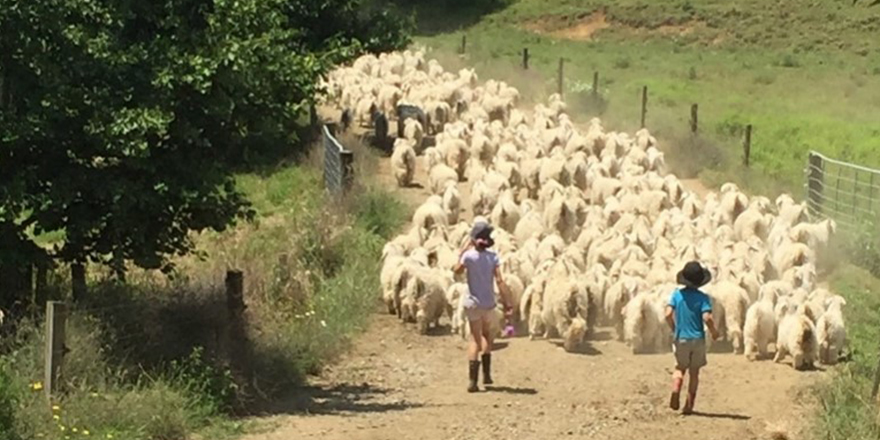
How does a dwindling mohair industry in New Zealand learn to play the infinite game?

Susie Woodward Kellogg report image

Executive summary

With conscious consumerism (Nguyen, 2020) on the rise, natural fibres are making a comeback. The rise in awareness of the damage which is caused by synthetic materials on the environment has led to the growth of natural materials, including growth of natural fibres like mohair (Data Bridge Market Research, n.d.).

Mohair fibre, produced by the Angora goat is one of those natural luxury fibres that has seen a resurgence in popularity in recent years.

Unfortunately, the New Zealand Mohair Industry has been rapidly declining along with the world production of mohair fibre. New Zealand mohair production peaked in the late 1980’s, producing up to 0.6 million kilograms of greasy mohair (2.4% of world production), dropping to current levels of 0.03 million kilograms or just under 1% of world mohair production (Hunter, 2020).

This decline in production is not the basis for this report, but instead the reason for finding out how the industry can be helped to stay alive and relevant, taking advantage of the increase in demand for more natural fibres over the use of synthetic materials.

The New Zealand mohair industry is not in a place to capitalise on the global trend of increasing use of natural fibres in its current state. The industry has seen an ageing base to its producer group form. The lack of new entrants coming into the industry has meant it has struggled to remain relevant and viable.

Despite the global mohair production decline, the demand has remained very strong, especially for top-end quality fibre and prices for mohair have remained high as demand continues to exceed supply (J. Woodward, personal communication, February 10, 2022).

With this global trend playing in favour of the mohair industry, the purpose of this research project was to identify what the New Zealand Mohair Industry organisation could do to help the industry stay relevant and thriving long into the future.

Research was conducted to explore what makes other organisations and businesses successful. Interviews were conducted with leading innovators to identify the reasons for their success and how the learnings could be adapted to help the New Zealand Mohair Industry.

For the New Zealand Mohair producer’s organisation to be successful, there were several key factors identified. They included the following:

  • Leadership – having the right person(s) guiding the organisation with a meaningful vision and empowering its members to create change.
  • Innovation – finding solutions to existing problems by challenging the status quo.
  • Resilience – learning how to adapt to change and analysing past failures to be stronger in the future.
  • Collaboration – successful businesses work effectively with others both inside and outside their organisations to develop their ideas or processes.

Another key element that was identified was having the right people on board, who demonstrated courageous leadership, adopted an infinite mindset, who were able to share their vision with others and whose behaviours reflect their values.

Together, with these key factors, several recommendations were made to assist the New Zealand Mohair Industry going forward.

The recommendations from this project include:

  • Utilise the findings from the Mohair New Zealand Incorporated SWOT analysis conducted in 2018 to help guide the strategy for the organisation going forward.
  • Adopt an infinite mindset; a mindset where the members of the Mohair New Zealand Incorporated organisation challenge the status quo, looking beyond the present to remain relevant long into the future. This will improve the levels of trust, cooperation, and innovation among the members of the mohair producer’s organisation and its leaders.
  • Undertake a step change and guide Mohair New Zealand Incorporated members through that process by following John Kotter’s (2012) proven eight-step process for leading change. The three phases of the step change are as follows:

– Phase 1: Create a Climate for Change
– Phase 2: Engage and Enable the Organisation
– Phase 3: Implement and Sustain the Change

By adopting the above recommendations, the New Zealand Mohair Industry can successfully implement a step change and help turn themselves from a declining industry, into something that’s innovative and relevant long into the future.

Achieving successful family farm succession in the New Zealand dairy industry.

Ross Neal Kellogg Succession planning in the dairy industry_eport image

Executive summary

Family farm businesses are the backbone of the New Zealand dairy industry, with many farms being handed down generation after generation to be retained under family ownership today.

The dairy farming landscape, however, is changing. Dairy businesses are increasing in size, scale, and value.

There are also many challenges looming in the sector as the country navigates towards being more environmentally sustainable, and the consumer demands more sustainably produced food. These challenges will largely need to be handled by the next generation of farmers. To ensure family farm businesses, and the New Zealand dairy industry, can continue to thrive it is important that succession is done well.

The aim of this report is to understand the key challenges that farming families face when trying to navigate through the succession process and identify solutions to these challenges.

The methodology includes a literature review, followed by semi structured interviews to gain insights from farmers and experts on their experiences. Interview responses were thematically analysed with key themes then critically analysed to gather findings.

Key challenges to succession were found to be poor communication, incorrect legal structure, a reluctance from farmers to start the process, and a lack of clarity.

Solutions to these challenges were identified as improving family communication, getting the legal structure right, reading literature to improve understanding, putting a plan in place, and engaging the help of an independent facilitator.

Recommendations for farming families:

  • Start discussions early regarding succession with your children and trusted advisors. Know that the succession process takes time. Early discussions help establish clarity for parents on potential successors, and clarity for children on how they may organise their lives.

  • Plan for succession. Parents to establish what the desired outcome for succession is. It is important that this plan comes from the parents. It is also important that this is a formal and written plan and is followed up on regularly.

  • Look to establish good family communication habits from a young age. For families who struggle to communicate effectively, all family members should be encouraged to read two books which provide great insight into effective family communication. These books are ‘The Secrets of Happy Families’ by Bruce Feiler and ‘The 7 Habits of Highly Effective Families: Building a Beautiful Family Culture in a Turbulent World’ by Stephen Covey.

  • Establish a company/trust structure:

– When first setting up the farming business with a solicitor or accountant, the company/trust structure should be put in place. This should be right at the beginning of the farming journey and well before succession is thought of.

– If the farming business is not currently in a company/trust structure it is important that this structure is set up and assets are transferred to this structure before proceeding with succession.

  • Engage with an experienced succession facilitator who is an expert in their field. The facilitator will help to start the process, lead the process and, along with a support team of trusted advisors, help the family to achieve success. A facilitator can also help to improve family communication and the formation of a written succession plan. Funding is available through MBIE and your Regional Business Partner under the Management Capability Development Fund.

  • Read the 2nd Edition of ‘Keeping Farming in the Family’ written by Ian Blackman. This is a well-thought-out book that has been specifically written to help New Zealand farming families through the succession process.

Recommendations for the dairy industry:

  • Industry bodies to engage with accountants and solicitors who deal with farming families to help them better understand:

– The implications of setting up partnership and trust structures for family farming businesses and the subsequent challenges that arise with these structures when the succession process begins.

– The importance of the company/trust structure for family farm succession and the all-around benefits that this structure provides to family farm businesses.

  • Industry bodies to create awareness about independent facilitators. Specifically:

– That there is a number of experienced succession facilitators available.

– There are significant benefits that independent facilitators can provide to make the succession process easier.

– That there is funding available through MBIE to help cover the cost of this service.

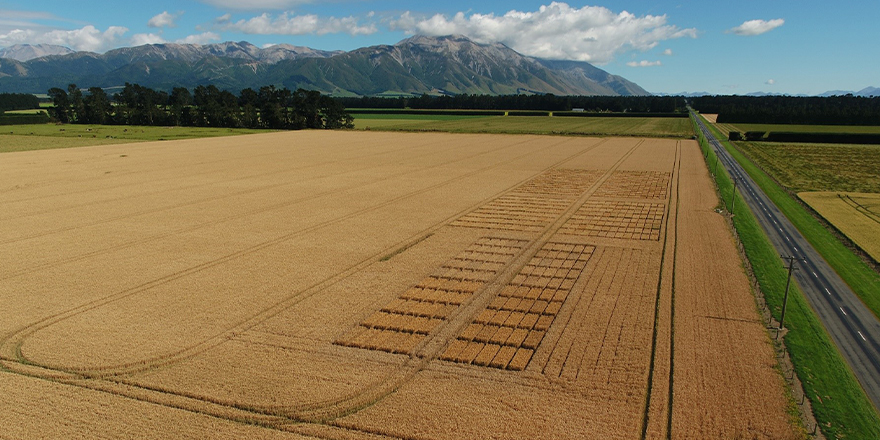
Escaping low value supply chains.

Richard Sim_Escaping Low Value Supply Chains_ellogg report image

Executive summary

New Zealand farmers are being asked to change how they operate their farming businesses. The sectors that are more likely to thrive in this new world are those which not only adapt to change but, become the drivers of change.

The Fit for a Better World roadmap offers a vision where production-oriented goals of the past will be realigned with core values shared by farmers, society and our overseas consumers.

This vision can be a catalyst for the creation of end-to-end value chains to take food and fibre products to markets in New Zealand and around the world. While the ‘volume to value’ mantra is not new, it is not clear how, or who will build these value chains for the arable industry.

Value chains differ from supply chains in that the product or service generates value as it flows between the participants to the final buyer.

This report aims to offer insights into how the utilisation of value chains by arable growers will enable them to create and capture more value from their products.

The research methodology was comprised of a literature review, semi-formal interviews and case studies across the entire supply chain to gain insights into their experiences.

Key Findings

Growers are trapped in low value supply chains. As a grower, if you cannot identify the other participants in the supply chain through to the end consumer, then it is likely you do not hold significant power. As a result, you will be a price taker.

Value is created by consumers. Therefore, the shift for growers from competing on price to optimising customer experience requires the alignment of the values of participants in the supply chain to those of the consumer.

Value can be created via innovation or branding. Irrespective of the pathway taken, growers will need to contribute time and capital to the co-creation of value chains for future food products.

Recommendations

This report proposes that for the arable sector to thrive, a mindset change from the good of the individual to the collective is required. This new mindset will foster the co-creation of value chains for new food products that create and capture greater value for all growers.

Specific recommendations include:

Define arable sector values. The shift from operational excellence and competing on price requires a new business strategy. The transition to customer intimacy requires the alignment of values of the participants of the supply chain to those of the consumer. The Fit for a Better World vision and the principles of Te Taiao could offer a worldview and a starting point for an industry discussion.

Foster a culture of innovation and value-add at the sector level. Develop a pathway to value-add through encouraging a ‘prototype – iterate – test’ culture in a start-up environment for future food products. This could be funded by the current levy body.

Take collective ownership of value chains. To disrupt existing supply chains a new grower-led investment model is proposed. This will overcome some of the current barriers to investing in value-add beyond the farm gate.

Green value chain.

Nathan Chestnut Kellogg report image

Executive summary

New Zealand has a unique position in the global market for its agri-food exports. Farming systems are world class in producing high quality, safe and environmentally sustainable agri-food products.

Processors and manufacturers are readily working to leverage additional value from raw materials into value-add goods, utilising tangible product qualities and intangible assets of product and people in the form of technological and cultural IP.

Consumers base purchases on a decision-making framework influenced by functional value (price, quality), conditional value (available alternatives, discounts), social value (social/self image, social values) and emotional value (personal favouritism, brand loyalty, nostalgic factor).

Products must find themselves containing authenticated quality and credence attributes which hit these value markers in order to gain consumer response. Better understanding of what product quality and credence attributes consumers desire is critical.

  • Continual data collection is a necessity to enable NZ agri-food producers and exporters the best chance at maximising consumers’ willingness to purchase. Without up to date data from markets on attitudes towards credence attributes, products may not be successful despite meeting functional and conditional values.

Authentication of attributes should be sought by global or locally recognised and reputable agents. By holding authenticated and verified quality and credence attributes consumers are willing to pay a premium on standard pricings for similar products.

Natural variability of willingness to pay increased price and willingness to purchase based on credence or quality attributes is market specific.

  • NZ should strive for globally recognised authenticators to be NZ companies or be NZ based. This aligns with the desire for NZ agri-food producers to operate under the highest standards of production in the world and attract off-shore brands for authenticating product to the NZ economy. The need for a NZ based globally recognised authenticator could either be offset or work in conjunction with a national provenance authentication marker. There has been lack of leadership from MPI and NZTE in implementing such a tool, leaving NZ agri-food exporters without a bona fide COO provenance marker, creating a fragmented marketing space for NZ product. It has left the NZ brand open to counterfeiting, damaging the reputation of NZ agri-food producers.

The New Zealand Government is mechanising change to production systems and product procurement through public policy, such as the National Policy Statement for Freshwater 2020 and Emissions Reduction Plan. Which is acting upon domestic environmental outcomes, and capturing the desires of consumer sentiment of agri-food credence qualities.

The use of public policy as a gearing mechanism for private enterprise to leverage value from the market is a consequence of New Zealand’s reputation as a world leader in environmentally sustainable and quality assured agri-food producers.

  • There has been a lack of effective communication from processors and manufacturers on the attitude of consumers toward credence and quality attributes. This oversight may be affecting their relationship with producers and suppliers over system changes that are required due to change in public policy. This can be overcome by making data more visible to producers and suppliers. It will enable a better understanding of the relationship between market demands and auditing requirements from processors and public policy.

Lead your people – they will stay.

Melissa King Kellogg report image

Executive summary

A highly skilled and valued staff member resigning can damage any team or business. Impacts can include significant loss of sales, productivity, and intellectual property loss, not to mention the costs of replacing a staff member. In this current era of low employee engagement and high employee turnover, organisations are losing good and valued people.

This research aimed to understand the impact of leadership on engagement and retention and provide recommendations on how organisations can identify the problem and introduce a meaningful approach to improve culture, engagement, and retention in their organisations.

The reasons for disengagement and turnover in organisations were discovered by comparing, contrasting, and evaluating the significant factors contributing to thriving organisational cultures with engaged and committed people.

This research project consists of a literature review, semi-structured interviews, and a thematic analysis to identify themes. From the analysis, data were evaluated to pinpoint key areas of importance.

Leadership’s impact on staff fulfilment, engagement, and retention is significant and is the fundamental driving factor that can make or break an organisation’s culture, engagement, and retention.

Organisations and leaders recognise the need and underlying benefits of creating a people-centred culture.

Employees will flourish in an environment that is focused on care, support, and growth.

Leadership is instrumental in driving these outcomes, and not enough focus is being placed on this. More significant investment in leadership is the denominating factor in improving culture, engagement, and retention.

Recommendations

  • Make leadership a genuine focus on strategic imperatives.
  • Identify strategies that cultivate a people-centric leadership model to deliver successful engagement and retention outcomes.
  • Cease relying on engagement survey data as the sole feedback for workplace engagement.
  • Convene a working party with a cross-section of people across the business that will meet to review the current organisational culture to create meaningful, authentic, and transparent guiding principles of leadership for the organisation.
  • Commission a case study that investigates people-centric businesses that are achieving success.
  • Prioritise a leadership recruitment strategy with clearly defined guidelines that identify specific leadership skills and attributes that will support recruiting the right people and align with the guiding principles of leadership.
  • Invest in setting up a leadership development programme to deliver the training and skills for a people-centric leadership model.

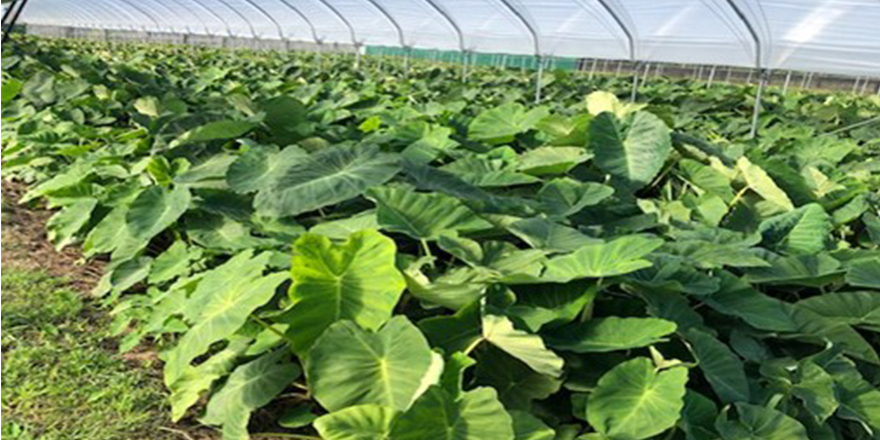
Pasifika subsistence farming in New Zealand.

Melaia Lousi Kellogg report image

Executive summary

A new narrative for New Zealand-based Pasifika farmers is required. The primary industries and government have an opportunity to contribute through shared principles of productivity, inclusivity, and sustainability. Supporting the upliftment of Pacific indigenous farmers in the long run can only contribute to the New Zealand global food story and help reduce social and income inequities.

The aim of this report is to gain an understanding into the New Zealand Pasifika subsistence farming operations, identify the skills and values being developed/maintained in this setting, assess the sustainable livelihood opportunities, and understand the potential values and skills New Zealand-based Pasifika bring to the Primary Industries.

Key findings:

  • There is a lack of formal research on Pasifika subsistence farmers in New Zealand to allow baseline assessments.
  • When assessed against the livelihood assets of the sustainable livelihood framework (SLF), New Zealand Pasifika subsistence farmers are challenged to access the capital assets (natural – land, physical – buildings, technology, financial – generate income, or investments) required to move from subsistence to surplus and generate income. Pasifika farmers’ strongest assets are human and social capital.
  • Pasifika’s key skills include traditional knowledge of horticulture production, intercropping, nutritional management, agronomy, crop rotation, seed/germplasm banks, entrepreneurship, biodiversity, agroecology, companion planting, hunting and gathering, and animal husbandry.
  • Pasifika’s key values identified were, kinship, stewardship, and reciprocity.
  • Absence of clearly defined policies that support the economic development of New Zealand Pasifika subsistence farmers.

Recommendations:

  • Data – undertake further research to map the current New Zealand-based Pasifika subsistence farming landscape to inform future investment/development.
  • Partnership – form partnerships between New Zealand Pasifika subsistence farmers and Primary Sector e.g., horticulture and pork industry in exchange for shared livelihood assets to create sustainable livelihoods.
  • Workforce development and mobility – use the findings from this research to enhance primary sector workforce development plans that include opportunities for the development, attraction, improved participation of Pasifika peoples in their sector.
  • Collaboration – bring together NZ Government, Pacific Governments, and FAO to discuss and consider opportunities to extending capacity building in the Pacific to include New Zealand-based Pasifika subsistence (indigenous Pacific Island peoples) farmers and their communities as long-term investment in agriculture and horticulture developments in the wider Pacific diaspora.
  • Road map – develop a road map for Pasifika subsistence farmers aspiring to create livelihood through successful Pasifika Agribusiness opportunities. Government agencies (MPI, MFAT, MBIE, TEC, MPP) to lead.
  • Transformation – development and delivery of compliance-based training by the regional/local and central Governments to help transform Pasifika subsistence farming businesses from informal to formal. In addition, help shift non-compliant mindsets towards voluntary compliance.

How do you utilise a technical sales team to grow market share?

Luke Fisher Kellogg report image

Executive summary

Technical salespeople are instrumental to organisational growth and often can be the key component of winning or losing market share. Since the introduction of technology and its systemic growth into all aspects of business, the need for customer facing salespeople to become increasingly technical has become common place.

There is now a need for increased knowledge that supersedes that of a technically connected customer. As the market moves on from the travelling salesmen model, it is now imperative for salespeople to offer highly solution focussed approaches, tailored to the consumer’s needs, at a point in time.

This technical and problem-solving ability when left isolated and misaligned from company strategies, has allowed for a high level of risk within a business as key market share holders in companies can move from organisation to organisation taking market share with them.

The aim of this report is to understand how technical sales team functions can be harnessed within an organisation and utilised to grow market share, whilst understanding the opportunities that technology integration and the forming of sales team functions can have on mitigating organisational risk and leveraging opportunity.

The methodology comprises of a literature review on sales teams and their changing functions followed by a semi structured interview process with three front line salespeople, three sales managers within the agribusiness sector and three agribusiness owner operators who are customers of technical sales teams, to gain an insight on their experiences and observations.

The analysis of these responses was the creation of codes and subsequently themes that assisted in the formation of the recommendations.

Key findings

Market share growth has become increasingly difficult to achieve with increased competition, dwindling competitive advantage and the exponential growth of resources over the internet.

Both salespeople and management highlighted the changes that the impact of Covid-19 has had on the sales environment.

There is a need for adaptability to not only mitigate risk but also to ensure relationships are maintained and where possible strengthened through the continued ability to offer the technical solutions required in real time.

This has meant the need for technology in sales teams has become vital. The alignment of the sales team and organisational strategy to this technology has become critical to maintain and develop value in the sales transaction.

Recommendations

  • Develop a sales team structure that removes isolated technical sales functions and embeds these into a sales team focussed on end consumer solutions.
  • Build a team that is resilient to changing environments and adaptable to market needs, allow processes to change and analyse performance frequently.
  • Use the technical, relationship focussed sales team members’ feedback on market insights, create a channel for the consumer voice and react to these insights.
  • Embed effective CRM technology into the sales team, ensure this technological solution is fit for purpose for each aspect of the sales team function and adds a technical advantage.
  • Utilise the data input the CRM technology offers, react to the insights gained, and leverage the market based on the data streams available.
  • Align organisational strategies to the CRM technology being used and have clear aims of the requirement for the technology.
  • Ensure your technology solution builds in data to maintain market share and embed intellectual property to mitigate personnel change and allow for succession planning.
  • Train the sales team efficiently on the technology solution, engagement is key to retention, if the right technological solution is outputting the correct data required that is in line with organisation strategy and all staff are trained and engaged then market share growth can occur.