2026 Nuffield NZ Farming Scholarship. Apply by 17 August 2025. Read More...

Apply for 2026 Nuffield NZ Farming Scholarship by 17 August 2025. More details...

GM Update: Our new branding

Anne Hindson, General Manager, August 2018

Andrew in his Chair update, focuses on Nuffield strategic initiatives and NZRLT board activities, while this update covers management activities of the NZRLT Trust (incorporating both Nuffield and Kellogg programmes) as well as Nuffield programme activities and reflections.

The launch of our new brandingin late June, has occupied a large amount of my time. Juliet Maclean led the project which began in January, through the brand development including the research, strategy, creative, story, and identity to get it to the brand kit and roll out stage.  Juliet’s commitment to making sure the Nuffield and Kellogg programmes are relevant for our future markets is invaluable in setting us up for the future.  

We started with the development of a new brand for our new organisation – the New Zealand Rural Leadership Trust (referred to as Rural Leaders) accompanied by a new fresh logo for the Kellogg programme and a refreshed modernised logo for the Nuffield Scholarships. If you missed our email with the story behind the branding, click here for a detailed explanation and video.

We created a single website which now hosts Rural Leaders and the two programmes, but have ensured that all Nuffield (and upcoming Kellogg) marketing drives people directly to the Nuffield page on the new site.  Over time, we hope to position Rural Leaders as the recognised organisation delivering both programmes with marketing going to just that site. 

The single website also provides one platform for our joint alumni to interact with both programmes and alumni activities. It is the first step in bringing our alumni groups together also under one umbrella organisation for thought leadership activities. The final step in this project is the transfer across of several hundred reports from both sites which will take some time. 

The new branding is now fully adopted in all communications; the response has been very positive from internal and external audiences.  

The appointment of Clara Sweetman as a part time marketing contractor in late June has already bought results with a raised social media profile and some fresh ideas. This is a resource which has been needed for a while but was delayed until the rebranding process had occurred. Clara joins us after contracting for Farmlands, before having her first child.  

Our 2019 Nuffield Scholarships close on 19 August and at the time of writing this newsletter we are waiting anxiously to see the calibre of applicants who apply. It is getting harder to market the Scholarships with the clutter of advertising and messaging, so the marketing strategies are continually being reviewed.  5 years ago, most of our marketing was focused on the rural print publications and alumni networks while now our vehicles are social media, testimonials and alumni shoulder tapping.  We are also trying to work more closely with each industry sector to get them identifying their emerging leaders and encouraging this as part of their pathway. 

While I appreciate that it has always been a big commitment and investment to undertake a scholarship, we are seeing and hearing some of the following challenges /barriers for the next generation of potential scholars;  

  • Young family commitments – many in the 30 – 40 age group are just starting families or have very young children 
  • Working partners – ability to cover family/business is reduced 
  • Diversity of investment often across several farm types or production systems so no natural breaks in workload  
  • More sole operators with no backup from family or others and no fulltime managers to take workload 
  • Greater opportunities to travel overseas, attend international forums  
  • Competing programmes and options to develop leadership skills  

While there is greater flexibility for doing the individual research travel there is still a requirement to be overseas at least 4 months in a 10-month period and complete the full scholarship in a year, which is tighter than other Nuffield countries with timelines of 18 – 24 months.  Of course, we do note to scholars that learning how to reorganise ‘life’ to take on new challenges is part of the benefits of undertaking a scholarship. 

As alumni numbers grow we also need to connect our recent scholars into the support network where alumni provide the opportunities and support their development post the scholarship. The Biennial Conference provided a great launchpad with this year’s 2016 and 2017 presenting scholars and it is pleasing that their topics are attracting industry interest with all of them having presented at conferences and industry forums before and after the Conference. 

Their 15min video presentations on the website and You Tube is proving to be a popular vehicle for those wanting to get an overview of their reports. If you haven’t checked them out, click here https://ruralleaders.co.nz/nuffield-presentations/ 

Planning for the 2020 Nuffield Triennial Conference is well under way with an organising committee meeting this week to sign off some key dates, branding, components. This will allow us to release the first marketing for the event to Nuffield alumni globally through country conferences, direct mail and using alumni contacts 

This is a very big commitment for the organisation in terms of resource, time and financial resources, and the full support of all alumni, which I am sure will be forthcoming.  

Upcoming Events 

  • Kellogg Course 38 delivery: June – November 
  • Kellogg Course 39 2019 Applications close:19 October  
  • Nuffield Selections: September/Oct 
  • 2019 Nuffield Awards: 6 November 

Chair Update: What Lays Ahead

Andrew Watters, Chair, Board of Trustees
August 2018

I hope you agree with me that the Tauranga Biennial Nuffield conference was a great event.  It had a nice mix of local content, thought leadership and catching up with old friends

I thought our new scholars did a very good job of presenting their project findings and their views on the issues and opportunities facing New Zealand and global agriculture.  And for them, it is a perfect introduction to the Nuffield fold.  The mix of youthful enthusiasm and wise perspectives from our range of generations is a strength of our Nuffield body. 

Thank you’s have been extended to the local organising committee led by Dave Hurst; the conference was well organised and operated with a $15,000 surplus assisted by securing valuable local sponsorship – this surplus has been transferred into the Nuffield Capital Fund. 

At the AGM, James Parsons was elected to fill the vacancy left by Juliet Maclean and I was re-elected.  Following the meeting the board elected me as your new Chair.  Thanks to Lucy Griffiths and Steve Wilkins for also being prepared to put their names forward for election.   

I would like to acknowledge the service of Juliet Maclean with her contribution of six years as a trustee including the past two as chair.  Juliet was instrumental in setting up the original consortium between Lincoln University and Nuffield New Zealand which provided both a potential leadership pathway for people in agriculture but also enabled the organisation to take on professional management.  Her work culminated in forming the New Zealand Rural Leadership Trust (NZRLT) with full operational control of the Kellogg scholarship programme. 

The outcome is to be appreciated but the behind-the-scenes work from Juliet along with our GM, Anne, was critical to the outcome.  Juliet also led our 2017 strategy review process which resulted in the rebranding of our programmes and the branding of the Trust, and the consideration of the Rural Thought Leadership and Advocacy Project.  Juliet has left Rural Leaders and the Nuffield program in exceptionally good heart and she has set a high mark for us all to perform to. 

The constitution of NZRLT requires four scholars elected by the Nuffield Alumni and two independents who are approved by our strategic partners.  Hamish Fraser has and continues to fill one of these roles, and we have had a vacancy that we are close to filling.  We have run a very successful recruitment process with 26 high quality applicants, quite astounding given this is a voluntary role.  At the time of writing we are completing referee checks on our preferred candidate.  A key element for us is seeking diversity in skills, experience and thought.  We look forward to announcing the appointment in coming days. 

Two related matters raised at the AGM was the fact that we have been holding AGMs only at our biennial conference (the constitution requires an AGM to be held annually), and that the Nuffield NZ financial reports are less meaningful now given all operations are under the Rural Leadership Trust.  The board have considered both these matters, we intend to hold an AGM via webinar in off-conference years and we will report the financial results of the NZRLT to the Nuffield alumni, noting that this is a separately constituted Trust and reporting structure. 

One general comment from past scholars and our strategic partners is the need to ensure that we get sufficient representation from grass-root scholars in our Nuffield programme.  This will be a continued work-on for the board including our processes for attracting applicants and how we assess applicants.  Although our agricultural economy is seeing the traditional within and outside farmgate boundaries blurring, we do need to get the balance right between selecting scholars who can shape the future of NZ agriculture and equipping our grass roots to work in a more complex world, including as farmer elected members on co-operative and industry boards. 

The thought leadership programme is progressing, albeit with small steps.  Work with other rural leaders and in particular our strategic partners suggests strong support for mobilising our Nuffield and Kellogg alumni to ensure that we win the debates on matters important to the future of rural communities.  We have decided to trial our first initiatives on a couple of regions to ensure that we learn ‘how’ we can be effective.  We expect to be in touch with scholars in those regions this spring. 

Michael Tayler and his team continue to work on the 2020 triennial conference which of course is a combination of our NZ biennial and the international triennial.  There is some consideration at Nuffield International that this may be the last triennial (perhaps replaced by annual travel opportunities flowing from the annual CSC conferences) although we need to see more debate on the proposed changes. It is important that our NZ alumni support this event in all ways and we will come back to you soon to help market the event with your cohorts. 

Finally, it is pleasing to report the on-going growth of the NZ Nuffield Farming Scholarship Trust’s fund performance.  As at the end of June the fund’s balance was $811,000 with an 11.74% return in the last 12 months and a time weighted return of 12.83% since inception (May 2010).  The fund has been supported by donations from scholars and business partners, but the growth strategy implemented ably by Craigs Investment Partners has been a significant help.  You will read separately about Peter Jensen’s generous ‘giving back’ which has been an important contribution to the fund.   

I wish you the best for the spring ahead; we have rarely seen agricultural prices so firm (other than wool) right across our industry and although there may be trade headwinds ahead there is at least some NZD relief being bought to bear.   

Chair Update: Juliet Maclean, April 2018

Your Trustees have been active over the last five months with regular board meetings, a strategic planning session, scholar mentoring and the Nuffield International conference in the Netherlands.

I believe it is important to have a dual focus when considering priorities for the future.

Firstly, we must continue to attract sufficient funding to operate our organisation. By identifying, selecting and supporting high quality scholars who can add value to New Zealand rural communities, we can demonstrate our worth. This is our bread and butter. Currently we offer five scholarships each year.

In my last note to you, I explained that LIC had decided not to continue their financial support, leaving a gap in our funding. I’m delighted to inform you that the Mackenzie Charitable Foundation has come on board as a Strategic Partner for the next 3 years with right of renewal.

The Foundation was formed in 1976 when brothers Alan and Don Mackenzie made the decision to leave their estates to the community of Mid-Canterbury. Agriculture was amongst the matters of importance to the pair and their wishes included the support of agricultural research, development, education and training, and the science and practise of agriculture. With such well aligned objectives, I’m confident the Foundation’s investment in our organisation will provide a range of outcomes that would bring pride and satisfaction for Alan and Don. We look forward to working with the Mackenzie Charitable Foundation Trustees to achieve positive outcomes for all.

Secondly, it is equally important that that we structure and lead an organisation which is offering a unique, experiential learning opportunity which will equip future leaders to be relevant and effective. In an agri sector that is being confronted by massive and rapid change, we must be active to keep pace. Diversity of background and thinking, nimble decision making, an understanding of exponential technology, effective team building skills, a negotiator, the ability to influence and navigate change; these are a sample of the skills and characteristics that are important for Nuffielders to demonstrate if we are to maintain relevance and gain respect.

Historically, the key focus of scholar studies was improving farm systems productivity – how does New Zealand produce more food? Now the attention has moved to improved resource allocation with themes of sustainability, innovation and environmental protection. Producing high-quality food and fibre products which emphasise our story of excellence, provenance and safety continue to move the dial from quantity to quality. Production systems are still important but understanding the expectations of our customers and how we delight them with our products and the integrity of our supply chains has gained importance and attention. Study topics of the future are likely to focus on these themes.

Nuffield NZ, in conjunction with the NZ Rural Leadership Trust, has a process of continuous review for all aspects of the scholarship, from selection through to content. We currently have a renewed focus on opportunities for engaging and leveraging our Alumni. Trustees constantly consider the balance between maintaining Nuffield New Zealand’s traditions and heritage with the imperatives of change. We recognise that some transformation is required to ensure relevance and attract new generations of scholars. Doing what we’ve always done will not meet muster as we strive to maintain our position as the preeminent agricultural scholarship in New Zealand. The opportunities are exciting.

At the end of our 2016 Nuffield conference John Palmer asked the trustees to consider whether advocacy for the rural sector was adequate for the challenges we face and if not, whether the Nuffield Alumni could be mobilised in a new manner, to provide that needed advocacy.

The trustees have considered the matter and plan to present an expanded thought leadership and advocacy role for Nuffield, for ‘in principle’ consideration at the 2018 conference in Tauranga in May. We look forward to your feedback so please remember to register now and join us for some thought provoking presentations and discussion.

In keeping too with the theme of relevance, the future and ensuring our programmes are attractive to high quality applicants, we are currently undertaking a review of our brands and messaging. As a newly established organisation, it is important to clarify the role and position of the New Zealand Rural Leadership Trust. How our Nuffield NZ Farming Scholarships and Kellogg Rural Leadership Programme fit within the structure requires explanation and it is important to confirm and explain the unique attributes of both in a compelling and engaging manner. We look forward to sharing the outcomes of this project with you.

Planning for the 2020 triennial conference is well underway with Michael Taylor at the helm and several alumni committees taking the lead on programmes for the conference and the tours. With a Christchurch base, the tours will cover a sample of the best the South Island has on offer and will include topics of interest to all.

2020 is a long time to wait for a Nuffield get together so it’s fabulous that Dave Hurst and his team have a plan for us to reunite in May. You still have time to register, to join recent scholars and old friends for ‘learning, listening and laughter’! I look forward to seeing you there.

Kind regards

Juliet

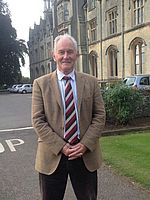
Professor John Alliston

Worshipful Company of Farmers Advanced Course in Agricultural Business Management in Cirencester, Goucestershire, England are mourning the unexpected death of Professor John Alliston who was electrocuted while working at his home. A Memorial Lunch in Celebration of John’s life was held on 21 July at the University.
Reports are that it was a wonderful event with nearly 600 people attending, great speeches and fellowship between so many of John’s family, friends, colleagues, course alumni and students.
His network of friends had no national barriers and he was just as caring about his southern hemisphere friends as those nearer to home reinforcing his truly international outlook and interests.
Stories of John’s adventures in New Zealand featured in the memorial speeches.
The Worshipful Company of Farmers has committed to continuing support for New Zealand scholars on the course, valuing their contribution