2026 Nuffield NZ Farming Scholarship. Apply by 17 August 2025. Read More...

Apply for 2026 Nuffield NZ Farming Scholarship by 17 August 2025. More details...

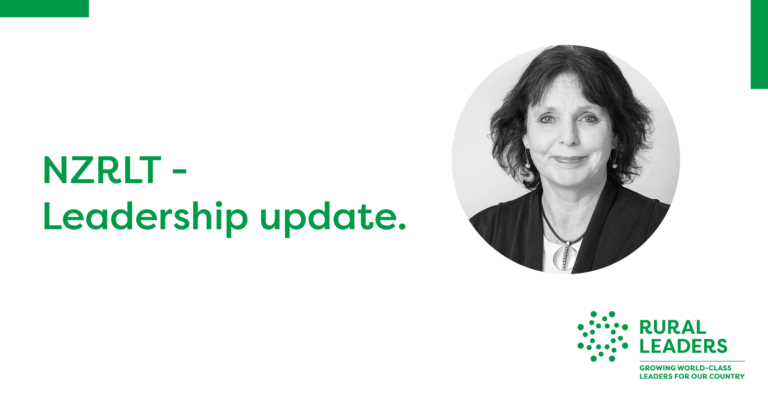
NZRLT (Rural Leaders) Leadership update.

After nearly nine years with Rural Leaders, including the last two and a half years as Chief Executive Officer, Lisa Rogers has decided the time is right to move on from her role, effective 9 January 2026.

During her time with the Trust, Lisa has made a significant and lasting contribution. She has led Rural Leaders through several major projects and periods of change, and now feels the time is right for someone new to build on this work and continue to advance the Trust.

While the Board is saddened by Lisa’s decision to move on, it fully supports her choice and is confident that her influence on Rural Leaders and rural leadership will continue well beyond her tenure with the organisation.

The Board will begin a recruitment process in the new year. Over the coming weeks, we will also work with the Rural Leaders’ team to ensure the continued delivery of our programmes.

The Board is very confident in the teams’ ability to continue to deliver to the high standard they are known for during this period of change.

If you would like to discuss this announcement further, please feel free to get in touch at Kate@landpro.co.nz

Kind regards,
Kate Scott
Board Chair, NZ Rural Leadership Trust

Renée Walker joins the Rural Leaders team.

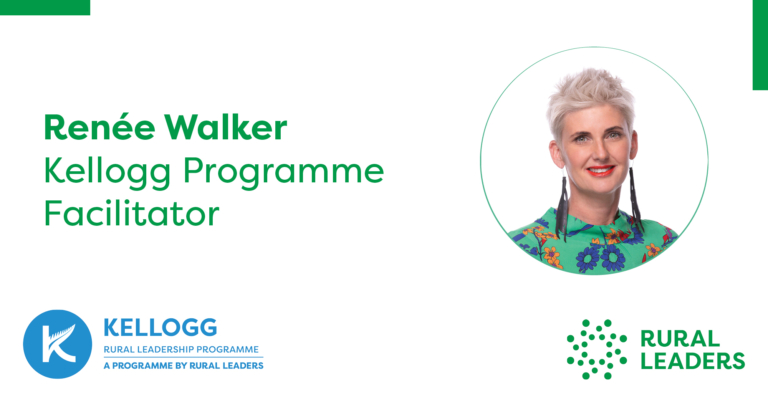
The New Zealand Rural Leadership Trust (Rural Leaders) is pleased to announce the appointment of Renée Walker as Kellogg Programme Facilitator. Renée will join Kellogg Programme One 2026.

For Renée Walker, Rural Leaders’ newly appointed Kellogg Programme facilitator, leadership has always been about people – seeing them, understanding them, and helping them unlock their own potential.

A former Chief Operating Officer and senior executive with more than 20 years’ experience leading teams through transformation and culture-building, Renée has built a career defined by involvement, visibility, and genuine connection. She has led through complexity – notably during Canterbury’s post-earthquake recovery -and brings deep experience in strategy, change leadership, and executive-level coaching.

Today, Renée is the director of The Leadership Revolutionist and Thrive For Life, working across New Zealand to equip leaders – from senior executives to Year 13 students – with the confidence, mindset, and capability to lead with heart and courage. She is known for her high-energy facilitation style, practical frameworks, and ability to create space for honest reflection and meaningful change. Her facilitation work spans boardrooms, classrooms, and conference stages, including leadership programmes, culture workshops, and Extended DISC and NLP-based development experiences.

From two large North Otago farming families, Renée’s connection to the rural sector runs deep. “It’s not just the backbone of New Zealand,” Renée reflects. “It is New Zealand. The rural sector is who we are.” With generations of family farming behind her, she understands the culture, values and pressures of rural life – and the pride that goes with it.

That rural pride led to working with Alliance Group – New Zealand’s only 100% farmer-owned red meat cooperative at the time – working in a role supporting and advocating for farmers. “My family have always been Alliance shareholders and suppliers,” Renée explains. “It felt important to be part of something that represents farmers so directly.”

Renée’s leadership journey began with a childhood dream of teaching, inspired by a grandmother who taught in small rural schools. “I thought you could only change lives by being a teacher,” Renée says. “But I realised leadership can do that too, being the person who sees others and helps them grow.”

Her career has spanned marketing, communications, insurance, and government relations, including her role as Deputy Chief Executive at EQC. “I’ve never been defined by a title,” Renée insists. “I don’t claim to be the smartest or the most technical person in the room, but I get people, and that’s been my greatest strength.”

Her work now focuses on culture, capability, and future-ready leadership – areas she believes are essential in a rural sector navigating generational change. “Young people don’t want hierarchy – they want autonomy, influence, and choice. That shift can be confronting… but also incredibly exciting for the sector.”

As the Kellogg Rural Leadership Programme Facilitator, Renée hopes to foster “…more diversity of voice…” in the sector. “We need different ways of thinking at the table,” Renée says. “Leadership is about helping people have an informed voice, especially as governments’ views of the rural sector can change.”

Outside work, Renée describes life as “integrated rather than balanced.” She balances time with her 13 year old son, and large extended family with community and board roles. Renée serves on the boards of the Christchurch Symphony Orchestra and the Riccarton Rotary Youth Trust, is a registered Marriage Celebrant, and an active supporter of several charities.

“I’m not known for relaxing…one of my key values is curiosity – I believe the more curious you are and the more you do, the more interesting and connected you become. That’s how you can really help others.”

Renée joins Kellogg Programme One 2026, which starts 27 January in Lincoln.

2026 Nuffield NZ Farming Scholars announced.

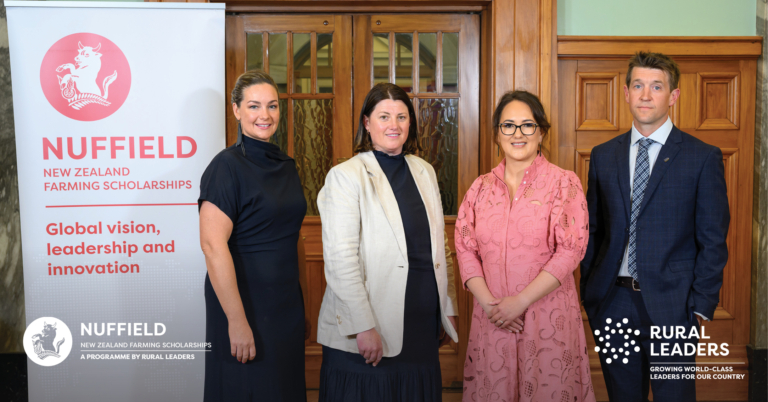
Last night (Tues 4 Nov) at Parliament, in front of Rural Leaders’ investing partners and political and industry leaders, Hon. Minister Todd McClay awarded the 2026 Nuffield Scholarships to four new leaders. 

Nuffield Farming Scholarships have been awarded to New Zealand’s Primary Industries leaders for 75 years.

With a global network of more than 2,000 alumni, 197 of these from New Zealand, Nuffield continues to help build rural leadership capability and Food and Fibre NZ’s global profile.

Last night at Parliament, in front of Rural Leaders’ investing partners and political and industry leaders, Hon. Minister Todd McClay awarded the 2026 Nuffield Scholarships to four new leaders.

The 2026 scholars represent three regions and several industries including dairy, aquaculture, and red meat.

The cohort will undertake a Rural Leaders delivered programme that offers a life-changing opportunity for travel, study of the latest agriculture innovations and an introduction to decision-makers around the world.

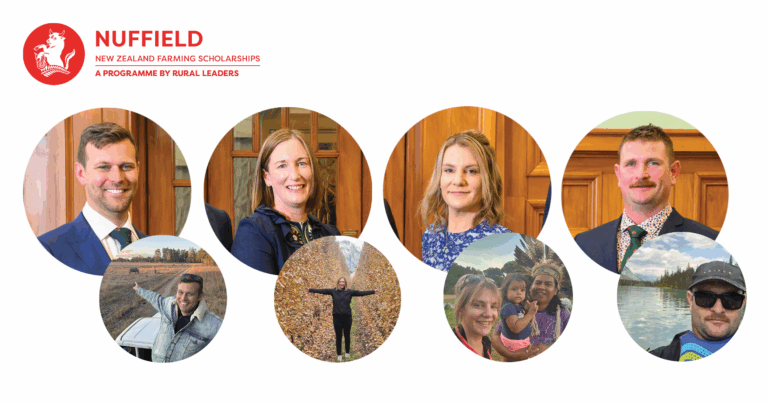
The new scholars were announced by Minister McClay as: Clare Bradley, a Bay of Plenty Aquaculturalist, Jared Clarke, a Canterbury Farmer, Kelly Heckler, an Otago Farmer, and Tracey Perkins, a Canterbury Farmer. They are the 194th, 195th, 196th and 197th New Zealand scholars respectively.

“Clare, Jared, Kelly and Tracey have shown they value giving back to community and industry, they display innovative approaches to their work, and they have demonstrated a track record of meeting challenges head on. 

Ultimately, they are now tasked with finding those deep insights that will create lasting benefit for New Zealand food and fibre, their industries and their communities,” said Kate Scott, Rural Leaders and Nuffield NZ Chair.

Lisa Rogers, Rural Leaders’ CEO added, “Clare, Jared, Kelly and Tracey have each exhibited the characteristics that embody a Nuffield Scholar and ambassador for NZ Food and Fibre.”

Introducing the 2026 Nuffield New Zealand Farming Scholars.

Clare Bradley, CEO AgriSea, Bay of Plenty
Clare Bradley is based in Paeroa with her children and husband AgriSea Chief Innovation Officer, Tane. Clare, CEO, leads a 30-strong team pioneering seaweed-based bio-stimulants, animal health supplements, and high-value hydrogels for agriculture and biotechnology. 

Clare is a leading advocate for the sustainable growth of Aotearoa’s seaweed sector. Guided by appreciation & respect for the marine environment, Clare has championed innovation that protects New Zealand’s underwater forests while creating economic, environmental, and cultural value. 

As the founding Chair of the Aotearoa New Zealand Seaweed Association, and Rere ki Uta, Rere ki tai, Clare is driving collaboration between Western science and Mātauranga Māori to build a trusted, sustainable sector. 

Under her leadership, AgriSea promotes local empowerment, zero-waste production, and circular economy principles. Known for her environmental vision, Clare continues to shape New Zealand’s emerging blue economy, turning the country’s rich marine biodiversity into a model of innovation and guardianship.

Clare’s Nuffield research is likely to explore the economic, environmental, and logistical viability of smaller, decentralised processing hubs and whether they can create local jobs, strengthen value chains, and enhance commercial resilience.

Jared Clarke, Farmer, Canterbury (John Hopkins Scholarship Award Winner)
Jared Clarke is a Canterbury dairy farmer with a strong record of performance, innovation and team development. A Lincoln University B.Ag.Sci (Hons) graduate.

From 2017 to 2022, Jared and his wife Victoria operated Two Rivers Ltd, a 50/50 sharemilking business milking 2,000 cows. In 2022, they formed an equity partnership and purchased Mount Rivers Ltd, a 1,000-cow irrigated dairy farm supplying A2 milk to Synlait. Under their leadership, the business has delivered high returns, sustainability initiatives and strong team retention. 

Jared believes that “turning sunlight into food is a noble task.” Known for his ability to ignore constraints, he enjoys helping fellow farmers where he can on performance, people and innovation. 

Off-farm, Jared’s governance work includes director of Barrhill Chertsey Ltd, a member of the Canterbury Farm Business Group, and a former member of LIC’s Shareholder Reference Group.

Interested (and passionate) about the potential for a reduced reliance on imported energy, both on-farm and at a national level, Jared’s Nuffield research is likely to be on the generation and storage of energy.

Kelly Heckler, Farmer, Community Leader, Central Otago
Kelly Heckler and her family farm Lauder Creek, a high-country sheep and beef property in the Manuherekia catchment of Central Otago.

Kelly is a values-driven leader and advocate for sustainable food and fibre production, recognised for her commitment to intergenerational resilience in New Zealand’s primary industries. 

As chairperson of Otago Water Resource Users Group, Kelly led the organisation through a major transformation, restructuring it into a formal incorporated society to improve accountability and adaptability. “Real impact doesn’t always come with grand gestures … it’s often about steady progress behind the scenes,” says Kelly.

Kelly’s leadership philosophy centres on authenticity and collaboration. Her experience navigating policy reform and community engagement has deepened her understanding of the challenges facing rural New Zealand.

Kelly aims to build a resilient, intergenerational farming business and advance innovative farm-planning solutions that support people and environment. She sees the future of agriculture as one built on integrity, communication, and shared purpose. “When we bring people together behind a common vision, we can shape a thriving, sustainable future for generations to come,” added Kelly.

Kelly is exploring research in Freshwater Management with specific focus on water allocation in overallocated catchments.

Tracey Perkins – Farmer, Sustainable Land and Water Management Advisor, Founder of AgriThrive

Tracey Perkins is a Canterbury-based dairy farmer, facilitator, and sustainable land and water management advisor who combines hands-on agricultural experience with a deep commitment to helping rural communities thrive.

Living in Darfield on a 1050-cow dairy farm with her partner Jonny and their three children, Tracey balances family life with leadership in sustainable land use and rural development.

Of Ngā Puhi and Raukawa descent, Tracey brings both cultural grounding and practical expertise to her work.

As the Founder and Lead Facilitator of AgriThrive, she is the only agricultural facilitator in New Zealand using a trauma-informed, farmer-to-farmer approach. A graduate of the Kellogg Rural Leadership Programme, she has over a decade of professional experience in biosecurity and environmental sustainability.

Tracey’s achievements include forming and guiding numerous Canterbury catchment and community groups, leading successful teams, and recently serving as Campaign Manager for Selwyn Mayor Lydia Gliddon.

She is passionate about empowering people to build resilient, solutions-focused communities. Whether through AgriThrive, local schools, or industry leadership, she champions collaboration, sustainability, and the belief that lasting change starts with people.

Tracey intends to explore “The Third Model,” an approach integrating Indigenous stewardship principles with the operational and economic realities of intensive agriculture to create a sustainable foundation for New Zealand’s future.

Congratulations to the four 2026 Nuffield scholars.

For more information about the Nuffield New Zealand Farming Scholarships,
go to
 https://ruralleaders.co.nz/nuffield


Fresh from their award night, our Nuffield Scholars featured in a RNZ interview, listen here:

FMG and Rural Leaders renew Strategic Partnership.

The New Zealand Rural Leadership Trust (Rural Leaders) is pleased to announce the renewal of their Strategic Partnership agreement with FMG.

Rural Leaders and Strategic Partner FMG, have renewed their partnership agreement, reinforcing a shared commitment to lifting leadership capability and to building stronger rural communities.

The new agreement formalises the continued alignment of values and support for Rural Leaders’ mission to develop capable industry leaders who, in turn, strengthen the communities they represent.

As a Mutual, FMG takes a long-term view – building long-term connections with rural New Zealand and reinvesting to help build strong and prosperous rural communities. FMG sponsors over 700 local events each year, from smaller lamb and calf days right up to National Field Days, and the FMG Young Farmer of the Year contest.

The renewal of the FMG-Rural Leaders partnership, alongside a long-standing relationship with Rural Leaders’ Programme Partner Farmlands, exemplifies this focus.

”FMG has been supporting farmers and growers for over 120 years now, and we’re committed to supporting the generations to come. It is a privilege to partner with Rural Leaders and support the future of farming in New Zealand Aotearoa. No doubt, our rural leaders will continue to challenge the status quo, team up to pool resources, share knowledge and capability as they have throughout our country’s history,” said Pete Frizzell, Chief Marketing Officer, FMG.

With FMG’s support, Rural Leaders’ programmes will continue to develop confident, skilled leaders equipped to tackle the challenges and opportunities facing their communities, industries, and the Food and Fibre sector.

“The partnership’s impact is evident in the transformative growth of our programme alumni, who consistently demonstrate enhanced leadership ability, show great resilience, and are better equipped to drive change”, said Lisa Rogers, CEO, Rural Leaders.

FMG also fosters leadership development internally, with employees regularly attending the Kellogg Rural Leadership Programme.

FMG has been a Strategic Partner of Rural Leaders since the Trust’s formation in 2017.

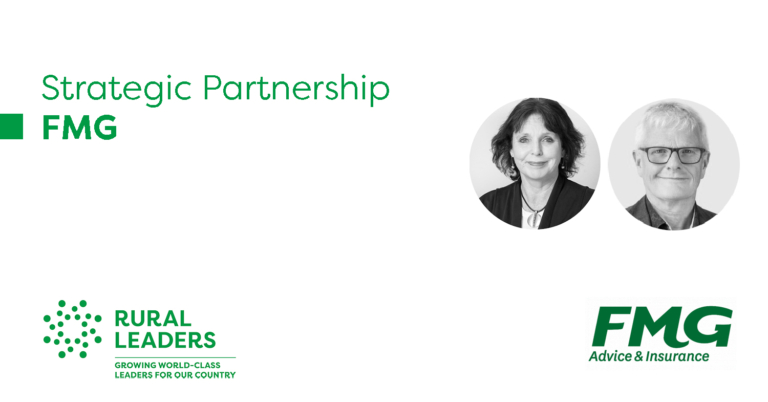
(Pictured – Pete Frizzell, Chief Marketing Officer at FMG, and Lisa Rogers, CEO Rural Leaders).

MyLead – Supporting stronger leadership in Food and Fibre.

MyLead: Supporting stronger Leadership in Food and Fibre.

A closer look at MyLead’s leadership stage outcomes and the industry stories that bring these to life.

MyLead.co.nz helps individuals at all stages of their leadership journey identify tailored development pathways to support their personal and professional growth.

MyLead marks a step toward a more coordinated and impactful approach to developing our sector’s most important asset – our people.

Research commissioned by Food and Fibre Centre of Vocational Excellence and led by Rural Leaders provides a leadership framework. The site brings this framework to life with an ecosystem of leadership programmes along with leadership outcomes by stage, supported by real industry stories.

The outcomes and stories vary depending on both the stage and industry selections users make on the site, making it a personalised experience.

What follows is an opportunity to review all of the leadership outcomes from the framework and their supporting stories.

These have been categorised, as they would be on MyLead, under the three leadership stages: leading self, leading others, leading strategy.

Leading self (team member/team leader)

Those at the Leading Self stage are focused on planning and executing tasks to achieve organisational or team objectives.

Leaders build trust

Relationships are founded on trust. It is also the oxygen that leadership breathes. How leaders behave builds or destroys trust. Without trust, suspicion, misunderstandings, failing relationships, and toxic workplaces quickly follow.

Story from the Sector

Leaders have empathy

To learn and understand others, we must demonstrate empathy. This is the ability to see and understand someone else’s perspective without judging it, or them… Demonstrating a genuine care and empathy for the team was frequently cited as a core attribute of what kaimahi (workers) in the sector wanted from their leaders.

Story from the Sector

Leaders are resilient

As a concept, resilience refers to the ability to endure and absorb the shocks of the world and recover from adversity… The good news is it is a learnable skill. For example, leaders can practice focusing on what they can control, taking charge of their thoughts, and adopting helpful habits.

Story from the Sector

Leaders are curious

Curiosity is a hunger to learn and grow further… The best leaders are not just curious about those things that directly relate to them, but they are also curious about what is happening beyond their immediate environment and how they might be able to adapt ideas from elsewhere.

Story from the Sector

Leaders understand their reputation

As leaders, we need to understand our reputation. Asking for 360-degree feedback can be very useful here (and potentially very confronting). How do other people see us? And does this reflect who we believe we are?

Story from the Sector

Leaders are in tune with their feelings

We lead people when we move them emotionally. So as leaders, we need to understand how emotions work, how they impact our thinking, affect our physical bodies, and how they spread between people.

Story from the Sector

Leaders understand their own drivers and values

As the leader, we are our first team member. So, leading ourselves is our first leadership responsibility. Knowing ourselves is a big ask, because it means exploring what it is that makes us tick—to differentiate between things that give us strength and those that cause grief.

Story from the Sector

Leading others (manager/general manager)

Those at the Leading Others stage bridge strategy and action by organising and systemising for success.

Leaders hold people to account

Leadership involves taking accountability for the behaviours and performance of the team while having the courage to share responsibility and authority with them.

Story from the Sector

Leaders delegate authority

As the leader, we are accountable for the results and wellness of our team. A leader’s accountability cannot be divided or delegated, but our authority and responsibilities can and should be… It takes courage to let go and let others act for us, knowing they may do it differently to us.

Story from the Sector

Leaders make effective decisions

Effective leadership is not a popularity contest. Leadership comes with scars. This is because a leader’s calling is to change-up (or adapt) the game rather than optimise the current game. To change with the times, the sector needs leaders with the courage of their convictions.

Story from the Sector

Leaders invest in people’s growth

As leaders we grow people, and our people grow the Food and Fibre our nation relies on. When we invest in our people, we invest in our business, not least because our people make decisions every day that have a material impact on the purpose or profit of our organisation.

Story from the Sector

Leaders deal with status and power

Leadership roles typically come with status and power which, to the unprepared, can be intoxicating. Leaders who put their own interests first, or who start thinking their elevated position equates to importance, set a rot in action that will ultimately undermine themselves and the results they seek to create.

Story from the Sector

Leaders serve something greater than themselves

Truly leading well is an act of service. Our role as the leader, is to serve the collective, not ourselves… An ethos of service works by unlocking one of leadership’s paradoxes (to lead we must serve). Leaders who serve, harness the reciprocal energy of the collective group or team.

Story from the Sector

Leaders make one-to-one connections

Leaders build a bridge between themselves and other people. To do this, leaders build trust, get alongside their people, and do more than just communicate— they connect. At its best, connecting is akin to creating a sense of family, this is the Māori value of whakawhanaungatanga.

Story from the Sector

Leaders know and understand others

As leaders, in addition to knowing ourselves we need to know others. To know others, we must seek to understand them. The things we seek to learn about ourselves (personality, thinking style, emotions, and resilience) are the same things we need to be curious about in seeking to know others.

Story from the Sector

Leading strategy (executive/director)

Those at the Leading Strategy stage focus on articulating the vision, generating value and creating competitive advantage.

Leaders energise the team

Energy is the wellspring of true leadership. When we are truly leading, the alignment of our whole self with meaningful purpose energises us and others are drawn to it. Finding what energises us and what feels true, is leadership’s X-factor. This is when the magic happens.

Story from the Sector

Leaders connect the team to an organisational purpose

People need to know that what they do matters. Leaders ensure their people understand how their task is important to the bigger picture. People simply want to know why they’re doing a task; this is what makes it meaningful.

Story from the Sector

Leaders create an environment where team members have autonomy over their timing and place of work

Flexible working practices should, as the name says, be flexible. It is unrealistic to think we can apply flexible working practices universally across an organisation. The goal is to apply them where possible. Organisations that embrace flexibility will maximise the pool of talent they can recruit from.

Story from the Sector

Leaders create an environment where team members have the autonomy to determine how best to conduct their tasks

People don’t want to be micromanaged. To give our people more autonomy, we need to focus more on the outputs we want them to achieve, and less on their inputs (methods, hours, and location required to deliver those outputs). In the end, it is as simple as giving people choice.

Story from the Sector

Leaders role model belonging

As leaders, we must create an environment where all our people feel they truly belong. This includes us. If we are brave enough to be authentic, we show our team members that it is safe for them to be authentic too.

Story from the Sector

Leaders create an environment where all team members feel safe to be their full and authentic selves

Leaders create an environment where everyone in their team can bring their whole, authentic, unique self to work and feel truly valued and included.

Story from the Sector

Generate your own leadership development pathway

Visit MyLead.co.nz

2024 Nuffield NZ Farming Scholarship reports.

Rural Leaders is pleased to be able to share the 2024 Nuffield Scholars’ Individual Research Reports.

Our four 2024 Scholars have undertaken research on a diverse range of topics, each addressing a topical and significant challenges in Food and Fibre, from sustainable land use to succession, and from the future of farming to genetic technology.

The Nuffield Scholarship is about impact – so, we hope you find these reports inspiring and thought-provoking.

We’d like to acknowledge those of you who have contributed your time and experience to the Scholars, a Nuffield Scholarship is after all, a team effort.

This year we have included a one-page summary of each report. You will find these short report summaries via the buttons below.

Carlos Bagrie – Beyond the farm gate: Rethinking New Zealand’s economic future.

Agriculture and tourism in New Zealand face growth limits, threatening export earnings. With global trade shifting and land constraints increasing, we must rethink NZ’s economic future; exploring high-value industries, supply chain control, and innovation.

It’s time to ask: what comes after agriculture and tourism to sustain long-term prosperity?

Rachel Baker – Coding for Change: Navigating adoption of gene editing in the New Zealand primary sector.

Gene editing in New Zealand’s primary sector offers opportunities to address climate change, sustainability, and productivity. Proposed legislation aims to align regulations with trading partners, balancing innovation with public trust.

Early engagement, investment in innovation, and leadership in regulatory frameworks are essential to enhance competitiveness and drive sector growth.

Jenna Smith – Changing the Bog-Standard: Repeatable solutions for Aotearoa’s Peatlands.

Occupying only 1% of Aotearoa’s land yet holding close to a fifth of the nation’s ecosystem carbon, New Zealand’s peatlands are indispensable but rapidly degrading. This report does not offer a silver bullet, but a new way of looking at what we’ve long called marginal land. It suggests that peatlands, when managed well, can be part of our productivity, our identity, and our climate response—not in spite of their wetness, but because of it.

Peter Templeton – Putting the Success back into Succession.

New Zealand’s farm succession faces challenges due to aging farmers, rising land prices, and financial barriers. The report explores alternative models like share-farming and equity partnerships, emphasising the need for early planning, government support, and industry leadership.

Innovative succession pathways are crucial for sustaining the agricultural sector’s future.

The Nuffield 2025 Contemporary Scholars Conference.

The Nuffield 2025 Contemporary Scholars Conference

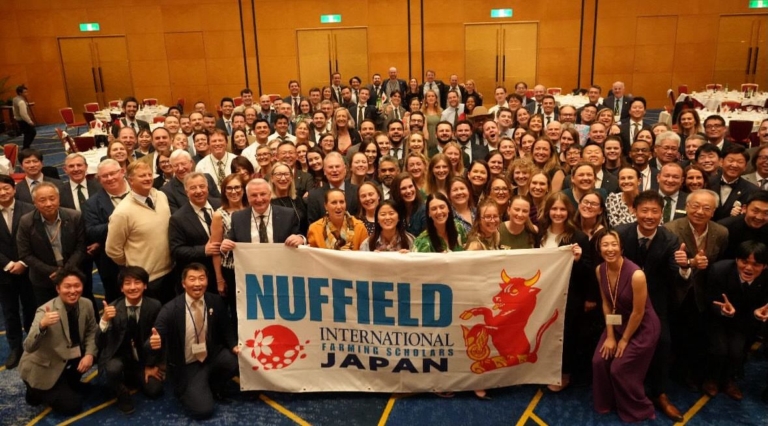
The Nuffield 2025 Contemporary Scholars Conference (CSC) wrapped up last week in Auckland, running March 8 to March 16. 

This CSC, organised by Rural Leaders and hosted by Rural Leaders and Nuffield International, brought together over 100 newly selected Nuffield Scholars from around the globe. The CSC offered scholars an immersive experience through a series of carefully curated activities, workshops and speakers.

It’s an immersive platform for new scholars to engage with thought leaders to address global agricultural challenges. The 9-day programme featured presentations, panel discussions, and field trips. This year’s conference emphasised leadership development, critical thinking, effective communication, wellbeing, Te Ao Māori and Te Tiriti o Waitangi, trade and exposure to New Zealand’s unique value chains.

For Rural Leaders, hosting this CSC provided an opportunity to showcase Aotearoa’s advancements in the food and fibre sector. Participants explored local farming systems, sustainability practices, and technological innovations, gaining insights into how New Zealand maintains its competitive edge in global agriculture. 

An important aspect of the CSC is the networking among scholars, fostering international collaboration and knowledge exchange. Many of these newly connected scholars will travel together internationally in small groups during their Global Focus Programme (GFP), another key chapter in the scholarship programme.

The GFP is a four-week tour across multiple countries, further enhancing scholars’ global perspective on agricultural practices.

CSC Programme highlights included:

Presentations: Scholars attended sessions led by global thought leaders addressing pressing agricultural challenges. These talks provided insights into innovative solutions and strategies shaping the future of agriculture.​

Speakers included: Jodie Redcliffe (Nuffield International and Australia CEO), Kate Scott (Nuffield/Rural Leaders Chair), Hon. Damien O’Connor MP, Christoph Graf Grote (Nuffield International Chair), Steve Kearney (Chief Mental Health Officer NZDF), Shannon Stallard (Lead with Virtue), Russell Pickering (The Pickering Group), Andrew Watene (Head of KPMG Propagate), Jessica Smith (Deputy Chief Executive at Te Tuapapa – Ministry for Housing and Urban Development), Marcin Markowicz,

(2023 Nuffield Scholar, Poland), Bruce Weir (GM Country Banking Rabobank), Campbell Parker (CEO DairyNZ), David Chin (CEO LIC), Tim Gibson (Director LIC), Corrigan Sowman (LIC Board Chair), Charlotte Rutherford (Dir. Of Sustainability Fonterra), Vangelis Vitalis (NZ Chief Trade Negotiator), Sally Thomson (Nuffield Executive – Brazil), Bev Flatt (Global Partnerships Manager – Agriculture Advocacy and Activiation, Bayer-Sponsor), Lisa Rogers (CEO Rural Leaders) and more. Thank you to all for giving your time and sharing your isnights.

Panel Discussions: Engaging panels allowed scholars to delve deeper into topics such as sustainable farming practices, climate change adaptation, and technological advancements in agriculture.​

Field trips: Participants embarked on field trips to local farming operations and agri-businesses, witnessing firsthand New Zealand’s cutting-edge agricultural practices and value chain innovations.​

These included: DairyNZ, LIC, Balle Bros., Plant and Food, Leaderbrand, Punchbowl and more.

Networking: The entire conference was essentially a networking session, enabling scholars to connect, share experiences, and lay the groundwork for future collaborations.​

And, did we mention the Nuffield Games? These were held near the end of the conference and, well, there’s really nothing like it.

While the true impact of this CSC will play out over time, these activities collectively enhance the scholars’ understanding of global agricultural dynamics equipping them with the knowledge to drive positive change in their respective regions and industries. For New Zealand – it puts the country front of mind amongst a large cohort of rising global rural leaders.

Feedback has been unanimously positive. The success of this CSC is underpinned by our conference sponsors’ generosity.

Rural Leaders, Nuffield NZ and Nuffield International wish to express their thanks to: Bayer, Nuveen, LIC, PWC, Rabobank, Laguna Bay and MyFarm Investments. Thank you for making this CSC possible.

You can download this CSC’s programme here for more detail on the conference’s nine days.

A huge thanks also to Phil Morrison for binding together the CSC’s insight threads so well during the conference. Phil facilitated the event expertly and was instrumental to its success.

For the 2025 Nuffield New Zealand Scholars: Lisa Portas, Dani Darke, Alan McDermott and Jon Pemberton, their journeys are underway and their research topics are now more carefully defined. During the CSC every 2025 scholar gave a 2-minute summary of their intended research.

Take a look at the topic presentations from our four 2025 NZ Scholars below:

The 2024 NZ Scholars will submit their completed reports in the coming weeks. We’ll share those widely after our investing partners have had a first preview.

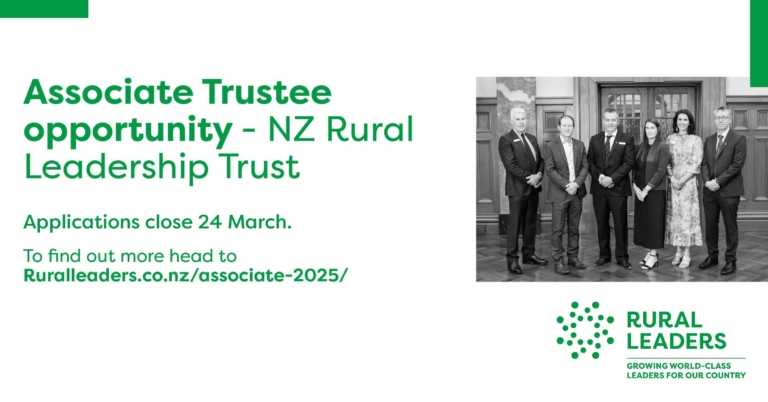
NZRLT governance opportunity.

The Board of Trustees for the New Zealand Rural Leadership Trust, responsible for governing the Nuffield Scholarships, Kellogg Rural Leadership Programme, the Value Chain Innovation Programme, Engage and the HortNZ Leadership Programme, wish to appoint an Associate Trustee.

This governance development opportunity is open to all Rural Leaders Alumni.

The Associate Trustee will have the opportunity to:

  1. Sit on the Board and gain greater understanding of governance processes under an experienced Board.
  2. Provide input into the development of some of the leading rural leadership programmes in New Zealand.
  3. Provide insights and perspective as an Alumni of the programme(s).

The Role
The position is included fully in all Board activities, events and meetings.

The Associate Trustee is expected to fully contribute to all Board discussions and actions as if they were a Board member of the organisation and attend events associated with the role. However, the role has no voting rights.

Eligibility
The Associate Trustee role is open to Alumni of the New Zealand Rural Leadership Trust who completed their programme between 2019 – 2024, inclusive.

Term
The term of appointment is for a twelve-month period (May 2025 – May 2026), which provides an opportunity to cover a full year of operations.

There are seven more Board meetings this year and several events. Most events are held in Christchurch or Wellington.

Flight and accommodation costs are covered, where applicable.

The Board meeting schedule for 2025 is:

  1. May TBC (Online)
  2. July 9 (Christchurch)
  3. August TBC (Online)
  4. September 10 (Wellington)
  5. November 3 (Wellington)
  6. December TBC (Online)
  7. January/Feb 2026 (Christchurch)
  8. April 2026 (Wellington)

Remuneration 
There is no remuneration or payment, however all direct costs (such as flights and accommodation where required) relating to meeting attendance, will be met.

Confidentiality and Conduct 
On appointment the Associate Trustee will be asked to sign a confidentially agreement.

Although the position is not an appointed Trustee of the New Zealand Rural Leadership Trust, the appointee is expected to adhere to the code of conduct of a Board member.

The Associate Trustee is expected to comply with any reasonable directions of the NZRLT concerning their role.

Application
Interested scholars should forward their application by 24 March 2025 to Lisarogers@ruralleaders.co.nz

Applications should be in writing, with a CV and a covering letter with the following;

  1. The reasons for applying for the role,
  2. What you expect to gain from the opportunity, including how the opportunity would contribute to your leadership goals,
  3. How you might contribute to the Board’s skills, experience and perspectives.

Appointment process 
An appointments sub-committee (a delegated committee of the Board) and the Chief Executive will consider all applications and provide a recommendation to the full Board who will approve the appointment.

The successful Associate Trustee will be notified by 10 April and will be invited to attend the May Board meeting online and subsequent meetings and events.

For any questions please contact:
Lisa Rogers, Chief Executive
Phone: 021 139 6881
Email: lisarogers@ruralleaders.co.nz

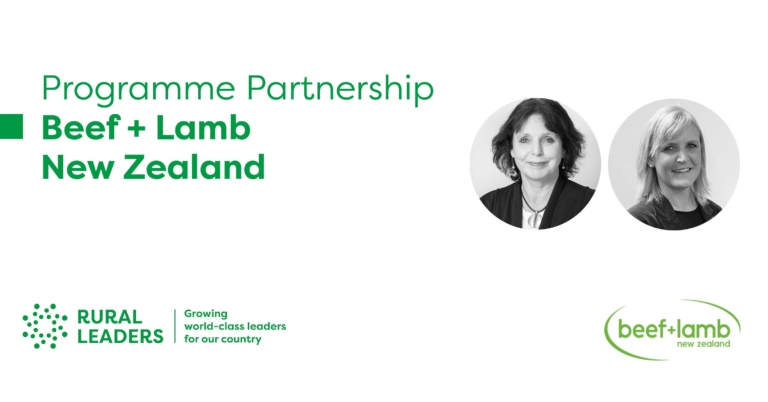
Beef + Lamb New Zealand and Rural Leaders renew partnership.

The New Zealand Rural Leadership Trust (Rural Leaders) is pleased to announce the renewal of its partnership agreement with Beef + Lamb New Zealand (B+LNZ).

Pictured: Lisa Rogers, CEO, Rural Leaders (left). Justine Kidd, GM Extension, B+LNZ (right).

One of the New Zealand Rural Leadership Trust’s (Rural Leaders) earliest industry partners is Beef + Lamb New Zealand (B+LNZ).  

The signing of a new partnership agreement between the two organisations aligns strongly with B+LNZ’s People and Capability Strategy focused on improving on-farm talent retention. Core to delivering on the objective of increasing the retention of people from their first day on farm to their third year is the role of on-farm leadership. Leadership that creates great work environments, communities and futures for people in the sector.

Justine Kidd, General Manager Extension, Beef + Lamb New Zealand, says, “On-farm leadership is critical to solving the challenge of our people’s future on farm. We are attracting enough young talent to the sector, but we aren’t holding them. Rural Leaders’ world-class delivery of leadership programmes supports our strategy, and we are looking forward to our continued joint effort growing great rural leaders across New Zealand.”

“B+LNZ’s partnership with Rural Leaders is a strong fit with two of our three investment pillars; ‘On-Farm’ focused on talent retention directly on farm and ‘Energising’ focused on growing leadership capability, celebrating and sharing stories of success.”, adds Justine Kidd.

To this end, B+LNZ recently announced farmers Richard Cameron and Natasha Cave would be the 2025 recipients of the B+LNZ Leadership Advancement Scholarships. They each receive full sponsorship to complete the Kellogg Rural Leadership Programme in 2025, along with mentorship from a B+LNZ leader aligned with their interests.

Lisa Rogers, CEO, Rural Leaders says, “The Rural Leadership Advancement Scholarships will become a flagship opportunity for the sheep and beef industry’s farmer-leaders. We look forward to playing a key role in these leaders’ development and future, both as people and as change-makers.”

The next available Kellogg places are for Programme Two 2025, 24 June start. Applications close April 13, 2025.

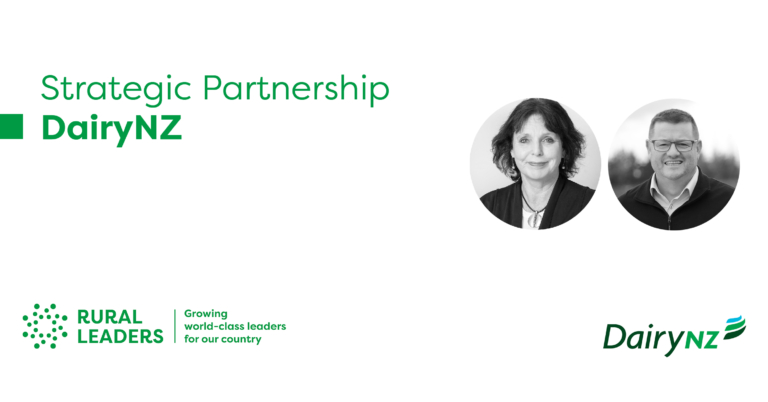
DairyNZ and Rural Leaders renew Strategic Partnership.

The New Zealand Rural Leadership Trust (Rural Leaders) is pleased to announce the renewal of its Strategic Partnership agreement with DairyNZ.

This latest partnership renewal follows a long-standing relationship with DairyNZ that dates to 2017.

The new agreement means we can continue to help build stronger, more capable dairy industry leaders and in-turn contribute to meeting DairyNZ’s new strategic priorities: accelerating on-farm productivity, powering more adaptable and resilient farms, and enabling sustainable and competitive dairying.

Much of this is underpinned not just by world-leading research and advocacy, but also by fostering evermore capable leadership capability.

DairyNZ’s high-impact partnerships make the most of the Food and Fibre sector’s expertise, connections and strengths. They help to expand their knowledge, access greater resources, and ultimately better meet the needs of New Zealand dairy farmers. We’re proud to play a part in this positive and purposeful ecosystem of change.

The partnership supports Rural Leaders’ purpose to grow world-class leaders for our country. We do this by delivering several of the sector’s most highly regarded and trusted leadership programmes.

DairyNZ CEO, Campbell Parker’s involvement with Rural Leaders is often as a popular speaker on the Kellogg Rural Leadership Programme. During these sessions Kellogg scholars learn about DairyNZ’s strategy and enduring value to the sector. They also want to know about Campbell’s own leadership journey, experiences and insights.

Rural Leaders, like DairyNZ, believe dairy has a strong and positive future and we are proud to partner with this key organisation and the industry it supports.

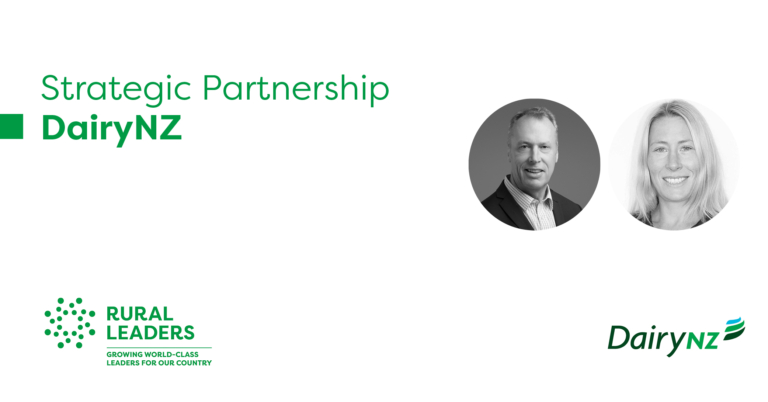
(Pictured – Campbell Parker, DairyNZ CEO, and Lisa Rogers, Rural Leaders’ CEO).