2026 Nuffield NZ Farming Scholarship. Apply by 17 August 2025. Read More...

Apply for 2026 Nuffield NZ Farming Scholarship by 17 August 2025. More details...

Hamish Murray 2019 Nuffield Scholar: CSC Report

A look into the Land Grant University system and their education, research and extension work reminded me of the importance of strong institutions in our agriculture sector.

Travelling to the American mid-west in the middle of winter was a shock to the system. Stepping out after 6 weeks of 25-30 degrees into -5 was only the first, there were many more surprises instore as we explored the States of Illinoi and Iowa, the corn and soybean capital of the world for a week before joining the Nuffield 2019 Contemporary Scholars Conference in Ames.

A week together allowed the five kiwis to quickly acclimatise and the chance to use some of the work done in preparation for the year ahead. A meeting with the Chicago IDEO office in the first days of our visit, quickly challenged our thinking as it provided new insights in to the processes and insights from a professional Design Thinking Team. The idea of a broader design brief, multi-functional teams and the testing a small protypes with ever present feedback loops quickly became a theme for the week.

We went to the Fonterra head office in Chicago for a quick overview of their US operations, before heading to an Agritech Summit at the University of Illinoi. A look into the Land Grant University system and their education, research and extension work reminded me of the importance of strong institutions in our agriculture sector. The Summit illustrated both their role in innovation of ideas and the verification of data providing confidence in research. The public private partnerships were providing benefits to the all involved.

  • Students gaining real world experience, and reward for work rather than ever increasing student loans
  • Tech talent paired with innovated companies at a lower cost than Silicon Valley competition
  • A beach head for tech, engineering and biotech students into Ag which would previously not have been considered
  • Real world experience and innovation without the downside risk, providing a pipeline of ideas
  • Sharing data and ideas in collaborative ways between seemingly competing companies
  • Real importance of discovery teams for addressing the real need (ICOR teams)

De Moine, the global head office of John Deere and combine factory was a highlight, not only because like little boys in a toyshop we were excited to see the big gear, but for me it illustrated how the culture of a company flows right through from top to bottom. The guy on the factory floor had as much pride in his work as the tour guide showed and allowed us access to sit at the table in the board room. Examples of how they have instilled that culture and have been able to maintain it over 180 years were evident throughout and a good reason why they are one of only and handful of companies to sit within the Fortune 500 for over 50 years.

The five kiwi scholars hit the ground running as we joined 70 other International Scholars in Ames, however at this point it stepped up a gear again and we got a further shock to our already overloaded systems. We had built a tight group and some confidence amongst each other, but even as I sit and write this report on the plane home it is hard to explain what just happened.  The intensity of the CSC, meeting so many other scholars, a packed programme of speakers and panels, field trips and social events kept pushing me to the edge all week. On reflection it is an incredible exercise in human capacity building, and I am excited for the next step in this year as I travel for GFP in June.

Three further brief points of interest – gleaned from the CSC and travels

  • America an example of big Ag – bigger, faster, stronger however this is slowing and beginning to shift more to thinking about smarter more efficient and lower impact.
  • Heard a lot about feeding the world – but it is no longer about growing more when 40% of the food grown is wasted. Consideration is shifting to the importance of providing the right nutrition to underfed and those overfed as everything in this later area is reducing our ability to tackle the 1st problem
  • Food trends breaking into three sectors – convenience now, convenience delivery and bulk buying of quality, natural and almost unlabelled product.
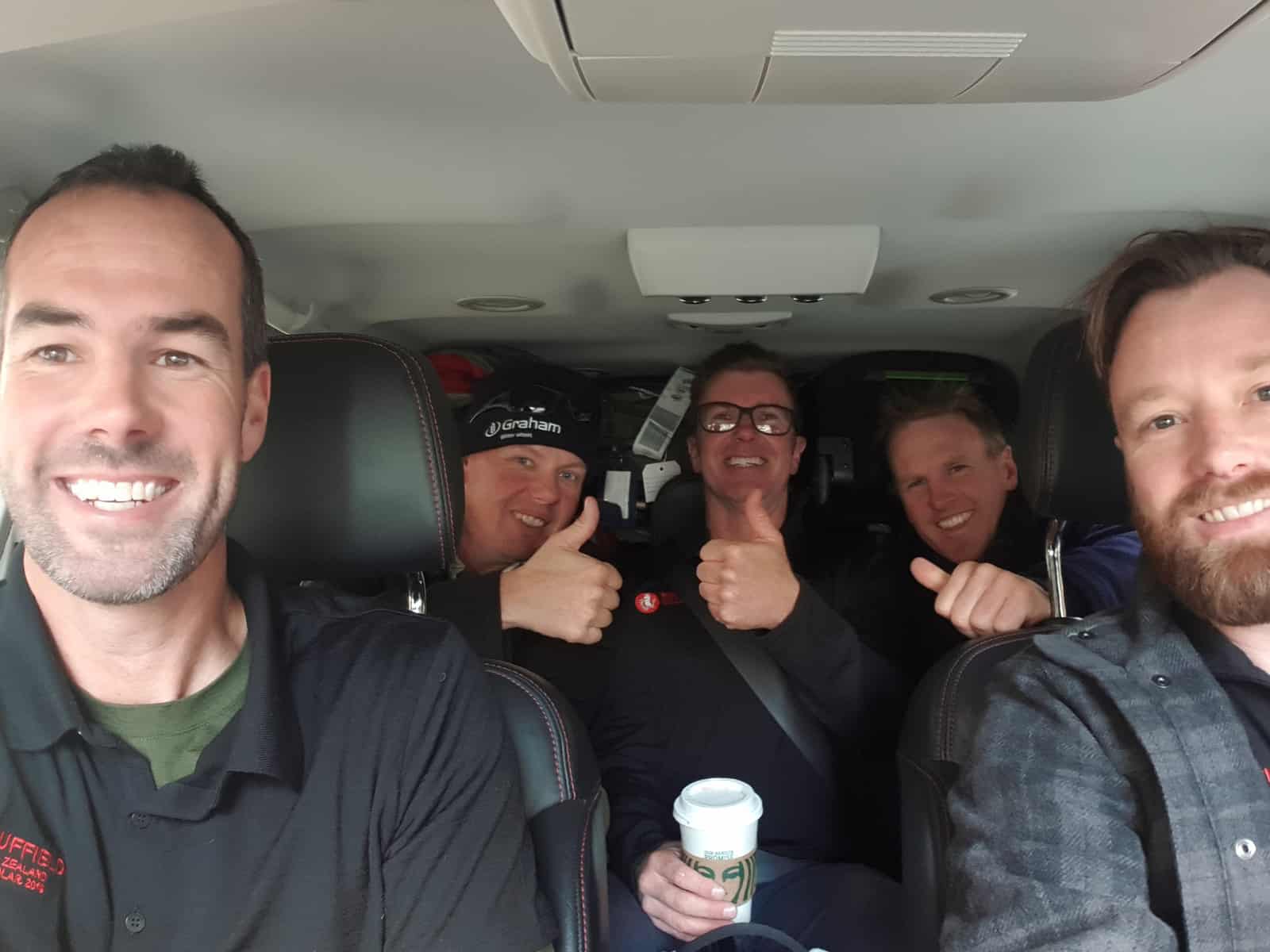

Ben Hancock 2019 Nuffield Scholar: CSC Report

I would like to acknowledge the investment that the New Zealand Scholars received prior to leaving for the Contemporary Scholars Conference (CSC). While the preparation covered a range of skills, personality assesments, and sessions with industry leaders and government officials, I would like to highlight two skills that have helped us hit the ground running at the CSC.

In particular, the reflective techniques got us off to a strong start. During our second meeting in Wellington, Hamish Gow went over some reflective strategies and gave us some material. With a little practice before we left New Zealand and our pre-CSC, we were well prepped before by the time we arrived in Ames, Iowa – though it will continue to be developed.

A noticeable example of this was during the CSC was after a fieldtrip where many scholars were focused on some of the negative aspects of the operation that wouldn’t apply in their own country. However, the conversation amongst the kiwi scholars had different tone that centred around the context and why he was farming in this manner, and why the CSC went there. My observations and reflection from this conversation helped me develop the background and why my research project area is directly relevant to primary producers.

My Global Focus Programme (GFP) group met during the CSC to plan our team rules and roles. The techniques that the New Zealanders were developing were noticed by other scholars and I’ve taken an lead in the initial reflective sessions and the format of these.

The second skill was the open questioning that Corene Walker and Hamish Gow coached us on. On our pre-CSC trip we practiced this technique often, whether expanding on the observations made in our reflection sessions, discussing how ideas could apply to our own systems, or developing our own research projects.

The coaching and practice prior to the CSC helped to internalise this skill, helping myself to think through presentations and visits, which feeds back into more concise reflective skills. I have been able to use open questioning in my own personal life outside of the Nuffield Scholarship and believe it will be helpful in farm succession discussions when I return to the Wairarapa.

Towards the end of the CSC, we had a session when we were paired up to practice open questioning. My partner had not used this structured technique before, so I was to help coach him because of our earlier introduction and previous practice. In helping my partner, it made helped myself to view the process from another aspect and be more conscious of straying from the process.

An instance where these two techniques combined was a chance meeting with the owner of restaurant that employs recovering opioid addicts. While this business was not directly involved with primary production, the discussion provided aspects of this operation I was able to consider for my own research. For instance, a field of research used to engage individuals removed marginalised from society by addiction back into the community, which reduces relapses, that could possibly be applied to engage those removed from how their food is produced.

The investment in the scholars prior to leaving New Zealand enhanced my ability to get more out of the CSC and the week prior. Furthermore, these are skills that can be applied in my personal life and will be valuable going forward.

Hamish Marr, 2019 Nuffield Scholar: CSC Report

If you asked any of the five scholars from this year they will all say the same I’m sure, our preparation was the key to our success not only in our pre CSC travel together but also at the CSC in Des Moines.  We must thank the board for three key pieces of personal training they allowed us to undertake.  Juliet Maclean, Hamish Gow and Corene Walker all spoke to us at length and we gained a lot from them.

Juliet Maclean, past chairperson of Nuffield New Zealand and Nuffield Scholar was able to not only impart a lot of her knowledge from her own experience but strategies we could use when dealing with other people in situations that always arise in groups.  Juliet also spoke with our partners about their expectations and what the 12 – 18 months was probably going to be like and walked us through some of those.

Hamish Gow’s insights into what is in store for us in the year ahead have been invaluable and reassuring. The explanation and classification of the stages of our journey being initially a divergent phase as we explore the world of many agricultural businesses, practices and views on the world.  The concept that you can’t solve the issue on day one until you have fully understood and defined the actual problem. The idea and encouragement to keep our topics broad and the skills imparted around reflective thinking really set us apart in keeping an open-minded approach. Often the Kiwi scholars were leading those reflective practices with small groups after various discussions or field trips.  “What did you see, what did you hear, what didn’t you see, what weren’t you told?” These skills were touched upon in the CSC but nowhere to the extent that we had from Hamish. New Zealand really cemented those skills prior to the CSC which allowed us to get a lot more out of it than some other countries.  This fact we know from the feedback throughout the CSC. As an example we visited a beef farm during the CSC, it was the middle of winter, snow on the ground, muddy and very cold.  It wasn’t the best advertisement for feedlotting cattle but it was where we went on the day.  A large number of scholars were less than impressed and could see no benefit in the visit.  However, the New Zealand contingent saw the potential in simple management decisions such as EID’s for weighing and feeding, regular marketing channels both in and out.  Some take homes, cattle can obviously survive outdoors in -25 deg C and its not wrong, just different. Hamish’s advice was always in the back of our minds, “what is the one take home from every visit you go on?”

Corene Walker spent a day with us detailing the science of getting along with people. The first phase being you must know yourself, your strengths, your weaknesses and how you deal with these things.  The second phase involves knowing and dealing with other people’s personality traits and the strategies to use these to everyone’s advantage. These soft and yet subtle skills certainly came to the fore at the CSC when faced with 80 strangers. It gave us the confidence not only in self-regulating our own feelings but also recognising the signs within the others in the group.

We also had a range of trade and government briefings prior to departure from New Zealand which helped us greatly. Even in such a short space of time, it is incredible how often people are interested in what goes on within New Zealand and how it is managed politically. Briefings from KPMG, Wakatu Farming, NZTE, MFAT, MPI, Wine NZ, Fonterra, Kiwifruit NZ, Hort NZ, FAR and Beef and Lamb NZ all helped to paint a picture of where New Zealand sits in the world.

The outcome of these meetings was that we left New Zealand as a very tight unit and we were set up well for what we encountered and what we will encounter throughout the year.

As a group, we must acknowledge and thank the Nuffield Board and also the tireless work of Anne Hindson and Lisa Rogers. Our pre-work and our travelling to date have exceeded our expectations and I know we are all very much looking forward to what happens next.

Chair Update: Andrew Watters

Andrew Watters, Nuffield New Zealand Chair

Andrew Watters, Chair of the Board
April 2019

The Trustees held our second Board meeting of the year last week (early April) to address ‘business as usual’ matters focused on running two high quality leadership development programmes as well as the strategic development of the organisation. 

The New Zealand Rural Leadership Trust (NZRLT) is the operational entity with the Nuffield New Zealand Farming Scholarship Trust (NFST) now operating as a capital fund for the future reinvestment in Nuffield Farming Scholarships.

Nuffield Scholars at our biennial meetings can elect two (existing or new) trustees to make a total of four Nuffield appointed Trustees, with two independent appointees appointed by our National Advisory Committee made up from our investor partners. We also have an associate Trustee appointed from recent Nuffield scholars.

I reference this because under the Charities Act we must hold our ‘annual’ meeting every year, with the proposed date for the 2018 financial year being Friday 10 May 2019. We will conduct the meeting by a zoom video-conference invite.  During the meeting we will cover off the normal requirements, including the 2018 year-end financial position with the NFST. As requested at last year’s AGM we will provide you with an update on the financial situation with the RLT and we will also provide updates on Nuffield International, the 2020 Triennial, and our Rural Communities project.

As part of the AGM we will provide some feedback on the ‘one kitchen two restaurants’ concept developed five years ago – that saw the NZRLT be formed and take over the operations of both the Kellogg and Nuffield programmes in June 2017. The analysis shows that Kelloggs has been a great contributor to the financial performance of the NZRLT, which in turn has enabled us to improve and extend the Nuffield Scholarship programme.

As a reminder, our two programs are as follows:

Nuffield:

  • Develop emerging producer (farming) leaders by fast tracking their leadership pathway through GLOBAL exposure & learning
  • Equip scholars to analyse and untangle wicked /complex problems, thereby enabling effective provide producer input into decision making
  • Experiential learning with the tools to maximise opportunities available
  • High quality research project and global insights delivered to partners, farmers /growers and industry

Kellogg:

  • Providing the ideas, capability, motivation and skills to “enable” and empower leaders who can collaborate across sectors and geographically.
  • Providing the tools, skills, and pan sector understanding of NZ AGRIFOOD sector
  • Creating networks/friendships across sectors and country
  • Applying & demonstrating critical analysis, design thinking, strategic analysis, problem /opportunity solving
  • Transferable skills being Collaboration, Creativity and Communication
  • Kelloggs is an ideal pathway development programme into the Nuffield scholarship although candidates can successfully enter the Nuffield program directly.

As the NZRLT our unique proposition as an organisation is:

  • Experiential learning focus and global exposure (Nuffield)
  • The combined Kellogg and Nuffield alumni
  • Our proud and successful history with a positive view of change
  • Our insightful reports
  • Our pan sector representation and national reach

Craige Mackenzie and Anne Hindson attended the recent CSC programme in Iowa in the US. It is pleasing to see our five scholars standing out as a group with their enthusiasm, team work and work ethic. They were well prepared and showed their capability and potential.

Craige represents New Zealand on the international board with the current focus on the financial sustainability of the organisation and delivering on current international scholar commitments. Nuffield International has important goals to extend Nuffield beyond the Commonwealth countries but is still in start-up mode.

Michael Tayler and his able team are making excellent progress on planning for the 2020 Triennial. The combination of the Nuffield New Zealand conference, the Agri-business Summit and the Nuffield 2020 Triennial (10 days from 20 March to 29 March, plus technical tours) makes this job a massive feat to organise with the resources of one contractor, volunteers and some support from NZRLT. We hope all our alumni will take on the host role and be part of the full programme.

Whilst we plan to update you on strategic matters at the AGM, our short-term focus is on building our potential pipeline of people (with an emphasis on farmers and growers) considering our two programmes. To that end we are to repeat our successful regional meeting initiative from 2017 to attract new potential applicants. This time the meetings will be open to both Kellogg and Nuffield applicants; we intend to utilise the meetings, to showcase our best scholars and to discuss the potential Rural Communities project. Our initial focus for meetings is Northland, Bay of Plenty, Hawkes Bay, top of the South, Central Otago and Southland. The NZRLT team may be in touch for suggestions and ideas for these meetings.

We look forward to a good discussion at the AGM on May 10th at 12.00pm!

Nuffield Triennial Conference Update: Michael Tayler

The last six months has been a very busy time for our Triennial Nuffield 2020 committee. With now only around 15 months until we have delegates arriving for our conference, we are very aware we still have a lot to do.  

Our aim is to produce a world-class conference that will showcase New Zealand’s innovative and leading edge agri-food sector. Highlighting Maori agriculture and demonstrating innovation and sustainability in our businesses. 

Some of the things we have been focusing on are; 

Communication/Marketing 

  • We have created a promotional video to be played at the individual countries conferences and will be putting another video out before registrations open 
  • We have created a basic website that we will continually add to www.nuffield2020.com  
  • We have set up social media accounts on Facebook and Twitter @Nuffield2020 and #Nuffield2020. 
  • NZ Alumni have been emailed a ‘save the date’ announcement including ways they can help 
  • International Alumni have been emailed a ‘save the date’ announcement with a program overview  
  • We have selected approximately 20 ‘Triennial Ambassadors’ from different year groups to help us promote the Triennial in their countries  

Biennial & Triennial Program 

  • Confirmed dates are:
    – Biennial  20th– 21st March 2020 
    –  Triennial 22nd-29th March 2020
    –  Technical tours 30th March – 1st April 2020 
  • We have selected catering and accommodation options 
  • We have spent time researching in the Central Otago and Canterbury regions looking at potential field trip options  
  • We have also put together a Program overview (attached: Triennial A4 Program Overview 181018). 

Sponsorship 

  • We have created a sponsorship prospectus document with insets for different levels of sponsorship 
  • Have been approaching targeted companies to become a partner of Nuffield 2020 

There is no doubt though that raising a sufficient level of sponsorship will have a key impact on our ability to put together a world-class conference so if any of the alumni have some suggestions, contacts or ideas regarding sponsorship we would welcome them. 

Finally, for our conference to be successful, we will need the help and support of our New Zealand alumni. This is a unique opportunity to show the rest of the world New Zealand agriculture at its best and we would love you to be a part of it.  

So please put 20th March – 1st April 2020 into your diaries now. We look forward to seeing you all in March 2020! 


Michael Tayler 

Chairman 

Nuffield Triennial 2020 

Simon Cook 2018 Nuffield Scholar – Global Insights: Biosecurity, from the border to the farm gate

My interest in biosecurity started with the harsh lessons of the PSA incursion into kiwifruit in New Zealand. My small orchard was only 500m away from ground zero and like all growers, I got a crash course in the importance of basic biosecurity and hygiene practices.  

I started my Nuffield travels around the world hoping to look at examples of on farm biosecurity practices. It was disappointing to see a total lack of preparedness worldwide, and the only farmers engaging in biosecurity had done so after an incursion had already established.  

The worst example of this was, after visiting farms in Qatar which is known to have foot and mouth, we could fly directly to France and head straight from the airport onto a dairy farm with no questions asked. Its little wonder that worldwide we are seeing an increase in exotic pest incursions taking their toll on agricultural production.  

Even with world class biosecurity protecting our border, we cannot stop everything. Once we accept that, then it becomes critical what happens inside the border and how we as individuals protect our own border – the farm gate. 

After 20 weeks and as many countries it was great to finally meet a farmer that got Biosecurity. He was a banana farmer from Queensland facing the threat of TR4 – a devastating banana disease. One of his comments that really struck me was biosecurity wasn’t about the things you do – the procedures the footbaths. Biosecurity is about culture. It’s about creating a culture that encourages everyone to accept responsibility for their own biosecurity.  

 The challenge is where will the drive to change this culture come from. Farmers in Britain have forgotten the lessons of foot and mouth and in the kiwifruit industry after only 7 years we are already losing the lessons we learnt. The only way to overcome this is to create a culture where biosecurity is just a part of everyday life – it becomes business as usual. 

 It’s pleasing to see the launch in New Zealand of Biosecurity 2025’s campaign Ko Tatou – this is us which is about trying to start a national culture of biosecurity awareness. The key is how do we build on this and how do we create this culture within the primary industries. 

Re-defining agricultural policy for better environmental outcomes.

Kate Scott 2018 Nuffield Scholar - Global Insights.

I have come to the view so far during my travels that globally New Zealand Agriculture is punching well above its weight in terms of both its understanding of the impacts of its activities on the environment, but also in its recognition of the need to change.

This is not to say that we have achieved all that is needed, in fact we are still some way from this. However I believe that we have at least started along the path towards finding solutions to reduce the environmental footprint of agriculture, and to achieve this we need to overcome the following challenges.

The first challenge is goal setting. As I see it there is broad consensus on the need to change, however we need a game plan to guide us on our journey, otherwise how do we go about making this change if we don’t know where we are going? This plan must set out long term, ambitious goals that define what agriculture in New Zealand will look like in the future. Until we have done this any change to our approach remains piecemeal and is unlikely to reduce the footprint of agriculture.

The second challenge is about taking a holistic approach. The path we take must encompass holistic management that is outward looking. We can no longer continue to look at the challenges of agriculture as isolated component parts, and we cannot define our road map without bold leadership at all levels.

We must encompass holistic, community centric, collaborative decision making.

Engaging all of New Zealand will be critical to solving the challenges that we face.

The third challenge is enabling evidenced based decision making. This must play a lead role in shaping our road map.

The fourth challenge is enabling technology.  We must continue to encourage innovation and find new tools that help guide our decision making and enable better environmental outcomes.

Information and data are the currency that will bring agriculture from reactive to revolutionary, and we must adopt these now at speed and at scale.

The final challenge is driving a shift to outwards looking policy. I think the answer lies in redefining our approach to policy. This requires a shift from a reactive regulatory approach to a proactive regulatory approach, where regulation and policy is the backstop rather than the front door.

We need to move towards capturing and monetising our sustainability, and to do this we need to address the five challenges:

  • Clear vision vs. Vague plan
  • Holistic Working Approach vs. Silos Working Approach
  • Evidence Based Decision Making vs. Thought Based Decision Making
  • Technology Uptake vs. Status Quo
  • Policy Incentives vs. Policy Punishment by Rules.

I encourage you all to get on board with making bold changes for the future of New Zealand, and New Zealand Agriculture.

You can read Kate’s full speech on LinkedIn here > https://www.linkedin.com/pulse/re-defining-agricultural-policy-better-environmental-outcomes-scott/

Turi McFarlane 2018 Nuffield Scholar – Global Insights: Farm optimisation for sustainable productivity within environmental constraints

Right now, farmers throughout New Zealand are confronted by a need to implement change to improve multiple environmental outcomes while still returning a profit. 

Supporting them on this journey industry groups, regional councils and central government have developed the Good Farming Practice Action Plan for Water Quality, which acknowledges a range of Industry Agreed Good Management Practices. This has been useful in providing clarity and collaborative industry support for farmers around agreed standards. But I’ve found myself asking the question, “what happens when good practice is not good enough’? By that I mean, what happens when farmers who in good faith have invested in changes to improve the environment to be considered operating at Good Farming Practice, still exceed community agreed limits? My Nuffield research seeks to explore this issue, considering farm and land use optimisation at both farm and catchment scale. 

Farm Environment Plans (FEPs) are often hailed as a primary means to help farmers improve environmental outcomes – and I agree, they have a huge role to play in this space. A tool which farmers can take ownership of to drive tailored and farm specific actions targeting specific management objectives. 

However, I really think that we need to utilize FEPs better, and I fear that as they are linked to compliance with an increasingly dominant pass/fail focus around Good Management Practice, FEPs are losing more of the aspiration of a living document and becoming more a tick box for minimum standards. 

In the early stages of my individual travels I have been pulling apart different examples of Farm Environmental Planning in Canada, Australia and the UK, leaving me with several key insights – a few of which I’ve highlighted below: 

  • We need to be encouraging farmer innovation with FEPs and provide real market linked incentives for their success.  
  • FEPs should reflect a holistic farm assessment which considers environmental, financial, social, and cultural priorities.  
  • Environmental considerations should have a broad focus, more effectively incorporating aspects around native biodiversity, climate, and greenhouse gas emissions.  
  • We need to be able to more effectively recognise cultural aspects and functions to our landscapes such as mahinga kai. 
  • We should better inform FEPs with non-regulatory decision support tools considering the role and function of ecosystem services and land use optimisation at farm and catchment scale. 

To help set farmers up to succeed in the long term, we need to enable effective Farm Environment Planning – linked to market and informed by non-regulatory decision support tools and farm systems modelling.

Solis Norton 2018 Nuffield Scholar – Global Insights: The impact on our primary production systems of our transition to a low carbon economy

The impact on our primary production systems of our transition to a low carbon economy 

Leader 

Economic projections for our low emissions economy miss a fundamental physical challenge in our transition. Biophysical analysis and our primary food systems can address this. Here’s how.  

Background 

The transition from energy dense fossil fuels to far less dense renewable alternatives is the story of our time. We need a huge transition to low emission energy systems.  

Urgency is growing so fast it’s now being hailed a war-scale mobilization of change.  

New Zealand’s transition is outlined in our proposed Zero Carbon Act. An outstanding and enormous step forward, this document puts us on the front foot internationally. 

But see it in context. Its underlying modelling is rooted solely in economics 

The problem  

Economics does not reflect the physical impact of our transition, especially on energy.  

Taxes, tariffs, interest rates, discounts, exchange rates, bonuses, deficits, etc etc. Strip them away to look purely and simply at the energy aspects of transition.  

As a key part of my Nuffield study I did this for the data behind the Carbon Zero Act. I used a method from biophysical economics known as Energy Return On Energy Investment 

This method makes a ratio of the amount of energy our society uses (in coal, petrol, diesel, PV, wind etc) relative to the amount we invest in obtaining that energy (mining, refining, building wind turbines, and shipping fossil fuels etc). Simply put: a ratio of outputs to inputs on an energy scale.  

Today, this ratio for our national energy mix is 20:1. Under our ambitious transition scenario for 2050, this ratio is 9:1.  A drop of over 50%. 

The impact on our economy and especially our primary food systems is unknown, completely unanticipated and probably substantial. Think of it like an alcoholic transitioning from vodka and whiskey to beer and wine. Surely there must be withdrawal symptoms. Where will they bite hardest?  

We cannot afford to pursue a transition path on economic merits for several years to have it crash into physical constraints. Reversing back and changing tack would be a massive failure. A loss of resources, loss of trust, loss of direction, loss of time.  

The solution 

We need a ‘Transition Institute’ within the Independent Climate Body. It does these energy analyses and tackles other biophysical issues. We pioneer integration of its outcomes in our primary food chain, because these people have an immensely practical and innovative grasp of this very physical approach to system optimization. Besides the fact that they drive export revenue. Just the nuts and bolts of transition. No silicon valley. No virtual reality. No exotic financial instrumentation. 

Linking our physical knowledge and our economic knowledge, we map out a transition that fits both our financial aspirations and our biophysical boundaries. We’ll lead the world by a good margin in achieving this.  

Solis Norton  

solisnorton1@gmail.com 

Andy Elliot 2018 Nuffield Scholar – Global Insights: What focus should the NZ agri food sector put on nutrition and high value ingredients

My journey started with a quest to explore what a move to focus more on nutrition would mean for our Primary Industries. 

If we diversified and invested into ingredients, extractable compounds and functional claims from our existing production could we increase value for export and develop new market opportunities? 

In Canada I had an epiphany.  There I met companies who were commodity producers of legumes and grains, within three years they have transitioned to different varieties to become ingredient companies and are now growing specialised crops for customers. These companies are now investing in their own breeding programmes and product formulation businesses, because their produce is no longer grown for visual consumer preferences, it’s grown for its nutrition or extractable value as ingredients. 

This was a catalyst for me to think about how NZ could develop secondary income streams that focus on nutrition, micro-nutrients and dietary minimums, and develop a BACK STORY to our food, the environment, our waste, a more diverse, integrated food system.  

Premium food should ultimately boost health, our mental health and our wellbeing…… as Industry we need to take a greater lead in developing this strategy around our food. 

 I believe it’s becoming too risky and expensive for us all to solely focus on end consumer.  

Food fashion is far more unpredictable than nutrition, so why do we focus on trying to understand food fashion over nutrition. 

If we chose to work with strategic customers already in market, customers who develop products such as formulated foods, nutraceuticals, vitamins, dietary supplements, pharmaceuticals. 

If we co-design solutions and products for their existing customer base, we would be opening a new business model and opportunity for growth and export from our existing base. 

By working with companies in market, we can utilise their science capability, their consumer research and knowledge, their technology, their Govts funding and their investment $$.  We can double up.  Our new customer in this space is a customer who already has customers. 

We do not have to do everything in NZ anymore or own all the IP.   It’s making us too slow and too unresponsive to market opportunities.  

We have science and tech capability, but we need strategies that offer both value creation and solutions to environmental and health problems.  

More engagement internationally would position us competitively with other countries who have a head start in Industries and market offerings we are just developing.  With strong leadership we accelerate adoption of resilient agriculture models and build a more expansive Industry vision. 

The opportunity that NZ’s Primary Industry has is an opportunity to create a new pathway. 

A story around nutrition, transparency and the environment. 

You can read Andy’s full speech on LinkedIn here > https://www.linkedin.com/pulse/food-fashion-far-more-unpredictable-than-nutrition-so-andy-elliot/


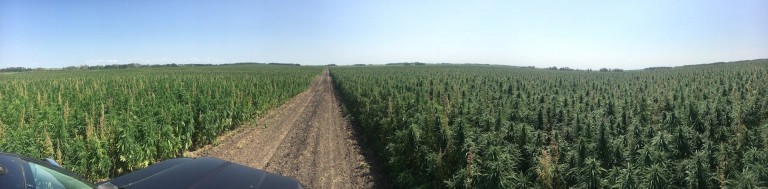
Manitoba hemp field

Saskatoon food centre