2026 Nuffield NZ Farming Scholarship. Apply by 17 August 2025. Read More...

Apply for 2026 Nuffield NZ Farming Scholarship by 17 August 2025. More details...

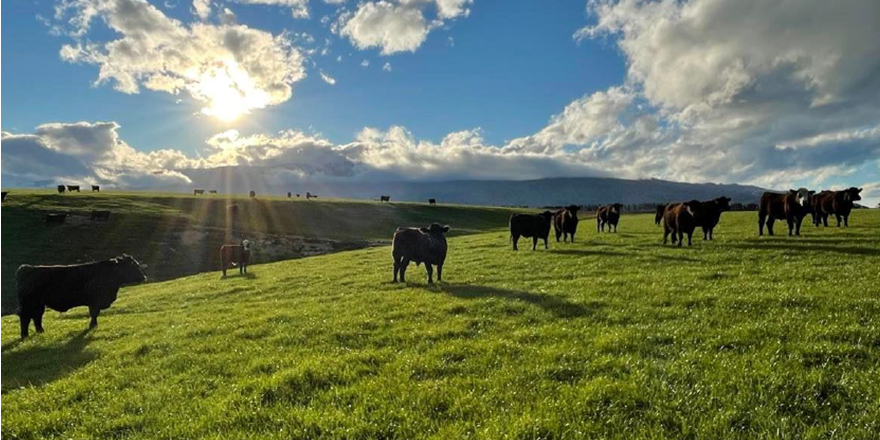
Owhaoko B&D land block.

Suzanne Hepi Kellogg report image

Executive summary

Māori land plays a critical part of Aotearoa and its history. Understanding the dynamics of Māori land ownership and the role they play to ensure their whenua is taking care of, is not as straight forward as people assume.

Māori landlocked land has influenced a change in the Te Ture Whenua Māori Act to lessen multiple barriers for Māori. This research has been conducted through a kaupapa Māori approach, for Māori by Māori.

This case study is concerned with understanding the land block, its isolated location, the barriers of access and how the trust can initiate a sustainable involvement for the owners. The report is based on semi structured interviews and analysis of secondary data.

Purpose

The aim of this report is to discuss the landlock block Owhaoko B & D with trustees and beneficiary owners. Overall, I am gathering data to build an understanding of what is occurring on this land block, trust developments and what the future aspirations could potentially be.

Key Findings

The key findings of this report have been grouped into themes and are a general understanding of the narrative around the story of the land block. It is supported by quotations from interview participants and is raw information that they have voiced.

Recommendations

  • Data – Embark on further research of this land block and internships conducted by beneficiaries or owners of this whenua with support from the trust and tertiary institutions.

  • Transformation – develop and deliver environmental programmes to help educate whānau about the importance of being kaitiaki for the land.

  • Collaboration – form a partnership with a Māori tech and digital business that could showcase the land blocks history and whakapapa digitally, to owners of the land that cannot experience it first-hand.

  • Capability development – Provide opportunities for owners to participate in projects associated on the block such as seed banking, wild game monitoring etc.

  • Leadership – Government to help support a leadership programme that is delivered partially out of the land block, informing this cohort about the change in legislation and how the land can contribute to this.

  • New initiatives – Establish other incentives for owners wanting to visit the block such as high-end accommodation, events, or annual activities etc.

  • Mātauranga Māori – Produce or deliver a wānanga based on traditional Māori practices such as rongoa, identifying native trees, land use etc.

Happy and Healthy at Work.

Executive summary

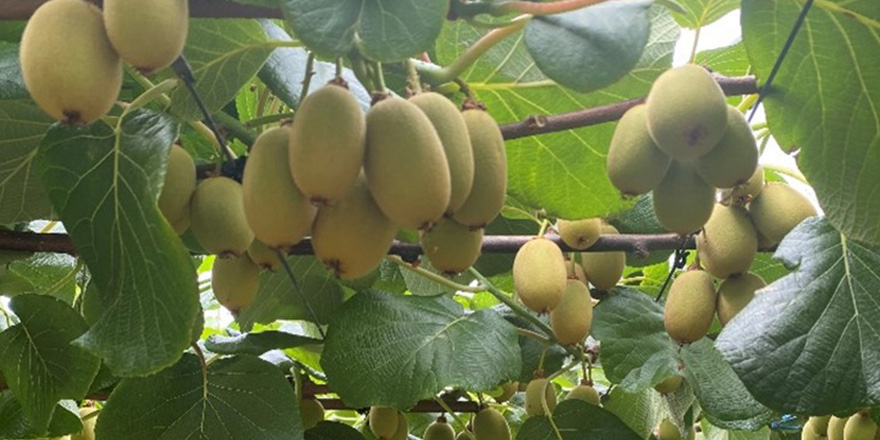
Labour and its shortage remain a critical issue that needs addressing, with the growth of horticulture predicted, coupled with on-orchard automation look ing closer to 2030. With low unemployment in New Zealand, engaging the Recognised Seasonal Employer (RSE) workforce is vital to remaining successful as an industry.

The purpose of this report is to understand and provide recommendations for the key attributes of a successful team within the seasonal RSE workforce, focusing on the kiwifruit industry. The methodology includes a literature review on the characteristics of a seasonal workforce and breaking down what a successful team looks like, followed by semi-structured interviews with ten orchard owners and pastoral care managers to gain insights from their experience with RSE teams. Themes were generated through thematic analysis to provide conclusions and recommendations.

Key findings

A family culture with a village mentality is key to the success of an RSE team and results in a team that is both happy and healthy at work. Team building and a homely living environment add to this. RSE employees’ purpose of making money to send home to their families, needs to be kept front of mind.

The RSE team needs to be well-formed with the right mix of skills, experience, and personalities with a clear and well-understood leadership structure. The team leader must be trusted and respected, creating productivity and success. Peer mentoring also adds to team success with team members supporting and encouraging one another.

The mindset of continuous improvement is essential to the success of the RSE team. Highly engaged RSE employees need development opportunities beyond their day-to-day tasks.

The relationship is symbiotic, with New Zealand employers needing to be willing to learn more about the values and culture of the Pacific Islands. All parties working together need to have a strong cultural understanding of similarities and differences, which improves team performance. Planning for continuity and succession is vital.

Recommendations

The following recommendations are made to orchardists looking to build a successful RSE team:

  • Develop a family culture, cultivating the village mentality. This is developed through having an inclusive living environment and creating a home away from home by their New Zealand employers.

  • Ensure all permanent employees have a good understanding of the similarities and differences of the Pacific Islander culture. This can be developed through developing a cultural training programme for all permanent staff.

  • Ensure RSE employees understand their purpose and motivation for being in New Zealand which is sending money home to their families. Checking in on this regularly to keep them reminded of their purpose is important to retain engagement.

  • Put in place an RSE team leader that is trusted and well-respected.
    • Create a culture of empowerment amongst the team to allow peer mentoring across team members.

  • Put in place regular team-building activities and be in regular communication with the RSE team.

  • The New Zealand employer needs to have a mindset of continuity and succession. The key to this is building a strong referral system.

  • Ensure RSE employees have access to development opportunities. The main provider of this is Vakameasina.

  • Be open to learning about the values and culture of the Pacific Islands.

What Goes In Must Come Out.

Executive summary

Social licence to operate (SLO), also known as just social licence, is an unwritten agreement between stakeholders and a business/industry on the impact that they can have on the environment and community.

As the values of the community change our SLO is going to come under increasing pressure. Stakeholders are increasingly scrutinising water usage, agrichemical and fertiliser applications, worker welfare, noise pollution and visual impacts. They want to see justification of use of the products and tangible outputs (saleable product).

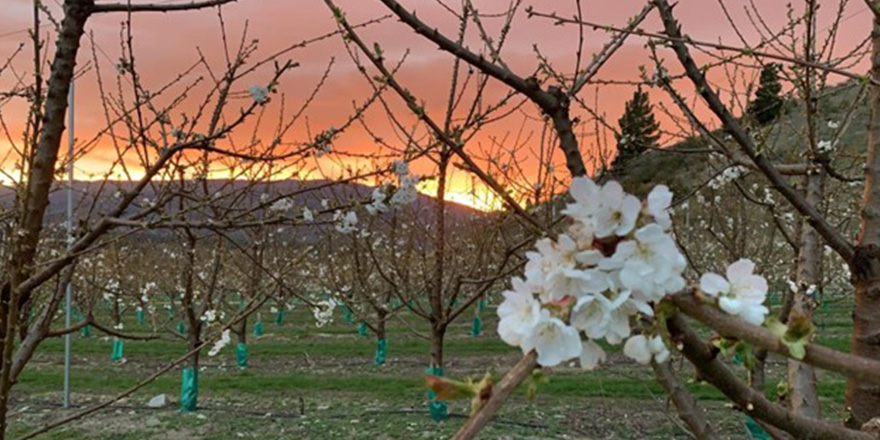
The aims and objectives of this project is to investigate whether growing cherries in an intensive, indoor growing system will protect our social licence to operate. Social licence will be defined, the aspects that are important to different stakeholders explored and how we can enhance our social licence with forward thinking growing systems explained.

A literature review was conducted to gather some insight to the origins of the social licence to operate concept, define social licence, identify stakeholders and examine what businesses can do to maintain social licence.

Three levels of stakeholders were identified as being significant to cherry production operations. These were seasonal workers, the general public and regulators. Semi-structured interviews were carried out with each stakeholder group to ascertain what aspects of cherry growing operations they perceived to be most important to the social licence to operate and what of these operations put the social licence to operate most at risk. These factors were then compared through a case study between a traditional open field cherry growing system and cherries grown intensive indoor growing system.

Conclusions

  • The practices of a cherry growing operation are likely to come under the spotlight. When questioned about operational practices and use of natural resources it is important that growers can provide quantitative data on the inputs involved and demonstrate attempts to increase efficiency.
  • Industry needs to be more open to sharing the positive aspects of their operations on the environment and community. We need to get better at promoting the good stories and letting people know all the good stuff we do. This way the industry has control over the information that is shared.

  • Education and communication are key to maintaining social licence to operate. Stakeholders are more likely to accept practices if they know why they need to occur, when they will occur, justification for the practice and what measures have been put in place to minimise any risk.

  • An intensive indoor growing system will protect the social licence of cherry growing operations. It will do this by decreasing the amount of water, fertiliser and agrichemical required to grow a kilogram of cherries while minimising the amount of waste product that is produced.

Recommendations

  • An industry-led research program needs to be set up to actively identify the stakeholders of cherry production and engage with them to find out their perceptions of positive and negative aspects of production and identify the strengths and weaknesses of each part production cycle. It will also identify practices that are deemed to be acceptable and unacceptable.

  • Embark on an information sharing and education program with stakeholders. Keep them up to date with orchard activities, invite them to the orchard and use social media as an information sharing platform.

  • Investment is required by industry to implement growing systems that are more efficient, that is have higher yields, less waste and use the natural resources and synthetic inputs more efficiently.

Ka Tipu Ka Ora – A Whanganui Regenerative and Resilient Sustainable Food System.

Executive summary

Te Tiriti o Waitangi as a Founding document

The research report is committed to being responsive to Māori as Tangata Whenua and recognises the Tiriti o Waitangi as Aotearoa New Zealand’s founding document. The principles of Te Tiriti o Waitangi as articulated by the Waitangi Tribunal, and the New Zealand Courts provides a framework for how we are to fulfil our obligations under the Te Tiriti daily.

More recently as outlined by the Ministry of Health, in 2019, “The Hauora Report” 1articulated five principles for primary care that are applicable to not only the wider health care system, but also to any person, organisation or Crown Agency working with Māori in our communities.

These principles are articulated as:

  • Tino Rangatiratanga: The guarantee of tino rangatiratanga, which provides for Māori self-determination and mana Motuhake in the design, deliver and monitoring of community services.

  • Equity: The principle of equity, which requires the Crown to commit to achieving equitable outcomes for Māori. This is achieved though breaking down barriers and enabling equity of access to ensure quality of outcomes.

  • Active protection: The principle of active protection, which requires the Crown to act, to the fullest extent practicable to achieve equitable outcomes for Māori. This includes that it, its agents, and its Treaty partner are well informed on the extent and nature of both Māori wellbeing outcomes and efforts to achieve Māori wellbeing equity.

  • Options: The principle of options which requires the Crown to provide for and properly resource kaupapa Māori services such as Ka Tipu Ka Ora. Also, the Crown is obliged to ensure that all services are provided in a culturally appropriate manner that recognises and supports the expression of Te Ao Māori models of service delivery.

  • Partnership: The principle of Partnership which requires the Crown and Māori to work in partnership in the governance, design, delivery, and monitoring of community services. This includes enabling Māori to express tino rangatiratanga over participation in governance, design, delivery, and monitoring of community services.

For this research project and to understand the importance for Māori, it was important for me as the writer to enable the principles to guide my mahi.

It was also important to provide community level and grassroots level insights and intelligence to enable communities to partner on the development of services to create positive impacts for people throughout the community.

These services should focus on addressing equity of access to services in a manner that is consistent with tino rangatiratanga, active protection in the co-design, provide options to ensure culturally appropriate services and developed through a solutions focussed community led partnership approach with the Treaty always at the forefront.

Executive Summary

Everyone should have access to affordable, healthy food. However, across Aotearoa New Zealand a rapidly growing number of people are experiencing severe food insecurity – which means that they don’t know where their next meal is coming from, or if it will be nutritious enough to lead a healthy, active life.

This research report will focus on answering the question of; How everyone, through a kaupapa Māori lens can move toward Sustainable Food Systems which are regenerative and resilient; prioritise locally grown and affordable kai; and uphold mātauranga (indigenous knowledge), kaitiakitanga (guardianship) and rangatiratanga (leadership) within this system.

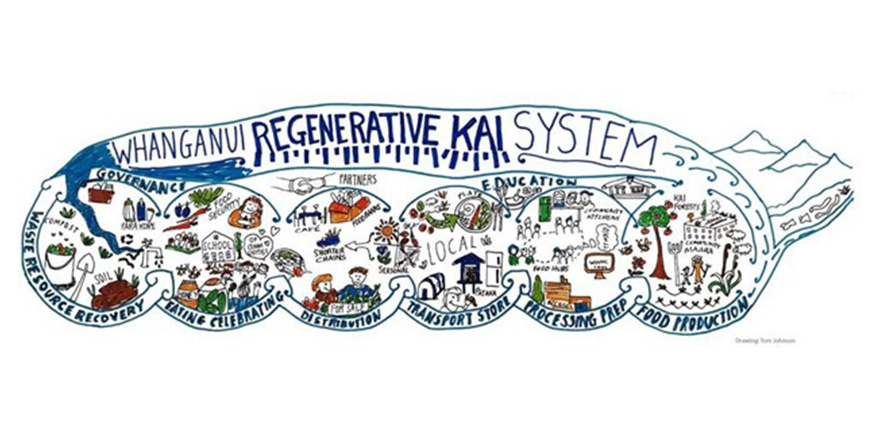
This research also aims to help develop and establish sustainable local food systems, so all individuals and whānau have access to good food to improve community health and wellbeing; where “sustainable local food system” is a collaborative network that integrates sustainable food production, processing, distribution, consumption, and waste management to enhance the environmental, economic, and social health of a place, ensuring food security and nutrition.

This research supports the vision that everyone in Aotearoa New Zealand should be able to access good food at all times; where “good food” is food and beverages that are affordable, nourishing, appetising, sustainable, locally produced and culturally appropriate.

Key Findings

  • Kai (food) is all about whakapapa (genealogy). It is the great connector that joins us to our tupuna (ancestors), our mokopuna (descendants), our whānau (families), te taiao (environment), and each other. Through kai we are connected to the plants, the animals, the waterways, the oceans, the forests, and the atua (deities). The recipes of our ancestors get pulled out in modern kitchens, linking us across time and bringing us together around the table to love and learn.

  • Kai is central to Māori concepts of wellness and for generations it has brought whānau, hapū and iwi together. Kai is medicinal. When it is nutritionally dense and healthy, it feeds and heals our body and mind. When it is grown by our people, in our place, it feeds and heals our spirit. When it is prepared and eaten together, full of love, it feeds and heals our families and communities.

  • Kai is the glue that holds so many of our communities together, and it is the sustenance that keeps our people well in body, mind, and spirit. However, for most people today our food system is not medicinal. Our current food system negatively affects our physical wellbeing, mental health, and community resilience. At the same time, the food system is causing environmental damage and degrading mana atua (spiritual integrity).

  • Māori have solutions to regenerative and resilient food systems based on Mātauranga Māori.

  • Many suburbs in Whanganui are food swamps and/or food deserts. This means residents and their population have good access to bad food and bad access to good food.

  • Individuals and whānau in Whanganui are suffering from diet-related chronic diseases.

  • One in five deaths can be associated with a bad diet. The leading diseases associated with diet-related deaths in New Zealand are coronary heart disease, stroke, colon, and rectum cancer.

  • Those who live with diet-related diseases are more likely to experience poorer mental, social, and educational outcomes.

  • Community, non-governmental, and non-profit organisations deliver several initiatives tackling the food system, particularly around urban production, and food environments. However, many of these initiatives face obstacles including policy constraints, funding constraints and lack of influence or access to decision-makers.

  • There are also significant and complex underlying systemic issues that cannot be addressed by the community alone e.g., loss of productive land, unsustainable business practices, waste reduction, regulations that can lead to commercial interests favoured over community wellbeing, fragmented approaches to addressing the food system e.g., multiple stakeholders with shared interests working independently.

  • The COVID-19 pandemic has seen growing discussion around the critical resource of food. And while New Zealand has an abundance of food produced from its land and seas, like many nations it still struggles with food security within its communities. The lockdown period had highlighted the need for resilient local food systems that can deliver food security and food sovereignty back to our communities.


Supporting older farmers to adapt to the rapidly changing food and fibre sector.

Executive summary

To this day New Zealand’s food and fibre sector continues to lead economic recovery through the Covid-19 response. This sector thrives on challenges and makes the most of opportunities to further develop.

With an increase in success, there is also an increase in challenges. Some of these challenges are supply chain disruptions, rising costs of fuel and fertiliser, workforce challenges, floods, drought, and the increase in new regulations.

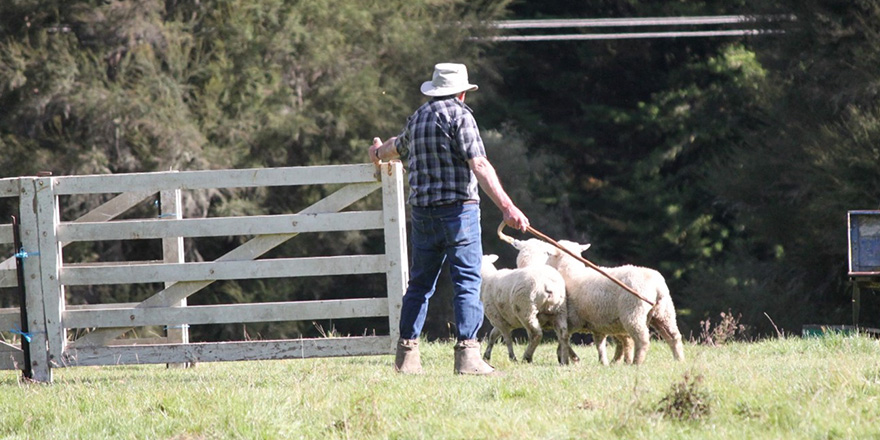
This report aims to better understand how the food and fibre sector can better support older farmers. I aim to better understand the changes and challenges older farmers are currently facing.

To produce recommendations, this report will further research into adopting change, farmer mindset, reverse mentoring, learning preferences, key drivers, and challenges they face as older farmers.

Older farmers enjoy the farming lifestyle and make their systems work for them. As farmers age, they start to show less desire and ability to be as productive and innovative as they were at mid-age. They focus on looking after their health by adopting new smarter ways of working.

Older farmers are feeling frustrated and confused about the new policy that is being brought out with little consultation and feedback opportunities.

From my findings, there is a great opportunity to further educate older farmers through a reverse mentoring model. This system provides an opportunity for both older farmers and younger farmers to communicate through generations.

This system will increase the sharing of perspectives and skill sets. And it can also promote more innovative and act as a cost-effective professional development tool that capitalizes on building bridges between generations.

Recommendations:

  • Establish a reverse mentoring system where younger farmers help educate older farmers on the usage of technology or other methods on farm.
    This method will help to increase the level of communication between different generations to help increase the level of change.
    There is great potential for the food and fibre sector to adopt this method into businesses to create more success.

  • Industry support organisations should develop more one-on-one and small-group support workshops. These workshops need to be consistent, as education is never a once-off. Little to no charge for this workshop as older farmers rarely invest in their education. Learning methods should be targeted at the audience.

  • Encourage older farmers to participate in a community catchment group. This is a great chance for older farmers to share knowledge and learn from others. Community catchment groups are local, low cost and farmer led.

  • Close the gap between farmers and the government. Farmers need more trust from the government to implement change that is driven by the government. The government needs to be clearer about its intentions for policy and put more time and effort into the consultation process.
    I recommend that with the consultation process, there should be more time spent going out to farmers in their community.
    This will show more effort from the government and simply give the farmers the best opportunity to attend the consultation process and provide feedback.

  • Improve connectivity of cell phone coverage and faster internet for rural communities. Central government should provide more resources to help achieve this, as poor connectivity to this infrastructure is a barrier to farmers’ uptake of technology and change.

Farming Lessons from Te Ao Māori.

Executive summary

The aim of this report is to provide an understanding of te ao Māori (the Māori world view) and mātauranga Māori (Māori knowledge) in an agricultural context and to explore how some of the concepts within this area can be utilised in a way that benefits both individual farms and the wider industry.

The methodology used to do so includes a literature review on these two areas as well as the key trends and challenges in the agricultural industry.

This is followed by semi-structured interviews with four farming organisations implementing some or all of the concepts reviewed. The interviews explored their core drivers and aims and the benefits and challenges of in incorporating these concepts and practices. Thematic analysis of the responses from interviewees was utilised to assess the qualitative data.

Key Findings:

Utilisation of the “quadruple bottom line” approach (environmental stewardship, social responsibility, intergenerational wealth creation, and cultural revitalisation), taking an intergenerational perspective, Kaitiakitanga (stewardship) and the relationship between whakapapa (genealogy) and whenua (land) are key areas of te ao Māori and mātauranga Māori where great value for agriculture can be achieved.

These areas have particular importance and relevance when used as potential solutions for the key challenges and trends in Aotearoa’s agricultural sector. The most significant of these are agriculture’s environmental impact and the rise of the conscious consumer as well as export market volatility and uncertainty in the current global context.

Within an agricultural context there are numerous practices, knowledge, concepts, and approaches are present in mātauranga Māori and te ao Māori that have significant potential value. There is also a clear alignment as they are all focused on the natural world and society which are the fundamental components of both te ao Māori and agriculture.

The most commonly incorporated aspects of mātauranga Māori were the use of kaupapa (principles and ideas which act as a base or foundation for action) to guide decision making, embracing a wider view of success and a holistic view of farming practices and the importance placed on relationships and connections through whanaungatanga (relationship, kinship, sense of family connection).

Recommendations:

  • Have patience and persistence in understanding the perspectives of Mana Whenua at all levels and involve them in governance and decision-making processes to ensure the best long-term outcomes are achieved on a consistent basis for communities and the environment.

  • Creation of think tanks or collaborative projects focused on the agricultural sector with individuals from diverse backgrounds encouraging open thinking and interpretation of ideas.

  • Encourage the uptake of new and novel approaches within farming and agricultural businesses as well as experimentation and trialling both on-farm and within business models.

  • Cultivate a culture in agriculture of combined and cross-cultural thought processes where utilising western technological advancements within te ao Māori frameworks is celebrated and encouraged.

  • Facilitate the development of kaupapa for farming businesses utilising te ao Māori to embrace wider definitions of success.

  • Create a platform for meaningful and genuine engagement between iwi, hapū and industry to take a collaborative approach to the generation of solutions for the multitude of wicked problems facing both the agricultural industry and the communities it is present in.

Farm System Influence on Dairy Workforce Retention.

Executive summary

There is significant difficulty faced by dairy farmers and the NZ dairy sector, particularly when attracting and retaining quality employees (Rolfe, 2017). The challenge of retaining talent and passion on NZ dairy farms is familiar for many.

A surveyed 49% of farm assistants on NZ dairy farms leave their employment in less than one year from starting (Federated Farmers & Rabobank, 2022). This is not sustainable for the dairy sector moving forward due to the associated financial burden and wellbeing concerns generated from high turnover on NZ dairy farms.

There is an abundance of literature and findings recognising the “soft skills” and human resources (“HR”) that can be altered to improve job satisfaction and retention in the NZ dairy sector. However, there is limited progress made on reducing overall turnover in the dairy sector over the last 10 years.

There is a gap in the literature, for the NZ dairy sector, among other sectors, considering how aspects of a farm system may influence employee job satisfaction and retention, why this may be the case and how valid solutions can be implemented.

This research is important given the current unsustainable turnover in the NZ dairy sector and the lack of progress seen at sector level in improving turnover statistics over the past decade.

To answer these research questions qualitative data was collected via a review of literature and 13 semi structured interviews. Each interviewee was unique as they either had a different role or set of responsibilities.

They were from different nationalities or backgrounds, had a wide range of farming experiences and were working on very different farm systems to one-another. As a farm systems consultant I have also been able to draw on my experience working with a range of farm businesses to inform the development of research questions as well as associated research and solutions.

A thematic analysis was then conducted between the literature review and the interview findings. Common and contrasting themes were evaluated and conclusions were made from these findings. Some of the findings included:

  • Various difficulties within a system build on one another having more of a multiplied, rather than summative, influence on job satisfaction and retention of NZ dairy farm employees.

  • Actual tasks required to be completed are not necessarily what influences an employee’s job satisfaction and retention. There may be more effective improvements in job satisfaction and retention on NZ dairy farms if focusing on the internal task efficiencies, performance factors related to these tasks and ensuring the purpose of tasks are well understood by employees to then be able to include them in successive decision making.

  • Understanding an individual’s strengths and passions before employing, or at the early stage of employment, will guide specific responsibilities best to provide this individual to improve their job satisfaction and chance of staying within the farm team.


Recommendations were then formed from these conclusions for individual farmers and the NZ dairy sector and are as follows:

For Farmers:

  • Consider examining each part of your specific farm system with all team members separately to gain understanding of the potential.

  • Investigate job preferences of your farm team members and specifically any solutions they may have to the difficulties found within the system.

  • Examine each individual’s strengths and passions before employing to guide their most suitable responsibilities and improve their job satisfaction and retention in your farm team.

  • Commit to explaining the purpose (the “why”) of all aspects of the farm system and policies implemented on farm to employees to improve their engagement and satisfaction in the business and improve the chance of retaining them in your business.

  • Complete and understand your specific farm’s total investment return and cash flow implications of any proposed change in your farm system.

For the NZ dairy sector:

  • Showcase the “top performing farmers” as case studies online to inform the rest of the sector what system adjustments have helped, how they have been implemented and how they are continuously managed to improve staff satisfaction and retention.

  • Commit to investigating more independent farm case studies to uncover further solutions and connections between farm systems and employee retention.

  • Investigate the investment return and other benefits of various technologies discussed in this research along with other technologies or procedures available.

  • Develop further farmer decision-support tools to be created to evaluate the economics of adopting new technologies on farms and allow for comparison with other technologies.

Forests or Fleece.

Executive summary

The North Island’s marginal country is undergoing a change in land use at a pace it hasn’t seen since the wool boom of the 1950s. This is being driven in large part by afforestation with exotic trees, primarily Pinus radiata being planted for traditional timber harvest as well as for carbon farming purposes.

This report seeks to understand the reasoning behind, and effects of, this change from an economic, environmental, and cultural perspective, and to look out 30 years to establish longer term viability of traditional farming, rotational and permanent forestry and Manuka plantation for the purpose of honey production and carbon sequestration.

Key Findings

  • Afforestation of marginal land provides significant economic advantage over traditional grazing in all its forms. The benefit varies from 346% (Manuka) to 974% (Permanent forestry) of the average profit from hard hill country over the last decade. This disparity is likely to increase in the next 30 years as carbon prices rise.
  • Afforestation is not going to slow down in the medium term with projections suggesting another 1.5million hectares of planting will be required to achieve New Zealand’s carbon targets.
  • Currently the cost of establishing native forests is prohibitive and the carbon benefits are not competitive with exotic forests, primarily radiata. As such radiata will continue to be the tree of choice until substantial subsidies are provided or changes are made to the legislation.
  • All afforestation options are superior in their environmental impact if managed properly. Manuka plantation is the most environmentally friendly option followed by permanent forestry, although this does have long-term risks if radiata is used.
  • Both permanent forestry and Manuka plantation have negative effects on labour FTE’s in rural communities compared to grazing on marginal land. Rotational forestry is significantly higher in both FTE and value chain than grazing but the location of these benefits is unknown, they may not be truly beneficial to the local community. This problem will only increase over the next 30 years as more marginal land is converted into permanent forest.
  • Maoridom are generally pro exotic forestry establishment while being aware of the environmental risk and native forestry being the best option for them. This is due to historical marginalisation leaving Māori with significant areas of landholding where afforestation is the only profitable option.

Recommendations

  • Central and local government need to support the establishment of native forests with the benefits that they entail. Significant subsidies need to be put in place to incentivise this form of afforestation.
  • Government support of permanent exotic forestry via subsidies and entry into the ETS needs to be limited to class 6 & 7 land only, and proper site analysis undertaken to ensure soil types and contour are suitable for this purpose to slow the change of productive land from pasture into permanent forests.
  • MPI should increase the threshold for land that is registerable under the MPI lookup table to a minimum of 200ha to streamline the process of registering land for entry into the Emissions Trading Scheme and the allocating of subsequent units, and minimise the cost for landowners looking to establish forestry on class 6 & 7 land.
  • Landowners on marginal land need to isolate and establish accurate profitability information regarding their class 6 & 7 land and confirm a baseline, then environmental and cultural considerations need to be carried out by the landowner. This will help in establishing the best option for them.
  • Investigation into potential afforestation options needs to occur on a case-by-case basis via communication with commercial rotational, permanent and Manuka forestry providers. Afforestation of marginal country is in most cases the most sensible outcome in any of its current forms. Landowners need to establish what options are available in their circumstance and establish a cost/benefit model for each of these.

Kellogg Rural Leadership Programme takes its 1,000th step forward.

Kellogg Rural Leadership Programme - Delivery Team

Can I have your attention please – the one thousandth graduate of the Kellogg Rural Leadership Programme has just left the building!

Like the graduates before, they return to their family, community, industry, and to contribute to a sector that just got a little smarter, a little stronger.   

We’ll know more about the scale of the Kellogg Alumni’s collective impact as we get closer to completing the Mackenzie Study with the Otago  School of Business.

The first stage of this Study revealed remarkable personal and sector gains attributable to participation in the Nuffield Scholarship. The second stage should show similar results for Kellogg. After all, it has evolved over decades to be one of the most respected rural leadership programmes in Australasia.  

“People know the programme. It’s respected. They’ve seen the contributions that the Kellogg graduates have made over time”, says Dr Scott Champion, Programme Director. 

“It’s enormously significant. Obviously, there are other programmes that contribute as well, but you can’t deny the programme’s longevity. It has impacted on large scale now – we’ve just had the 1000th Kellogg Graduate.  

“Depending on whether we do two or three programmes, that’s somewhere between 45 and 65 Scholars per year. You start to build quite a community”, adds Scott Champion. 

Kellogg, a leadership programme spanning six decades.

The programme was initially developed in collaboration with the Kellogg Company in the US, as a way to enhance global leadership capability. Since then Kellogg Rural Leadership programme was reinvented many times over, keeping up with the challenges and the times. It delivers New Zealand centred syllabus, accredited by Lincoln and Massey Universities and delivered by the Rural Leaders.

In 2013, Kellogg was transferred to the newly-formed New Zealand Rural Leadership Consortium. This merged with the Nuffield New Zealand Farming Scholarship to create a single organisation. Four years later, the consortium became a registered charitable trust and changed its name to the New Zealand Rural Leadership Trust (Rural Leaders). 

A partnership known as the Pāhautea Initiative was formed in 2020 between Lincoln University, Massey University, AGMARDT and Rural Leaders. The initiative focused on building leadership capability in the regions, with the aim of creating a sustainable future for Food and Fibre.  

More recently, Kellogg academic accreditation through both Lincoln and Massey Universities has become available to those who undertake the Programme.

Kellogg offers new networks, friends and industry connections.

Rural Leaders deliver up to three programmes a year, with two based at Lincoln University. The other, in alignment with the Pāhautea Initiative’s aim of growing flourishing regions, is the same Lincoln Programme, only regionally based.  

Numbers are kept low to ensure a transformative experience, as the Kellogg journey is as much about learning from fellow scholars and developing a pan-sector network of friends as it is being exposed to industry leaders and new ideas. 

“For many Kellogg scholars, the enduring relationships and access to a network of like-minded change agents offers the most decisive outcome from the Programme. There’s a strong sense of trust, reciprocity, and a ‘pay it forward’ attitude which emerges amongst participants, says Phil Morrison, Kellogg Facilitator. 
 

The Kellogg eco-system of support and delivery.

The Kellogg team is passionate, dedicated, and ably steered by Chris Parsons, Rural Leaders’ CEO. Lisa Rogers, Programmes Manager, Annie Chant, Operations and Events Manager further support Scholars and Kellogg facilitators Dr Scott Champion and Phil Morrison, Dr Patrick Aldwell and examiner Professor Hamish Gow.  

The team work hard to provide a varied and stimulating learning experience.  

The Programme is delivered over three phases and includes two papers, the first of which requires the completion of specific assignments. This is delivered by Dr Scott Champion and Phil Morrison. 

The second paper, delivered by Dr Patrick Aldwell, involves completing a research project and giving a presentation at the end of the programme.  

Kellogg pushes beyond Primary sector boundaries.

On the first day of Phase One, Scholars are asked an important question. 

“On the first day they come in to the programme, we ask them, what’s the one thing you want to hit by the end? And then on the last day, we ask them what was most valuable thing to you through the programme?”, It’s a before and after comparison of perceptions of value,” says Dr Scott Champion. 

The results of this survey reveal where the true value is. One Scholar coming into the programme states, my one thing would be ‘…to find where I fit.’ At the end, that same Scholar says their most valuable thing was ‘the connections made with fellow Scholars and the greater Kellogg network’. Fit found perhaps. 

“It’s something you see really elevating as Scholars go through. And I think that’s evident in what they talk about as being most valuable to them. They often come in with something quite narrow and specific, like ‘I want to learn how to do X’, but when they leave, it’s about networks, understanding systems, understanding stuff beyond the boundaries of the sector they work in”, adds Dr Champion. 

Develop a questioning mindset with Kellogg.

On Phase One, Scholars embark on a nine-day, eight-night residential module based at Lincoln University, or potentially closer to home for the regionally based programme.  

This phase sets the foundations. It explores leadership skills and tools, including personal and team styles, design thinking, and critical analysis. Leadership applications of skills are also covered in various situational contexts, along with leadership strategic contexts – with a focus on New Zealand Food and Fibre Sector strategies and leadership challenges. 

Most importantly, underpinning this is the active encouragement of Scholars by facilitators, to develop a questioning mindset. 

“We play a video on the first day of Phase One, where a guy is saying, managers are defined by the things they know, leaders are defined by the questions they ask. It’s a 30 second clip, and it just nails it for me”, says Dr Champion. 

“We’ll often see comments in Scholars’ reflection journals from Phase One like, Oh, man, I thought I needed to know everything. But perhaps I don’t need to know everything. I just need to be able to think and ask questions.” 

Kellogg builds the confidence to engage with food and fibre leaders.

What Kellogg does so well is to expose Scholars to industry leaders. All of these senior people are eager to engage in conversations, and look to Scholars as the next generation of leaders, hungry to learn about the things they need to be thinking about. Kellogg creates a new interface for that knowledge transfer.  

“There’s often a reticence when senior or experienced industry people get in front of Scholars, to engage in a conversation, to ask questions. I completely understand that. So, what we’ve deliberately tried to do is reduce the monologue from the front, and increase the opportunity for questions. And then give them a real nudge to speak up. Scholars soon discover these people are very approachable,” says Dr Champion. 

“So experientially, we shift beyond just the head learning, to the heart learning. They think, I can do this, it was alright. That industry leader seemed to think that was an interesting question.”  

Scholars also make contact with industry leaders themselves, particularly during the individual research projects. Engaged people from a range of industries often respond to Scholars’ questions within 24 hours, and are more than happy to do interviews to help with research. 

“I think it speaks to the brand and standing of the Programme. There’s an opportunity to use the Kellogg brand to be able to talk to industry people and have some conversations that you might not otherwise be able to do”, says Dr Champion. 

Kellogg Scholars - from lifelong friends to lifelong learning.

Throughout the Programme, Dr Patrick Aldwell, Academic Director, works closely with Scholars to help them complete an individual research project. This is undertaken between Phase One and Phase Three.  

Scholars choose a topic of interest that also contributes to developing leadership outcomes and aspirations. The project brings together problem definition, research tool application, critical analysis, report writing and presentation. 

Dr Aldwell fosters a philosophy of lifelong learning with Scholars, and for many this begins with the research and reading disciplines acquired doing the research project. 

“That’s something that you need to adopt to be a leader. And the key part of that is reading widely”, says Dr Aldwell. 

On the programme the facilitators demonstrate to Scholars the importance of the lifelong learning piece, particularly in the critical thinking and critical analysis area, gathering different perspectives, seeking information, and evaluating its value and authenticity as well. 

“If there’s one key thing that’s changed in the last two years, is that we’ve gone from just comparing and contrasting information, and the status of that information, to comparing, contrasting and evaluating it,” adds Dr Aldwell.  

Dr Aldwell explains that one huge benefit he has seen arise from individual research is that Scholars gain at least one specialist area of knowledge, to the extent that in some organisations, they’ve become the go-to person for that area. Whether it’s dealing with anything from waste in the dairy industry, to succession planning.  

“That’s not just the knowledge and capability side of things, but also the ability to access, evaluate and produce credible information and analysis in an era of rising misinformation, and disinformation, the politicisation of those, and of knowledge,” states Dr Aldwell. 

Kellogg is an executive leadership programme gearing Scholars for success.

On the Programme’s remaining two phases the foundations built in Phase One guide Scholars strongly.  

Phase Two’s five day, four night residential in Wellington, looks at how to engage and influence decision making at local, regional and central government and industry level.  

Phase Three’s five-day (four-night) residential at Lincoln University, is the culmination of the project work, where Scholars demonstrate the application of research, presentation and critical analysis skills.  

A final goal setting for the future piece includes personal brand identification and provides the platform for ongoing learning and leadership development. 

“I get a real kick out of watching the Scholars succeed in life, because I do follow them, watch them grow, and develop. Seeing them have confidence to take the next step, no matter what that is. I’m constantly astounded at the energy they have, the strength of character they have, to see things through,” says Dr Aldwell. 

Who is the Kellogg Rural Leadership Programme for?

Many Scholars who come into the programme, are in the transition from a technical management role to generalist management role.  

“The things that get you through that technical pathway, which is typically about knowledge and excellence, these are not the things that are necessarily going to equip you for the next generalist bit,” says Dr Champion.  

The programme helps leaders make that transition, whether they’re slightly beyond that, right on the cusp, or whether that might be something for them in the future.  

Arming Scholars with the ability to understand and make connections in ways that others can’t predict, or don’t. This is the alignment between what the programme does and equipping people to progress in their careers.  

“The best Scholars, leave able to join the dots, and make connections across areas that might seem quite disconnected when you first look at them. They’re able to lift above, like the specifics of the context of something, and think quite strategically about it”, notes Dr Champion. 

“They see connections across sectors or issues and that helps them think about opportunities, risks and challenges in quite different ways. The ability to do that as a leader is an enormously helpful thing”, adds Dr Champion. 

Rural Leaders’ bigger picture and Kellogg’s role in it.

The Kellogg Rural Leadership Programme, The Nuffield New Zealand Farming Scholarship, and the Value Chain Innovation Programme exist for one reason – to grow leaders with the ability to deliver the changes in food and fibre that ensure our communities, country and planet flourish. 

This isn’t just a version of a line on a website – 1000 Kellogg graduates, our rural leaders, are delivering that change. In the coming months we’ll share the Mackenzie study’s findings on their impact. There’s unlikely to be too many surprises. 

Dr Champion concludes,

“We have a collective intent in the Kellogg Programme, where we want to see Scholars contributing back to the sector and rural communities and ensuring the wellbeing of the regions and their people.” 

Investment Management meets Agriculture.

Emily Walker_Investment management Decision making_Kellogg report image

Executive summary

The traditional model of primary production in New Zealand is facing significant challenges from internal and external forces, which are only expected to increase over the coming years. These include water security and quality, climate change, carbon emissions, labour availability, market forces and biodiversity. To continue in business and remain sustainable for future generations, transformational change will be needed requiring sector wide strategic and capital investment programmes.

This research report attempts to provide specific support for agri-business leaders. It focuses on answering the question: Does an evidence-based approach to decision making improve outcomes for small agri-businesses in New Zealand?

Research was undertaken using an inductive approach to thematic analysis, allowing the data to determine the themes, rather than be driven by the researcher’s theoretical interest or specific questions (Braun & Clarke, 2006). The data corpus was constructed through a literature review and semi structured interviews. The outcome of the analysis was a thematic map, showing two themes: the decision maker and decision framework.

Key Findings

  • There is significant opportunity to support agri-businesses through a decision-making approach that uses evidence to consider the environmental, social, cultural, and economic impacts of their actions.

Decision Maker

  • Whilst maintaining an understanding of the current operating environment can be challenging (for decision makers), it allows business leaders to be agile and take advantage of opportunity early. The key is in knowing what topics you must be informed of, then focusing efforts on those domains.

  • Decisions must be aligned to an organisation’s purpose, else there is potential for mismatched decision making, detracting from the business’s momentum, diluting leader and team focus, and ultimately, diminishing the purpose the business is working to achieve.

  • Decision makers need to be more ambitious. The interviews found that many organisations were simply ‘playing not to lose, rather than to win.’ The case studies revealed that this could lead to the continual investment in tried and tested solutions.

Decision Framework

  • Robust analysis of the problem ensures the issue itself is being solved, rather than only managing symptoms. This avoids unintended consequences and rework, increasing the likelihood of developing an enduring solution.

  • Decision-making process matters six times more than analysis to producing impactful decisions (Health & Health, 2013). However, process should be flexible, allowing for the idiosyncrasies of individual agri-businesses, and is improved through collaboration.

  • In addition, the inclusion of testing into the decision-making process reduces risk through proof of concept, testing assumptions and bias, checking decision makers haven’t inadvertently jumped to a solution, and provides awareness of different perspectives to enable continual improvement.

  • Analysis of two options rather than just one also improves likelihood of success by a factor of six (Health & Health, 2013). Widening the set of options evaluated improves discussion and debate, increasing the probability of strategic decision making occurring.


Implementation

  • Evolutionary implementation, the compounding effects of numerous small changes, has a higher probability of creating successful, enduring change.

  • Development of a strategic plan to support implementation of the investment across the business can support accountability for action, prepare for opportunity, understand risk, measure results, and build credibility with stakeholders.

Recommendations

As a result of the findings and discussion presented in this report, the following recommendations are made to the leaders of small agri-businesses:

  • Develop and maintain an understanding of the operating environment in which the reader is acting.

  • Align all decisions with the business’s purpose and principles/values.

  • Engage a multi-skilled advisory board to collaborate on and support decision making. This board may include professional advisors, accountant, banker, lawyer, and an independent member.

  • Utilise structured processes and evidence to support decision making.

  • Prepare a strategic plan to create accountability for action, prepare for opportunity, understand risk, measure results, and build credibility with stakeholders.