2026 Nuffield NZ Farming Scholarship. Apply by 17 August 2025. Read More...

Apply for 2026 Nuffield NZ Farming Scholarship by 17 August 2025. More details...

The Circular Economy of Glass Packaging for the New Zealand Wine Industry and the Impact of a possible Container Deposit Scheme.

Executive Summary.

Glass recycling is the perfect example of the circular economy in action, right here in New Zealand.

It is becoming increasingly obvious, that to retain New Zealand’s prized clean green image and for our primary sector to remain competitive, a circular economy is an important part of our strategy.  The success of a circular economy of glass depends upon intelligent supply chain management to ensure sustainable customer demand. 

“A circular economy is a systematic approach to economic development designed to benefit businesses, society, and the environment. In contrast to the ‘take-make-waste’ linear model, a circular economy is regenerative by design and aims to gradually decouple growth from the consumption of finite resources”(MacArthur, 2018). 

Glass is the most sustainable package on earth and is the best example of the circular economy in action in New Zealand because,

  • It is infinitely recyclable and is made purely from raw natural ingredients
  • Over a tonne of natural resources are saved for every tonne of glass recycled
  • Every tonne of glass recycled saves approximately 670kg of CO2 over virgin materials

Recovery and reuse of glass contributes to a low emissions economy, with the use of recovered glass in manufacturing. This is because recycled glass can be melted at a lower temperature than virgin materials so consequently requires less energy. For every 10% of cullet used in the manufacturing process, O-I can achieve a 5% reduction in greenhouse gas emissions.

On average, a wine bottle is made from 67% recycled content manufactured at O-I New Zealand. The availability of recycled content primarily depends on our country’s waste collection infrastructure.  The existing voluntary product stewardship scheme for glass containers managed by the Glass Packaging Forum (GPF) is working very effectively, and is on track to meet a recycling rate of 82% by 2024. The GPF is a collaboratively designed circular economy for glass, returning cullet to O-I furnaces through a network of collection hubs, services and community facilities in order to ensure the circular benefits of glass are harnessed again and again.

In the circular economy of glass we refer to closed loop application, where we all play a part in helping a glass bottle is recycled back into a new glass bottle. There are sound economic and environmental incentives for O-I to support the recovery of high value glass and should be well understood the significance O-I have in driving the circular economy. Without a manufacturing plant with a commitment to cutting carbon reduction, using high portions of recycled content, we could not have a circular economy.  A majority of the New Zealand wine bottle supply chain of glass starts, and ends at O-I.

It is important to understand the glass recovery supply chain and the role it has within the circular economy design for glass.  To date, there are two glass recovery methods;

  1. Glass separate recovery – high value cullet
  2. Co-mingled glass recovery (problematic to the supply chain) – more complex and lower quality cullet

The cost and time it takes to separate, colour sort, grind and beneficiate the glass from co-mingled collections adds significant complexity and cost to the glass recovery system. Reduced quality glass recovery through co-mingling, can still be used with no environmental degradation for sport turfs, golf bunkers and base course for roads; however cannot ever be returned back to the glass lifecycle and therefore represents a break in the circular economy of glass.  To sustain a circular economy, Auckland council should cease co-mingling glass. 

The Ministry for the Environment has a consultation process on priority product guidelines (Ministry for the Environment, 2019) which included all beverage packaging, including glass.  Before stage one of the consultation had closed,  Minister Sage further announced work toward developing a Container Return Scheme (CRS) through a Waste Minimisation Fund application project managed by Auckland and Marlborough District council on 25th of September. The list of representatives on the working group, does not include New Zealand’s only cullet purchaser.

The basic principle of a Container Deposit Scheme is that the consumer pays a deposit at the point of purchase, and the deposit is refunded when the consumer returns the empty container.

This report highlights the Minister have not considered the market demand for glass and the impact an influx of extra glass would have on the supply chain.

Container deposit schemes are not supported by the New Zealand wine industry, or those involved in the glass recovery process, because they are expensive, are only one type of capture system for glass, can create recycling inconvenience for ratepayers, are not circular in nature, and are a particularly challenging solution for the hospitality sector. Marlborough is New Zealand’s largest wine region producing 77% of the total wine production. “Wine Marlborough supported the introduction of circular waste reduction policies where they meet the criteria under the Waste Minimisation Act; yet in the case of glass we believe those criteria are not met” is cited in their submission to the proposed priority products and priority stewardship scheme guidelines. “Wine Marlborough recommend continuation of the current voluntary scheme with government support for investing in further infrastructure”.

This research concludes that there is little supporting evidence that a container deposit scheme will increase overall glass packaging recycling rates, nor provide the recyclate needed to drive a circular economy anywhere in the world. 

The countries that have the best glass recovery rates in the world do not operate a container deposit scheme (Lee, Bell, Garcia, Lee, & Harding, 2019) indicating CDS is not the best solution to increase glass recovery rates. Denmark, Sweden and Norway are exemplar countries that have container deposit schemes, which exclude glass.   

In order to maintain a circular economy for glass within the New Zealand wine industry, CDS should exclude glass.  A circular economy is not possible without strong collaboration with all glass stakeholders and it is evident this has not happened yet with CDS. Should CDS progress, I urge the Ministry for the Environment to better consolidate the glass recovery process with O-I.

New Zealand would benefit from an Extended Producer Responsibility (EPR) scheme around material flow of a specific product; in this instance glass.  The findings from my industry survey show the wine industry has expressed a keen interest to make this mandatory. This is expected to fast track GPF glass recovery efficiencies and position us as world leaders in introducing the circular economy within glass.

Economic Complexity and the New Zealand Wine Industry. Implications for Government Policy in the Primary Sector

Executive Summary

New Zealand’s (NZ) primary sectoris facing uncertainty from all angles. Brexit and the USA/China trade
war has thrown our primary sector exports in the air and we don’t know where they’ll land. Climate
change, sustainability and natural resource management ask serious questions of the sector’s
performance and its adaptability. Changing consumer preferences along with a rise of low carbon
impact lifestyles also put pressure on the sector. Global export dynamics are in flux as emerging
economies such as India and China build momentum. On top of this, a myriad of government
regulatory changes in the form of the Zero Carbon Bill, Three Waters Review, and the movement for
a living wage, to name a few, will continue to affect the primary industry sector.
New Zealand has the 51st largest global economy measured by nominal Gross National Product (GPD),
21st largest measured by nominal GDP-per capita at $41,555 (USD)). New Zealand’s GDP-per capita is
comparable to Japan, which has a population of 127 million people and is ranked 3rd in GDP but 24th
in GDP-per capita at $39,306 (USD). New Zealand’s forecast overall growth for 2019 is 2.5% which
surpasses Japan (0.9%), Australia (1.7%), the United States (2.4%) and the EU (1.2%) (IMF, 2019). Based
on these measures, New Zealand is performing well.
But there appears to be misalignment between the situation experienced by the primary sector, New
Zealand’s largest earner ahead tourism and services, and measures of the nation’s economic health.
Is this due simply to the monotony of the media’s crisis narrative as they report on the economy? Are
economists right to suggest everything is ok or are there deeper problems for primary production in
New Zealand?
There are well known limitations to GDP as a measure of economic success. For example, GDP doesn’t
account for the contribution made to the economy of people and natural resources. The NZ wine
industry’s (NZWI) performance is rolled up into a single measure of export value by economists and
other monetary observers. The dairy industry answers to only one measure which is the milk solids
price. Some argue GDP is a reductionist and reactive measure, a lagging aggregate measure of growth
that doesn’t predict how we will fare as circumstances or assumptions change. It is also not very good
at illustrating the need to simultaneously grow and be resilient. Considering current primary sector
uncertainty, these are important limitations.
To understand the economic environment of the NZWI is to understand the complex interactions of
the value chain that are required to make and sell wine. The emergence of methods to measure
economic complexity (EC) has proved to be of interest to contemporary economic researchers and
practitioners in this regard (Simoes and Hidalgo, 2011; Tacchella, et al., 2012; Battiston, et al., 2012;
Cristeli, et al., 2013; Bahar et al., 2014; Hausmann and Hidalgo, 2014; Cristeli, et al., 2015; Morrison
et al., 2017; Ortiz-Ospina and Beltekian, 2018). This is because these methods are like using a
microscope compared to the magnifying glass of GDP in its ability to measure complex interactions
and explain their value. By uncovering the actors and their connections within a value chain,
complexity analysis can tell us more about uncertainty and, more importantly, what to do about it.
This isn’t to say that GDP as a measure of the economy is useless, merely that it should be used in
conjunction with measures like EC.
Economic complexity also has the capacity to account for the productive contribution of human and
natural resources to the economy in ways that GDP can’t. But, most importantly, EC offers measures
for the economy that account for knowledge.
5
The counter to economic vulnerability and uncertainty is resilience (Briguglio, 2006). Increasing the
economy’s complexity increases its resilience which in turn reduces its vulnerability and the
uncertainty held by the industries within it. Economic complexity analysis provides insights into how
to understand, measure and build a resilient economy.

Do current extension methods cater for farmers with dyslexia?

Executive Summary

Farming has always been seen as a career for those who were never any good academically, often ridiculed as ‘dumb ‘many left school as soon as they were able and went farming. Once they became farmers they began to excel, as farming is a practical and hands on career which requires problem solving, a love of the land and little reading and writing. To gain insights on what it is like to be farming with dyslexia I undertook several interviews with farmers throughout New Zealand who were willing to share their story. From these interviews I found that most of them didn’t see their dyslexia as a disadvantage but rather an advantage as it enabled them to think differently. Many had found ways to help overcome their dyslexia. There were key themes which came out of the interviews, the main one being that the agricultural sector needs to acknowledge that dyslexia is an issue within the sector, and secondly that dyslexic people are often more creative, entrepreneurial and can see the bigger picture. Often many have the ability to look at risks and mitigate these. All those I interviewed did not see their dyslexia as a bad thing.

Many of us who work in the agricultural industry will know farmers with dyslexia. Many of whom have tried to hide it rather than embrace it. Often these are intelligent individuals, but they struggle with reading and writing and therefore could be classed as a ‘functional dyslexic’ but some dyslexics are ‘literate dyslexic’s and will persevere with reading and writing.  As a sector we need to change the way they can and do receive information and we now have the technology available to do this.

The research provides the following broad conclusions:

  • Reduce the stigma of dyslexia in the agricultural industry by having ambassadors for dyslexia and mentors to assist other farmers with dyslexia
  • Conduct research to determine the extent of dyslexia within the agricultural sector
  • Develop workshops for rural professionals to educate them about the basics of dyslexia, and how they may be able to better assist their dyslexic clients
  • Develop extension resources in dyslexic font
  • Develop more podcasts and videos on popular extension topics which don’t require dyslexic farmers to have to read to gain the information
  • Encourage Regional Council’s to provide assistance with compliance paperwork such as drop in days or help desk staff to help dyslexic farmers to complete paperwork required

I acknowledge that it isn’t going to be easy for the sector to make the changes required, as for too long this has been a topic which has been almost hidden but at the same time it is acknowledged that many farmers are dyslexic. A change in mindset will take some years to create but I believe we can do this by having an ambassador or ambassadors for dyslexia in the same way we have Doug Avery for rural mental health.

We are in both exciting and changing times in the sector. With increasing compliance and environmental changes being introduced and demands on farmers increasing, we will see some dyslexic farmers despairing and wondering how they will cope with the increase in paperwork which they already struggle with.

Dyslexia is the new stigma in the agricultural sector which needs to be broken. I hope this report helps to both challenge and change the mindset that dyslexia is something which should be embraced not ridiculed. I would love to work in this space and help bring about change in the agricultural sector and make it easier for the next generation of dyslexic farmers coming through.

Putting the food back into food: What will it take for our primary industry to produce nutrient-dense food?

Executive Summary

“Let food be thy medicine, and let medicine be thy food” – Hippocrates. The idea of food-as-medicine has been around for many years. It is not until recently that consumers are leading the charge, prioritising products and ingredients that are novel, nutritious, locally sourced and ethically produced.

In both a local and global context, primary industries are facing challenges with changes in consumer behaviour. These are often strongly driven by social media trends and awareness of environmental factors involved in the methods of growth and production of food, leading to shifting food purchasing trends. The New Zealand primary sector is no different to other global producers, however an increase in the focus by the public on ‘food-as-medicine’ is creating an opportunity for New Zealand producers to fill a potential gap in the market.

Increasing demand for nutritious, safe and healthy food grown in an ‘environmentally friendly’ way has become ever more prevalent. It is well documented there is a continued and alarming rate of increase in preventable diseases, especially of the non-communicable diseases (NCD) type such as cancer, heart disease and diabetes. This trend allied with potentially catastrophic pressures on our environment, especially in the form of climate change, gives rise to a combination of major challenges for society as a whole but especially for agriculture and medicine globally.

New Zealand is in a position to take advantage of this situation and create strong markets due to its size, relatively highly educated (by global standards) agricultural workforce, and innate ability to innovate rapidly. It can add value to its export (and domestic) markets by way of capitalising on the astonishing lack of focus that has so far been paid to the nutrient content of food by consumers and producers. This will empower farmers to become educated and focussed on healing, enhancing and protecting the soil from which they derive their livelihood. It will also pass on a worthwhile heritage to future generations, while simultaneously positioning itself as a global leader in premium nutrient-dense food production.

My aim for this commentary is to create a discussion piece for our industry leaders and to help the primary sector develop a potential common goal or value proposition. I want to challenge our thinking about how we tackle the changes that are facing our industry.

This research uses a combination of a literature review and qualitative analysis. This allowed me to apply critical thinking, draw key themes and identify areas of key importance.

From this research, my recommendations include:

  • Market a strong value proposition for our primary industry and gain support from the government, to ensure we have economic viability
  • Facilitate better education for our growers, farmers and our own consumers, so they have the ability or option to produce and/or consume nutritionally dense food
  • Create better collaboration between leaders not only within the primary industry, but across the nation
  • Implementation of soil measurement and consistent production standards so that we are genuinely producing nutrient-dense food

More work is required to understand how soon testing of our food will be economically and practically viable, thereby changing the economic landscape for our producers. The inevitable increase in value of what they produce will be reflected in what extra profit will accrue from the production of nutritionally dense food – not the volume. This will simultaneously bring enormous quantifiable benefit for the environment.

With change comes opportunity, and challenges, to evolve our market strategy and to feed our families and the world with more nutritious food. Growth occurs at the border of challenge and support.

Genetic gain opportunities: a trans-Tasman comparison.

Executive Summary

The story of the herd improvement industry in New Zealand is the story of a long history of great innovation, on a scale not replicated anywhere else.  A complex industry of science, human resources and innovation, dairy farmers wherever you go are a resourceful bunch.  They are plying their trade across many facets such as animal science, animal welfare, human resources, soil science, engineering, finance just to name a few.  Priorities over different areas of the farming business shift over time depicted by financial pressures, available resources, environmental pressures and in more recent times animal and environmental practices which are being called into question.  The purpose of this project is to try and dig deeper into some of the conversations I come across every day during the course of my work on Tasmanian dairy farms.  What is the difference between New Zealand and Tasmania?  With increased reliance on grain inputs in Australia, how does New Zealand produce what they do on just grass?   “They have better grass”  “It just grows better over there”, “Its just different”  “it’s a more even growing season”.   I wanted to find out more about these off the cuff comments, and see just how different the two industries are, from a climatic and environmental point of view, and at the core of the dairy business, the dairy herd. 

Comparing Tasmania to the West Coast, Tasman, Marlborough region, on the same latitude line, my research suggested the two areas are very similar in climate, annual rainfall volumes and temperatures, and should have reasonably similar opportunities to grow good quality grass.  Both have similar numbers of herds, and herd sizes.  Tasmania features slightly higher in per cow production, but has narrower margins.  Both regions have access to good cow genetics from around the world. 

Singling out herd improvement – one of the biggest drivers of New Zealand dairy production gains over time, I carried out a survey of 37 dairy farmers in Tasmania to find out what is influencing the breeding, and how they are reacting to the operating environment in Tasmania.   The survey population was a mixture of farm sizes and breed of cow.    I looked at the answers and attempted to seek out any correlations.

The stand out opportunity is the way dairy genetics are managed.  The lack of herd testing uptake is evident in Tasmanian herds when compared to their New Zealand counterparts, not only that, those that do herd test don’t have easy access to software that makes cow selection on performance simple and accurate.   As a direct result of the small numbers of farmers herd testing, Datagene, Australia’s dairy genetics evaluation body has placed an increased reliance on predicting genetic merit through DNA testing, as opposed to herd test data which would be the case in New Zealand.   Yes, accelerating the opportunity of genetic gain by not having to wait considerable time for bulls daughters to hit the dairy herd for proving, but placing large weighting on a system which is less reliable than that of daughter proving data. 

My findings suggest there needs to be better education and more information from industry bodies around the financial benefits of herd testing, more so the implications of not herd testing.  Tight margins and cost cutting at the farm level are partly to blame, but the immediate monetary savings of not testing are well outweighed by the production losses bought about by losing genetic gain and efficiency.  A 70% uptake in the New Zealand region versus 30% in the Tasmanian region is a stark contrast.  From my experience, the benefits of herd testing in New Zealand have never been called into question, and in tight times become even more important.  Tools such as MINDA, New Zealand’s herd management system, and herd testing have been an integral part of the dairy farmers arsenal since herd testing was rolled out 110 years ago in 1909. 

Recommendations:

  • As an industry – look at ways to increase herd testing uptake to enable targeted selection pressure on low performing animals
  • Further educate farmers and software providers the basics of sire selection indexes and daughter proven vs genomic proofs, heritability of traits vs environmental, and make visible the financial benefits of good genetics and selection pressure.
  • Streamline data on farm to record ancestry and increase outcrossing at an individual cow level.

Farmer Storytelling: Navigating our narrative.

Executive Summary

The Primary Industries have long been described as the economic backbone of New Zealand, with farming businesses being a way of life since before anyone can remember.

Not too long ago, many of the city dwelling population had an Uncle and Aunt, or Grandparents, or family friends on a farm, that provided that nostalgic connection, and understanding of what it means to live and work on the land.

With an increasing national population year on year since 1950 from 1,908,000 to 4,468,457 in 2012 (New Zealand Population, 2019), the increase of those living in urban areas from 69.6% in 1991 to 71.8% in 2006 and the decrease of those living in rural areas from 12.2% in 1991 to 12% in 2006 (Stats NZ, 2019), the need for understanding what it is that the rural sector does and its role in our national brand is increasingly important.

The concept of storytelling can bring to mind thoughts of painting a positive picture of a company or industry, and not acknowledging any other aspects in order to please an audience (Fryer, 2019).

Whilst this is certainly true can also be used as a vehicle to get accurate information, in a relatable way, to a target audience, to create an impact, and it’s this type of storytelling that could be the answer to bridging any gaps in education, perception, understanding and relatability that the rural sector are experiencing currently.

Rural New Zealand have heard the message loud and clear from its industry bodies and advisors across the board; get out there and tell your story.

But is it that easy?

And do those of us on the ground know where to start?

Preventative measures to combat food fraud and actively protect our New Zealand brand

Executive Summary

This research report is a literature review of the current climate and future sociopolitical environment prevalent in New Zealand’s food sector today. Specifically the possibility of food fraud on international and domestic produce is highlighted. The current actions that producers and companies are employing to prevent such adulterations or fraudulent activities along their supply chains is also explored.

Food exports, Year End 2017, accounted for $30b of a total of $76.3b of New Zealand’s Gross Domestic Produce (New Zealand Trade and Enterprise,2018) and as such is a link to our country’s ‘Taste Pure Nature’ (Beef and Lamb, n.d.) image internationally. Ramifications and negative economic impact across the whole food and fibre sector in New Zealand is a possibility if incurrences of food fraud attached to a New Zealand product is detected.

Ultimately this research report aims to identify potential weaknesses or emerging risks and the resultant opportunities in our domestic and export food sector supply chains so as to avoid or limit food fraud opportunities. Understanding the increasingly complex natures of food supply chains and any current premeditated practices to mitigate food fraud is of high importance in our country’s current food market. A further understanding of the many differing types of food fraud is imperative in understanding what producers and exporters are currently facing. Therefore this report looks in to preventative measures to combat food fraud and how the food and fibre sector, alongside government can actively protect our New Zealand brand


Wool Image: Being Heard in the “Post-Truth” Era.

Executive Summary

This research is in the form of a literature review which is precised here. The post-truth era is defined and accepted as a genuine, although not as a new phenomenon.  Writers are discussed who blame post modernism for the post-truth Era.  In this work the author elucidates the reasons why post modernism and wider philosophy can be seen as part of our coping strategy, for dealing with the post truth world, rather than the cause of this “modern” condition. In addition to an entreaty for a mindset shift towards the state of Aporia (the ever-open mind/ a state of puzzlement where there is joy and adventure in the not-knowing), the author makes four key conclusions- that New Zealand Merino and other organisations need to have/ develop ceaselessly, a defined Purpose, work with Authenticity, embrace Truth and build Connections, developing bands even with unnatural allies. 


Breeder finisher collaboration.

Executive Summary

Increasingly consumers want to know where their food has come from and how it has been produced.  Confidence in food safety, animal welfare, and environmental practices is paramount.  High value market opportunities requiring a clear and traceable provenance story linked back to the birth of an animal, are developing quickly.  

Livestock in New Zealand are commonly traded from a hill country breeding farm as store stock, onto a flatland specialised finisher to be grown out to prime slaughter weights.  Presently there is a lot of insular and opportunistic behaviour of trading livestock through sale yards with no clear business relationship between the breeder and finisher and a breakdown in the transparency of the provenance story.  

Consumers in the market are driving the requirement for increased transparency and traceability through quality assurance programmes providing verification of the provenance of the food they’re eating.  This can be seen in higher value markets where retailers require lamb and beef to be certified from birth to slaughter through validated accreditation standards.  

This report investigates the current opportunities for livestock breeders and finishers to collaborate, bringing their farming systems closer together so that the provenance story is not impacted by the sale of store stock to a finisher.  Where collaboration is currently occurring, this report looks at what sales models are being utilised to determine the trade price from breeder to finisher.

It is understood that farmer producers differ in how they wish to conduct their business relationships and whether they have a desire to be more collaborative or prefer to operate in a spot market.  For our customers who are demanding strength of our provenance story, to enhance livestock breeder finisher collaboration I recommend:

  • Livestock processors and marketers promote the awareness of producer group type structures and engage more breeders and finishers into these supply programmes.
  • Livestock processors and third-party agencies embrace collaboration, developing and enhancing the skillset of livestock and procurement agents in identifying and connecting suitable breeders and finishers and facilitating these relationships.
  • Further in-depth analysis be carried out by a data analyst into the development of a pricing model for the trading of store category livestock between breeders and finishers.

Integrating pasture raised egg production into an existing farming business: A business plan.

Executive Summary

With increased protein demand from the agriculture sector, ever increasing compliance costs and high land prices, adding more operational layers and diversity to an existing system is an option to some businesses.

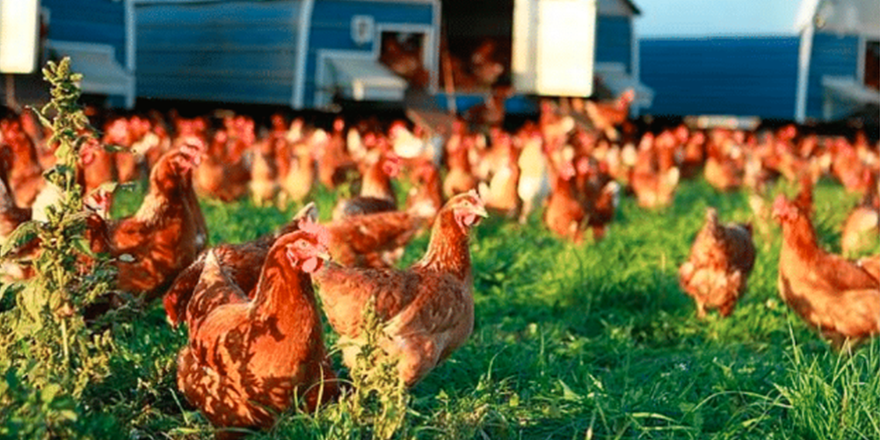
This business plan focuses on integrating pasture raised egg production into an organic dairy farm but has relevance to any farming system.

The worldwide demand for eggs is increasing with most consumers in the EU already preferring to purchase free range eggs. Caged eggs are being phased out of New Zealand supermarkets by December 2022. The industry is expecting supply deficits due to the change in practice.

The initial idea was to have the birds following a dairy herd in a New Zealand grass based rotational system, but after talking with some of the interviewees this would have risks with smothering and animals becoming lost from the flock. The research shows better results could be gained through fertility transfer by focusing on poorer paddocks.

The low initial set up cost and payback modelled over 2.25 years makes it an attractive investment to be part of.

The pasture-based model has high social licence to operate characteristics which is being demanded more by consumers and the sector is expected to continue the growth its currently experiencing.