2026 Nuffield NZ Farming Scholarship. Apply by 17 August 2025. Read More...

Apply for 2026 Nuffield NZ Farming Scholarship by 17 August 2025. More details...

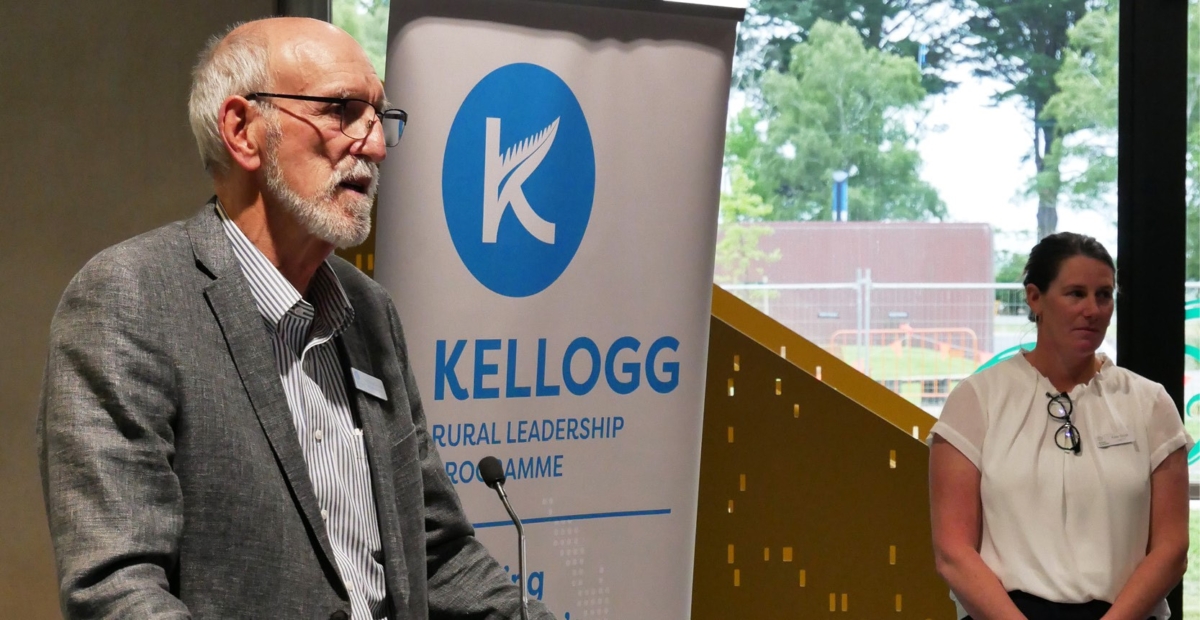
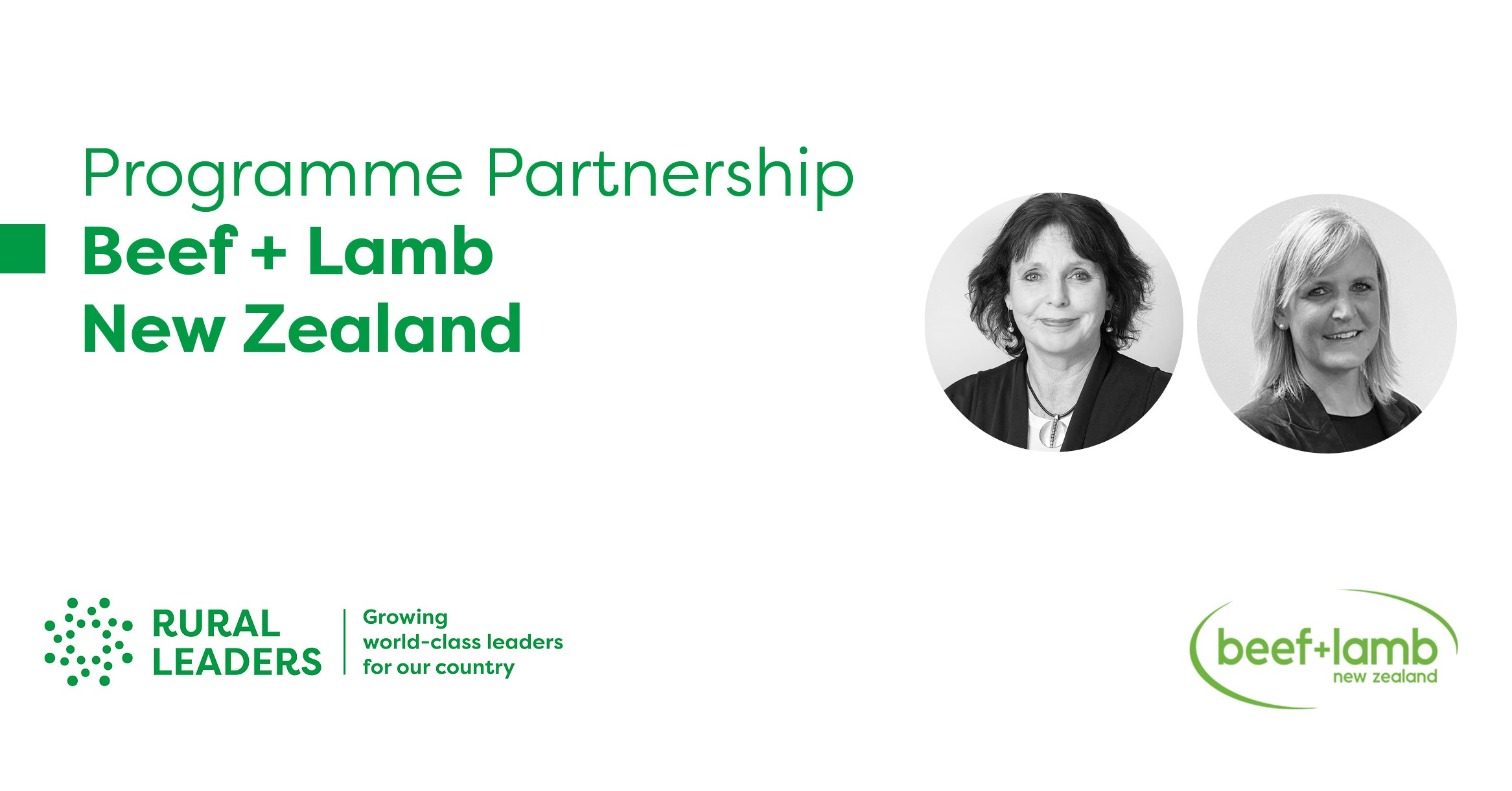
Beef + Lamb New Zealand and Rural Leaders renew partnership.

The New Zealand Rural Leadership Trust (Rural Leaders) is pleased to announce the renewal of its partnership agreement with Beef + Lamb New Zealand (B+LNZ).

Pictured: Lisa Rogers, CEO, Rural Leaders (left). Justine Kidd, GM Extension, B+LNZ (right).

One of the New Zealand Rural Leadership Trust’s (Rural Leaders) earliest industry partners is Beef + Lamb New Zealand (B+LNZ).  

The signing of a new partnership agreement between the two organisations aligns strongly with B+LNZ’s People and Capability Strategy focused on improving on-farm talent retention. Core to delivering on the objective of increasing the retention of people from their first day on farm to their third year is the role of on-farm leadership. Leadership that creates great work environments, communities and futures for people in the sector.

Justine Kidd, General Manager Extension, Beef + Lamb New Zealand, says, “On-farm leadership is critical to solving the challenge of our people’s future on farm. We are attracting enough young talent to the sector, but we aren’t holding them. Rural Leaders’ world-class delivery of leadership programmes supports our strategy, and we are looking forward to our continued joint effort growing great rural leaders across New Zealand.”

“B+LNZ’s partnership with Rural Leaders is a strong fit with two of our three investment pillars; ‘On-Farm’ focused on talent retention directly on farm and ‘Energising’ focused on growing leadership capability, celebrating and sharing stories of success.”, adds Justine Kidd.

To this end, B+LNZ recently announced farmers Richard Cameron and Natasha Cave would be the 2025 recipients of the B+LNZ Leadership Advancement Scholarships. They each receive full sponsorship to complete the Kellogg Rural Leadership Programme in 2025, along with mentorship from a B+LNZ leader aligned with their interests.

Lisa Rogers, CEO, Rural Leaders says, “The Rural Leadership Advancement Scholarships will become a flagship opportunity for the sheep and beef industry’s farmer-leaders. We look forward to playing a key role in these leaders’ development and future, both as people and as change-makers.”

The next available Kellogg places are for Programme Two 2025, 24 June start. Applications close April 13, 2025.


DairyNZ and Rural Leaders renew Strategic Partnership.

The New Zealand Rural Leadership Trust (Rural Leaders) is pleased to announce the renewal of its Strategic Partnership agreement with DairyNZ.

This latest partnership renewal follows a long-standing relationship with DairyNZ that dates to 2017.

The new agreement means we can continue to help build stronger, more capable dairy industry leaders and in-turn contribute to meeting DairyNZ’s new strategic priorities: accelerating on-farm productivity, powering more adaptable and resilient farms, and enabling sustainable and competitive dairying.

Much of this is underpinned not just by world-leading research and advocacy, but also by fostering evermore capable leadership capability.

DairyNZ’s high-impact partnerships make the most of the Food and Fibre sector’s expertise, connections and strengths. They help to expand their knowledge, access greater resources, and ultimately better meet the needs of New Zealand dairy farmers. We’re proud to play a part in this positive and purposeful ecosystem of change.

The partnership supports Rural Leaders’ purpose to grow world-class leaders for our country. We do this by delivering several of the sector’s most highly regarded and trusted leadership programmes.

DairyNZ CEO, Campbell Parker’s involvement with Rural Leaders is often as a popular speaker on the Kellogg Rural Leadership Programme. During these sessions Kellogg scholars learn about DairyNZ’s strategy and enduring value to the sector. They also want to know about Campbell’s own leadership journey, experiences and insights.

Rural Leaders, like DairyNZ, believe dairy has a strong and positive future and we are proud to partner with this key organisation and the industry it supports.

(Pictured – Campbell Parker, DairyNZ CEO, and Lisa Rogers, Rural Leaders’ CEO).


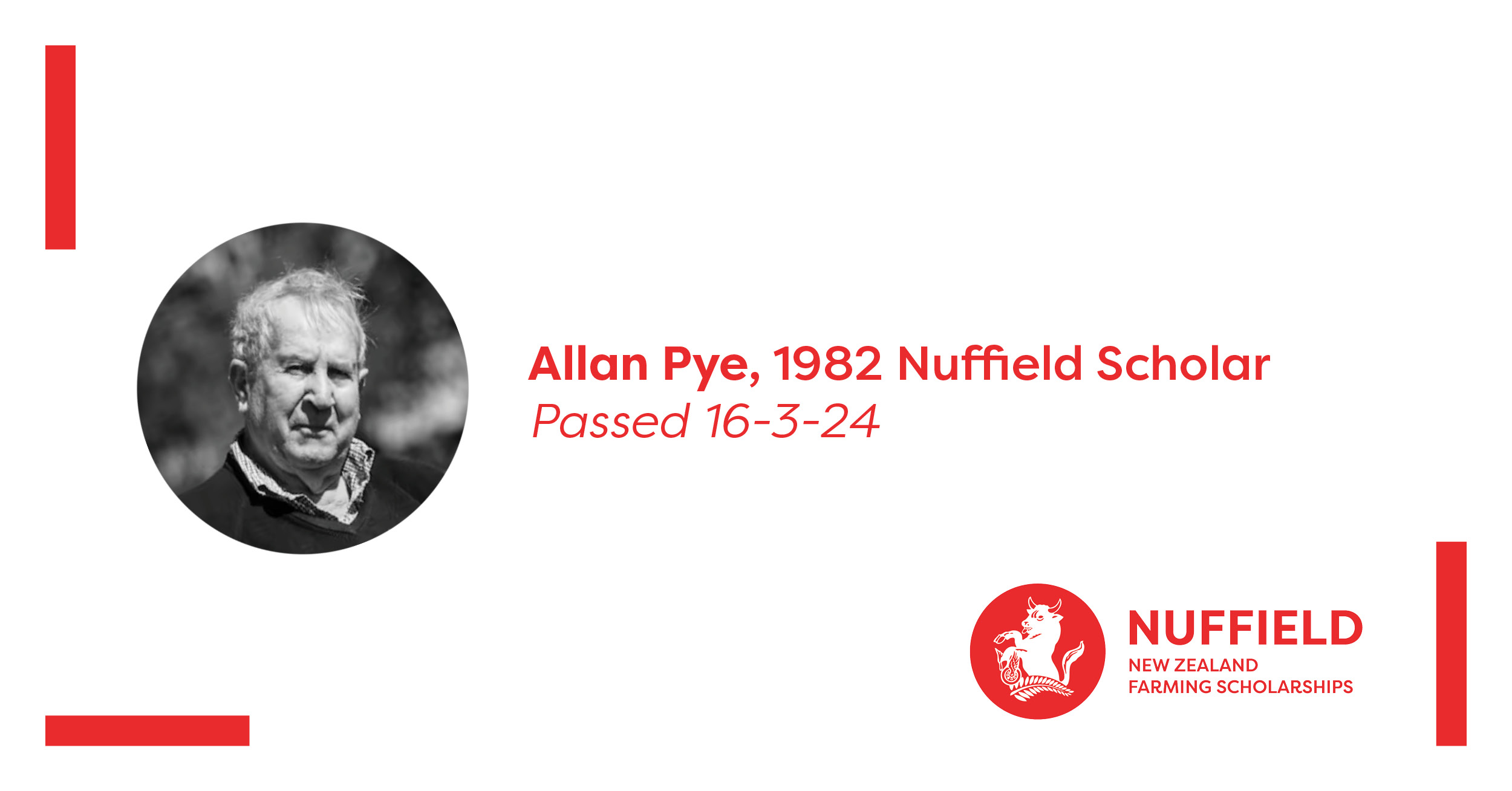
A larger-than-life Nuffield alum passes.

The New Zealand Rural Leadership Trust (Rural Leaders) and Nuffield New Zealand are saddened by the recent passing of Garrick Murfitt, 1977 Nuffield Scholar.

Garrick was a hill-country farmer first and foremost and was involved with Horizons Regional Council since joining as statutory member in 1992. He went on to be elected to represent the Tararua District and served as Chair from 2006 to 2010.

Garrick was involved in a number of collaborative initiatives involving local government, iwi and hapū and was also a driver of the improved health of the Manawatū River.

Horizons CE, Michael McCartney said of Garrick, “He was a larger than life chartacter … a joy to work with, and loved by everyone. He was a wonderful person and a man of real public service.”

Garrick is survived by his wife Jane, sons Simon, Richard and Daniel, daughter Emma, and grandchildren Taylor, Ben, Grace, Ellen, Beth, Anna, Tobias, Jack, Lucy, Poppy and Beatrice.

You can leave a message for Garrick’s family here.

You can read a Herald article here.

Zespri and Rural Leaders renew Programme Partnership

The New Zealand Rural Leadership Trust (Rural Leaders) is pleased to announce the renewal of its long-running Programme Partnership agreement with Zespri.

Zespri are highly engaged in rural leadership development and in the support of the programmes that help build the strategic leadership capacity in our food and fibre sector.

With the support of Zespri, Rural Leaders’ programmes continue to grow leaders who have the awareness, confidence and skills to take advantage of the opportunities and challenges confronting the sector and its communities.

Rural Leaders are proud to partner with Zespri and the sector it supports.

(Pictured – Jason Te Brake, Zespri CEO, and Lisa Rogers, Rural Leaders’ CEO.

Horticulture NZ Leadership Programme partnership.

A fast-changing industry needs more adaptble and capable leaders.

Horticulture is fast-changing. It has big goals, such as doubling the farmgate value of production. The industry wants to do this in a way that lifts the prosperity of its people while also protecting the planet.

The environment horticulture now operates in is more complex than it has ever been. It will need a pool of high-performing, current and potential leaders with the confidence and skills to take the industry into the future.

The New Zealand Rural Leadership Trust (Rural Leaders) are partnering with HortNZ to deliver the highly regarded and in-demand HortNZ Leadership Programme.

“A sustained flow of capable and self-aware leaders is critical to the Food and Fibre sector remaining vital and vibrant into the future. The Sector needs leaders that are continuously developing themselves and the teams they work with.

This addition to Rural Leaders’ suite of programmes, fully realises our intent to include an operational level programme as part of a wider leadership development ecosystem.

We are pleased to be working in partnership with HortNZ to deliver this important piece of a horticulture leader’s development journey”, Said Lisa Rogers, CEO, Rural Leaders.

The programme is designed to help leaders capture the opportunities and address the challenges offered by the industry’s expected growth and change. Participants will be fruit and vegetable growers, their employees, or from organisations closely associated with growing. They will join the more than 300 leaders who have graduated from the programme since 2002.


A key piece of the Food and Fibre sector’s leadership development ecosystem.

The HortNZ Leadership Programme took a break in 2023 to be reviewed against the current industry landscape. An additional evaluation was completed by Scarlatti, funded by Food and Fibre CoVE.

Food and Fibre CoVE also commissioned Rural Leaders to undertake research to define, design and develop an integrated approach tailored for Food and Fibre to help establish leadership development pathways for our people to grow and succeed. 

The research outputs include the Capability Development Framework, introduced in the report, ‘A path to realising the leadership potential of Aotearoa New Zealand’s Food and Fibre Sector’. Key elements from the Capability Development Framework were also reviewed alongside the HortNZ Leadership Programme.

HortNZ Leadership Programme timetable.

The Programme is delivered by Rural Leaders in two phases and over nine weeks starting 13 August 2024 and finishing 19 October 2024:

  • Phase one: five days (13 –18 August 2024 in Auckland)
  • Phase two: three days (17-19 October 2024 in Wellington)
  • Personal leadership plan – six weeks over the Programme.

Designed to build participants’ confidence to take the lead and to create influence, the programme will also develop business skills, such as communication, teamwork, critical thinking and problem solving.

It includes sessions that aim to generate an awareness of strategy, how to use it,
as well as developing a personal plan. A key feature of the programme is the opportunity to network and grow relationships with other like-minded emerging and current influential leaders.


Dr Patrick Aldwell retires after 25 years of service to Kellogg.

Dr Patrick Aldwell has made a hugely positive impact on thousands of people from across the Food and Fibre sector. Passionate about life-long learning, he has also made the academic and strategic support of anyone who needed it, his life-long mission. On the Kellogg Programme alone, he did this for twenty five years. 

Now he has officially retired from Kellogg (well probably, mostly).

Since retiring from Lincoln University as Dean of the Faculty of Commerce in 2012, 
Dr Patrick Aldwell continued to focus on agribusiness programmes that build leadership capability in Food and Fibre.

These included the Kellogg Rural Leadership Programme, the Horticultural Leadership Programme, the Nuffield Scholarship and Future Food Network programmes.  

Prior to returning to Lincoln University in 1998, Patrick was a scientist for 20 years at the then Forest Research Institute in the Trade, Marketing and Economics group. During this time he worked on New Zealand land use issues and internationally for the UN and World Bank on capacity-building for science infrastructure projects. 

Patrick’s disciplines are in the fields of regional and industrial economics and strategic management. He has degrees from Massey University, Monash University, the University of Washington and a Dip. Agri from Lincoln University. 

Patrick never tires of sharing his knowledge with students and sector leaders. He is sought out for academic support and strategic guidance, particularly when it comes to tackling the big challenges facing the primary industries and its rural communities.

Today Patrick’s academic interests lie in fields of technological change, rural issues, the interface between agricultural intensification and other ecosystems, and on building our sector’s leadership capability. 

To this end, Patrick’s 25 years with the Kellogg Rural Leadership Programme, were marked by his support and encouragement of the rural leaders he taught.

One recent Māori Agri-business graduate of the Kellogg Programme said of Patrick, “He was instrumental in assisting me to basically learn how to write, how to write well, and to get my writing out there in the public space so that I could share what was on my heart and mind.” Comments such as this are typical and frequent.

He provided academic guidance and knowledge-rich support to rural leaders not just on the Kellogg Programme, but also the Horticulture Leadership Programme and many more. It is not just his dedicated academic support for students and scholars, but it is also to people in their ‘day jobs’ as well.

As Dean, Patrick’s long-time colleague, Associate Professor Charles Lamb, now Divisional Director at Lincoln University, said, “Dr Aldwell’s stand out quality was his genuine empathy for his staff”.

Images top and bottom – the graduation of the 50th Kellogg cohort. November 2023.

Shaping the critical and strategic thinking ability of hundreds on Kellogg.

Patrick’s involvement in the Sector runs so deep it can be hard to find a place he hasn’t had a significant positive impact on the primary industries’ people and their communities.

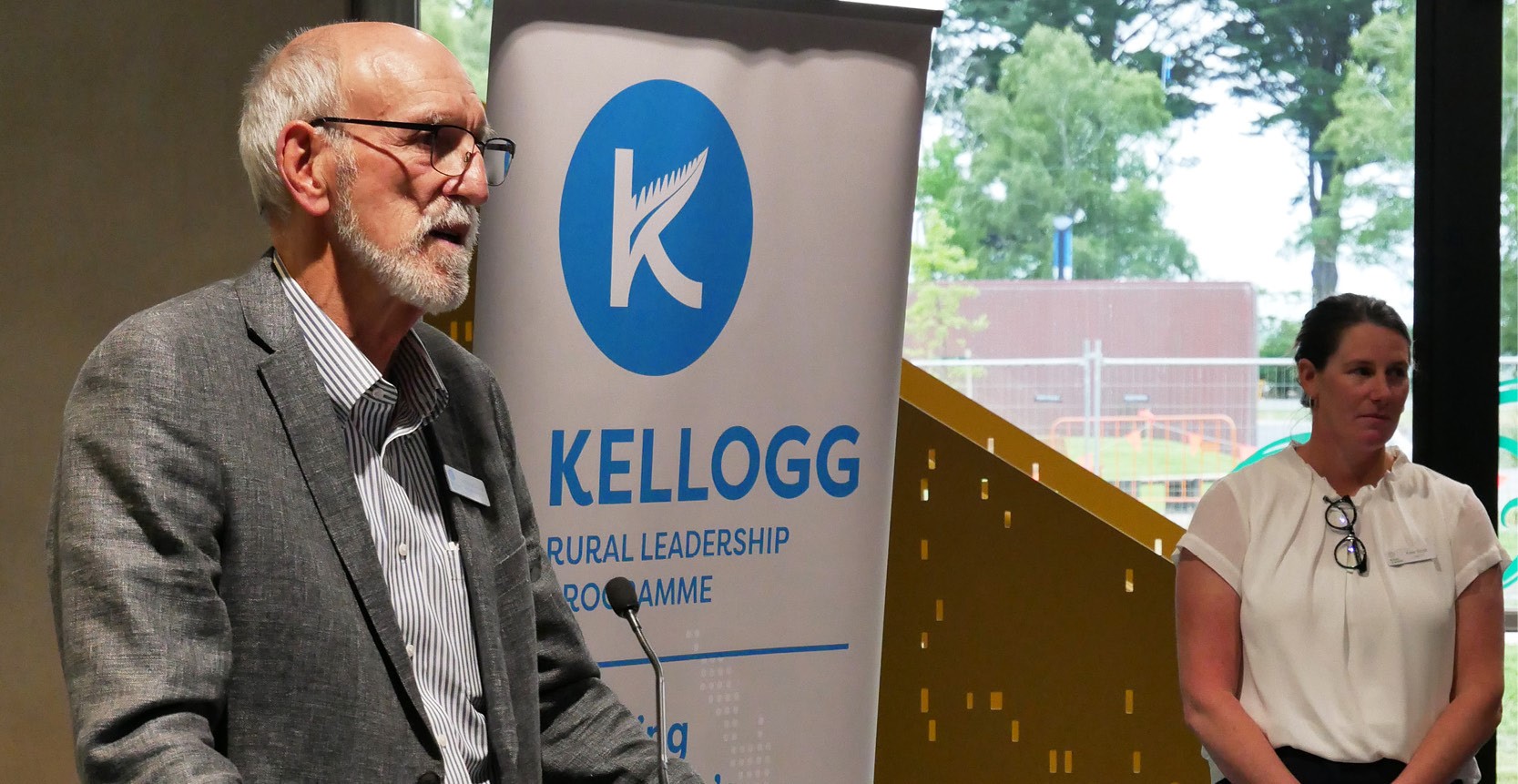
In late November last year, the Kellogg Rural Leadership Programme celebrated the graduation of its 50th cohort. Patrick was asked to speak to a large crowd of Scholars and industry leaders, not just as the Academic Director of the Programme, but as someone who had influenced the trajectory of over 800 of the Programme’s 1100+ alumni.  

Patrick has often said that one of the biggest thrills he gets is hearing of the successes of those in rural New Zealand he has taught, encouraged or perhaps provided quiet counsel to when times were tough on-farm. 

The length of time served, the passion, commitment, and the individuals influenced by Patrick’s involvement in key sector programmes, particularly around leader capability lift, means his impact on the primary industries has been exponential.

His fifty years of service to the Sector, positively influencing trade, science, academia and people, stands as tacit evidence of his dedication and passion for the primary industries.

In the last two decades Patrick has focused more specifically on addressing leader capability lift in the primary industries. Patrick understands the exponential impact stronger and ever-better leader ability can have in creating better outcomes for rural communities and their people.

As a simple and frequently occurring example, it is common to hear Patrick has spent hours working into the night, consulting with a farmer or grower who has been working all day on their operation. He takes a genuine interest in them as business owners, as team members, as students and as human beings. Whether on Zoom, over the phone, or in-person, Patrick never shies from helping the rural people and communities he is so passionate about.

From everyone at Rural Leaders, and the rural leaders you have supported and encouraged, enjoy your retirement Patrick.

Gilman Scholars to visit New Zealand – hosted by Rural Leaders.

Gilman and Rural Leaders forge Food and Fibre education alliance.

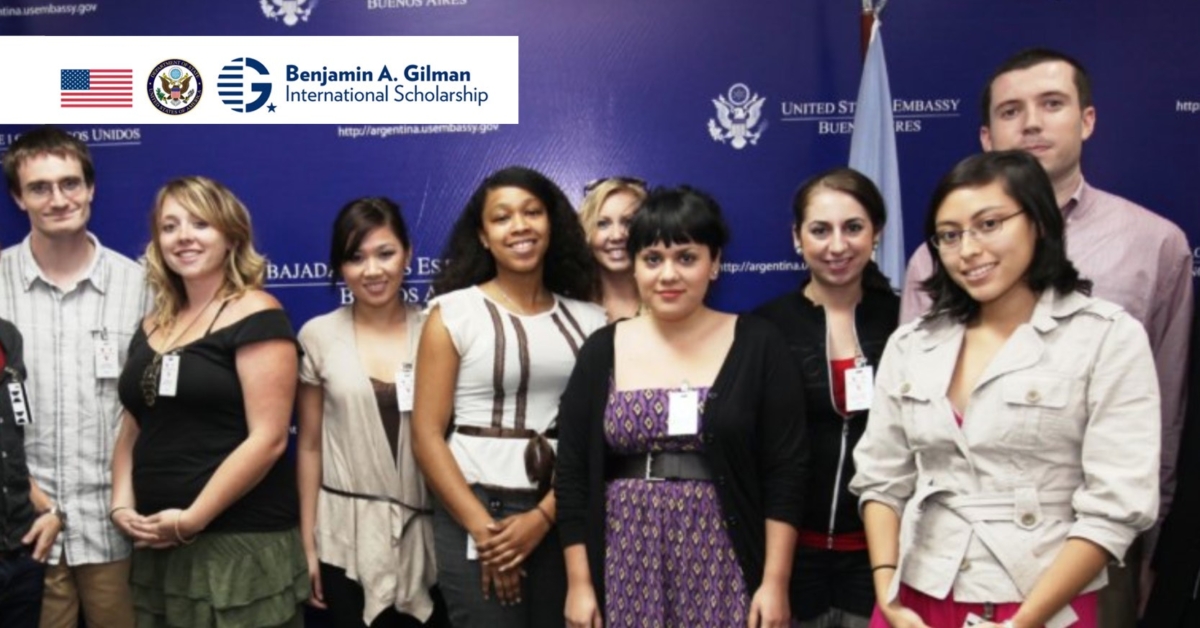
In partnership with Rural Leaders, the U.S. Mission to New Zealand will undertake a week-long, interactive programme for Gilman alums working in fields related to global food security.

As part of their professional development the Gilman alums will examine how New Zealand navigates geopolitical and climate change risks as a Food and Fibre based economy.

Participants will gain insights into policies, technologies, and adaptation measures aimed at securing the agricultural sector and mitigating environmental impacts, crucial for sustaining New Zealand’s role as a global food supplier amidst evolving global challenges.

“We are excited to be hosting this programme with Gilman and the US Department of State. It gives us an opportunity to showcase New Zealand’s innovation and initiatives towards food security and how we create resilience throughout our food systems,” said Lisa Rogers, CEO, Rural Leaders.

Benjamin A. Gilman International Scholarship Background.

The U.S. Department of State’s Benjamin A. Gilman International Scholarship Program enables students of limited financial means to study or intern abroad. The Scholarship aims to encourage students to study and intern in a diverse array of countries; in 2024 this will include New Zealand.

The week-long programme called ‘Mission New Zealand – Navigating Geopolitical Tensions and Climate Change as an Agri-based Economy’,  has been designed to give the visiting Scholars a deep dive into global food security.

Running from Monday 26th – Friday 30th August 2024, and facilitated by Dr. Scott Champion, the Programme features a stellar line-up of modules and speakers, including:

A Global Perspective, Ian Proudfoot (Global Head of Agribusiness, KPMG).

Te Ao Māori Perspective, Jess Smith (Regional Director – Te Tai Hauauru
Te Puni Kōkiri).

Food Security/Food Safety Perspective, Hon Minister Andrew Hoggard (Minister for Biosecurity and Food Safety).

A Discussion on Trade, Hamish Marr (Special Agricultural Trade Envoy), Brian Wilson (Divisional Manager – Trade Policy & Negotiation Division, Ministry of Foreign Affairs & Trade)

Value Chains in the NZ Food and Fibre Sector, Prof. Hamish Gow (Professor – Global Value Chains & Trade, Lincoln University).

Global Food Security, a NZ Government Perspective, Hon Minister Todd McClay (Minister of Trade and Agriculture). 

Silver Fern Farms, Ryan MacArthur (On Farm Sustainability Manager).

Fonterra, Charlotte Van Der Lee (Sustainability Manager).

Precision Agriculture, Craige MacKenzie (2008 Nuffield Scholar).

Supply Chain, Lyttelton Port Company – Simon Munt (Chief Customer and Supply Chain Officer).

Biosecurity, Regulations, and Emissions Reductions, Julie Collins (Deputy Director-General Policy and Trade, Ministry for Primary Industries).

Global food security, the NZ Perspective, Hon Damien O’Connor (Labour Party Spokesperson for Foreign Affairs, Land Information, Trade and Transport, Member of NZ Parliament).

Final Overview, Lisa Rogers (CEO, NZ Rural Leaders), Dr. Scott Champion (Dir. Primary Purpose, Facilitator), Margaret Walrod (Foreign Service Officer at U.S. Department of State, U.S. Embassy, Wellington), Theresa Gagnon (Program Officer at U.S. Department of State, Bureau of Educational and Cultural Affairs (ECA), USA).

The Programme also features several reflection sessions with Facilitator Dr. Scott Champion, farm visits (Matt Iremonger, Alan and Carina Friedman and Marr Farms), dinners, and recreational activities.

Why visit us? The New Zealand context.

As an agribusiness nation, New Zealand remains dependent on its agricultural and horticultural product exports to maintain a healthy economy. Each year, New Zealand exports approximately 90% of its dairy, meat, fruit, and vegetables to a value of USD 32 billion. However, this economic backbone is vulnerable to geopolitical tensions and climate change.

Geopolitically, New Zealand’s agriculture is affected by global conflicts. During the Russia-Ukraine war, farmers faced decisions regarding exports to Russia amidst international sanctions, highlighting the sector’s exposure to global political dynamics.

Climate change presents significant challenges, with intensified weather events like Cyclone Gabrielle disrupting supply chains and threatening agricultural viability.

The sector is also grappling with increased animal diseases and oceanic impacts on aquaculture, exacerbated by its substantial greenhouse gas emissions.

“This partnership highlights Rural Leaders’ desire to forge stronger relationships with international connections,” added Lisa Rogers.

Other Scholar groups will visit Columbia and Zimbabwe later this year.

To find out more about the Gilman Scholarships visit here.

Farmlands and Rural Leaders renew Programme Partnership

The New Zealand Rural Leadership Trust (Rural Leaders) is pleased to announce the renewal of its Programme Partnership agreement with Farmlands.

Farmlands and Rural Leaders have enjoyed a productive partnership for many years. In that time both organisations have worked together to help build the strategic leadership capacity in our food and fibre sector. 

Working with Farmlands, Rural Leaders’ programmes aim to grow world-class leaders for our country. These are leaders who have the skills, networks, awareness, and confidence to deal strategically with the significant changes confronting the sector, its communities, and the environment.

Rural Leaders are proud to partner with Farmlands and the sector it supports.

(Pictured – Tanya Houghton, Farmlands’ CEO, and Lisa Rogers, Rural Leaders’ CEO).

Foundation for Arable Research and Rural Leaders renew Programme Partnership

The New Zealand Rural Leadership Trust (Rural Leaders) is pleased to announce the renewal of the Programme Partnership agreement with the Foundation for Arable Research (FAR).

FAR and Dr Alison Stewart’s involvement with Rural Leaders’ Programmes goes back not too long after the formation of Rural Leaders in 2017.

While arable growers on Rural Leaders’ programmes benefit from FAR’s programme sponsorship and input, FAR also supports the development of leadership and leaders from industries across the Food and Fibre Sector.

The important role FAR and arable growers play cannot be understated. Their work underpins the livestock industries. Growers produce the grass seed for pastures and animal feed in the dairy, beef and poultry industries. Rural Leaders are proud to partner with this key organisation and the industry it supports.

Dr Stewart’s own involvement with Rural Leaders is often hands-on as a regular speaker on the Kellogg Rural Leadership Programme. Kellogg scholars learn about the work FAR does and the role it plays, as well as Dr Stewart’s own leadership journey, experience and insight.

“…you’re able to have some honest and sometimes quite painful discussions about how New Zealand agriculture needs to move into the future and the changes that need to be made. And that cohort of Kellogg leaders are up for those kinds of discussions. I just love it.” Dr Alison Stewart, 2023.

Pictured above is Dr Alison Stewart, Foundation for Arable Research, CEO, and Lisa Rogers, Rural Leaders’ CEO.

Foundation for Arable Research background.
FAR is an applied research organisation responsible to New Zealand’s arable growers. It is involved with funding of arable, maize research and technology transfer.

FAR contributes funds to research programmes, often in collaboration with government funded organisations or universities. Involvement in specific research programmes is driven by the interests of New Zealand’s arable growers.

Research is split between three themes: Maximising productivity and value; Environmental and social best practice; and Resilient cropping in farming systems.

Each year, in consultation with growers across the country, FAR reviews and updates the short, medium and long-term projects within each theme.

Levy funds are also used to secure additional Government funding through programmes such as the Sustainable Food + Fibre Futures Fund.

FAR’s research and extension portfolio supports our vision of A vibrant and profitable arable sector producing healthy, value-added food, feed and seed.

Amongst the work in applied research, the search for new management systems, tools and new technologies to assist growers, FAR also works on supporting growers with compliance and biosecurity.  

“We also promote to the general public, to the other sectors, to the government, the value of arable systems and the value that they bring to New Zealand agriculture.” Dr Alison Stewart, 2023.

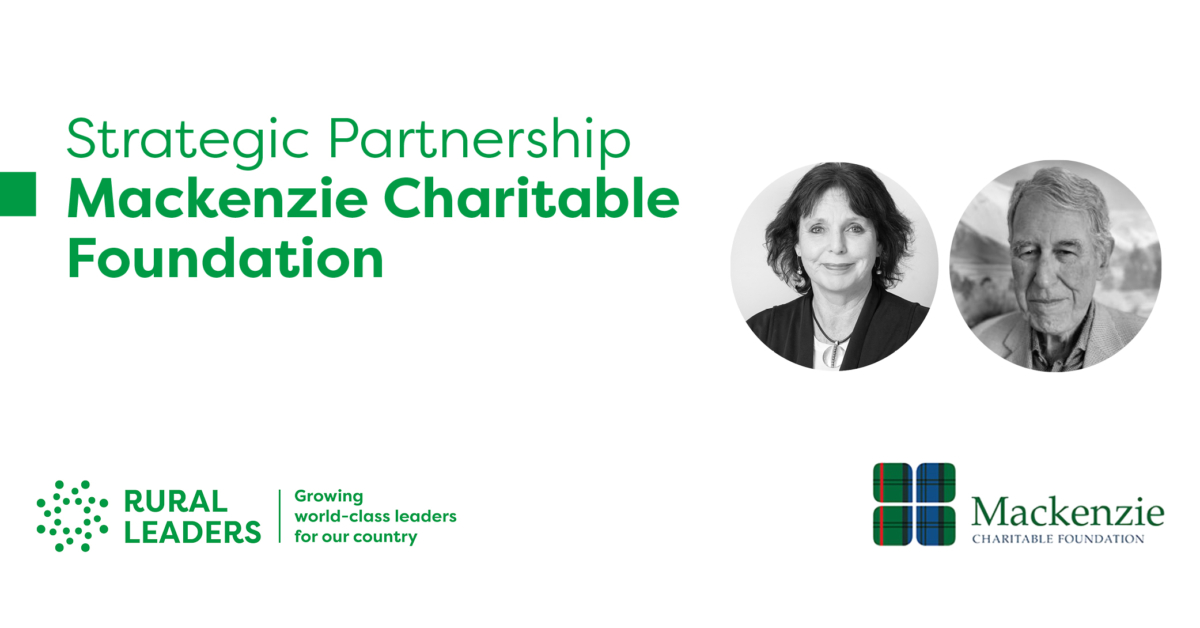
Mackenzie Charitable Foundation and Rural Leaders renew Strategic Partnership

The New Zealand Rural Leadership Trust (Rural Leaders) is pleased to announce the renewal of its Strategic Partnership agreement with the Mackenzie Charitable Foundation.

The Foundation’s desire to assist in the amplification of entrepreneurial and emerging leaders in the food and fibre sector finds significant alignment with Rural Leaders’ purpose of growing world-class leaders for our country.

To this end The Mackenzie Charitable Foundation undertook research alongside Rural Leaders, in collaboration with Otago Business School and the Department of Economics, to investigate the contribution of Kellogg and Nuffield Alumni to Food and Fibre.

This report, a world-class evidence base, measures the within-person gains in entrepreneurial leadership capability that occurs because of participation in the Kellogg and Nuffield programmes.

You can download the Mackenzie Study here. 

Pictured above is Don McFarlane (MNZM, JP), Mackenzie Charitable Foundation Trustee and 1981 Nuffield Scholar, and Lisa Rogers, CEO, Rural Leaders.

Mackenzie Charitable Foundation background.

The Mackenzie Charitable Foundation was formed in 1976 when brothers Alan and Don Mackenzie made the decision to leave their estates to the community of Mid-Canterbury.

Both brothers were diagnosed with cancer in the mid-1970’s and it was then that they decided to leave a legacy to the community they had lived in and loved so much.

The Foundation assists the province of Canterbury in Agriculture, specifically in the areas of research, development, education and training, and expansion of the science and practice of agriculture.

The Foundation supports Cancer Research, treatment, provision of equipment, and education and training. It also supports young people that may have challenges that put them at disadvantage to their peers.

We are proud to be working with an enterprise that has given, and continues to give so much to Canterbury, its communities and people.