2026 Nuffield NZ Farming Scholarship. Apply by 17 August 2025. Read More...

Apply for 2026 Nuffield NZ Farming Scholarship by 17 August 2025. More details...

Meet the 2024 Nuffield New Zealand Farming Scholars.

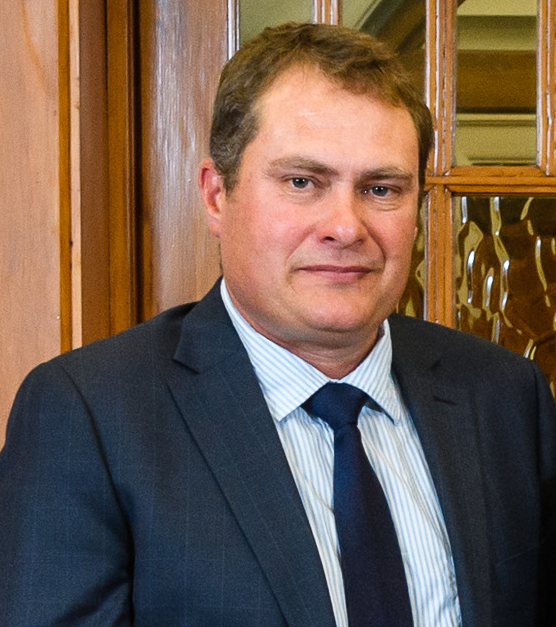
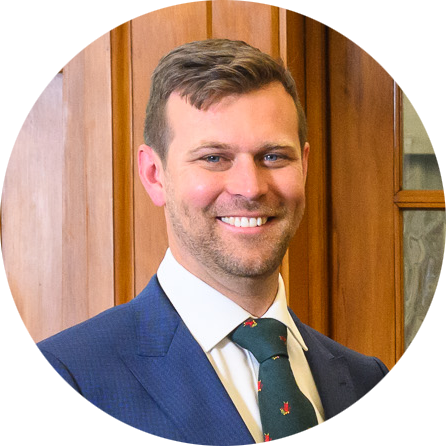
Carlos Bagrie

Carlos Bagrie

Carlos Bagrie has been across multiple ends of food production and the value chain, including primary production, distribution, retail and media.

He recently founded Royalburn Station, a renowned high-country farm that has carved a niche for itself by distributing premium quality food to some of New Zealand’s top-tier restaurants.

Carlos further diversified influence in the food sector when he co-founded My Food Bag. This innovative food distribution company helps answer the ‘what’s for dinner?’ question for tens of thousands of Kiwis every week. During the COVID lockdowns, Carlos played director and videographer, filming TV1’s hit ‘Nadia’s Comfort Kitchen’ on his iPhone.

In 2022, Carlos found himself in front of the cameras on TV3’s ‘Nadia’s Farm’, a TV show that highlighted the intricacies of farm life and food production at scale.

Alongside his wife, Carlos delved into the world of books and media. Together, Carlos and Nadia self-published a series of Number 1 best-selling cookbooks that resonated with home cooks.

Carlos can usually be found on the farm, either in the butchery, on the combine harvester, or moving mobs of sheep across the property. 

“I’m humbled to be selected as a Nuffield Scholar and will be focussing my research on circular farming systems that reduce waste while improving the bottom line.”

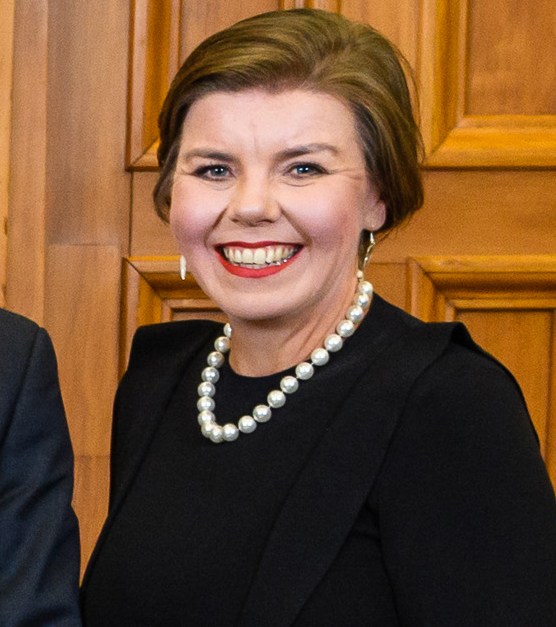
For Rachel Baker, the Primary Sector is both a passion and growth enabler. Her path has always involved the people, communities and business of food production.

Rachel’s extensive professional experience includes working as a dairy veterinarian, a dairy farm systems consultant, sharemilker, dry stock farm owner, educator, and more recently, an asset manager for horticulture investment businesses. 

“While being relatively new to horticulture, my role as Portfolio Manager of MyFarm Investments’ Hawke’s Bay apple syndicates, has enabled me to learn, understand and challenge the grower model. I have been involved with development and management of 100ha of Rockit® plantings in Hawke’s Bay and Gisborne.”

Rachel’s current governance experience includes serving as a trustee of the Rockit Apple Growers Trust and directorships of horticulture and commercial property. Rachel is a 2016 Kellogg Scholar, a 2018 NZ Dairy Woman of the Year finalist and past Chair of the NZ Dairy Industry Awards. 

On Rachel’s proposed Nuffield research, she states, “My research topic will explore the impact, challenges and opportunities of existing and proposed global food strategies on food producers, with particular interest in the applications for New Zealand.”

Rachel’s recent focus has been the response and recovery of properties impacted by Cyclone Gabrielle.
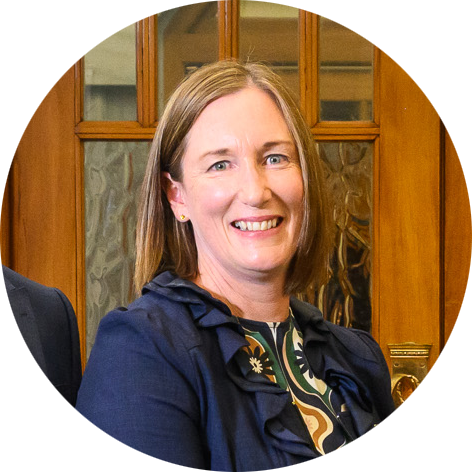
Rachel Baker
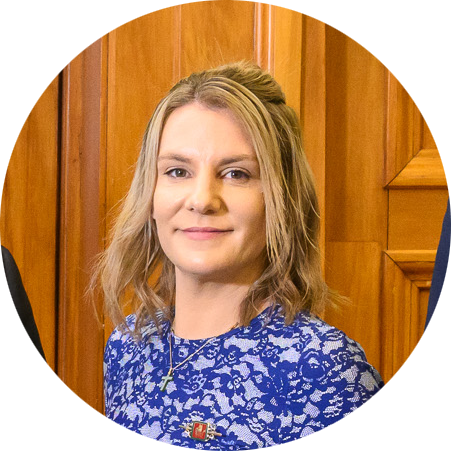
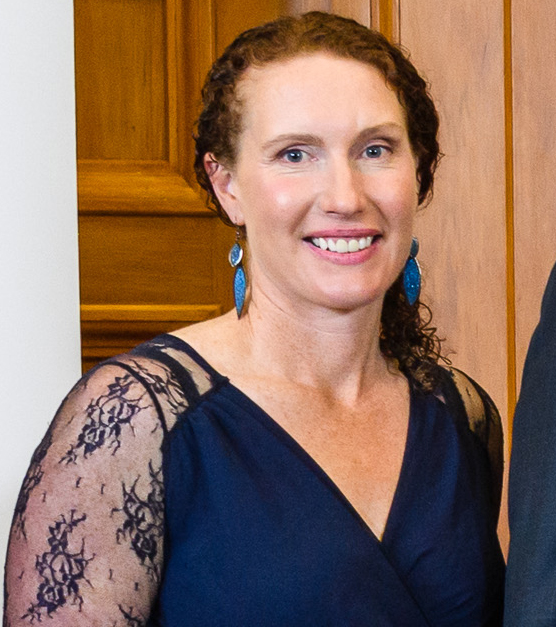
Jenna Smith

Jenna is the current Chief Executive of Pouarua – a diverse Māori Agribusiness encompassing Dairy, Arable, Beef and Horticulture on the Hauraki Plains.

Jenna serves as a trustee for DWN, on the board of BEL Group and chairs St Francis Catholic School in Thames.

Jenna has extensive corporate agriculture experience across Waikato, Canterbury, Otago and Southland, having previously worked for SOE Pāmu, and syndicated overseas investment farming portfolios. During this time, she has always “kept a gumboot in the grass” through her and her husband’s farming businesses.

Leading Pouarua Farms to be awarded as finalists in the prestigious Ahuwhenua Trophy for excellence in Māori Farming in 2021, Jenna was also named a finalist in the 2021 Zanda McDonald Award which recognises talent and passion for Agriculture across Australia and New Zealand.

“I am looking to study economically and sustainably viable alternate land uses for lowlands and peatlands that are highly susceptible to climatic pressures.”

Passionate about creating environmentally sustainable agribusinesses – Jenna regularly contributes to advisory boards for MfE, MBIE and MPI.

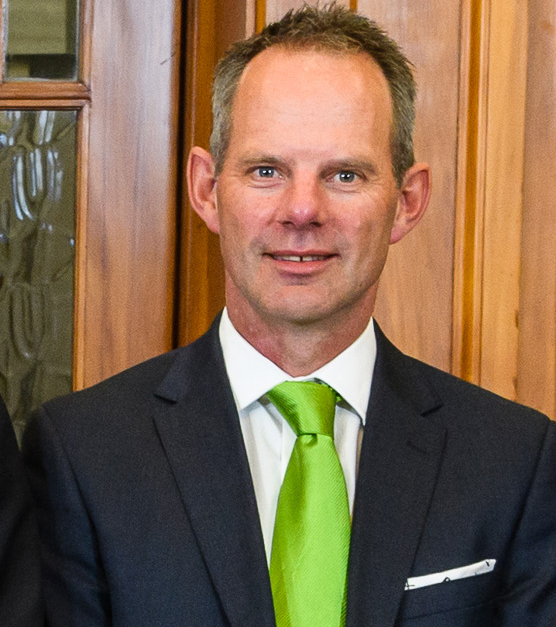
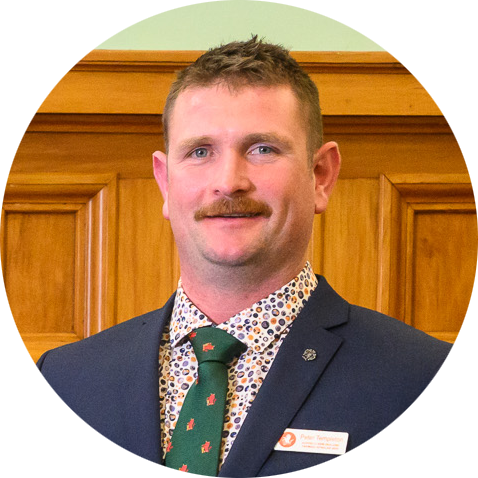
Peter Templeton is a 5th generation dairy farmer based on the south coast of Southland. 32 years old, Peter is passionate about southland dairy farming.

Peter has been dairy farming for 11 seasons, working his way up from 2IC to farm manager before returning to the family farm in 2016. Peter began his ownership journey as a 50/50 sharemilker for five seasons, before leasing the farm for two seasons and finally owning the farm in August 2023.

Peter is interested in focusing on the future of farming, what it is likely to look like on an individual farm basis – in particular on new technologies to implement on farm.

“I am always curious to see other systems and challenging myself to see what I could use in my own environment.”

Peter also states he is excited to see and gain a better understanding of New Zealand’s value chains, understand how they intend to innovate to compete.
Peter Templeton

Peter Templeton

Meet the 2023 Nuffield New Zealand Farming Scholars.

Kerry Worsnop

Kerry Worsnop describes herself as a rural advocate, born and raised on a South Waikato dairy farm, she later ventured into the hills of the East Coast north of Gisborne.
The business was originally shaped by both her partner’s and her own desire to own a farm and their early years were devoted to this pursuit, operating a contracting business and leasing land before purchasing Taheke, 36 km west of Gisborne in 2013.
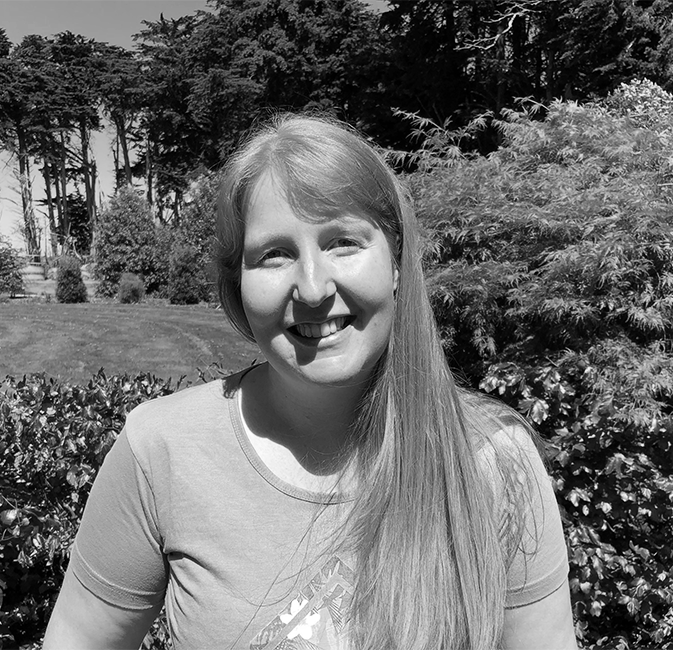
Inspired by extramural study, the next few years incorporated various roles in the community and employment, building a toolkit based on resource management skills and a passion for interface between policy and the ‘real world’.

This interest led to a three-year term as a Gisborne District Councillor, a role where the issues facing that interface became impossible to ignore. “I want to help solve some of these problems” Kerry says, “A lot of our policy outcomes aren’t great – we must be able to do this better!”

Matt Iremonger, alongside his wife Katy and daughters Alice and Abby, operate diverse pastoral farms on Banks Peninsula and in the Ellesmere district in Canterbury.

These properties include hill country sheep and beef breeding, intensive irrigated finishing and dairy support, along with dairy farms and native and exotic forestry.

Matt studied at Lincoln University graduating with a BCom (Hons) and completed the Rabobank Executive Development Program in 2017.

“I am planning to undertake research into the integration of beef production from the dairy industry to create a high value premium product”, Said Matt.

Matt Iremonger

James Allen

James Allen is CEO of AgFirst, New Zealand’s largest provider of primary sector consultancy services. A key focus of his consultancy work is business planning, farm systems design, environmental management, and agribusiness project work, both nationally and internationally.

James is also the president of the New Zealand Fieldays Society, a Fellow of the New Zealand Institute of Primary Industry Management, and a previous national president of New Zealand Young Farmers. He was a grand finalist in the Young Farmer of the Year Contest in 1999 and again in 2002.

Originally from a sheep and beef farm near Raetihi, James and his wife Kerry now live at Matangi, along with their three sons. Alongside the consultancy business James and Kerry are partners in a variety of farming and non-farming businesses. In his free time James enjoys diving, tramping, skiing and cycling.

“Participating in the Nuffield Programme has been a long-term goal and I’m looking forward to the challenge. My research topic will be focused on re-defining what excellence looks like for the agricultural consultancy sector in the midst of change,  to help keep New Zealand farmers at the leading edge of profitability and sustainability,” Said James.

Kylie Leonard was elected to the Fonterra Cooperative Council in 2020 and serves on the Cooperative culture committee.  She is also on the Taupo District Council, representing the East Rural Ward, a Director of Vetora and is a Trustee of Hillary Outdoors.

Kylie is Chair of the Lake Taupo Protection Joint Committee and the Taupo East Rural Community group. She is also on the Board of Trustees at the school her daughter attends. Kylie is proudly married to Rick and has 3 daughters, Kate, Isla and Eloise.

Previously Kylie received a local hero medal, awarded Dairy Woman Community Leader of the Year and finalist in Dairy Woman of the Year, finalist in the Woman of Influence awards and Emerging Governance leader.

Kylie developed an investment property portfolio which lead to an equity partnership in a mixed farming operation involving both Dairy and beef in the Central Plateau.

“I am passionate about quality food production, our farm, my community and especially my family. I am curious to look behind the farm gate into environmental health, social equity and economic performance to meet the challenges of the future. I don’t know what I don’t know and am very excited about this opportunity,” Said Kylie.

Kylie Leonard

2023 Nuffield New Zealand Scholars Announced

2023 Nuffield New Zealand Scholars Awarded.

Wellington, 8 November 2022

Congratulations to our 2023 Nuffield New Zealand Scholars!

Kerry Worsnop, a Gisborne based Sheep and Beef Farmer, Company Trustee, and Environmental Consultant.

Matt Iremonger, a Sheep and Beef and Dairy Farmer from Banks Peninsula, in Canterbury.

Kylie Leonard, a Taupo based Dairy Farmer, Governance Specialist, and dual Board Chair.

James Allen, a Waikato based Agribusiness Consultant and Managing Director.

Find out more about the 2023 recipients >>

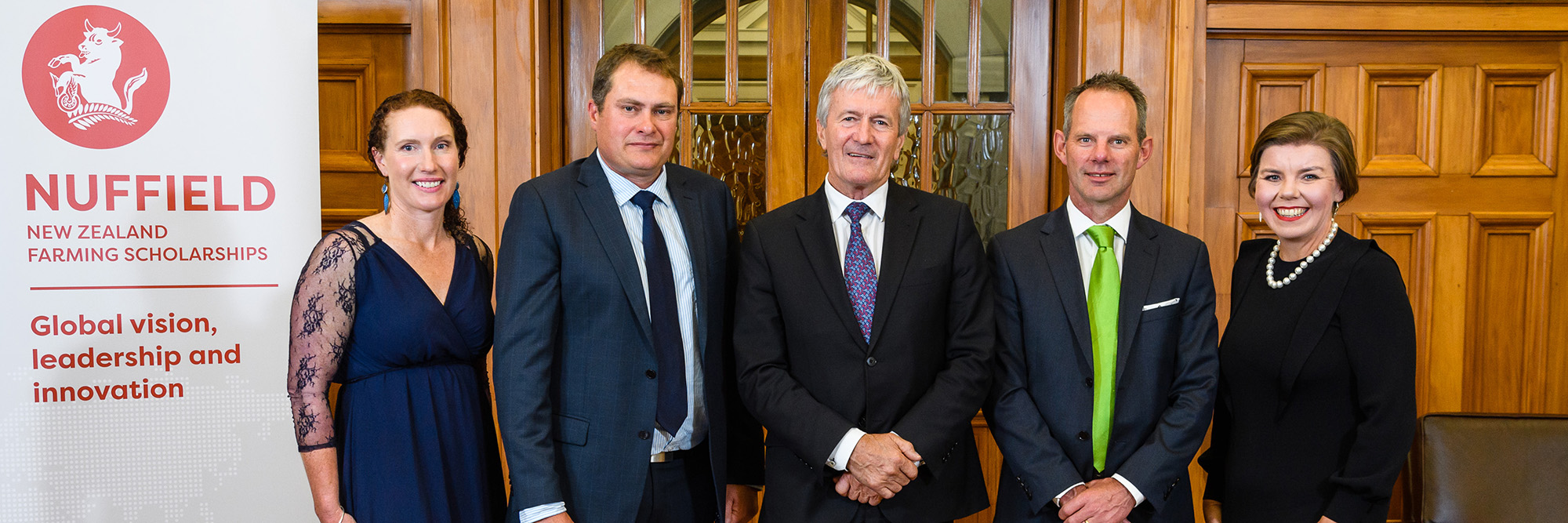
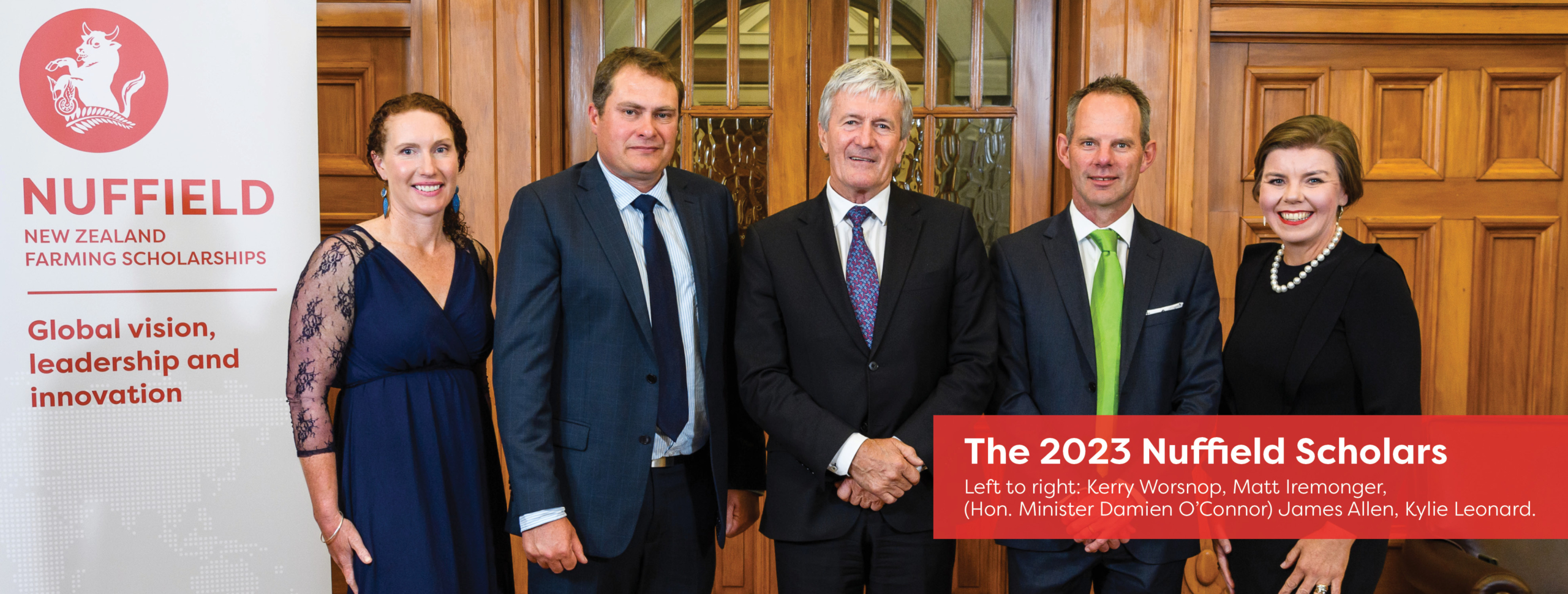
Four emerging Food and Fibre Sector leaders have been awarded 2023 Nuffield New Zealand Farming Scholarships. Each has received their awards from Hon. Minister Damien O’Connor. The Awards Ceremony was held in the Grand Hall at Parliament in Wellington last night. The New Zealand Rural Leadership Trust (Rural Leaders), who administer the Nuffield New Zealand Farming Scholarship, hosted the event.

Strong interest in the Nuffield Farming Scholarship.

This year saw the most applicants for the prestigious Nuffield Farming Scholarship since 2018. To ensure that the new 2023 Scholars can travel and gain international insights to the same level as their predecessors, The Nuffield Trustees increased the value of the Scholarship, in recognition of the increased cost of travel.

Correspondingly this has meant that only four Scholars were selected, making the competition to gain a coveted Scholarship even tougher this year. Each Scholar brings talent, passion, perspective, and a track record of performance. Their job now is to find insights and build foresight to benefit our sector.

“We wish to acknowledge all those who applied. The field of applicants was particularly strong and representative of the regions and industries within our Sector. It is safe to say, there is some real talent in our regions,” Said Chris Parsons, CEO, Rural Leaders.

The collective impact of Nuffield Scholars.

Nuffield Alumni’s collective impact on the Food and Fibre Sector has recently been highlighted by the Mackenzie Study, a Rural Leaders’ collaboration with The Otago University School of Business. The study maps the in-person and sector gains from participation in the Nuffield Programme. Some of the study’s findings include:

  • Nuffield Scholars hold 14 senior leadership roles over their career.
  • Each Scholar has created an average of 3.3 businesses.
  • And each creates an average of 48 FTE roles.

“The contribution and impact New Zealand Nuffield Scholars have made on New Zealand Agriculture, regionally, nationally and globally is significant, and it is a real pleasure to be able to see the opportunity that lies ahead of the 2023 scholars to continue to create impact for the future benefit of New Zealand Agriculture”, Said Kate Scott, Rural Leaders Board Chair.

In addressing the Rural Leaders’ Strategic Partners: AGMARDT, DairyNZ, Beef+LambNZ, Mackenzie Charitable Trust, and FMG, Kate Scott said, “The positive impact on New Zealand Agriculture that is created by New Zealand Nuffield Scholars would not be possible without the generous and ongoing support of our partner organisations, who are an integral part of our mission to create world class leaders for New Zealand.”

Within this context of achievement by Nuffield Alumni, the new 2023 Nuffield Scholars were announced by Minister O’Connor as:

Kerry Worsnop, a Gisborne based Sheep and Beef Farmer, Company Trustee, and Environmental Consultant.

Matt Iremonger, a Sheep and Beef and Dairy Farmer from Banks Peninsula, in Canterbury.

Kylie Leonard, a Taupo based Dairy Farmer, Governance Specialist, and dual Board Chair.

James Allen,
a Waikato based Agribusiness Consultant and Managing Director.

The 2023 Nuffield Scholars’ research topics will cover a range of our biggest food and fibre challenges including: environmental health, social equity and economic performance, integration of beef production from the dairy industry, and fit for purpose rural professionals.

The Nuffield Scholars will bring a valuable global perspective to their research through an intensive travel itinerary of visits, meetings and experiences, designed to lead to a period of transformative personal insight and growth.

The four new Scholars will join the over 180 Nuffield Alumni, awarded scholarships over the last 71 years.

Find out more about the 2023 recipients >>

Lucie’s Nuffield US travel so far – in less than five minutes.

Lucie Douma. 
 
Soon after Lucie Douma and Parmindar Singh returned from their Nuffield CSC in the UK, Lucie was traveling again. This time in North America.  
 
Lucie is four weeks into her US trip that has so far covered: California, Illinois, Wisconsin, and more. Lucie is currently in Texas and will round out her travel visiting Washington DC, Saskatchewan, and the Yukon. 
 
Lucie is gathering information and insights on her Interoperability work. The working title of her research topic is On-farm data management and governance: Creating a system and understanding where farmers benefit from data. 

Here is Lucie’s Nuffield travel in the US so far – in less than five minutes.

Note – some posts have been edited for brevity. 

Start of July 2022

The start of my next Nuffield journey couldn’t be better. A group of international scholars were in a Fourth of July parade in the town of Clarksburg, just south of Sacramento. I felt welcomed by the local community and it is great to see such strong support for farming here. 

Clarksburg, California.

First half July 2022

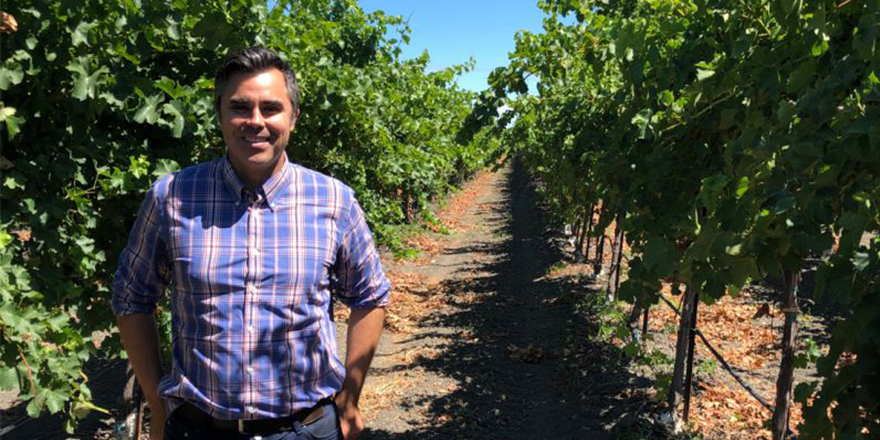
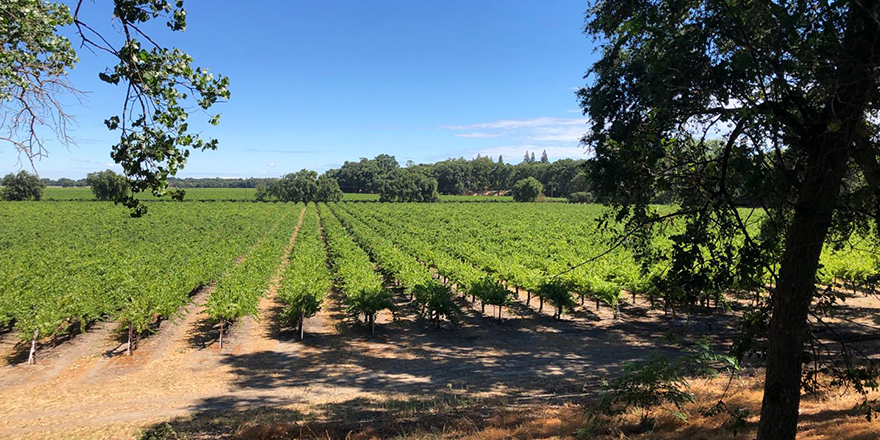
We had a fantastic wine tasting at Tom Merwin’s vineyard. We heard how his farm maintains a competitive advantage. The most value for his business comes from his wine club subscription, where he has a direct link to customers rather than having to go through intermediaries. 

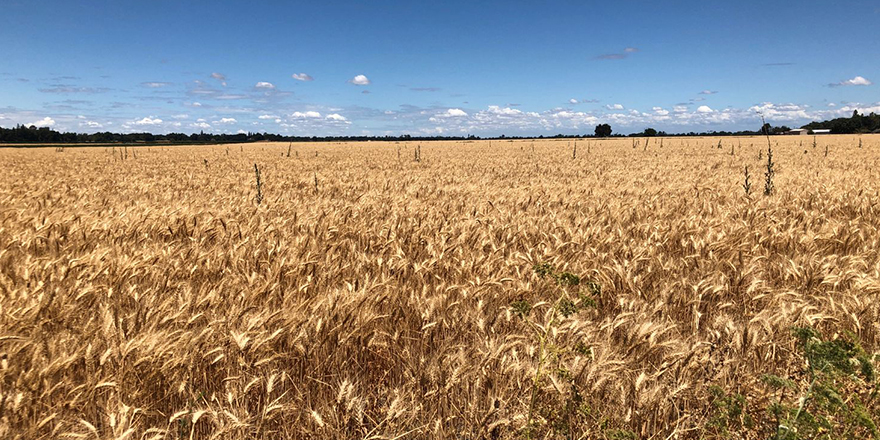
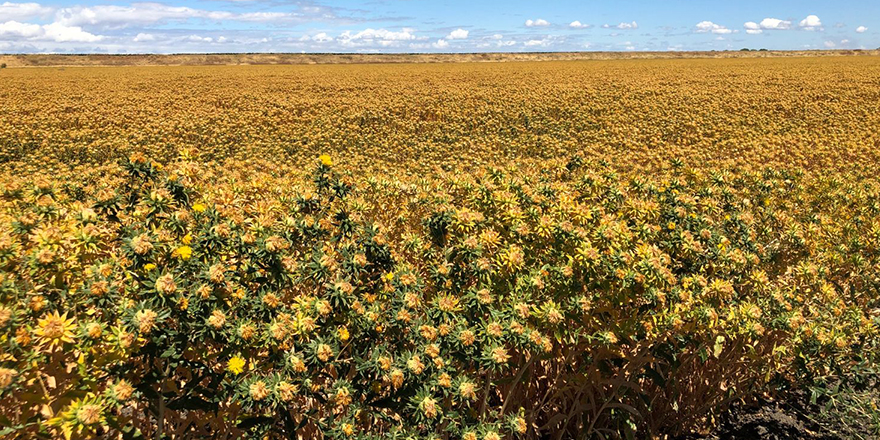
He explained more about his 1200-acre farming operation; 650 in vines and the remainder in arable (wheat and safflower). And we were also able to talk all things data. 

In the region of Clarksburg, California, they have a high-water table and two rivers nearby. Because of this they don’t have the water take restrictions the rest of California does. 

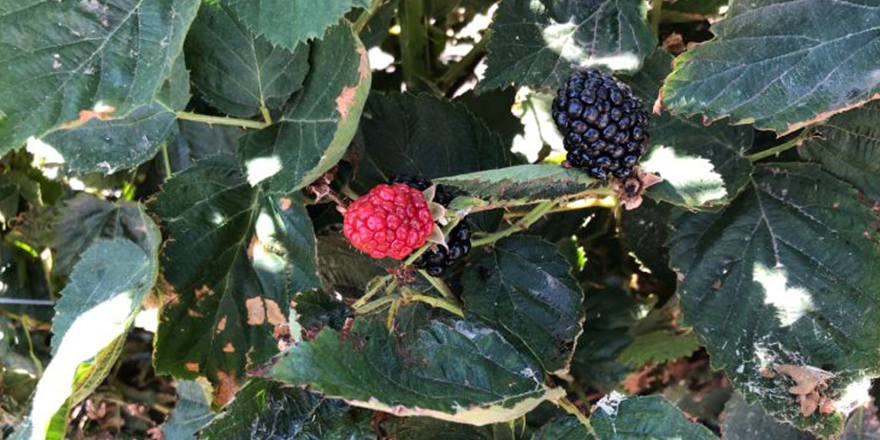
Tom takes a lot of time to make sure he is ahead of the game, always looking at how he can do things better or differently. For example, he’s experimenting with growing all-natural blackberries (no herbicides or pesticides), which will be sold at a local farmer’s market. 

Salinas, California.

First half July 2022

Spent a fantastic day in Salinas with Dennis Donohue and Walt Duflock at the Western Growers Technology and Innovation Centre. 

We met some inspiring people including Norm Groot who is working hard to ensure future water availability for County ranchers and growers. 

We also heard from Church Brothers’ Joshua Reed, who is empowering his people by sharing the data from their vegetable and leafy green growing so his staff can maximise yield production. He has managed to increase yields overall by 20% by using and analysing data. 

Dennis Donohue thank you for a fantastic visit and organising the day so well for us!  

Fresno, California.

Mid July 2022

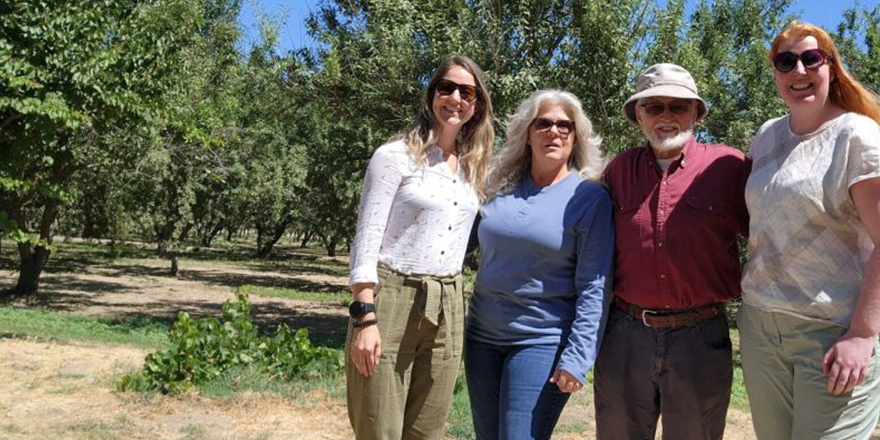
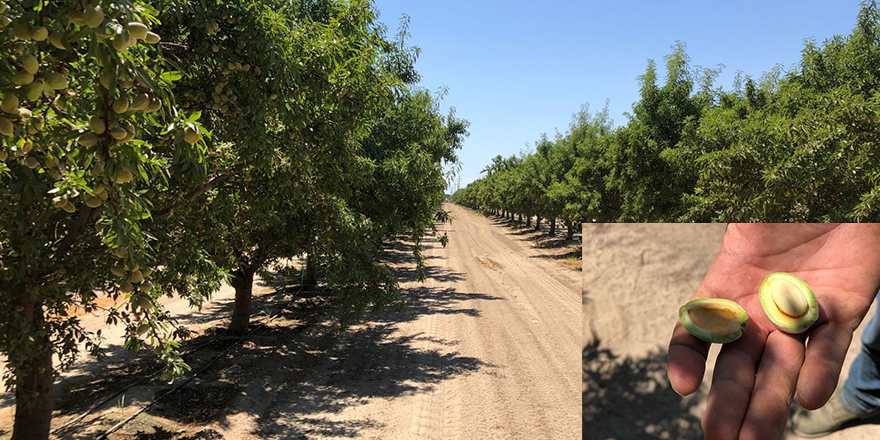
What a time to be in California. Elisa Blanco and I had the pleasure of spending the morning with Wendy Larson and her father, Glen Anderson, on their 20-acre organic almond orchard, that sells direct to customers. They helped establish the organic almond industry. 

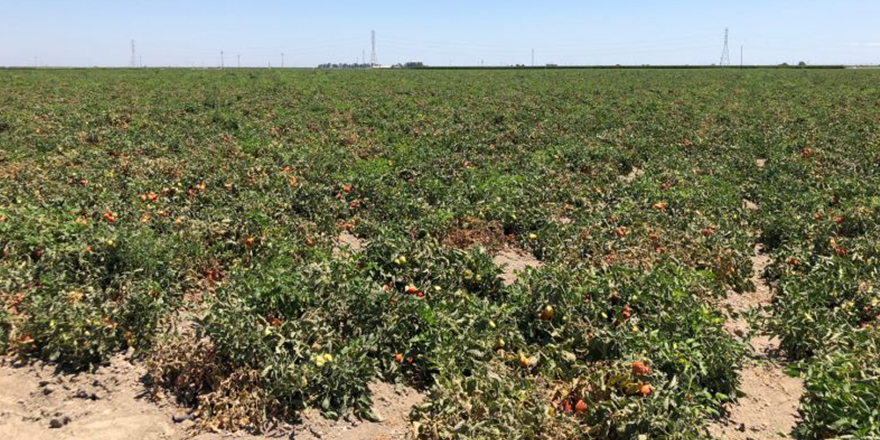
In the afternoon we had a tour of a much larger 8000-acre property, Terranova Ranch, Inc. They grow crops from organic tomatoes, peppers for Subway, red and white onions, to almonds and pistachios. This was an impressive operation, and they work hard to ensure water resource is managed well.  

Then for my final day in California it would’ve been remiss of me not to see the Muir Woods’ towering old growth redwoods. On to Chicago now.

Chicago, Illinois.

Mid July 2022

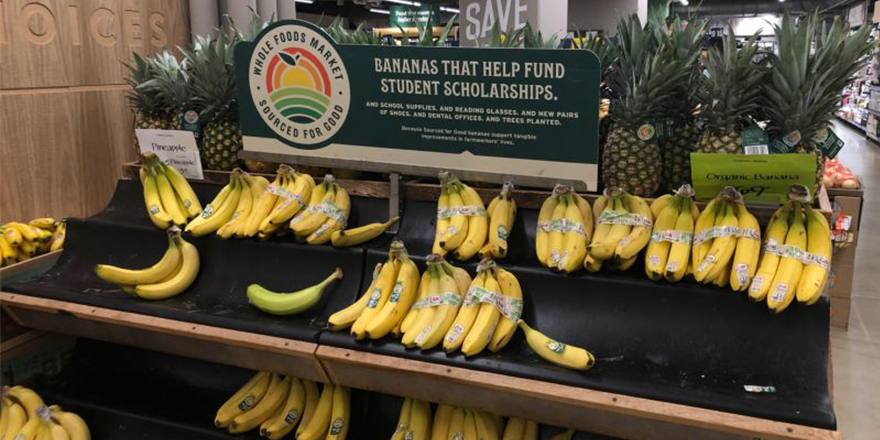
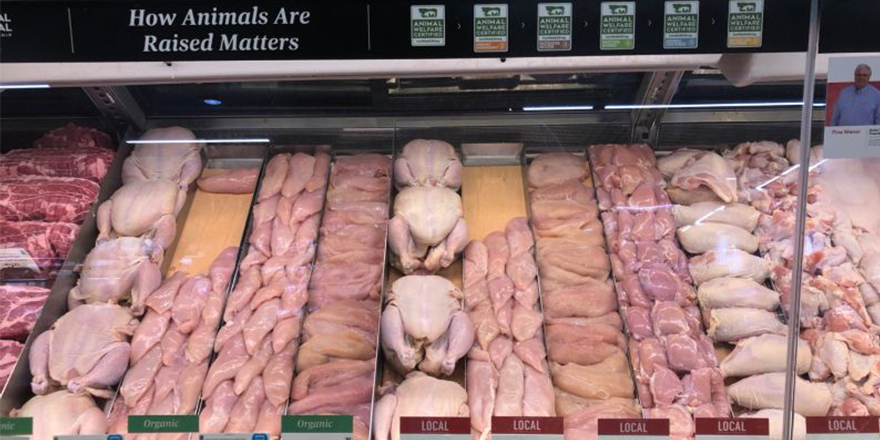
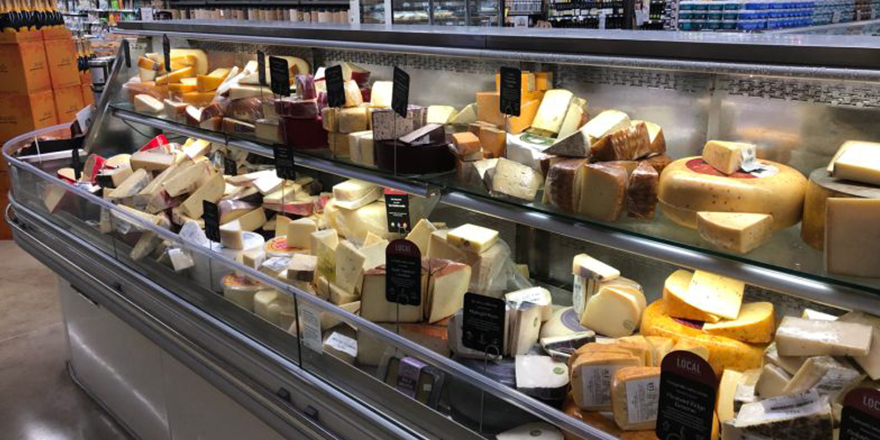
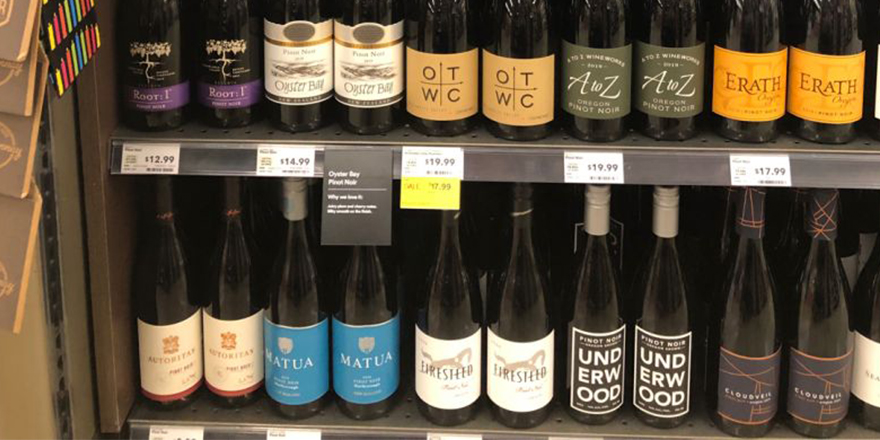
First day in Chicago. I took a trip to a Whole Foods store where I noticed the New Zealand wine on offer. This is a store where country of origin is really important and those that shop there want to see who they are supporting and what they are supporting. Like the bananas shown – supporting students through their scholarships.  

Whole Foods also have their own certified animal welfare standards where the meat is traceable to farm. It is also hormone and antibiotics free – like much of New Zealand’s meat. 

Champaign, Illinois.

Posted about one and a half weeks ago. 

The crops in Champaign, Illinois are predominately corn and soybeans. One farmer is looking at a third type of crop, miscanthus, which is a reedy type of grass and is used in biomass fuel and cut up into chips for turkey bedding.  

This is an interesting third crop that could be worked into the rotation of these fields, but there needs to be an increase in demand for it. Possibly the rise in fuel costs will do this? 

The innovation in machinery here is at the point where corn can be planted at 13-16kmph. This means 80 acres (or 32 hectares) of corn can be planted in one hour! The machinery is so impressive! 

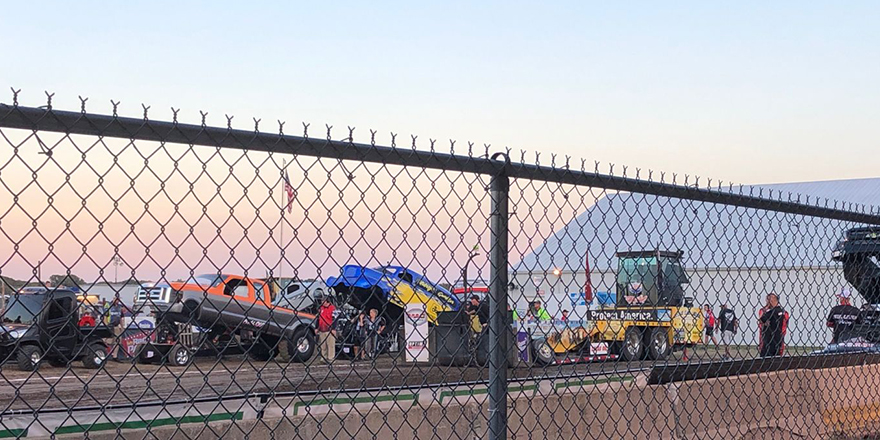
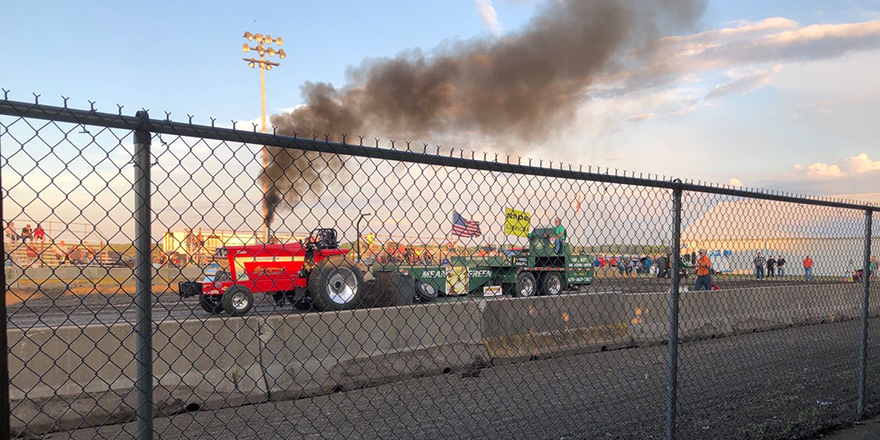
Also you cannot be in the rural country of the US without going to a local community fair, with the tractor and truck pulling! Thanks to the local farmers for inviting me to go with them. 

Also posted about one and a half weeks ago. 

I spent a great day with the Champaign Farm Bureau and the corn and soybean growers in Illinois, this is part of the USA corn belt, and they rely on rainwater not irrigation for crop growth.  

The weekend before I arrived, they finally had some rain. Before this the crops were looking dry and the corn was starting to curl. 

The farms here have grown significantly in size over the last decade which has happened in line with increasing machinery size. They have much larger machinery here than New Zealand because the landscape is so flat. They can get 18m wide heads on their combines. 

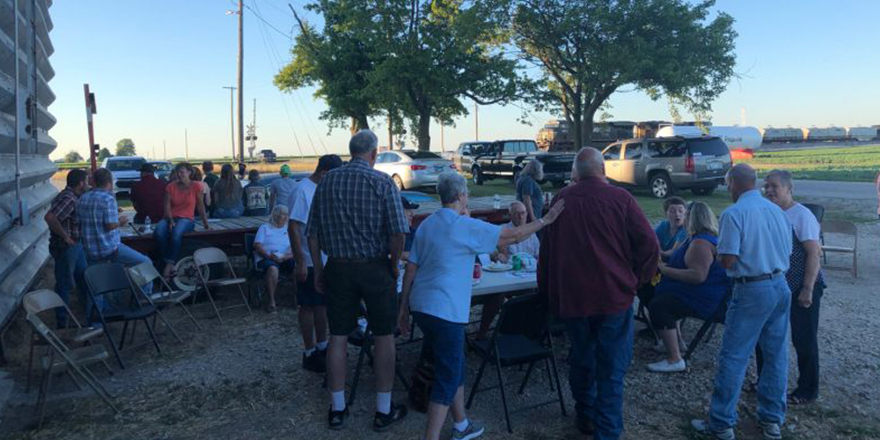
The day ended with a BBQ put on by the Farm Bureau. Thirty local farmers took part at an unused grain elevator. The Farm Bureau then announced some funding they had received from the federal government to improve rural broadband and to encourage more use of cover crops. 

Thank you to everyone who made me feel so welcome here!  

Fair Oaks, Indiana.

Mid July 2022

Today filled me with lots of hope. I went to Fair Oaks Farms in Indiana where they are doing a fantastic job educating the public on where our food comes from.

They have three farming systems they teach the public, a dairy farm, a piggery, and crop farming.

The dairy operation was both conventional and robotic milking. They milk 2800 cows in one facility, split between a 72-bale rotary (that operates 24 hours a day) and robotics. With the milking robots they have 12 robots milking 800 cows.

Madison, Wisconsin.

Late July 2022

I met a great leader today; someone I truly look up to. Dr Molly Jahn is a Programme Manager in the Defence Sciences Office at DARPA. Previously she was Under Secretary of Research, Education and Economics at the USDA. 

Her work at DARPA looks at the wider risks and opportunities in the global food system. I got to spend three hours with Molly and her husband discussing the food system. They also took me on a tour around the Wisconsin area and explained the diversity of the food system there. 

This was a real honour for me and shows the doors that the Nuffield New Zealand Farming Scholarship can open. 

St. Louis, Missouri

Second half July 2022

The last few days have been full of fantastic conversations around the food system. From the potential of GMO crops to continue to feed our world, to speaking with Dr Jacqueline Applegate, President of Bayer Crop Science North America, about the climate change weather patterns we are currently experiencing. And finally, on to conversations around building more resilience in our food system with senior professors from the University of Illinois.

The University of Illinois is a leading agriculture university and is heavily involved in supporting the agriculture community with new research. Their Farmdoc website is used to share information, resources and tools with farmers.

Next stop – Texas.

Thank you Rural Leaders, their partners, and the Ministry for Primary Industries (MPI) for making this all possible!

Lucie discusses her Nuffield study with 2021 UK Scholar, Chris Manley.

Posted about five days ago by Chris Manley, 2021 UK Scholar. 

Data Interoperability – struggling to get systems to work together? Not sure how to analyse and make the most of your data? What is the value of your data? 

Thank goodness my fellow Nuffield Farming Scholarships Trust Scholar Lucie Douma from Nuffield New Zealand is travelling the world to bring some clarity to some of these questions. 

I was delighted to catch up with Lucie to hear how the research is going and to hear her views on leadership.

Nine tips to nailing your Nuffield application. 

1. Identify Nuffield’s goals.

As simple as it sounds, applicants often don’t fully understand what the broader goals and objectives of Nuffield are.  

If your application is written with consideration to ‘giving back’ for example, this will go some way to increasing your chances of gaining an interview. 

2. Get your Nuffield referees sorted soon.

There’s still time to get your three referees locked in. This is something that often needs a little time, so if you don’t have three lined up yet, make it a priority. 

3. Include what you’ve done for your rural community or assisting others.

Tell us about it. We’re often surprised to learn of the above and beyond participation some applicants have done without mention in their application.  

Have you served on any boards, committees, in any community organisations? Any rural groups, or in any voluntary capacity? Have you written any articles?

Dig, think, tell us. 

4. Keep an eye on the close date – 17 August.

For some reason time seems to be getting away on us all at the moment. This next few weeks will be no different. Take five minutes to plan your approach to applying.  

Start planning what needs to be done and by when. Aim to finish on Friday 15 August – or sooner. 

5. Get in touch with our Programmes Manager.

Our Programmes Manager can help you through any queries you may have. she’s within earshot of CEO Lisa Rogers, so you get Lisa’s 8+ years’ experience as well.

We just asked Lisa for a gem, and she said, 

“Be very explicit about what being awarded a Nuffield Scholarship will allow you to do for the sector, not necessarily what it will do for you.” 

Who knows, five minutes on the phone with the Rural Leaders Team, or a quick email, might be the difference.

6. Focus on your strengths.

Find ways to both answer the questions accurately and get your ace cards down. 

An average application isn’t necessarily a badly written one, however, it is definitely one that doesn’t get across how suited you are to being a Nuffield Scholar. That said, you might want to pay attention to this next tip for a well written application.

7. Check your application.

Spell check. Grammar check. Read check – how does your answer sound when read aloud?

Check the questions. Check your answers. You get the idea.  

8. Read a few back issues of the Rural Leader.

Not as strange as it sounds. The Rural Leader has much information entwined throughout  that may spark topical responses to application, and potentially, interview questions.  

Of note are the Ideas That Grow podcasts and Alumni in the Spotlight articles. School up – read the Rural Leader. 

9. If you know a Nuffielder, get in touch with them.

As Kate Scott, 2018 Nuffield Scholar, said of the Nuffield Alumni, (they are) ‘A network open to you picking up the phone or flicking them and email’.  

Kate may have been talking about being part of the Alumni, but if you know, or know of, a Nuffielder, reach out and ask their advice.  

Good luck with your application. 

Lucie Douma: Entering an unknown future – 2022 Nuffield CSC – Norfolk, United Kingdom

Lucie Douma, 2022 Nuffield New Zealand Scholar

I was lucky enough to be at the first Contemporary Scholars Conference (CSC) to take place as the world is starting to see out the other side of the Covid pandemic. It was quite surreal to be with two-years’ worth of scholars (roughly 140 people) from 15 countries, all in one place for eight days. Considering most of us have not travelled for more than two years it was a bit of re-learning how to travel and manage the new ‘Covid’ rules. But it felt normal again. This feeling couldn’t be bet.

The feeling of returning to normality comes with a number of new challenges. These global challenges affect all of our agriculture systems and our farmers. The challenges we are facing are:

  • Two weeks before the CSC took place, Russia invaded the Ukraine.
  • Dealing with the aftermath of the world being shutdown for two years from Covid, and the damage this has caused to our respective supply chains.
  • The implementation of Brexit and creation of new Free Trade Agreements with countries.

These large challenges were common themes to all of our discussions during the conference.

How do we navigate this new world from Norfolk?

We also spent a significant amount of time at the Norwich Research Park which is home to pioneering research and solutions to some of the world’s biggest challenges including; food shortages, an ageing population and climate change. The perfect place for us! Here we tackled some big questions from potential meat free days to water shortage.

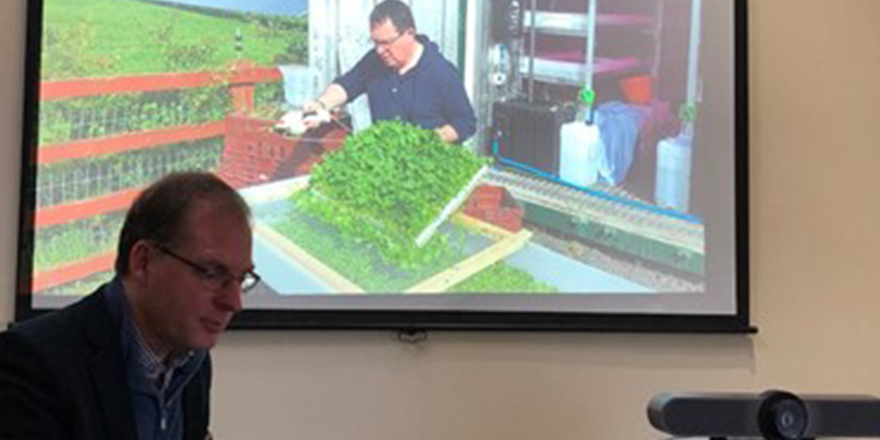
Innovation in agriculture in Norfolk can be seen at the Food Enterprise Park where Fischer Farms has begun work on a £25m project to build the world’s largest vertical farm. The vertical farm will be 25,000sqm of stacked growing space for salad leaves, herbs and other fresh produce for supermarkets.

Fischer Farms claims they will be able to produce the same amount of food in its four-acre building as would be possible on 1,000 acres of conventional British farmland. What does this mean for conventional British farming? The question becomes, is there room for both and how do they co-exist? This is what Tristan Fischer (CEO of Fischer Farms) tasked us with designing a solution for.

Tristan Fischer, CEO of Fischer Farms

Learning from other scholars

I greatly valued learning from the other scholars on the challenges they face in their countries with agriculture. It was heartening to hear that we face similar challenges. However, having read through other Nuffield reports these challenges were already recognised 5-10 years ago.

One example is the vegan movement, which is getting worse and there is now a greater level of activism amongst vegan and environmental groups who appear to have coalesced in some areas (including the UK).

If this is a sign to come, then in New Zealand we really need to be thinking how we can reduce our rural-urban divide. How do we encourage more participation in our agriculture sector? Is there a role for data here? This will lead me through to the rest of my research on data interoperability and the value of data.

Thank you to Rural Leaders and all those who support Nuffield for enabling us to travel to Norfolk and come together as a global community to address some of our big challenges in the sector. The experience and what I have taken out of it is invaluable, including all the new friends I have made.

Ngā mihi nui.

Parmindar Singh: 2022 CSC Insights – Norfolk, UK

Parmindar Singh- 2022 Nuffield New Zealand Scholar

Background

The 2022 Nuffield Contemporary Scholars Conference (CSC) was held during March 2022.  Nuffield 2021 and 2022 Scholars travelled from 15 countries and were hosted in Norfolk, UK.  Prior to our departure in March the New Zealand Government announced their plan to relax border restrictions, welcoming New Zealand residents back to New Zealand.  With this announcement we had the opportunity to attend the CSC in the UK and represent Nuffield New Zealand. 

Pre-conference, Lucie Douma and I spent time with Nuffield Scholars David and Christine Hill in Norwich. David and Christine introduced us to agriculture to Norfolk, where we visited their arable farming business, visited friends of the Hills who were dairy farmers in the village and toured the local town and village getting an insight into farming in Norfolk.  David and Christine shared with us their farming and family history and the challenges the UK farming sector was facing.  

Farms in the Norwich area consisted of generational farming with long-time family connections to the land and estates. Larger estates like Holkham Hall consisted of variable farming and commercial enterprises and considerable land ownership. These estates are well recognised in the UK, along with their family ownership and heritage and in some circumstances their association to the House of Lords. 

The UK Farming Situation: March 2022

The Russian invasion on Ukraine, has created a global humanitarian crisis.  In the UK, it signified the immediate concern for food security and the additional pressure on farmers who had already been challenged over the past two years.  Spiralling input costs were front of mind, particularly with wheat, fuel, energy and fertiliser costs.

Russia’s significant control over the supply of gas though the UK and the EU, imposed not only an increasing input cost on farm, however also increasing household and living costs.    General conversation with the UK public, posed an anxious population with the on-going impact of covid-19 on businesses and the additional pressures from the Russian invasion on the Ukraine.  It was interesting to note, that although the general UK population was sighting increasing food costs in the supermarkets, when comparing UK super market food costs with New Zealand super market food costs, it appeared that the cost of food in the UK was significantly less that the cost of food in New Zealand.

Additional changes in agriculture in the UK also reflect the transition from the long-standing EU scheme of agricultural subsidies (Common Agricultural Policy [CAP]) to the phasing out of the subsidy scheme with the exit of the UK from the EU. Post Brexit, the UK is navigating the challenges of staff shortages and increasing costs of production (which are likely to see the cost of local produce continue to increase), creating additional pressure for UK farmers.

Regenerative Agriculture was a topic discussed often and referred to as an opportunity to restore soil health and the quality of waterways, whilst reducing greenhouse gas emissions and enabling a healthy ecosystem; expanding the conversation of the global environmental challenge.

UK dairy farmers also expressed the increasing pressure and scrutiny they were facing from the public on environmental and animal welfare issues.

The CSC Agenda

The CSC agenda included presentations from agricultural leaders, identifying agriculture and the food of the world, British agriculture in a global setting, the impact of agriculture on climate and the global environmental challenge.

The all-important health, safety and wellbeing also featured on the agenda, with some real-life take-home messages and scenarios.  A visit to the Norwich Research Park, highlighted the research and innovation undertaken in searching for solutions to worldwide challenges in food-related disease and research into plant sciences and species. 

We also visited the Norwich Food Enterprise Park.  This park has been created to encourage and support food production, processing and agriculture through co-location of commercial enterprises. Our visit to the park provided us with an opportunity to participate in a small group activity to come up with solutions to challenges four businesses in the park were facing.  It was a great way to learn about real case scenarios and learn about a group of diverse agricultural businesses. 

A visit to Houghton Estate and Dairy was enlightening, hearing from two enthusiastic farmers about their journey.  Holkham Hall & Estate, was the final destination in Norwich.  Holkham was somewhat surreal, with history dating back to the 1600’s and a family estate that was built for the 1st Earl of Leicester in the 1700’s.  The Estate consists of 25, 000 acres, with business ranging from agriculture, holiday park, retail to property development. 

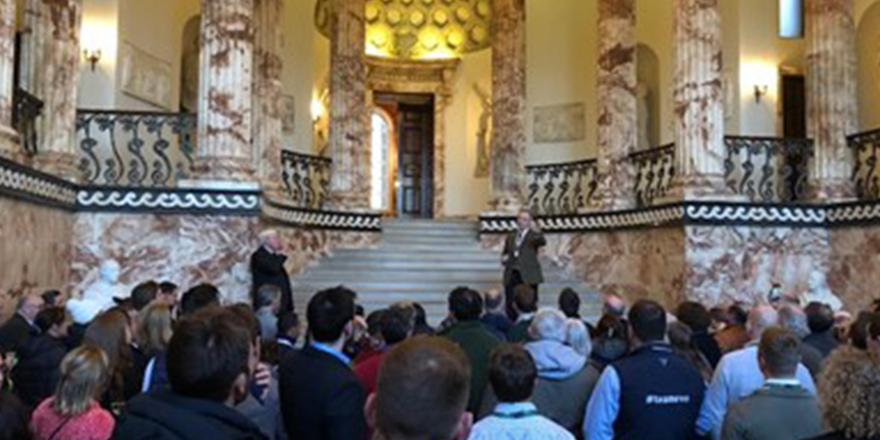
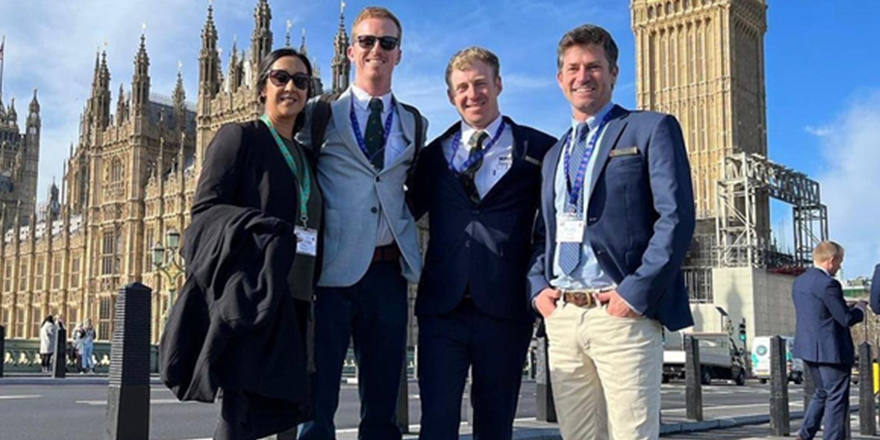
The final few days of the conference were spent in London, with a visit to the Houses of Parliament and a celebration to mark the closing of the CSC Conference with a Gala Dinner. 

Group photo Nuffield CSC 2022

Learning from Global Scholars

The CSC offered the opportunity to engage with global agricultural leaders.  Learning from other scholars about their country and their agriculture was a highlight.

Such a diverse group of agricultural enthusiasts, ranging from: cows, camels, poultry, crocodile, pigs, vineyards, horticulture, bees, deer, sheep, flowers, arable, sheep and beef to agricultural service and technology providers and developers (no doubt there was more).  From the opening of the CSC on March 7th to the closing of the CSC March 14th, each day, a country group would present agriculture in their country.

Learning about how countries engage in agriculture and listening to the proud country men and women talk about their work and their countries work back home, was a great start to every day at the CSC.  

NZ Farming vs UK Farming

UK is farmed according to landscape, water availability and weather/climate conditions much like NZ.  Norwich for example consisted of predominantly arable farms, with variable crops (dominant crops included: wheat, oilseed rape and sugar beet) and forward negotiated contract agreements.  Arable farms consisted of large fields and it was interesting to note that some fields were planted with more than one crop simultaneously. 

Although the EU is recognised as a leading exporter of Dairy alongside New Zealand and the US, the UK was not seen as a leading exporter of dairy, conversely more of a domestic producer.  New Zealand exports more than 90% of domestically produced dairy products and revenue exports contribute significantly to the New Zealand economy.  The UK reports significantly less contribution to its national economy from its agricultural exports.

Across the UK, dairy farming appears to be more predominant in the South.  As with NZ, some dairy systems are more complex than others and weather dictates the type of dairy system applied.  The dairy farms we visited in Norfolk, housed their animals in barns, which appeared to be the dominant form of dairy farming system applied in this particular region in UK. 

New Zealand Brand Reputation

CSC participant and fellow scholar feedback consistently focussed on a global perception of New Zealand producing premium agricultural products, with a focus on grass fed and an organic style of farming where products can be traced back to origins of a country that cares about their environment and animal welfare.  “New Zealand punches above its weight”, was a consistent and humbling message from many fellow scholars. 

My insight from the conference and travel, was that New Zealand is profound at producing premium quality food.  Globally we are viewed as leading in all thing’s agriculture and we are seen as a country who cares about environment factors and animal welfare.  We have a great story to tell, and we are getting better at telling it!