2026 Nuffield NZ Farming Scholarship. Apply by 17 August 2025. Read More...

Apply for 2026 Nuffield NZ Farming Scholarship by 17 August 2025. More details...

Hamish Marr, 2019 Nuffield Scholar: CSC Report

If you asked any of the five scholars from this year they will all say the same I’m sure, our preparation was the key to our success not only in our pre CSC travel together but also at the CSC in Des Moines.  We must thank the board for three key pieces of personal training they allowed us to undertake.  Juliet Maclean, Hamish Gow and Corene Walker all spoke to us at length and we gained a lot from them.

Juliet Maclean, past chairperson of Nuffield New Zealand and Nuffield Scholar was able to not only impart a lot of her knowledge from her own experience but strategies we could use when dealing with other people in situations that always arise in groups.  Juliet also spoke with our partners about their expectations and what the 12 – 18 months was probably going to be like and walked us through some of those.

Hamish Gow’s insights into what is in store for us in the year ahead have been invaluable and reassuring. The explanation and classification of the stages of our journey being initially a divergent phase as we explore the world of many agricultural businesses, practices and views on the world.  The concept that you can’t solve the issue on day one until you have fully understood and defined the actual problem. The idea and encouragement to keep our topics broad and the skills imparted around reflective thinking really set us apart in keeping an open-minded approach. Often the Kiwi scholars were leading those reflective practices with small groups after various discussions or field trips.  “What did you see, what did you hear, what didn’t you see, what weren’t you told?” These skills were touched upon in the CSC but nowhere to the extent that we had from Hamish. New Zealand really cemented those skills prior to the CSC which allowed us to get a lot more out of it than some other countries.  This fact we know from the feedback throughout the CSC. As an example we visited a beef farm during the CSC, it was the middle of winter, snow on the ground, muddy and very cold.  It wasn’t the best advertisement for feedlotting cattle but it was where we went on the day.  A large number of scholars were less than impressed and could see no benefit in the visit.  However, the New Zealand contingent saw the potential in simple management decisions such as EID’s for weighing and feeding, regular marketing channels both in and out.  Some take homes, cattle can obviously survive outdoors in -25 deg C and its not wrong, just different. Hamish’s advice was always in the back of our minds, “what is the one take home from every visit you go on?”

Corene Walker spent a day with us detailing the science of getting along with people. The first phase being you must know yourself, your strengths, your weaknesses and how you deal with these things.  The second phase involves knowing and dealing with other people’s personality traits and the strategies to use these to everyone’s advantage. These soft and yet subtle skills certainly came to the fore at the CSC when faced with 80 strangers. It gave us the confidence not only in self-regulating our own feelings but also recognising the signs within the others in the group.

We also had a range of trade and government briefings prior to departure from New Zealand which helped us greatly. Even in such a short space of time, it is incredible how often people are interested in what goes on within New Zealand and how it is managed politically. Briefings from KPMG, Wakatu Farming, NZTE, MFAT, MPI, Wine NZ, Fonterra, Kiwifruit NZ, Hort NZ, FAR and Beef and Lamb NZ all helped to paint a picture of where New Zealand sits in the world.

The outcome of these meetings was that we left New Zealand as a very tight unit and we were set up well for what we encountered and what we will encounter throughout the year.

As a group, we must acknowledge and thank the Nuffield Board and also the tireless work of Anne Hindson and Lisa Rogers. Our pre-work and our travelling to date have exceeded our expectations and I know we are all very much looking forward to what happens next.

General Manager Update: Anne Hindson, April 2019

This update for December through to April summarises the activities of NZRLT which is the operational arm of both Nuffield and Kellogg programmes.

With the recruitment period for 2020 Nuffield scholars and the 2020 Kellogg programmes about to kick off, word of mouth and encouragement from those who have completed the programmes are still the prime drivers of quality and diverse applicants so we hope you will all take time to approach some emerging leaders and encourage them to apply for these life changing experiences.

The 2019 scholars announced in the November E Nuff are well into their programme having undertaken a two day NZ briefing in early December which enabled the group to bond, be briefed by industry and government on global activities and priorities and put into practice some of the research and reflection tools provided by Hamish Gow at their November orientation.

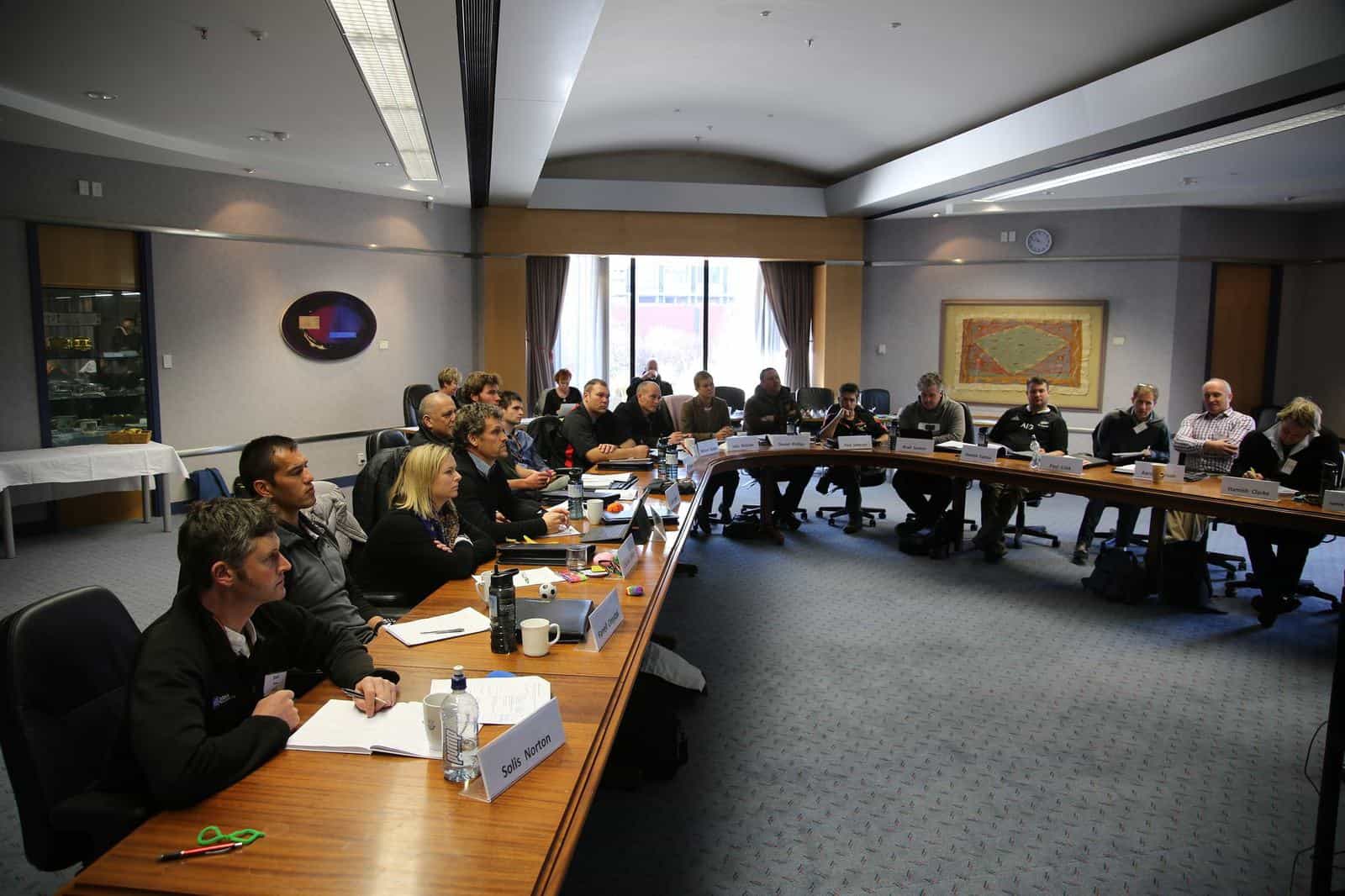
In January the group opted to do a 1.5-day leadership workshop with the Course 39 ‘Kelloggers’ providing further tools and new understanding of their own and others leadership styles and how to operate as a team. The combined tools were well utilised at the Contemporary Scholars Conference where the NZ scholars were sharing and coaching other international scholars on these tools.

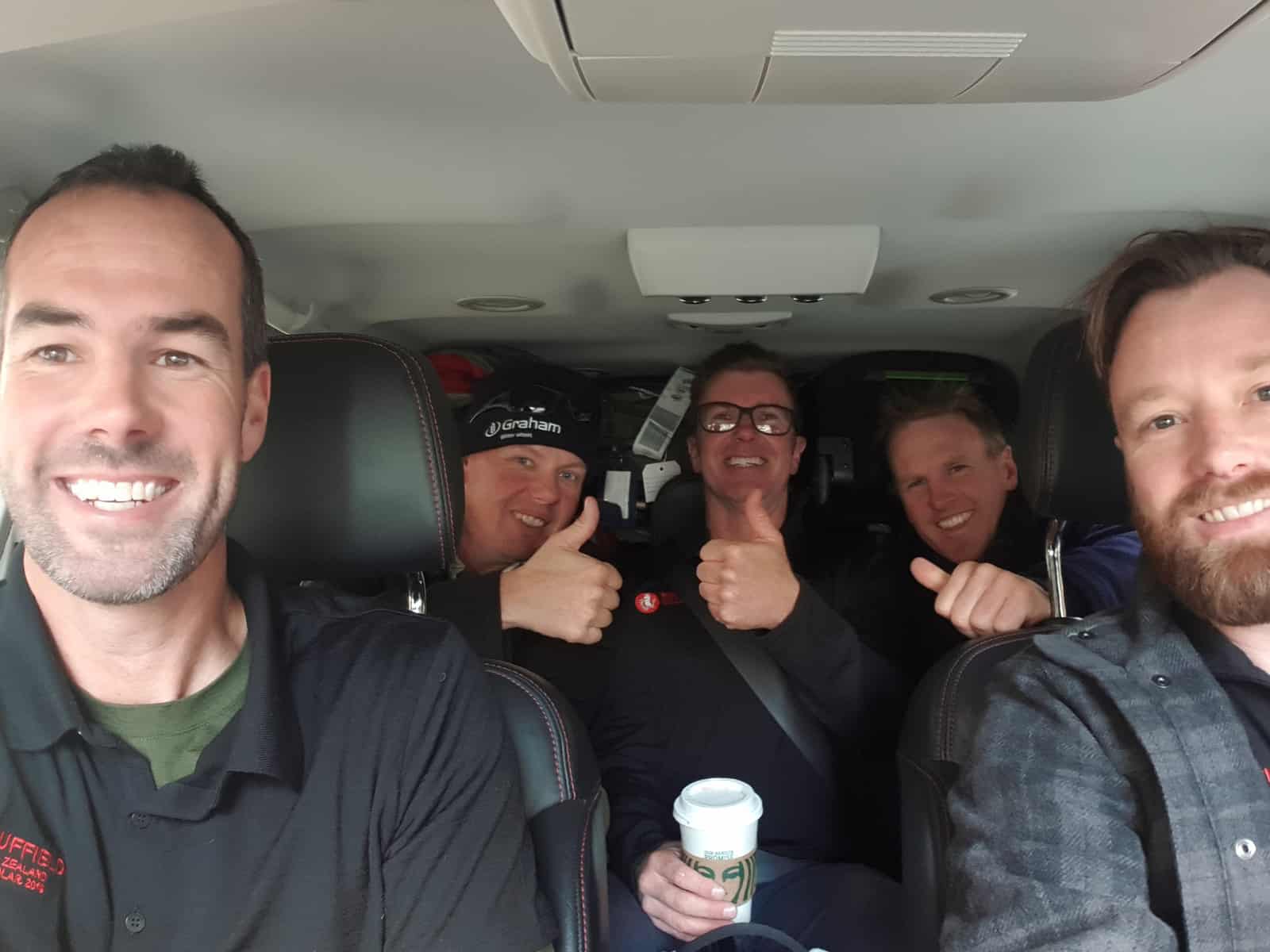
This April E Nuff provides the five scholar reflections on their CSC experience and the 5-day tour & business visits the group undertook between Chicago and Des Moines in Iowa which was the location for the 2019 CSC.

Meanwhile the 2018 scholars reports are just released after scholars spent the summer working on their draft and incorporating the feedback received.  There is a lot of industry interest in the reports with requests for copies and speakers at industry events. As mentioned by Andrew, we are looking at how we leverage these leading insights and learnings together with our alumni to start making a difference.

Nuffield2020 is a huge undertaking for the organisation and the hardworking committee with four events over 11 days. It will be vital that NZ alumni support this event as country hosts but also in generating interest by encouraging year cohorts and GFP groups to combine the event with a group reunion but the invites and suggestions need to get out now!.

Having just attended the two day Grow 2019 Boma conference in Christchurch, with a few of our  organising committee we have reflected on the content and focus of the one day Summit as a key component  of Nuffield2020, and particularly ways to to differentiate it from other industry conferences. With the event open to Kellogg alumni and industry it is an opportunity to gain greater exposure for NuffieldNZ.

The website has just been updated with more details on the different events under Nuffield2020 so check out on https://www.nuffield2020.com/

Noting other NZRLT activities, The Kellogg Rural Leadership Programme continues to attract high quality applicants and deliver great networks, friendships and leadership skills on farm and in industry forums and businesses. It is great to see the Kellogg alumni now in government  (5 in total) and their willingness along with Minister O’Connor to share experiences with the group.

In June, the 40th course of Kelloggers will be welcomed onto the programme and this is a major milestone for the programme. The cohort will receive different content to those who undertook the first programme in 1979, reflecting the new leadership environment and skills needed but the fundamental principles of the programme remain the same.

On the management front, in May we regretfully farewell Clara Sweetman who has been our Marketing and Comms Contractor for the last 12 months as her family move to Auckland. We are actively recruiting a replacement for the role along with a newly created Event/Project Coordinator role to help with regional seminars etc.

With the NZRLT financial year running between 1 April & 31 March we are just wrapping up the 2018-19 year financials and the Board & I have been reviewing our strategy and new alumni initiatives as we plan for the next twelve months.

Chair Update: Andrew Watters

Andrew Watters, Nuffield New Zealand Chair

Andrew Watters, Chair of the Board
April 2019

The Trustees held our second Board meeting of the year last week (early April) to address ‘business as usual’ matters focused on running two high quality leadership development programmes as well as the strategic development of the organisation. 

The New Zealand Rural Leadership Trust (NZRLT) is the operational entity with the Nuffield New Zealand Farming Scholarship Trust (NFST) now operating as a capital fund for the future reinvestment in Nuffield Farming Scholarships.

Nuffield Scholars at our biennial meetings can elect two (existing or new) trustees to make a total of four Nuffield appointed Trustees, with two independent appointees appointed by our National Advisory Committee made up from our investor partners. We also have an associate Trustee appointed from recent Nuffield scholars.

I reference this because under the Charities Act we must hold our ‘annual’ meeting every year, with the proposed date for the 2018 financial year being Friday 10 May 2019. We will conduct the meeting by a zoom video-conference invite.  During the meeting we will cover off the normal requirements, including the 2018 year-end financial position with the NFST. As requested at last year’s AGM we will provide you with an update on the financial situation with the RLT and we will also provide updates on Nuffield International, the 2020 Triennial, and our Rural Communities project.

As part of the AGM we will provide some feedback on the ‘one kitchen two restaurants’ concept developed five years ago – that saw the NZRLT be formed and take over the operations of both the Kellogg and Nuffield programmes in June 2017. The analysis shows that Kelloggs has been a great contributor to the financial performance of the NZRLT, which in turn has enabled us to improve and extend the Nuffield Scholarship programme.

As a reminder, our two programs are as follows:

Nuffield:

  • Develop emerging producer (farming) leaders by fast tracking their leadership pathway through GLOBAL exposure & learning
  • Equip scholars to analyse and untangle wicked /complex problems, thereby enabling effective provide producer input into decision making
  • Experiential learning with the tools to maximise opportunities available
  • High quality research project and global insights delivered to partners, farmers /growers and industry

Kellogg:

  • Providing the ideas, capability, motivation and skills to “enable” and empower leaders who can collaborate across sectors and geographically.
  • Providing the tools, skills, and pan sector understanding of NZ AGRIFOOD sector
  • Creating networks/friendships across sectors and country
  • Applying & demonstrating critical analysis, design thinking, strategic analysis, problem /opportunity solving
  • Transferable skills being Collaboration, Creativity and Communication
  • Kelloggs is an ideal pathway development programme into the Nuffield scholarship although candidates can successfully enter the Nuffield program directly.

As the NZRLT our unique proposition as an organisation is:

  • Experiential learning focus and global exposure (Nuffield)
  • The combined Kellogg and Nuffield alumni
  • Our proud and successful history with a positive view of change
  • Our insightful reports
  • Our pan sector representation and national reach

Craige Mackenzie and Anne Hindson attended the recent CSC programme in Iowa in the US. It is pleasing to see our five scholars standing out as a group with their enthusiasm, team work and work ethic. They were well prepared and showed their capability and potential.

Craige represents New Zealand on the international board with the current focus on the financial sustainability of the organisation and delivering on current international scholar commitments. Nuffield International has important goals to extend Nuffield beyond the Commonwealth countries but is still in start-up mode.

Michael Tayler and his able team are making excellent progress on planning for the 2020 Triennial. The combination of the Nuffield New Zealand conference, the Agri-business Summit and the Nuffield 2020 Triennial (10 days from 20 March to 29 March, plus technical tours) makes this job a massive feat to organise with the resources of one contractor, volunteers and some support from NZRLT. We hope all our alumni will take on the host role and be part of the full programme.

Whilst we plan to update you on strategic matters at the AGM, our short-term focus is on building our potential pipeline of people (with an emphasis on farmers and growers) considering our two programmes. To that end we are to repeat our successful regional meeting initiative from 2017 to attract new potential applicants. This time the meetings will be open to both Kellogg and Nuffield applicants; we intend to utilise the meetings, to showcase our best scholars and to discuss the potential Rural Communities project. Our initial focus for meetings is Northland, Bay of Plenty, Hawkes Bay, top of the South, Central Otago and Southland. The NZRLT team may be in touch for suggestions and ideas for these meetings.

We look forward to a good discussion at the AGM on May 10th at 12.00pm!

Calling all dairy farm workers

Blake Marshall from Ngai Tahu Farming is completing his Kellogg Rural Leadership project on “The importance of developing positive stress management and mindset skills in young dairy farmers”.

He is wanting to survey dairy farm workers.

If you are a dairy farm owner or employer and want to be involved in this survey or receive a copy of the report on completion, please email him on Blake.Marshall@ngaitahu.iwi.nz

Climate change and agriculture.

Executive summary

This report is about climate change and its effects on the dairy industry on the East Coast of New Zealand. I have been working in the industry for the past 12 years and have seen some of the changes in climate. As a farmer, you would be foolish not to have a better understanding about climate change and its effect on your business. 

The scope of the research considers climate change impacts over the past 20 years, and into the next 20 years. The three key areas of enquiry are related to farming operations, productivity and environmental factors (rain, temperature and land erosion).

The key objectives are to:

  1. Understand how climate change has impacted on operations and productivity in dairy farming/farming over the past 20
  2. Explore how climate change may impact operations and productivity in the next 20 years.
  3. Consider the key environmental factors of rain, temperature and land loss on the future of dairy

The literature review looks at climate change and the implications for farming operations and productivity. All information was gathered through an internet search under the topic climate change and agriculture. The main sources used were New Zealand government agencies, research centres and research from Universities.

The research methodology used anonymous questionnaires to gather data. The questionnaire was distributed via social media and email. I received 14 responses. The data from the research questionnaires was analysed by question and themed by topic. Six of 14 respondents say that climate change is a natural cycle of weather. Five of 14 say that climate change means less certainty and that farming operations will need to change. Six of 14 say that the main risks are weather related, mainly drought, flooding and major weather events. Half of the respondents said climate change has not affected them. Nearly all respondents

  • have plans to mitigate the effects of climate change. Half of respondents say that compliance and cost does affect their farming operations and they expect these to

For farmers, it is business as usual and for farming operations we manage for the extremes now anyway. However, the industry needs to develop sustainable practices, we need innovation, and government and regulatory bodies need to be reasonable about the cost of compliance.

Jori Tuinier