2026 Nuffield NZ Farming Scholarship. Apply by 17 August 2025. Read More...

Apply for 2026 Nuffield NZ Farming Scholarship by 17 August 2025. More details...

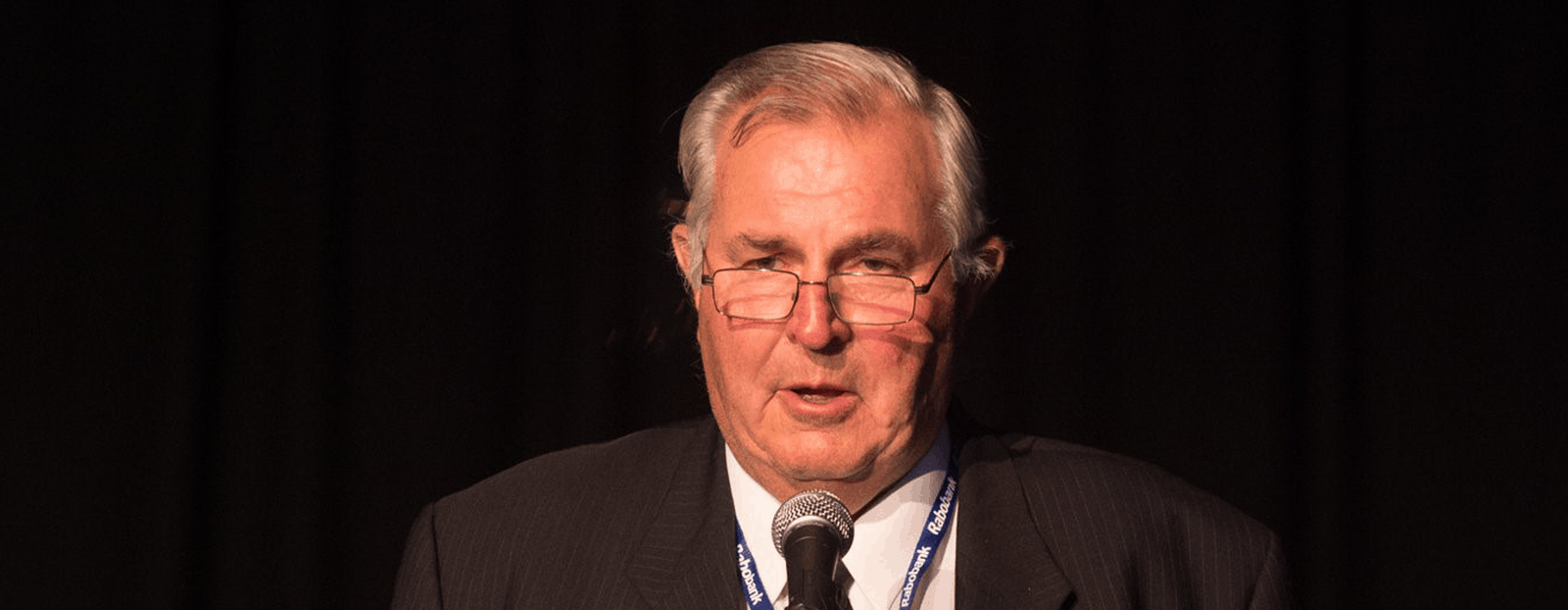
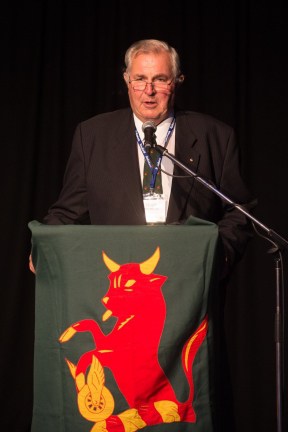
Obituary for Hugh Roberts

Hugh was a highly active member of the Nuffield Alumni and at the 2015 Nuffield Australia National Conference in Albury, was acknowledged for a 40-year reign as a Nuffield Scholar. 

Hugh was a well-known grains industry advocate, former agri-politician who had a long association with the NSW Farmers Association and other industry bodies. He was also a strong advocate for genetically modified (GM) crops.  

Until recently, Hugh and his wife Jenny lived at “Birralee”, a 485 hectare property which became widely known as the base of a successful registered seed business, specialising in triticale and legume varieties.
 

Hugh was awarded a Nuffield Scholarship in 1977 to study British agriculture, and the British seed industry in particular. You can read Hugh’s final report here.

He has represented the agricultural industry in many roles, including with NSW Farmers Association, Grains Council of Australia and Bio Technology Australia Advisory Council, Australian Seeds Authority and the Australian Crop Accreditation System.

The effective leadership of remote agribusiness sales teams.

Executive Summary

The New Zealand Agricultural Sector makes up about two thirds of the exported goods from New Zealand and as such remains the most important industry for New Zealand’s economy. Agricultural farms span from Stewart Island in the South to Cape Reinga in the North, some 1600 km away and from one coast line in the east to the other in the west up to 400km apart, with a total land mass of 268,000 square kilometres. For Agribusinesses who wish to support these farmers with products and services, this is a logistical challenge.

Traditionally in New Zealand the method in which farmers have traded with Agribusinesses who supply them with products, services and advice is over the kitchen table. This originates from a time when technology such as mobile phones, the internet, fax machines and overnight courier were still to be discovered. Farmers would less frequently travel to town, either because the distance was too far, the roads too poor or there was no need.

Co-operatives were formed and as such there were milk processing companies nearby, a fertiliser distributer, a farm supplies store and a bank. A local representative from the respective Agricultural Company would visit the farmer on farm, have discussions and provide advice around their requirements and then ensure these products or services were deployed to the farm accordingly.

As technology has evolved farmers are now able to use multiple platforms to engage with their farm supply companies. There are multiple communication channels and most products and services that a farmer may need can be purchased and subsequently delivered without even talking to somebody. However as a result of history the large proportion of customers still prefer to conduct business over the kitchen table and as a result most agribusinesses in New Zealand have Sales representatives dispersed as far as Kaitaia to Gore. The majority of these businesses do not have headquarters, offices or stores in all of these regions so the sales representative typically works from a home office and their line manager is usually over 100km’s away working from a separate location.

From a leadership perspective this poses challenges for the manager of these dispersed teams when it comes to creating a high performing team who feel part of a team, are well coached, rewarded, recognised for their achievements, trained and where necessary their performance managed. Unlike the typical office environment where a manager will see and interact face to face with their reports often on a daily basis, having employees 100km away and often mobile on the road means the manager requires a unique set of skills.

As a leader of a remote based sales team in the agricultural sector I saw an opportunity to understand this dynamic better and review existing literature and research which has been done on the topic and also conduct my own survey of other rural leaders in the same positon as to how they lead their teams.

After reviewing literature and from my own experience in the area of leading a remote sales team I decided to take a closer look at 5 keys areas of leading a remote sales team: the team dynamic, coaching, effective feedback, reward and recognition and productivity.

Existing literature confirmed that remote sales teams can be highly effective and productive if led well with a clear vision and purpose. The key to success is having a well-designed team who understand what their job is, are kept well informed of how they are doing, have a good relationship with their manager and are clear on what their future is. Management is a discipline which has changed dramatically over time and is now a lot less effective. To be an effective coach in a leadership role will improve team performance at a greater rate than management in the purist sense.

Reward and recognition are key elements of keeping a team productive, positive and engaged. And under the right leadership remote teams can be more productive than their office based counterparts.

For leaders reading this discussion paper there are five take home messages: recruit the right team, give them a clear purpose, tap into their hearts and minds by being an effective coach, reward and recognise to drive the right behaviour and provide regular, effective and meaningful feedback to improve the effectiveness of your people.

Leadership: What are the key attributes for success.

Executive Summary

Leadership is one of the many fundamental components of a successful business. Understanding and appreciating what makes up leadership can ultimately drive success. No matter what the business size, sector or turnover, a successful business requires great leadership.

To be a great leader requires a particular skill set; not everyone is naturally a leader. However, research has shown that successful leadership is a process and can be learned; there are definable skills that you need to possess to succeed.
 
What are the key skills that a successful leader needs to possess? Do leaders draw more on soft or hard skills? As generations change in character will the leaders of tomorrow need to draw on an alternative skill set? These are the key questions that have been researched in the following study.
Two approaches were used to investigate these questions. A literature review was completed looking at three studies with a focus on leadership skills. In addition a survey and six in person interviews were conducted with a group of agricultural leaders in the Marlborough region.
 
From the literature, survey and interviews key skills were highlighted that were critical to being a successful leader. Communication and listening ranked highly and when used effectively these skills build trust and inspire loyalty. Once trust is established a culture of safety develops allowing an environment where people are free to innovate. Kouzes and Posner (2012) stated that people who are perceived as trusting are more sought out as friends, more frequently listened to, and subsequently more influential. The most effective leadership situations are those in which each member of the team trusts the others.
 
The key recommendations that have come from this report for leaders are;
  • Good Communication and effective skills are is essential. If done effectively and genuinely it allows people to feel closer to their leader building trust, teamwork, engagement and ultimately results.
  • Support and develop others. In showing commitment to growth, people are motivated to reciprocate by often going the extra mile. Leaders need to recognise that great things cannot be achieved all by themselves.
  • Relationships. To be an effective leader you must first understand the people you are leading; building a relationship takes effort. By adopting a relationship-driven approach leaders can earn the trust and confidence of an increasingly diverse workforce and improve long-term retention.
  • Integrity. Getting this right is fundamental for success. Integrity is consistently rated as one of the most important character traits of a respected leader. After all, if you cannot count on a leader to consistently operate with high ethical standards, and with honesty, how can you trust them.
  • Leadership style. If you try to simply adopt a company’s style or try to copy someone else’s style your lack of authenticity will show through. It is about being self-aware, knowing what you stand for and what is important.
  • Soft skills are now becoming increasingly important for the future workforce, as a leader being aware that you need skills such as listening, creativity, agility, and problem solving are becoming as important as expertise and technical competency.

The following study presents the findings and discussions that have resulted in the above key recommendations.

Water sharing in a water short catchment.

Executive Summary

In New Zealand (NZ) freshwater management has become a top political issue with most New Zealanders having an emotional attachment to freshwater and how it is managed. The question is, how do we manage freshwater and respect diverse interest and complex environmental interactions? The aim of this study was to gain an understanding of freshwater management, and identify successful policies and management structures that can meet the needs of rural communities. This project includes a review of the literature around environmental governance and unstructured interviews with regulators, industry individuals and those involved with water governance.

New Zealanders are unlikely to respond to authority unless they understand why. Catchment specific limits around water quality and quantity, empowers rural communities, allowing flexibility for methods to solve issues and giving ownership over solutions. This approach and other bottom up approaches such as Maniototo Pest Management have developed a high level of social capital in the Upper Taieri Catchment, meaning compliance limits set by the Otago Regional Council (ORC) are often bettered by local initiative.

The Resource Management Act 1991 (RMA) set NZ on a different path allowing meaningful recognition of environmental and social values. The RMA is based around sustainable management, principles with an integrated approach to environmental management. Agreed principles give the opportunity for groups to identify shared values. If groups agree in principle, this enhances the opportunity to build trust. If trust is not built between water users, stakeholder groups and regional authorities it increases the likelihood of resource consent applications ending up in the environment court. This adds significant time and cost, and the opportunity to create win-win scenarios is lost.

In California, ownership rights and a strict priority system of ‘first in first served’, means water is unevenly distributed between communities and can result in significant geographic differences in wealth. Ownership rights to water encourage competition between users and ‘Tragedy of the Commons’ where individuals are unlikely to preserve the resource because they expect another will take it. The user group structure being achieved in the upper Taieri reduces competition between users by giving top priority to the environment.

Efficiency of water use is the net value of outputs generated from inputs. Individual catchments around NZ, like the Upper Taieri are all unique so best use of a water resource is appropriately established at community level with an integrated catchment governing body such as the Upper Taieri Group. This gives opportunity to harness the valuable social capital and local knowledge.
In conclusion, good environmental policy will alter behaviour in a way that is appropriate to the needs of communities. While freshwater interests in NZ must always be respected, the implications of ownership rights or top down policies will likely have negative implications for rural communities. NZ has a chance to be world leaders in freshwater management by using social capital to reduce compliance costs and achieve policy goals. This is reliant on central and regional government recognising the value of community engagement. Transparency, face to face communication and compromise are needed and should be encouraged to achieve policy goals.

GM Update: Our new branding

Anne Hindson, General Manager, August 2018

Andrew in his Chair update, focuses on Nuffield strategic initiatives and NZRLT board activities, while this update covers management activities of the NZRLT Trust (incorporating both Nuffield and Kellogg programmes) as well as Nuffield programme activities and reflections.

The launch of our new brandingin late June, has occupied a large amount of my time. Juliet Maclean led the project which began in January, through the brand development including the research, strategy, creative, story, and identity to get it to the brand kit and roll out stage.  Juliet’s commitment to making sure the Nuffield and Kellogg programmes are relevant for our future markets is invaluable in setting us up for the future.  

We started with the development of a new brand for our new organisation – the New Zealand Rural Leadership Trust (referred to as Rural Leaders) accompanied by a new fresh logo for the Kellogg programme and a refreshed modernised logo for the Nuffield Scholarships. If you missed our email with the story behind the branding, click here for a detailed explanation and video.

We created a single website which now hosts Rural Leaders and the two programmes, but have ensured that all Nuffield (and upcoming Kellogg) marketing drives people directly to the Nuffield page on the new site.  Over time, we hope to position Rural Leaders as the recognised organisation delivering both programmes with marketing going to just that site. 

The single website also provides one platform for our joint alumni to interact with both programmes and alumni activities. It is the first step in bringing our alumni groups together also under one umbrella organisation for thought leadership activities. The final step in this project is the transfer across of several hundred reports from both sites which will take some time. 

The new branding is now fully adopted in all communications; the response has been very positive from internal and external audiences.  

The appointment of Clara Sweetman as a part time marketing contractor in late June has already bought results with a raised social media profile and some fresh ideas. This is a resource which has been needed for a while but was delayed until the rebranding process had occurred. Clara joins us after contracting for Farmlands, before having her first child.  

Our 2019 Nuffield Scholarships close on 19 August and at the time of writing this newsletter we are waiting anxiously to see the calibre of applicants who apply. It is getting harder to market the Scholarships with the clutter of advertising and messaging, so the marketing strategies are continually being reviewed.  5 years ago, most of our marketing was focused on the rural print publications and alumni networks while now our vehicles are social media, testimonials and alumni shoulder tapping.  We are also trying to work more closely with each industry sector to get them identifying their emerging leaders and encouraging this as part of their pathway. 

While I appreciate that it has always been a big commitment and investment to undertake a scholarship, we are seeing and hearing some of the following challenges /barriers for the next generation of potential scholars;  

  • Young family commitments – many in the 30 – 40 age group are just starting families or have very young children 
  • Working partners – ability to cover family/business is reduced 
  • Diversity of investment often across several farm types or production systems so no natural breaks in workload  
  • More sole operators with no backup from family or others and no fulltime managers to take workload 
  • Greater opportunities to travel overseas, attend international forums  
  • Competing programmes and options to develop leadership skills  

While there is greater flexibility for doing the individual research travel there is still a requirement to be overseas at least 4 months in a 10-month period and complete the full scholarship in a year, which is tighter than other Nuffield countries with timelines of 18 – 24 months.  Of course, we do note to scholars that learning how to reorganise ‘life’ to take on new challenges is part of the benefits of undertaking a scholarship. 

As alumni numbers grow we also need to connect our recent scholars into the support network where alumni provide the opportunities and support their development post the scholarship. The Biennial Conference provided a great launchpad with this year’s 2016 and 2017 presenting scholars and it is pleasing that their topics are attracting industry interest with all of them having presented at conferences and industry forums before and after the Conference. 

Their 15min video presentations on the website and You Tube is proving to be a popular vehicle for those wanting to get an overview of their reports. If you haven’t checked them out, click here https://ruralleaders.co.nz/nuffield-presentations/ 

Planning for the 2020 Nuffield Triennial Conference is well under way with an organising committee meeting this week to sign off some key dates, branding, components. This will allow us to release the first marketing for the event to Nuffield alumni globally through country conferences, direct mail and using alumni contacts 

This is a very big commitment for the organisation in terms of resource, time and financial resources, and the full support of all alumni, which I am sure will be forthcoming.  

Upcoming Events 

  • Kellogg Course 38 delivery: June – November 
  • Kellogg Course 39 2019 Applications close:19 October  
  • Nuffield Selections: September/Oct 
  • 2019 Nuffield Awards: 6 November 
Chair Update: What Lays Ahead

Andrew Watters, Chair, Board of Trustees
August 2018

I hope you agree with me that the Tauranga Biennial Nuffield conference was a great event.  It had a nice mix of local content, thought leadership and catching up with old friends

I thought our new scholars did a very good job of presenting their project findings and their views on the issues and opportunities facing New Zealand and global agriculture.  And for them, it is a perfect introduction to the Nuffield fold.  The mix of youthful enthusiasm and wise perspectives from our range of generations is a strength of our Nuffield body. 

Thank you’s have been extended to the local organising committee led by Dave Hurst; the conference was well organised and operated with a $15,000 surplus assisted by securing valuable local sponsorship – this surplus has been transferred into the Nuffield Capital Fund. 

At the AGM, James Parsons was elected to fill the vacancy left by Juliet Maclean and I was re-elected.  Following the meeting the board elected me as your new Chair.  Thanks to Lucy Griffiths and Steve Wilkins for also being prepared to put their names forward for election.   

I would like to acknowledge the service of Juliet Maclean with her contribution of six years as a trustee including the past two as chair.  Juliet was instrumental in setting up the original consortium between Lincoln University and Nuffield New Zealand which provided both a potential leadership pathway for people in agriculture but also enabled the organisation to take on professional management.  Her work culminated in forming the New Zealand Rural Leadership Trust (NZRLT) with full operational control of the Kellogg scholarship programme. 

The outcome is to be appreciated but the behind-the-scenes work from Juliet along with our GM, Anne, was critical to the outcome.  Juliet also led our 2017 strategy review process which resulted in the rebranding of our programmes and the branding of the Trust, and the consideration of the Rural Thought Leadership and Advocacy Project.  Juliet has left Rural Leaders and the Nuffield program in exceptionally good heart and she has set a high mark for us all to perform to. 

The constitution of NZRLT requires four scholars elected by the Nuffield Alumni and two independents who are approved by our strategic partners.  Hamish Fraser has and continues to fill one of these roles, and we have had a vacancy that we are close to filling.  We have run a very successful recruitment process with 26 high quality applicants, quite astounding given this is a voluntary role.  At the time of writing we are completing referee checks on our preferred candidate.  A key element for us is seeking diversity in skills, experience and thought.  We look forward to announcing the appointment in coming days. 

Two related matters raised at the AGM was the fact that we have been holding AGMs only at our biennial conference (the constitution requires an AGM to be held annually), and that the Nuffield NZ financial reports are less meaningful now given all operations are under the Rural Leadership Trust.  The board have considered both these matters, we intend to hold an AGM via webinar in off-conference years and we will report the financial results of the NZRLT to the Nuffield alumni, noting that this is a separately constituted Trust and reporting structure. 

One general comment from past scholars and our strategic partners is the need to ensure that we get sufficient representation from grass-root scholars in our Nuffield programme.  This will be a continued work-on for the board including our processes for attracting applicants and how we assess applicants.  Although our agricultural economy is seeing the traditional within and outside farmgate boundaries blurring, we do need to get the balance right between selecting scholars who can shape the future of NZ agriculture and equipping our grass roots to work in a more complex world, including as farmer elected members on co-operative and industry boards. 

The thought leadership programme is progressing, albeit with small steps.  Work with other rural leaders and in particular our strategic partners suggests strong support for mobilising our Nuffield and Kellogg alumni to ensure that we win the debates on matters important to the future of rural communities.  We have decided to trial our first initiatives on a couple of regions to ensure that we learn ‘how’ we can be effective.  We expect to be in touch with scholars in those regions this spring. 

Michael Tayler and his team continue to work on the 2020 triennial conference which of course is a combination of our NZ biennial and the international triennial.  There is some consideration at Nuffield International that this may be the last triennial (perhaps replaced by annual travel opportunities flowing from the annual CSC conferences) although we need to see more debate on the proposed changes. It is important that our NZ alumni support this event in all ways and we will come back to you soon to help market the event with your cohorts. 

Finally, it is pleasing to report the on-going growth of the NZ Nuffield Farming Scholarship Trust’s fund performance.  As at the end of June the fund’s balance was $811,000 with an 11.74% return in the last 12 months and a time weighted return of 12.83% since inception (May 2010).  The fund has been supported by donations from scholars and business partners, but the growth strategy implemented ably by Craigs Investment Partners has been a significant help.  You will read separately about Peter Jensen’s generous ‘giving back’ which has been an important contribution to the fund.   

I wish you the best for the spring ahead; we have rarely seen agricultural prices so firm (other than wool) right across our industry and although there may be trade headwinds ahead there is at least some NZD relief being bought to bear.   

Trading Among Farmers (TAF):Why we need it, how well is it working and where to in the future.

Executive Summary

The decision by Fonterra to implement TAF (Trading Among Farmers) back in 2012 was a major decision in the history of the co-operative and was predominantly to address an issue know as Redemption risk. This redemption issue was something Fonterra conceded to in the process of forming Fonterra in 2001. Government at the time wouldn’t allow the mega co-operative to be formed without shareholders and their capital to leave freely.

The final vote to implement TAF saw some shareholders raise concerns the process becoming the first step towards a public share listing and loss of farmer control. There was a strong belief that retained earning could address Redemption risk.

The aim of this report is to look at the TAF model now that it has been in place for close to 6 years. The report aims to look at why did we need TAF, how well is the model working, where would we be without it and where does Fonterra’s capital structure need to head in the future.

My study process involved reading background information that Fonterra provided its shareholders during the capital restructure process to understand why we needed. Talking with and asking some set questions of people who were involved in the process. Gaining the opinion of respected industry people who have no strong links to Fonterra through a questionnaire to build some common theme’s or opinions. Putting together a table showing Fonterra’s capital expenditure over the past 10 years, along with some key metrics of milk supply change, pay-out and gearing ratios. Analysing this data set to make some assumptions of where Fonterra would be placed without TAF. The final section deals with the fact that capital structure is an ever evolving model in co-operatives and where does Fonterra need to head in the future.

The key findings from the report are that, Redemption risk was very real issue that Fonterra faced, and we were much better placed to deal with issue back in 2007-2012 from a position of strength. It would have been a much more challenging issue to deal with now as Fonterra continues to lose milk supply via cessations and to rival competitors. Certainly, doing nothing or having greater retained earnings were not viable solutions, it simply meant kicking the can down the road. TAF is complicated to fully understand but no other viable options were really put forward at the time. TAF has given Fonterra the confidence of permeance in the balance sheet to go out and continue making capital investments without having the concern of shareholders leaving the co-operative and taking their capital with them.

Heading to the future Fonterra needs to be talking with its shareholder base on a regular basis about what they want from their co-operative and how this aligns with strategy and capital structure. Capital structure is an ever-evolving process and everyone in the business needs to be brave and open enough to good strong discussions on all options. Most outside commentators believe a two-business model one where the processing assets are separate from the value add/brands part of the business would serve the co-operative best. This would drive better performance from each unit and allow farmer shareholders to have greater choice over the level of capital they invest in their co-operative. At the end of the day there is no right or wrong answer, but it is important that discussion is strong and robust. Shareholders needs and wants from their co-operative will change over time and they are the ones who control its future direction of travel.

How to earn your social licence to operate.

Executive Summary

The topic of social licence has become more mainstream in New Zealand in the past five years as our primary sector has grappled with what appears to be a public discontent with its environmental, health and safety, animal welfare and employment performance. The public discontent appears as if it is driving a wedge between the primary sector and urban communities (rural urban divide), however a recent report by the Ministry for Primary Industries on New Zealander’s views of the sector shows declining views of the sector from both urban and rural communities.

A Business NZ meeting, hosted at the request of Ministers English and Carter in 2012, (Muller & Garey, n.d.), was unanimous that social licence to operate issues are not only relevant to the agribusiness sector, but that further efforts from businesses in general were required to clarify and meet public expectations surrounding  the social licence to operate. It was agreed that future national and regional governments are likely to regulate more and existing property rights had the potential to be affected.

In five years, positive perceptions of New Zealand dairy farming have slipped from 78% to 47% for urban respondents as have rural respondent’s views, though slightly higher, going from 83% to 50% (UMR Research, 2017). Dairy is used as an example here because this particular industry has been the main point of focus to date in public criticism. While these results tell us the industry is not yet at complete ‘withdrawal’ of its Social Licence to Operate (SLO), it is heading in that direction. Therefore the importance of not only understanding what a SLO is, but what can cause an industry or organisation to lose it and earn it back is paramount to New Zealand’s primary sector if it wants to maintain its access to natural resources and remain profitable.

The Potential of Blockchain.

Executive Summary

Blockchain is a digital platform that stores and verifies transactions between users. It is different from other digital databases in the following ways; it allows peer-to-peer transactions rather than relying on an intermediary to facilitate the transaction; the information is distributed throughout the network rather than being held in one central database; data is encrypted so that it is unable to be changed in any way; and any changes to the network require consensus among all participants in the network.

The potential for blockchain is huge, with it now having hundreds of uses across the financial, manufacturing, health, and education sectors. It has created a secure, immutable way to store information on all kinds of assets. This report will focus on the use of blockchain within supply chains. Supply chains are a perfect use case for blockchain technology as they require multiple parties having access to the same information.

This report will cover the fundamentals of how blockchain technology works, it will investigate how blockchain could change supply chains, and it will identify and understand the global trends that are driving the need for this technology. New Zealand is in a great position as a producer of premium food and fibre to capitalise on blockchain technology. We aim to feed the top 40 million consumers, these consumers want more safety and security around their food, they want to know where it has come from, how it was produced; they care about a healthy environment and the sustainability of the planet. For New Zealand businesses, they are looking for ways to protect their reputation, fending off imitation products and maintaining a premium position for products. The transparency offered by blockchain provides this information to every entity in the supply chain.

Transparency is one of the key drivers of blockchain technology, but the other outcome for the New Zealand primary sector is greater supply chain efficiency. With more stream-lined supply chains, there will be a faster turnaround of goods and finance, fewer transaction costs, and ultimately more money back to the people who grow the product.

As an agricultural exporting nation, New Zealand has huge opportunity to lead the world in developing agricultural supply chains that connect, shorten, and sharpen global supply chains. Blockchain has the potential to reshape the way New Zealand agricultural companies market, sell and record the provenance of our products to the globe. If we are to lead the world, then we must invest in understanding this technology now.

Public perception of the crop protection Industry and how this could be improved.

Executive Summary

By the utter fact food for human consumption is generally farmed by way of established monocultures, it is never a choice not to use crop protection, but rather what approach is employed, i.e. is it by way of physics, chemistry, biology or ecology?

Public perception of the New Zealand crop protection industry is not that of an exemplifier (at least not from an anecdotal perspective). Improvement is required. What is also clear is the fact that the general public’s understanding of the crop protection industry is limited, with a high level of uncertainty when it comes to what constitutes the practice of crop protection.

For a small country like New Zealand, only producing enough food to feed circa 40 million people (six million being local plus annual visitors), quality of product needs to be our leading competitive X– factor. For this reason, all that is involved in the food production cycle (and how aspects such as crop protection are perceived by the public) needs to be known and appropriately addressed by the industry. Perception is an individual’s “world view” – right or wrong and matters to the individual (the ultimate end consumer).

Little research has been conducted analysing the public’s perception of the crop protection industry with respect to New Zealand. In a world of heightened societal concern regarding threats to human health, nutrition and the environment, such things as “people’s perceptions” can translate into real effects in the marketplace. Given the importance of both crop protection and the perceived quality of New Zealand produce both locally and internationally, it was important that a pilot study be conducted to ascertain where improvement could take place as far as people’s perceptions of the New Zealand crop protection industry is concerned, hence the research question of this report being:

Public Perception of the Crop Protection Industry and how this could be improved.

As far as the methodology employed for this study, a survey instrument was the chosen research strategy for this report. Following an extensive review of the literature and science based findings, it was deemed appropriate that the retailer (12) for the purpose of this project, be utilised as a suitable proxy for the general public. A non-parametric technique, namely descriptive analysis was chosen for the survey review. A qualitative construct as far as survey design was subsequently employed.

Key findings gathered through the results included such things as high levels of ambivalence regarding people’s attitudes with respect to the protection of food through the production cycle.

This phenomenon does not help with fostering a positive or even neutral attitude associated with all things crop protection.

Great progression as far as safer more targeted products have characterised the crop protection industry over recent decades. Due to an array of reasons we are now also seeing significant investment taking place in a new category of crop protection, namely biologics.

Pseudoscience, media sensationalism, pressure groups, naivety were all found to be causes giving rise to negative perceptions associated with the crop protection industry.

This report outlines a raft of recommendations taking into account a range of tactics that need to be better promoted, fast tracked or simply communicated by way of a more united industry voice.