2026 Nuffield NZ Farming Scholarship. Apply by 17 August 2025. Read More...

Apply for 2026 Nuffield NZ Farming Scholarship by 17 August 2025. More details...

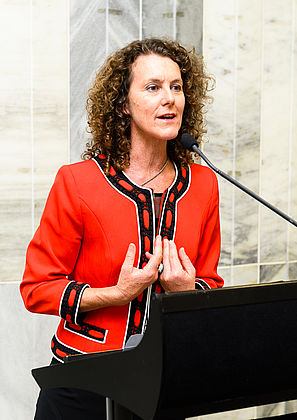
Chair Update: Juliet Maclean, April 2018

Your Trustees have been active over the last five months with regular board meetings, a strategic planning session, scholar mentoring and the Nuffield International conference in the Netherlands.

I believe it is important to have a dual focus when considering priorities for the future.

Firstly, we must continue to attract sufficient funding to operate our organisation. By identifying, selecting and supporting high quality scholars who can add value to New Zealand rural communities, we can demonstrate our worth. This is our bread and butter. Currently we offer five scholarships each year.

In my last note to you, I explained that LIC had decided not to continue their financial support, leaving a gap in our funding. I’m delighted to inform you that the Mackenzie Charitable Foundation has come on board as a Strategic Partner for the next 3 years with right of renewal.

The Foundation was formed in 1976 when brothers Alan and Don Mackenzie made the decision to leave their estates to the community of Mid-Canterbury. Agriculture was amongst the matters of importance to the pair and their wishes included the support of agricultural research, development, education and training, and the science and practise of agriculture. With such well aligned objectives, I’m confident the Foundation’s investment in our organisation will provide a range of outcomes that would bring pride and satisfaction for Alan and Don. We look forward to working with the Mackenzie Charitable Foundation Trustees to achieve positive outcomes for all.

Secondly, it is equally important that that we structure and lead an organisation which is offering a unique, experiential learning opportunity which will equip future leaders to be relevant and effective. In an agri sector that is being confronted by massive and rapid change, we must be active to keep pace. Diversity of background and thinking, nimble decision making, an understanding of exponential technology, effective team building skills, a negotiator, the ability to influence and navigate change; these are a sample of the skills and characteristics that are important for Nuffielders to demonstrate if we are to maintain relevance and gain respect.

Historically, the key focus of scholar studies was improving farm systems productivity – how does New Zealand produce more food? Now the attention has moved to improved resource allocation with themes of sustainability, innovation and environmental protection. Producing high-quality food and fibre products which emphasise our story of excellence, provenance and safety continue to move the dial from quantity to quality. Production systems are still important but understanding the expectations of our customers and how we delight them with our products and the integrity of our supply chains has gained importance and attention. Study topics of the future are likely to focus on these themes.

Nuffield NZ, in conjunction with the NZ Rural Leadership Trust, has a process of continuous review for all aspects of the scholarship, from selection through to content. We currently have a renewed focus on opportunities for engaging and leveraging our Alumni. Trustees constantly consider the balance between maintaining Nuffield New Zealand’s traditions and heritage with the imperatives of change. We recognise that some transformation is required to ensure relevance and attract new generations of scholars. Doing what we’ve always done will not meet muster as we strive to maintain our position as the preeminent agricultural scholarship in New Zealand. The opportunities are exciting.

At the end of our 2016 Nuffield conference John Palmer asked the trustees to consider whether advocacy for the rural sector was adequate for the challenges we face and if not, whether the Nuffield Alumni could be mobilised in a new manner, to provide that needed advocacy.

The trustees have considered the matter and plan to present an expanded thought leadership and advocacy role for Nuffield, for ‘in principle’ consideration at the 2018 conference in Tauranga in May. We look forward to your feedback so please remember to register now and join us for some thought provoking presentations and discussion.

In keeping too with the theme of relevance, the future and ensuring our programmes are attractive to high quality applicants, we are currently undertaking a review of our brands and messaging. As a newly established organisation, it is important to clarify the role and position of the New Zealand Rural Leadership Trust. How our Nuffield NZ Farming Scholarships and Kellogg Rural Leadership Programme fit within the structure requires explanation and it is important to confirm and explain the unique attributes of both in a compelling and engaging manner. We look forward to sharing the outcomes of this project with you.

Planning for the 2020 triennial conference is well underway with Michael Taylor at the helm and several alumni committees taking the lead on programmes for the conference and the tours. With a Christchurch base, the tours will cover a sample of the best the South Island has on offer and will include topics of interest to all.

2020 is a long time to wait for a Nuffield get together so it’s fabulous that Dave Hurst and his team have a plan for us to reunite in May. You still have time to register, to join recent scholars and old friends for ‘learning, listening and laughter’! I look forward to seeing you there.

Kind regards

Juliet
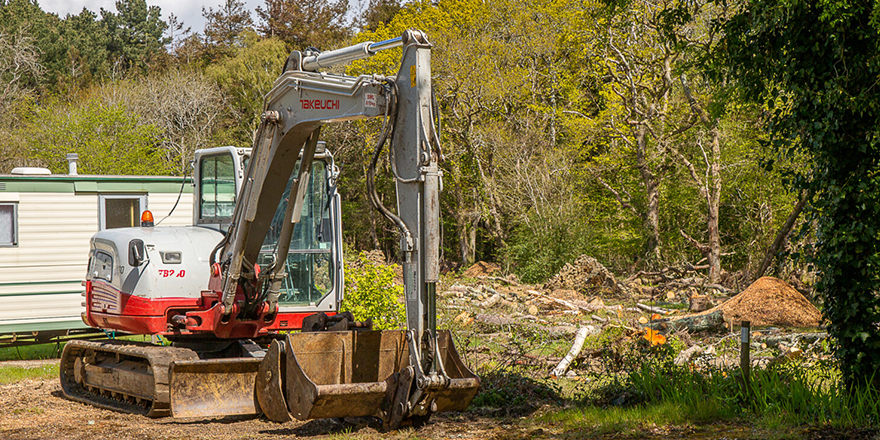
Felling the Wall: An investigation into forestry training in the Gisborne region.

Executive Summary

Plantation forestry in New Zealand is entering a period of growth due to the availability of wood supply. Nowhere is this more prevalent than the Gisborne region. In order for forest owners to capitalise on their investment, this growth in industry capacity needs to be met with the supply of labour. To this end, the industry has its back to the wall.

The primary aim of this project has been to identify important characteristics of forestry training that are considered useful in the context of designing an alternative forestry training programme for the Gisborne region. The characteristics of training explored in this project include features that are considered successful as well as identifying limitations and challenges that are impeding the delivery of positive training outcomes. A broader objective of this project is to support the Eastland Wood Council (EWC) initiative to explore the potential for an alternative industry led training programme for the region. In order to achieve this aim, the author has collected data with semi-structured interviews to explore the perspectives of a sample of key stakeholders who are directly involved in the industry.

The results of this research illustrate that forestry training is a complex and challenging environment which is constrained by many factors. What is evident is that there is strong support for an alternative forestry training programme for the region. There is collective acknowledgment that the current training framework is not delivering what is required to support industry labour needs. The industry stakeholders realise the potential opportunity and more importantly are willing to consider alternatives and invest to find ways to improve efficiency and deliver better training outcomes.

Improved efficiency and better outcomes for forestry training will come at a significant cost. It will require substantial investment to design and implement a modern and attractive training programme which utilises technology to facilitate training as well as provides strong pastoral support to students. Strategic partnerships beyond current levels will be needed with businesses, organisations and government agencies within the industry training space to build critical momentum and realise the opportunity. This research suggested that progress toward this opportunity will require strong leadership and collaboration among industry representatives.

This report makes a number recommendations that relate specifically to the design of a training programme as well as training and industry promotion more broadly.

The recommendations are:

  • Consider partnering with Competenz to integrate the apprenticeship model.
  • Design and implement a student induction process to clarify the expectations of the training programme and employment in the industry more broadly.
  • Invest in a strong pastoral support framework to assist and develop students.
  • Consider employing a Project Manager/s to coordinate the programme. Ensure individuals who support students directly are able to engage and communicate effectively with the students.
  • Invest in technology to improve student recruitment and engagement as well as improve training efficiencies and student access (i.e. machine operation simulators).
  • Consider options for a machine operation training facility located in or around the city.
  • Expose students to all aspects of the industry and its support services to promote the scope of care er opportunities.
  • Explore opportunities to deliver the introductory industry qualifications to students prior to worksite placement with contractors. These should include NZQA ‘general requirements’ (17769) and ‘employment in a forestry operation’ (22995) . Additionally, basic fire and first aid units should be considered.
  • Vet contractors who partner with the programme to ensure their team culture is appropriate to facilitate student learning.
  • Consider and implement appropriate incentive mechanisms for contractors who partner with the training programme.
  • Facilitate opportunities to develop a shared vision for forestry training among key stakeholders in the region. This shared vision should include defining what future employment in the forestry industry will look like. Ensure this vision can be communicated effectively.
  • Facilitate opportunities to improve collaboration between key stakeholders.
  • Stakeholder collaboration and partnerships with the training programme should be based upon co – investment (financial and/or non – financial) to improve engagement and deliver better outcomes.
  • Increase promotion of the industry and career opportunities in schools including specific engagement with teachers and parents to ensure they are up to date with changes in industry and the future opportunities.
  • Consider targeted industry and career promotion at rural schools within the Gisborne region.

Exporting Aotearoa: A new business model for nutrition and health-focused export companies

Listen to the podcast

Download the report

Executive Summary

The challenge that Aotearoa-New Zealand faces is finding balance between retaining and restoring our environment, whilst achieving social and economic benefit. This is not just our challenge; it is a response to a global call for better outcomes for our planet and us.

This report is targeted at businesses and industries within New Zealand who export, or who aspire to export. Businesses who are struggling to work out how to change their production model and increase their margins. Businesses who want to change their production methods but are unsure how to justify the change or cost.

My report is a thought-piece; it is about a different approach to our export potential, what we aspire to be in the future. It approaches a market demand first that is focused on the customer and the problem.  The focus is neither on production nor on the environment; they are simply components of the solution. I want this to start the conversations of why we can’t continue to walk down the same path …

There is urgency and risk for us all and the rate of change is unprecedented. My approach to this has been to explore how Aotearoa food producers can gain more export value, connect with their consumers in-market, and provide solutions to the problems we face, all at the same time? 

If New Zealand producers and exporters became the health and nutrition solution providers to the world, this would fuel our aspirations for export growth, help us gain new customers, and drive change to our production systems and environment. The problem is the health and nutrition of the world’s consumers.

The business model of developing products and pushing them into market is not working. If we don’t know what our consumers want, then how can we presume to design a product for them. In New Zealand the food products we produce, and design, are largely for ourselves, our culture and our needs and wants. We then transition these domestic offerings to our export markets. The markets are not the same.

The proposed solution is to change the priorities of our business models to first identifying an opportunity or problem, then finding a customer to work with. The product can then be designed as a solution to a problem, and we remove the risk of the unknown.

When approaching an export market, we should design where our business is going to end up, rather than treat it like a progression of steps that need to be dealt with as they are encountered.

“By unbundling and changing our business model, our products and customer mix, we create a pathway for our businesses to be more adaptive and more profitable. It then becomes a natural progression to align farming practices that enhance the products’ value. The backfill of sustainability is safer and far more palatable to the producer if it is market and customer led.” Andy Elliot

The environment, our diets, our health and the burgeoning challenge to sustain a world’s population. This is our horizon for market growth and to provide differentiation from other countries. It will help all New Zealand identify with what it means to be sustainable or to demonstrate Kaitiakitanga.

This strategy will enable better utilization of waste: in fact that’s probably one of the best places to start with this strategy. By developing nutritional formats and supplements, we create opportunities for new varieties and different production methods to become established.

When the consumer-focused breeding attributes like taste, shape, and colour that our whole food offerings require are no longer our only value propositions, it becomes easier to change our growing practices.

This will allow faster growth in organics and into more regenerative farming methods. The transition will be due to our markets, our customers and the consumers requesting this change: it will be market pull. Discerning customers shopping for health and nutrition products want transparency. That means full disclosure of how the product was produced and its environmental impact. Regenerative agriculture and sustainable aquaculture will become the new wealth creators of our natural products export sectors. The environmental credentials that we are all leveraging currently will become enhanced.

An estimated compound annual growth rate (CAGR) of 9%1 is predicted for nutraceuticals over the next eight years. The natural products sector, a sector is already worth NZ$1.4B.2 This makes it a 4% contributor to our 2018 total Food and Beverage export value. This value is derived from approximately 1-2% of our total agri-food production.

Our current starting point in 2012 was a goal to double the export earnings from the primary industries by 2025.3 This would have seen the value grow from around NZ$33 billion to somewhere in the vicinity of NZ$66 billion. On current projections we will not achieve this.

  • Currently just over 1% of our primary industry production is earning $1.4B, from largely commodity-scale sales; if this could move to 5%, it would represent growth to $4.3B.
  • The real step change is if we were able to shift this from these largely commoditised transactions to branded consumer retail-ready products; if this happened, it would not be unrealistic to expect this value to grow from $4.3B to over $20B.

We cannot get there unless something changes; that something is how we approach our markets and customers and our aspirations for future value creation.

Alternative proteins, stem cell production and the enormous investment that is occurring in a handful of companies internationally should be a major wakeup call. It should be our catalyst to embrace this change with our own products and formulations that showcase the best of everything that New Zealand produces. This environment is an opportunity, not a threat.

This opportunity will also pave the way for identification of new novel compounds from our existing production and supply base and for the development of new sectors focused entirely on nutrition for health and wellness. Through my research and case studies, some key factors in this customer focused ingredient space have emerged:

  • Potential customers and existing customers can undertake innovation for you.
  • Relationship with customer is the new pathway to market and expansion vehicle for growth.
  • Relationships are everything in diversifying into ingredients and into health markets.
  • There should be no waste; everything has a value when nutrition is the framework.
  • Breeding and science can play backfill if consumer demand is established.
  • Health and nutrition consumers demand transparency and quality.
  • Providing solutions to customers’ problems is far safer than supplying wants.

In summary, this opportunity for health, nutrition, function and ingredients is not new, it has always been here. New Zealand is simply not reaching anywhere near its potential in this space. This report explores some of those reasons why not, and expands on the potential opportunity we have to grow real value.

This report concludes by providing a step-by-step description of a business model that could be used to approach this opportunity. It is not a definitive solution, but rather serves as a guide to what the approach might look like for high value export return. It should be adapted and configured to a problem, and a subsequent solution developed.

Exporting Aotearoa – Andy Elliot

Keywords for Search: Andy Elliot, Andrew Eliot

Farm planning for a sustainable future.

Listen to the podcast

Download the report

Executive Summary

New Zealand farmers are being confronted by the need to improve multiple environmental outcomes while still returning a profit. How the primary sector continues to evolve to deliver sustainable returns for farmers responding to increasing environmental pressures, is one of the defining challenges of our time and the focus of this Nuffield research.

The purpose of this study was to investigate tools to facilitate optimisation of farm systems and improve sustainable outcomes in New Zealand agriculture.

The main recommendations to come from this study include:

(1) Farm Environmental Planning should be prioritised, appropriately resourced and supported as a primary means to drive sustainable outcomes in New Zealand agriculture. Critical to this are a number of enabling components:

  • Farm Environment Plans (FEPs) should seek holistic objectives – considering environmental, economic as well as social and cultural aspects. Within this, environmental considerations should be broader than often articulated, considering traditional aspects relating to water quality and soil conservation, as well as indigenous biodiversity, ecosystem services and greenhouse gas emissions at farm and catchment scale.
  • Investment from industry as well as regional and central government should be aligned to aid in the design, delivery and implementation of FEPs and farmer support via targeted environmental stewardship incentives should be explored.
  • To encourage innovation and farmer aspiration, FEPs should be enabled outside of regulation, with processors (e.g. meat, wool, milk companies) and industry bodies taking a leading role as well as providing a link to market and the consumer.
  • Farmers should be linked with trusted advisors who are able to provide ongoing, tailored and farm specific advice prioritising long term outcomes and farmer investments as part of the FEP.

(2) Sustainable Management Practices (SMPs) should be promoted and supported to help provide farmers with clarity regarding on-farm management.

  • SMPs should be developed in collaboration with a wide group of stakeholders (e.g. farmers, industry, regional councils, government, iwi and environmental NGOs) where possible to ensure wide support and collective buy-in.
  • Implementation guidelines for SMPs should recognise the dynamic and varied New Zealand farming context.

(3) Climate Smart Agriculture should be socialised by the New Zealand agricultural industry as a valuable component of farm environmental planning – prioritising the ‘triple win’ of increasing productivity, enhancing resilience to the effects of climate, as well as reducing greenhouse gas emissions.

(4) New Zealand farmers should be supported by relevant industry groups to have access to appropriate farm systems modelling tools and specialist support to inform land use and land management decision making.

  • Farm systems modelling informed by robust science should be recognised as a critical component of farm environment planning. Farm systems modelling targeting holistic and sustainable outcomes can help guide farm environmental planning and inform critical decision making with regards to land use suitability and farm design.

(5) Effective farmer extension at both farm and catchment scale to enhance farm sustainability and ensure effective uptake of relevant technologies should be prioritised by the New Zealand government.

  • Government investment into the agricultural sector needs to go beyond traditional research and development (R&D), and prioritise effective extension and farmer support (research, development and extension – RD&E). Comprehensive extension will be critical to enable sustainable management practices at both farm and catchment scale.

The future of New Zealand farming is laced with both challenge and opportunity; however, sustainable agriculture is not some far off, unattainable goal. To truly optimise farm systems in New Zealand, we must take a holistic approach, utilising a range of enabling tools to help farmers make informed decisions regarding both land use and management practice.

Farm planning for a sustainable future. – Turi McFarlane 2018

Keywords for Search: Turi McFarlane, Toori MacFarlane

Nuffield International Contemporary Scholars Conference: March 2018, Zeewolde, The Netherlands

Photo: The New Zealand Continguent in Zeewolde, Netherlands

This year 80 Nuffield scholars from 12 countries met in the Netherlands, in Zeewolde an agricultural area around 40 mins from Amsterdam. The location as part of a marina apartment complex was ideal for group dynamics as it was some distance from the closest town, but across from a holiday park which had restaurants and recreation facilities. Despite the “Beast of the East” hitting with minus temperatures, spirits and social interactions were high. (Insert the photo of venue)
The diversity of the group was expanded with invitations extended to African, Japanese and other guests as well as the Nuffield International Scholars. The 2018 scholars followed the lead of the 2017 group and did a short tour together prior to the start of the CSC visiting organisations and attending events in France and the Netherlands creating a good bond and looking at things from a NZ perspective before meeting the wider group.
The following are the reflections of the Scholars of their eight days with different messages and sharing of insights picked up.
2018 NEW ZEALAND SCHOLAR CSC REFLECTIONS
‘The Hunger Winter And The Evolution Of Subsidies’, Simon Cook
‘Strengthen Our Adaptability by Developing Collaborative Models’, Andy Elliot
‘The Future As We Know It’, Solis Norton
‘The Tiny Country That Feeds The World’, Turi McFarland