2026 Nuffield NZ Farming Scholarship. Apply by 17 August 2025. Read More...

Apply for 2026 Nuffield NZ Farming Scholarship by 17 August 2025. More details...

Redefining excellence in agribusiness advisory. The role of the rural advisor in the modern world.

The farming world is striving to feed an ever-increasing population from a declining land area whilst at the same time reducing its environmental footprint. As farmers evolve their practices to meet these challenges, the rural advisor working alongside the farmer must also evolve to meet the needs of the industry and the wider community – or run the risk of becoming obsolete.

This Nuffield report explores the trends and issues facing the rural advisor and provides guidance for the future roles and necessary skillsets of the advisor so they can continue to add value to the primary sector.

The objectives of this Nuffield research report were:

1. To understand the trends in the use of technology in the agricultural sector, and how these trends will affect the role of the agricultural advisor.

2. To provide recommendations on the future role of the agricultural advisor, and to investigate optimal business models for the agricultural advisory sector.

The desired outcomes from this research are to redefine what excellence looks like in agribusiness consultancy, and as a result increasing productivity in the agricultural sector, whilst at the same time reducing the environmental footprint of the primary sector.

A rural advisor, also known as a farm advisor, farm consultant or rural professional, works within the agricultural sector to support farmers in the theory and practice of farming. The intention is to add value to the farming business, recognising that the definition of value will vary between clients.

To anticipate the future role of the rural advisor it was necessary to understand some of the key trends facing farmers:

i) Scale and complexity: Farms continue to increase in size, and as a result complexity. The amount of information available to each farming business is increasing each year at a rapid rate, and this makes it more challenging to analyse and interpret the data.

ii) The commodity cost-price squeeze. Farmers who are producing a commodity face the continual challenge of increasing input costs and a decreasing margin, whilst at the same time being scrutinised more closely.

iii) A declining (farm) labour force is forcing farmers to adopt new technology that will reduce labour requirements, as well as altering the skill set requirements of farmers.

iv) Social licence to farm: Farmers around the world are facing an increased level of scrutiny by the public and the consumer. This scrutiny includes the areas of animal welfare, environmental impacts and labour treatment.

v) Increasing use of technology on farm. As farmers adopt new technologies, so too must the rural advisor become proficient with the technology in order to stay relevant.

vi) Land ownership versus management. There is a worldwide trend towards a separation between the ownership of land and the management of land.

Developments in Agri-tech are impacting on both how farmers manage their farms, how rural advisors are interacting with their clients, and how they are managing their own businesses. However, for Agri-tech to have maximum impact, there are two fundamental issues that continually frustrate those working in the New Zealand primary sector:

a) Lack of internet connectivity.
b) Lack of data sharing and interoperability.

These issues are not new, but until they are resolved the ability for Agri-tech to influence farming in New Zealand will be constrained.

From an agri-tech perspective, the increasing of artificial intelligence (AI) in agriculture has the potential to have a significant impact on the role of an advisor. Around the world there are already many instances where AI is replacing the traditional knowledge transfer role of the advisor. For example, Climate FieldView is auto-scripting corn sowing rates and fertiliser recommendations for US crop farmers. Farmer. Chat is an AI system providing agronomy advice for small scale cropping farmers in Ethiopia, Kenya and India. Closer to home, wearable technologies for cattle such as Halter are providing detailed farm management insights directly to the farmer.

The role of a farm advisor or rural professional varies widely throughout the world, between sectors and between organisations. For those advisors whose role is purely focused on providing only technical advice, the impact of technology may be rapid and profound, to the point that their role may not exist in the future.
Keywords for Search: James Allen

Dr Alison Stewart – FAR and the role of arable systems in agriculture.

In this podcast, Dr Alison Stewart, CEO at the Foundation for Arable Research, talks with Farmers Weekly’s Managing Editor, Bryan Gibson, about the role of arable in agriculture, her role at FAR and the delivery of research that benefits growers.

Dr Stewart also discusses her involvement with the Kellogg Rural Leadership Programme and the importance of exposure to diversity of thought for leaders in Food and Fibre.

Listen to Alison’s podcast or read the transcript below.

Bryan GibsonManaging Editor of Farmer’s Weekly.

Kia Ora, you’ve joined the Ideas That Grow podcast, brought to you by Rural Leaders. In this series, we’ll be drawing on insights from innovative rural leaders to help plant ideas that grow so our regions can flourish. Ideas that Grow is presented in association with Farmers Weekly.

My name is Bryan Gibson, Managing Editor of Farmers Weekly and this week I am talking to Dr Alison Stewart, CEO at FAR, the Foundation for Arable Research, and a regular speaker on the Kellogg Rural Leadership Programme.

Bryan Gibson:
G’day Alison. How’s it going?

Dr Alison Stewart – Chief Executive Officer at the Foundation for Arable Research (FAR).
Yeah, great. Thanks for having me.

BG: Great to have you here. Now, you’re the Chief Executive of Far. What’s been happening in your world lately?

The current arable context.

AS: Well, we’ve just had a referendum. So, every six years, our levy peers vote to decide whether FAR is doing a good job and they want to continue paying their levy. So that happened just last month. I guess for the last year, we have been focused a little bit on the referendum and making sure that the growers know what we’re doing and what value it delivers. And fortunately, yes, we got good support.

Although I have to say getting growers to vote was the biggest challenge. They’ve just got so much happening in their lives at the moment and so much information being thrown at them that they’re almost in a situation where finding the time to vote in a referendum was not a high priority. That actually was the biggest challenge, convincing them to get onto their computer and vote.

BG: And running the organisation, what does your job entail? What do you do in a week?

AS: My job is to make sure that everybody else in the company is doing their job really well. I’m joining all the dots. We’ve got some amazing research staff who are out there doing applied research, trying to find new management systems, new tools, new technologies that will assist our farmers.

We also have a lot of extension people focused on trying to support them with all of the compliance regulations that are coming down the track. And then we also have to deal with the biosecurity incursions. We’re dealing with two at the moment.

Amongst all of that, we’re just trying to promote to the general public, to the other sectors, to the government, the value of arable systems and the value that they bring to New Zealand agriculture. I jump around a lot, getting involved in lots of things, across lots of areas, at different levels of responsibility. It’s never a dull day.

BG: Yeah. Our Food and Fibre Sector is dominated by the big two animal proteins. I guess, as you say, the animal sector is as big and successful of its own accord, but in some ways plays second or third fiddle sometimes?

AS: Oh, very much so. That frustrates me in the sense that we actually underpin the livestock sector because we produce all of the seed and the grass seed that they need to grow their pastures to feed their cows. If we go under, then the livestock sector is going to be substantially worse off.

We also produce a large amount of the animal feed the dairy sector and the beef sector and the poultry sector need. So, I’m not sure that we ever get full recognition for the important role we play, not only in our own right through producing milling wheat and quality seed crops, but also underpinning the livestock sector. I try to remind my colleagues in the dairy and beef and sheep sector that they need us as much as we need them.

World-leading seed production.

BG:  I guess a lot of people do just think of fields of maize or barley or wheat, but that seed production part of things is really important, but also quite an opportunity and a success for New Zealand, isn’t it? We’re quite good at it.

AS: Absolutely. It does help that the big global seed companies can see that they can get out of Northern Hemisphere seasons and they can get seed crops being produced in New Zealand. We have really good environmental conditions.

We have good quality certification, verification and accountability systems. We’re seen to be a very important seed producer. That’s really good from the perspective of an arable farmer because it provides a really nice rotation.

We’ve got our foundational cereal crops, but then we’ve got the seed crops in the foundation of the rotation and that gives a nice diversity, but it also introduces the opportunity to capture another revenue source.

Dr Alison Stewart - A CEO’s career path.

BG: Now, how did you get to the position you’re in now? What’s your career been like? What did you do when you left school?

AS: Well, I mean, gosh, I’ve been around the block. I’ve always been interested in plants. Even as a child, I was always out in the garden with my mum planting and looking after plants. I did botany at university, and then I did a PhD in plant pathology, and then I came to New Zealand.

Obviously, I’m Scottish, and I came to New Zealand, got a lecturing job at Auckland University, and it was the old Botany department. That was how I started off my career being an academic, and I had 10 years at Auckland. Then I moved down to Lincoln University because I wanted to be doing more applied research and more closer to the actual farming sector. I was 18 years at Lincoln University as an academic, running a big research centre, looking at sustainable production systems.

Then I decided to challenge myself a little bit more and I went off to California and ran a biotech company. Then I came back to New Zealand and headed up forestry science in Rotorua with Scion. Then I moved from there and came to be the CEO of FAR.

I’m probably relatively unusual in the sense that I’ve been in academia, I’ve been in the CRI system, I’ve been in a commercial company and I’m now working in an industry body. I’ve worked across horticulture, vegetable cropping, herbal cropping, and forestry. So it gives me a nice broad perspective on what’s happening, particularly in the plant-based sectors in New Zealand.

FAR - delivering the arable research that benefits growers.

BG: Well, that’s quite a CV. I’m interested in your interest in applied science and knowledge transfer. That’s something that’s been talked about in our sector as something that works pretty well, but does need work, if you know what I mean. Is that something that you think is moving the dial over the years?

AS: Oh, most certainly. I mean, there isn’t much point in doing research if you’re not going to get the results of the research out, being taken up and used by farmers and growers. FAR in particular, over the last 25 years, has been an exemplar of an organisation that has effectively delivered its research to benefit the growers.

It’s becoming more difficult because the environment is so much more challenging for growers. I won’t say the good old days, because I never think that the old days are actually that good. But in the past, FAR would do research and it would be identifying a new plant growth regulator or a new fungicide or a better fertiliser programme. And you’d go out and you’d say, if you do X, Y and Z, that will deliver a one-ton increase in yield.

That’s a really easy story to tell. The growers will go, that’s a good idea. I’ll do that. The growers get a one-ton increase and they think, Oh, my levy is good value for money for us doing a good job. But we’ve driven yield optimisation pretty close to the optimum.

A challenging arable environment.

Now the challenge is, how do we maintain those optimum yields given all of the constraints that growers now have around input costs and compliance around fresh water and climate change. That’s a much, much harder knowledge exchange programme because you’re potentially, and quite often, telling the growers something that they don’t want to hear. So you’re always trying to find a way in which you can present that information in as positive a way as possible.

At this moment in time in New Zealand, farmers feel as if they’re really under the pump with people throwing compliance regulations at them, their cost of production is going up. So often their headspace is not necessarily that favourably inclined towards hearing some quite difficult messaging. It’s challenging. It’s a really challenging space for the growers, and it’s a really challenging space for the labour organisations.

FAR and the Kellogg Rural Leadership Programme.

BG: Very much so. Now, turning to Rural Leaders, you have a bit to do with the Kellogg Programme, is that correct?

AS: Yeah. I mean, they roll me out twice a year where I come and I talk to the new cohort of rural leaders. I’m one of these people that, and it causes me a lot of angst over the years, I tend to just say exactly what I think. That can get me into a lot of trouble!

I really enjoy challenging young people around what they’re thinking, why they’re thinking it, and what they want to achieve in their careers. I love having discussions around what leadership actually means, because leadership means quite different things to different people.

In New Zealand agriculture at this moment in time, with all of the challenges that are coming up, it’s really hard to be a leader because levy organisations, for example, are reliant on doing what their levy peers want them to do, and that sometimes prevents you from being able to take a true leadership position.

I really like talking about some of those challenges, and it’s a good environment because it’s not out in the public arena. You’re not going to get hung out to dry on social media, but you’re able to have some really honest and sometimes quite painful discussions about how New Zealand agriculture needs to move into the future and the changes that need to be made. And that young cohort of Kellogg leaders are up for those kinds of discussions, and I just love it.

BG: I mean, it’s an interesting group because most of them already have a career and then they have a day job, and then Kellogg is back to school. So I guess it’s different from your previous work in academia, where it was 9:00 to 5:00 learning. And that has some upside, I think, of the Kellogg Programme, do you think?

Kellogg exposes leaders to diversity of thought and opinion.

AS: I think it’s a fantastic programme because it provides an opportunity to bring multiple thought processes to the table. Scott Champion, who’s one of the key Facilitators on the Programme; he’s very well connected and he can bring quite disparate views to the discussion.

That’s really important because if you stay in your own industry, in your own space, in your silo, then all that happens is that everybody validates preconceived ideas and it’s really good to be challenged.

I think that’s what the Kellogg Leadership Programme does. It makes you realise that what you thought you knew and what you thought was a valid belief, there may actually be alternative viewpoints. You have to open your mind to different ways of thinking and different people’s perceptions of agriculture and different conclusions that you can draw from the vast amount of research that’s out there.

It’s a fantastic learning opportunity for young people to avoid getting into a siloed mantra of just believing the here and now and what people they tend to engage with think. It’s a bit like when you google something, the algorithm sitting in behind Google can work out what your preconceived ideas are, and therefore they tend to give you links to things that validate those preconceived ideas.

I think we’ve always got to try and make sure that we don’t get into that mentality of thinking that because we believe something now, that means it must be true.

BG: Cross-discipline research or work in real time, isn’t it?

AS: Absolutely, yeah.

BG: So, you’d recommend the Programme to anyone thinking about the big issues facing the sector, and thinking about leadership?

AS: I think you have to be prepared to put time and effort into it. It’s like anything in life that if you don’t commit and put your passion and energy into it, you’re not going to get the same amount of benefit out of it. I think you have to be prepared to come to the table and listen to those diverse views and be prepared to change your opinion about things.

If you come to the Kellogg Programme with a preconceived idea that you’re right and everyone else is wrong, you’re not going to get the benefit out of the Programme.

BG: Thanks for listening to Ideas that Grow, a Rural Leaders podcast in partnership with Massey and Lincoln Universities, AGMARDT and Food HQ. This podcast was presented by Farmers Weekly.

For more information on Rural Leaders, the Nuffield New Zealand Farming Scholarships, the Kellogg Rural Leadership Programme, or the Value Chain Innovation Programme, please visit ruralleaders.co.nz

Data sharing to achieve data interoperability

New Zealand is a country of entrepreneurs and leaders in the creation of new systems and apps that can capture on farm data. A significant opportunity to automate data collection to match the systems together and see the data holistically still remains. Each company is creative and innovative in their own right, but farmers and growers want to see the data consolidated. This is how they can make robust, science-based decisions on farm.

This is becoming increasingly important as we move into a digital world where information is accessible at consumers’ fingertips – we need farm data to be in this same realm. With the new generation coming through, it is no longer enough to have values and show what farmers stand for, we also need to prove it.

During my Nuffield year I spent four months overseas visiting different agriculture companies, farmers, and governments. I came back with a strong understanding of the risks of not integrating our data. Covid-19 has changed our world faster than ever before. There are new standards and requirements to be met that are being imposed by consumers. No longer can we afford to look at siloed data systems.

We should not be afraid of transparency because the world is demanding it. Our consumers are demanding it. If we do not do it the effect will be that we will be told how to farm because we haven’t proved we are better than 10 years ago. I believe we do farm better. But belief does not cut it anymore. For the next generation coming through we need the data and the evidence of our farms to back up our claims.

No country or system I came across has a fully integrated farm data system. In New Zealand we are well placed to try something new around data interoperability because many of our companies are co­operatives and farmer owned. We are in the premium space and need to hold our premium position. We also need to have all the information available to make the best decisions on farm and enable scenario planning and modelling. We should be able to answer questions such as:

• What happens if I put 40 kilograms less fertiliser on per hectare? What does that do to my beef production and revenue line?
• What happens if I invest in cow monitoring technology and then catch mastitis and disease earlier? What does this do to production and revenue?

Consider the emerging discipline of a farm data manager. The farm data manager will work directly with farmers and growers to determine their drivers for farming and to create a data strategy. Every farmer and grower has different needs, drivers, and reasons for being. Different data points interest different farmers. Each farm and farmer or grower require a solution that matches their driver and strategy.

Farmers and growers need a bespoke solution for them – a data manager can assist with this. It is not practicable for every farm to employ a data manager. Instead, a data manager will have a portfolio of farmers and growers they work with to give them a solution that best works for them. We need to try something different to move forward on on-farm data interoperability.

This report proposes establishing a new discipline of the farm data manager. Farmers and growers are not expected to be finance experts instead they outsource this to an accountant to support them. So why are we asking them to be data experts? Instead, a farm data manager can support them.

Keywords for Search: Lucie Douma, Lucy Duma

Where Does the Future Lie for the Arable Industry in Canterbury?

William Wright Kellogg report image

Executive summary

Arable farming in Canterbury is at a crossroads. The wettest harvest in the last 30 years, coupled with high inflation, low profitability, and a changing regulatory scene, has seen farmer morale at its lowest point in many years.

Changes in land use to dairy or dairy support and more extensive family farming operations buying up smaller operations have caused the number of arable farming businesses to decrease significantly over the last 20 years.

In the early 2000s there were over 1200’s arable farms in Canterbury. This has now been reduced to less than 500 (Merrilees, 2021). Recent freshwater regulations now mean that converting to more intensive land uses is difficult. If profitability issues continue to worsen farmers now feel like they have few options.

This report aims to provide a broad overview of the arable industry in Canterbury with a key focus on understanding whether maintaining a business-as-usual approach to farming would be enough to maintain operations into the future. A literature review, informal indicative interviews and two proven models were used to answer the following questions:

  • Why is it important to have a viable arable industry on the Canterbury Plains?
  • Can arable farmers continue to operate business as usual?
  • What factors determine the underlying cause of poor profitability in the industry?
  • What are the potential solutions to improve the long-term viability of the industry?

Canterbury Arable Farmers are highly skilled and have access to some of New Zealand’s best soils, irrigation, and research. Canterbury’s climate, infrastructure and skilled grower group means that they are undeniable world leaders in grain and seed production and are critical to the success of our red meat and dairy industries as well as the security of New Zealand’s domestic food supply.

However, Canterbury arable farmers are facing a number of challenges both domestically and internationally and the long-term viability of the arable industry as a whole is potentially under threat from high rates of attrition, low returns on investment and fragmentation of the growers.

Reliance on the traditional growth pathway of increasing production is unlikely to be
sustainable in the long term, though current external forces driving high commodity values may enable the status quo to be maintained in the short-medium term.

Arable farms are flexible and agile in nature which means they are well poised to pivot into new opportunities as they arise. The key areas where the arable industry can improve its long-term viability are:

  • Continue to build resilience into farm systems.
  • Cooperate.
  • Stop beating up the merchants.
  • Differentiate the offering.
  • Invest or partner in supply chains.

If Canterbury arable farmers continue to sit back and expect a better future without taking any action the industry will likely continue to diminish. If farmers take the opportunity that a favourable short-term outlook provides them then the opportunities are endless.

Escaping low value supply chains.

Richard Sim_Escaping Low Value Supply Chains_ellogg report image

Executive summary

New Zealand farmers are being asked to change how they operate their farming businesses. The sectors that are more likely to thrive in this new world are those which not only adapt to change but, become the drivers of change.

The Fit for a Better World roadmap offers a vision where production-oriented goals of the past will be realigned with core values shared by farmers, society and our overseas consumers.

This vision can be a catalyst for the creation of end-to-end value chains to take food and fibre products to markets in New Zealand and around the world. While the ‘volume to value’ mantra is not new, it is not clear how, or who will build these value chains for the arable industry.

Value chains differ from supply chains in that the product or service generates value as it flows between the participants to the final buyer.

This report aims to offer insights into how the utilisation of value chains by arable growers will enable them to create and capture more value from their products.

The research methodology was comprised of a literature review, semi-formal interviews and case studies across the entire supply chain to gain insights into their experiences.

Key Findings

Growers are trapped in low value supply chains. As a grower, if you cannot identify the other participants in the supply chain through to the end consumer, then it is likely you do not hold significant power. As a result, you will be a price taker.

Value is created by consumers. Therefore, the shift for growers from competing on price to optimising customer experience requires the alignment of the values of participants in the supply chain to those of the consumer.

Value can be created via innovation or branding. Irrespective of the pathway taken, growers will need to contribute time and capital to the co-creation of value chains for future food products.

Recommendations

This report proposes that for the arable sector to thrive, a mindset change from the good of the individual to the collective is required. This new mindset will foster the co-creation of value chains for new food products that create and capture greater value for all growers.

Specific recommendations include:

Define arable sector values. The shift from operational excellence and competing on price requires a new business strategy. The transition to customer intimacy requires the alignment of values of the participants of the supply chain to those of the consumer. The Fit for a Better World vision and the principles of Te Taiao could offer a worldview and a starting point for an industry discussion.

Foster a culture of innovation and value-add at the sector level. Develop a pathway to value-add through encouraging a ‘prototype – iterate – test’ culture in a start-up environment for future food products. This could be funded by the current levy body.

Take collective ownership of value chains. To disrupt existing supply chains a new grower-led investment model is proposed. This will overcome some of the current barriers to investing in value-add beyond the farm gate.

Should New Zealand be trading maize forage on quality parameters?

Fraser Dymond Kellogg report image

Executive summary

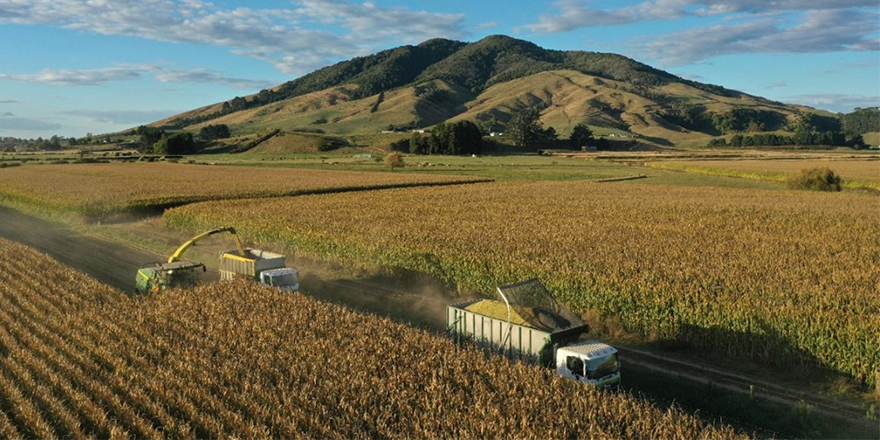
Maize forage is essential to the productivity of the New Zealand dairy sector. It is easily ensiled and provides energy and fibre, which is essential to balance a pasture-based diet.

An estimated 1,164,000 tonnes of maize forage was harvested in 2021. In the 2020/2021 season 24,500 hectares, or 45% of total maize forage planted, was grown off-farm and sold to a purchaser via a contract (Arable Industry Marketing Initiative, 2021a).

Current contracts trade maize forage on dry weight and neglect most facets of forage quality, so the purchaser is unaware of the quality of the product they are receiving. Per cow consumption of maize silage is increasing, so the quality of maize forage becomes more influential and important to the purchaser.

This report seeks to quantify the variation in maize forage quality in New Zealand and how the grower can influence it to enable trading maize forage on quality parameters.

Key findings:

  • Growers can positively influence maize forage quality but are not rewarded by the purchaser, so it is not the priority in their decision-making.

  • Starch is the critical influencer of maize forage quality.

  • There is significant variation in maize forage quality in New Zealand. Starch content has been seen to range from 15 – 40%DM1, neutral detergent fibre from 33.4 – 50%DM and metabolisable energy from 9.5 – 11.3 MJME/kg DM2. This variation creates significant differences in production potential for the purchaser.

  • Maize forage quality can be influenced by hybrid choice, agronomic management, and the environment. The environment cannot be controlled, so strategies that create resilience in the growing system are essential.

  • There is limited New Zealand-based data available for growers and advisors on how to influence maize forage quality.

  • The common method of sampling maize forage for analysis is unlikely to cope with paddock variation, caused by a changing climate and variable soil types.

Recommendations:

  • Research and provide educative resources on how agronomic decisions affect maize forage quality. This should be conducted by maize seed wholesalers and independent industry bodies, such as the Foundation for Arable Research (FAR).

  • Create independent data comparing all commercially available maize hybrids for forage quality. This should be conducted by an independent industry body such as FAR or DairyNZ.

  • Calibrate and certify the use of near-infrared spectrometry (NIR) in forage harvesters as an accurate measure of whole plant dry matter and quality parameters. Allow open entry to promote competition and innovation. This will need to be proven by the manufacturers and forage contracts amended by the Forage Trading Development Group.

  • Create educative resources to extend the understanding of growers and purchasers on the accuracy of NIR technology as an assessment of quality parameters. This should be an industry approach, including DairyNZ, Federated Farmers, Contractors Association, FAR and the Forage Trading Development Group.

Science and Innovation in New Zealand Agriculture

The era of trade liberalisation and reform in the 1980’s and 1990’s left New Zealand (NZ) focusing on what it was good at – being efficient commodity producers, and NZ exploited its comparative advantages. This drive for efficiencies created the domestic agenda for science and innovation. For agriculture, to drive productivity gains, the focus was inside the farm gate. It is something of a paradox that, as the world was globalising and NZ was opening up its economy to competition, we became more localised in the things that created immense value for NZ. The world is changing, and to keep up, NZ needs to be world-class at research and value creation – Innovation is the common denominator. We need to re-imagine our science and innovation models to give agriculture the best opportunity to contribute to a more prosperous NZ.

This report makes a case for change in the way research and development is conducted in this country. What we have today was the result of a massive reform agenda in the 1980’s and 1990’s, when market forces were introduced into areas of the economy that had traditionally been protected. In the 30 years since, there has been a series of policies attempting to ‘fix’ our science system; to roll back the unintended consequences of the reforms. These efforts have largely been ‘small’ and often on the edges of the big problems. It is almost as if the courage of government for reform has evaporated; the upheavals of the earlier era has left little appetite for fundamental change. So, we have a science system that is fragmented, siloed, and characterised by competing agendas and organisations. The structures and funding models drive perverse incentives such as, doing science to get published, to be able to get funding, and to get funding, in order to get published….

The government’s role in science is complex. As a major funder it has an obligation to ensure the output is both world class, and benefits NZ. It must balance funding of the science sector with all the other demands on the treasury. The political reality of science is that there is little be gained from solving the sector’s problems. The issues are complex, difficult to define, and changes hard to implement. Over the decades there has been a decline in expert capability inside government (Cook, 2004) – people who have depth and breadth of experience in their roles. Cost efficiencies and productivity became guiding principles (Cook, 2004) and a ‘slimmed’ down state sector still resonates with the electorate. This in turn, has lowered the ambition of governments and reduced the experience held internally (Mazzucato, 2021).

Policy change at any level becomes difficult, making substantial reorganisation or visionary change to the status quo, very complex. When we try and ‘fix’ the issues we enter into what is known as the complexity paradox (Mazzucato, 2021), where layers of policies drive the creation of silos that begin competing with each other. Thus, rather than ‘fixing’ the problems they are further entrenched. We need to do much better. Whilst it’s broadly true that innovation happens close to consumers, in value chains, in science institutions, private enterprises and on farms – all across the economy, governments do have an important role in creating the framework and policies, that encourage innovation.

The crux of the problem for NZ’s science sector is that everything is viewed in the short term. Everything, almost everywhere, has been reduced to time periods, – governments can’t wait, the Performance Based Research Fund can’t wait, the science can’t wait, the funds are annually contestable, and businesses want quick wins for reporting purposes. The system doesn’t allow science enough time to figure things out. Election cycles influence funding horizons that determine project lengths, and scientists’ time horizons are limited to the length of the project they are working on, and their careers are limited to the project duration.

Everyone needs quick wins to survive. Incentives are misaligned and fragmented, all players are responding to ‘their’ incentives and few groups share the same ones. Long term strategies underpinned by investment in R&D have created some of our most successful businesses. The long-time horizons associated with Māori business is a compelling reason to build relationships with Māori and may be the catalyst for our science sector to recapture its long term view.

Keywords for Search: John Foley, Jon Foly