2026 Nuffield NZ Farming Scholarship. Apply by 17 August 2025. Read More...

Apply for 2026 Nuffield NZ Farming Scholarship by 17 August 2025. More details...

General Manager Update

Anne Hindson, August 2017

The countdown until the close of Nuffield applications for the 2018 scholarships has started with this year’s closing date on the 13th August, one week earlier than usual to allow more time for the selection process.  The announcement of the successful scholars will be held on the 2nd November, at Parliament. The returning (2017) scholars will present some of their key insights at this event also.
With the help of Denitsa Stoeva, who has been on a two month contract with us, we have been able to review the Nuffield Scholarship marketing programme. Denitsa has increased the social media marketing and reviewed the content and messaging on the website. Following up with those who have registered interest in the scholarship over the last three years has also prompted some renewed interest and requests for more information.

Taranaki Evening


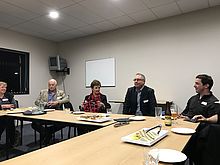
We held one regional Nuffield recruitment event this year – in New Plymouth. Lisa Harper, with support from alumni, Phil Luscombe, Marise Stephens and Noel Schrider shared their Nuffield experiences and the impact on their leadership pathways and careers. The event was also attended by two successful Kellogg alumni –  Bronwyn Muir and Shona Glentworth who shared their experiences from that programme.  We had some very interested potential scholars for the programme this year and in the future.  These regional events provide an opportunity for alumni to catch up with each other, but also provide an opportunity to introduce future scholars, particularly farmers and growers who are our target market. 

Scholar Update


The six 2017 scholars are fully immersed in their study and travel programme with three of the six still away, and three just returned from part of their personal research. A feature of this group which I have found positive has been the close friendship and sharing of information and ideas which has consistently happened on their travels. I think we will get some great insights and challenges to current thinking when the group present back. Like most scholars, their topics have morphed over time and we should see some insights and recommendations that will build on the issues raised by Ian Proudfoot in the KPMG Agenda. In this E Nuff you can read their insights from their Global Focus Programmes – Nadine, Mat and Ryan completed their GFP in March/April, while Jason, Rebecca and David undertook their GFP in May/June. They all experienced very different parts of the world with a range of social, environmental, political and financial issues to consider and understand. The 2016 scholars are active in getting their reports and research discussed at forums and in media. They will have the opportunity to present at the Nuffield Australia Conference in Darwin at the end of September this year. If you have not read their reports, there are some interesting topics:

Jessica Bensemann        

Defining our Kaupapa:  New Zealand’s role in the future of global Agriculture

Tom Skerman 

Agribusiness Governance – Finding the Green Zone

Richard Fowler 

An Investigation into Synthetic Food and the Implications for NZ Agriculture

Sam Lang       

Community-Centric Innovation and the Regenerative Farming Frontier

Bede O’Connor   

China Dairy: the growth of an industry

Management Developments

New Entity

The transition from an informal partnership between Nuffield NZ and Lincoln University to an Incorporated Charitable Trust has now been completed and the new Trust began operations on 1 June 2017. There have been some challenges, as anyone recently setting up a Trust will know. The New Zealand Rural Leadership Trust will manage both the Nuffield Scholarships and the Kellogg Rural Leadership Programme and continue to provide effective and co-ordinated leadership pathways.  The office will remain on the Lincoln campus site, and will be totally independent of the University operations.

Staff Changes

With the transition to a new entity, Desley Tucker, our Programme Coordinator for three years, chose to stay in employment with Lincoln University (she was contracted by us from LU) rather than move to the new Trust.  We will miss Desley and her great people skills as many of you will appreciate having liaised with her over the last three years. However, we have secured a great new replacement for the role with Lisa Rogers who started in late June. Lisa comes to us from a recent contract in the IT sector, and has previously worked in a financial contract role for Nurse Maude, and in a similar role of project and event managing with a large Canterbury golf club. Lisa brings strong financial and administration skills to the role. Lisa is a keen golfer and skier and has two teenage sons.   

Upcoming Nuffield Events

Nuffield New Zealand Conference – 10-13 May 2018 Dave Hurst and his team have been working hard on confirming venues, visits and a detailed programme with dates & Tauranga location already confirmed – see overview in this edition of E Nuff. Further details will be sent out shortly including registration information. It is important that you put the dates 10-13 May in your diary now! Nuffield International Triennial 2020 The Nuffield International Triennial was held in the UK in mid June with more than 20 New Zealanders attending, including some of our younger scholars who were given some fee sponsorship to enable them to attend.  The three mid-year Global Focus Programmes for current scholars also included the Triennial as part of their schedule to engage them in this wider Nuffield event. New Zealand was confirmed as the host for the 2020 Triennial. The year also coincides with our scheduled biennial Nuffield NZ Conference so some creative thinking is being done to manage the outcomes for both. An organising committee is being set up to consider dates, venues, theme etc. The challenge for NZ is finding the right timing to showcase our fabulous corner of the World and also work with the Northern Hemisphere calendar. I wish to thank all Nuffield alumni for their ongoing support in recruiting future scholars, assisting with regional events and presentations.  Please continue to promote the programme to our sponsors who along with alumni, make it possible for the programme to continue as New Zealand’s premium award in the Agrifood sector.  Kind regards Anne Hindson Beef+Lamb NZ
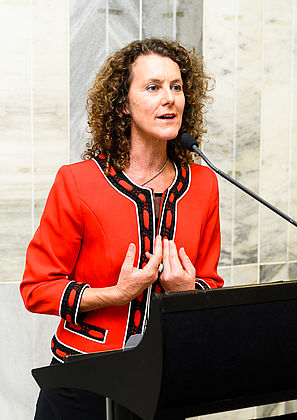
Chair Update: Juliet Maclean

Those of you who have read the KPMG Agri Business Agenda will have noted the multiple references to leadership and its importance to the growth and sustainability of an innovative and resilient food and agri business sector for New Zealand.
In his introduction, Minister Guy made particular mention of the investment made by MPI into the Kellogg and Nuffield programmes. This is a respected and valuable contribution, both financially and as tangible demonstration of support for our organisation.

The KPMG survey asks agri-business leaders to rank a range of priority items depending on their view on the importance and urgency of action required by the industry. Not surprisingly, maintaining a world class bio security system is ranked number one.

Recent threats to the biosecurity of our cattle population is a reminder of why this is so crucial to our livelihoods. Creating New Zealand provenance brands featured at number two. Innovation with customers is number five and developing future leaders is number nine. It would be difficult to find any better endorsement for the relevance of Nuffield New Zealand, with our tag line of “Global vision, leadership and innovation”.

The KPMG Agenda is a future focused, interesting read. If you would like to peruse the contents further, you can find it via this link
https://home.kpmg.com/nz/en/home/insights/2017/06/agribusiness-agenda-2017-the-recipe-for-action.html

Regardless of this confirmation of the importance of our organisation, we mustn’t become complacent and I am determined that Nuffield remains appropriate and effective in an ever- changing global environment. Each generation of scholars has, and will face, new challenges and opportunities, even if they fall within consistent themes.

Technology, social media, the internet of things, transport, robotics, education – we are part of a rapidly evolving and exciting world and Nuffield must keep pace with this if we are to stay truly relevant.  The qualities and skills required to build relationships, navigate negotiations, demonstrate leadership, display grit and resilience will, I believe, remain invaluable for us as individuals and contributors to business and rural communities.

Focusing on how Nuffield can contribute to each scholars’ learning experience is an exciting challenge and one which both your Trustees and management consider regularly. If you have any ideas, please share them with me.

I’ve had enthusiastic and complimentary reports from those of you who attended the Triennial in the UK. With your feedback in mind, we are now underway with planning for the 2020 conference which we will host here in the South Island. Stay tuned for updates over the next few months.

Applications for this year’s scholarships close in mid-August, with selections and interviews taking place in September and October. Meeting our scholar applicants and considering their potential to contribute to Nuffield and New Zealand, is a highlight of the year for me. I look forward to announcing the successful applicants in our next update.

As the days lengthen and those mid winter Xmas celebrations become a fun but distant memory, the matters of calving, lambing, crop establishment and the elections focus our attention. These will bring different responsibilities and involvement for each of you. Whatever part you play, be sure to ‘get amongst it’, make a real difference and have fun too.

Kind regards
Juliet 

Professor John Alliston

Worshipful Company of Farmers Advanced Course in Agricultural Business Management in Cirencester, Goucestershire, England are mourning the unexpected death of Professor John Alliston who was electrocuted while working at his home. A Memorial Lunch in Celebration of John’s life was held on 21 July at the University.

Reports are that it was a wonderful event with nearly 600 people attending, great speeches and fellowship between so many of John’s family, friends, colleagues, course alumni and students.
His network of friends had no national barriers and he was just as caring about his southern hemisphere friends as those nearer to home reinforcing his truly international outlook and interests.
Stories of John’s adventures in New Zealand featured in the memorial speeches.
The Worshipful Company of Farmers has committed to continuing support for New Zealand scholars on the course, valuing their contribution

Developing an online sales strategy for New Zealand: How New Zealand agri-food producers can leverage mobile technology to add more value.

New Zealand exported a total of $37 billion in agri-food products in 2015 – yet KPMG (2016) estimates those same products ultimately generated more than $0.25 trillion dollars in retail sales when sold to consumers around the world. The challenge was how we forge new pathways that will help us capture more share of the export pie? The aim of this report is to investigate how New Zealand could utilise e-commerce as a sales channel to get closer to our customers and provide less volatility in niche markets. My study involved immersing myself in global markets to observe how customer’s and consumers purchased our products, how we could get closer to them and how we could build world leading e-commerce solutions.  When I started my research into e-commerce sales I focused initially on the internet. However, this quickly changed to looking at mobile sales platforms and how they were disrupting our traditional supply chains.  How we buy and consume our food and beverage products is changing globally and traditional supermarkets are struggling to find ways to be relevant.

The key insights that I observed was the growth of mobile first e-commerce platforms globally, and the frequency of transactions involving food and drink products particularly in Asia n countries. One important statistic was that one in five Chinese e-shoppers wants to buy products from New Zealand which is currently 156 million people.  E-commerce was also the fastest growing sales channel globally with double digit growth. Another important statistic for New Zealand was the growth in B2B selling via e-commerce which will be twice the size in value of the B2C market by 2020.

Key elements of a successful online sales strategy that need to be considered are mobile first platforms, leveraging the dominant ecommerce marketplaces and accepting foreign forms of payment relevant to the market you are selling in. In addition to this, businesses need to consider both B2B and B2C strategies that are different but both online in nature. New Zealand agri-food companies also need to collaborate together to have ‘pop up stores’ in crucial New Zealand markets to attract customers to the online offering. The final finding is how you leverage existing companies with dominant ecommerce marketplaces and customer bases to grow your brand without losing to much of your margin.

Traditional relationship-based sales channels have serve d New Zealand well in the past. However, as we move into the future both business customers and consumers will be made up of millennial and Gen Z individuals who have lived their whole lives immersed in mobile technology. They no longer value face to face relationships like previous generations and prefer convenience and speed of technology when doing business and consuming products.  We need to focus more on these consumers as they will be the dominant purchaser by 2030.

The humble mobile phone has not replaced retail or the face to face selling of food, it has just internationalised it and made it more accessible globally with simpler supply chains connecting producers direct to the customer. Businesses such as Alibaba, Tenpay and Amazon are disrupting how consumers interact with retailers and farmer producers and bypassing the traditional banking systems we are so used to.  If you want your business to remain relevant in a constantly changing global market place you need to read this report!

Keywords for Search: Jason Rolfe

The Innovative farmer: Generating innovation through a farmer and grower-led system of innovation.

The genesis for my Nuffield Scholarship research was a sense that farmers and growers have a number of significant challenges or problems, both on-farm and off that have not been solved, or we are struggling to solve. As we milk, shear, tend and harvest, thousands of farmer and grower-minds around the country turn to these problems and to the dreams we have for the future.

We think about our immediate problems, like how much grass have I got to feed my animals, or do I have a water leak? We think about system problems, like how will I reduce my nutrient use, or what is my environmental footprint? We think about the tough problems like changing consumer preferences, or heightened society expectations and how can we reconcile these. Collectively we think and dream of a hundred thousand ideas. At the moment very little happens with many of these ideas. I want to change that.

In this Report I refer to the Wicked Problems of agriculture and food. These are the complex, incomplete, and changing problems we face, where there are no black and white answers but rather trade-offs. And often when a solution is found to one problem, then another problem emerges. Producing nutritious food for a growing population, with less agricultural land, a smaller environmental footprint, climate change and satisfying a multiplicity of consumer demands, while improving livelihoods for rural communities is a wicked problem.

In NZ we have many of the pre-conditions for innovation and fare comparatively well on international innovation indexes. So, what is missing? Why are we struggling to solve the wicked problems we face? The problem is two-fold: firstly the very-nature of the problems we face needs to be recognised; they are wicked problems and we cannot solve them alone. Working away in isolated groups won’t do it. Rolling up our sleeves and puffing out our chests to declare we will solve it won’t do it. And well-intended broad consensus collaboration won’t do it. Secondly, we need to take a closer look at our system of innovation. Where is the user (the farmer and grower) in our design of innovation, where is the user in the generation and development of innovation? How do we close that gap, refine our innovation and speed our cycles to market?

This Report aims to provide a model for generating and capturing ideas to solve the wicked problems of food and agriculture. The key element to solving this is bringing to bear the focus, passion, practical application and entrepreneurial drive of our farmers and growers. The innovation model needs to put them at the centre. It also needs to build an innovation consciousness amongst our farmers and growers.

This topic is important because the world today has become much more complex, uncertain and fast- moving. I borrow the term VUCA (volatile, uncertain, complex and ambiguous) from the military to throw light upon this. To succeed and innovate in this VUCA world we need to be actively engaged in innovation to perceive the opportunities and foresee the risks of disruption to our businesses and industries. As Rodd Carr, Vice Chancellor of University of Canterbury explained, “the lone-farmer standing in the field is a high- risk strategy.”

Generating ideas is the easy part. Ideas sitting in silos by themselves are useless. We need platforms to take one good idea and, as Stephen Johnson in his book Where Good Ideas Come From describes, collide it with another good idea to create innovation.2 We need places where good ideas can be shared, refined and given substance. In this Report I look at case study examples of platforms for innovation from Salinas Valley in California, from the Netherlands, from the EU and from Silicon Valley.

This Report recommends an innovation model for New Zealand where farmers and growers lead from the middle to solve the challenges they face. I describe eight principles of innovation to assist farmers and growers understand what good innovation looks like. I explain the myths, barriers and wrong-turns to innovation, to help navigate along the zig-zag path of innovation.

Keywords for Search: Mathew Hocken, Hocking

Effective industry collaboration for environmental gains.

New Zealand farmers are facing significant pressure to manage the impact of their land use on water quality which has been affecting their social licence to farm. The environment we farm in underpins the sustainability of our farming businesses and our country. As stated in the KPMG Agribusiness Agenda 2017, an annual report detailing the insights and megatrends relevant to the agribusiness sector, a vision for the agri-food sector is actually a vision for New Zealand, given we are the only developed country that relies on selling biologically produced products to fund our schools, roads and hospitals.

Statutory regulation for fresh water management has caused competition between farmers within catchments as allocation of nutrients amongst land owners is discussed. A national strategy and anticipating the way forward is an easier way to collaborate than when legislation is in place. It takes more listening and more engagement. In my experience as a Certified Nutrient Management Advisor, farmers are willing to better understand what changes need to be made on farm, they don’t want to be doing the wrong thing.

The competition really begins when industry bodies or processing companies get involved. Energy-wasted competition with fellow New Zealand farmers will get us nowhere. In situations where compromise is needed between farmers the time needs to be taken for the trust and understanding to be built between all parties involved. We need to better use our resources, both physical such as soil, water and biodiversity, and human resources to be the best New Zealand we can be. All too often I hear and read phrases such as “We need to collaboration more” or “we need to collaborated better”. What does that actually mean? What is effective primary industry collaboration for environmental gains? That is the questions I have been asking myself and others over the last 12 months.

This report includes four case studies that have been completed from 68 interviews completed during my Nuffield travels through America, Canada, Ireland, England, China and Australia. These case studies show how effective collaboration can be achieved. When effective collaboration is referred to, it is focusing on communities and catchments remaining strong and

vibrant. I’d love to see a New Zealand where instead of talking about Sarah the dairy farmer or Tom the sheep and beef producer, we talk about Sarah and Tom the food producers who farm in the same environment.

Environmental gains regarding soil, nutrients, irrigation, effluent and biodiversity can be made by each and every one of us. Each land based agricultural sector in New Zealand has a role to play and often, regardless of which sector you farm in, the same management practices will be applied to achieve these gains.

We need to acknowledge the current model of collaboration is not working. The main findings of this report identify key themes that came from interviews with overseas organisations that are having success with collaboration which enabled them to tackle environmental challenges.


Keywords for Search: Rebecca Hyde, Hide

How can pastoral Dairy Farming remain competitive.

The NZ dairy industry has always historically enjoyed the advantage of being the world’s lowest cost producer of milk with our cheap pasture feed resource being the envy of the dairy industry globally.

Despite this, farmers in the Europe and the US, the worlds 2nd and third largest exporters are eyeing opportunities for growth to compete with NZ in the global milk market. They are using a containment (housed) dairy model to achieve this and becoming increasingly competitive on many production and cost metrics through the application of efficiency, scale and productivity gains. These same techniques are being applied to world grain production with resultant excess of supply over demand suppressing prices, a key driver for profitability in containment livestock industries.

The question for the NZ dairy industry in light of this is ‘How can pastoral dairy remain competitive?’

The aim and purpose of this paper is to explore and evaluate the comparisons between pastoral based and containment-based production systems and determine where the advantage for NZ will lie in the future i.e. how we can compete and stay relevant.

This is an important discussion, the NZ dairy industry is a key part of the NZ economy and its prosperity is important on many levels. Over the past decade, the NZ dairy industry has pursued a volume (growth) model but due to emerging environmental constraints, this has evidently run its course and a value model is the next opportunity.

Information gathered on the topic followed two main themes: production systems and consumer insights. Dairy farming businesses, particularly scale or expanding operations were consulted in the US and Europe with a view to establishing resilience of their business models, future prospects and intentions. Consumer market insights were observed, mainly in Asia and the US, to establish what trends are currently occurring in dairy consumption and consumer preferences.

The key findings suggest that cost competitive marginal milk will be delivered onto world markets from the US, Europe and others, but there are opportunities for NZ to differentiate and pursue a value proposition around ‘grass-fed’. Our free-range pastoral model is unique in a global volume context and difficult for most dairying nations to replicate. Many consumers are actively seeking out food produced from sustainable, high animal welfare production models and this is an important opportunity for NZ.

The recommendations from this research contain a key message around the NZ dairy industry continuing to do what it does best on-farm. Beyond the farm, we need to look at ways to tell our story and leverage the differentiation that already exists in our national milk supply.

There are of course a number of challenges along the way and some of these will be discussed. This report endeavours to provide only a perspective based on observations offshore. It is up to the industry to evaluate the merits of the discussion and find a way forward.

Keywords for Search: Ryan O’Sullivan

2018 Nuffield Scholars Announced

Simon Cook is a kiwifruit grower from Te Puke, owns an orchard a contracting business. 

Andy Elliot, working for Wakat? Incorporation in Nelson, has 20 years’ experience in New Zealand’s aquaculture industry.

From Banks Peninsula, Canterbury, Turi McFarlane works for Ravensdown Environmental utilizing his experience in agricultural systems and sustainable land management. 

Solis Norton from near Port Chalmers, Dunedin manages the industry funded national animal health and productivity  programme for the New Zealand Deer Industry.

With a background in dairy farming, Kate Scott, from Central Otago, owns her own environmental planning and surveying business which services a broad range of agri sector businesses.

The five new 2018 scholars join more than 140 New Zealand agricultural leaders, over more than 60 years, to have been awarded a Nuffield Scholarship – a highly respected and prestigious award in the primary sector.

The 12 month scholarship programme with up to 20 weeks spent overseas, allows participants to spend time away from their business and to travel to observe, immerse, reflect and learn about global agricultural practices and the contexts they are operating in. A research topic, which focuses on an issue /challenge for the New Zealand primary sector, will be a focus of individual travel and investigation.

Triennale Nuffield Conference 2017: United Kingdom

David Kiss and Jason Rolfe, 2017 Nuffield Scholars

England – The Triennial

The Triennial was an amazing opportunity to catch-up with not only the other groups who were also travelling on their GFPs, but also to meet and interact with a range of scholars from all countries and years.  They provided a fascinating insight into the Nuffield Scholarship and the opportunities and discussions that have resulted following completion of their scholarship programmes.

Although several impressive businesses were viewed, many of which were using new technology to improve their profitability, sustainability and environmental impact, discussion was very much influenced by the upcoming BREXIT and what this will potentially mean for these businesses.  Some appear to be embracing the opportunity, while others were quite apprehensive about the challenge of competing against lower cost or more efficient operators from other parts of the world (NZ very much included). 

There was considerable discussion regarding the potential for subsidies in farming to be reduced or removed, and NZ was discussed at length as a model as to how this could work.  Many of the businesses that we were shown relied heavily upon manual labour which invariably came from Eastern Europe, a challenge that the UK government will face as they work through discussions with the EU.

Some of the businesses that we were fortunate enough to visit really focused on two key points of interest, the first being the provenance of the food they were selling and ensuring the quality of that produce.

Consumers are becoming increasingly focussed on the ‘story’ of their food.  They want to know how it has been made, where it comes from and what makes it unique. 

We cannot underestimate the importance of this, however any ‘story’ must be supported by a strong and secure supply chain that backs the integrity of claims on the packaging.  I was also struck by the high importance of consistent quality and the impact of this quality on the price that is received.

At Hall Hunter Partnership, the managing director Harry Hall was only interested in supplying berries of ‘A’ quality.  Berries that did not meet ‘A’ quality standards were discarded regardless of any income that could be received from them. 

Together with his level of supply, this meant he had the ability to engage in meaningful discussions with his in-market partners (Waitrose and Marks & Spencer) when it came to marketing his products and achieving the highest possible price (and therefore the best return on his assets).

David Kidd

*****


United Kingdom – “Attitude towards Agriculture and Subsidies”

In the UK, we were lucky enough to attend the Nuffield Triennial Conference, where we got to mix and mingle with many previous Nuffield scholars from around the world. This was a valuable opportunity to make some contacts for further travel and research later in the year.

The common topic of the conference was around ‘Brexit’ and what the future looked like for British Agriculture as they transitioned out of the European Union (EU).

The debate naturally centred around farm subsidies currently received by farmers and whether these would continue and for what. Interesting for me was the large number of farmers, including UK Nuffielders, whose attitude was that they would not survive without subsidies and were very resistant to change.

Delegates at the conference were in agreement that due to Agricultures relatively small contribution to GDP that subsidies were going to be greatly reduced if not removed.


This potentially would create opportunities for the younger generation if older farmers chose to exit the industry. It was clear that the process of leaving the EU was going to be very long and drawn out.

Due to this and the inward focus it brings, they may miss global market access opportunities.

Jason Rolfe

Nuffield and Kelloggs combine resources

Media release

24 September 2013

Kellogg and Nuffield combine resources

The Nuffield Farming Scholarship Trust and Lincoln University are combining their efforts to improve leadership capability within the rural and primary sectors in New Zealand. The two organisations have agreed to establish a rural leadership consortium to manage two prestigious leadership programmes that have operated in New Zealand since the late 1970s.

The two programmes will continue to operate distinctly and maintain their strong existing brands and alumni networks, but will be managed by a shared full-time General Manager. This position will be advertised shortly.

The Kellogg Rural Leaders Programme (Kellogg) is owned and administered by Lincoln University and the Nuffield Farming Scholarship Trust (Nuffield) is owned and administered by the Nuffield Farming Scholarship Trust. Over 650 New Zealand alumni have completed the Kellogg programme and there are around 150 Nuffield New Zealand alumni. 

“There is a natural synergy between the two programmes and they combine logically to form a leadership pathway within the rural and agribusiness sectors”, says Nuffield Trustee Juliet Maclean.

Chancellor of Lincoln University, Tom Lambie adds “By combining our resources, the University and the Nuffield Trust will be able to strengthen both of these programmes, and ensure the essential leadership capabilities are maintained and enhanced within rural New Zealand”.

Both the Nuffield Trust and Lincoln University expect that the combined resources of the rural leadership consortium, with the support of both programmes’ industry partners and sponsors, will enable the Kellogg and Nuffield programmes to better meet the leadership development needs of the wider rural and primary sector.

Background information

Lincoln University and the Kellogg Rural Leaders Programme

Lincoln University is New Zealand’s specialist land-based university delivering research informed education and training, along with research and commercial activities to support growth in the land based industries. Land based industries are referred to in the widest sense of the word including land, land resources and waterways.  

Lincoln University has administered the Kellogg Rural Leaders Programme since 1979 when it was launched with a grant from the Kellogg Foundation, USA. The programme provides an opportunity for twenty men and women who live and work in rural New Zealand to participate in residential workshops, seminars and personal study over an 11 month period.  The objectives of the Kellogg programme are to:

  • Develop solid leadership skills
  • Build the confidence to take the next big step in business, professional development, politics, industry governance or community service
  • Learn how political, cultural, social, economic and physical forces impact on New Zealand agribusiness
  • Establish networks with leaders from New Zealand and beyond.

The Kellogg programme is generously supported by DairyNZ, Beef+Lamb NZ, Zespri, Pipfruit NZ, and Deer Industry NZ.

The Nuffield Trust and Nuffield Scholarships

The Nuffield Trust is a charitable New Zealand Trust set up in 1978 and is part of an international network of Nuffield Trusts that provides scholarships to emerging leaders in the agricultural industry.

The Nuffield Trust is governed by four Trustees and managed through a part-time director and secretariat, with around 150 active alumni members (all the alumni are Nuffield scholars).

The Nuffield Trust’s mission is to develop leadership and excellence in all aspects of New Zealand agriculture through its function of providing scholarships to around five scholars.

The objectives of the Nuffield programme are to:

  • Select scholars with high personal integrity, a close connection to farming or a practical hands on farming background, who are self-disciplined but flexible, focused on innovation and high achievement and who are likely to “give back” to the agricultural industry over their life time
  • Increase thought leadership
  • Create a full international immersion experience for scholars
  • Develop global networks

Nuffield scholarships are provided to future leaders chosen because of the positive difference they will make to their relevant primary sector, and for the life-time contribution they make to New Zealand agriculture. 

Scholars are linked into the Nuffield international network and supported to undertake projects or research that will fuel intellectual debate within their communities and industries.   Nuffield New Zealand also provides an alumni network through circulating newsletters, publishing information on the Trust’s website and running conferences. 

The Nuffield programme is generously supported by DairyNZ, Beef+Lamb NZ, FMG, AGMARDT, FAR, the Mackenzie Charitable Foundation, and Landcorp.