2026 Nuffield NZ Farming Scholarship. Apply by 17 August 2025. Read More...

Apply for 2026 Nuffield NZ Farming Scholarship by 17 August 2025. More details...

Farmers in governance: an insight into the functions of a farmer elected board.

George Fox Kellogg report image

Executive summary

The board of directors is critical to the success of a business. The board is responsible for approving major strategic and financial decisions and for the critical tasks of both monitoring and partnering with the CEO.

In addition to these roles, the board is a resource, providing perspectives on member needs with their knowledge about agricultural production and agribusiness industries (Kenkel, 2020).

The aim of this report to gain insight into diversity on farmer elected boards and how the integration of independent directors has positively influenced board performance.

This report investigates boards that have a high representation of farmers, to understand whether this dynamic allows best performance, against an increased ratio of independent directors influencing the board performance.

The report also covers the pros and cons of the ward election system. The report contains analysis of key literature, to understand the functions of a high performing board, as well as how diversity fits into the board room. It reviews the ongoing discussion topic of ‘director elections’, using the ward system or across the whole country to understand the impact this has on board performance.

The consideration of these factors provide insight as to where and how farmers could better prepare themselves for director roles.

Key findings:

Within the food and fibre sector, diversity plays a huge role, whether that be on a governance board or in the packing room at an abattoir. It is important to consider that diversity might not be just about what we see, but rather the thought and skills of individuals.

We are very quick to judge organisations on the diversity of their board members when we have very little knowledge on the diversity of thought and skills of those people. Throughout the interviews, it was frequently mentioned that a mix of things such as age, gender and ethnic background was needed to achieve diverse thought and skillsets.

Farmers play a significant part on governance boards within the primary sector. As farmers, we must strive to gain the necessary skills required to become valuable directors of these organisations. We must continue to look to the future with regard to our candidate development, but also not lose sight of the value experienced directors bring.

Recommendations

  • Boards to convey what skill gaps they are seeking to fill at the time of farmer elections so farmers can vote knowing they are putting the right person into the role.
  • Candidates at every election to advertise their skills matrix on the candidate profile form.
  • Farmers with a passion for the progression of the food and fibre sector must seek the necessary skills needed to fill these roles. In turn encouragement must be given to those with the same passion but are less likely to put themselves forward for election.
  • Aspiring directors, work in management before working in governance. Governance roles require experience, and experience comes with higher level management roles within organisations.

“There’s nothing better for board training than having been accountable to a board.”
– Industry Leader

Should New Zealand be trading maize forage on quality parameters?

Fraser Dymond Kellogg report image

Executive summary

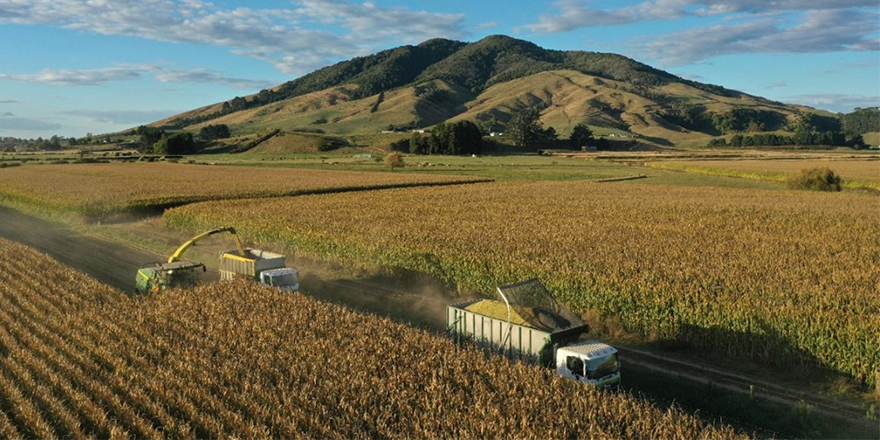
Maize forage is essential to the productivity of the New Zealand dairy sector. It is easily ensiled and provides energy and fibre, which is essential to balance a pasture-based diet.

An estimated 1,164,000 tonnes of maize forage was harvested in 2021. In the 2020/2021 season 24,500 hectares, or 45% of total maize forage planted, was grown off-farm and sold to a purchaser via a contract (Arable Industry Marketing Initiative, 2021a).

Current contracts trade maize forage on dry weight and neglect most facets of forage quality, so the purchaser is unaware of the quality of the product they are receiving. Per cow consumption of maize silage is increasing, so the quality of maize forage becomes more influential and important to the purchaser.

This report seeks to quantify the variation in maize forage quality in New Zealand and how the grower can influence it to enable trading maize forage on quality parameters.

Key findings:

  • Growers can positively influence maize forage quality but are not rewarded by the purchaser, so it is not the priority in their decision-making.

  • Starch is the critical influencer of maize forage quality.

  • There is significant variation in maize forage quality in New Zealand. Starch content has been seen to range from 15 – 40%DM1, neutral detergent fibre from 33.4 – 50%DM and metabolisable energy from 9.5 – 11.3 MJME/kg DM2. This variation creates significant differences in production potential for the purchaser.

  • Maize forage quality can be influenced by hybrid choice, agronomic management, and the environment. The environment cannot be controlled, so strategies that create resilience in the growing system are essential.

  • There is limited New Zealand-based data available for growers and advisors on how to influence maize forage quality.

  • The common method of sampling maize forage for analysis is unlikely to cope with paddock variation, caused by a changing climate and variable soil types.

Recommendations:

  • Research and provide educative resources on how agronomic decisions affect maize forage quality. This should be conducted by maize seed wholesalers and independent industry bodies, such as the Foundation for Arable Research (FAR).

  • Create independent data comparing all commercially available maize hybrids for forage quality. This should be conducted by an independent industry body such as FAR or DairyNZ.

  • Calibrate and certify the use of near-infrared spectrometry (NIR) in forage harvesters as an accurate measure of whole plant dry matter and quality parameters. Allow open entry to promote competition and innovation. This will need to be proven by the manufacturers and forage contracts amended by the Forage Trading Development Group.

  • Create educative resources to extend the understanding of growers and purchasers on the accuracy of NIR technology as an assessment of quality parameters. This should be an industry approach, including DairyNZ, Federated Farmers, Contractors Association, FAR and the Forage Trading Development Group.

What is currently being done and what more can we do to reduce on-farm waste in the New Zealand Dairy Industry?

Daniel Butler_ On-farm waste management-daairy__Kellogg report image

Executive summary

The New Zealand dairy sector has come through a remarkable period of expansion over the past 20 years. We have seen cow numbers grow from 3.4 million in 2000 to 4.9 million in 2019 and the area being farmed for dairy has increased by 33% over this period.

Underpinning this growth has been continued intensification which has created significant opportunities and prosperity for those in the industry, however like any fast-paced intensification it has created negative impacts on our environment.

As a result, the NZ dairy industry has been challenged to be more environmentally and socially sustainable to ensure we are both proud and responsible within our farming practices. We are beginning to see change in a number of areas across the dairy industry with significant emphasis being placed on climate change, water quality, work conditions and animal welfare.

Despite some initial farmer objections, these developments are all beneficial to the NZ dairy industry, and will enhance our reputation as a world leader in quality produced dairy products.

An area that remains out of the spotlight is on-farm waste and what we are doing to be environmentally responsive. It was the objective of this report to discover current waste and recycling volumes within the NZ dairy sector as well as what is being done about improving waste disposal. The report also sought to determine what is being developed for greater future farmer engagement as well as what is currently being achieved with the recycling we are collecting from dairy farms.

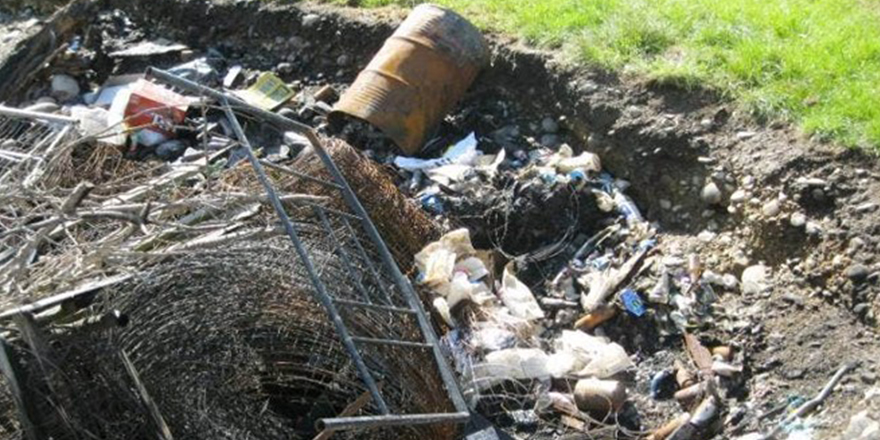
At the commencement of the project the assumption was made that farmers continue to burn and/or bury their waste and that there is a lack of work being completed to address the increasing issue of on-farm waste on dairy farms.

This report has been able to determine that previous work has been undertaken around waste levels and current disposal across the rural sector in New Zealand, and that despite some improvements in disposal practices this is an ever increasing issue that requires immediate attention.

This report identifies several significant studies and the arrival of two key recycling providers into the industry, AgRecovery and Plasback, who have ensured the volumes of recycling collected from New Zealand dairy farmers has significantly increased. This has been further accelerated by Fonterra adding evidence of recycling as part of their “Co-operative Difference” payment scheme which has seen both AgRecovery and Plasback see significant surges in registrations.

Farm plastics were given additional focus in July 2020 when the Government named Farm Plastics as one of its six priority products. This has ensured that the rural sector now has a responsibility to be environmentally responsive with the plastic products generated within the sector. Following this announcement, the Ministry for the Environment (MFE) advised it would be working with the AgRecovery Foundation to produce the Green-Farm Product Stewardship Scheme.

This document has been designed to create a “one stop shop” to ensure farmers are able to deliver four key plastics streams to local collection centres by 2024. The proposal recommends that these services will be free to customers with any cost incurred generated through levies paid by plastic producers.

The Green-Farm Product Stewardship Scheme, which is yet to be accredited by Government, is a positive step for the industry. However, following further critical analysis and using frequency distribution data gathered from surveys of farmers across Taranaki, it has been found that this service alone will not be fit-for-purpose to service the needs of all farmers.

This analysis and data also suggested that both Plasback and AgRecovery have improvements to make in their service delivery to ensure they are meeting the needs of farmers. It is therefore recommended that these improvements alongside a collaborative approach from all providers will need to be delivered before any potential accreditation is approved.

Frequency distribution analysis of the survey data also indicated that farmers would like a choice in their provider, and a desire to feel that their contribution is valued. In order to achieve this the research demonstrated that offering additional profit based providers for greater convenience would see further engagement from farmers.

In addition, having accuracy around the amount of recycling collected on-farm would quantify the contribution an individual farm is making.

The data also found that household waste is an area where very little emphasis is placed, with significant quantities of household recycling currently being burned/buried or placed in “skip bins” due to a lack of convenient services. This is another area that improvements could be made and a recommendation is made in the report to assess the feasibility of “on-farm recycling stations”.

Finally this report analyses where our current recycling is being processed, whether this is sustainable at its current levels, and if it can sustain an inevitable increase from greater farmer compliance. This report concludes that currently up to 80% of our farm plastics are sent overseas and whilst we are utilising some of this product in New Zealand, this is limited to a few manufacturing companies. In order to be more environmentally responsive in future we need to deal with recycling internally and therefore greater sector and government collaboration is required to assist businesses within New Zealand.

Following the information gained from this report the following recommendations are made:

Establish An Accredited Inclusive Product Stewardship Scheme

1. The current Green-Farm Product Stewardship Scheme proposed by the AgRecovery Foundation is a great initial concept, however it requires further development before any potential accreditation is granted from the Ministry for the Environment.

The “One-Stop Shop” solution is a positive one for the rural industry, however, needs to be more inclusive of other providers including Plasback, for its ultimate success. The proposed scheme needs to better acknowledge the work that is already occurring within the waste sector and utilise these providers in any future scheme. Once these necessary amendments are made the proposal needs to be accredited and operational as projected, in 2024.


Utilise Local Service Providers

2. That local services are required to complement the Green-Farm Product Stewardship Scheme proposal which will both provide additional options for farmers, and service additional waste streams. These services could include on-farm collection as a user pay service that allows for greater convenience to farmers to ensure waste removal and improve recycling practices.

Farmers need the ability to choose the most convenient practice to meet their business needs and one solution will not meet this requirement.

Collection of On-Farm Recycling Levels

3. That volumes of waste and recycling collected needs to be recorded and collated at a farm level. This would allow farmers to accurately record the increased efforts that they are making and to hold those to account who are not making the required effort. This would also allow farmers to provide more accurate statistics across the complete rural sector.

Currently we are not recording this information as accurately as we could. Farmers need to know the difference they are making so showing key individual farm stats as to levels of recycling will be crucial to any future success.

Enhance Government Collaboration

4. That government needs to enhance the work it is doing alongside current businesses within New Zealand who are attempting to use recycling waste and to look to support and develop companies who are trying to operate in New Zealand. Currently up to 80% of our plastic recycling goes offshore to be processed and we therefore need to develop further businesses within New Zealand to service more of our own recycling.

Many of the products that are created from plastic waste are not high value therefore government assistance will be required to ensure companies are able to process these plastics and remain financially sustainable.


 

The impact of exotic carbon forestry on rural Aotearoa New Zealand.

Craig Fellowes Kellogg report image

Executive summary

“We are not anti-forestry – exotic plantings can be integrated where appropriate – but it is about planting the right tree in the right place”

Sam McIvor B+LNZ Chief Executive, 2021

With Aotearoa New Zealand’s commitment to the Paris Agreement of a reduction in emissions to net zero by 2050, the practice of planting faster growing, quicker carbon sequestering trees (Pinus radiata) has boomed.

The continued rise in the Aotearoa New Zealand Units (NZUs) price and Government’s lack of regulations around permanent exotic carbon forestry have further contributed to planting more exotic forests on productive land where previously the land value would have been too high to be considered for forestry.

The new permanent forestry category will be added to the New Zealand Emissions Trading Scheme (NZ ETS) on the 1st of January 2023. This applies to both exotic and native forests that will not be clear-felled for fifty years. Forests must be planted post-1989 to qualify, any trees planted or established pre-1989 do not qualify for entry into the NZ ETS.

Aotearoa New Zealand’s land area is 26.8 million hectares of which 8 million hectares is native and indigenous forests and 2.1 million hectares are exotic forests, mainly Pinus radiata.

Only 333,000 hectares of post-1989 plantings are registered into the NZ ETS, leaving a vast portion of pre-1989 forests excluded from the NZ ETS, all of which are still holding and continuing to sequester carbon.

Key findings of the research around the potential effects of exotic carbon forestry on rural Aotearoa New Zealand are as follows:

  • As the NZU price rises (currently $77) stockholders will be able to out-compete farmers for productive farmland sales.
  • Returns on investment for permanent exotic forests far outweigh relative competing land uses and native trees.
  • Large-scale permanent exotic forests would allow Aotearoa New Zealand to meet their emissions targets and at a lower direct economic cost.
  • To reach our 2050 goal, the area needed for planting exotic trees would be less than if native trees were planted.
  • Higher economic returns due to the faster sequestration rate of exotic trees.
  • Higher economic returns on marginal to steep land compared to traditional farming in these areas.
  • Long-term damage to the biodiversity and ecology of the land.
  • Increased pest burden, risk of wildfires and spread of wilding pines.
  • Direct financial impact through job losses on farms and indirect financial impacts on rural towns and businesses.

The short-term fix of planting permanent exotic forestry will become a long-term problem for future generations.

Key recommendations from this research are as follows:

  • Government should be encouraging industry to reduce emissions rather than taking the easy option of offsetting them.
  • MPI allowing pre-1989 native forests and natural carbon sinks (Fiordland) into the NZ ETS.
  • Research into alternative ways to sequester carbon such as the use of our oceans and seaweed to sequester carbon.
  • Power companies should be increasing investment into alternative power sources such as wind turbines, building more hydro lakes and harnessing geothermal energy.
  • The Ministry for the Environment and local councils encouraging partial farm plantings which will improve profitability on marginal land and will have environmental benefits on-farm if waterways and marshy areas are locked up and left in native plants.

Bringing New Zealand’s food science to the world.

Coralie de La Fage Kellogg report image

Executive summary

Background

Food science in New Zealand is an important contributor of the Science and Innovation ecosystem and helps maintain a positive international reputation in this field. However, international stakeholders are looking in, the food crisis, accentuated by a growing population, is worsening and scrutiny is increasing across every sector.

Thus, our food science sector must show clear direction, collaboration, and thought leadership. Therefore, New Zealand’s science industry needs to be reshaped to help find solutions to the pending global food crisis identified by the United Nations and other organisations.

The COVID-19 pandemic presents an opportunity to restart the clock and implement some changes. Te Ara Paerangi Future Pathways’ consultation is addressing a wide range of issues and looking at solutions while keeping an open mind and including many voices. This is an excellent step in the right direction and a welcome review of New Zealand’s research system.

Internationally, New Zealand is described as harder to justify, far away and laid back. Moreover, New Zealand faces the issue of ‘local is the new global’, meaning that when available, most stakeholders would prefer to engage with a science provider closer to them geographically.

However, commercial revenue for New Zealand’s food science sector is not only important financially, but also critical to maintain a global reputation.

Method and Focus

This report focuses on international business development and ways to better integrate New Zealand’s food science globally. The purpose of this research includes providing a clear picture of the New Zealand’s food science ecosystem and the opportunities and challenges that organisations in the industry are facing.

This research was underpinned by two components.

Firstly, a literature review to draw research, articles, industry reports and opinion pieces together to understand the current New Zealand science system, compare it with other models and identify some common challenges and opportunities.

Secondly, a crucial part of the research consisted of semi structured interviews with food science providers. A compare and contrast analysis was undertaken. The interviews formed the basis of the recommendations and shaped the vision for New Zealand’s food science strategy.

Recommendations

The recommendations have been drawn from readings and interviews, and can be summarised as:

  • Support engagement among the science industry and enhance the collective mindset to capitalise on every expertise to create greater impact.
  • Creation of a capability map to identify the focus areas and support world leading capability building.
  • Promote the transition to a single overarching science institute.
  • Leverage New Zealand’s science capability to focus on world leading expertise and attract international business, thus enhancing New Zealand’s economy.

It’s encouraging to see more and more collaborative projects in science, however this research suggests that only a whole sector change would accelerate the rate of exchange of scientific knowledge, increase the delivery outcome to answer global issues and keep New Zealand in a world leading position.

Ultimately, the aim is to draw insights and develop a bold vision and relative recommendations for the future of New Zealand’s food science, to position the country as a leading knowledge and research provider in this sector, globally.

Water resilience.

Conan Moynihan Kellogg Rural Leadership report image

Executive summary

New Zealand is extremely fortunate when it comes to natural water resources.

However, under a changing climate our water security is under threat particularly for New Zealand’s rural communities. Our freshwater resource is at the heart of our prosperity and resilience of our communities.

With increasing demand from all sectors, it is crucial that New Zealand efficiently manages our freshwater and that it is allocated to its best uses.

Water capture and storage systems have been identified as key adaptions to climate change. Future systems will need to be multi-purpose to utilise freshwater to its full potential under a Te Mana o te Wai framework (TMOTW).

How we slice the pie of water allocation within these multi-purpose systems will be critical to the success of sustainable growth for rural communities.

This report will focus on how New Zealand’s rural communities can afford to build water resilience through water capture and storage and the implementation of market-based systems to manage allocation of freshwater within catchments.

The methodology includes a literature review of current research on water resource solutions and allocation models, followed by semi structured interviews with eight sector experts to gain insights into their experiences and perceived solutions.

Key findings:

  1. There is lack of specific oversight and strategy for managing New Zealand’s freshwater resources.
  2. Current water allocation models need to go through reform at both national and local policy levels.
  3. Rights of existing users including iwi need to be addressed. Allocation reform will be unable to be successful without tackling this issue first.
  4. Current management of the resource is in silos which is inefficient and costly for both the environment and water users. Collective management of freshwater is needed to create efficient use of the resource.
  5. Costs, planning and perception of building infrastructure solutions are prohibitive to investment in development of water security infrastructure.
  6. Water capture and storage is needed to build water resilience against climate change for rural communities. Solutions will vary between catchments, but significant investment is required.
  7. Market-based systems are a tool for creating efficiency of water use and help to reallocate water to higher value uses. Collective management entities are able to easily implement market-based systems provided the system is closed (e.g. within one aquifer or reservoir etc), they have an accurate optimisation model, and real time data.

Recommendations:

  1. Ministry for the Environment to address and find resolution of iwi interest and rights in water. Allocation reform will be unable to be successful without tackling this issue first. Iwi should have a seat at the governance table of proposed national agency for freshwater management and crown entities for water management to ensure that the TMOTW framework is at a catchment by catchment level.
  2. Ministry for the Environment to establish a National Agency for Freshwater Resources similar to what overseas New Zealand’s roading infrastructure (Waka Kotahi).
  3. National Agency for Freshwater Resources to create a national strategy for water resources that works in tandem with the long-term view of TMOTW. The Agency would create Crown Entities for multi-regional water management in a similar vain to what is proposed under the Three Waters Reform Programme but with further refinement and input from stakeholders.
  4. Regional Councils to facilitate aggregate consent entities within catchments through regional plans. These will allow for the management of the overall resource and can implement market-based solutions such as trading of water allocations and/or pollutant allowances. These entities will also enable the ability to generate sufficient funds to build more efficient infrastructure and storage upgrades if required.
  5. CWME’s to quantify and understand demand requirements for individual catchments and then plan water storage and capture infrastructure accordingly. Implement staged projects so initial costs up front are not prohibitive.
  6. The national agency for freshwater resources must facilitate and define future allocation model options and provide clear classification of new water permits. Regional Councils to facilitate and undertake water allocation reform that adheres to the hierarchy of TMOTW, enables a transitional period for existing rights and undertakes investment in community education.

Greenhouse gas emission consequences of New Zealand’s urban sprawl.

Andrew Myers Kellogg report image

Executive summary

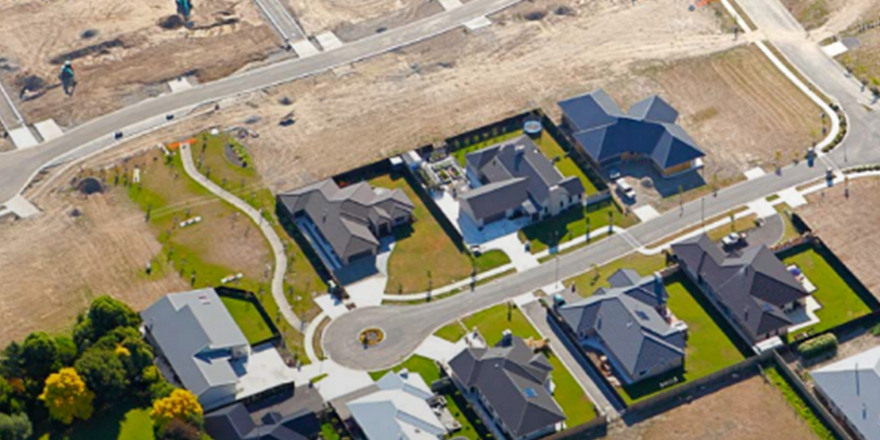
Land use change from agriculture to urban is occurring at record rates. Stats NZ (2021) report that record numbers of stand-alone houses are being built. Emissions from the building sector increased 77% in the decade to 2017 (Stats NZ, 2019).

In contrast, pastoral farming land area is decreasing, and the emissions profile of the industry is flat to declining (Ministry for the Environment, 2021).

Legislation and numerous reports reference agriculture as New Zealand’s largest Greenhouse Gas (GHG) emitter and as the main industry targeted for emissions reduction to meet New Zealand’s GHG obligations under the United Nations Paris Agreement of 2015. The housing sector has significantly less reference within the same documents.

If agriculture is recommended to decrease land area and therefore emissions to help achieve New Zealand’s obligations (New Zealand Productivity Commission, 2018), why is that same agricultural land then allowed to be subdivided and turned into housing which emits potentially more emissions?

This is the context of the data sought for this study’s hypothesis: There isn’t a carbon footprint reason for land use change from primary to urban residential.

The results of the data analysis from a literature review suggest that the emissions from land use change to one hectare of urban subdivision are significantly higher than if the land had stayed as one hectare of primary land use.

Seven interviews with industry leaders were undertaken for discussion surrounding the hypothesis. They were thematically analysed showing the agriculture sector having concerns about the way its emissions are reported and the availability of tools to decrease emissions. This limits the industry’s potential to do what it does well, producing some of the lowest carbon footprint nutritional products in the world, for its growing population.

The housing sector has potential to improve its industry unity to lift its GHG reporting performance. Several solutions are available to reduce housing’s carbon footprint and minimise the use of agricultural land. They are too slowly being taken up for the sector to meet its emissions reductions targets.

Reporting gases on their separate warming potentials would clarify the impact of pastoral farming on the overall emissions. Reporting of land use change emissions associated with subdivisions, and emissions per dwelling should be undertaken.

Resource consent applications for land use change should consider the associated GHG consequences. More research could be undertaken to express the emissions of the civil infrastructure surrounding houses.

Paths to strategically meet our GHG reduction obligations can then be more clearly identified, and decisions made to ultimately improve the planet’s overall goal – reducing global warming.

Leadership during a crisis.

Henry McIntosh_report image

Executive summary

The Covid-19 pandemic hit New Zealand during 2020 and the horticulture sector was immediately faced with an extremely challenging situation. The sector was operating under very strict rules and experienced significant effects to the wider supply chain. But overall, the sector performed very well during 2020.

The aim of this report is to understand how the New Zealand horticulture sector successfully navigated the unknown during the initial phase of the pandemic, specifically focussing on leadership.

The question I wanted to answer was ‘what are the most effective leadership strategies during a crisis?’.

I completed a literature review to analyse some of the previous work done on crisis leadership and interviewed six senior leaders from New Zealand’s horticulture sector. These people were actively involved in directing the industry and leading their stakeholders through the early phase of the pandemic.

The clear answer to my question regarding the most effective crisis leadership strategy was to implement a people-first approach. Removing the controllable worries that people have about the situation. Keeping people busy to maintain a sense of purpose and continuing a level of social interaction are all key parts of a people-first strategy. 

With this approach, people are motivated to continue as normal and will often create better results. A lot of the interviewees reported better team engagement, efficiencies, and overall business performance during this period.

It is clear, that without this people-first approach, New Zealand’s horticulture sector would not have managed this period as successfully as it did.

Communication was also a significant part of the successful leadership strategy. There was no fear about potentially over-communicating. Getting the correct and most up to date information out to all stakeholders quickly was a focus. Many communication systems have been completely refreshed as a result.

The pandemic situation was developing so quickly, that often learnings from previous weeks or from other businesses were very useful to handle new challenges. Being conscious of the learning opportunity was challenging for businesses, but once embraced, systems and processes improved significantly.

Recommendations:

  • Cultivate a company culture that puts people first and ensure that staff can recognise this prioritisation.
  • Invest in professional development and networking opportunities to continually upskill staff and create opportunities for pan-industry connections.
  • Review and re-create the existing communication plans to ensure the best tools and strategies are being used.

Wahine toa, Wahine ahu matua.

Sharleen Temara Kellogg report image

Executive summary

“ Whaia te iti kahurangi ki te tuohu koe me he maunga teitei, ki nga whetu rawa”

__

“Seek the treasure that you value most dearly, if you bow your head, let it be to a lofty mountain, let it be beyond the stars”.

This whakataukī is about perseverance and endurance. Refusing to let obstacles get in your way while striving to reach your goals.

This research paper looks at the need for women in leadership, the need for te ao Maori and tikanga Maori in the workplace, the current resistance to change and posits how this might change.

Traditionally and historically the leadership role has been the domain of men in Maori and mainstream organisations. Progress is happening, glacial as it feels at times.

Although there has been little research into gender bias in New Zealand, overseas studies have concluded it is prevalent at all levels.

 In 1993, Dr Sheilah Martin, Dean of the University of Calgary, “identified five commonly alleged sources of gender bias. While conceding that bias can arise in many situations and can assume a number of forms, she maintained that it typically occurs where decision makers:

  • fail to be sensitive to the differing perspectives of men and women;
  • apply double standards or rely on gender stereotypes in making decisions;
  • fail to recognise harms that are done to one group only;
  • apply laws or make decisions that exclude people on grounds of gender;
  • are gender-blind to gender-specific realities;
  • rely on gender-defined norms;
  • make sexist comments.” (New Zealand Law Commission, 2003).

AAUW (2016) report Barriers to women leadership that occurs due to the qualities of leaders are based on male models; (stereotypes) that the traits associated with leadership are viewed as masculine; men surpass women in networking to find mentors and sponsors; bias and discrimination and the lack of flexibility balancing family and work as women are viewed as the primary carer.

The purpose of this research paper is to identify potential pathways, for wahine and business, to enable Maori women with the potential to move into leadership positions.

The research has sought to understand the experiences and perspectives of successful wahine leaders and the barriers they faced.

The objectives of the research are set out in section 4.1, the methodology used in section 4.2, the findings in section 6 and the conclusions in section 8. The research provides a snapshot into the relationship Maori business and primary sectors have with the Maori economy; Explains the importance of kaupapa Maori in business and leadership; Provides an insight on the status of women and Maori women; Maori leadership, Maori women leadership and governance. Section 4.2: Research Methodology, focus on research method. Section 6 offers a brief and the voices of the Maori women who are the focus of this research. Section 7 weaves together the research by providing a discussion and interpretation of the overall findings. Section 8 presents the conclusions. Section 9 presents the recommendations.

Retaining Rangatahi in the Red Meat Sector.

Executive summary

The red meat sector is rooted deeply in New Zealand’s culture and epitomises a true testament of resilience. Navigating annual environmental disasters, political tension, disruptive technologies, economic crises, disease outbreaks, changing land use and consumer demands – this durable industry has adapted with rigour over the past century. Generation Z (born 1995-2010) is an ambitious, empathetic, knowledge-hungry generation flooding the workplace with their creativity, curiosity and tech-savvy skills.

The aim of this report is to understand what motivates Generation Z in the workplace, identify their workplace expectations within an on-farm, processing/supply chain context and discover how to bridge the gap between their expectations, and the reality of a workplace within the red meat sector.

The methodology includes a literature review on Generation Z, retention strategies, followed by semi structured interviews with twelve Gen Z employees and eleven industry leaders working in the red meat sector, to gain insights on their experiences and expectations.

Key findings:

Lifestyle, opportunities for learning, career progression, variety and open/transparent businesses are key drivers for Gen Z wanting to pursue a career in the red meat sector. Low pay, long hours, poor culture/management, and lack of career progression are the top reasons causing young people to leave jobs in the red meat sector. All Gen Z participants who had a goal of farm ownership planned to leave the red meat sector, change careers, or find other creative ways of building capital to achieve farm ownership.

Within a processing context, Gen Z want opportunities to work on their own project throughout the duration of their rotation around different departments. Employers’ experience with Gen Z in the workplace found this generation requires a high level of feedback, they want to be involved in the business and progress quickly. Poor leadership, cost and lack of support were perceived as the greatest barriers for retaining young talent by employers.

Recommendations:

  • Close the gap between employer and employee expectations: employers in the red meat industry need to be clear about what opportunities employees will have to learn, roles they can progress towards within their business and realistic about timeframes.
  • Foster open and transparent businesses; Gen Z wants to know how their work contributes to the bigger picture.
  • Invest in coaching and leadership development for red meat sector employers.
  • Provide more resources and education for young people to learn about pathways into farm ownership. Pathways into farm ownership are not linear.
  • Cultivate more structure for Gen Z employees in processors/rural support services. Rotating new employees around departments is valued by Gen Z however, giving them a tangible project to work on in the background will provide them with a greater sense of purpose that is needed to hook them in their first few months of employment.
  • Implement an accreditation system for employers that have good workplaces to incentivise them to improve living conditions for on farm employees.