2026 Nuffield NZ Farming Scholarship. Apply by 17 August 2025. Read More...

Apply for 2026 Nuffield NZ Farming Scholarship by 17 August 2025. More details...

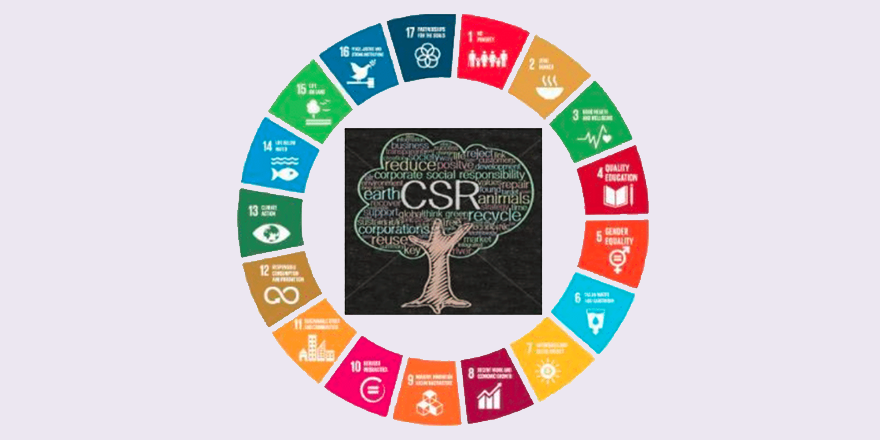
Looking forward to 2030: the un-sustainable development goals – corporate social responsibility and the New Zealand primary sector.

Executive Summary

Whilst travelling through Europe and China in 2015, I saw great examples of Corporate Social Responsibility (CSR) being undertaken by organisations, both in their countries of origin and through global pursuits.

Applying this concept to the New Zealand primary industry, I questioned whether more value would be possible for business when conducting CSR in conjunction with the United Nations Sustainable Development Goals (SDG’s), and it immediately became apparent that these two things needed to work hand in hand to enhance social and environmental outcomes for business.

Through discussing the concepts with organisations I became conscious that awareness of CSR andthe SDG’s was lacking.

The aim of this paper is to create awareness of the subject of CSR and to reinforce and challenge the need for the New Zealand primary sector to have a unified approach to the challenges of conducting business sustainably.

I aim to explore the SDG’s and discuss the benefit to integrate them throughout an organisations culture to form the basis of a unified approach to meeting the needs of society and the environment.

Having had an interest in how CSR can be best integrated into the New Zealand primary industry for some time, I have put this report together with knowledge and concepts gained during that period.

To continue on from this I have conducted a literature review to explore concepts to extend the knowledge gained.

With consumers becoming more informed of how businesses operate and choosing to purchase goods and services based on their ethical beliefs, the power of the consumer is greater than ever. Seventy-two percent of people globally say business is failing to take care of the planet and society as a whole (Accenture and Havas Media Group, 2014) and are adapting their spending habits to support businesses that are actively working to improve the life of society.

Corporate Social Responsibility is a movement aimed at encouraging companies to be more aware of the impact of their business on the rest of society, including their own stakeholders and the environment. (Financial Times, n.d.)

The Sustainable Development Goals are a set of global goals adopted by the governments of the United Nations in 2015 to help improve societal standards.

When both CSR and the SDGs are integrated into business together the following benefits can happen for an organisation.

  • Driving growth
  • Positive effects on company image and reputation
  • Positive effects on employee motivation, retention, and recruitment
  • Revenue increases from higher sales and market share
  • New revenues from innovative products and services
  • Lowering cost
  • Reducing risk
  • Being able to continue to operate in countries where future policies and legislations will be shaped by the SDGs
  • Building trust
  • Forging partnerships with other companies, governments and non-government organisations (NGO)

The framework for engaging the SDGs into the CSR function of an organisation may look like…
Identify relevant SDGs – Select SDGs that are relevant to the business and its supply chain
Goals – Set targets around what the organisation wants to achieve comparative to the baseline in relation to the SDGs
CSR engagement – CSR philanthropy aligned with the SDGs
Embed – Communicate a new way of thinking throughout the organisation
Implement – Specific projects engaging with the SDGs
Monitor – Utilise tools to assess impact
Report – Annual report written in line with Global Reporting Initiative or similar.

A primary industry approach to this would be beneficial to all of society including stakeholders.
Tackling the effects of groundhog day in farm ownership.

Executive Summary

“Groundhog Day (noun): A situation in which events are or appear to be continually repeated” (Collins dictionary)

I grew up with a dog whistle around my neck, a handpiece in my hand and a knife and pouch around my waist. Farming was always going to be my journey. Yet after seventeen years of management and more recently ownership, I feel my passion for the day to day work dwindling…. I’m bored.

The daily chores on my 1000ha sheep and beef property at Porangahau in Hawke’s Bay are no longer the challenge they once were, development on Senlac Station was predominantly done over 10 years ago, with fencing, water systems, metalling and an aggressive regrassing programme keeping my passion burning at the time. And while there is still plenty to do, I feel like the project that is Senlac Station is complete. But high debt levels, and an emotional attachment (that is only experienced once you have poured your heart and soul into a business) toward my property hinder the decision-making process and before long I find myself stuck in a rut, constantly looking over the fence for the stimulation I crave.

Initial research suggested I was not alone. I have many friends and acquaintances that themselves have made changes to their farm business just to combat the boredom in their daily lives. Some bought diggers and went contracting, some invested heavily into sheep and cattle studs, while others leased out the farm and joined the corporate world in search for more stimulation.

This report endeavours to:

  1. Ascertain whether Groundhog Day is an issue for farm owners
  2. If so, why is it an issue
  3. What tools can be employed to deal with it and prepare for it.

Unfortunately, although the agriculture industry has overlooked boredom in farming as an issue, the corporate world sees boredom in entrepreneurs as a contributor to low productivity and stress leading to depression, yet the question is rarely asked in any farming sector. As a young person about to enter farm ownership, it would be beneficial to know that keeping the passion for farming alive is not as easy as it may seem and to have some tools in place to tackle the issue if and when it arises may make any transition much easier.

As not much has been written about boredom in farm ownership, I had to look at the corporate world for my literature review. Here articles regarding boredom in entrepreneurship could be directly related back to the farming sector. I also conducted a survey on social media which had 86 respondents and gave me the basis of my research. Meeting with leaders in the field of rural mental health highlighted the importance of exposing an issue not yet considered relevant.

Most wellbeing experts believe in the five ways to wellbeing.

These are:

  • Connect with family, friends, neighbours.
  • Give to charities, donate your time.
  • Take notice of the little things.
  • Keep learning and developing.
  • Be active at work or in sport.

My survey also sought to find out how much time farmers set aside for these five behaviours and whether there were any correlations between these and those farmers that are struggling with the effect of Groundhog Day.

Out of the 86 people surveyed:

  • 30% said they often felt stuck in a rut at work
  • 42% reported that they felt stuck in a rut only sometimes
  • 28% stated that they did not feel they were stuck in a rut.

This backed up my initial hypothesis that Groundhog Day is an issue to some extent for 72% of farm owners, and a key contributor to low productivity and stress for 30% of farm owners.
The main causes appear to be monotony of routine, long hours/hard work, and profit/debt. And other reasons such as weather, inability to progress, compliance, and staff issues having a lesser impact but still worth noting.

Other interesting trends include:

  1. Farm owners that are not affected by boredom tend to have other paid jobs outside of their core farm business (e.g. Council/board work), showing they have realised they require more stimulation than what the farm can offer.
  2. Farmers that have been managing/owning for more than ten years are more affected by Groundhog Day showing that the longer you’re farming the bigger an issue this is.
  3. Farmers that are unaffected by Groundhog Day are much better at utilising the five behaviours to wellness.

There are many tools available outside of the five behaviours of wellness, most of which I shall detail in the report. These include:

  • Take time off
  • Create the role you want within your business
  • Invest in yourself
  • Have a strategic plan
  • Notice the envy in others
  • See the art in your work

Groundhog Day, boredom, seven-year itch, lack of passion – however you choose to describe it, can be an issue for any business owner. The difference with farming is that often there is millions of dollars tied up in property, stock, and plant, not to mention the sentimental value that can go with owning property, especially if it has been in the family for generations. Also, we normally live on the property, meaning the pressures of business are with you 24/7.

Animal welfare in livestock production systems – how well do New Zealand farmers perform and where can we improve.

Executive Summary

Animal welfare in New Zealand agriculture is a vital part of our “brand” as an exporting country. Both nationally and globally, consumers are expecting more and more transparency throughout the food supply chain. With society’s collective conscience adapting an increased focus on the ethical treatment of animals, we as members of the agricultural community have more and more reason to ensure that our whole industry is aiming to be above reproach on this matter. However, as there continue to be articles in the media exposing cases of animal neglect or abuse, we must acknowledge as an industry that there is room to improve. The problem the primary sector faces is: how can we collectively improve animal welfare in a practical, collaborative and sustainable way? In doing so, the aim is to meet the values and needs of our global consumers and maintain our social licence to farm. With access to information at an all-time high, any abusive or negligent behaviour leaves the whole of New Zealand agriculture vulnerable, as distressing videos can make it around the world to our consumers in seconds. Similarly, poor communication from our sector or an inability to give scientific evidence to consumers on why we continue with certain farming practices could lead to their distrust for our brand. The goal of this study was to identify what we are currently doing well in the sector as a whole, what areas we need to work on, and how best to practically effect change.

This study is a combination of a literature review, interviews and two surveys. The literature review focused on scientific research, global perspectives and media releases in relation to animal welfare. Interviews were conducted with representatives from industry bodies on their stance on how best to improve animal welfare and what they believe the biggest issues to be, and what action their organisation is taking on this front. I conducted two surveys – one from a farmer/rural professional perspective and one from an urban consumer perspective, to gauge whether there were any shared opinions and concerns between the two demographics.

The literature review enlightened me to the fact that animal welfare standards will always be evolving as society changes. This means that New Zealand must be keenly aware of what our overseas markets expect of us, and we must ensure we align with their values. Increased public scrutiny means that farmers need to be cognisant of how our agricultural practices are being viewed by the public.

Throughout the farmer survey, many respondents showed that they put a high priority on animal welfare, and many desired harsher punishments for those that showed disregard for their animals’ wellbeing. Farmers recognised the need in the sector for increased education on animal welfare, and a desire for urban consumers to not judge their farming practices so harshly without first understanding the reasoning behind it. Many urban consumers also identified within their survey that the urban population is not very well informed in relation to common farming practices. However, the majority did want information to be easily accessible to them on the welfare status of the animal- based food products that they buy. In general, they showed distaste for “factory farming” of chicken and pork, as well as for the production and slaughter of bobby calves.

The key recommendations from my research centered around the need for promoting open dialogue around animal welfare, in a “farmer to farmer” format. This would improve the exposure that young people and new entrants of the industry have to topics and resources around animal husbandry practices. Increased knowledge of best practice animal care could also be improved by better marketing by some of the key industry players in the animal welfare space. This research has also shown that as a sector we need to put increased focus on reducing the number of bobby calves.

I also believe that the industry would greatly benefit from national animal welfare awards, which would be a great way to celebrate and incentivise best practice animal welfare, in the same way that the Ballance Farm Environment Awards have incentivised best practice environmental stewardship.

TB freedom in New Zealand’s domestic cattle and deer herds by 2026: Is this an achievable goal.

Executive Summary

The future of our primary industries relies on the wealth that we, as farmers, can create by having safe and integral products that we can export and market to the world. We also need to have a ‘second to none’ provenance story to command a premium price per unit from our increasingly conscious consumers. The aim to have a national cattle and deer herd that can boast freedom from Mycobacterium Bovis (Bovine Tuberculosis, TB) by 2026 will contribute to our beef, dairy and venison national product integrity story and eliminate risk to our international trade security in some markets.

Now is not the time to let complacency take us back to epidemic levels of TB. A well known farming cliche is ‘don’t let your foot off the throat’ and this applies now, more than ever. Too much time, sweat and tears have been put in to the cause – not forgetting the huge monetary investment that farmers, the taxpayer and other contributors have poured into this effort to let our ‘foot off the throat’ now. Our fight against TB needs to remain a committed, national effort where money and resources are to be used as efficiently as possible to see the goals achieved that were set out in the latest National Disease Management Plan, 2016 (NDMP).

The latest NDMP (2016) has provided us all 3 clear goals to work towards over the next 37 years:
● 2026 TB freedom in domestic cattle and deer herds.
● 2040 TB freedom in possums.
● 2055 Biological eradication of TB from New Zealand.

We must be mindful that an intergenerational mission statement, ‘to eradicate bovine tuberculosis from New Zealand’, needs strong pathways of communication and knowledge sharing for it to be realised.

These ambitious goals, that are recognised to be achievable, require trusted and dedicated collaboration. Personnel must be attracted, and continue to provide expertise, in order to keep advising farmers on the most efficient ways to achieve this goal. New solutions need to be devised so we can achieve this. An engaged, levy-paying farmer base that understands why we are doing this is also fundamental to success. Enough highly-skilled, ‘on the ground’ experts, enough human capability and enough technology to gain efficiencies is also key to our achievement. Our Government and Ministry of Primary Industry needs to be approachable to recognise target successes, and offer a consistent funding model. Above all else, the governance and stewardship of this eradication plan must lead us seamlessly through the years, steering us towards an environment free of Mycobacterium bovis.

The health of our national herd has come into the spotlight as farmers face another significant national disease incursion. Although a different microorganism to the one that is the cause of bovine TB, it has sparked debate. General risks factors need to be taken in to consideration when farmers are making decisions around stock origin and history before purchasing. Activities that need special consideration include the grazing of animals off farm (separate or commingled), breeding bull accreditation processes and the purchasing of (and feeding of) pooled milk to calves that could contain disease. It has also raised discussion about the sacrifice of diseased animals for good of the national herd. These are all areas that need exploring continuously. We must investigate if there is a need for tighter restrictions to be enforced to stop the drift of the disease and to ensure the 2026 goal of TB freedom in domestic cattle and deer herds is achieved. This is not a time to ‘let the foot off the throat.

The Habit of engaging Human potential, Teal.

Executive Summary

From my time researching my chosen Kellogg’s topic, I have found it very easy to say something is broken.  We need to change.  This needs to be done by aiming for those low hanging fruit that shock and challenge us as dairy farmers.

I have since come to the realization that great leaders can inspire and lead change.  The point of this project was not just to start a conversation and become more knowledgeable, but to challenge my own beliefs, innovate and lead through action.

‘The light bulb wasn’t invented by continuously improving the candle.’ Oren Harari

It was about understanding the job to be done and then stepping back to look for solutions to solve this.

Only a few years ago the statement ‘Pasture to Plate’ was created.  Now with that rate of change required to hold onto our licence to operate as a farmer, I feel it should be changed to ‘Ecosystem, transparent to customer with an emotional connection in-between.’

To even adjust to the complexity of what I feel is now required, I find myself relaunching my dairy farming career with what I suspect will happen at least three times within my working time frame, if I am to remain competitive.  At each point requiring to fully up-skill, or in today’s words – capability rejuvenation. To achieve this, can we do what we’ve always done and just improve or adjust? Or as farmers do, we innovate?

For years gone by and even still today, we as Kiwi’s believe that we are great innovators through the ingenuity of the “No.8 wire” mentality, with a can do resourcefulness attitude, that comes from a country such as ourselves at the bottom of the world.  We are a long way from February 15th 1882 when our first frozen meat shipment left New Zealand’s shores.  Although these are incredible feats in their own right, as we moved towards the industrialised age, the question has to be asked:

Are we as Kiwis still great innovators?  How can New Zealand shift from this idea of ‘feeding the world,’ to ‘being great for the world?’

Furthermore within an industry such as the dairy industry, why is it that we struggle to attract and retain quality staff members?  That across the board we have an increased number of people struggling with mental health and well-being. To a point now, I’m left wondering, who’s next?  Who will be the next fellow dairy farmer crippled by depression and/or anxiety?

Federated Farmers: past, present and future.

Executive Summary

Federated Farmers is a strong lobby and advocacy organization that has proudly represented New Zealand’s primary production sector since 1946.

In the period from 2014 to early 2018 Federated Farmers experienced a 7.5% decline in membership subscriptions. While much of this decline can be attributed directly to a significant downturn in dairy farming returns in 2015, it is also reflective of more systemic problems that threaten the organisation’s traditional membership model and future viability. This raises the key study question; is the current Federated Farmers membership model sustainable?

To address this question the primary aims of the project are to;

  • Understand Federated Farmers history and lessons that can be learnt from this.
  • Describe the current operation of Federated Farmers, its weaknesses and strengths.
  • Understand and articulate the membership story, its complexity and implications.
  • Identify current issues, disruptive trends and the key challenges that threaten Federated Farmers long term viability.
  • Consider and discuss organizational changes and strategies that might support the Federations future viability and important ongoing contribution to New Zealand’s rural sector.
  • Make recommendations on actions identified.

Qualitative data and information from a variety of different sources have been gathered, studied and analyzed. These have informed and helped identify the key issues and challenges and contributed to the formation of ideas and discussion on future strategy and recommendations.

The key disruptions and challenges identified are;
The growing demand for food security, safety and traceability with ever rising environmental and animal welfare standards has created a complex, highly politicised and crowded market space for Federated Farmers to operate in.

Increased competition from levy funded organisations, other member based advocacy groups and rural support groups make it very difficult to maintain and grow a membership base.

The long-term, but potentially growing trend of urban expansion competing for land, farm amalgamations and multi-farm ownership threatens Federated Farmers traditional membership model.

Being predominantly a public good provider for the rural sector is another long-term problematic trend that enables members and non-members alike to enjoy the benefits of Federated Farmers success in lobbying and advocacy.

Arguably the number one challenge identified is a perceived lack of relevance particularly amongst younger non-member farmers. Awareness of the scope of Federated Farmers amongst non-members was largely limited to contracts/agreements at best or only very vague notions at worst. A common theme was that the organisation lacked visibility in the farming community and as such was easily dismissed as remote and distant.

Answering the study question;
The implication of these challenges and the symptoms of decline that the organisation has experienced in recent years suggest that the current Federated Farmers membership model is not sustainable.

Exploring the Solutions;
Three key themes are identified to help bridge the perceived irrelevance gap and encourage growth. These are vision, identity and transparency.

Vision relates to Federated Farmers’ leadership role as a public good provider for the entire rural sector. A clear vision and purpose is required to attract new members, commercial partners and collaboration with other advocacy providers.

Identity and/or belonging relates to realigning membership so that members identify more closely with and are better connected to their local province. Federated Farmers’ provincial structure is a unique strength of the organisation as it provides nationwide representation and the best opportunity for growth and alignment with non-members at grass-roots level.

Transparency relates to the national governance structure. The lack of membership understanding and engagement in this process adds to the perception of a remote and distant organisation. Also the current structure potentially misses the opportunity to introduce specific skill sets that bring experience in the governance of large not-for-profit organisations.

Recommendations are specific actions based on the three key themes;

  1. That Federated Farmers identifies a vision statement that encapsulates the Federations original purposes of; ‘protecting, fostering and advancing the interest of all farmers and of farming generally’ 
  2. That Federated Farmers conducts a review of and analyzes the opportunity to strengthen provincial operations to improve visibility and non-member perceptions.
  3. That Federated Farmers reviews its current national governance and representation model.

Carbon sequestration rates on different land uses.

Executive Summary

Soil carbon is a key indicator for the health of the land. Arguably, the long-term agrarian wealth of a nation is determined by whether soil is being formed or lost. If soil carbon is being lost, so too is the economic and ecological foundation on which production and conservation are based. Soil carbon provides the infrastructure for micro-organisms to thrive, stabilises soil, improves nutrient and water cycling, increased biodiversity, all leading to soil resilience and improved profitability.

The purpose for my research was to understand the science related to changing soil carbon concentrations in NZ and how this has provided the framework for policy.

Approximately half of NZ’s land mass is in pastoral production and has been excluded from the emission trading scheme along with any land uses other than commercial forestry due to the science.  No research has yet been validated on how to increase soil carbon stocks in NZ, but the wider science related to carbon depletion is not so limited. Conclusive evidence is forecasted to be published in 2020. This understanding needs to be data rich and not driven by models. End goal is to include soil carbon crediting for other land uses such as pastoral and horticulture.

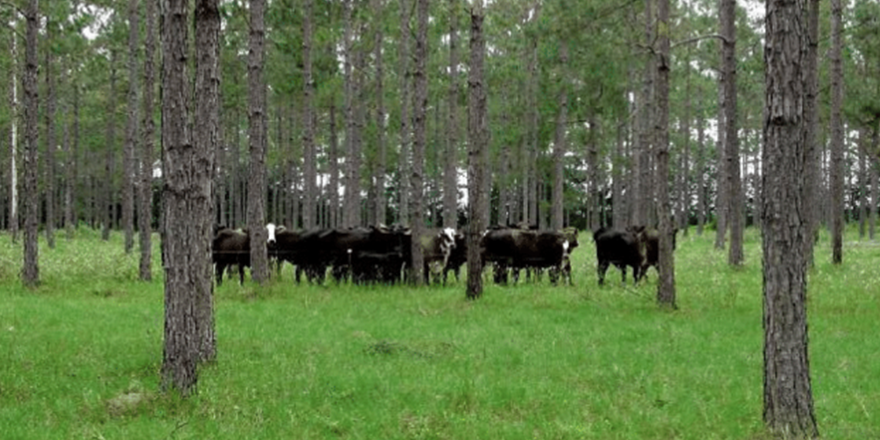
Silvopastoral system provides a diverse range of land uses similar to nature with livestock and trees grown in symbiosis. Not only does this diversify income, but financially rewarding. This land use qualifies for the Afforestation Grant Scheme by MPI to fund tree establishment. Further trials are necessary to substantiate the potential carbon sequestration from this land use but trials from similar conditions overseas are generating exciting results.

Exposed soil reduces soil carbon stocks via oxidation (released as CO2) and/or increased risk of soil erosion at a rate of 35kg C/ha/day leading to sediment contamination in waterways and is one of the main issues facing NZ. Disincentivise and/or educating land users from this practice will mitigate soil carbon losses providing flow on effects. Diversity has a key contribution; diverse plants have higher root biomass, leading to high storage capability contributing to increased soil carbon compared to monocultures.

The most valuable, productive soil types in NZ have the highest soil carbon losses due to intensification, particularly cultivation. The biggest potential for addressing climate change and sequestering carbon from the atmosphere is from our Brown soils that make-up 22% of our land area.

NZ soils are young and generally have high carbon content, unlike soils elsewhere. This reduces the plausibility of using overseas science to adopt in NZ emphasising the need for greater investment in this field. Society seems more interested in space than what I believe is one of the final frontiers.

Mitigating nitrogen loss: The financial impact.

Executive Summary

Currently, the environment and water quality are at the forefront of New Zealanders minds. There is a general consensus that our environment is suffering from the strain modern society has put on it. As a consequence of this, the agriculture industry is coming under increased pressure and scrutiny to find solutions to address this problem. The subject has become a political football, with every one with a vested interest having their say, whether their opinions are informed or not.

The National Policy Statement for Freshwater Management places regulatory obligations on Regional Councils to improve or maintain water quality (MFE, 2016). Regional Councils around the country are in various stages of implementing policies to try to mitigate these problems. In Canterbury, Environment Canterbury is achieving this with the help and guidance of Zone Committees and catchment groups. The inclusion of local stakeholders and community engagement to help address local problems is a positive step. The outcomes locals decide will be far better received than policies imposed from outside influences.

To look deeper into the problem, I have studied the potential impacts of some of the proposed recommendations in the OTOP (Orari-Temuka-Opihi-Pareora) zone, one of the ten sub-regions in Canterbury. These Recommendations have been taken from the OTOP Draft ZIPA (Zone Implementation Program Addendum), which was released in December 2017 (OTOP Zone Committee, 2017). At the time of writing this document the above plan is in the submission period.

The specific part of the proposed plan I have looked at refers to the Rangitata-Orton area of the OTOP zone, which has been found to have high nitrates concentrations in ground water. The recommendations are that farms in the zone may have to reduce nitrogen leaching to ground water by up to 30-40% if water quality in the catchment does not improve in the next 5-10 years.

To test the implications of these proposed recommendations I have modelled a dairy farm, McClelland Dairies, which is situated in this zone. The purpose of the study is to determine what service industries will be significantly impacted from the implementation of such policies.

I believe this study is important because little information is circulated about who bears the brunt of cut backs to primary industries, whether these primary industries facing cutbacks are Agriculture, Mining, Forestry, or the likes.

To investigate the problem, I created Overseer nutrient budgets for McClelland Dairies, using current farm management factors (stocking rates, inputs and outputs), to calculate the total amount of nitrogen being lost (i.e. leached) below the root zone from the whole property. The current nitrogen losses to water per hectare from McClelland Dairies, at Good Management Practice (GMP), are 108kg/N/ha/yr. Therefore, to meet the 40% reduction in nitrogen leaching losses, nitrogen loss has to decrease to 65kg/N/ha/yr.

I applied nitrogen mitigations to McClelland Dairies by implementing soil moisture monitoring, reducing imported supplementary feed and the stocking rate, to achieve the desired 40% cut in nitrogen leaching. Following this, I created financial budgets of the two farming systems (base farm (status-quo) and 40% mitigation scenario) and compared their financial performance, in order to determine the financial implications of the 40% nitrogen leaching reduction. This data created a picture of where the impact will be felt.

When I started out on this project, I expected that the nitrogen mitigation would have a significant adverse impact on farm profitability. However, some of the results came as a surprise. The difference in profit between the base farm and 40% mitigation scenario was relatively small. The base farm had a profit of $684,647 compared to the farm with lower nitrogen leaching which had a profit of $664,642. The difference was $20,005 or 2.9%.

The greater financial impact was felt in the businesses that supplied the farm. The farm with the applied mitigations and lower nitrogen losses had farm working expenses of $95,339 less than the base farm. This money would have been spent locally and had a direct impact to the local economy. The most significantly impacted service industries were feed suppliers, fertiliser companies, transport firms and local jobs across the service industries. All of these have flow-on effects to the greater economy.

With the issues highlighted in this study I recommend that there should be greater emphasis on investigating all the implications of placing restrictions on primary industries.

Personally, the environment is also important to me. I live, work and play in the same environment that we farm. I believe there is a balance to be reached between the impact that we as a society have on the environment and the financial viability of this same society.

We are already here so with the help of new ideas, science and technology and time, I am positive a solution to the problems we face will be found.

Obituary for John Clarke

John Clarke was awarded a Nuffield Scholarship in 1963.

One of New Zealand’s great leaders in the N. Z. agricultural business, in particular the New Zealand wool industry, John Clarke passed away on 12 May 2018 in Dunedin.

John was involved in the sheep, beef, dairy, cropping and pig farming industries.  He was a member of the Producer Board’s Electoral Committee;  became Chairman of the New Zealand Wool Board between 1072-1980;   served as a Director of the Otago Dairy Co-Operative;   the Kiwi Dairy Co-Operative;   a Director of The National Bank;  and served as a Governor on the Board of Columba College, Dunedin.

His involvement in his local community as a leader both nationally and internationally within the wool industry John was formally recognised for these services.  In 1981, he was honoured with the CMG (Companion of the Order of St Michael and St George) and  received the NZ 1990 Medal for services to his community.

Anyone wishing to make contact with John’s wife, Margaret, and his family can do so by sending a message to 113 Quatermain Rd, Clinton South Otago 9584.

Peter Jensen Raises a Challenge to Alumni

Peter Jensen encouraged alumni to pay it back at the 2019 Nuffield NZ AGM announcing that he and his wife Anne were donating $40k, the equivalent of one scholarship, to the Nuffield Capital Fund.  

He challenged every scholar for whom the scholarship had been a life changing event, either in their business or personal life, or both to donate over their lifetime the equivalent of a current scholarship ($40k) in recognition of the opportunities that it provided each person in their business and personal life.  

I am showing that I believe that in donating back the equivalent of a scholarship I can ensure this amazing opportunity continues well into the future and Nuffield NZ is in a strong position to continue to spearhead rural leadership development into the future” says Peter. 

He follows another generous contribution of $10k by Derek Daniels earlier and contributions some years ago by other alumni and events. 

The fund is currently sitting at just over $810k so our target is not unrealistic! 

To download a donation form click here or if you need to discuss options please contact GM Anne Hindson on 027 431 7575 or annehindson@ruralleaders.co.nz 

Background  

The Nuffield Capital Fund was set up a number of years ago to build a fund of $1million to ensure that the Nuffield legacy would continue in times of ‘shocks and challenges’ such as the loss of a major sponsor or a rural/country recession. The interest from this fund would support at least two scholarships each year and enable ongoing leadership development opportunities for alumni i.e. attendance at courses, development opportunities. 

The fund will ensure Nuffield continues to be the pinnacle of rural and agri food leadership development in New Zealand into the future.