2026 Nuffield NZ Farming Scholarship. Apply by 17 August 2025. Read More...

Apply for 2026 Nuffield NZ Farming Scholarship by 17 August 2025. More details...

GM Update: 2018 in review

We are reaching the end of a busy year for Rural Leaders and our two programmes – the Nuffield Scholarships & the Kellogg Rural Leadership Programme.  While we have tried to make this a year a time of some consolidation after the launch of the new organisation and branding and the increased responsibilities, the projects and opportunities keep arising and enthusiasm from a busy management and governance team keeps emerging!

For this last E Nuff of 2018, I would like to give an overview of the highlights and achievements of the organisation and the programmes for the year which has involved the contribution of a larger team as highlighted below. 

2018 Highlights/Achievements  

Marketing  

  • Launched new branding (logo & applications) for Rural Leaders and Kellogg programmes & Refreshed the Nuffield brand to modernise and be consistent with the branding of Rural Leaders as the organisation
  • Launched a new website hosting both programmes and Rural Leaders with multiple entry points 
  • Appointed a part-time marketer – Clara Sweetman to drive our marketing activities
  • Increased significantly the media coverage and exposure of Kellogg & Nuffield projects supported by our media partnerships 
  • Had at least 5 alumni featured in On Farm Story with David Kidd starring on a Country Calendar episode. 

Financial & Sponsorship  

  • Re-signed four of our programme partners for a further period – thank you for your support Farmlands, Zespri, Hort NZ, FAR 
  • Bought onboard new Service & Media partners with KPMG, NZ Farming Life (Dairy Exporter & Country Wide) and Global HQ (Farmers Weekly & Dairy Farmer) 
  • Introduced new accounting and reporting systems as required under the Charities Act, with the support of our KPMG partner. 

Governance  

  • Farewelled and thanked Chair Juliet Maclean for her exceptional leadership and contribution to the big changes introduced, particularly the new branding. 
  • Welcomed James Parsons on to the board as Nuffield appointed Trustee 
  • Recruited, after a robust selection process, a new independent Board member, Louise Webster who will start the role in January (click here for more info on Louise) 

Programmes  

Nuffield 

  • Hosted a Nuffield International GFP New Zealand leg in Hawkes Bay and Bay of Plenty in April 
  • Delivered a fantastic, well supported Nuffield NZ Biennial Conference in Tauranga in May, thanks to Dave Hurst and his team  
  • Discussed and debated high quality presentations from the 2016 & 2017 Scholars.  
  • Selected five high quality 2019 scholars (see their profiles in this E Nuff)  
  • 2018 Scholars presented insights and debated implications for NZ to an audience of our investing partners 
  • Hosted the 2019 Nuffield Awards with over 75 industry guests & alumni attending  
  • Launched Nuffield 2020 Triennial event globally with a great video resource 
  • Appointed a project manager for the Triennial – Deb Gee from Higher Perspectives Consulting  

Kellogg 

  • Ran two 6 x month Kellogg programmes coordinating the involvement of over 40 industry leaders 
  • Graduated 48 new leaders within a broad diversity of sectors, geographical location, gender, age, ethnicity.
  • Published 48 new pieces of rural research for industry & public use. 

Our vision of “Growing NZ Through Thriving Rural Communities” and the achievement of the steps toward this could not be achieved without the ongoing contribution and time of the following; 

Rural Leaders Team:  Programme Coordinator Lisa Rogers, Marketing & Comms Clara Sweetman, our Kellogg programme leader Scott Champion and Project Support Patrick Aldwell & Nuffield Advisor, Hamish Gow. 

The Trustees:  Andrew Watters (Chair), Hamish Fraser, Michael Tayler, James Parsons, Craige Mackenzie, Associate Matt Hocken and Juliet Maclean (chair prior to June) 

Strategic partner representatives (National Advisory Group) 

  • Dairy NZ – Jenny Jago (prior to May – Mark Paine) 
  • Agmardt – Malcolm Nitsche 
  • Beef + Lamb NZ – Doug Macredie and Richard Wakelin 
  • FMG – Andrea Brunner 
  • Mackenzie Charitable Foundation  –  Mary Ross 

Programme Partners: Farmlands, FAR, Horticulture NZ, Zespri, MPI, TIAA  

From us all, at Rural Leaders, we wish all a great Xmas and New Year.

 

Nuffield International Triennial and NZ Nuffield Conference

20 March – 01 April 2020

Christchurch, New Zealand


Join us at Nuffield2020, the key forum for Nuffield alumni globally to get together for networking, ongoing learning and development. We have a programme that will focus on successful innovation and business models as we innovate for the future. Nuffield2020 coincides with our bi-annual Nuffield New Zealand conference and an important milestone of 70 years of the Nuffield New Zealand organisation and scholarships.


See the program of events and more information on our website www.nuffield2020.com


Contact:

Deb Gee  |  Conference Secretariat

secretariat@nuffield2020.com or +64 27 606 1810

Chair Update: Andrew Watters

Andrew Watters, Nuffield New Zealand Chair

This time of the year is a busy period for trustees, selecting and presenting our 2019 Nuffield scholars.  The process is robust and involves shortlisting, referee checks and of course the interview process.  It all culminates with the announcement in the Banquet Hall of Parliament in early November. 

You will see from the profiles that we have very good hands-on farmers in this year’s selection with representation in dairy, sheep & beef, fibre, arable sectors.  It is also notable that the topics initially selected (which can change) are very outward/ market/ customer focused in recognition that the challenges and opportunities facing many sectors are more about the how and why of what we are doing on-farm than the what. 

We obtained excellent feedback from this year’s scholar announcement event.  Prior to the Awards, we had a highly valuable two-hour session engaging returning scholars and programme partners on topics and perspectives facing NZ and global agriculture.  And at the formal announcement at Parliament more than 75 people enjoyed hearing perspectives on the 2018 Scholar’s preliminary insights on their research topic which included challenges of setting environmental policy, the physical limitations of moving to low carbon energy systems, the need to optimise farm systems within environmental limits, the need for NZ agriculture to up its game on biosecurity and the opportunities for high value nutritional ingredients. 

One notable fact that we will be addressing in future selections is the lack of diversity amongst our scholar group.  We are under-represented this year in horticulture, in Maori agribusiness and in women scholars.  This isn’t an issue of selection, it is an issue of ensuring that we get a sufficiently diverse group of applicants.  We will be developing some plans to address this for the new year.  The answer is probably a mix of better engagement with our business partners and sponsors around candidate nomination and some more activity in the regions. 

Since our last Enuff, I am pleased to confirm the appointment of Louise Webster as an independent trustee.  As noted on our website, Louise brings a different skill set based around technology, innovation and leadership development.  Louise will join the Trust Board in January following a six-month sabbatical in Europe looking at the agri-food and other sectors.  We look forward to her contribution helping us ensure we remain relevant in a fast-changing world. 

I can also report on progress on the Thought Leadership or Rural Communities project.  Utilising the ‘Good to Great’ hedgehog as an organising concept, we have confirmed as a Trust that we are passionate about “Growing New Zealand through thriving rural communities”.  We are working on the other two components of the hedgehog but believe we can be world’s best at “Developing rural leaders that can solve (or untangle) wicked problems”.  And finally, we think that our real economic engine (how we secure ongoing funding) is “delivering leaders, and cost-effective solutions, that can address wicked problems” for our programme partners and sponsors. 

A wicked problem is defined as a problem that is difficult or impossible to solve because of incomplete, contradictory and changing requirements that may be difficult to recognise.  An effort to solve one aspect of a wicked problem may create other problems.
 

The trend towards commoditisation, the need to meet environmental standards, climate change, the role of genetic engineering, attracting young kiwis to work on farms are all examples of wicked problems.  Often these problems are across industry rather than within industry silos. 

As an organisation, we have limited resources so we need to crawl before we walk.  What we can do in the near term is ensure that our new scholars (Nuffield and Kelloggs) understand the wicked problem concept and can develop their topic area into an aspect that we need to solve for the future of NZ agriculture.  We then need to better leverage the post scholarship period to ensure scholars can engage with our partners and the alumni to transfer their knowledge into positive action. 

Finally, as we near the Christmas period it is important to acknowledge the work of Anne Hindson and her very small team.  They are currently fully engaged in running the Nuffield (working with 2018 and 2019 scholar groups) and Kellogg programs (class 38 just completed last week) & planning for the 2019 courses starting in mid-January and supporting the Nuffield Triennial work being done by Michael Taylor and his group.  As we move forward it will be important that we match our desire for impact with resourcing and this in-between time can be difficult to traverse. 

Indigenous branding creating an emotional connection.

Executive Summary

Global customers are increasingly demanding authentic products and services, and indigenous branding has been recognized as a natural fit to deliver on this. Global trends observe a shift away from traditionally produced premium foods to more sustainable alternatives. This consumers is increasingly concerned of where their product comes from, the impact growing this product has had on the environment, that these people and lands are being looked after and what the indigenous stamp means.

Indigenous branding creates huge opportunity for Maori who consider that land is a living and breathing thing and part of your identity as Maori. It is an inter-generational culture with a 150 year plan, “we are a whakapapa, we are both the past, and the future.”  Maori need to wrap this up in a meaningful way as resonates with the consumer to make an emotional connection, and the whole company needs to align with these brand values.

The purpose of this study was to evaluate two things, 1) what a consumer expects when presented with an indigenous product. 2) How do we give confidence that this product is genuine. This research is carried in two parts. The first is a review of literature published between the 2005 and 2013 period and key themes that come through from this. Part two is a case study evaluating four successful Maori businesses regarding the work they are carrying out around consumer expectations and authenticity.

There was a considerable amount of literature published between 2005 and 2013 regarding indigenous branding and how it could be used to create a point of difference. A key finding of this review is that Maori branding focused on presenting a product that encompassed a set of values as important to the Maori business. The case studies determined that this focus has since been reversed, and is now focused on expressing value as determined by the consumer.

The recommendations of this report are that further research is required to position an indigenous experience to make the consumer feel good and create an emotional connection, and Maori brands need to collaborate more to ensure the market insight work is done to avoid risking market position.

Has monitoring of financial objectives improved with improved technology.

Executive Summary

New Zealand farmers have often looked to adopt technology to use in their farming business to increase productivity. The use of technology throughout the entire farm business has increased as modern day farming techniques become more complex and large scale investment in the rural sector increases.

Sheep & beef farmers in New Zealand have benefited from recent sustained increased returns. This report focuses the Tararua and Wairarapa regions as a sample of New Zealand sheep and beef farmers who, like the rest of the industry, have the opportunity to utilise the increased returns to achieve their financial objectives.

Historically, budgeting and monitoring of financial objectives amongst sheep and beef farmers has been low. Using a survey of rural professionals and farmers, the aim of this project was to investigate whether financial monitoring has improved with improved technology.

When analysed, the data quickly showed monitoring of financial objectives had not improved. The barriers to technology – use identified in the survey by rural professionals, could be seen as barriers to financial monitoring as much as technology. Subjective barriers such as fear of technology seems to be a defence for lack of financial knowledge or a perceived shortfall in some areas of financial knowledge. Time was disregarded as a direct barrier, as programmes that are available today are quick and easy to use. Therefore, time issues were considered a lack of defined return on investment for the time invested.

A number of recommendations have been made as part of this report. These included:

  • Encourage farmers to investigate ways of binging technology into their financial monitoring in a way that fits their approach.
  • Rural professionals to put financial considerations as the first issue in succession plans.
  • Farmers to set small goals that fit within the larger financial objectives so that the sense of achievement is realised along the way.
  • Farm businesses identify and monitor critical financial performance measurements that are important to them and their individual goals.

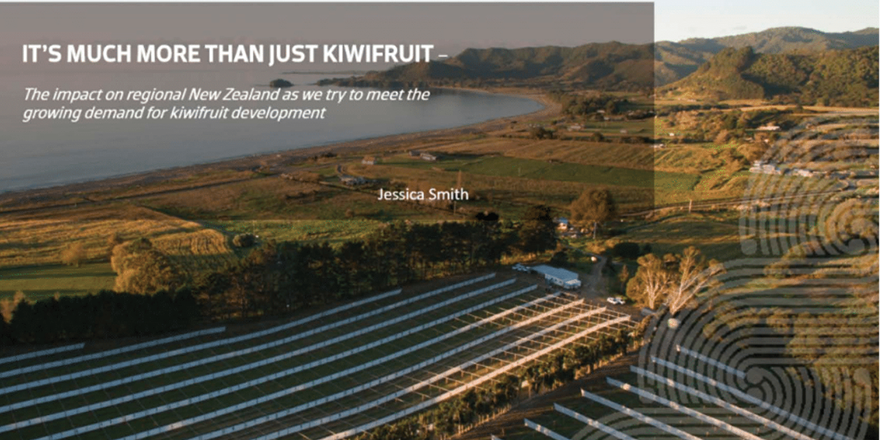
Its more than just Kiwifruit: The impact on regional New Zealand as we try to meet the growing demand for Kiwifruit development – Te Kaha case study.

Executive Summary

  1. If our regions are not thriving the prosperity of our people declines. Half of New Zealand’s population live in the regions. It is our regions that generate our economic output through the primary industry. Kiwifruit is the largest horticultural economic contributor and is targeted for significant growth.
  2. This research is about the impact on regional New Zealand as we try to meet the growing demand for kiwifruit development. In my opinion, very little research exists about the impact of kiwifruit development that is people centric and flavoured with regional perspectives.
  3. The Government’s regional economic strategy to foster regional prosperity aligns with global growth opportunities in Kiwifruit, Zespris growth strategy and market demand. The common denominator is that the regions are key to achieving their strategy.
  4. 52 individuals participated in the survey over a three month period. A combination of in-person interviews, postal and online surveys were conducted. All respondents were located in Te Whanau Apanui, a thriving kiwifruit community north of Opotiki. The survey questions were designed to capture demographic data for regional context; and gain personal insights about the impact of kiwifruit development on their community.
  5. The people centric approach that I have undertaken has enabled me to gain, on the ground personal insights which will be used to help guide industry thinking about kiwifruit development in our regions, particularly the more remote areas.
  6. Three key themes emerged from the research that captured the essence of the voices of the people in this region:
    • the impact on our People;
    • the impact on our Land;
    • the importance of Social Investment
  7. The following recommendations have been prepared to guide and support key industry stakeholders about working in our regional kiwifruit communities.

THAT a multifaceted strategy is required when growing industries in our regions. This will require collective involvement from the communities, industry and Government. MULTIFACETED STRATEGY

THAT the voice of the people is critical in the development of any strategy, therefore any strategy needs to include and allow time for meaningful engagement. MEANINGFUL ENGAGEMENT.

THAT a knowledge gap currently exists in our regional communities about on-orchard kiwifruit practices. INFORMATION COMMUNICATION

THAT a Maori grower participation strategy needs to be developed to increase participation within the kiwifruit industry. MAORI PARTICIPATION

Preparing a team to manage a severe storm/flood across multiple dairy units: How do you prepare your business.

Executive Summary

Severe storms and flooding are occurring in New Zealand more with more impact to our people and environment. How prepared for an Emergency is critical to how an event impacts your business is significant to a profitable farming system. Methods used for this report is a comprehensive analysis into regional emergency response giving the understanding of the complexity’s involved in levels of response, process behind declaration of local state of emergencies, structure and roles of decision makers. Analysis also looked at industry bodies recommendations giving this report trends of common themes in response plans.

Research into the regional response system highlighting structure and roles within community’s emergency response such as the (CIMS) model to build a robust business plan show that with reoccurring weather events Household emergency plans, Personal workplace emergency plans and thorough reviewing the plans with staff and updating getaway survival kits is key to being prepared in your household and your business.

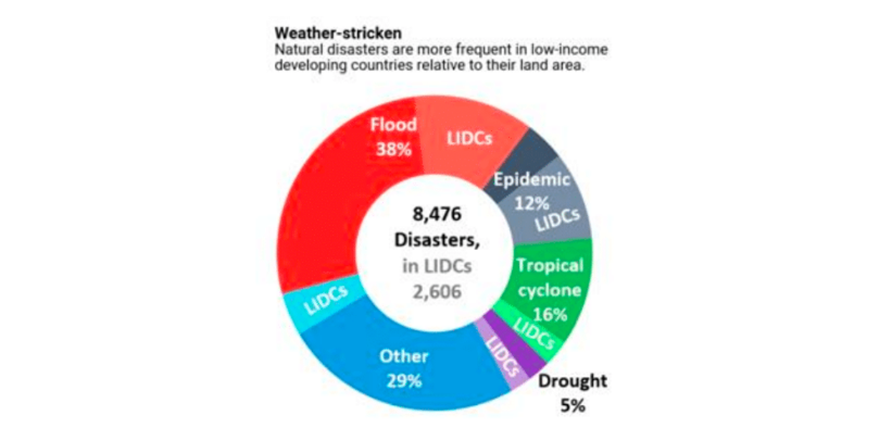
With research that extreme weather events are becoming much more common not only in New Zealand but across the world, between 1990 and 2014 there were more than 8,000 weather related disasters with floods, hurricanes and epidemics being the most common. (IMF Blog insights and analysis on economic and finance- climate change) shows 25 years of research proves 38% of natural disasters are severe floods with 16% Tropical cyclones.

Declaring state of local emergencies is made up of a number of Authorities or Mayor and Local Councillor. A state of Emergency is declared when the special powers within the Civil Defence Emergency Management (CDEM) Act 2002 are required to coordinate the emergency. The special powers can only be used if the event meets the definition of an emergency as defined in the Act. The CDEM defines an emergency situation where flooding, storms, tornados earthquakes and many other natural disasters. Also where there is significant risk to injury or life or in any way endangers the safety of the public or property in New Zealand.

There are five levels of response with level one being a local incident or response activities dealt with by an emergency service, Local Authority or other responsible organisation without the activation of an EOC (Emergency Operations Centre).
Level 5 being National Coordination with a regional level response being activated to direct, coordinate and support incidents with regional or national implications at the National Crisis Management Centre (NCMC).
Analysis of industry recommendations has picked up the trend of three key areas Preparation, Response, Recovery. Under the Health and Safety in Employment Act, businesses have an obligation to be prepared for an emergency. Workplace Emergency Plans which includes communicating my get home plan, work get home group, my get home plan, personal and family information are a successful way to prepare your teams and need to be communicated frequently so all staff understand what the plan is when preparing for a storm or flooding.

Safety of stock is protecting a significant asset to your property when preparing for weather event some common trends through analysis have been stock on highest ground, shelter is extremely important as stock lose body temperature when wet, access to fresh stock water.

Response during a severe storm of flood it is highly recommended by industry bodies and Civil Defence to listen to your local radio stations as emergency management officials will be broadcasting advice for your community and situation. Filling bathtubs, sinks and storage containers with clean water in case water becomes contaminated, consider using sandbags to keep water away from your home, ensuring you and your staff have household emergency plans in place, do not attempt to drive or walk through floodwaters unless it is absolutely essential.

Recovery from a severe storm or flood can be a significant job. Making sure family, staff and neighbours are all ok is priority. Checking and securing stock with fresh stock water and report any power or phone faults. If power is out, look for trees over lines, fallen poles. Treat all lines as live. Check farmbuildings and infrastructure including roads and races.

Research suggests long term mitigation strategies on your property such as strategic planting of willows or poplars, having adequate supplementary feed on hand, having all pumps above flood levels, having an older styled telephone that doesn’t require power, having a car charger if you have a cell phone, having stock in good condition as healthier stock are more resilient which gives you more management options during difficult times, reviewing your insurance cover regularly, is it economical to buy a generator? Potentially in partnership with one or two neighbours.

So how Prepared is your Business?

Pathways to farm ownership.

Executive Summary

Changes in dairy farm ownership and overall industry growth has occurred at a rapid pace in the past 25 years . This has largely occurred due to strong returns from dairy farming driving a “dairy boom” in most regions of New Zealand. The dairy boom has been particularly evident in the South Island where farmers and investors have converted dry-land sheep and cropping farms to irrigated dairy making use of a supportive banking sector and low interest rates, availability of reliable water for irrigation and a statutory requirement on Fonterra to collect all new supply.

The dairy boom and the conversion of farm land to dairy has led to significant wealth creation through a change in land values (e.g., from dry-land sheep and cropping to irrigated dairy) that exceeded the cost of conversion. These one-off gains are tax-free and despite the high levels of debt that many took on, there was, in general, an expectation that land values would continue to rise long enough to resolve the low equity position that many farmers had during this period.

Some regions have proven more popular with dairy farm investors than others. There are a number of reasons for investor preference however, high debt levels (financial risk) were managed by investing in areas with reliable production and lower business risk. Essentially, areas that could reliably grow enough high quality feed each season (such as irrigated Canterbury and Southland) were favoured over regions with more variable performance. Demand for farms in the premium regions continued to rise over other regions and this demand was reflected in price premiums.

Since 2008 farm gate milk prices have been volatile and included periods of low payouts when most farmers ran their farms at a loss. Those farm businesses with high debt levels had to manage costs and production very carefully or risk breaching bank loan covenants. The down turn also increased dairy farm debt levels. In the ten years from 2007 to 2017 dairy farm debt increased from $18.8 billion to $41.2 billion as a period of land development, business growth and investment in farm conversion was followed by record low milk prices. The graphs below depict the effects of the dairy boom and dairy downturn on rural debt and scale of growth in the dairy industry and equates to $22 a kilogram of milksolids (Woodford, 2017).

During the recent downturn, bank lending to the dairy sector increased by $5 billion or 15 percent, mainly for working capital purposes. Farms also borrowed almost $400 million through Fonterra Co-operative Support Loans. With leverage in the dairy sector already high, this growth in debt has left the sector more vulnerable to another period of low dairy prices.

The dairy boom also saw a change to the type of investor in the industry. Corporate and institutional “type” investors were attracted by the strong returns from the tax-free capital gains that were available through the change in land use, from land development and from farming cash flows. This interest increased the demand for existing dairy farms and their support farms and also for those farms with potential to convert to dairy helping to underpin the market for farmland.

While there is no official data on the proportion of New Zealand farmland that is now owned by “corporate” type companies (vs traditional family owner operated farms), Foregin Direct Investment (FDI) can be used as an indicator for this type of investment activity. NZIER reported in 2016 that FDI in New Zealand almost doubled between 2001 and 2015 from $55 billion to $100 billion and while FDI in farmland represented only 5.9 % of all FDI in 2015 , this share has risen from 1.3% in 2001. Th is represents an increase of 16% per annum and is above rate of the 13.5 % annual rise in farmland values over a similar period (Gawith, Andrew, New Zealand Herald 2010). Since 2001, 15% of agriculture and forestry transactions have involved some form of FDI of which 58% was forestry (ANZ Agrifocus December 2017).

Historically, dairy farming has provided viable pathways for farmers to create wealth over time enabling many to achieve farm ownership. The development of the industry over the past 20 years has increased land values at a faster pace than cow values and, as a consequence, is reducing the use of traditional structures such as 50/50 share-milking favouring instead the use of other arrangements such as equity partnerships, contract milking and variable-order sharemilking. The low milk prices of 2015 and 2016 seasons added impetus to this trend as farm owners were forced to consider all options to reduce operating costs. This has included a move away from sharemilking to directly employing farm managers and contract milkers. The table below shows that there are approximately 800 less sharemilking jobs (from 4.044 to 3,208) in New Zealand than 10 years ago. O her data from DairyNZ shows that in 2017 82% of all sharemilking job were on farms of less than 3 600 cows, indicating that farm owners prefer straight management roles for large scale farms. Anesdotal evidence also suggests that large scale farms are preferred by corporate investors.

The changes outlined above meant that herd owing share-milkers lost ground to land owning farmers on a proportion of asset value that was contributed to a traditional share-milking partnership and could no longer expect to share in 50% of the milk income ( less their costs ). Historically sharemilkers had been able to grow their equity at over 30 % per year (DairyNZ Economic Survey 2017). This compared with owner-operators return on equity (from 2008 – 2017) averaging 6%. More recent entrants to the industry are having to work with land owners to develop new models for wealth creation to achieve farm ownership. For others, farmland values have reached such high levels that the goal of farm ownership seems attainable and have exited the industry.

While farm ownership through dairy farming is becoming harder in high land value regions and where the dairy land development cycle is at a mature stage, there are regions that have suitable land for dairy farming although have attracted less interest from corporate investors. One such region is the West Coast of the South Island. Land values on the West Coast haven’t reached the same levels as in premium regions such as Canterbury on a per hectare and per kg milksolids basis. There are a number of reasons for the difference and this study seeks to identify how this has affected investment returns for investors and emerging farm owners.

Understanding and comparing investment returns for both Canterbury (as an example of a high value region) and the West Coast (as an example of low value region) is important to farmers exploring new ways to create wealth in the dairy industry. As a recent entrant to the dairy industry (less than 10 years) it is an area of particular interest to me and I hope that this study will contribute to the pool of knowledge for many other farmers in a similar position.

The future of Gisborne navel oranges: sweet or sour.

Executive Summary

This report looks into Gisborne navel orange production and investigates why a product (Gisborne navel oranges) with world class attributes fails to deliver reasonable returns to producers, and what can be done to improve, not only this industry, but also likely to be applicable to other products or industries that may find themselves in a similar position.

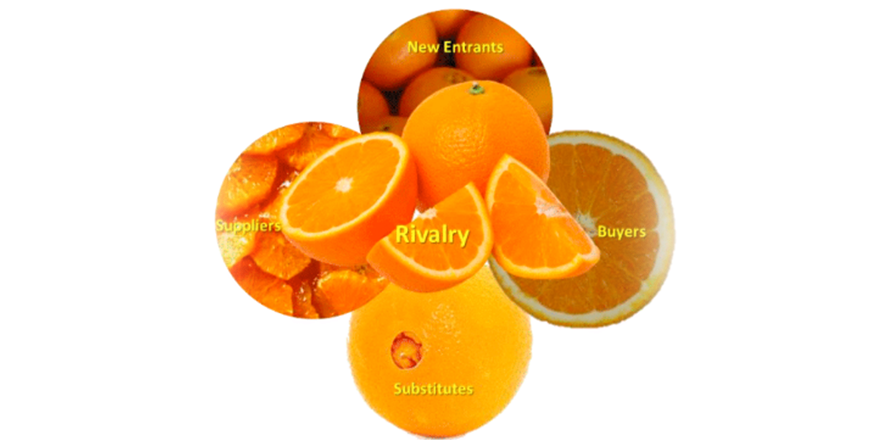
Using both Porters Five Forces and SWOT analysis this report looks at core issues facing the industry. The industry is made up of a large number of small producer’s most of whom have no connection with the consumer.

With the exception of the shoulders of the season, typical grower returns are only sufficient to cover expenses. This is a long standing issue and previous attempts to improve grower returns have been short lived. Recent attempts by the industry to lift consumer acceptance through the introduction of a voluntary maturity standard has improved fruit in the market, but falls short of making sufficient change to lift grower returns.

The biggest natural advantage of Gisborne Navel oranges is their ability to taste better than any other navels if left to reach their maturity potential; yet fruit entering the market is inconsistent and growers typically pick fruit very early in the maturity cycle, long before they are at their best. There is little to no differentiation in the market and consumers typically don’t know one navel orange from another.

There is a need for Growers to focus more on the consumer, and work together as an organised group to get sufficient control of the supply to make a significant impact on lifting quality and coordinating volume through the supply chain. Without significant change, returns to growers are likely to remain low.

Beyond the borders of Nelson: The opportunity for growth of the New Zealand hop industry.

Executive Summary

The report titled: Beyond the borders of Nelson – The opportunity for growth of the New Zealand hop industry sets out to establish the following key aims:

  • To investigate the key dynamics influencing the New Zealand hop industry and understand the key drivers encouraging growth within the sector
  • To understand the key growing requirements for hops and determine if opportunity exists for hop production in alternative regions to Nelson, New Zealand To seek a balanced point of view a multi-faceted approach was taken including
  • Reviewing national and global literature on hop production, marketing and selling methods
  • Undertaking a higher-level overview of the global craft beer market and more in-depth review of the US craft beer market to appreciate the drivers of hop demand
  • Informal discussions and in person meetings with various people from within and around the New Zealand hop industry to determine the dynamics of the market, approaches to selling product and how they aim to maximise returns for New Zealand hop growers
  • Speaking with local and international brewers to understand market dynamics, and key decisions around sourcing hops when determining a ‘brew’.
  • Review and present a case study on a soon to be released market investment opportunity to understand the capital requirements and forecast returns for this investment

The key findings from the report show:

  • The global craft beer dynamics will support continued growth of the New Zealand hop sector
  • Hops can grow in other regions of New Zealand with some regions exhibiting remarkably similar growing conditions to the larger international hop growing areas of Yakima in Washington State and Hallertau in Germany
  • New Zealand grown hops have several redeeming features to make them more attractive to brewers such as their aroma and flavour profiles unique to New Zealand
  • Capital cost of entry is considerable
  • Forecast returns support continued investment in this sector

The conclusions and recommendations in this report are targeted at any party wanting a greater understanding of the New Zealand hop sector.