2026 Nuffield NZ Farming Scholarship. Apply by 17 August 2025. Read More...

Apply for 2026 Nuffield NZ Farming Scholarship by 17 August 2025. More details...

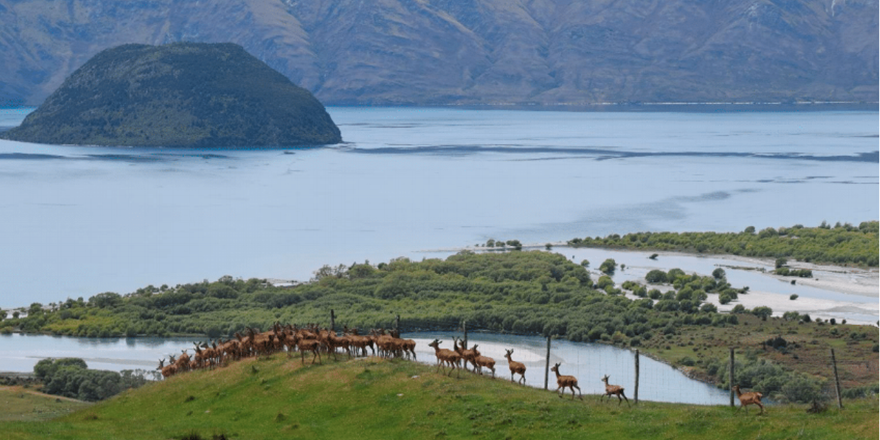
Potential threats to New Zealand deer pet food from international wild deer supplies.

Executive Summary

“The large-scale commercial farming of deer started in New Zealand, and New Zealand remains the world’s largest and most advanced deer farming industry” (DINZ, n.d.).

Recently, a significant increase in demand for pet food products has developed. This has been fuelled by American and European customers buying for pets which are now so highly regarded they are seen as members of the family. This is leading to greater importance being placed upon nutrition, taste and overall wellbeing of the animal, driving the customer to invest in high quality and novelty pet foods.

Venison has been counted as a novelty meat in the pet food ingredient classification. “Venison is seen as a natural, high-quality, lean snack in the pet industry which appeals not only for its nutritional values but because dog owners in particular think it’s something their animal’s ancestors might have eaten” (NZ Farm Life Media, 2016).

Mechanically Deboned Meat (MDM) is the product produced from the crushing and separating of bone from meat. As well as MDM, the organs from deer are able to be added to pet food products in small quantities, enabling labelling claims which indicate to customers that venison is present in the product but also enables a relatively high return per kilogram back to the New Zealand exporter who in turn can pass these benefits to the New Zealand farmer in the form of higher schedule prices for their livestock.

International pet food manufacturers have signalled however that they are dissatisfied with the cost per kilogram and are therefore searching the globe for alternative sources of venison. It appears that Spain and potentially Australia are able to meet a proportion of this demand, with more investigation required to determine if other nations are able to meet this demand.

What becomes apparent in this is that the disease status of the supplier country plays a significant part in market access. Freedom from Foot and Mouth Disease, Chronic Wasting Disease and BSE prevent the United States of America (US) and in some areas of the European Union (EU) from utilising their own deer population to meet this demand. The key suppliers of venison to the pet food market are at present left to Spain and New Zealand and some internal EU countries.

This poses a threat of substitution, rivalry in the industry and a new entrant threat to the New Zealand farmed-deer industry.

Building mental wellness in the rural sector.

Executive Summary

The topic of mental wellness has become more mainstream in New Zealand due to suicide rates continuing to climb and as more and more people suffer from stress, depression and anxiety in an ever evolving busy society. Unfortunately the rural sector is not immune. In fact the rural sector has a higher suicide rate per capita then the urban sector.

This report explores depression, anxiety and suicide to further understand how to recognize the signs and what to do when the signs appear in your life or others around you. How do we ensure that as a society we can live in a calm, relaxed state of mind even with the reality of a fast world filled with social media and a “keeping up with the Jones” attitude.

In New Zealand one in ten adults are on antidepressants, this is an eight-fold increase in total prescription numbers since 1998. 14.3% of New Zealand adults have been diagnosed with depression at some time in their lives and 6.1% with anxiety disorders. There are many reasons for these figures. What are we as New Zealanders doing to ensure these statistics do not continue to rise? Ask yourself: Are my daily routines sustainable and do I live in a way that will keep myself and others around me mentally well?

This report involved a literature review, thematic analysis and interviews. My focus was to find trends around what triggered mental wellness issues as well as what daily, weekly and monthly techniques people use to make their mind and body feel better.

The research uncovered the main influencing factors in our rural industry causing mental wellness issues. Main factors included isolation, long hours, not enough time off farm, lack of exercise, poor eating habits and lack of sleep.

As New Zealand’s suicide rate increases, now is the perfect time for us to be talking through these issues with an opportunity to make a real difference within our communities. Implementing simple daily mindfulness activities will help you to look after yourself and then others around you.

The research has been pulled mainly from New Zealand to provide a real sense of what is going on within rural New Zealand. This work will not only be vital for the Primary sector but also our urban neighbours as depression does not stop at the farm gate, it can easily find its way into your life at any age or stage.

There are four personal stories throughout this report. The aim here is to give the reader a chance to reflect on their own circumstances while reading about challenges others have been through. We all have a story, tell someone yours, it just might make all the difference to your mental wellbeing and possibly theirs.

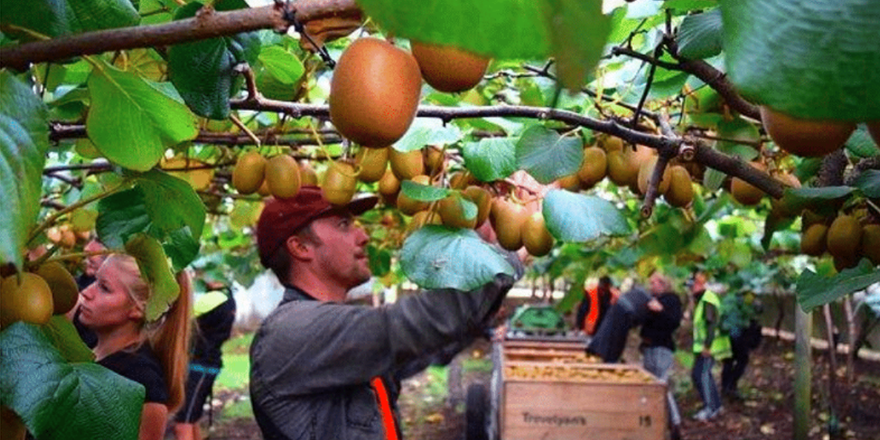
Seasonal labour shortage in the kiwifruit sector.

Executive Summary

The kiwifruit sector has a serious labour shortage.  What is the extent of the shortages, why has the industry got to this problem and how can we address the shortages?

The aims for me in doing this project was to get an understanding of the labour problems facing the kiwifruit industry.  I wanted to see what was driving the labour shortages with an aim to consider how we could overcome the problems to create a desirable workplace and attract plentiful and reliable workforce.

New Zealand kiwifruit sector is currently producing 143 million trays, this is projected to reach 190m trays by 2027.  The sector is set to contribute $6 billion to New Zealand’s GDP by 2030.  The kiwifruit industry currently employs 15,000 FTE seasonal workers.  An additional 7,000 workers will be required if projected growth is to be achieved so the extent of the labour shortages is critical to the industry.

Kiwifruit together with all sectors, are struggling to employ sufficient workers.  In 2018 a labour shortage was declared in the Bay of Plenty with 1,200 vacancies and still 70% of the crop remaining to be picked.  The reasons why these shortages have come about are multiple.  The current labour market is very tight with a nine-year unemployment low of 4.5%, projected growth for the industry of 67m trays by 2027, the diversion of working holiday visa workers to other sectors and poor uptake of the local seasonal labour pool, this being due to poor reputation around pay and conditions.

As an industry, labour constraints are a real challenge in meeting future growth.  Many of these challenges are around the nature of seasonal work being inconsistent hours, physically demanding but other challenges are around compliance with employment law.  How the industry participants respond to the situation will impact on future growth.  The constrained labour market will require owners and employers reconnecting directly with employees.

Inconsistency of seasonal work is a significant deterrent to new employees; the industry could address this with centralised labour coordination to facilitate year-round employment and alternative employment arrangements and agreed hours. Employees are also looking for greater range of flexible working options with different shifts, staggered hours and job sharing.

How the industry engages with our employees, ensuring the pay is structured to provide certainty as well as incentives for efficient high performance.  Allowances should be considered to address travel waiting times, and availability allowance to acknowledge employees being on hold and available to work and not redirecting to other sectors.

Investment into accommodation and transport options for the seasonal workforce will contribute to attractiveness as well as motivation and performance.  Innovation is the way of the future and investment is needed now however it is not the immediate solution we are needing.

The attraction of all the seasonal workers available within New Zealand will not meet projected demands, the Recognised Seasonal Employer (RSE) scheme needs the full support of the industry and government, however employment standards, accommodation and transportation investments are required.

The growth of NZ Horticulture, including Kiwifruit, is a great economic success story for our country. People are or most important and scarce resource, coordinated, committed and compliant efforts are required by all.

The benefits of red-meat farmers opening the gate to agri-tourism.

Executive Summary

Tourism is now New Zealand’s biggest export earner which is rapidly growing, with close to five million tourists expected in 2023.  A large draw-card attracting tourists to New Zealand is the rolling hills, farming persona and pristine environment.  If New Zealand farmers can leverage off international tourists, and provide each of the five million a positive on farm experience, what are the benefits on farm, to the tourism and agriculture sectors, and beyond?

This research outlines the benefits that occur because of agritourism.  Firstly, the benefits that occur on farm are explored.  These include the benefits to the farming family, and also include positive outcomes from a tourist perspective.  Secondly, benefits are explored from the agricultural sector and the tourism sector.  Lastly, the benefits on a global scale are defined.

The most important benefit, and motivator, for a farmer venturing into to agritourism is the social aspect.  Farmers also benefit financially from utilising accommodation on farm and from the creation of employment.  Agritourism is also an opportunity for farmers to engage directly with their consumers and educate the urban population about food production.

This was also one of the main benefits and motivators from the tourist’s point of view; the ability to connect with food production and the environment. These trends are already visible in New Zealand with over a quarter of international tourists visiting a farm or orchard while on holiday here in 2016.  The rising number of Free and Independent Travellers are also creating a spread from tourist hot-spots to the regions.

Because of the spread in tourists, and interest in New Zealand’s farming culture, both the agricultural and tourism sectors benefit from agritourism.  Local food production provides regionalised distinctiveness to tourists, while simultaneously offering farming groups an opportunity to connect with their consumers and ‘tell their story’ of ethical, sustainable and clean green food production directly.

Globally, there are benefits of opening the farm-gate to agritourism by showcasing, from the source, exactly what farming in New Zealand entails.  Consumers will continue to ‘tell the story’ for New Zealand producers, which in turn, has the potential to reach an untapped community of consumers currently oblivious to our farming systems.

Biologically integrated organic dairy and vegetable growing.

Executive Summary

There is great disconnect in society when it comes to externalities and who pays for these. Specifically in agriculture, the common goods be it air, water and soil are getting destroyed by modern farming methods. It is these very foundations that everything is built on, not just a farm or some food. Environmental limits are well and truly being meet here in New Zealand and globally. We cannot continue down this path for too much longer without seriously altering our sources of nutrition, our lifestyles, or finding a new planet and doing it all over again.

As farmers we have a huge responsibility to not only grow food but to care for the land and the resources of the world. Every decision we make when we farm holds environmental consequences, be it good or bad. We need to look for new ways of doing things to ensure our farming systems are not buoyed along by environmental destruction somewhere else. We need to find ways to minimize off farm inputs and start regenerating our soils. We need to keep the land productive but not at the cost of degradation. We need to start effectively managing the complex biological relationships that underpin a farms success, rather than being dependent on synthetic chemicals. We need to work with nature, rather than wage a war against it. We need to increase profitability. We need to find ways to bring community and vocation back to farming.

The objective of this report is quite simply to find a more ‘complete’ and realistic food growing solution for our farm Mingiroa Farm, that can then be modelled and modified to suit other farms not just nationally but globally. Bearing in mind that every farm and farmer is unique so I’m not advocating for a carbon copy approach, but fortunately the fundamentals of nature and life are all the same so hopefully it will provide a good starting point, inspiration or at least bring about some questions.

The research was initially looking at the regenerative agriculture principles to base a more complete food growing off and looking at modern industrial agriculture and where this may be failing. It then looks to our family farm, Mingiroa Farm as a case study and the opportunities present in the current system. With the help of textbooks, journal articles, interviews and Alex Novak a complete model has been planned and budgeted to understand how this may look and the financial implications of shifting and running such a system.

On-farm bio security planning.

Executive Summary

The recent outbreak of Mycoplasma bovis (M. bovis) has shone the biosecurity spotlight directly on the pastoral sector and follows recent serious biosecurity breaches in the horticulture sector with Pseudomonas syringae pv. actinidiae (Psa) devastating kiwifruit orchards in 2010.

Biosecurity in New Zealand is primarily governed through the Biosecurity Act 1993 and is led by the Ministry for Primary Industries (MPI). In 2016 the Government announced a biosecurity initiative managed by Biosecurity New Zealand (MPI) which sought to establish a ten-year plan for managing risk.

MPI, DairyNZ, Federated Farmers and others have developed significant resources to assist farmers in managing biosecurity risk. The industry has long been aware of the risk posed by incursions with KPMG’s Agribusiness Agenda ranking biosecurity as the number one priority for the last eight years.

The objective of this report is to develop an understanding of industry demand for farm specific biosecurity plans and to test appetite for a method of delivery. It deals specifically with the development of an active on-farm biosecurity plan; what it needs to cover, who needs to be involved and how farmers and industry can be assured it is specific and fit for purpose.

An online survey of farmers was developed and distributed through social media platforms Facebook and Twitter. The ten-question survey site recorded 101 unique visits and resulted in 49 completed surveys.

Whilst many farmers are acutely aware of the major sources of biosecurity risk to their business, they don’t necessarily have a clear picture of their obligations, or where a farm plan sits as part of the wider New Zealand biosecurity ecosystem and many feel responsibility sits with them, as guardians of the land, to manage that risk in isolation.

This report highlights farmer desire for assistance in bringing together the various strands of biosecurity information to develop a farm specific plan and for assistance in assessing whether that plan is fit for purpose.  Furthermore, farmers felt it would be beneficial to industry if all farms had an active biosecurity plan.

A conclusion of this report is that a digital approach would enable ease of management for farmers and this aligns with the Biosecurity 2025 ambition to have a digital data commons. Consultation with other food producing industries suggests that any solution should seek to manage risk across the entire pastoral farming sector and develop a digital solution that will provide the ability to share data and manage industry risk collectively.

Managing the national standard of biosecurity plans could be achieved through the use of new micro credentials, or bite-sized qualifications, approved by the New Zealand Qualifications Authority. Primary ITO can develop specific unit standards for a biosecurity micro credential and as such would take responsibility for managing quality and consistency of on-farm biosecurity plans.

A micro credential linked to an on-farm biosecurity plan with the ability to be managed by farmers digitally would provide a fit for purpose solution for industry in terms of managing biosecurity risk and support from milk processors might see it fit seamlessly with existing digital solutions or on-farm schemes.

The New Zealand Government Industry Agreement on Biosecurity Readiness and Response (GIA) forum might provide the best framework to develop digitally enabled on-farm biosecurity plans.

Can a circular economy create added value for New Zealand agriculture.

Executive Summary

The aim of this paper is to clearly define the Circular Economy (CE) concept and showing its potential for NZ agribusiness using mini case studies to provide insights on how we can improve our sustainability and add economic value in an ethically values-based way.  The research methods used for this report involve a literature review and thematic analysis.   The report includes comprehensive recommendations for the primary sector to assist in the transition to a CE.

At a high level, the CE is based on designing out waste and pollution, keeping products and materials in use, and decoupling growth from environmental pressure.  The model distinguishes between technical and biological cycles (where consumption occurs).   Key features of a CE include; the power of circling longer, and the power of cascaded use, closed loops, renewable energy, circular inputs, tight loops, and circular design.

Cradle to Cradle sits at the heart of CE and is a framework that aims to create production techniques that are not just efficient but are essentially waste free.  With Cradle to Cradle the aim is for a positive footprint.

Technology is a key enabler for unlocking the potential of a CE, and this includes disruptive economies such as like Blockchain & Artificial Intelligence.  Examples of this are explored in the report.  The CE will enable new customer relationships as ‘consumers’ become ‘users’. With leasing or ‘performance’ contracts in place, more customer insights are generated for improved personalisation, customisation, and retention.

Consumers need to become more aware of the true environmental and social costs of their purchases and become more conscious consumers as they choose products and services from a CE.  The challenge here is educating consumers and validating the authenticity of the product or service that comes from the CE.  The consumer helps take responsibility for the waste they create.  Consumers can potentially champion change in good behaviour through a CE.

I see the CE providing an important platform for us to disseminate our shared values and purpose with the consumer who in turn must recognise what comes before and goes after their use in the cycle. Our objective for the CE must be aspirational to enable transformational change.

The circular advantage value can be shown in a greater preparedness to pay for high standards of animal welfare and environmental stewardship in a CE. The transition to a circular approach for the economy will be improved with the right mix of incentives and investment from government.  Reducing taxation of labour, especially at the lower end, would help repair activities and other kinds of services in a Circular Economy. Regulation needs to be adjusted to fit circular business models. This will frequently require changes to existing regulation, which is a challenge requiring bi-partisan commitment to ensure agile enduring policy which aids the CE uptake.

We need to attract the best talent into the primary sector to enable the change to a CE. Benefits from a CE are not just improved profitability and environmental outcomes.  Benefits from having high production standards that include positive feedback loops will enable agility and risk mitigation.  Positive feedback loops can provide strategic advantages over competitors giving us greater market access.  This will position us to capture value when mainstream users shift demand. Benefits could go even further providing ability to influence future regulation as we gain back our social license. Aligning our values and practices with the consumer demands through a Circular Economy will enable us to capitalise on this transparency.  There is a need to collaborate to create joint value by working together throughout the supply chain.

Wool is the second most volatile global commodity after sugar so alleviating this cannot be underestimated in underpinning stable farming systems.  Wool can become an essential ‘ingredient’ in CE, transforming it to a valuable renewable resource that is respected for its attributes and positive impact on the environment.  A CE can allow us to tell our story in a coherent manner, showing our primary industries are working with nature.  The primary sector needs strong leadership, clarity in vision and premise for the wool industry to become a successful Circular Economy.  Wool can contribute positively to products that are safe and circular.  It is a great fit for a CE in that it is a renewable fibre with many unique attributes and superior performance to synthetic fibres.  Wool can be safely returned to the environment after multiple uses, biodegrading in under twelve months.

Examining the entire agri-food and fibre chain reveals opportunities at all stages, from primary production using precision agricultural techniques, to the retail-consumer, through to the utilisation of agri-food wastes in the bio economy.  Greater innovation around farm inputs would be demanded by a CE.

When was the last time we as farmers made any significant number of changes because of our customers’ demands?  We reluctantly make changes because of enforced compliance or social pressure rather than leading the way.

Can vertical farming replace New Zealand’s productive land to deliver high quality fruits and vegetables in the future.

Executive Summary

Urban expansion is reducing the availability of some of New Zealand’s most versatile productive land for growing food. Between 2002 and 2016 there has been a 30% reduction in vegetable-growing land across New Zealand (Deloitte, 2018). Due to the abundance of land available, there is a misconception that food crops can simply be grown elsewhere, outside land in demand for housing (Curran-Cournane, 2018). However, New Zealand soils vary widely in quality and versatility. Also, the climate varies across New Zealand.  Fruit and vegetable crops generally need high class and versatile soils and climate requirements vary for crops.

It is estimated that by 2043, demand for fruits and vegetables will be 33% higher than it is in 2018 (Deloitte, 2018). A new way of thinking is required if the challenge of meeting New Zealand’s growing demands for fresh fruit and vegetables is going to be met by the horticultural industry. New Zealanders cannot rely on the way they have always done things to find the answers the country needs now (Deloitte, 2018). This study investigates the potential for vertical farming (that does not rely on productive land) to resolve this issue in New Zealand.

Vertical farming is described as an urban agricultural system of large-scale food production that utilises sophisticated greenhouse methods and technologies within a closed environment to maximise productivity (Kalantari, et al, 2017; Graamans, et al, 2017; and Januszkiewicz and Jarmusz, 2018). High productivity is achieved by fully controlling aspects of cultivation, such as; lighting (exposure levels and time), temperature, humidity, levels of nutrient, growing medium composition and air composition (Graamans, et al, 2017; and Januszkiewicz and Jarmusz, 2018; Pascual, et al, 2018; and Wang, 2018). Crop trays are stacked vertically above one another to maximise the use of space (Banerjee and Adenaeuer, 2013; Molin and Martin, 2018)

While there are many recognised benefits of vertical farming, with the most prevalent being growing independent of weather conditions, the requirement to replace solar energy with electricity for artificial lighting and temperature control, combined with the high capital investment and operational cost, currently outweighs the benefits. This is a limitation in New Zealand where we enjoy high levels of sunshine hours and have enviable growing conditions (KPMG, 2017).

It was found that the type of crops that can be grown in a vertical farm are limited (e.g. leafy greens and herbs) and that vertical farms cannot grow the full range of fruits and vegetables currently grown in New Zealand.

Nothing is currently known about how vertical farming aligns with the cultural values of Maori.

A survey was conducted to gain insight into the understanding of vertical farming in the New Zealand horticulture industry. Interestingly, three respondents had investigated establishing a vertical farm in New Zealand. They did not proceed due to the economic feasibility. There may come a point in the long-term future where vertical farming is economic in New Zealand. Produce grown in a vertical farm may supplement a local market, but would not be suitable for export due to the crop types that can be grown.

The New Zealand Government and Horticulture New Zealand should take a balanced approach to the issue of New Zealand’s diminishing productive land and food security. This would include the proposed National Policy Statement to protect New Zealand’s versatile land and high-class soils; a full review of the risks to vegetable growing in New Zealand; the development of a strategy for the sustainability of domestic fruit and vegetable supply; and earmarking investment into internationally leading technology and innovation for the field of growing, including vertical farming.

Developing a provenance strategy for premium exports: connecting consumer with producer.

Executive Summary

In a knowledge driven world, changes to the buying behaviour of consumers is shaping the need for New Zealand exporters to pivot towards a consumer centric model. This requires us to shape the way we produce and market New Zealand products to fit the demands of the discerning consumer.

Changing consumer buying behavior and the increasing threat from alternative protein products means that we must reposition New Zealand exports to capture the premium market. Putting a focus on building trust with the end consumer is imperative.

A fast-moving consumer market requires products that are fresh, convenient, nutritious and safe to eat, while making the consumer feel good about their purchase.

Provenance is the ability for an end consumer to form an understanding of where products they purchase come from and how the key attributes of that product aligns with their own values. These key attributes include answering the questions; Is this product safe to consume? Where has this product come from? Was it produced in a sustainable and ethical manner?

Our provenance strategy is made up of three key features; brand, supply chain transparency and social licence to operate. Brand represents the way we tell the story of our products to the end consumer, while supply chain transparency provides the evidence. Social licence to operate is achieved through the approval of the end consumer in the way that we produce our products.

For years New Zealand has leveraged off the clean green image as a key brand attribute for our products by creating a vision of sustainable and ethical production. With the rise of digital platforms, trust in the information available to consumers is decreasing. As a result, we can no longer just tell the consumer our story through brand alone, the consumer now demands that we prove it.

Providing authenticated data from across the supply chain in a comprehensive format provides evidence to the consumer that from creation to consumption, that product is aligned with their values. Tools such as Blockchain technology seek to deliver to the consumer a single source of truth of a products lifecycle. Trust in a brand has never been more important. We must seek to find new ways to demonstrate the value of our products to the consumer.

In order to successfully implement our provenance strategy, we need to make changes to our business practices. This research will look at the key demands of the premium consumer and how that effects the way we produce our products behind the farm gate.

This work will be vital for all industry stakeholders who are reliant on exports of our food and fibre products as a means of income. It will also identify key changes that we need to make to our business practices in order to successfully penetrate the premium market.

This research uses a combination of in-depth literature review and qualitative analysis. Including interviews with key industry stakeholders and leaders. This allowed me to develop critical thinking, draw conclusions on our provenance strategy and the effect it has on New Zealand farmers.

From this research, the three key recommendations include the need to move to a consumer-centric model, implement minimum standards for the way we produce our products on farm and the need for rapid uptake of digital recording from behind the farm gate.

In implementing minimum food production standards across all sectors, a framework will allow us to ensure we are lifting the operating standards of all New Zealand producers and mitigating the risk of damage to the national brand. Processor driven incentive schemes will encourage producers to lift the bar on best practice production standards.

Essentially, for us to contribute information about the lifecycle of a product from behind the farm gate we require NZ producers to provide information relating to it. Adoption of on farm digital recording is imperative in order to capture data to contribute to the value chain. More work is required to understand how we can generate the resources required to lift the level of digital literacy of New Zealand farmers.

With change, comes the opportunity to evolve our market strategy and return further value to New Zealand farmers for their efforts.

Nuffield Triennial Conference Update: Michael Tayler

The last six months has been a very busy time for our Triennial Nuffield 2020 committee. With now only around 15 months until we have delegates arriving for our conference, we are very aware we still have a lot to do.  

Our aim is to produce a world-class conference that will showcase New Zealand’s innovative and leading edge agri-food sector. Highlighting Maori agriculture and demonstrating innovation and sustainability in our businesses. 

Some of the things we have been focusing on are; 

Communication/Marketing 

  • We have created a promotional video to be played at the individual countries conferences and will be putting another video out before registrations open 
  • We have created a basic website that we will continually add to www.nuffield2020.com  
  • We have set up social media accounts on Facebook and Twitter @Nuffield2020 and #Nuffield2020. 
  • NZ Alumni have been emailed a ‘save the date’ announcement including ways they can help 
  • International Alumni have been emailed a ‘save the date’ announcement with a program overview  
  • We have selected approximately 20 ‘Triennial Ambassadors’ from different year groups to help us promote the Triennial in their countries  

Biennial & Triennial Program 

  • Confirmed dates are:
    – Biennial  20th– 21st March 2020 
    –  Triennial 22nd-29th March 2020
    –  Technical tours 30th March – 1st April 2020 
  • We have selected catering and accommodation options 
  • We have spent time researching in the Central Otago and Canterbury regions looking at potential field trip options  
  • We have also put together a Program overview (attached: Triennial A4 Program Overview 181018). 

Sponsorship 

  • We have created a sponsorship prospectus document with insets for different levels of sponsorship 
  • Have been approaching targeted companies to become a partner of Nuffield 2020 

There is no doubt though that raising a sufficient level of sponsorship will have a key impact on our ability to put together a world-class conference so if any of the alumni have some suggestions, contacts or ideas regarding sponsorship we would welcome them. 

Finally, for our conference to be successful, we will need the help and support of our New Zealand alumni. This is a unique opportunity to show the rest of the world New Zealand agriculture at its best and we would love you to be a part of it.  

So please put 20th March – 1st April 2020 into your diaries now. We look forward to seeing you all in March 2020! 


Michael Tayler 

Chairman 

Nuffield Triennial 2020