
2026 Nuffield NZ Farming Scholarship. Apply by 17 August 2025. Read More...

Apply for 2026 Nuffield NZ Farming Scholarship by 17 August 2025. More details...

Aussie – our competitor or our mate?

Dan Steele, 2015 Nuffield Scholar

In September I attended Australia’s Nuffield conference in Darwin to catch up with the scholars I had met before and to meet some new ones.

The Northern Territory was an interesting part of the world to see, and what better way to explore new territory and gain some valuable insights than a Nuffield tour? I was the only Kiwi to attend, and found myself in the company of one English, one Irish and one Dutch scholar, and many Australians.

The Northern Territory?

Well, it’s hot, flat and full of crocodiles, and it has been periodically bombed, invaded and flattened by cyclones. The tour offered a top look around a very diverse and difficult area, from buffalo milking, croc farming and raising barramundi by the tone to growing durians, jackfruit and oranges bigger than your head.

We saw and tasted much of what the far north of Australia has to offer. As one of the local scholars told us, a lot of the terrain is ‘GAFA country’, it has great amounts of… not much.

Nonetheless, the northern half of Australia produces 54% of Australia’s export, and that from 5% of the population! Most of their export products come from under the ground, I believe – mainly mineral fuels and ores.

Darwin and the Northern Territory consider themselves the gateway for products from Asia, with 400 million people only a few hours flight time away. Therefore, Asia’s close to one billion emerging middle class and their strong demand for quality produce, formed a significant theme of the conference.

Also, some problems that emerge when trading with Asia were cited: animal welfare, over-regulation and a lack of labour and agricultural leadership. Surprisingly, there was no mention of synthetic foods becoming an issue – a major point of discussion in New Zealand at the moment.

From the conference

…and the Australian scholars in particular, I gathered that New Zealand is seen as having a fantastic rugby team, a jointly named plant called ‘manuka’ (which they strongly claim) and a very strong business model: we know how to market the quality and story of our products worldwide.

The Australian Wool Innovation company seems to be doing some good work educating people around the planet. They have partnered with the global high fashion brand Prada whose salespeople will be showcasing the health and quality benefits of wool products all over the world – quite a coup!

New Zealand is rather competitive with Aussie – but look, they are quite easy to beat at rugby. I believe that we should form strategic partnerships with our mates over the ditch. Sort out a joint honey plan to take on the world. Try to get alongside some of the good work they are doing with wool and utilize their gateway into Asia.

We are very different countries but surely there could be some great strength in unity. Nuffield could lead the way in forming some of those relationships.
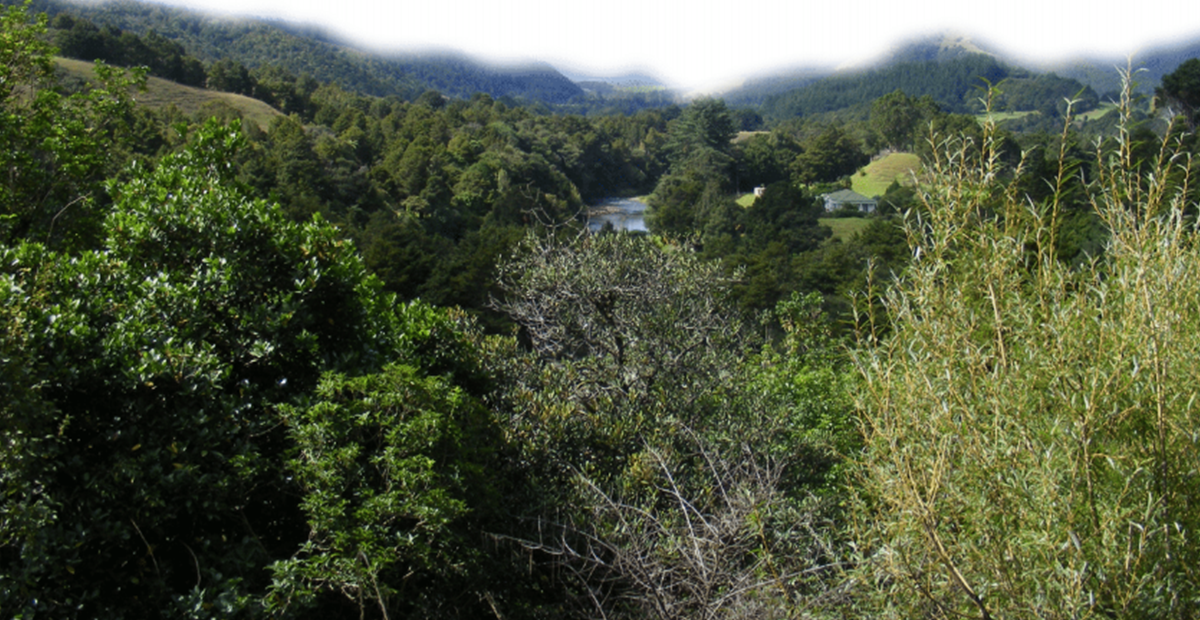

Healthy environment and healthy food go hand in hand

Rebecca Hyde, 2017 Nuffield Scholar

This is all occurring at a time when our target market of premium consumers is becoming more conscious about the health benefits of the food they are consuming.

The question is, how do we link the two?

Regulation is not always the best way to achieve change but I do believe it has woken our farmers up to the changes that need to happen within the farm gate.

Are we prepared to stop calling ourselves farmers and start calling ourselves food producers? There is a phenomenal amount of work by farmers and industry going in to improving the environment we farm in, yet we haven’t managed to collaborate to make this movement as powerful as it could be. I believe there needs to be agreement at the top of our organisations to work together to achieve the outcomes.

The Danish Food and Agricultural council in central Copenhagen was impressive to visit, all the land based agriculture sectors are represented under one roof. While they work independently a lot of the time they very much work together regarding environment, urban engagement, promoting the industry and promoting the health benefits of the food produced.

I’d love to see a rural New Zealand where instead of talking about Sarah the dairy farmer or Tom the sheep and beef farmer we talk about Sarah and Tom the food producers who farm in the same environment.

I do believe that everyone in New Zealand is after the same outcome – a sustainable environment – but we have managed to muddy the waters.

The theme for the Nuffield triennial conference was Farming Fit for Food. A very relevant topic as our consumers get further removed from how and where their food is being produced. During a presentation the LEAF Chief Executive Caroline Drummond made a strong link between the health of the environment and the health of the food it produces.

Twenty years ago in the UK talk around environmental management was very topical. If at that time they had linked the connection of environmental management to the health of the food, they believe the consumer buy in to the importance of farmers would have been considerably greater.

In New Zealand you don’t have to look far to find a discussion regarding environmental management and water quality.

We are in the prime position to link this to the benefits of the real food we are producing, not only domestically but internationally for the benefit for both farmers and consumers.

There is a connection to be made between the health of the food we eat and the health of the environment it is produced in. As an industry we need to highlight this connection and communicate it to our fellow New Zealanders and consumers abroad.

We are a proud food producing nation. Let’s make the link together.

Juliet Maclean: A Note from the Chair

November 2017

Since my last note, not only do we have a new government, we also have five new Nuffield scholars. 

The businesses of farming and growing have changed dramatically over the past decade. Historically, it was adequate for farmers to express a personal desire to care for their livestock and land and to ‘do the right thing’ when undertaking development projects. There was little scrutiny and our freedom to operate was largely unlimited.

This is no longer the case, with a complicated landscape of approvals, monitoring and reporting, compliance and restrictions now changing the way rural businesses are operated. Both the general public and the regulators are lifting the bar on how farmers and growers produce food.

Many a rigorous debate has navigated the pros and cons of changing nutrient management regimes, protecting our waterways, reducing waste, keeping our people safe from harm, sourcing adequate capital to ensure financially robust businesses, biosecurity, customer centric marketing,  succession and the place for exponential technology.

I believe that sustainable and successful rural businesses will be led by those who stay abreast  of these and many more topical issues, develop an ability to  critically analyse the options, then execute with excellence.

With this backdrop and the Nuffield objective of encouraging global vision, leadership and innovation, your board of Trustees agonises over their decisions to select the most appropriate scholars from those who apply. We seek diversity, the potential to demonstrate thought leadership, to gather and share knowledge, to understand different aspects of our production to plate supply chain,  to influence positive future outcomes for New Zealand and to ‘fit’ with our proud Nuffield culture.

Our agri business ownership structures are evolving and not all farmers own land, not all growers work full time within the farm gate. The future of work is such that technology will play a bigger part and a first chosen career is likely to be followed by many iterations of learning and doing as our future work-force reinvents themselves to stay relevant and engaged.

Our system for short listing, reference checking and interviewing scholar applicants for one of five available scholarships is now a very thorough one and a demonstration of Nuffield NZ focusing on professional management processes with outcomes which have relevance for the future.

Over recent years, the selection panel has balanced all these factors to select scholars whom we believe are ‘fit for the future. Some are hands on farmers and growers and others work alongside them to provide information and advice which is required to operate rural businesses.

What these scholars all have in common is a sense of self responsibility to learn and lead and a strong desire to influence positive future outcomes for our rural ecosystem – communities, people, the environment and business. I believe a diverse and  well networked Nuffield New Zealand will continue to be a national asset.

I look forward to seeing you all at the conference in Tauranga in May and I trust you’ve saved the date already. Our recent scholars are excited about presenting to you and are ready for your feedback and searching questions. They know this is the ‘Nuffield Way’.

Enjoy a safe and fulfilling summer, fun across the festive season and look forward to 2018 with excitement and anticipation; we are all privileged to have the opportunity to enjoy another year!

Kind regards
Juliet Maclean

Improving Maori capability to make decisions for the development of Maori land.

Natasha Clarke-Nathan Kellogg report image

Executive Summary

This report outlines research conducted to identify how Maori decision making capability can be improved to increase the development of Maori land and to recommend ways to support that capability.

The research identifies how historical Maori decision making frameworks enabled Maori to develop their land collectively as a tribal people. It describes the key differences of historical frameworks to the current legislative Maori Land Trust frameworks provided in the Te Ture Whenua Maori Land Act 1997 and the constraints to progressing Maori land development.

The research highlights that historically Maori worked collectively as inter-dependents and how legislative frameworks that today promote individualism, have disbanded this collective ability. Individualism is established with the appointment of trustees who to some degree act independently on behalf of their land owners. The research identifies this as a key deferent to the development of land. The handing over of authority and decision making from the owners to trustees presents a risk or threat to the owners. This has contributed in the loss of Maori land development.

The results of the data analysed and tests of additional processes and thinking techniques present opportunities to reinstate the collectivised approach to developing land as Maori practiced historically – pre European contact.

The report finds that the application of additional processes can improve land owner participation and the application of thinking techniques can mobilize the development of Maori land and encourage new styles of thinking for Maori.

The recommendations of the report are for further testing and refinement of the process and for the process to be tested in other sectors (outside Primary Industries).

The dream that made us.

Executive summary

When looking at people and culture, it is difficult to use traditional academic processes to understand how we see the world, and how we think and feel. This is because the influences on humans tend to be more around emotions, rather than logic. Traditional academic process has been around logic or critical thinking, and this has served us well but I have strayed away from this discipline to explain the emotion behind our culture. 

I have chosen to deliver this paper in way that can explain the perception or the emotion of our culture – The Culture of Dairy Farming. I have also written this paper so a dairy farmer that reads this paper can easily follow the information. I have used the story telling approach to allow the reader to relate to different perspectives. The hope is to allow for a solution to develop by having a better understanding of different people’s perspectives. 

I have relied on comments and perceptions from interviewees to explain an agricultural perspective. I have also conducted a survey of dairy farmers to understand how they see or think about their work and life.

Stuart Taylor

Organics: fat into the fire or get out of jail card.

Executive summary

Aoroa Farms Trust sees organics as a Get Out of Jail Card!

This report was written to enable two decisions to be made:

  1. Whether or not Aoroa Farms Trust remain a conventional dairy farm or convert
    to becoming an organic dairy farm.
  2. If the decision is to convert do they supply Fonterra Coop or Organic Dairy Ag
    Hub Coop

The people involved in this business plan and who are critical to its success are the directors of the Aoroa Farms Trust Hal Harding and Penny Smart. They fully realise that they will not fulfil their goals on their own however, they will need good advice and support. During their time farming and during their due diligence on the organic conversion they have surrounded themselves with people to fill the skills gaps that they lack. Their farm consultant Rodd Hodgson, accountant Charmaine O’Shea and bank manager Bryn Hughes have been integral in helping them with their decisions; there are no plans to change this combination. Aoroa Farms Trust also have a very skilled, steady and committed staff whom they have consulted with throughout the whole organic due diligence process and from whom they have full support. Hal and Penny along with Aoroa Farms have a strong vision, set of values and clear goals regarding the farm and how they want it to be now and in the future. Hal and Penny back themselves, work well as a team and are confident that they can make an organic system work well on their farm. 

The opportunity for organics domestically and more importantly through export is growing very quickly and it would appear set to grow exponentially in the short to medium term. (The Organic Aotearoa Report March 2016). There is currently an undersupply of organic dairy and as more and more consumers want to know that the food that they are consuming is good for them and just as importantly the planet, this is set to continue. There will need to be ongoing improvement in the integrity of organic products as well as less fragmentation in the organic market place amongst suppliers, for the full potential of organics to be met and continue to progress at the current rate. (https://www.marketresearchreports.com/technavio/global-organic- dairy-products-market-2015-2019).

Aoroa Farms Trust has a high debt and in order for organics to be financially sustainable on the farm, they need to have an average $8/kgMS farm-gate milk price once fully certified. Benchmarking production, costs per kgMS and farming systems with other Northland organic dairy farms (which included on farm visits), has guided the figures and predictions used in making the organic decision. Being a ‘value add’ product the organic milk price is de-linked from the conventional global commodity milk price and so more likely to be as volatile/affected by global events as conventional milk pricing. This is one of the main attractions for the conversion as well as the ongoing benefits to the environment that occur when farming organically.

Risks that are involved and are beyond the control of the Trust are the weather, as Northland is prone to drought (affecting levels of production); the stability of the global economy, geopolitical disruption and the demand and supply equation for organics, affecting price paid.

There are two options available to Aoroa Farms Trust as to a processor to supply; Fonterra Coop and the Organic Ag Hub Coop. Fonterra (whom the Farm currently supplies with conventional milk) has recently stepped up/come back into the organic milk market. Fonterra have historically been unreliable in regard to renewing contracts in Northland for organic milk. They currently offer a transition premium linked to the conventional milk price pre full certification of .45c/kgMS with the share ownership requirement the same as conventional i.e. fully shared up at the market value which is north of $5.50/kgMS currently (May 2016). The Organic Ag Hub is a new cooperative that has a business model of matching organic milk to processors only i.e. they don’t own any processing plants themselves, they are small and intimate but as yet unproven. Their transition pricing is currently higher than Fonterra’s and shares in the Ag Hub Co-op are valued at $1per kgMS with the requirement to be fully shared up if supplying transition or organic milk.

The Trust feel that the rewards are there for the conversion both financially and environmentally which fit with their values, vision and goals.

The backstop if organics do not work out would be reconvert to conventional supply.

The decision was made on the 18th May with the approval of the bank to start the conversion to Organics and supply the Organic Dairy Ag Hub from the 1/6/16.

Penny Smart

Blackroom: A concept incubator for the future of coarse wool.

Executive summary

The coarse wool industry has been described as being in a state of malaise by the existing literature and industry experts. Back in 1981 Prime Minister David Lange infamously boasted that agriculture was a sunset industry (Federated Farmers, 2014). At the time this was challenged by industry sector leaders as being false. However, whilst undertaking an analysis of the coarse wool, the research has indicated the industry has passed through the ‘sunset phase’ and now is in the ‘decline’ phase and may be irretrievable, unless major changes occur. 

The primary reason for this research is to investigate the future for coarse wool. Wool is a hugely under rated product that has so many positive, environmentally conscientious and natural benefits that are being over-looked in favour of synthetic alternatives.

The report continues on from the previously titled “The New Zealand Coarse Wool Industry – Does it have a Future?” (Oliver, 2015). As reiterated in the prior report, the only way forward now for the industry in the expert’s opinion, is for the industry to commit itself seriously to advanced research to take the coarse wool fibre into new uses. This report outlines the potential of using a foresighting, backcasting concept incubator, named ‘Blackroom’.

The key to the utilization of a Blackroom futures concept is to takes the researchers away from the present and places them in the distant future, envisaging the future system state and then bringing it all back in order to determine the pathway to the future product use. The resulting outcome of the Blackroom will be to develop new research pathways for the future of the wool fibre and industry.

Nicole Oliver

Bobby calves: The game changers within New Zealand’s supply chain.

Executive summary

There is significant potential for New Zealand to increase its ability to utilise more bobby calves therefore making them a more valued product. It is important that we have a sustainable, viable, ethical and PR friendly value chain. It is also important that NZ Inc. gets this right to maintain farmers/producers’ ‘social licence’ to farm and maintain our positive worldwide perception.
While difficult to calculate, it is estimated that more than $1 billion is on offer, if we can capture the full value of underutilised bobby calves.

It is acknowledged that famers all operate different policies with different values, so it is near impossible to make a recommendation that will suit all producers and fit with processors’ expectations and resources. There is a range of options which will lead to more prosperous returns for the farmers, processors and overall sector. However, more leadership is needed to make these changes at all points of the industry supply chain.
Key recommendations:

  • Increased use of beef genetics across dairy herds
  • Increased use of sexed semen across dairy herds
  • An integrated dairy beef “profit partnership” supply chain model, where everyonecaptures the value of the end product
  • Uptake of a tool which measures beef performance through the supply chain toallow a feedback loop
  • Increased farmer education on what options are available

Dairy farmers are at the start of the value chain, so it is critical that those options are easy for them and do not affect their primary objective, which is producing milk at the highest margin possible.
In implementing any of the above options, it is expected that sacrifices would have to be made and some options do not benefit everyone in the supply chain.

Andrew Jolly

Primary connections: Leadership pathways within rural organisations.

Executive summary

A Professionalism shortage in governance, more and more organisations are beginning to expect more professionalism, from potential candidates. Although this might be the case there may not have been enough done to clarify and support the transformation. Every year thousands of people volunteer their time in leadership roles throughout the primary industry, yet there is no cross industry information to provide a pathway for these individuals to allow them to take their next step in governance and leadership

This feasibility study and research asks the question:


“Where do you go find the relevant information to get involved in the various governance roles in the volunteer based rural organisations?”

My project looks at the feasibility of a website concept that rural industry good/Non-profit organisations can use as a platform to promote the leadership pathways available within the organisation that shows short job descriptions and information on how to get involved from an entry level to high level of governance.

A one stop shop website of information on what is available to the up & coming leaders of tomorrow wanting to make a difference in the rural communities of New Zealand.
The areas of research to complete this paper have used the following methods

  1. A Literature review, to gain understanding of current used of leadership pathways and opportunities
  2. An online survey promoted via Facebook and email targeting people involved in the primary industries tounderstand their method of finding information relevant to my question.
  3. Case Study interviews that were held face to face and via email and phone, to gain an understanding howthese particular organisations promote their leadership pathways currently.

A key finding through the process of the online survey and case study interviews, found that the primary industries in the Non-profit and Industry good sector, who may rely on governance structures and people coming through to fill these roles. Haven’t consider the role that the internet and Social media can play to advertise and show the leadership opportunities to the future leaders looking for their next step in the governance ladder. And so could be missing the opportunity to engage this particular generation which we call the “Millennials”.

By having clear and concise information in which the “Millennials” (Researchers Neil Howe and William Strauss defined as those born in 1982 and approximately the 20 years thereafter) crave, to collectively to tell these Future leaders the opportunities available. We can look to change the way we engage and fill these vitally important positions on the various rural governance groups in New Zealand.

Preparing for the changing tide.

Executive summary

The regional council of Southland (Environment Southland) is mid-way through its Water and Land 2020 and Beyond (WL2020) Project. This project consists of three stages, and is the council’s response to the government’s National Policy Statement for Freshwater Management. It aims to prevent any further decline in water quality, and to help the Southland community achieve its goals for water.
Dairy farming has increased significantly in Southland over the previous 20 years, and is now a substantial contributor to the Southland economy. With this intensification, has come water quality pressures. The changing environmental regulations of the WL2020 project will impact Southland dairy farmers, as well as the Southland community.

The aim of this project was to investigate how Southland dairy farmers had been involved in the WL2020 process so far, and how to increase this involvement. From this, the aim was to find ways in which DairyNZ, the industry levy body, can support Southland dairy farmers to adapt to changing environmental regulations. Thirteen people, a mixture of industry members and Southland dairy farmers, who have been very involved with the WL2020 process so far, were interviewed.
It was found that engagement by dairy farmers in the WL2020 project was between 10 and 20%. This low engagement restricted the majority of dairy farmers from being able to have knowledge of the proposed rules and changes of the WL2020 project, the impacts of these and from being prepared for these impacts.

Five broad recommendations were made that would contribute to Southland dairy farmers and their communities adapting to the changing environmental regulations:

  1. Water quality is a social science issue as well as a science issue – dairy farmers must understand the water quality issue, accept that there is an issue and understand the effect of their actions on it.
  2. DairyNZ should continue what it is doing in Southland but build on this – the work of DairyNZ in Southland is effective and appreciated. There were some recommendations for building on this, but overall DairyNZ is on the right track.
  3. Engagement is the first step – dairy farmers needed to be engaged before they could have knowledge of the proposed changes, their impacts and adapt to these. Personalising the issues and one-on-one meetings were important in this step.
  4. Sustainable Milk Plans (SMPs) are an effective tool but need a follow up visit – SMPs helped increase the knowledge and preparedness for the proposed rules and changes, but a follow up visit and auditing system would increase their effectiveness.
  5. Relationships and leadership are key – relationships within the community and with ES are important. Dairy farmers must be prepared to show leadership.

It was found that Southland dairy farmers themselves have a responsibility to build relationships in their own community. Although DairyNZ has an important supporting role to play, dairy farmers must be prepared to show leadership. If this occurs, not only will Southland dairy farmers and their communities adapt to the changing environmental regulations, they with thrive within them.

Jolene Germann