
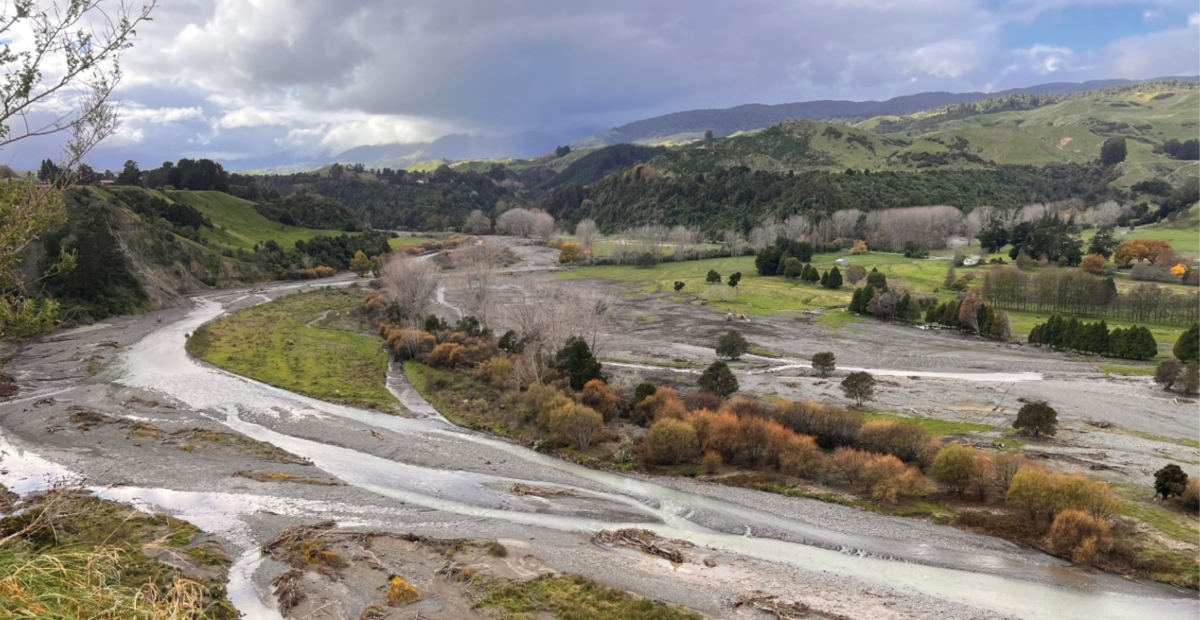

Farmers adapt to the weather as part of their everyday decision-making on farm. Evidence suggests that, for New Zealand, the climate will change more significantly in the years between 2040 and 2090. How might Manawatū-Rangitīkei sheep and beef farmers adapt to the changing climate and futureproof their land?
The purpose of this report is to translate scientific climate modelling into practical contexts for Manawatū-Rangitīkei sheep and beef farmers and consultants.
This report aims to provide knowledge of:
1. Climate change predictions within the century.
2. What risks and opportunities are associated with climate change predictions.
3. What practical short to long-term actions could be considered that might future-proof farming businesses?
The methodology involved a literature review, followed by semi-structured interviews which formed qualitative research into futureproofing solutions.
The key findings are four climatic attribute changes to be aware of:
1. The frequency and intensity of drought.
a. By mid-century, a rainfall deficit of 50mm – 75mm per year.
2. The number of ‘hot days’ over 25oC.
a. By mid-century an increase of ‘hot days’ over 25oC, between 40% and 100% per year.
3. The frequency and intensity of adverse and compounding weather events.
a. El Niño and La Niña natural weather cycles exacerbated by climatic changes globally.
b. More severe adverse weather events, their frequency requiring more research.
4. An increase in temperature.
a. By the end of the century, an increase of 0.7oC – 3.1oC under the Representative Concentration Pathway’s (RCP) 2.6 and 8.5.
Recommendations to Manawatū-Rangitīkei sheep and beef farmers and consultants:
1. Use credible, trusted, and up-to-date sources of information to inform opinions about the changing climate.
2. Learn from advisors who collaborate closely with the scientific community and can translate data into meaningful, practical contexts.
3. Assess the current farming system concerning the top four climatic attribute changes and identify relevant, attainable, short to long-term actions, that may futureproof the business.
4. Build financial resiliency to be able to absorb hits and invest in futureproofing mitigation solutions.
5. Identify primary land use resources and their potential alternate use, if the existing system needs to change in the future.
Grace McLeay