2026 Nuffield NZ Farming Scholarship. Apply by 17 August 2025. Read More...

Apply for 2026 Nuffield NZ Farming Scholarship by 17 August 2025. More details...

māori

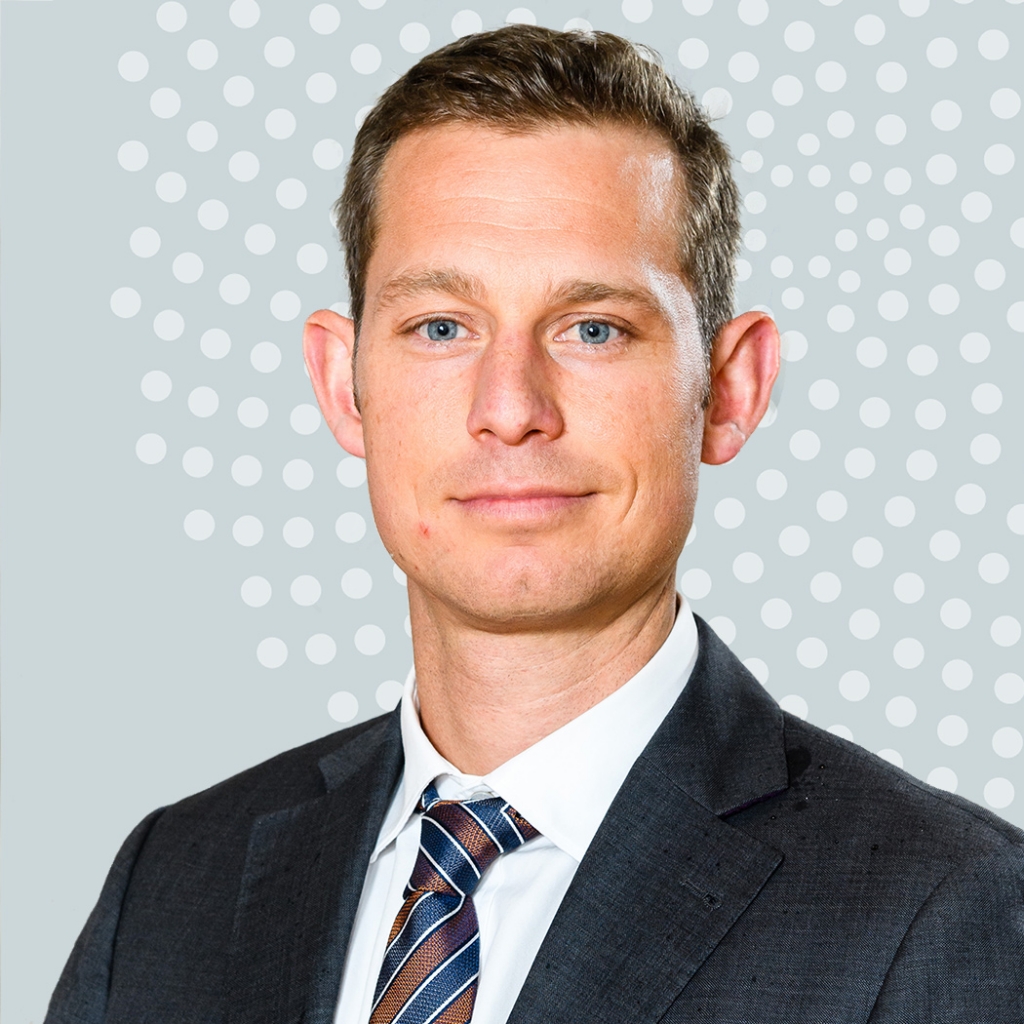
Phil Holland

Phil’s report examines the expanding deer population across Aotearoa New Zealand, its ecological and economic impacts, the limitations of current management, and the ethical tensions surrounding lethal control, cultural values, and decision-making in deer management strategies.

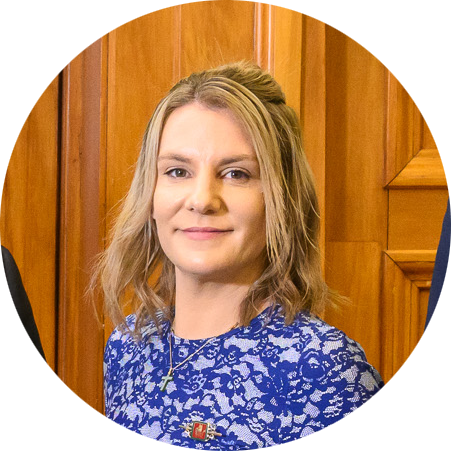
Rachel Baker

Gene editing can boost NZ’s primary sector by improving sustainability, productivity, and resilience. Success requires balanced regulation, sector leadership, public trust, and coordinated innovation.

Jenna Smith

Peatlands store 20% of NZ’s soil carbon but are largely degraded. This report explores restoration, wetland farming, and Māori-led solutions for climate and cultural resilience.

Cheyenne Wilson

The food and fibre sector, a cornerstone of Aotearoa’s economy, thrives when rangatahi Māori lead. This report outlines barriers, strategies, and a vision for inclusivity.

Dave Nuku

This report aims to show how Māori land trusts in Te Moana a Toi apply Kaitiakitanga principles to achieve sustainable governance and long-term intergenerational well-being.

Chloe Walker

Access to capital is constraining the sector's sustainability, productivity, and transition to the next generation of farmers.

Anthony Taueki

In this report Anthony examines how Aotearoa's primary industries are transforming through technology and innovation, arguing that Industry, Iwi, Government, schools, and tertiary providers must collaborate to build adaptive vocational pathways that deliver meaningful careers and prosperous futures for all whānau and communities.
Daniel Eb 2021 Nuffield NZ Scholar

Daniel Eb

A fracturing social licence to farm. Recruitment. An authentic provenance story. These are our sector’s most entrenched challenges. At their roots, they are about culture, values and perception.

Troy Hobson

The Māori economic engine is significant in terms of both asset holding and in generating activity for the economy of Aotearoa New Zealand. Despite this Māori have almost no presence in the governance of the Agricultural cooperatives, despite these being businesses that they are significant suppliers and customers of and hold equity in. The purpose of this report is to understand the reasons behind this, identify ways to re-engage Māori at governance levels with the cooperatives and understand the benefits and costs to each from doing so.
Suzanne Hepi Kellogg 2022

Suzanne Hepi

Māori landlocked land has influenced a change in the Te Ture Whenua Māori Act to lessen multiple barriers for Māori. This research has been conducted through a kaupapa Māori approach, for Māori by Māori. This case study is concerned with understanding the land block, its isolated location, the barriers of access and how the trust can initiate a sustainable involvement for the owners. The report is based on semi structured interviews and analysis of secondary data.

Kiritahi Firmin

The research report is committed to being responsive to Māori as Tangata Whenua and recognises the Tiriti o Waitangi as Aotearoa New Zealand’s founding document. The principles of Te Tiriti o Waitangi as articulated by the Waitangi Tribunal, and the New Zealand Courts provides a framework for how we are to fulfil our obligations under the Te Tiriti daily.

Dave Thomson

The aim of this report is to provide an understanding of te ao Māori (the Māori world view) and mātauranga Māori (Māori knowledge) in an agricultural context and to explore how some of the concepts within this area can be utilised in a way that benefits both individual farms and the wider industry.
John Foley

John Foley

The era of trade liberalisation and reform in the 1980’s and 1990’s left New Zealand (NZ) focusing on what it was good at – being efficient commodity producers, and NZ exploited its comparative advantages. This drive for efficiencies created the domestic agenda for science and innovation. For agriculture, to drive productivity gains, the focus was inside the farm gate.
Caroline Batley Kellogg 2022

Caroline Batley

Many rural communities have lost their hospitals, police stations, banks, government departments, schools, sporting clubs and churches. This report explores whether healthcare, employment, crime and education outcomes have worsened for rural residents compared to their urban counterparts due to these changes, and recommends enhancements to public policy to address this.

Mihi Harris

Mihi Harris

This project is concerned with understanding the learnings and insights specific to Tai Tokerau and how they can inform enduring, sustainable agricultural production systems to unlock opportunities for future generations in Waima.
Catherine Miller

Catherine Miller

In this project I considered the question “how might we develop a food system that benefits everyone in community?” We have a highly productive and well-functioning export system bringing benefit to the New Zealand economy, yet domestically we have people struggling to access healthy food.

Julian Reti Kaukau

This report outlines and identifies two things: -How can Waikato Maniapoto Māori landowners increase their economic productivity from their whenua (land) and; -How can this be achieved whilst upholding the values of Kaitiakitanga (guardianship) and Manaaki Whenua (goodwill to the land).

Rebecca Hyde

The aim of this report is to help farmers and rural professionals better understand Māori cultural values and to see how collaborative relationships can be built between farming communities and Rūnanga in the Hurunui district. There is common ground between Māori and farming because of the connection to land. The Hurunui District is covered by two Rūnanga of Ngāi Tahu. Te Rūnanga o Kaikoura, also known as Ngāti Kurī, cover north of the Hurunui River and Te Ngāi Tūahuriri Rūnanga, centred on Tuahiwi, to the South of the Hurunui River (Te Rūnanga o Ngāi Tahu 2021).

Clare Easton

The objective of the research is to provide another layer of insight and use this as a platform for further collaboration and conversation – understanding the social impacts (real and perceived) of contrasting primary sector investment in rural Hawke’s Bay – comparing sheep and beef, horticulture, dairy and forestry.

Alby Hanson

Through my research, I have sought to understand how government institutions internationally and locally are innovating and experimenting to better understand these perspectives. The value and promise of these innovations is already being demonstrated. I have also sought to understand farmer perspectives myself, and what matters to them. Through a range of semi- formal interviews, I captured a variety of themes. Views of government, the realities of farming, Māori agribusiness, communication and engagement and community and the importance of people were expressed.

Jessica Smith

If our regions are not thriving the prosperity of our people declines. Half of New Zealand’s population live in the regions. It is our regions that generate our economic output through the primary industry. Kiwifruit is the largest horticultural economic contributor and is targeted for significant growth. This research is about the impact on regional … Read more

Allister Holmes

It is naïve and self-centered to even consider our selves the owners of land. Land has existed for millennia before we “own” it, and will continue to exist for millennia after we no longer “own” it. We are simply occupiers, users and stewards of it for a fleeting time. Current land stewards should undertake succession … Read more

Willem Kupa

Aim: To create a social enterprise whose social mission is focused on a perceived gap in my region. That being, Maori youth prospects in the primary industries and growing economic sustainability to create stable futures for them. I propose to do this through an innovative hybrid model of education and enterprise. The primary industries have … Read more

Natasha Clarke-Nathan

The research highlights that historically Maori worked collectively as inter-dependents and how legislative frameworks that today promote individualism, have disbanded this collective ability. Individualism is established with the appointment of trustees who to some degree act independently on behalf of their land owners. The research identifies this as a key deferent to the development of land. The handing over of authority and decision making from the owners to trustees presents a risk or threat to the owners. This has contributed in the loss of Maori land development.