2026 Nuffield NZ Farming Scholarship. Apply by 17 August 2025. Read More...

Apply for 2026 Nuffield NZ Farming Scholarship by 17 August 2025. More details...

What is currently being done and what more can we do to reduce on-farm waste in the New Zealand Dairy Industry?

Daniel Butler_ On-farm waste management-daairy__Kellogg report image

Executive summary

The New Zealand dairy sector has come through a remarkable period of expansion over the past 20 years. We have seen cow numbers grow from 3.4 million in 2000 to 4.9 million in 2019 and the area being farmed for dairy has increased by 33% over this period.

Underpinning this growth has been continued intensification which has created significant opportunities and prosperity for those in the industry, however like any fast-paced intensification it has created negative impacts on our environment.

As a result, the NZ dairy industry has been challenged to be more environmentally and socially sustainable to ensure we are both proud and responsible within our farming practices. We are beginning to see change in a number of areas across the dairy industry with significant emphasis being placed on climate change, water quality, work conditions and animal welfare.

Despite some initial farmer objections, these developments are all beneficial to the NZ dairy industry, and will enhance our reputation as a world leader in quality produced dairy products.

An area that remains out of the spotlight is on-farm waste and what we are doing to be environmentally responsive. It was the objective of this report to discover current waste and recycling volumes within the NZ dairy sector as well as what is being done about improving waste disposal. The report also sought to determine what is being developed for greater future farmer engagement as well as what is currently being achieved with the recycling we are collecting from dairy farms.

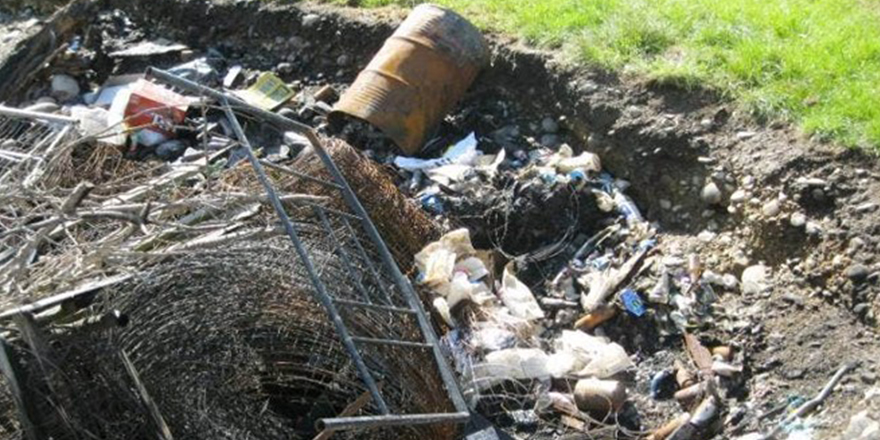
At the commencement of the project the assumption was made that farmers continue to burn and/or bury their waste and that there is a lack of work being completed to address the increasing issue of on-farm waste on dairy farms.

This report has been able to determine that previous work has been undertaken around waste levels and current disposal across the rural sector in New Zealand, and that despite some improvements in disposal practices this is an ever increasing issue that requires immediate attention.

This report identifies several significant studies and the arrival of two key recycling providers into the industry, AgRecovery and Plasback, who have ensured the volumes of recycling collected from New Zealand dairy farmers has significantly increased. This has been further accelerated by Fonterra adding evidence of recycling as part of their “Co-operative Difference” payment scheme which has seen both AgRecovery and Plasback see significant surges in registrations.

Farm plastics were given additional focus in July 2020 when the Government named Farm Plastics as one of its six priority products. This has ensured that the rural sector now has a responsibility to be environmentally responsive with the plastic products generated within the sector. Following this announcement, the Ministry for the Environment (MFE) advised it would be working with the AgRecovery Foundation to produce the Green-Farm Product Stewardship Scheme.

This document has been designed to create a “one stop shop” to ensure farmers are able to deliver four key plastics streams to local collection centres by 2024. The proposal recommends that these services will be free to customers with any cost incurred generated through levies paid by plastic producers.

The Green-Farm Product Stewardship Scheme, which is yet to be accredited by Government, is a positive step for the industry. However, following further critical analysis and using frequency distribution data gathered from surveys of farmers across Taranaki, it has been found that this service alone will not be fit-for-purpose to service the needs of all farmers.

This analysis and data also suggested that both Plasback and AgRecovery have improvements to make in their service delivery to ensure they are meeting the needs of farmers. It is therefore recommended that these improvements alongside a collaborative approach from all providers will need to be delivered before any potential accreditation is approved.

Frequency distribution analysis of the survey data also indicated that farmers would like a choice in their provider, and a desire to feel that their contribution is valued. In order to achieve this the research demonstrated that offering additional profit based providers for greater convenience would see further engagement from farmers.

In addition, having accuracy around the amount of recycling collected on-farm would quantify the contribution an individual farm is making.

The data also found that household waste is an area where very little emphasis is placed, with significant quantities of household recycling currently being burned/buried or placed in “skip bins” due to a lack of convenient services. This is another area that improvements could be made and a recommendation is made in the report to assess the feasibility of “on-farm recycling stations”.

Finally this report analyses where our current recycling is being processed, whether this is sustainable at its current levels, and if it can sustain an inevitable increase from greater farmer compliance. This report concludes that currently up to 80% of our farm plastics are sent overseas and whilst we are utilising some of this product in New Zealand, this is limited to a few manufacturing companies. In order to be more environmentally responsive in future we need to deal with recycling internally and therefore greater sector and government collaboration is required to assist businesses within New Zealand.

Following the information gained from this report the following recommendations are made:

Establish An Accredited Inclusive Product Stewardship Scheme

1. The current Green-Farm Product Stewardship Scheme proposed by the AgRecovery Foundation is a great initial concept, however it requires further development before any potential accreditation is granted from the Ministry for the Environment.

The “One-Stop Shop” solution is a positive one for the rural industry, however, needs to be more inclusive of other providers including Plasback, for its ultimate success. The proposed scheme needs to better acknowledge the work that is already occurring within the waste sector and utilise these providers in any future scheme. Once these necessary amendments are made the proposal needs to be accredited and operational as projected, in 2024.


Utilise Local Service Providers

2. That local services are required to complement the Green-Farm Product Stewardship Scheme proposal which will both provide additional options for farmers, and service additional waste streams. These services could include on-farm collection as a user pay service that allows for greater convenience to farmers to ensure waste removal and improve recycling practices.

Farmers need the ability to choose the most convenient practice to meet their business needs and one solution will not meet this requirement.

Collection of On-Farm Recycling Levels

3. That volumes of waste and recycling collected needs to be recorded and collated at a farm level. This would allow farmers to accurately record the increased efforts that they are making and to hold those to account who are not making the required effort. This would also allow farmers to provide more accurate statistics across the complete rural sector.

Currently we are not recording this information as accurately as we could. Farmers need to know the difference they are making so showing key individual farm stats as to levels of recycling will be crucial to any future success.

Enhance Government Collaboration

4. That government needs to enhance the work it is doing alongside current businesses within New Zealand who are attempting to use recycling waste and to look to support and develop companies who are trying to operate in New Zealand. Currently up to 80% of our plastic recycling goes offshore to be processed and we therefore need to develop further businesses within New Zealand to service more of our own recycling.

Many of the products that are created from plastic waste are not high value therefore government assistance will be required to ensure companies are able to process these plastics and remain financially sustainable.
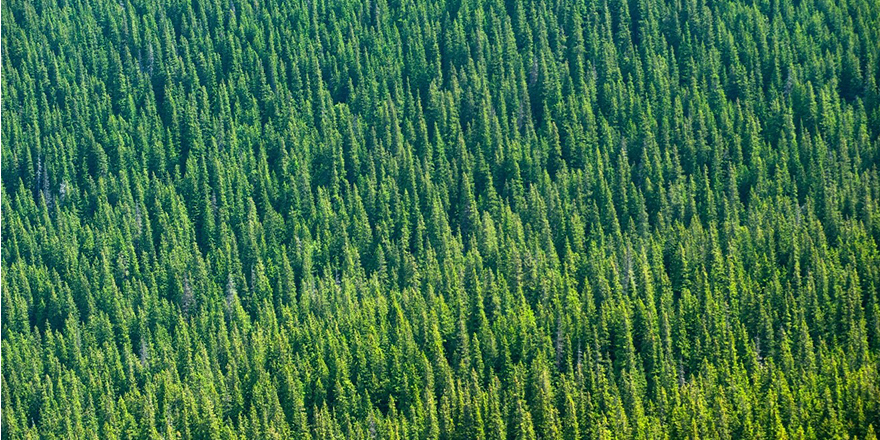

 

The impact of exotic carbon forestry on rural Aotearoa New Zealand.

Craig Fellowes Kellogg report image

Executive summary

“We are not anti-forestry – exotic plantings can be integrated where appropriate – but it is about planting the right tree in the right place”

Sam McIvor B+LNZ Chief Executive, 2021

With Aotearoa New Zealand’s commitment to the Paris Agreement of a reduction in emissions to net zero by 2050, the practice of planting faster growing, quicker carbon sequestering trees (Pinus radiata) has boomed.

The continued rise in the Aotearoa New Zealand Units (NZUs) price and Government’s lack of regulations around permanent exotic carbon forestry have further contributed to planting more exotic forests on productive land where previously the land value would have been too high to be considered for forestry.

The new permanent forestry category will be added to the New Zealand Emissions Trading Scheme (NZ ETS) on the 1st of January 2023. This applies to both exotic and native forests that will not be clear-felled for fifty years. Forests must be planted post-1989 to qualify, any trees planted or established pre-1989 do not qualify for entry into the NZ ETS.

Aotearoa New Zealand’s land area is 26.8 million hectares of which 8 million hectares is native and indigenous forests and 2.1 million hectares are exotic forests, mainly Pinus radiata.

Only 333,000 hectares of post-1989 plantings are registered into the NZ ETS, leaving a vast portion of pre-1989 forests excluded from the NZ ETS, all of which are still holding and continuing to sequester carbon.

Key findings of the research around the potential effects of exotic carbon forestry on rural Aotearoa New Zealand are as follows:

  • As the NZU price rises (currently $77) stockholders will be able to out-compete farmers for productive farmland sales.
  • Returns on investment for permanent exotic forests far outweigh relative competing land uses and native trees.
  • Large-scale permanent exotic forests would allow Aotearoa New Zealand to meet their emissions targets and at a lower direct economic cost.
  • To reach our 2050 goal, the area needed for planting exotic trees would be less than if native trees were planted.
  • Higher economic returns due to the faster sequestration rate of exotic trees.
  • Higher economic returns on marginal to steep land compared to traditional farming in these areas.
  • Long-term damage to the biodiversity and ecology of the land.
  • Increased pest burden, risk of wildfires and spread of wilding pines.
  • Direct financial impact through job losses on farms and indirect financial impacts on rural towns and businesses.

The short-term fix of planting permanent exotic forestry will become a long-term problem for future generations.

Key recommendations from this research are as follows:

  • Government should be encouraging industry to reduce emissions rather than taking the easy option of offsetting them.
  • MPI allowing pre-1989 native forests and natural carbon sinks (Fiordland) into the NZ ETS.
  • Research into alternative ways to sequester carbon such as the use of our oceans and seaweed to sequester carbon.
  • Power companies should be increasing investment into alternative power sources such as wind turbines, building more hydro lakes and harnessing geothermal energy.
  • The Ministry for the Environment and local councils encouraging partial farm plantings which will improve profitability on marginal land and will have environmental benefits on-farm if waterways and marshy areas are locked up and left in native plants.

Bringing New Zealand’s food science to the world.

Coralie de La Fage Kellogg report image

Executive summary

Background

Food science in New Zealand is an important contributor of the Science and Innovation ecosystem and helps maintain a positive international reputation in this field. However, international stakeholders are looking in, the food crisis, accentuated by a growing population, is worsening and scrutiny is increasing across every sector.

Thus, our food science sector must show clear direction, collaboration, and thought leadership. Therefore, New Zealand’s science industry needs to be reshaped to help find solutions to the pending global food crisis identified by the United Nations and other organisations.

The COVID-19 pandemic presents an opportunity to restart the clock and implement some changes. Te Ara Paerangi Future Pathways’ consultation is addressing a wide range of issues and looking at solutions while keeping an open mind and including many voices. This is an excellent step in the right direction and a welcome review of New Zealand’s research system.

Internationally, New Zealand is described as harder to justify, far away and laid back. Moreover, New Zealand faces the issue of ‘local is the new global’, meaning that when available, most stakeholders would prefer to engage with a science provider closer to them geographically.

However, commercial revenue for New Zealand’s food science sector is not only important financially, but also critical to maintain a global reputation.

Method and Focus

This report focuses on international business development and ways to better integrate New Zealand’s food science globally. The purpose of this research includes providing a clear picture of the New Zealand’s food science ecosystem and the opportunities and challenges that organisations in the industry are facing.

This research was underpinned by two components.

Firstly, a literature review to draw research, articles, industry reports and opinion pieces together to understand the current New Zealand science system, compare it with other models and identify some common challenges and opportunities.

Secondly, a crucial part of the research consisted of semi structured interviews with food science providers. A compare and contrast analysis was undertaken. The interviews formed the basis of the recommendations and shaped the vision for New Zealand’s food science strategy.

Recommendations

The recommendations have been drawn from readings and interviews, and can be summarised as:

  • Support engagement among the science industry and enhance the collective mindset to capitalise on every expertise to create greater impact.
  • Creation of a capability map to identify the focus areas and support world leading capability building.
  • Promote the transition to a single overarching science institute.
  • Leverage New Zealand’s science capability to focus on world leading expertise and attract international business, thus enhancing New Zealand’s economy.

It’s encouraging to see more and more collaborative projects in science, however this research suggests that only a whole sector change would accelerate the rate of exchange of scientific knowledge, increase the delivery outcome to answer global issues and keep New Zealand in a world leading position.

Ultimately, the aim is to draw insights and develop a bold vision and relative recommendations for the future of New Zealand’s food science, to position the country as a leading knowledge and research provider in this sector, globally.

Water resilience.

Conan Moynihan Kellogg Rural Leadership report image

Executive summary

New Zealand is extremely fortunate when it comes to natural water resources.

However, under a changing climate our water security is under threat particularly for New Zealand’s rural communities. Our freshwater resource is at the heart of our prosperity and resilience of our communities.

With increasing demand from all sectors, it is crucial that New Zealand efficiently manages our freshwater and that it is allocated to its best uses.

Water capture and storage systems have been identified as key adaptions to climate change. Future systems will need to be multi-purpose to utilise freshwater to its full potential under a Te Mana o te Wai framework (TMOTW).

How we slice the pie of water allocation within these multi-purpose systems will be critical to the success of sustainable growth for rural communities.

This report will focus on how New Zealand’s rural communities can afford to build water resilience through water capture and storage and the implementation of market-based systems to manage allocation of freshwater within catchments.

The methodology includes a literature review of current research on water resource solutions and allocation models, followed by semi structured interviews with eight sector experts to gain insights into their experiences and perceived solutions.

Key findings:

  1. There is lack of specific oversight and strategy for managing New Zealand’s freshwater resources.
  2. Current water allocation models need to go through reform at both national and local policy levels.
  3. Rights of existing users including iwi need to be addressed. Allocation reform will be unable to be successful without tackling this issue first.
  4. Current management of the resource is in silos which is inefficient and costly for both the environment and water users. Collective management of freshwater is needed to create efficient use of the resource.
  5. Costs, planning and perception of building infrastructure solutions are prohibitive to investment in development of water security infrastructure.
  6. Water capture and storage is needed to build water resilience against climate change for rural communities. Solutions will vary between catchments, but significant investment is required.
  7. Market-based systems are a tool for creating efficiency of water use and help to reallocate water to higher value uses. Collective management entities are able to easily implement market-based systems provided the system is closed (e.g. within one aquifer or reservoir etc), they have an accurate optimisation model, and real time data.

Recommendations:

  1. Ministry for the Environment to address and find resolution of iwi interest and rights in water. Allocation reform will be unable to be successful without tackling this issue first. Iwi should have a seat at the governance table of proposed national agency for freshwater management and crown entities for water management to ensure that the TMOTW framework is at a catchment by catchment level.
  2. Ministry for the Environment to establish a National Agency for Freshwater Resources similar to what overseas New Zealand’s roading infrastructure (Waka Kotahi).
  3. National Agency for Freshwater Resources to create a national strategy for water resources that works in tandem with the long-term view of TMOTW. The Agency would create Crown Entities for multi-regional water management in a similar vain to what is proposed under the Three Waters Reform Programme but with further refinement and input from stakeholders.
  4. Regional Councils to facilitate aggregate consent entities within catchments through regional plans. These will allow for the management of the overall resource and can implement market-based solutions such as trading of water allocations and/or pollutant allowances. These entities will also enable the ability to generate sufficient funds to build more efficient infrastructure and storage upgrades if required.
  5. CWME’s to quantify and understand demand requirements for individual catchments and then plan water storage and capture infrastructure accordingly. Implement staged projects so initial costs up front are not prohibitive.
  6. The national agency for freshwater resources must facilitate and define future allocation model options and provide clear classification of new water permits. Regional Councils to facilitate and undertake water allocation reform that adheres to the hierarchy of TMOTW, enables a transitional period for existing rights and undertakes investment in community education.

Greenhouse gas emission consequences of New Zealand’s urban sprawl.

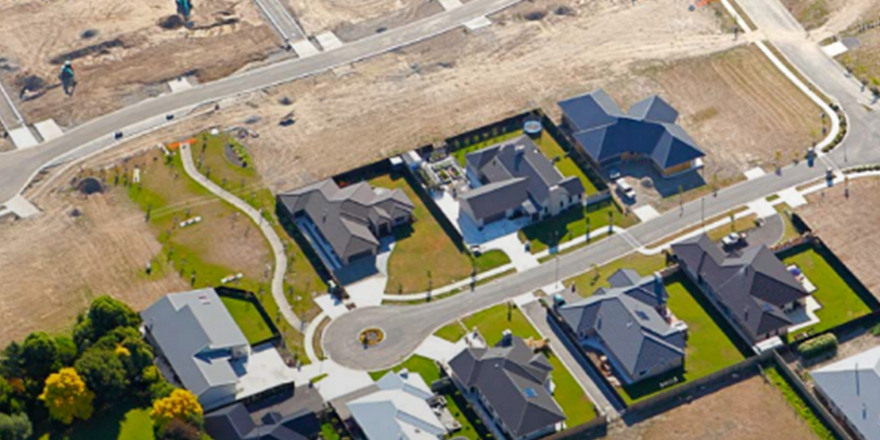
Andrew Myers Kellogg report image

Executive summary

Land use change from agriculture to urban is occurring at record rates. Stats NZ (2021) report that record numbers of stand-alone houses are being built. Emissions from the building sector increased 77% in the decade to 2017 (Stats NZ, 2019).

In contrast, pastoral farming land area is decreasing, and the emissions profile of the industry is flat to declining (Ministry for the Environment, 2021).

Legislation and numerous reports reference agriculture as New Zealand’s largest Greenhouse Gas (GHG) emitter and as the main industry targeted for emissions reduction to meet New Zealand’s GHG obligations under the United Nations Paris Agreement of 2015. The housing sector has significantly less reference within the same documents.

If agriculture is recommended to decrease land area and therefore emissions to help achieve New Zealand’s obligations (New Zealand Productivity Commission, 2018), why is that same agricultural land then allowed to be subdivided and turned into housing which emits potentially more emissions?

This is the context of the data sought for this study’s hypothesis: There isn’t a carbon footprint reason for land use change from primary to urban residential.

The results of the data analysis from a literature review suggest that the emissions from land use change to one hectare of urban subdivision are significantly higher than if the land had stayed as one hectare of primary land use.

Seven interviews with industry leaders were undertaken for discussion surrounding the hypothesis. They were thematically analysed showing the agriculture sector having concerns about the way its emissions are reported and the availability of tools to decrease emissions. This limits the industry’s potential to do what it does well, producing some of the lowest carbon footprint nutritional products in the world, for its growing population.

The housing sector has potential to improve its industry unity to lift its GHG reporting performance. Several solutions are available to reduce housing’s carbon footprint and minimise the use of agricultural land. They are too slowly being taken up for the sector to meet its emissions reductions targets.

Reporting gases on their separate warming potentials would clarify the impact of pastoral farming on the overall emissions. Reporting of land use change emissions associated with subdivisions, and emissions per dwelling should be undertaken.

Resource consent applications for land use change should consider the associated GHG consequences. More research could be undertaken to express the emissions of the civil infrastructure surrounding houses.

Paths to strategically meet our GHG reduction obligations can then be more clearly identified, and decisions made to ultimately improve the planet’s overall goal – reducing global warming.

Leadership during a crisis.

Henry McIntosh_report image

Executive summary

The Covid-19 pandemic hit New Zealand during 2020 and the horticulture sector was immediately faced with an extremely challenging situation. The sector was operating under very strict rules and experienced significant effects to the wider supply chain. But overall, the sector performed very well during 2020.

The aim of this report is to understand how the New Zealand horticulture sector successfully navigated the unknown during the initial phase of the pandemic, specifically focussing on leadership.

The question I wanted to answer was ‘what are the most effective leadership strategies during a crisis?’.

I completed a literature review to analyse some of the previous work done on crisis leadership and interviewed six senior leaders from New Zealand’s horticulture sector. These people were actively involved in directing the industry and leading their stakeholders through the early phase of the pandemic.

The clear answer to my question regarding the most effective crisis leadership strategy was to implement a people-first approach. Removing the controllable worries that people have about the situation. Keeping people busy to maintain a sense of purpose and continuing a level of social interaction are all key parts of a people-first strategy. 

With this approach, people are motivated to continue as normal and will often create better results. A lot of the interviewees reported better team engagement, efficiencies, and overall business performance during this period.

It is clear, that without this people-first approach, New Zealand’s horticulture sector would not have managed this period as successfully as it did.

Communication was also a significant part of the successful leadership strategy. There was no fear about potentially over-communicating. Getting the correct and most up to date information out to all stakeholders quickly was a focus. Many communication systems have been completely refreshed as a result.

The pandemic situation was developing so quickly, that often learnings from previous weeks or from other businesses were very useful to handle new challenges. Being conscious of the learning opportunity was challenging for businesses, but once embraced, systems and processes improved significantly.

Recommendations:

  • Cultivate a company culture that puts people first and ensure that staff can recognise this prioritisation.
  • Invest in professional development and networking opportunities to continually upskill staff and create opportunities for pan-industry connections.
  • Review and re-create the existing communication plans to ensure the best tools and strategies are being used.

Milk Without a Moo.

Executive summary

The NZ primary industry is no stranger to disruption and has adapted over the years to deal with changing market, environmental and economic conditions. There is a new threat on the horizon: alternative protein, sometimes called lab grown, cultured or synthetic food.

Alternative protein is not a new term and has not impacted the NZ primary industry in any major way so far. It would be easy to dismiss as a phenomenon that will happen elsewhere, that it won’t affect the pasture raised, free range, high quality products from New Zealand. Having researched this topic for a year, I do not believe this is the case – here’s why:

Dairy is the low hanging fruit for alternatives. Risk to the NZ primary industry from alternative protein is often considered in relation to the meat industry. Meat is a complex product, with many structural, textural, inconsistent aspects – different animals, cuts, types of protein etc. In contrast, milk is a homogenous product – it’s always a liquid consisting of 87% water and 13% solids. The complexity of meat will be very complicated to replicate successfully using alternative technologies, but this is not the case for milk. Dairy, and particularly dairy ingredients, are seen as the ‘low hanging fruit’ for disruption.

New Zealand dairy exports are mostly used as ingredients in other foods. New Zealand is the largest dairy exporter in the world, growing from $2 billion of exports to $20 billion in just thirty years. A large proportion of NZ dairy products are used as ingredients in processed food. In 2021, Fonterra made 74% of the milk they processed into ingredients. New Zealand provides 60% of the world’s whole milk powder exports, with a large proportion of this going to China to supplement their domestic milk production.

The retail market for milk powder pales in comparison to the demand for drinking yoghurt, shelf stable milk and flavoured milk drinks which are most likely what Chinese food manufacturers produce with NZ milk powder.

When dairy products become ingredients in processed food items, they are treated as commodities, comparable with the same product specification (i.e. milk powder) made all over the world and competing only on price. They lose their origin story which is what New Zealand prides itself on. Consumers don’t value the fact that the milk powder in their processed food such as a chocolate bar is made with NZ milk powder, so any competitive story associated with NZ production methods is lost.

Some of NZ’s highest earning exports are first in line for replacement. Plant-based liquid dairy alternatives such as oat and soy milk are not a threat – New Zealand only exports a small amount of liquid milk. Alternatives are aiming to disrupt the business to business ingredients industry, the very same market that NZ dairy currently thrives in.

Ingredients with the functional properties of animal ingredients are being reverse engineered from plants. Individual proteins (whey and casein) are the initial targets for precision fermentation technology. Perfect Day is producing whey commercially, and others are set to launch in the next two years. Protein exports account for 10% of New Zealand’s dairy export revenue – $2 billion in 2020. These are likely to be the first group of products which experience major disruption from alternatives. Cellular agriculture companies are developing technology to produce human breast milk for babies, could this replace infant formula made from cows?

There will be a tipping point. It’s a long, intensive process to produce a tonne of milk powder. You need to grow a cow, complete with head, bones, hooves, tail etc. You can’t milk her for the first two years until she’s had a calf. Once she’s in the milking herd, she needs enough food and water to stay alive, walk to the milking shed twice a day and produce milk. If there’s enough grass in the paddock this will form the majority of her diet, it’ll normally be topped up with supplementary feed such as hay or palm kernel expeller (PKE). The milk will be collected, driven to another location where the water (87% of milk) will be removed via spray drying, leaving just the 13% solids available to sell.

In contrast, precision fermentation technology bypasses the wasteful process above, using a tank of microbes consuming sugar to produce exactly the same molecules as milk – if they were assessed under a microscope, it would be impossible to tell whether they were from a cow or a fermentation tank. This technology has existed commercially for well over 40 years, producing components which used to be harvested from animals (insulin, rennet). It is now being leveraged at a far greater scale to produce components of milk, starting with protein.

Precision fermentation produced protein is predicted to reach price parity with traditional dairy within the next eight to ten years. The industry is not there yet though: the cost to produce insulin by precision fermentation is around $110,000/kg compared with a milk price of $9.90/kg, and precision fermentation start-up companies are signalling a bottleneck when it comes to manufacturing facilities to produce product at scale.

Large multinational companies are becoming involved to assist with scaling up – fermentation experts ADM and AB InBev are working on large scale fermentation capacity for food grade precision fermentation rather than pharmaceutical which will start to bring the cost down.
The cost and waste involved in milking cows is far greater than simply fermenting a sugar feedstock. Once price parity is reached, food manufacturers who currently value NZ dairy ingredients for their high quality, consistent, cost effective attributes will have another option. In applications where dairy is anonymously used as a functional ingredient, it’s highly likely these will move to the cheaper option which will have the additional benefit of helping meet sustainability goals and appealing to a wider variety of consumers (vegetarians and vegans). This will be the tipping point, where alternatives can displace traditional dairy.

New Zealand dairy needs to act now. This report identifies three key recommendations for the industry:

  1. Acknowledge the risk and react – Alternative dairy, especially precision fermentation, represents a significant risk to the New Zealand dairy industry due to the reliance on commodity ingredient products which will be easiest to replicate. The sooner this can be accepted and acted upon the better. Advanced economies that NZ tends to compare itself with are moving rapidly – investing in research via partnerships between government, research institutions and industry. New Zealand risks being left behind.

  2. Get involved – There’s an opportunity to play a part in this emerging industry – New Zealand has significant expertise in key areas required for alternatives to scale up. Leveraging this will ensure NZ dairy will continue to be profitable in the long term and provide capital to invest in the infrastructure required to make milk into money in different ways.

  3. Make milk into money differently – commodity ingredient products made without cows will become available at the same or better quality for the same or lower price within the next ten years. The NZ dairy industry is heavily reliant on spray drying of milk into powder; this will be one of the first products to experience disruption from alternatives. It’s imperative that dairy companies identify the elements of their product portfolio which are at risk of disruption and pivot milk towards future-proofed products.

Carbon sequestration rates on different land uses.

Executive Summary

Soil carbon is a key indicator for the health of the land. Arguably, the long-term agrarian wealth of a nation is determined by whether soil is being formed or lost. If soil carbon is being lost, so too is the economic and ecological foundation on which production and conservation are based. Soil carbon provides the infrastructure for micro-organisms to thrive, stabilises soil, improves nutrient and water cycling, increased biodiversity, all leading to soil resilience and improved profitability.

The purpose for my research was to understand the science related to changing soil carbon concentrations in NZ and how this has provided the framework for policy.

Approximately half of NZ’s land mass is in pastoral production and has been excluded from the emission trading scheme along with any land uses other than commercial forestry due to the science.  No research has yet been validated on how to increase soil carbon stocks in NZ, but the wider science related to carbon depletion is not so limited. Conclusive evidence is forecasted to be published in 2020. This understanding needs to be data rich and not driven by models. End goal is to include soil carbon crediting for other land uses such as pastoral and horticulture.

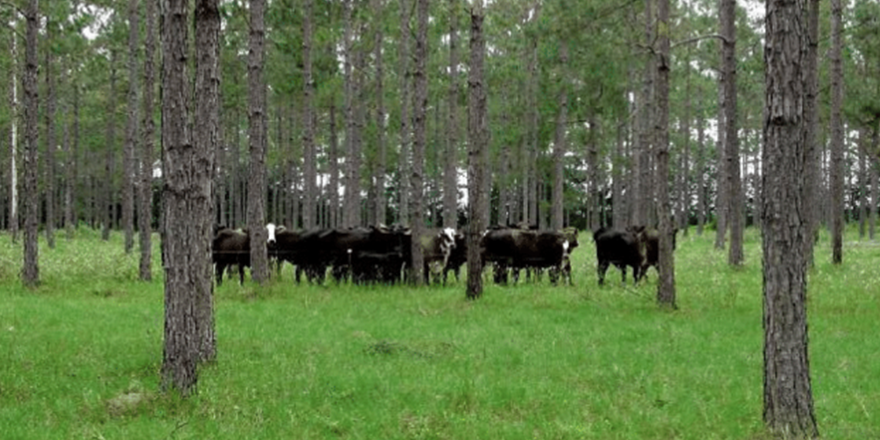
Silvopastoral system provides a diverse range of land uses similar to nature with livestock and trees grown in symbiosis. Not only does this diversify income, but financially rewarding. This land use qualifies for the Afforestation Grant Scheme by MPI to fund tree establishment. Further trials are necessary to substantiate the potential carbon sequestration from this land use but trials from similar conditions overseas are generating exciting results.

Exposed soil reduces soil carbon stocks via oxidation (released as CO2) and/or increased risk of soil erosion at a rate of 35kg C/ha/day leading to sediment contamination in waterways and is one of the main issues facing NZ. Disincentivise and/or educating land users from this practice will mitigate soil carbon losses providing flow on effects. Diversity has a key contribution; diverse plants have higher root biomass, leading to high storage capability contributing to increased soil carbon compared to monocultures.

The most valuable, productive soil types in NZ have the highest soil carbon losses due to intensification, particularly cultivation. The biggest potential for addressing climate change and sequestering carbon from the atmosphere is from our Brown soils that make-up 22% of our land area.

NZ soils are young and generally have high carbon content, unlike soils elsewhere. This reduces the plausibility of using overseas science to adopt in NZ emphasising the need for greater investment in this field. Society seems more interested in space than what I believe is one of the final frontiers.