2026 Nuffield NZ Farming Scholarship. Apply by 17 August 2025. Read More...

Apply for 2026 Nuffield NZ Farming Scholarship by 17 August 2025. More details...

Triennale Nuffield Conference 2017: United Kingdom

David Kiss and Jason Rolfe, 2017 Nuffield Scholars

England – The Triennial

The Triennial was an amazing opportunity to catch-up with not only the other groups who were also travelling on their GFPs, but also to meet and interact with a range of scholars from all countries and years.  They provided a fascinating insight into the Nuffield Scholarship and the opportunities and discussions that have resulted following completion of their scholarship programmes.

Although several impressive businesses were viewed, many of which were using new technology to improve their profitability, sustainability and environmental impact, discussion was very much influenced by the upcoming BREXIT and what this will potentially mean for these businesses.  Some appear to be embracing the opportunity, while others were quite apprehensive about the challenge of competing against lower cost or more efficient operators from other parts of the world (NZ very much included). 

There was considerable discussion regarding the potential for subsidies in farming to be reduced or removed, and NZ was discussed at length as a model as to how this could work.  Many of the businesses that we were shown relied heavily upon manual labour which invariably came from Eastern Europe, a challenge that the UK government will face as they work through discussions with the EU.

Some of the businesses that we were fortunate enough to visit really focused on two key points of interest, the first being the provenance of the food they were selling and ensuring the quality of that produce.

Consumers are becoming increasingly focussed on the ‘story’ of their food.  They want to know how it has been made, where it comes from and what makes it unique. 

We cannot underestimate the importance of this, however any ‘story’ must be supported by a strong and secure supply chain that backs the integrity of claims on the packaging.  I was also struck by the high importance of consistent quality and the impact of this quality on the price that is received.

At Hall Hunter Partnership, the managing director Harry Hall was only interested in supplying berries of ‘A’ quality.  Berries that did not meet ‘A’ quality standards were discarded regardless of any income that could be received from them. 

Together with his level of supply, this meant he had the ability to engage in meaningful discussions with his in-market partners (Waitrose and Marks & Spencer) when it came to marketing his products and achieving the highest possible price (and therefore the best return on his assets).

David Kidd

*****


United Kingdom – “Attitude towards Agriculture and Subsidies”

In the UK, we were lucky enough to attend the Nuffield Triennial Conference, where we got to mix and mingle with many previous Nuffield scholars from around the world. This was a valuable opportunity to make some contacts for further travel and research later in the year.

The common topic of the conference was around ‘Brexit’ and what the future looked like for British Agriculture as they transitioned out of the European Union (EU).

The debate naturally centred around farm subsidies currently received by farmers and whether these would continue and for what. Interesting for me was the large number of farmers, including UK Nuffielders, whose attitude was that they would not survive without subsidies and were very resistant to change.

Delegates at the conference were in agreement that due to Agricultures relatively small contribution to GDP that subsidies were going to be greatly reduced if not removed.


This potentially would create opportunities for the younger generation if older farmers chose to exit the industry. It was clear that the process of leaving the EU was going to be very long and drawn out.

Due to this and the inward focus it brings, they may miss global market access opportunities.

Jason Rolfe

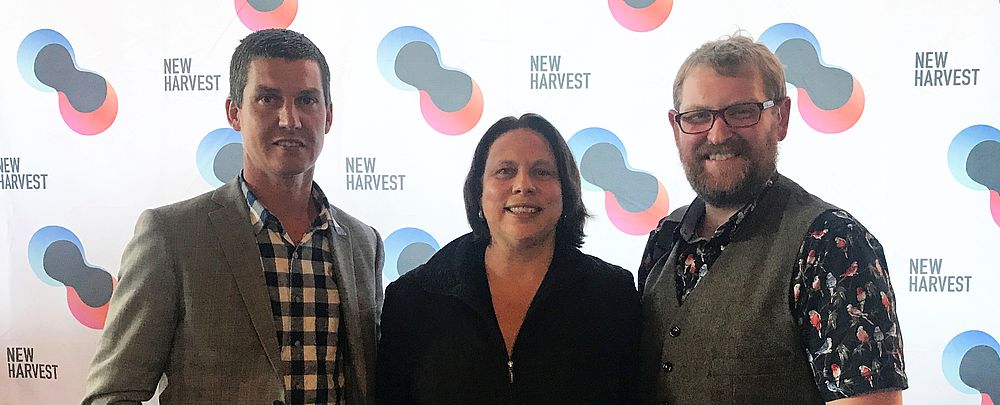
New Harvest Conference New York: Synthetic Food Debate

Richard Fowler, 2016 Nuffield Scholar

The hype and debate around synthetic food seems to keep ramping up with a continuous stream of articles in the farming papers and mentions from so called futurists, but when I attended the New Harvest 2017 conference in New York last month, I got the impression that the rhetoric and the marketing is still out of tune with actual production and sales.

New Harvest is a non-profit group that aims to fund and coordinate research into ‘Cellular Agriculture’ and covers the extreme end of synthetic food including in-vitro meat production, and milk protein synthesis without the need for cows.

When I attended the 2016 conference, I got the impression that despite the incredible amount of funding and interest in the field, there were some serious hurdles like the use of bovine foetal serum for cell growth and the need to get USDA approval for novel technologies. There was also an obvious lack of farmers and food processors in the room, so there was no balanced debate or real-world experience.

This year, after giving my feedback on the 2016 conference, I was asked to speak on a panel alongside a Welsh farmer (also a Nuffield scholar) and two of the leaders from the Cell Ag world. The questions put to us included “what will happen to all the farm animals when they’re not required any more” and “is clean meat the right term to be using to describe cell cultured tissue?”

It was always going to be a tough crowd and there’s a real need to get more farmers and researchers in on the conversation. But I think we managed to get a couple of points across like “YouTube doesn’t represent different farming systems very well” and that “animal agriculture is actually a rich part of human culture.”
To me, the thing that needs the most attention from a New Zealand Agriculture point of view, is pushing back on the claims that are being made by the synthetic food companies.

Stats like ‘98% less water consumption to make cultured milk’ and ‘95% less land to make a veggie burger’ are presented like they are facts when they’re quite frankly rubbish.

I strongly believe that once some real research (instead of modelling) is done on the actual production (instead of forecasts) of synthetic food, then pastoral farming will prove more efficient and therefore cheaper and better for the environment.

That message is being diluted by the millions of dollars being pumped into the marketing of synthetic food and animal agriculture still runs the risk of being shot without a fair trial.

Update from the General Manager

Anne Hindson, November 2017

There has been lots going on since I last updated you in August. This is my summary of the key activities and the highlights of the year.Earlier this month we announced our 2018 Scholars. This edition follows up on our brief, pre-media announcement to you with photos and bios of the scholars. I hope that many of you will get to meet the scholars during their scholarship year.

The 2018 Awards Ceremony was hosted in Parliament by the new Minister of Agriculture, Damian O’Connor in his first few days in office. Having the Minister able to present the awards had special significance given both his father and brother are Nuffield alumni.
 
A second highlight of the Awards evening was hearing the progress of the current scholars. Each shared their preliminary insights on their research topic. With greater emphasis on scholars studying topics that will add value and offer solutions to some of the challenges facing the primary sector, there was strong interest from those attending. The value of this has been reinforced with MPI Director General, Martyn Dunne requesting a presentation from the scholars to MPI staff in the new year.

Having shared information and experiences with the 2017 scholars, the 2018 scholars will have a two-day New Zealand and Industry sector briefing in Wellington on 7/8th December. This is to ensure they understand the global positioning, strategy and key markets of our primary sectors, as well-informed ambassadors of NZ and Nuffield.

New Entity

The New Zealand Rural Leadership Trust has now been operating for 6 months, managing the Nuffield Scholarships and the Kellogg Rural Leadership Programme.

The transition to a standalone entity has taken time, but the organisation is now well set up to meet opportunities and challenges for the future. The legal and accountancy advice required has been significant and I wish to acknowledge the generous support of Mark Tavendale of Tavendale & Partners (legal) and Andrew Hawkes & team at KPMG Christchurch office (accounting) and encourage alumni to support them for any future needs.

The office at Lincoln University has been retained with myself and Lisa Rogers, our Programme Coordinator based there. The Kellogg Rural Leadership Programme is still delivered using Lincoln University venues and facilities.

Investing Partners

Our Strategic Partners are now contributing to leadership pathways by supporting both programmes and are actively involved in the development of leaders for the sector.

During the year, FMG and Agmardt have recommitted to a three-year partnership with the Trust, while Dairy NZ and Beef+Lamb NZ have continued their support.

For our organisation, the value of these industry partners comes in many ways with the National Advisory Group (representatives of the four organisations) providing regular industry insights, developments and views on future leadership needs to help us better shape the programmes. In addition, they have provided meeting space, special project support & Nuffield selection specialist HR support.

Our Programme Partners have grown in number, and their support is equally valuable providing marketing and speaker support to the programme.

Associate Director appointment

The Board recently invited alumni from the last 5 years to expression interest in the Associate Director role being vacated by Dan Shand in November. After considering the five applications, Mat Hocken was selected and will take on the position in January 2018 for 18 months. This is part of our commitment to provide ongoing leadership development opportunities to scholars, with governance a key goal for some.

Upcoming Events

Dave Hurst and his team have finalised the exciting programme for the 2018 Nuffield NZ Biennial Conference in May 2018 in Tauranga and surrounds. They are confidently anticipating a great turnout! You will be receiving information and regular updates over the next few months.

The programme will begin at 2pm on Thursday 10th May to accommodate presentations from the eleven scholars, including the six 2017 scholars with their reports “hot off the press”! The programme features some interesting field visits reflecting the agri-food and business strengths of the Bay of Plenty region.

The 2020 Nuffield Triennial Conference organising committee has been convened under the chairmanship of Michael Tayler with Murray King, Jane Mitchell, Steve Wilkins, Desiree Whittaker (Reid), John Wright, Rebecca Hyde, Anne Hindson and Lisa Rogers on the planning committee. Other alumni will be brought in to assist with specific activities as required.

This event will be a major undertaking so thanks to the team that have taken on the challenge.

We plan to hold the 2020 Nuffield NZ Biennial Conference in conjunction with the Triennial but with a separate programme.
Thank you for your support during the year.

We particularly value the role you play in identifying and encouraging applications from potential and successful new Nuffielders. You are our most powerful and respected advocates.

I look forward to seeing you all in May, in Tauranga for the conference.

Anne Hindson

Jessica Bensemann in Mexico City

Jessica Bensemann, 2016 Nuffield Scholar

I am currently in Mexico City on a temporary assignment for four months as Acting Deputy Head of Mission in the New Zealand Embassy.

It’s an interesting time to be in the region, with the recent conclusion of the Comprehensive and Progressive Agreement for the Trans Pacific Partnership (CPTPP) and the on-going renegotiation of NAFTA. 

Free Trade Agreement negotiations are also underway between New Zealand and the Pacific Alliance countries of Mexico, Peru, Chile and Colombia.  The role of the Embassy is to gather information about the negotiations by meeting with government and industry stakeholders.

My learnings from Nuffield enable me to understand the broader geo-political dynamics at play in production and trade, particularly related to agriculture and food. 

The concept from my report of how a country’s external strategy is driven by their culture and geographical location applies also in Mexico, where they  have become a strong manufacturing country based on lower cost labour, with supply chains integrated into the United States.

Mexico is New Zealand’s largest trading partner in Latin America, and while food and beverage exports dominates the profile, there are an increasing number of innovative New Zealand companies seeing Mexico as a platform for entry into the region.

A period of disruption in traditional international relationships presents opportunities for New Zealand to think about new business models that respond to the needs and challenges facing other countries in this period of uncertainty.

Aussie – our competitor or our mate?

Dan Steele, 2015 Nuffield Scholar

In September I attended Australia’s Nuffield conference in Darwin to catch up with the scholars I had met before and to meet some new ones.

The Northern Territory was an interesting part of the world to see, and what better way to explore new territory and gain some valuable insights than a Nuffield tour? I was the only Kiwi to attend, and found myself in the company of one English, one Irish and one Dutch scholar, and many Australians.

The Northern Territory?

Well, it’s hot, flat and full of crocodiles, and it has been periodically bombed, invaded and flattened by cyclones. The tour offered a top look around a very diverse and difficult area, from buffalo milking, croc farming and raising barramundi by the tone to growing durians, jackfruit and oranges bigger than your head.

We saw and tasted much of what the far north of Australia has to offer. As one of the local scholars told us, a lot of the terrain is ‘GAFA country’, it has great amounts of… not much.

Nonetheless, the northern half of Australia produces 54% of Australia’s export, and that from 5% of the population! Most of their export products come from under the ground, I believe – mainly mineral fuels and ores.

Darwin and the Northern Territory consider themselves the gateway for products from Asia, with 400 million people only a few hours flight time away. Therefore, Asia’s close to one billion emerging middle class and their strong demand for quality produce, formed a significant theme of the conference.

Also, some problems that emerge when trading with Asia were cited: animal welfare, over-regulation and a lack of labour and agricultural leadership. Surprisingly, there was no mention of synthetic foods becoming an issue – a major point of discussion in New Zealand at the moment.

From the conference

…and the Australian scholars in particular, I gathered that New Zealand is seen as having a fantastic rugby team, a jointly named plant called ‘manuka’ (which they strongly claim) and a very strong business model: we know how to market the quality and story of our products worldwide.

The Australian Wool Innovation company seems to be doing some good work educating people around the planet. They have partnered with the global high fashion brand Prada whose salespeople will be showcasing the health and quality benefits of wool products all over the world – quite a coup!

New Zealand is rather competitive with Aussie – but look, they are quite easy to beat at rugby. I believe that we should form strategic partnerships with our mates over the ditch. Sort out a joint honey plan to take on the world. Try to get alongside some of the good work they are doing with wool and utilize their gateway into Asia.

We are very different countries but surely there could be some great strength in unity. Nuffield could lead the way in forming some of those relationships.

Wicked Challenges

Mat Hocken, 2017 Nuffield Scholar

What comes before the eureka moment? What is the latest thinking and what are the cutting-edge innovations in the agriculture and food? My goal has been to understand what generates innovation and I’ve been searching for innovative people, ideas and places around the world. 

Wicked challenges

At an Agtech conference in Silicon Valley, Google’s head of global food services Michiel Bakker spoke about the wicked problems in agriculture and food systems.

A wicked problem has complex, incomplete, changing and contradictory elements. There are no black and white answers but rather trade-offs. And often when a solution is found to one problem, another problem emerges.

Producing nutritious food for 7.6 billion people (rising to 9-10 billion in 2050), with less agricultural land, a smaller environmental footprint, climate change and satisfying a multiplicity of consumer demands, while improving livelihoods for rural communities is a wicked problem.

How we approach these challenges will shape our agriculture and food systems.

Principles

When faced with wicked problems we need to think differently. We need to innovate. How are we thinking about innovation? What will generate innovation in agriculture? Do we have a common understanding and language for the process?

From my travels I have observed some common principles of agri-innovation:

1. Innovation can be messy. It is not a linear process.

We need to borrow and embrace concepts from other sectors, such as the tech sector’s ‘launch and iterate’ and ‘fail fast’. By focusing and limiting time-commitment you generate energy, speed and de-risk involvement.

2. We need a farmer-driven and consumer focused approach.

I studied the Dutch design innovation model, which utilizes their smartest minds in research and business, but centres on forward thinking farmers who bring hands-on knowledge, practical minds, drive, passion and entrepreneurial skills. Farmers need to be involved in the end-to-end innovation process and they need to put their hand-up and drive the changes they want to see.

3. The innovation eco-system is critical.

Researchers, farmers, advisors, agronomists, start-ups, corporates, finance, incubators, accelerators must contribute and prosper together. Going alone results in failure, the potential for disruption, or the inability to scale and make an impact.

4. We need places, both physical and virtual to get people together regularly.

We need a diverse collision of ideas, the opportunity for serendipity to play its part in bringing ideas and people together. 

5. Innovation takes place at the intersection of different sectors and up and down the supply chain.

It might be between health care, regional development, or city development (new technology such as autonomous vehicles developed for the urban masses that can cross-over to agriculture). How can we connect the tech-consumers to producers in meaningful ways that adds value for both? 

6. Innovation must be networked.

Israeli innovation occurs in well-organised network clusters, which are strong drivers of innovation. Regions must also be networked nationally. We must partner with other hotspots of innovation around the world. The challenges we face are universal, and they require genuine collaboration and effective networks.

The New Zealand Way

The 2017 Global Innovation Index New Zealand ranks 21, just ahead of Australia and China. We have many of the building blocks for innovation. We have excellent universities and researchers, an open business environment, a growing start-up scene and highly efficient farmers. We bring all this together in a closely connected network that is relatively easily and quickly accessible.

Building on our history of creative leaders and businesses, we must focus our resources and energy and observe the principles of great innovation. And if we do that, what would success look like?

For me success would be a diverse (sectoral and by size) agriculture and food sector producing quality products supported by ‘pro-sumers’ (consumers that love our products).

It would be a thriving agri-innovation sector leading global developments.

It would be about building trust with consumers and society. It would be helping build a future for farmers and their children to make their lives better.

It would be building successful partnerships and networks in our regions, connecting them nationally, and linking internationally. 


Healthy environment and healthy food go hand in hand

Rebecca Hyde, 2017 Nuffield Scholar

This is all occurring at a time when our target market of premium consumers is becoming more conscious about the health benefits of the food they are consuming.

The question is, how do we link the two?

Regulation is not always the best way to achieve change but I do believe it has woken our farmers up to the changes that need to happen within the farm gate.

Are we prepared to stop calling ourselves farmers and start calling ourselves food producers? There is a phenomenal amount of work by farmers and industry going in to improving the environment we farm in, yet we haven’t managed to collaborate to make this movement as powerful as it could be. I believe there needs to be agreement at the top of our organisations to work together to achieve the outcomes.

The Danish Food and Agricultural council in central Copenhagen was impressive to visit, all the land based agriculture sectors are represented under one roof. While they work independently a lot of the time they very much work together regarding environment, urban engagement, promoting the industry and promoting the health benefits of the food produced.

I’d love to see a rural New Zealand where instead of talking about Sarah the dairy farmer or Tom the sheep and beef farmer we talk about Sarah and Tom the food producers who farm in the same environment.

I do believe that everyone in New Zealand is after the same outcome – a sustainable environment – but we have managed to muddy the waters.

The theme for the Nuffield triennial conference was Farming Fit for Food. A very relevant topic as our consumers get further removed from how and where their food is being produced. During a presentation the LEAF Chief Executive Caroline Drummond made a strong link between the health of the environment and the health of the food it produces.

Twenty years ago in the UK talk around environmental management was very topical. If at that time they had linked the connection of environmental management to the health of the food, they believe the consumer buy in to the importance of farmers would have been considerably greater.

In New Zealand you don’t have to look far to find a discussion regarding environmental management and water quality.

We are in the prime position to link this to the benefits of the real food we are producing, not only domestically but internationally for the benefit for both farmers and consumers.

There is a connection to be made between the health of the food we eat and the health of the environment it is produced in. As an industry we need to highlight this connection and communicate it to our fellow New Zealanders and consumers abroad.

We are a proud food producing nation. Let’s make the link together.

Juliet Maclean: A Note from the Chair

November 2017

Since my last note, not only do we have a new government, we also have five new Nuffield scholars. 

The businesses of farming and growing have changed dramatically over the past decade. Historically, it was adequate for farmers to express a personal desire to care for their livestock and land and to ‘do the right thing’ when undertaking development projects. There was little scrutiny and our freedom to operate was largely unlimited.

This is no longer the case, with a complicated landscape of approvals, monitoring and reporting, compliance and restrictions now changing the way rural businesses are operated. Both the general public and the regulators are lifting the bar on how farmers and growers produce food.

Many a rigorous debate has navigated the pros and cons of changing nutrient management regimes, protecting our waterways, reducing waste, keeping our people safe from harm, sourcing adequate capital to ensure financially robust businesses, biosecurity, customer centric marketing,  succession and the place for exponential technology.

I believe that sustainable and successful rural businesses will be led by those who stay abreast  of these and many more topical issues, develop an ability to  critically analyse the options, then execute with excellence.

With this backdrop and the Nuffield objective of encouraging global vision, leadership and innovation, your board of Trustees agonises over their decisions to select the most appropriate scholars from those who apply. We seek diversity, the potential to demonstrate thought leadership, to gather and share knowledge, to understand different aspects of our production to plate supply chain,  to influence positive future outcomes for New Zealand and to ‘fit’ with our proud Nuffield culture.

Our agri business ownership structures are evolving and not all farmers own land, not all growers work full time within the farm gate. The future of work is such that technology will play a bigger part and a first chosen career is likely to be followed by many iterations of learning and doing as our future work-force reinvents themselves to stay relevant and engaged.

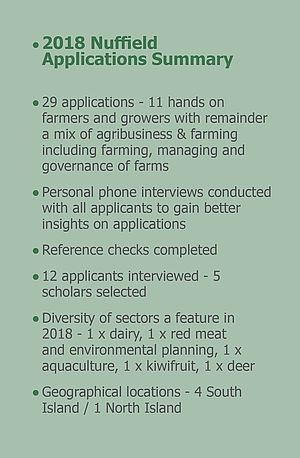
Our system for short listing, reference checking and interviewing scholar applicants for one of five available scholarships is now a very thorough one and a demonstration of Nuffield NZ focusing on professional management processes with outcomes which have relevance for the future.

Over recent years, the selection panel has balanced all these factors to select scholars whom we believe are ‘fit for the future. Some are hands on farmers and growers and others work alongside them to provide information and advice which is required to operate rural businesses.

What these scholars all have in common is a sense of self responsibility to learn and lead and a strong desire to influence positive future outcomes for our rural ecosystem – communities, people, the environment and business. I believe a diverse and  well networked Nuffield New Zealand will continue to be a national asset.

I look forward to seeing you all at the conference in Tauranga in May and I trust you’ve saved the date already. Our recent scholars are excited about presenting to you and are ready for your feedback and searching questions. They know this is the ‘Nuffield Way’.

Enjoy a safe and fulfilling summer, fun across the festive season and look forward to 2018 with excitement and anticipation; we are all privileged to have the opportunity to enjoy another year!

Kind regards
Juliet Maclean

The Hunger Winter And The Evolution Of Subsidies

By Simon Cook, 2018 Nuffield New Zealand Scholar

The theme of this year’s CSC in the Netherlands was very much about learning and understanding the history of Dutch agriculture and how and why they have got to where they are now. As a New Zealand farmer, we often hear about the long term subsidies paid to farmers in the EU, without ever understanding why these subsidies were introduced in the first place.

During our Nuffield conference in the Netherlands we had a number of speakers fill that gap in our knowledge with the story behind the introduction of subsidies.

After a day of beginning to meet each other and an afternoon farm visit, the second day of our CSC got off to an interesting start, with a presentation being given to the scholars while they sat in the pool in their togs – an introduction to business models.

Once back in the conference room we had some moving presentations focused around WW2 and the famine bought on as the war drew to a close. We had a presentation by Mr Jaques Von Trammel who was a young Jewish boy forced to grow up quickly as he lived in constant fear of being caught by German forces. We were then given the story of Leny Adelaar-Polak, a survivor of the medical experiments in Auschwitz. Leny was the only member of her extended family to survive the war.

We also had a presentation by Ingrid de Zwarte who completed a PhD thesis titled “The Hunger Winter” which focused on the famine that struck the Netherlands as WW2 drew to a close. In the winter of 1945 the population of the Netherlands were struck by food shortages.

Bought on by a shortage of local produce and failing supply lines from Germany, the population of Netherlands suffered a severe famine. During April 1945, the average daily calorie intake dropped below 500 kcal, less than a quarter of the daily average an adult consumes today.

This mass starvation and resulting deaths galvanised the population to ensure that farms completely de-stocked and devastated by the war would be given whatever support was needed to get back up and running, to ensure this situation would never happen again. Food security became the utmost priority in the Netherlands and across Europe.

It was interesting to reflect on the low status farming holds in countries like New Zealand and Australia, where there has never been a food shortage, and compare it to countries like the Netherlands and Japan who have known critical food shortages and truly understand the importance of agriculture as a necessity of life along with fresh water and clean air.

One of the major steps towards ensuring not only food security but also political stability in Europe came in 1958 with the formation of the EU. The initial trade agreements, signed up by the six founding nations, that were to form the basis of the EU, were designed to control the supply of steel and coal, the two raw ingredients required to manufacture canons and therefore wage war. By the late 70’s most European countries and the UK had also joined the EU.

Now that I have a better understanding of the environment and pressures that lead to the formation of the subsidies I have a more open mind towards their purpose and introduction.

The question is whether they are still valid in today’s society and it will be interesting to follow the outcome of Brexit which will remove the direct payment subsidies to farmers in the UK, and may also challenge the future of farming subsidies across Europe.

Re-define Communicators as the strategists and thought leaders they are

Nadine Porter, 2017 Nuffield Scholar

Right now, there is an underground subtle global war being waged in the agri-food sector to secure consumers hearts and minds and New Zealand food producers are not immune to becoming one of the many victims.
 
It’s not being fought in research laboratories nor is it being fought in disruptive ag-tech start-up boardrooms. It’s also not being fought on our farms…no – this war is being waged in savvy, futuristic communication and marketing thinking rooms with big budgets and even bigger ideas. 
 
When we think of communications – we traditionally think of PR spin-doctors or journalists charged with making an organisation look good – but the reality is far removed. That old school model is being disrupted and we must adapt or face being left behind. 
 
Communicators should be called what they are in this global context – change makers, and thought of as a crucial part of thought leadership within any business. They hold all the keys – and frankly, we’ve been guilty of leaving them in the door to be snatched at will. 
 
These skilled strategists have their finger on a consumer’s pulse at any given moment in time and cast their eyes ahead to what might make that pulse beat faster or slower. They are adept at altering a narrative mid-course, and banishing it to the trash can. 
 
No longer is it necessary for these people to hold a Communications or Media degree. Put simply, successful global organisations know communicators often have extraordinarily high EQ, and use it to intercept what might be the next trend, fad, or feeling.
 
“They use empathy as a weapon and in this instant, many of our food sectors are the target”.
 
Take the all-powerful organic movement in the United States where Mums are being carefully nurtured and developed to a point of hysteria around pesticides. Rightly or wrongly, they are dropping well-timed ‘studies’ onto media that make great sound-bites. The Pesticide Action Group of North America only have to mention 1/3rd of population have cancer and then claim pesticides are ‘part’  (note – no quantitative data given) of that reason and you understand just how vital the message becomes.  
 
Recently a group called Moms Across America tested five top orange juice brands and found glyphosate traces in all of them. The levels were low and considered non-harmful but the damage was done. Perceptions were formed and the true narrative lost, the moment the results were ‘spin’ printed.   
 
Yet we knew this was coming. We’ve been listening to the ongoing glyphosate debate for years but what was/is our strategy to combat it? 
 
‘Clean meat’ is another strategy dreamed up by futuristic storytellers. Used to describe alternative protein burgers such as the Impossible Foods (bleeds and has texture and taste of meat but is made from plant protein) and Beyond Meats offerings, it has captured imaginations worldwide. Never mind that’s it’s not meat – because it captures succinctly in one soundbite the perceived fear Mums carry – that meat might be carcinogenic.  
 
The rise of populist politics – of Trump’s ‘Make America Great Again’, and the Brexit slogan ‘340 million pounds extra a week for NHS’ as the clincher for exiting the EU illustrate the power of a few words positioned to the nuance of the moment. 
 
So what do we do? 
 
Why not take a leaf out of Monsanto’s book – where they invest heavily in thought leaders, strategists and the message. They do comprehensive long-term research globally and know that science by itself, such as in the glyphosate debate, does not save the day.  
 
A visit to their St Louis headquarters proved to be inspiring. For the world’s ‘most hated company’ they sure had their finger on the pulse. Monsanto learnt through pain. They accept they got it wrong when it came to selling biotech in Europe. They realized their biggest failure a decade ago was assuming European consumers hold the same values as American consumers.  
 
Their research has told them that as a food industry collectively, our messaging has been inconsistent and more importantly, our terminology is completely wrong. For example, global research has told them consumers don’t understand the terms ‘conventional’ or ‘traditional’ farming. GM, GE and CRISPR is one blurred topic and sustainability is a buzzword to them, yet they recognize and bond with the term environmental sustainability. 
 
Consumers have told them to stop talking about producing more and to concentrate instead on the message of ‘using fewer natural resources’. Don’t use the term revolutionary, Monsanto found – instead use the more positive evolutionary. Moreover, they don’t want us to celebrate our past (which we are won’t to do in New Zealand, especially when talking about becoming subsidy free, and our low cost grass system). They want us to look forward, not back. 
 
And, if you are in any doubt to where New Zealand sits in understanding how to taper a message, look no further than what we call those that grow our food. From farmers, to primary producers to agriculturalists – none of those terms connect. Our new Ministry of Agriculture is a step in the right direction… but if we were really on the pulse, it would have simply been called the Ministry of Food.