
nuffield
Exporting Aotearoa: A new business model for nutrition and health-focused export companies

Executive Summary
The challenge that Aotearoa-New Zealand faces is finding balance between retaining and restoring our environment, whilst achieving social and economic benefit. This is not just our challenge; it is a response to a global call for better outcomes for our planet and us.
This report is targeted at businesses and industries within New Zealand who export, or who aspire to export. Businesses who are struggling to work out how to change their production model and increase their margins. Businesses who want to change their production methods but are unsure how to justify the change or cost.
My report is a thought-piece; it is about a different approach to our export potential, what we aspire to be in the future. It approaches a market demand first that is focused on the customer and the problem. The focus is neither on production nor on the environment; they are simply components of the solution. I want this to start the conversations of why we can’t continue to walk down the same path …
There is urgency and risk for us all and the rate of change is unprecedented. My approach to this has been to explore how Aotearoa food producers can gain more export value, connect with their consumers in-market, and provide solutions to the problems we face, all at the same time?
If New Zealand producers and exporters became the health and nutrition solution providers to the world, this would fuel our aspirations for export growth, help us gain new customers, and drive change to our production systems and environment. The problem is the health and nutrition of the world’s consumers.
The business model of developing products and pushing them into market is not working. If we don’t know what our consumers want, then how can we presume to design a product for them. In New Zealand the food products we produce, and design, are largely for ourselves, our culture and our needs and wants. We then transition these domestic offerings to our export markets. The markets are not the same.
The proposed solution is to change the priorities of our business models to first identifying an opportunity or problem, then finding a customer to work with. The product can then be designed as a solution to a problem, and we remove the risk of the unknown.
When approaching an export market, we should design where our business is going to end up, rather than treat it like a progression of steps that need to be dealt with as they are encountered.
“By unbundling and changing our business model, our products and customer mix, we create a pathway for our businesses to be more adaptive and more profitable. It then becomes a natural progression to align farming practices that enhance the products’ value. The backfill of sustainability is safer and far more palatable to the producer if it is market and customer led.” Andy Elliot
The environment, our diets, our health and the burgeoning challenge to sustain a world’s population. This is our horizon for market growth and to provide differentiation from other countries. It will help all New Zealand identify with what it means to be sustainable or to demonstrate Kaitiakitanga.
This strategy will enable better utilization of waste: in fact that’s probably one of the best places to start with this strategy. By developing nutritional formats and supplements, we create opportunities for new varieties and different production methods to become established.
When the consumer-focused breeding attributes like taste, shape, and colour that our whole food offerings require are no longer our only value propositions, it becomes easier to change our growing practices.
This will allow faster growth in organics and into more regenerative farming methods. The transition will be due to our markets, our customers and the consumers requesting this change: it will be market pull. Discerning customers shopping for health and nutrition products want transparency. That means full disclosure of how the product was produced and its environmental impact. Regenerative agriculture and sustainable aquaculture will become the new wealth creators of our natural products export sectors. The environmental credentials that we are all leveraging currently will become enhanced.
An estimated compound annual growth rate (CAGR) of 9%1 is predicted for nutraceuticals over the next eight years. The natural products sector, a sector is already worth NZ$1.4B.2 This makes it a 4% contributor to our 2018 total Food and Beverage export value. This value is derived from approximately 1-2% of our total agri-food production.
Our current starting point in 2012 was a goal to double the export earnings from the primary industries by 2025.3 This would have seen the value grow from around NZ$33 billion to somewhere in the vicinity of NZ$66 billion. On current projections we will not achieve this.
- Currently just over 1% of our primary industry production is earning $1.4B, from largely commodity-scale sales; if this could move to 5%, it would represent growth to $4.3B.
- The real step change is if we were able to shift this from these largely commoditised transactions to branded consumer retail-ready products; if this happened, it would not be unrealistic to expect this value to grow from $4.3B to over $20B.
We cannot get there unless something changes; that something is how we approach our markets and customers and our aspirations for future value creation.
Alternative proteins, stem cell production and the enormous investment that is occurring in a handful of companies internationally should be a major wakeup call. It should be our catalyst to embrace this change with our own products and formulations that showcase the best of everything that New Zealand produces. This environment is an opportunity, not a threat.
This opportunity will also pave the way for identification of new novel compounds from our existing production and supply base and for the development of new sectors focused entirely on nutrition for health and wellness. Through my research and case studies, some key factors in this customer focused ingredient space have emerged:
- Potential customers and existing customers can undertake innovation for you.
- Relationship with customer is the new pathway to market and expansion vehicle for growth.
- Relationships are everything in diversifying into ingredients and into health markets.
- There should be no waste; everything has a value when nutrition is the framework.
- Breeding and science can play backfill if consumer demand is established.
- Health and nutrition consumers demand transparency and quality.
- Providing solutions to customers’ problems is far safer than supplying wants.
In summary, this opportunity for health, nutrition, function and ingredients is not new, it has always been here. New Zealand is simply not reaching anywhere near its potential in this space. This report explores some of those reasons why not, and expands on the potential opportunity we have to grow real value.
This report concludes by providing a step-by-step description of a business model that could be used to approach this opportunity. It is not a definitive solution, but rather serves as a guide to what the approach might look like for high value export return. It should be adapted and configured to a problem, and a subsequent solution developed.
Farm planning for a sustainable future.

Executive Summary
New Zealand farmers are being confronted by the need to improve multiple environmental outcomes while still returning a profit. How the primary sector continues to evolve to deliver sustainable returns for farmers responding to increasing environmental pressures, is one of the defining challenges of our time and the focus of this Nuffield research.
The purpose of this study was to investigate tools to facilitate optimisation of farm systems and improve sustainable outcomes in New Zealand agriculture.
The main recommendations to come from this study include:
(1) Farm Environmental Planning should be prioritised, appropriately resourced and supported as a primary means to drive sustainable outcomes in New Zealand agriculture. Critical to this are a number of enabling components:
- Farm Environment Plans (FEPs) should seek holistic objectives – considering environmental, economic as well as social and cultural aspects. Within this, environmental considerations should be broader than often articulated, considering traditional aspects relating to water quality and soil conservation, as well as indigenous biodiversity, ecosystem services and greenhouse gas emissions at farm and catchment scale.
- Investment from industry as well as regional and central government should be aligned to aid in the design, delivery and implementation of FEPs and farmer support via targeted environmental stewardship incentives should be explored.
- To encourage innovation and farmer aspiration, FEPs should be enabled outside of regulation, with processors (e.g. meat, wool, milk companies) and industry bodies taking a leading role as well as providing a link to market and the consumer.
- Farmers should be linked with trusted advisors who are able to provide ongoing, tailored and farm specific advice prioritising long term outcomes and farmer investments as part of the FEP.
(2) Sustainable Management Practices (SMPs) should be promoted and supported to help provide farmers with clarity regarding on-farm management.
- SMPs should be developed in collaboration with a wide group of stakeholders (e.g. farmers, industry, regional councils, government, iwi and environmental NGOs) where possible to ensure wide support and collective buy-in.
- Implementation guidelines for SMPs should recognise the dynamic and varied New Zealand farming context.
(3) Climate Smart Agriculture should be socialised by the New Zealand agricultural industry as a valuable component of farm environmental planning – prioritising the ‘triple win’ of increasing productivity, enhancing resilience to the effects of climate, as well as reducing greenhouse gas emissions.
(4) New Zealand farmers should be supported by relevant industry groups to have access to appropriate farm systems modelling tools and specialist support to inform land use and land management decision making.
- Farm systems modelling informed by robust science should be recognised as a critical component of farm environment planning. Farm systems modelling targeting holistic and sustainable outcomes can help guide farm environmental planning and inform critical decision making with regards to land use suitability and farm design.
(5) Effective farmer extension at both farm and catchment scale to enhance farm sustainability and ensure effective uptake of relevant technologies should be prioritised by the New Zealand government.
- Government investment into the agricultural sector needs to go beyond traditional research and development (R&D), and prioritise effective extension and farmer support (research, development and extension – RD&E). Comprehensive extension will be critical to enable sustainable management practices at both farm and catchment scale.
The future of New Zealand farming is laced with both challenge and opportunity; however, sustainable agriculture is not some far off, unattainable goal. To truly optimise farm systems in New Zealand, we must take a holistic approach, utilising a range of enabling tools to help farmers make informed decisions regarding both land use and management practice.
 Farm planning for a sustainable future. – Turi McFarlane 2018
Nuffield International Contemporary Scholars Conference: March 2018, Zeewolde, The Netherlands
Photo: The New Zealand Continguent in Zeewolde, Netherlands
This year 80 Nuffield scholars from 12 countries met in the Netherlands, in Zeewolde an agricultural area around 40 mins from Amsterdam. The location as part of a marina apartment complex was ideal for group dynamics as it was some distance from the closest town, but across from a holiday park which had restaurants and recreation facilities. Despite the “Beast of the East” hitting with minus temperatures, spirits and social interactions were high. (Insert the photo of venue)
The diversity of the group was expanded with invitations extended to African, Japanese and other guests as well as the Nuffield International Scholars. The 2018 scholars followed the lead of the 2017 group and did a short tour together prior to the start of the CSC visiting organisations and attending events in France and the Netherlands creating a good bond and looking at things from a NZ perspective before meeting the wider group.
The following are the reflections of the Scholars of their eight days with different messages and sharing of insights picked up.
2018 NEW ZEALAND SCHOLAR CSC REFLECTIONS
‘The Hunger Winter And The Evolution Of Subsidies’, Simon Cook
‘Strengthen Our Adaptability by Developing Collaborative Models’, Andy Elliot
‘The Future As We Know It’, Solis Norton
‘The Tiny Country That Feeds The World’, Turi McFarland
Nuffield Loses A Great Scholar
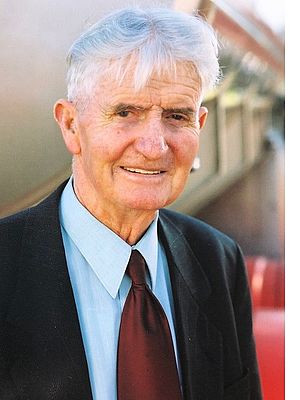 The Nuffield alumni lost one of its oldest surviving scholars with the death of John O’Connor in March. Father of 2015 scholar, Bede and Agriculture Minister Damien O’Connor, the connection with the O’Connor family has been strong.John O’Connor, ONZM, was a passionate advocate for the dairy industry and was regarded as a pioneer for introducing dairy to the Buller district on the West Coast.
As well as a Nuffield Scholar, he was Federated Farmers National Dairy Chair, West Coast Provincial President and served for 48 years as a director on the Buller Valley, Karamea and Westland Dairy Companies.
A keen sports follower and marathon runner, Mr O’Connor was an active member of the West Coast Rural Support Trust even in his later life.
"If you’re a Coaster you’ll really appreciate the challenges there is farming near the mighty Buller River. Mr O’Connor epitomised the true West Coaster spirit through his determination and resilience to withstand the local climatic extremities. He also valiantly battled the scourge of TB in cattle and served on the RAHC – Tb Free as it is now called.
The West Coast farming community has lost one it its biggest battlers – he will be sorely missed," reflected Katie Milne, President of Federated Farmers.
West Coast dairy farmer and close friend Ian Robb, remembers Mr O’Connor’s engaging sense of humour and strong moral values.
"John had a kind, wonderful personality, he could relate to most people and the trials and tribulations they faced as farmers. He would always back the underdog and would seek out those doing it tough, and this was before the days of the Rural Support Trusts.
As his name goes, he definitely had that Irish charm. He was also a great orator and was adept at getting his point of view over in difficult conversations without offending anyone."
In his seventies, Mr O’Connor was so formidable and respected, he was still being re-elected to the Westland Dairy Companies when up against strong candidates.
"He didn’t always agree for example with the merging of the Coast’s dairy companies, but he soon got on with it, because he wanted farmers to succeed collectively," said Mr Robb.
Mr O’Connor is survived by his wife of 62 years, Del, six children and 20 grandchildren.
The Tiny Country That Feeds The World
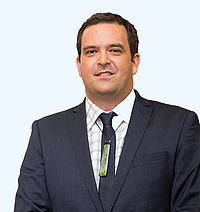 By Turi McFarlane, 2018 Nuffield New Zealand Scholar
With a much-touted reputation as the tiny country which feeds the world, The Netherlands is the world’s second largest exporter of agricultural products after the USA. The Dutch agricultural sector is diverse and supplies a quarter of the vegetables that are exported from Europe amongst a range of other produce.
During the CSC, we were privileged to hear and visit a wide range of farmers, researchers and rural professionals who emphasised several key themes over the week:
Farming land and succession
Three farmers a day leave farming in The Netherlands and with agricultural land selling for € 60-100,000 per hectare there are massive challenges for the next generation of farmers looking to own their own farm.
Feeding the world versus niche markets
With the world population expected to grow to almost 10 billion by the year 2050, we are regularly presented with the challenge of “feeding the world”. However, how does this align with obvious opportunities for us as a nation to focus on creating high value products which command a premium price in niche markets? Food security, particularly in Africa which is expected to see the most growth over this period is critical to us all, yet perhaps our greatest opportunity as a nation is to provide technical advice and assistance to improve the food self-sufficiency in developing countries?
New technologies
A number of new technologies were mentioned throughout the week as potential game changers. CRISPR-Cas9 genome editing is definitely seen as having great potential, offering dramatic advances in speed, scope and scale of genetic improvement. However, the debate around GM and gene editing policy is obviously alive and well – “The CRISPR conundrum”.
We also heard about research at Waginengen University in The Netherlands which has highlighted a natural variation for photosynthesis in plants. With this knowledge they are hoping to breed crops in the future which make better use of photosynthesis – opening the possibility for much higher yields and capture of carbon dioxide.
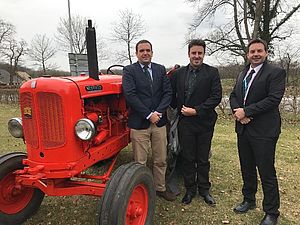
To finish – a few interesting quotes from speakers over the week included:
“Every 20 years, the number of people depending on one farmer doubles in developed countries”.
“Climate change is here”.
“Agricultural land per capita has halved since the 1960s (worldwide)”.
“1/3 of globally produced food is wasted”.
“Lactose intolerance is more popular than skinny jeans”.
Enabling better environmental outcomes in agriculture.
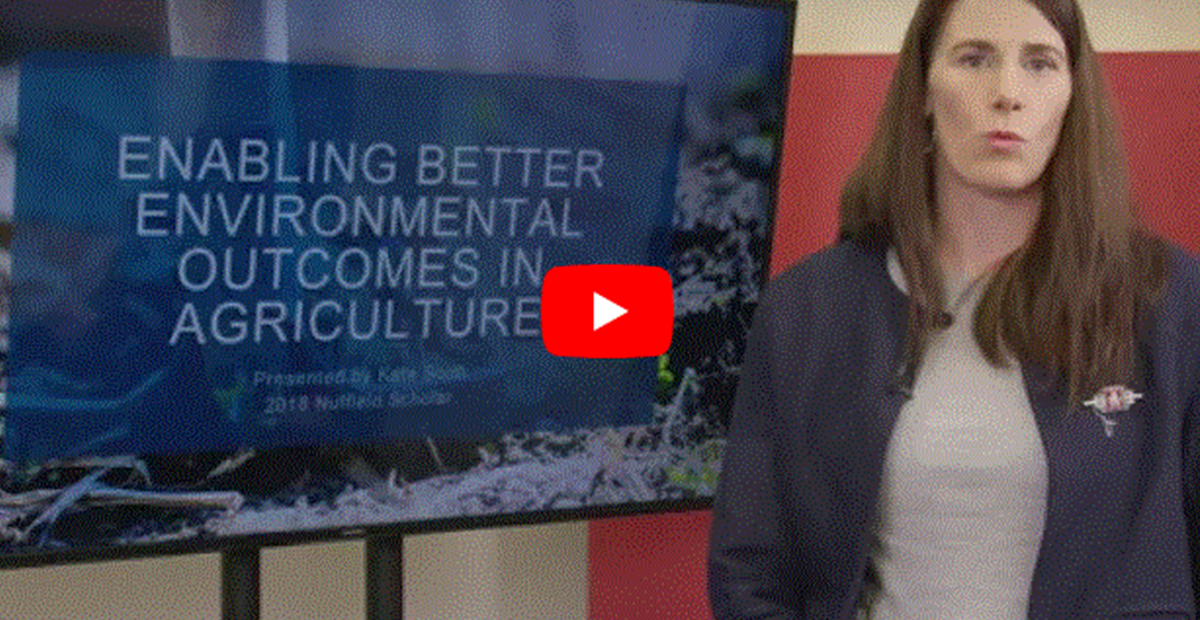
Executive Summary
The current world of agriculture is uncertain, with challenges of climate change, water quality, animal welfare, the rise of plant-based proteins, and of course feeding an estimated 9.7 billion people by 20501. However as global agriculture stands on the cusp of significant change, New Zealand’s ability to adapt quickly will define the degree of opportunity available for us to capture.
New Zealand must sit in the driver’s seat and must come together as a sector and as a nation to achieve effective outcomes for both agriculture and the environment.
Globally New Zealand agriculture is punching well above its weight in terms of both its understanding of the impacts of its activities on the environment, but also in its recognition of the need to change. The key to success will be the development of an array of ‘change inducing tools’ that can be called upon by the sector to enable better environmental outcomes in agriculture.
Whilst it is certain that we have not achieved all that is needed in terms of reducing the impacts of agriculture on the environment, and there remains much which can continue to be done, compared to many other intensive agricultural nations, we have at least started along the path towards finding solutions to reduce the environmental footprint of agriculture.
The purpose of this research is to challenge the status quo, encourage conversation and debate, and spark action for transformational change within the agriculture sector in New Zealand. In this report I have focused on the ways the New Zealand agricultural sector, Local, and Central Government can work to enable better environmental outcomes in agriculture utilising policy and technology tools. My research has identified five key challenges that we need to address to ensure we can successfully reduce the environmental impacts of agriculture. We must build momentum and seek to engage broadly, in order to have any chance of realising success.
The challenges agriculture face are numerous and best described in the context of a “wicked problem”, that is, one which is not easy to define, one which has no easy answer, one which has conflicting and contradictory pieces of the puzzle, and one where the playing field changes frequently.
The first challenge is goal setting. My observation is that there is broad consensus on the need to change, however we need clear objectives to guide us on a path to transformational change. Otherwise how do we go about making this change if we don’t know where we are going, or how we will measure our success?
This plan must set out long term, ambitious goals that define what agriculture in New Zealand will look like in the future, what we will value, who our consumers will be, how our communities and our environment will look. We must have a Big Hairy Audacious Goal (BHAG) for New Zealand agriculture. We need to have all of the issues on our agenda when working through what our objectives and goals will be. The purpose of a goal is to help drive New Zealand towards a more sustainable agriculture framework for the future and to help preserve our position as truly global agricultural leaders. Until we have a vision, any change to our approach remains piecemeal and uncoordinated and unlikely to reduce the footprint of agriculture in a meaningful and measurable way.
The second challenge is taking a holistic approach. Our path must encompass holistic management that is outward looking. We can no longer continue to look at the challenges of agriculture as isolated component parts, and we cannot define our goals and objectives without bold leadership at all levels.
We must encompass holistic, community centric, collaborative decision making. The current decisionmaking tools such as the Resource Management Act 1991 (RMA) are often isolated from the principles of holistic management, despite being an effects-based planning mechanism.
If an RMA framework could be applied to an agreed strategy for agriculture in New Zealand, which had been developed on the principles of holistic management and evidenced based decision making then we may well be in a position to reduce the environmental footprint of agriculture within agreed tolerances relating to the impacts on the economics of farming. It is, however, my belief that an environmentally sustainable business will also be an economically sustainable business. We must recognise agriculture as a critically important New Zealand and global enterprise, but it is about achieving the three pillars of sustainability; Environmental Prosperity, Economic Prosperity and Social Prosperity.
A holistic approach supported by an agreed strategy will ensure balance between environmental, economic and social indicators. However, engaging with all New Zealanders will be critical to solving the challenges that we face. In this case engagement with all of New Zealand is about overcoming the perception that farming is bad for the environment, rather than requiring each and every New Zealander to actually patriciate. This links to my first recommendation of the need for effective engagement and informed robust conversations, which can and should provide a platform for sharing the good news stories about agriculture and the environment.
The third challenge is driving evidenced based decision making. This must play a lead role in shaping our goals and objectives and must inform the debate that we need to have about the future of agriculture and the environment. A good example of citizen led evidence-based decision making comes from an Irish example, known as the “Citizens Assembly”.
The assembly strives for “rational and reasoned discussion” and uses a panel of experts drawn from across the political spectrum to guide the deliberations. The discussions aim to build consensus on contentious issues through informed debate.
A process of this nature has the potential to provide a forum to help define the aspirational goals that we set to achieve and enable a consensus to be reached on the direction that we need to take. It will also lead toward a process of identifying what we value and its importance. This challenge is also linked to enabling technology, as data and interpretation of data will become essential for evidence-based decision making.
The fourth challenge is enabling technology. We cannot sit back and wait for technology to solve our challenges, as technology will not do this on its own. It is also possible that technology may not eventuate in the way that we need. We must therefore continue to encourage innovation and find new tools that help guide our decision making and enable better environmental outcomes.
Globally there are challenges with policy not readily enabling technology tools to be recognised or implemented.
There are many examples of new developments that fall within the growing global ag-tech space, such as satellite-based crop or pasture monitoring, or the application of in-field sensors and machine learning to make informed on-farm decisions. This space is developing quickly, but currently remains largely focused on precision ag tools that enhance production outcomes, or time/cost savings. There is much less focus on the application of technology to overcome the environmental hurdles that agriculture is facing, compared to the focus on addressing the productivity aspects of precision agriculture.
Sensor technology in an agri-environmental space remains underdeveloped but provides significant future opportunities for reducing the environmental footprint of agriculture. Currently there are challenges in applying technology to solve agri-environmental challenges. Policy and regulation don’t always enable technology uptake because they are reactionary in nature and they don’t anticipate technological changes as a solution when they are developed.
Take for example the challenge of nutrient losses to waterways, this is a very real problem that New Zealand is having to address. Imagine a world where we can put nutrient sensors into aircraft (or perhaps drones), and that we can map where actual nutrient losses are occurring either at farm scale or catchment scale, in close to real time, and on a regular basis.
In a scenario where we can monitor where actual losses are occurring, we can enable targeted mitigation and remediation. This will not only help improve our natural environment but will mean the cost of remediation and mitigation is applied at the actual source rather than a broad, less specific more generic mitigation approach.
Information and data are the currency that will transform agriculture from reactive to revolutionary, and we must adopt these now at speed and at scale. We will need to enable technology to turn data into opportunities, for example the Internet of Things (IOT) technology will enable us to collect more information, store it and use it to inform decision making.
The final challenge is driving a shift to outwards looking policy. The answer lies in redefining our approach to policy. It must be all encompassing and consider that the whole is greater than the sum of the parts.
This requires a shift from a reactive regulatory approach to a proactive regulatory approach, where regulation and policy is the backstop rather than the front door. By working more collaboratively between the agriculture sector and regulators and by putting more emphasis on implementation will also empower farmers to think beyond regulation as well.
We need to move towards monetising our sustainability, to become the world’s most sustainable agricultural nation, whilst remaining profitable.
We will be able to meet the demands of our communities and our consumers by setting ourselves high standards and consistently meeting these. To do this we need to address the five challenges;
- A Clear vision vs. A Vague plan
- A Holistic approach vs. Working in Silos
- Evidence based approach vs. Thought based approach
- Uptake of Technology vs. Maintenance of the Status Quo
- Enabling Policy Incentives vs. Policy Punishment by Rules.
I encourage you all to get on board with making bold changes for the future of New Zealand, and New Zealand Agriculture, such that changes in policy and technology can create an environment where inspiring goals can be achieved through ground-up collaboration across all stakeholders.
Enabling Better Environmental Outcomes in Agriculture – Kate Scott
Energy use in New Zealand’s primary food production chains and a transition to lower emissions.
Executive Summary
This report explores and applies a novel methodology of standardising and quantifying energy flows within New Zealand’s primary food production chains and more widely within New Zealand itself in relation to the Zero Carbon bill. Then demonstrates the method as a critically important adjunct to economics in planning and navigating our transition to low emissions food systems and society more generally.
The looming challenge of maintaining the success and growth in global food production enjoyed over the last century is heightened by the fact that underpinning a huge amount of this progress was cheap, flexible and incredibly energy dense fossil fuels. Given that managing our human population seems an impossibly thorny maelstrom, our only option is to mitigate its impact while trying ever harder to meet its needs.
Tension within our food systems between increasing production and reducing environmental impact is creeping steadily upward. Many ‘wicked’ issues are involved. Proposed solutions based on economics often seem to compound them further yet, while confounding our leaders and causing frustration amongst the public. We need to strip away all that is superfluous and get down to the very basics of how to produce food in a genuinely sustainable fashion. I sought to explore this from an energy perspective.
In my Nuffield Scholarship I investigated and applied a method of describing systems, food systems for example, in terms of their energy use and their energy production. From this understanding their, strengths, weaknesses, risks, and opportunities can be quantified, especially with respect to reducing energy related emissions. Even the comparatively high level calculations reported here illustrate the very very critical risks inherent in plotting a path to low emissions food systems and for society more generally based solely on economic analysis.
The method is known as Energy Return On (Energy) Investment (EROI) and lies within the field of Biophysical Economics.
It has traditionally been used to quantify the net energy returned from fossil fuel or other energy sources. In so doing it consistently shows that fossil fuels have a higher EROI than almost all the non-fossil alternatives. In essence, the fossil options are a more lucrative energy source. This presents a tremendous challenge to maintaining current levels of prosperity during our shift to other energy sources that is not immediately visible economically.
EROI has immense potential in a diverse spectrum of other applications. For example food systems, transport, industries, or any element of our society, even society itself. The key point is any system that we want to reduce energy use within and emissions from. My report shows that it is an ideal adjunct to our economic approaches to adapting New Zealand’s primary food production chains and our society more widely toward goals set out in the Zero Carbon Bill.
Key outcomes are that:
Energetically, organic and less intensive farm systems tend to have proportionally lower inputs and outputs than their conventional counterparts, often by a considerable margin, eg 15-25%. Hence a nation-wide shift to low intensity food systems will reduce our total production.
Energetically, producing food from plants is far more efficient than producing it from animals. Many other environmental and emissions related benefits link to this point.
Despite advances in our agriculture, forestry, and fisheries over the last 30 years, the energy required by this sector to produce a dollar of GDP has not changed.
Fonterra’s projected energy requirement in 2050 under the Zero Carbon Act will increase 5% even with the simplistic assumption that their production levels remain static between now and then. All similar industries will experience much the same increase in primary energy requirement as they transition away from fossil fuels, more so if they want to grow between now and then. This is a fundamental challenge to our low emissions transition.
Critically, there is very little understanding of energy use in our primary food production system from a chain perspective. That is, right from the creation of farm inputs through to the shipping of processed product to consumers. Without this, transition weaknesses and opportunities cannot be prioritised effectively.
Under the 2050 Innovative Scenario modelled in the Low Emissions Economy final report, energy used by our energy supply system (primary energy) increases from 5% of our national consumption today to 9% in 2050. This is a drop in EROI from 20.3 today to 10.0 in 2050. But concurrently GDP is projected to double.
In this same scenario, anticipating population growth within New Zealand and a transition to both less energy and renewable energy sources, energy delivered per capita per year drops 37% from 16.5GJ to 10.4GJ, equivalent to what we used per person in the late 1970s.
In my view the proposed Zero Carbon bill is an exceptionally forward thinking and valuable document to guide a transition to lower emissions. It identifies all the critical elements. But it needs an energy perspective alongside its economic one for success.
What to do?
The Zero Carbon Bill presents the perfect opportunity to bring EROI in to optimise our transition to lower emissions systems.
Development of this methodology, for which the vast majority of expertise and logistics are readily available, should be undertaken by a ‘Transition Institute’ that links initially to the Interim Climate Change Committee and then to the independent Climate Commission.
In a little more detail, we need to deepen our understanding of New Zealand’s primary production systems from an energy stock and flow perspective. First by creating an overarching perspective of energy use in the different components of our systems, then by filling knowledge gaps. The rural transport sector typifies such a gap. Fonterra show notable foresight in making key data in this regard publicly available but their results emphasise the importance of both EROI and economic approaches to future projections. Nationally and within the sphere of primary industries this is not a huge undertaking. But the benefit would be immense if it brought an energy perspective to those leading our transition.
On recognising the merits of EROI, I feel it is a natural it would then be applied beyond our primary industries to other aspects of New Zealand’s Zero Carbon transition.
Furthermore, it could easily be adapted to other food systems around the world. It provides a standardised means of comparison mercifully unbiased by the usual blizzard of economic and political instruments. Consequently it could play a major role in optimising the full range of food systems from subsistence through to super high tech, all of which will play some role in 2050. In doing so, New Zealand would be truly forging ahead globally in the process of optimising a low emissions transition. We would actually be making a major contribution to adaptation and mitigation efforts against the impact of climate change.
Sure our land mass won’t feed everyone but our ingenuity, practical mentality and pioneering spirit absolutely could. See the recommendations on page 62 for how.
On farm biosecurity: The importance of the farm gate.
Executive Summary
For the 8th consecutive year World Class Biosecurity ranked the number 1 priority for industry leaders in KPMG’s annual Agribusiness Agenda for 2018. It is interesting to note that while industry leaders recognise this as such a critical focus, at grass roots level there seems to be a disconnect or unwillingness to engage in practical on-farm biosecurity practices. In New Zealand we do have one of the best international biosecurity borders in the world, but as we continually see, this border protection cannot stop everything.
The only way to achieve complete border protection would be total isolation by eliminating international trade and travel. This is obviously not an option and with ever increasing international trade and travel, the risk of another incursion also increases. Given that we can’t eliminate the risk of a future incursion, then the next step is preventing or slowing the spread of that incursion within New Zealand before it is detected. The only way to achieve this is through active farm gate biosecurity protection.
Some pests we have very good early detection systems for like the trapping systems for fruit-fly. Other pests and disease can exist without any obvious symptoms for several years making early detection very difficult and giving substantial time for spread before it is detected and any controls are put in place as part of a response.
Basic farm biosecurity practices do have a cost in terms of setup and ongoing maintenance and inconvenience, and for the most part there is little or no recognizable benefit from these practices. It’s a lot like insurance where you are paying out for a service that hopefully you will never need, but if you do then it is vital. One of the other issues with biosecurity practices is that it is a lot like immunisation where you need basically everyone to get on board to make a difference. Unfortunately, those who do nothing can also be protected in the same way herd immunity works.
The key to creating lasting biosecurity practices is to make it part of our culture to the point where it just becomes business as usual. Therein lies the difficulty, making a cultural change within farming in New Zealand and making on-farm biosecurity the norm.
The key finding of this report are that biosecurity doesn’t stop at the border and that we all have a role to play. Talk and education alone will not drive this change, we need to find the levers that will shift people from knowing they should be doing something about it – to doing something about. Those levers will not come from farmers, they must come from industry organisations pushing the need for biosecurity and working with commercial players in their industry to make biosecurity a mandatory part of their contracts. We have seen the push in this area for worker welfare and safety, and a strong social push to clean
up the environment. We need that same push to also implement biosecurity practices to protect the environment and our livelihood.
On Farm Biosecurity: The importance of the farm gate – Simon Cook