2026 Nuffield NZ Farming Scholarship. Apply by 17 August 2025. Read More...

Apply for 2026 Nuffield NZ Farming Scholarship by 17 August 2025. More details...

New Zealand Dairy trade and market expansion opportunities

New Zealand exports in excess of 90% of its dairy products and is the world’s leading supplier of whole milk powder to China. New Zealand must expand current dairy trade markets and identify emerging market opportunities to remain competitive in the global dairy trade. New Zealand is an export dependent country, that efficiently produces milk and dairy products in excess of domestic market requirements. Returns from dairy trade contribute over 40% of food and fibre revenue which is more than 80% of the total export revenue to the New Zealand economy. China is New Zealand’s largest dairy product export market, importing an estimated NZD$8.3 billion of whole milk powder during the 2022 year. Pre-COVID and the Russia – Ukraine conflict, the demand for New Zealand dairy products was increasing in the Asia and Middle East regions; particularly in countries such as Japan, the UAE and Singapore. Food security has become a priority for countries such as the UAE and Singapore, who are dependent on food imports to feed their populations.

Dubai, Tokyo and Singapore are studied in this research, exploring trade expansion opportunities throughout the Asia and Middle East regions, through applying a gateway city model. The literature describes gateway cities as business hubs, linking international financial and consumer markets and connecting nearby regions where trade has been restricted due to political instability, social unrest, or bureaucratic red tape. The importance of political stability in the gateway city and country is an important element for gateway cities. Both Dubai and Singapore are well respected in their regions for the secure flow of finance and reliable financial systems. Geopolitical uncertainties can be high in Asia and the Middle East regions and Dubai and Singapore are recognised as a safe place to engage in business and investment.

Gateway cities perform an important role of connecting their hinterlands and peripheries to the global trade network. Gateway cities further perform a brokerage role; mediating the flow of goods, capital and labour; creating a connection between regions through a central role in logistics, transportation and wholesaling. Gateway cities gain wealth from their regions and create regional economic wealth. They are cities that are seen as attractive places to live and work for foreign talent, tourists and investors. Further, gateway cities like Singapore and Dubai have Governments who have invested in creating trade relationships that support the ease of trade and access to markets. Tokyo is a unique gateway city, connecting Tokyo to Japan’s domestic market and the wider Asia region. Japan has gained power and influence through regional and global economies; connecting to its hinterland and other world
cities.

The Asia and Middle East regions are the largest volume importers of whole milk powder (WMP), followed by skim milk powder (SMP), cheese and butter. The UAE is the second largest volume importer of WMP, behind China during the 2017-2021 years. The ten largest volume importers of SMP are from the Asia region and the Middle East countries do not feature on the top ten list. Japan is the largest volume importer of cheese and the UAE is the sixth largest volume importer of cheese. Five Middle East countries feature as the top ten cheese importers across the Asia and Middle East regions. Butter is the least imported dairy product across the regions, however Singapore, the UAE and Japan all feature on the top ten largest volume importer list for the 2017-2021 years for butter. New Zealand will remain a strong exporter of WMP and butter and the cheese market is one that can be further expanded. New Zealand is a larger volume exporter of dairy products across the Asia region, and the Middle East market creates an opportunity for market expansion. The UAE, Japan and Singapore are three countries which feature on the top ten importing countries across the Middle East and Asia for all four dairy product imports.

Domestic dairy production in Japan is highly regulated to create a stable supply of fresh milk for the domestic market. The cost of producing milk in Japan is high, with a dependency on feed imports, driving the cost of production. Despite strong Government support and subsidies, Japanese Dairy Farmers are experiencing the challenge of increasing business debt and an ageing workforce. Japanese consumers enjoy engaging with the origin of their dairy products and agri-tourism is popular. Health benefits drive Japanese consumer behaviour towards dairy product choice and dairy products such as: international cheeses, yoghurts, drinking yoghurts and protein drinks are becoming increasingly popular. Singapore and Dubai have limited domestic production of milk and are reliant on imported dairy products.

Singapore has a diverse population. The expatriate population contributes to 30% of the total population and has influenced Singaporean diets, resulting in an increase of dairy product consumption. Singaporean consumers are health conscious and consider dairy based protein for health and nutrition benefits. Singapore and Dubai import more than 90% of their food for their domestic population. Up to 90% of Dubai’s population are expatriates from over 200 nationalities. Dubai supermarkets are specifically targeted at consumer groups and cater for a super diverse population meeting the needs by extensive food imports. The UAE is experiencing a shift towards more value-add, convenient and healthier food alternatives, developing a taste for westernised diets; influenced by a growing expatriate population. Food security strategies have created heightened awareness for food import dependent countries; Singapore and the UAE. The Singaporean Government has invested in science, innovation and research to look at alternative forms of growing food and protein. Singapore is well known for its science and research centres along with its urban strategy.

Further research to understand the influence of country-based culture on consumer food choices across Asia and the Middle East is required. Current research does not adequately understand the cultural influences on dairy product choice and consumption. Understanding country-based culture provides an insight into the daily eating habits, rituals, traditions and consumption patterns. Asia has been a traditional consumer of plant-based protein and understanding the social shift that is occurring particularly in ageing populations is important.

Consumption of food has been linked to economic and social factors, including disposable income, age, education, family member and family size. Consumer buyer behaviour is different for domestic populations compared to expatriate populations, particularly in Singapore and Dubai, where the expatriate population is significantly higher than Japan. Increasing urbanisation also impacts consumer food choices along with population growth leading towards higher value foods and an increase in dairy product consumption.

Keywords for Search: Parmindar Singh

Data sharing to achieve data interoperability

New Zealand is a country of entrepreneurs and leaders in the creation of new systems and apps that can capture on farm data. A significant opportunity to automate data collection to match the systems together and see the data holistically still remains. Each company is creative and innovative in their own right, but farmers and growers want to see the data consolidated. This is how they can make robust, science-based decisions on farm.

This is becoming increasingly important as we move into a digital world where information is accessible at consumers’ fingertips – we need farm data to be in this same realm. With the new generation coming through, it is no longer enough to have values and show what farmers stand for, we also need to prove it.

During my Nuffield year I spent four months overseas visiting different agriculture companies, farmers, and governments. I came back with a strong understanding of the risks of not integrating our data. Covid-19 has changed our world faster than ever before. There are new standards and requirements to be met that are being imposed by consumers. No longer can we afford to look at siloed data systems.

We should not be afraid of transparency because the world is demanding it. Our consumers are demanding it. If we do not do it the effect will be that we will be told how to farm because we haven’t proved we are better than 10 years ago. I believe we do farm better. But belief does not cut it anymore. For the next generation coming through we need the data and the evidence of our farms to back up our claims.

No country or system I came across has a fully integrated farm data system. In New Zealand we are well placed to try something new around data interoperability because many of our companies are co­operatives and farmer owned. We are in the premium space and need to hold our premium position. We also need to have all the information available to make the best decisions on farm and enable scenario planning and modelling. We should be able to answer questions such as:

• What happens if I put 40 kilograms less fertiliser on per hectare? What does that do to my beef production and revenue line?
• What happens if I invest in cow monitoring technology and then catch mastitis and disease earlier? What does this do to production and revenue?

Consider the emerging discipline of a farm data manager. The farm data manager will work directly with farmers and growers to determine their drivers for farming and to create a data strategy. Every farmer and grower has different needs, drivers, and reasons for being. Different data points interest different farmers. Each farm and farmer or grower require a solution that matches their driver and strategy.

Farmers and growers need a bespoke solution for them – a data manager can assist with this. It is not practicable for every farm to employ a data manager. Instead, a data manager will have a portfolio of farmers and growers they work with to give them a solution that best works for them. We need to try something different to move forward on on-farm data interoperability.

This report proposes establishing a new discipline of the farm data manager. Farmers and growers are not expected to be finance experts instead they outsource this to an accountant to support them. So why are we asking them to be data experts? Instead, a farm data manager can support them.

Keywords for Search: Lucie Douma, Lucy Duma

Lucie Douma and Parmindar Singh reporting from abroad.

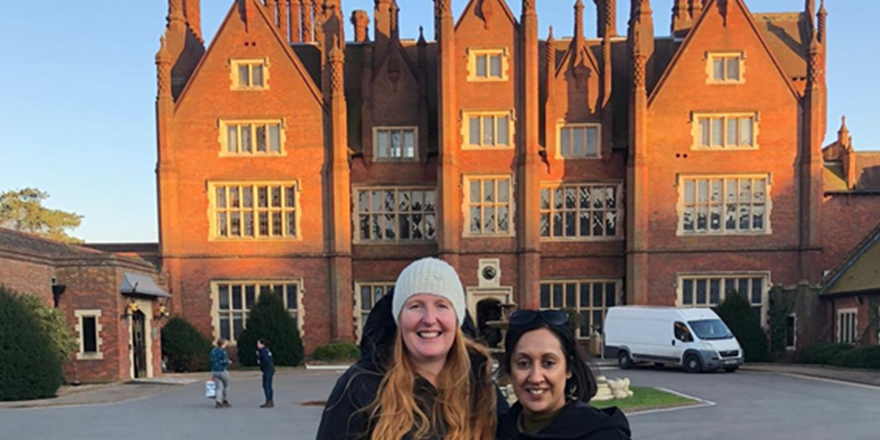
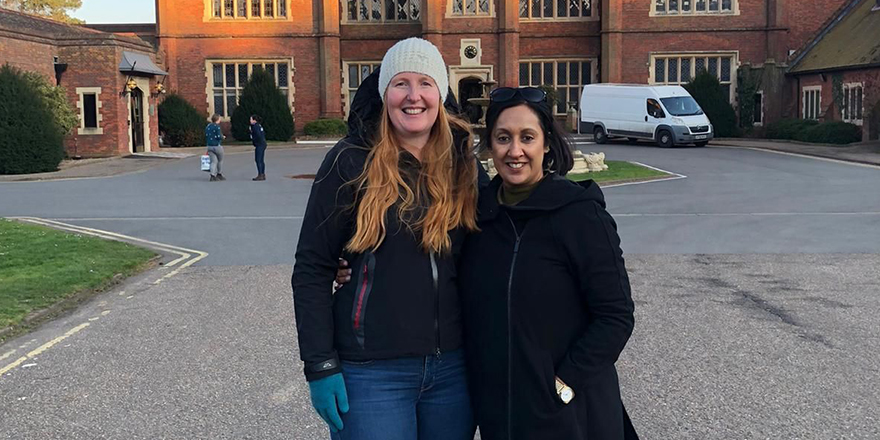
After a two-year hiatus courtesy of the Covid-19 pandemic, the Contemporary Scholar Conference (CSC) finally took place this year, in Norfolk, UK. Lucie Douma and Parmindar Singh, 2022 Nuffield Scholars, attended and reported back on the event and their travels. The following article brings together these reports.  

As part of their scholarship programme key milestones, they also compiled a brief insight work report.

Follow the links to read Lucie and Parmindar’s Insights Reports.  

The 2022 Nuffield Contemporary Scholars Conference.

“Lucie Douma and I represented New Zealand this year. The Contemporary Scholars Conference was a great way to start the global aspect of our Nuffield Programme. The Conference provided an opportunity to meet global agricultural enthusiasts and build new network of connections,” says Parmindar Singh. 

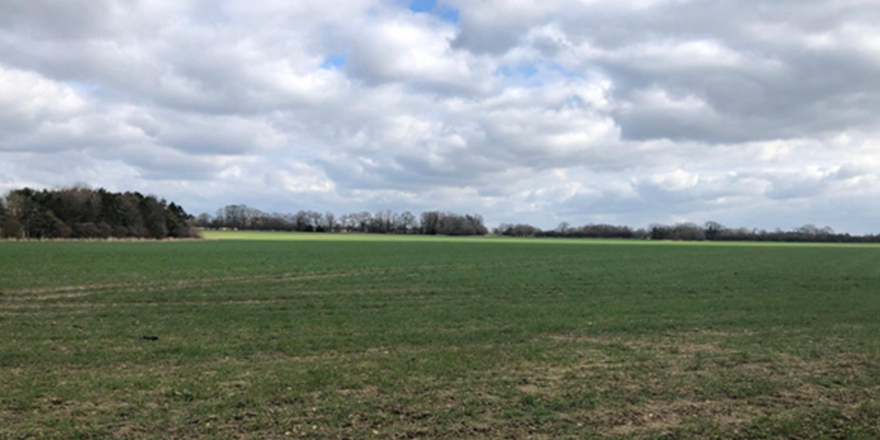
“Our hosting region, Norwich, is predominantly arable farming with notable long time family estates. The landscape, climate and access to water very much determines land use and production. 

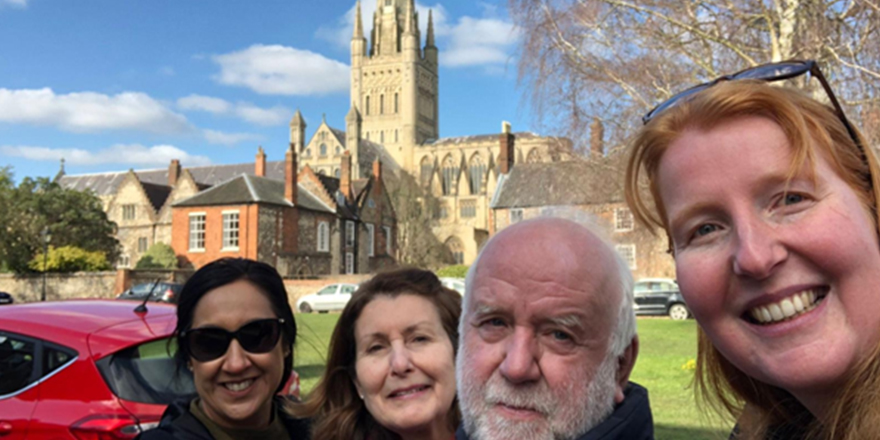
“Before the CSC, Lucie and I were very generously hosted by Christine and David Hill. David is a Nuffield Scholar who is still very active in the Nuffield community. David travelled the world to study biotech crops. His wife was a science teacher and very involved in agricultural education and research and is also actively involved in several Norfolk organisations working in this filed. They manage their 500+ha arable farm. 

“David and Christine showed us around their neighbourhood, we visited a local dairy farm and learned about the Hill’s arable business and family history,” shares Parmindar. 
Sharing New Zealand with the world.

New Zealand, our farming systems, and the positioning we have on global markets was part of virtually every conversation Lucie and Parmindar had at the CSC. This was driven in some part by a presentation Lucie and Parmindar gave to those attending. This was a brief overview of the New Zealand food and fibre sector. 

“At the start of each day of the CSC, representatives of all participating nations were asked to share a short presentation of the agricultural sector in their respective countries. In all cases the ten-minute time limit was not enough, and we were no different,” shares Lucie. “For our presentation, Parmindar opened with our values and understanding towards agriculture and how we incorporate the principles of Whakapapa and Kaitiakitanga.  

“I did the second half of our presentation and covered the key statistics of farming in New Zealand and shared our vision of fit for a better world.” 

Parmindar adds, “ Learning from other scholars about their country and their agriculture, was always a highlight of the day. To be given the opportunity to explain more about what we do here at home was a time for reflection on how proud I am to be a New Zealand farmer.” 

The CSC business hackathon.

One of the initiatives included in the conference programme was the so called “business hackathon” where each group of scholars visited four different businesses over one day. 

“The visits started with a 20-minute induction about the business followed by a specific challenge. Then as a group, we had to come together with a result – a solution to the challenge. We then had to present this to our hosts at the end of each session,’ explains Lucie Douma. 

“It was an interesting way to get to know more about some of the notable businesses in the region. I really enjoyed the exchanges we had during the hackathon with the other scholars and the local business community,” adds Parmindar. 
Two years’ Nuffield Scholars get together.

This year’s conference was the first after a two-year hiatus caused by Covid restrictions around the world.  

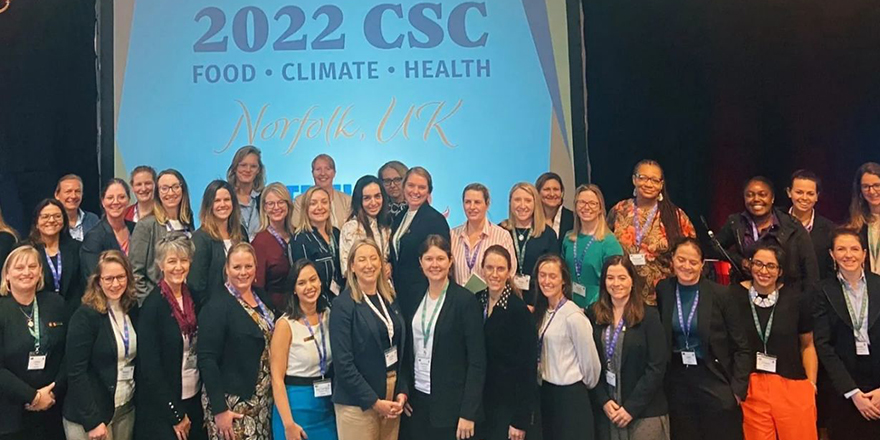
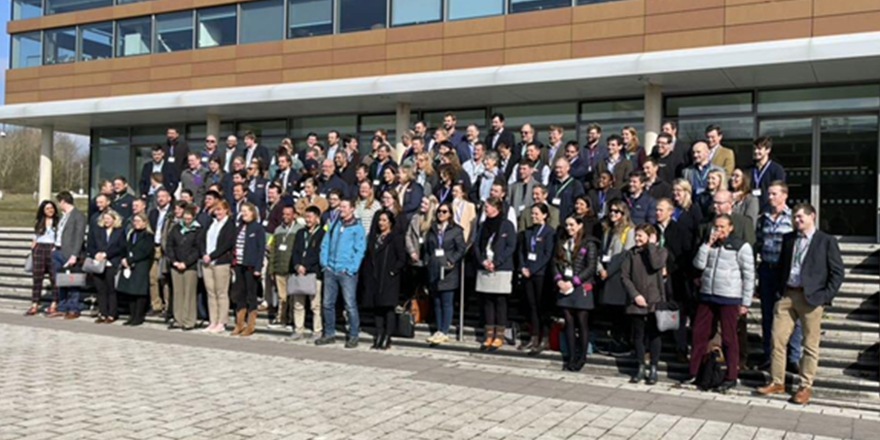
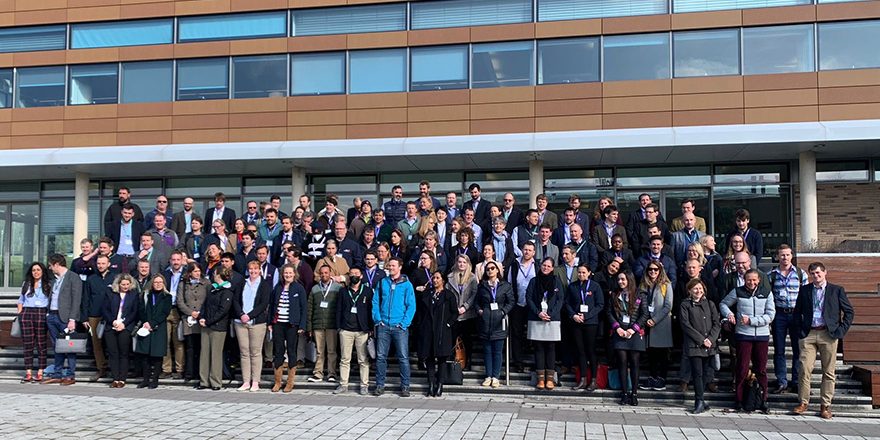
“It was great to have two years combined – instead of having 60 or 70 people, we had 140. Also attending were the 2020 UK Scholars and we got to meet some of the alumni,” recounts Lucie. 

Parmindar agrees, “All in all, CSC was a full-on conference, where we had the opportunity to meet passionate and enthusiastic global agricultural leaders.   

“Many scholars commented on how New Zealand punches above its weight and has created a name for itself as a premium agricultural production powerhouse. It seems we are known as a small country with a notable place in the premium agri-products market. 

“We also touched on many global issues around climate, water, and soil management along with political tension particularly with Russia’s invasion of Ukraine and the associated concerns for global food security. 

“We’ve both been reflecting on the last few weeks and feeling very privileged to have had the opportunity to engage with whanau from across the globe! Thank you Nuffield New Zealand, the CSC in Norfolk was invaluable,” concludes Parmindar.

Lucie’s post-conference travels: North England, Scotland, Shetland Islands, Norway and the Netherlands.
After the CSC, Parmindar travelled back to New Zealand to organise further travel plans for later in the year, while Lucie had the opportunity to further explore the United Kingdom and Europe. 

She went to Wales, where unfortunately she tested positive for COVID and had to spend a week in isolation – giving her time to reschedule her itinerary.  

“I went up through Northern England to The Lakes District and spent some time with farmers in Cumbria, and North Cumberland.  

“What really struck me is that people were facing similar issues to what we do in New Zealand. Almost all farmers who have similar systems to us, are facing the same challenges with labour access and input costs. It’s a global problem, not a localised one. 

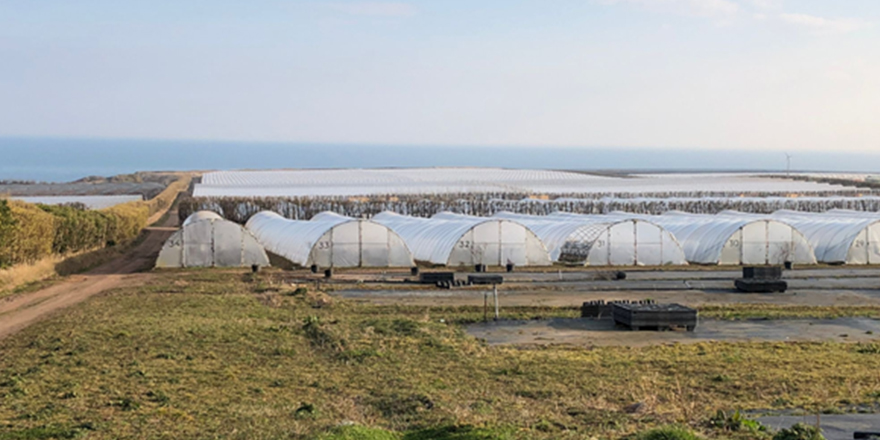
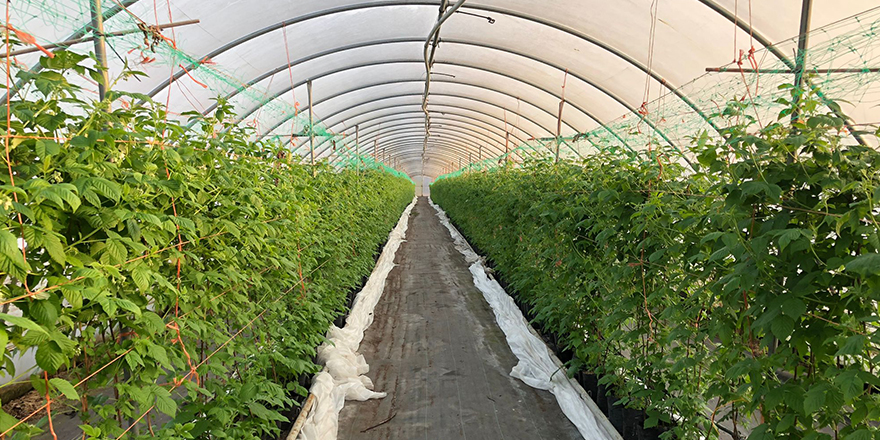
“In Scotland, I visited Angus Soft Fruits. These growers supply 15 to 20% of all the fresh berries to UK supermarkets. It was interesting to talk to them and hear about the challenges they face with Brexit, and what they are doing to secure the labour they need to harvest. They need roughly 400 seasonal workers over the main picking period.  

“They have contracts with growers in other countries like Morocco, Spain to ensure year-round berries are available for the UK supermarkets. It was informative to hear how they are dealing with the realities of modern farming,” says Lucie. 

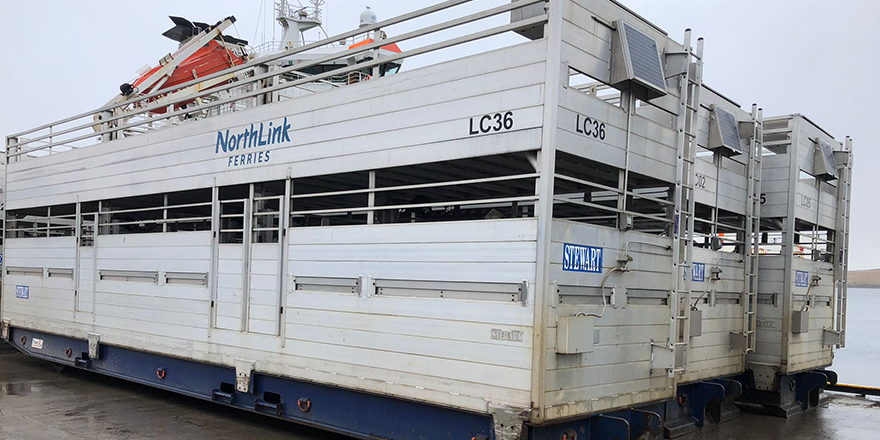
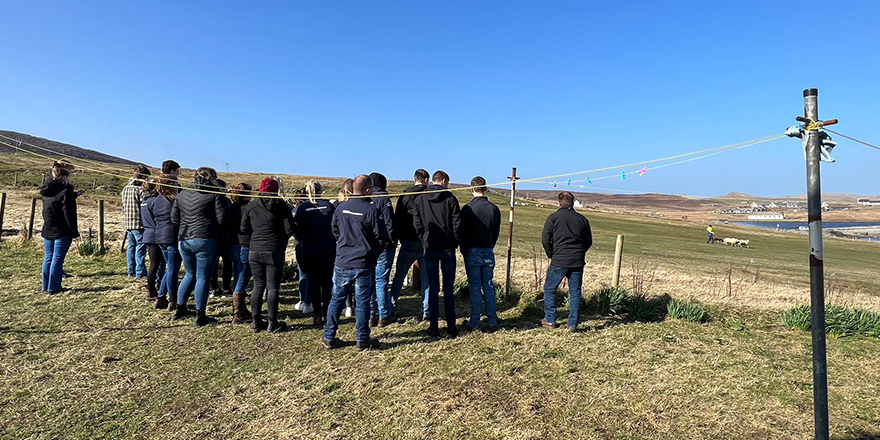
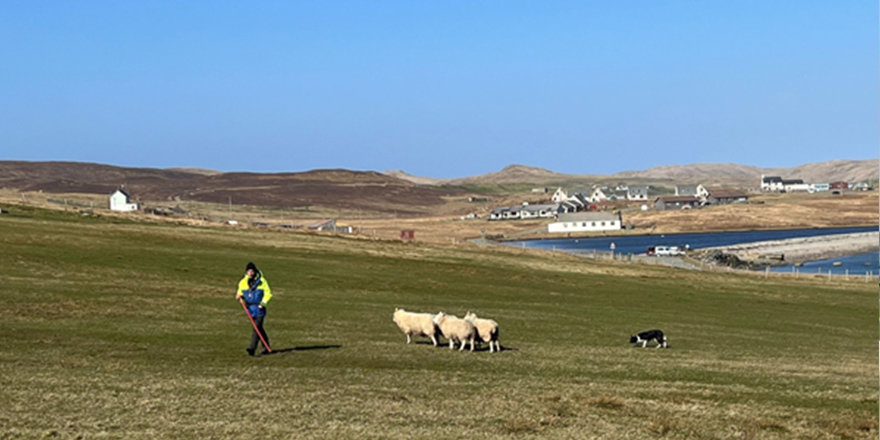
“The next stop was the Shetland Islands – probably the most eye-opening time I had. They farm so differently to us here in New Zealand, it’s a more community-based approach they have built there; where everybody supports each other,” explains Lucie.  

“They don’t have the same labour challenges as larger farming operations do, because they operate as one community, they operate on mutual support – helping each other in times of need. That really came across in my conversations with the people there. They have an active young farmers group  and I had the opportunity to spend a lot of time with them. I really enjoyed that,” concludes Lucie. 

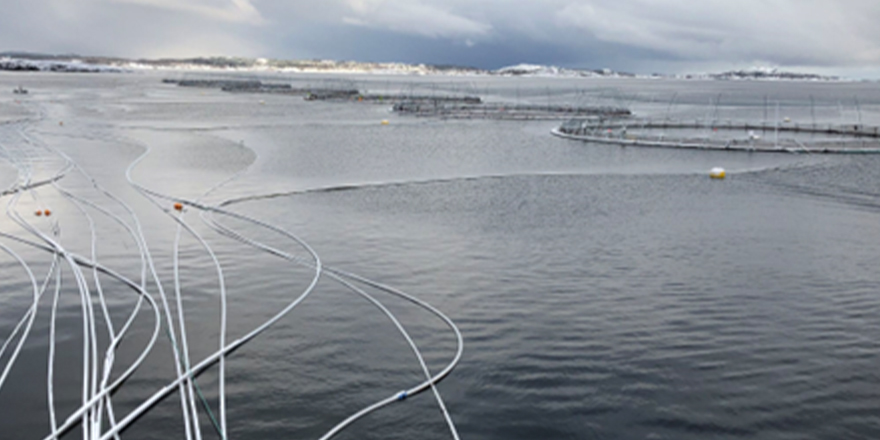
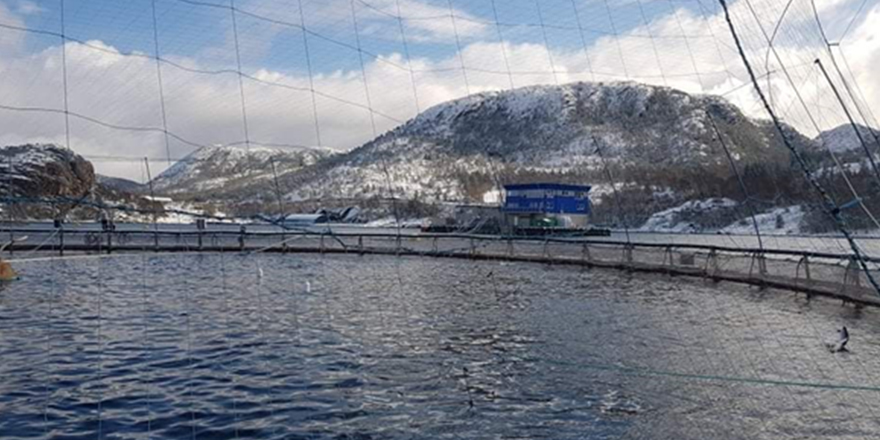
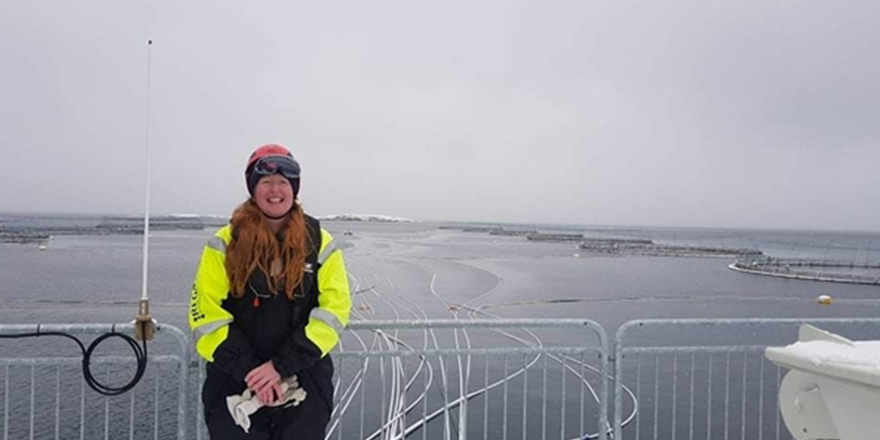
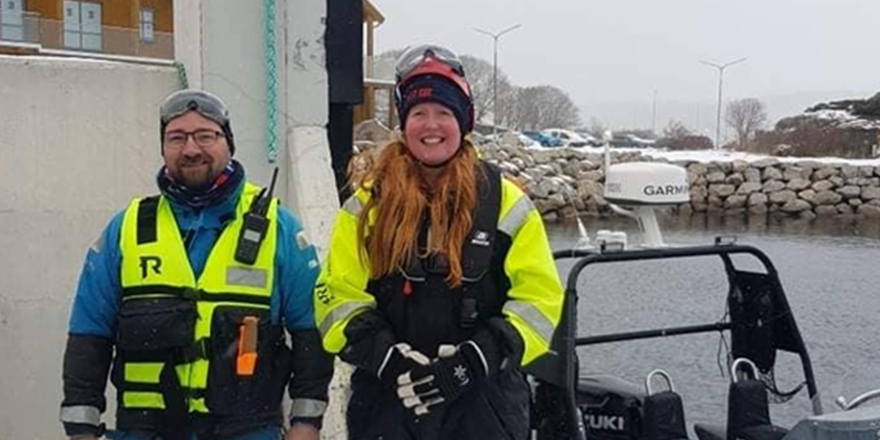
Next on the schedule was a visit to a Norwegian salmon farm. “This is an industry that has risen at pace and scale over the last few decades. The wild salmon population around the Norwegian coast numbers 500,000. This farm has 11 cages with the capacity to hold 1.8 million salmon and there are over 1000 farms in Norway such as this one. 

They are very advanced in some respects. When it comes to data management, similar issues exist around data interoperability of systems as with the agriculture sector. Biosecurity is an important issue for them as well,” adds Lucie. 

Lucie then headed to the Netherlands, but not before experiencing full Norwegian blizzard. 

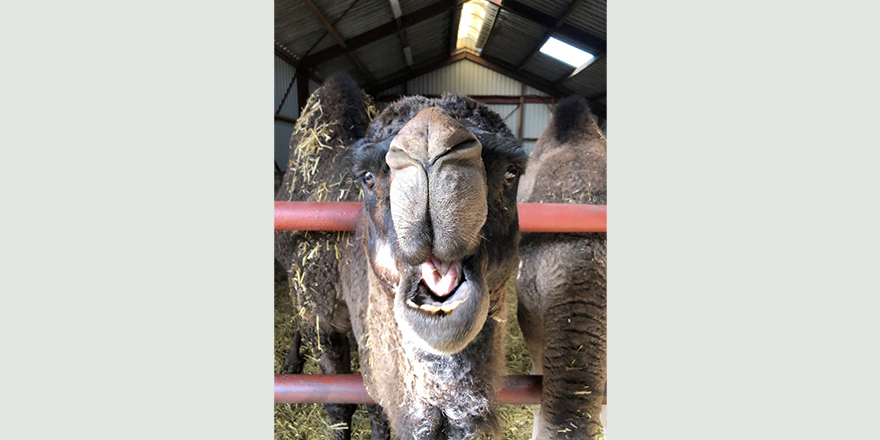
The Netherlands had a highly advanced agriculture sector. From traditional horticulture and animal farming through to developing new industries, including camel milking.
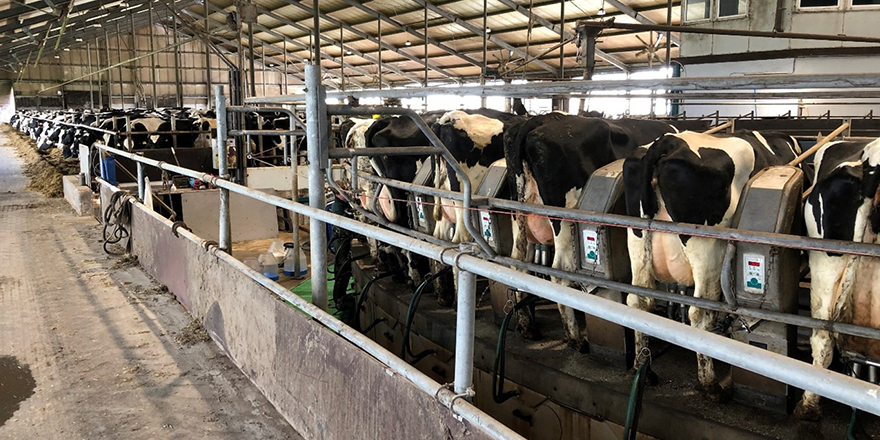
Land-use change in the Netherlands means incorporating energy production into the systems. Some arable farms where busy building large wind turbines and other farms had solar panel fields incorporated within them. Lucie visited advanced farming barns where the whole rood was covered in solar panels.

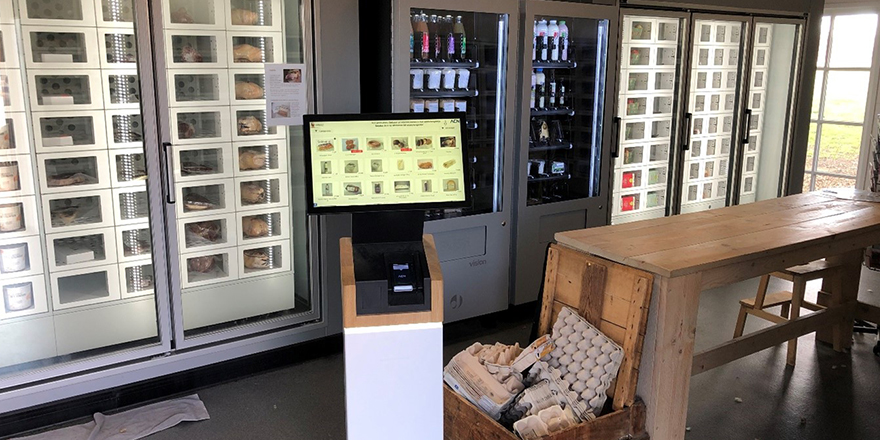
“With the Russia-Ukraine conflict, energy production and self-sufficiency has come to the forefront of farming. All farming systems I visited were diversified in some part, and they all had a farm shop in order to share the story of their produce and build strong connections with the local communities,” recounted Lucie.

You can read both Lucie and Parmindar’s Insights Reports here.  
The Nuffield Contemporary Scholars Conference 2022.

Lucie Douma and Parmindar Singh, 2022 Nuffield New Zealand Farming Scholars, have been in Norfolk, UK, for the Contemporary Scholars Conference (CSC).

Back after two years’ hiatus, due to the Covid-19 pandemic, the CSC ran between 7 and 15 March.

The Contemporary Scholars Conference – all together now, finally.

The Conference gathers Scholars from the current year and creates opportunities for them to learn and get to know each other at the start of their Nuffield journeys. Nuffield Scholars each bring different expertise, and all are keen to share knowledge and discuss the big challenges.

The CSC is followed by the Global Focus Programme (GFP), where Scholars split into groups to travel around the globe, visit multiple countries, businesses, institutions, and research organisations. On the GFP, Scholars will begin to dig deeper into their topics of interest, they will gather information and explore solutions and ideas.

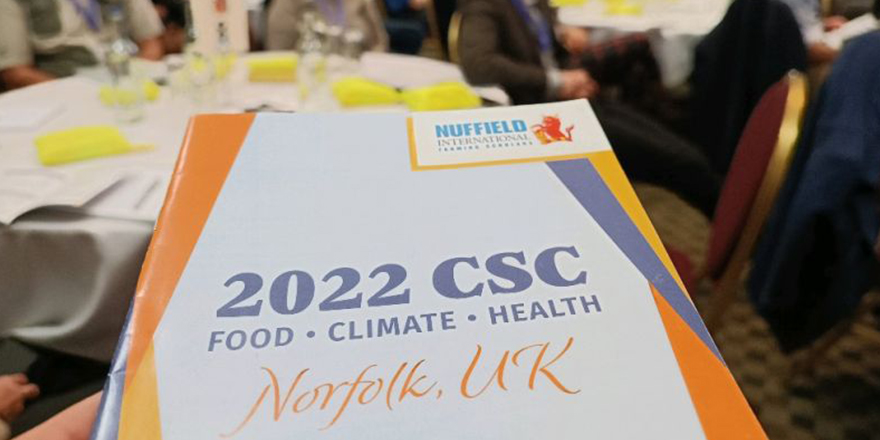
CSC 2022 – Food, climate, health.

The theme of this years’ Conference was “Food, Climate, Health”, but by all accounts, the discussions were far reaching and went beyond the theme, not surprising given the aim of any Nuffield initiative has always been to look at things differently.

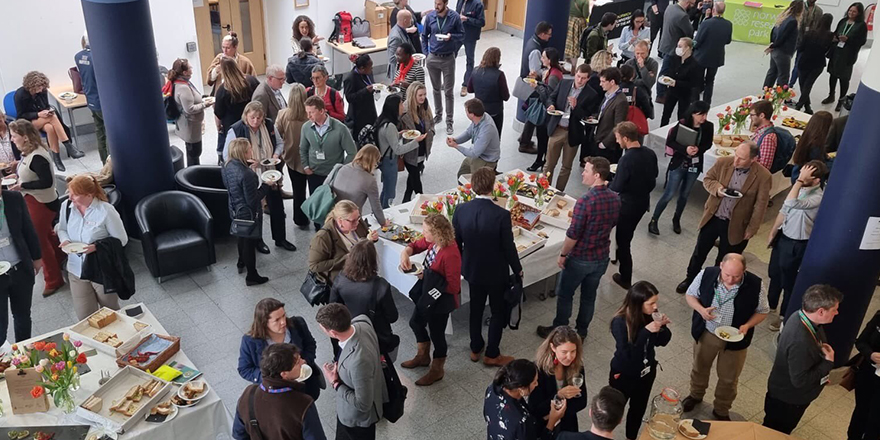
The Conference itinerary was packed with quality content, Q and A sessions, workshops, and plenty of opportunity for networking between Scholars.

In a post early on the CSC, Lucie and Parmindar both share the excitement,

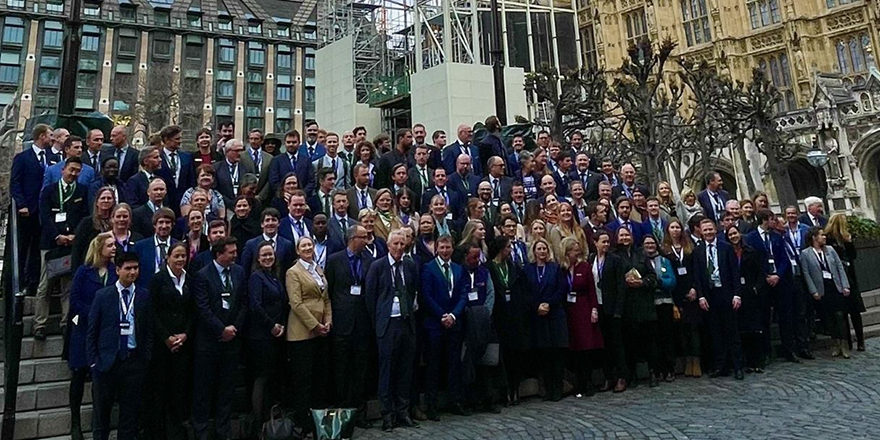
“What a privilege to be able to join 150 people from across 15 countries at the Nuffield Contemporary Scholars Conference in both Norwich and London.

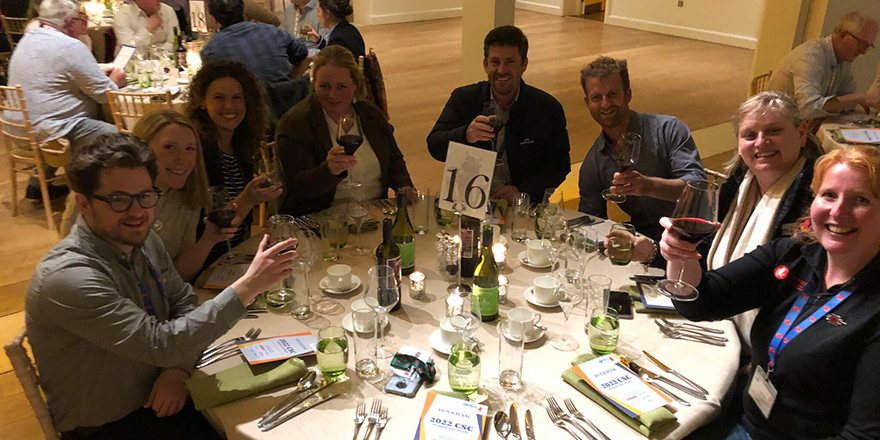
The week was packed with inspirational speakers, farm visits, gala dinners, meeting MPs, and getting to know how other countries farm. We’ve met some incredible people along the way.”

The elephant in the room: War time food security.

When the Conference was planned, everyone’s mind was preoccupied with the Covid pandemic and when we would get that under control. If we only knew…

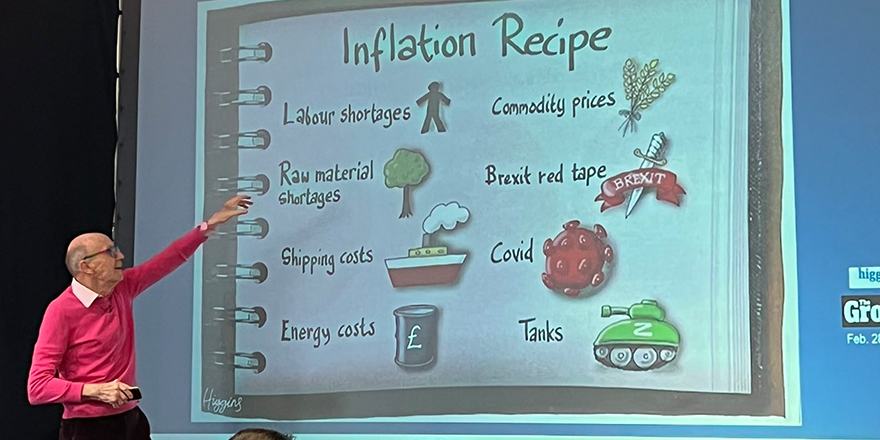
Just couple of weeks before the start of the CSC, a new global challenge arose – the Russian invasion in Ukraine, bringing a tsunami of worries around the world – the humanitarian devastation, the economic sanctions, the shifts in the political stances on so many issues. But there are massive implications for the agricultural sector and food security, caused by the war and the sanctions imposed on Russia and Belarus.

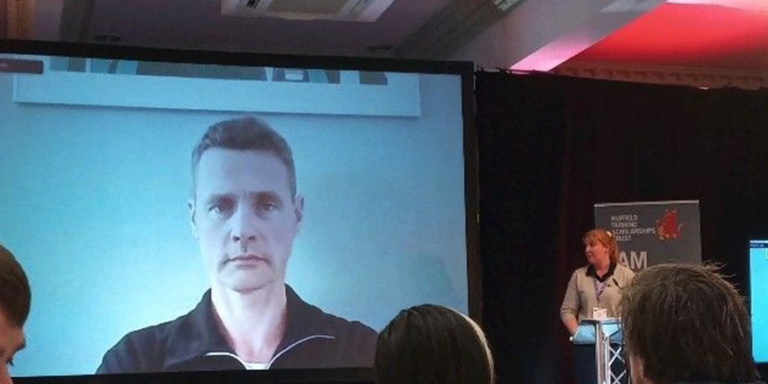
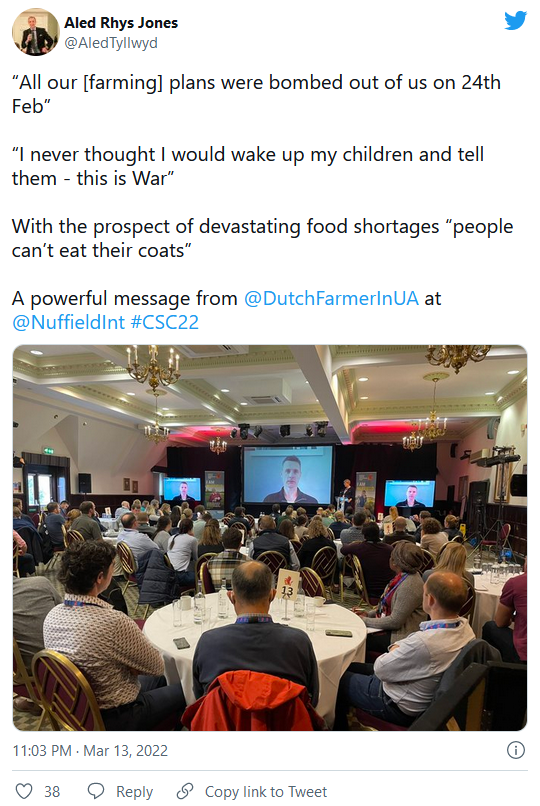
As part of the conference a Dutchman, named Kees Huizinga, who farms in Ukraine, addressed the scholars and talked about what it is to farm in a war zone.

As Lucie recounts, “Kees gave a sobering account of what is happening on the ground in the Ukraine, where farmers have less than a two-week window to plant their crops for the next year, including wheat. They are short 200,000t of diesel and are afraid to drive their tractors at night because they light up like Christmas trees and become targets.”

Everyone in the room felt the situation required immediate action.

“I just heard of a group of UK farmers who are driving to the Ukraine border next week to drop off supplies. This is real action. My question to you is what can we do from New Zealand to support these farmers?”, asked Lucie.

Scholar, Camila Hayseldon-Ashby, from the UK also conveys the sense of urgency and desperation she felt during Kees’s talk:

“As well as the humanitarian and moral impact, the war will have a huge impact on food production. We go to our political representatives and make sure they understand how this is impacting food production and global food security.”

Aled Rhys Jones, Nuffield Farming Scholar, broadcaster, and podcaster tweeted,

Visiting the locals: Condimentum.

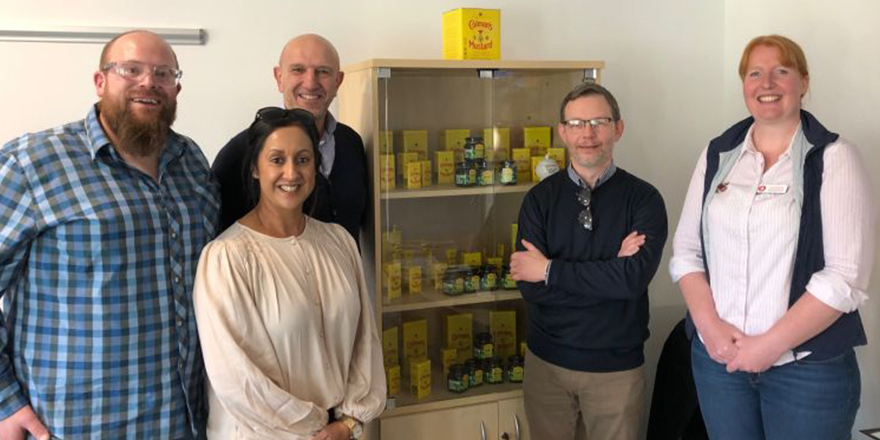
Another highlight for the New Zealand Scholars, was the visit to Condimentum. Lucie shared on LinkedIn after the meeting:

Great to spend the morning with CEO, David Martin and the wider team at Condimentum where they are going through an exciting Growth stage while servicing a 10 year contract with Unilever to supply Coleman’s Mustard, an iconic brand in the UK. Parmindar Singh and myself learnt a lot about the mustard business and suggested ways they could use their by-products as an income stream instead of a waste stream #Condimentum

The end of the beginning.

The week appeared very intense and busy, even from afar, and in Lucie’s words “An excellent week spent getting to know 150 scholars, across two years from all around the world.”

Another attendee, Helen Wyman, quoted Nuffield Scholar Wyn Owen at the conclusion of the conference – ‘The end of the beginning’ as she elaborates on the experience,

“On Tuesday I returned home emotional, tired and overwhelmed but after a few days of reflection I am excited about the future and look forward to visiting my new friends around the UK and the globe very soon.”

These were only some of the anecdotes from the conference. We’ll hear more from Lucie and Parmindar when they return to New Zealand to collect their thoughts.

The conference is over, but the journey still lays ahead. For most of the participating scholars, it will never end. After all, being a Nuffield Scholar is, above all, a mindset – to keep searching, keep daring, keep improving.