2026 Nuffield NZ Farming Scholarship. Apply by 17 August 2025. Read More...

Apply for 2026 Nuffield NZ Farming Scholarship by 17 August 2025. More details...

How can Waikato Maniapoto Māori landowners increase productivity whilst improving the environmental protection of their land?

Executive Summary

This report titled – How can Waikato Maniapoto Māori Landowners Increase Economic Productivity whilst Improving Environmental Protection of their Lands outlines and identifies two things:

  1. How can Waikato Maniapoto Māori landowners increase their economic productivity from their whenua (land) and;
  2. How can this be achieved whilst upholding the values of Kaitiakitanga (guardianship) and Manaaki Whenua (goodwill to the land).

This research is carried out in two parts. Part one provides context and a background story to Waikato Maniapoto’s introduction to modern agriculture and how quickly the tribe was able to amass large scale growing operations and manufacturing facilities throughout the tribal region. Part one also describes the creation of the Kīngitanga (King Movement) whose sole aim was to centralise Māori power throughout all of Aotearoa (New Zealand) and how this power base was lost. 

Subsequently historical narratives are provided on how Waikato Maniapoto were forced into conflict with the Crown which resulted in the loss of over 1.2 million acres of prime land after the Land wars followed by another million from various legislative tactics imposed on Waikato Maniapoto by the Crown. The last piece of part one describes how a new leader needed to emerge to revive the dynasty of the Kīngitanga and rebuild the damaged foundations of the once mighty tribe of Waikato Maniapoto.

There was a considerable amount of literature reviewed which formed the basis of part two. In part two, the research offers up current opportunities and barriers for Waikato Maniapoto Māori landowners. Though it should be acknowledged further research into these opportunities and barriers should be carried out in more detail. A key finding of this review is that additional testing and research into how mātauranga Māori in the context of environmental protection can be genuinely applied to all land throughout the rohe (region) of Waikato Maniapoto.

The recommendations of the report are that further testing, and refinement of the processes used to increase economic productivity are required and for mātauranga Māori to be better understood in the context of the region’s environmental footprint.

Is New Zealand prepared for foot and mouth disease?

Executive Summary

A Foot and Mouth Disease (FMD) outbreak would have devastating impacts on the agricultural industry, the New Zealand economy, and have severe implications for farming communities. Communication is a vital part of an emergency response, and its effectiveness has a major impact on the overall success of controlling an outbreak.

The question is, are we prepared for FMD in New Zealand, from a communications perspective? This is a disease that is well known, and we know as a nation we would act to stamp it out. With this knowledge, we can, and we should, be prepared.

This report combines a literature review with semi-structured interviews. Research articles, journals and presentations were analysed. As part of the research, several primary industry representatives from both emergency response and communications backgrounds were interviewed.

Learnings from past emergency responses were investigated, including the 2001 FMD outbreak in the UK, 2017 Mycoplasma bovis outbreak in New Zealand, and New Zealand’s communications strategy for COVID-19.

The UK FMD outbreak emphasised the value of scenario planning and having an up-to-date crisis plan. Resource requirements also weren’t recognised, leaving the communications team lacking skilled staff and being short of money.

The Mycoplasma bovis response highlighted the importance of having a well-resourced communications team, particularly at the outset of the response. Politics lead to underutilised channels, including social media.

The COVID-19 response showed the effect that a strong brand can have in banding people together. High empathy and action-based messaging led to a successful elimination strategy.

There is a communications strategy in place for an outbreak of FMD in New Zealand. It is a comprehensive plan, though developed in 2016, it is out of date. The findings of this study show that there are improvements to be made for New Zealand to be ready for a FMD outbreak, from a communications perspective.

I recommend the following actions should take place to help us prepare an effective communications response to an FMD outbreak in New Zealand:

1. Update the FMD communications strategy, keep it live and complete regular scenario testing.

2. Prepare a national brand and messaging ready for regional implementation.

3. Develop a swift sign off procedure so communications can be released quickly.

4. Have a well-resourced communications team.

5. Work to understand, engage and listen to stakeholders.

Live sensor data for environmental monitoring and improvement.

Executive Summary

This project was intended to investigate the potential uses of remote sensor environmental data by farmers to help them improve their environmental outcomes. This could promote innovative management practices whilst making compliance easier for farmers.

The concept of ‘outcome-based’ regulation as well as environmental monitoring through sensors has been explored with some good applicable literature from case studies available to study. Several common themes emerged from this literature around benefits and risks as well as the importance of the system design.

Due to their nature of basing regulation around outcomes farmers can self-manage their environmental outcomes, removing managerial restrictions to not only allow, but encourage farmers to innovate and achieve better and more cost-effective results.

European researchers have noted farmers improve their skills over the duration of result-based schemes and form new social connections between conservationists/ecologists due to their common goals. It was also theorised that change may also occur in the relationship between farmers and the public, with farmers assuming the responsibility for management practices and the credit for
environmental improvements as opposed to merely meeting government requirements.

Better environmental monitoring data would be hugely beneficial to both regulators and farmers as the feedback would allow for better prioritisation of actions and funds. To maximise these benefits, it has been shown that the timing and frequency of water sampling is of great importance. Water quality varies greatly around storm events, within seasons and between years. Data needs to be amassed over several years to fully understand the real impact of land management practices.

The risks of outcome-based regulation have come through the literature as:

  • The need for careful establishment of desired outcomes, how they are benchmarked and how they are measured.
  • Possible lack of effective mitigation options and farmers exposure to events beyond their individual control e.g., large flooding events
  • The issue of data ownership and how it is used and/or shared

The success of any outcome-based scheme would be greatly dependant on the identification and development of indicators. These should be carefully considered, and a balance needs to be struck between minimising the scheme complexity and having sufficient indicators to represent the objectives. If this cannot be achieved a combination of regulatory approaches may be necessary.

The last risk identified is the need for a better understanding on how farmers are likely to respond to result oriented approaches. Past examples have shown many benefits, these are mainly concerning agricultural subsidies and a switch to compliance may change the results.

With this technology still in its earlier stages of development, the cost and availability of sensors combined with poor rural connectivity make the possibility of widespread adoption purely theoretical, at least currently.

I conclude that it is too early for New Zealand to incorporate an outcome-based regulation system. Given the substantial benefits which may be achieved I don’t believe the idea should be completely abandoned and I have recommended further trails to understand and quantify any potential efficiencies. As technology develops further and becomes less prohibitive a hybrid model of ‘action’ and voluntary ‘outcome’ based regulation may be created reducing the cost of compliance and helping farmers to be seen as part of the solution and not part of the problem.

My main recommendations are as follows:

  1. Address data ownership and use issues. Any increase in data capture and reporting requires a data strategy addressing data ownership and how it is to be used. In order for farmers to voluntarily give their own environmental data to a regulatory body there would need to be assurances made to address any concerns in this area.
  2. Begin environmental data collection. Early trial work by regulators would provide feedback and learnings from live sensor data. This would help in designing required actions for environmental protection. It would also have value if data can be incorporated into existing models to strengthen their validity.
  3. Identify indicators for monitoring. Designing a system of effective indicators should be carefully considered and would need to involve a high degree of consultation. If an environmental outcome cannot be monitored simply and effectively then an outcome-based scheme may not be appropriate for that measure.
  4. Start small, proof of concept trials. This might suit larger high-country properties where it can be safely assumed that water entering the grazed areas is of high quality. Water leaving the property could then be monitored to establish agricultural impacts. This would have benefits as the cost to fence off all water ways on these properties would likely be uneconomic if required under an action-based scheme.
  5. Explore options for a hybrid model between action and outcomes based environmental legislation.
  6. Allow voluntary data use. Live sensor data could well be incorporated as a voluntary component of a digital farm plan, creating a ‘hybrid’ model allowing innovative farmers and regulators to test the approach before wholescale adoption.
  7. Factor in future technological advances in writing regulation. Currently the technology looks to make this option cost prohibitive. Legislation could be written now to allow for its use in the future.

Novel pathways to farm ownership in the arable sector.

Executive Summary

Farm ownership within the New Zealand arable sector has and will continue to become a more contentious subject as we develop and age as an industry and a country. Do we accept that the current trends of the established becoming more established, or do we try and initiate a conversation to address the elephant in the room? We need greater diversity in farm ownership to ensure critical mass is maintained.

The aim of this project is to gain some insights into the realities of a person/couple in how feasible it would be for them to be able to gain a foot hold into an arable farming business. I specifically wanted to target people that were not in a position that will or may benefit from matrimony, alimony, and patrimony. Of all the people I interviewed not one example of farm ownership could be thought of that didn’t involve the three pervious terms.

The methodology used in this report was literature review into the arable sector and its current situation, this was used to quantify themes present. Using both informal interviews and my own profession I explored the key themes coming out of the industries professionals that service this sector.

The arable industry is a relatively small sector when compared to other food and fibre sectors around New Zealand. The critical mass of the industry has been increasingly put under pressure over the past 15-20 years. The number of arable farming businesses have decreased from approx. 1200 in the early 2000’s to a hard-core group of approx. 300 that are classed as true mixed small seed & grain arable farms. It is this trend that has driven the questions around this report.

Contracting Seed companies face decreasing diversity with their grower base, corporate, syndicate and large establish family farming businesses have substantially increased their foot hold on large arable operations. Available land suitable for arable production systems is relatively scarce and is heavily contended for on the open market. The established are and always will be able to upscale and grow.

Investigating how an outsider could possibly compete with these established businesses, it become very apparent that the system is broken. The willingness and fortitude of thinking that should and would be required by the banking sector to see the importance to encourage and back the next generation to a sort of farmer ownership was completely lacking.

There were signals of hope with examples equity partnerships, asset fund management companies, and growers signalling that they would be interested to develop relationships with young and up coming individuals. Share farming was a commonly used term to describe situations where a landowner would slowly step back allowing a trusted partner to slowly buy into an arable business.

The relationships that are required for such agreements seemed to be the most difficult aspect to establish, with many growers opening admitting that they wouldn’t know who they should turn to in order to make a connection.

The key take outs form this project are:

  1. There needs to be a fundamental change of mindset by banks. Rather than looking at one’s risk portfolio why not look at their business strategy and passion for achievement.
  2. Young people/couples that are driven and hungry for stepping up into an arable farm need to find, foster, and build a trusted relationship with a current landowner.
  3. The methodology that is currently used in valuing properties for sale must change to reflect what that business is worth, using the previous three years of EBITDA as the basis.

Shaping the future of Aotearoa’s food system – a scenarios analysis.

Executive Summary


This report seeks to draw insights from the global response to Covid-19 and evidence from actions currently underway in
New Zealand’s food and fibre sector to predict the likely future scenario for the global food system in 2030. Given this likely scenario, the report will identify areas of opportunity for New Zealand to pursue to position itself to succeed in a changed future food system.

Analysis provided in this report relies heavily on a scenario mapping exercise undertaken by the World Economic Forum (WEF) in 2017 titled ‘Shaping the future of global food systems: a scenarios analysis.’ My research will seek to unpick these scenarios to answer the below focal question:

“According to the four potential worlds provided by the WEF (2017), what is the likely scenario for the global food system in 2030 and how can New Zealand position itself to succeed?”

Findings demonstrate that in 2030, the world’s food system will make significant shifts towards being more resource-efficient, with reasonable market connectivity showing a balanced focus between local production and trade.

This future provides the platform to achieve an aspirational food system that is efficient, sustainable, inclusive and delivers healthy and nutritious food to the world. In doing so, the world can improve its food system and contribute towards achieving a large majority of the Sustainable Development Goals agreed by the United Nations (UN) in 2015. To get to this state, significant investment must be made in climate and environmentally responsible actions to lower the overall emissions and pollution profile of the sector.

Shifts in consumer habits are already signalling a preference for healthy, safe, environmentally sustainable, and ethically produced food. Food innovation is enabling new product development to help keep products relevant. Green economic recovery strategies following short term Government responses to the pandemic are highlighting various Governments’ prioritisation to rebuild back economies within planetary boundaries, putting our ecological and social systems first.

Redesigning Aotearoa’s Food system

New Zealand is well positioned to succeed in any likely future global food system scenario. However, disruption from Covid-19 and the various impacts on the food and fibre sector from putting social and ecological considerations first, has signalled that change is required. For New Zealand’s food and fibre sector to remain relevant and lead aspirational change towards an aspirational food system in 2030, this report recommends that, as well as pursuing the opportunities noted in section 8.4 of this report, the below actions should be taken. Further detail on the below recommendations can be found in section 11.

1. Taking action towards initiatives as set out in the sectors’ Fit for a Better World roadmap. 2. Co-investing in a centre of excellence to share market insights and improved data coordination and access.

3. As noted in Fit for a Better World (2020) removing trade barriers and maintaining market access through developing appropriate ethical and environmental standards to keep up with the changing food system and international market consumption trends.

4. Developing a fit for future horticulture system and supply-chain by:

    • using our competitive advantage to invest in intellectual property and new commercial opportunities from native fauna;
    • incentivising and supporting the uptake of new horticulture and novel product development through capability building and connecting growers with a pathway to market; and
    • incentivising collaboration between Government, business and research institutes to invest in horticulture and bio-technology.

5. Pursuing new / innovative structural changes to the food and fibre sector labour market by:

    • ensuring education institutes are providing agriculture, horticulture and agribusiness study opportunities;
    • appropriately recognising the skillset required for jobs in the food and fibre sector and reflecting this in renumeration; and
    • improving cross-sector collaboration to provide a national network of accommodation for seasonal employees in multiple industries.

6. Proposing regulatory change for industries likely to experience market failures such as honey.

7. Supporting marketplaces for start-ups, novel products and new horticulture by considering the appropriateness and economic viability of creating regulations or incentives that guarantee shelf space in all supermarkets for New Zealand products.

8. Taking action to adapt food supply chains and improve supply chain resilience through:

    • ensuring local authorities maintain a space for local markets to operate safely in a Covid-19 environment;
    • investment by industry bodies and businesses in e-platforms, and digital marketplaces; and
    • encouraging co-investment in a feasibility study for New Zealand to own a small shipping fleet to enhance supply-chain resilience.

9. Increasing the availability and affordability of nutritious and healthy food on the domestic market by:

    • pioneering food business to doctor models;
    • increasing Government and public health investment in nutrition education and regulating food deserts to maintain a minimum quality of access to healthy food; and
    • exploring the feasibility

How can the NZ dairy industry design workplaces to attract the best of the next generation?

Executive Summary

In 2019, my partner Isaac and I were offered an 1100 cow contract milking job in the beautiful Bay of Plenty. We were 23 and 24 years old, I hadn’t been dairy farming full time before and Isaac had roughly 3 years experience, in primarily a farm assistant role. We received a lot of great advice prior to our first season. And what was the most common piece of advice we received?

“Cows are easy, people are hard”

After having many discussions with friends around a beer and being sick of asked “Do you guys really work eight days in a row?” or “Are you really waking up at 4am?” I began to wonder if we were doing right by our team, or if we were just accepting what had always been done.

This research project investigated what is being done in our industry and how we can learn from industry leading employers, and out of industry leaders. The question is, “Learning from global workplace trends, how can the NZ dairy industry design workplaces to attract the best of the next generation into our workforce?”

Over the past 20 years the dairy industry has seen huge expansion, with the herd size doubling in a twenty year period. As of 2018, the NZ dairy industry workforce was made up of roughly 40,000 people with 22,500 of these being employees.

Nationally 88% of employee are either satisfied or very satisfied with their jobs, and research by StatsNZ identified six key metrics driving work satisfaction. These were hour and times of work, flexibility, job security, workplace autonomy, workplace relationships and work related stress and tiredness.

From my twelve semi structured interviews with leading employers the key common themes across both in and out of industry employers were the need for clear communication, importance of developing a competitive workplace and the importance of flexibility and work life balance.

My call to action is for our industry to question current practices. The areas that I believe are worth focusing on:

  • Encourage flexible rosters and pay scales.
  • Foster leaders not managers on farm.
  • Develop safe workplaces cultures that allow autonomy and innovation.
  • A share purpose on every farm.

I have put forward many ideas in the final section, and my hope is that any farmer who reads this report considers each idea and whether they could implement one on farm. My key recommendations are:

  1. Look within.
  2. Ask your people.
  3. Try something!


Generation Z and the environment – how can we use their passion to attract them into food and fibre sector careers?

Executive Summary

The Food and Fibre sector in New Zealand can be a great place to work. However, Gen Z (those born between 1995 and 2010) does not always see the opportunities available to them in this diverse and rewarding sector. At the same time, the sector needs more people, partly due to the pace of change it is facing as environmental concerns, consumer attitudes and needs of the sector evolve.

The influence of Gen Z on the workforce is only beginning and will continue to grow. This generation is very different to those before and define themselves by their values and identity. The defining issue of this generation will be climate change and the environment. In New Zealand, agriculture is the largest emitter of greenhouse gases. This could be viewed as a problem to attracting Gen Z into the sector. At the same time the sector is being asked and is actively looking to understand how it can improve its environmental impact.

This research has focused on how we can use Gen Z’s passion about the environment to attract them into the sector. The sector needs skilled and passionate people to meet the challenges it faces.

My research and survey have highlighted some key areas in which the current system could be strengthened. This involves aligning Food and Fibre sector careers with the values of Gen Z through:

  • Strengthened sector approach to career attraction in the Food and Fibre Sector in a Gen Z context
  • Reframing the story around the Food and Fibre sector to appeal to Gen Z values
  • Gen Z focused communication strategies.

These recommendations recognise that appealing to Gen Z is not only important in terms of attracting the labour required but also the attitudes and values needed in the Food and Fibre sector going forward. Gen Z have more choices than ever before for their future careers. The Food and Fibre sector needs to come to Gen Z to build the capability the sector will need in the short and long term.

Rural freshwater quality. What’s perception? What’s reality?

Executive Summary


It feels in recent times public perception has been increasingly negative towards the primary Industries as a result of the water quality “showdown” between farmers, government and the general public. The urban rural divide has been perceived to be greater than ever, and social media has presented a new arena for robust debate about water quality.

However, this project discovered that:

  • Even though four out of five Kiwis rate water quality as their number 1 environmental concern 60% still feel positive about the primary industries.
  • Water quality is giving way to other key issues growing in concern for New Zealanders like climate change, greenhouse gases, recycling, ocean pollution and more.
  • New Zealanders perception on whether they feel positive or negative farming has been eroding since 2008. However, since 2017 has been improving and post Covid 19 that trend has been galvanised.
  • Negative perception towards the primary industries is still largely based around Dairy’s impact on water quality.
  • The dominate land use within a catchment has the biggest influence on water and ecosystem health.
  • Lag time between land use or system changes made now and impacts on water quality can be upwards of 50 years depending on the natural makeup of the land scape.
  • Water quality has been stable nationally over the last 10 years.
  • Northland has high Dissolved reactive phosphorus in the ground and river/stream water but low nitrogen levels.
  • Waikato has huge variances across the catchment but has pockets with high nitrogen and phosphorus levels.

As a result of these findings, I believe:

  • Farmers need to continue forming catchment groups which involve the urban community especially in highly sensitive catchments. Forming catchment management plans with all key stakeholders will improve water quality and public perceptions.
  • Industry groups need to unite as one and have one voice when lobbying central government to ensure regulation is pragmatic and has timeframes which allow for the environmental work already done on farm to take effect in water quality results.
  • The industry as a whole need to continue their environmental improvements and tell their story louder and wider to ensure those not involved in the sector can understand the sacrifices and changes being made.
  • Northland farmers need to focus on containment lost through overland flow to reduce phosphorus and sediment reaching water ways.
  • Waikato farmers need to continue improving their nutrient efficiencies to ensure any nutrients brought into the system is required and utilised at the correct time to minimise nitrogen and phosphorus lost to the environment.

Bobby Calves – Industry benefits rather than wasteful perception.

Executive Summary

The world population continues to grow and so does the demand for animal proteins. The primary sector exports the majority of the dairy and meat products produced nationally and as a result contributes billions of dollars to the New Zealand economy. As a nation we want to achieve the highest premiums for our products to maximise our returns, as a result we are a consumer lead industry.

Consumers have more choices now than ever before and are much more conscious of the food they purchase. They are happy to pay extra to ensure the quality of the product, but these premiums also have to meet their expectations around environment and animal welfare, two aspects that are under constant scrutiny as the world moves into an era trying to deal with climate change.

New Zealand is seen by many as a clean and green country at the bottom of the world that produces dairy and meat products with the lowest environmental footprint, but our uniqueness doesn’t come without some unique issues.

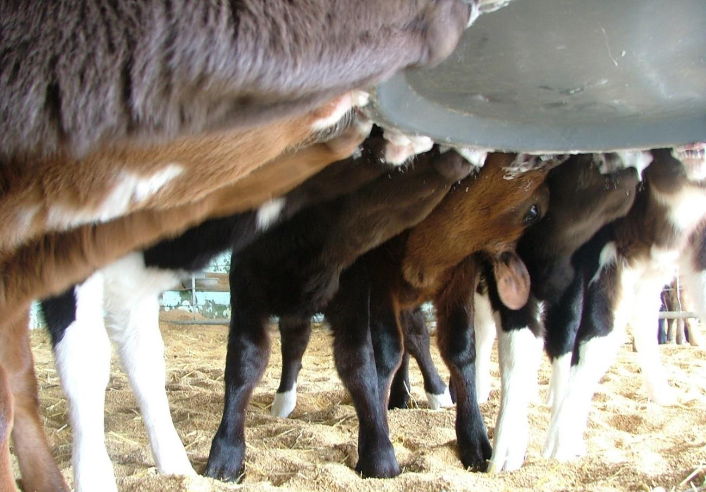
As an industry we send 1.9 million four day old calves to slaughter every year in a very short space of time, this practice has all but ceased in the rest of the world, and while we meet all animal welfare code requirements in the treatment of these calves, ethically people do not like the thought of killing four day old animals, and this is putting pressure on the future of the New Zealand bobby calf industry.

I have conducted many interviews over the last few months throughout the bobby calf supply chain, these have been conducted in person and via “Teams” meetings over the internet. Some of the interviews have been recorded, and others who wanted to remain anonymous I only took notes. Once I had conducted all my interviews I broke down the information into common themes to ascertain what current value these calves currently contribute to our economy and was their life a life worth living? Did that life add value?

While many people were happy to speak to me, due to the enormity of the topic it was less easy to acquire supporting information to validate my findings. Bobby calves are currently flying under the radar and nobody really wanted to draw unnecessary attention to their businesses.

I was able to identify that 100% of the calf is utilised and that it is broken down into many products that are exported around the world. Because of the age of the calf and New Zealand’s disease free status compared to other countries the products the calf goes into achieve export premiums due to the high quality of goods.

One of the key insights was the continuity of employment these calves brought to the industry, helping keep meat processing plants operational in a quiet period of time. Being able to offer more staff full time employment was good for the processors the staff and the local communities and the economy.

While there weren’t any products that could not continue to be produced from an adult animal, the quality of some of these products would be reduced. We could simply remove bobby calves overnight but the flow on costs to the industry would not counteract the additional value potentially achieved by growing these calves out to be slaughtered at an older age.

To remove the bobby calf from the industry is going to take considerable collaboration across the primary sector to come up with solutions and markets that we currently do not have, and is a cost that potentially have to be worn by the dairy farmer as the only way to rear these animals through to an older age is to displace some of the 4.9 million dairy cows.

While it was clear that the calf was treated humanely and added significant value to the industry, it did not answer the ethical debate of whether it will continue to be socially acceptable to slaughter four day old calves.

It seems ironic to me that the consumers in International countries like China or Europe that want dairy and meat products from animals that do not support a bobby calf industry are the same countries / consumers that will pay premiums for the co-products that are generated from the bobby calf.

To full understand the financial and social benefits that the current 1.9 million bobby calves contribute to society and to our economy I would recommend a full industry review be carried out that can them be used as the benchmark for any proposed future solution for their removal.

Reflection on foreign direct investment in the Central South Island primary industry.

Executive Summary

Foreign Direct Investment (FDI) into rural land is a topic that most New Zealanders have an opinion on and in the past two decades has become an increasingly controversial and emotive topic. Our economy is driven from production using our land and water resources, this is seen as our competitive advantage – so the ownership of these resources is continually under the spotlight, regularly reported on and is a frequent political issue.

New Zealand also needs to broadly recognise the direct links FDI has with supplying our nation with much needed capital, continued and new access to offshore markets, innovation, and technology. Contentiousness around FDI has been centred around the sell down of our land assets (and by default our competitive advantage), with less consideration given to the immediate and downstream benefits.

This study aims to reflect on Foreign Direct Investment and provide an overview of where we are today, the numbers and trends, particularly in reference to the central South Island. It will explain how Foreign Direct Investment is governed and regulated in New Zealand and investigate our current legislative policy in New Zealand.

It was important to review national and regional literature on Foreign Direct Investment in New Zealand with a lens towards my home region of Canterbury and balance this with a series of interviews and case studies with farmers, rural professionals, academics and overseas investors. All parties have been selected to seek a balanced view of the impacts of Foreign Direct Investment in the central South Island since 2005. And where are we heading?

The key findings and recommendations from the report show:

  • As New Zealand farmers become more sophisticated in their approach to business, we are seeing more happening in the <25% investment space, “It’s New Zealanders accessing strategic capital offshore, not the other way around”.
  • Access to the ‘right’ capital is fundamental to our country’s long term prosperity, we need a balanced approach towards finding the right type of investor. The opportunity exists to further grow our agri-economies by partnering and co-investing.
  • The Overseas Investment Office (OIO) will continue to face a challenge in applying the purpose of the Act. The current legislation is accommodating the easy wins for New Zealand i.e. forestry investment and viticulture. Tension remains around our pastoral activities.
  • The regulatory framework from which foreign ownership is governed is key and needs regular review. The consensus is we nearly have this legislation right.
  • There is an ease in attracting FDI to New Zealand, it includes our open and business-friendly economy, low levels of corruption, good protection of property rights, high living standards, political stability and advantageous tax policy.
  • There is broad acknowledgement that it is a privilege for New Zealand businesses to access FDI and do what they are doing. OIO restrictions are not only a benefit to the nation, but give any business operating in this space clarity about what is expected.

The conclusions and recommendations in this report are targeted at any party wanting a greater understanding of Foreign Direct Investment, the impacts, benefits and future considerations.