2026 Nuffield NZ Farming Scholarship. Apply by 17 August 2025. Read More...

Apply for 2026 Nuffield NZ Farming Scholarship by 17 August 2025. More details...

Collaboration through the Cervena appellation.

Executive Summary

An industry founded by entrepreneurs and innovators, the deer industry is relatively young. Farming the most recently domesticated animals, deer farmers have experienced all of the highs and lows that markets can deliver. With boom and bust cycles a regular occurrence, industry leaders developed a strategy to create an appellation for premium New Zealand Venison – Cervena. These leaders were visionary in many respects with both a sound structure and an intense focus on quality, Cervena has emerged as a model to admire and aspire to.

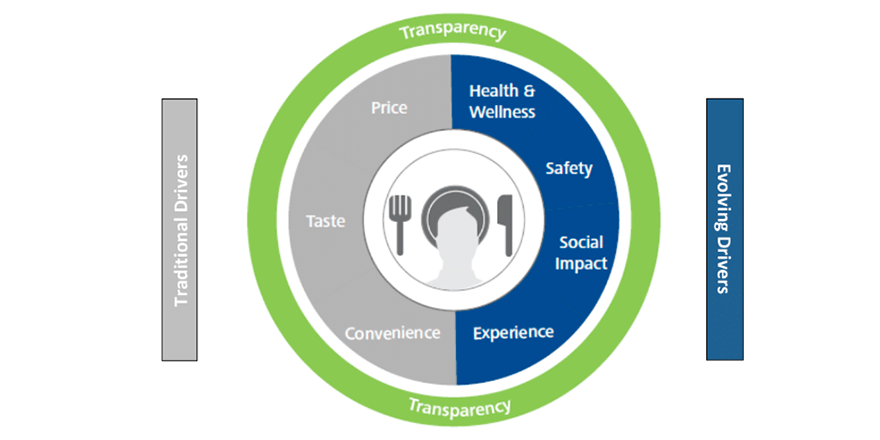
Collaboration is at the core of the appellation which extends both vertically and horizontally within the value chain. Cervena provides the platform for the consistent brand message, collaborative behavior and loyalty that ultimately generates a premium for farmer suppliers inside the farm gate. Cervena is not a whole of industry appellation and has very strict guidelines as to specifications that a product must meet to be branded. In this way it varies from other NZ industries which exhibit this marketing strategy such as Zespri with Kiwifruit. Appellations have been used through history and the designers of Cervena drew inspiration from the European guilds which successfully created localized monopolies which could set and maintained standards for the quality of goods and the integrity of trading practices in that industry, the guilds worked to maintain stable prices for their goods and commodities; and they sought to control town or city governments in order to further the interests of the guild members and achieve their economic objectives. All of which was developed and utilized through the 11th – 16th century in Europe. Further inspiration was drawn from the sparkling wine appellation – Champagne. Delivering value to the farmers who invest levies into the appellation is the ultimate goal by way of developing and growing new and existing markets for premium NZ venison. Drivers of the consumer decision have seen a change from taste, value and price to a real focus on quality, food safety, social impact and experience. The provenance of our food is paramount to the consumer and can only be delivered by a robust quality assurance and traceability program. Cervena delivers that assurance of a consistent premium product that can be eaten the world over at any time of the year. Cervena has a natural fit with the broader NZInc market strategies and messaging to the world.

Cervena sales into the US have recently become the largest export market by both value and volume, replacing Germany as the top export market for NZ venison. Cervena is certainly delivering on its core goals and we are entering into a golden era of venison pricing driven in part by limited supply but predominantly because of an appellation and collaboration throughout the industry.

New Zealand land tenure is holding back the success of agriculture

Executive Summary

It is naïve and self-centered to even consider our selves the owners of land. Land has existed for millennia before we “own” it, and will continue to exist for millennia after we no longer “own” it. We are simply occupiers, users and stewards of it for a fleeting time. Current land stewards should undertake succession planning, rather than attempt to leave a legacy on the land.

There is a fundamental flaw in the tenure of land in New Zealand, with the current model of farm ownership resulting in land ownership becoming concentrated in fewer hands, and increasing barriers to new entrants wanting to enter the industry

. Land tenure in New Zealand is largely based on United Kingdom freehold principles. There is a strong bias towards land tenure by people that inhabit and use the land, whether it be farming on their own account, or making it available as leasehold to others to farm it.

Our desire to own land is related to our fundamental desire to own where we live. For typical New Zealand farmers land tenure means solely the ownership or rental of land. This simple view of land tenure has become outdated. It is interesting to note that New Zealand already embraces a novel form of land tenure, being the global exemplar of share farming through the variable order share milking system.

We need to develop land tenure models to include various forms of joint ventures to enable new entrants and young farmers to climb onto the farming ladder. Using these different models will encourage innovation, entrepreneurship, expansion and acceptable succession within the industry, ensuring a sustainable future for the farmer and the next generation. New entrants and first-generation farmers are vital to the success of any country’s agricultural industry.

Māori entering farming in New Zealand also have the challenges of raising working capital on collectively owned Māori land; the need to rebuild sustainable Māori rural communities; and managing small blocks of land scattered throughout a region. New Zealand farmers need to stop family land being sold from one generation to the next, continuously loading debt on the next generation and resulting in continual profit for off shore banks. As New Zeal and matures, land sales will become less common, with families leasing land across generations, and tenant farming of this land will become more common.

State owned Landcorp farms are marginally profitable, and should be transferred to a land trust to be made available to new entrants to the industry. New Zealand should allow sales of farmland to overseas purchasers, providing there are strong controls around the management of the farmland after the sale.

A well-structured Capital Gains Tax should be implemented to attempt and reduce the continual trading of land, and encourage land to be valued on its productive capacity. This will help stop the situation facing South Island dairy farmers where they are attempting to be profitable on $80,000 per hectare land while facing increasing environmental pressures.

By embracing change in New Zealand farmland tenure, the industry will future proof itself and make farming more accessible for new entrants to engage in, driving greater innovation and early adoption of techniques but also through providing a dynamism by an intensive striving for efficiency.

Joining the family: Attributes to support integration into a family farm business.

Executive Summary

Family farming businesses contribute to a large proportion of the total number of agricultural businesses in New Zealand. But given the level of their significance very little focus is put on how family businesses function to remain harmonious, strengthen and grow. The small amount talked about is largely focused on governance and succession planning and predominately from the perspective of the older generation. This report looks at the family business from a different angle, that of a new family member joining a family business as a daughter or son in-law to understand what attributes are required to successfully integrate into a family farm business.

Initial research and articles relating to in-law integration into a family business identified that limited attention especially in a farming context has been placed on the role and impact both to the individual, family and business but recognised it was a unique and challenging position. Further reading specific to in-law relationships in an overseas farming context followed by identification of factors that contribute to effective and happy families influenced my direction and focus. The aspects needed by the individual daughter or son in-law and how the overall family functions.

The true learning really happened at the interview stage when four family members and three professionals shared their experiences, knowledge and insight into what contributed to smooth integration. Many of the research themes were echoed by the participants but what really stood out was the commitment required and that integrating into a family business is a journey that one is on for a life time. Becoming part of a family and business is a constant evolution and involves continual learning and application.

For that reason, the attributes which have been identified in this report are timeless and can be adopted at any stage of the journey. At the heart is to remain values focused – living a life aligned to what is important to you. Second, to maintain a strong and connected spouse relationship. From there stems prioritising understanding time, developing conversational confidence, remaining agile, practicing self-care, having fun and being creative and recognising change can start with you.

The attributes of joining a family business are aimed at supporting those assuming the daughter or son in-law role but to achieve a truly harmonious integration into a family business it takes commitment from all the family members. I there for believe many if not all these attributes are worthy of attention by all kinfolk involved.

My wish is this report ignites a willingness to create a culture that focuses on commitment, support and encouragement towards and within family farm businesses to ensure they remain sustainable and harmonious now and for future generations.

Hi-Tech humanitarianism: tech adoption on farm.

Executive Summary

Adoption of digital technology on farm has been largely for business as usual activities that are a “nice to have” aspect rather than a “must have”. In the future agribusinesses will use digital technology to lower operating costs, increase productivity and expand to new markets or develop new product offerings.

The aim of this study is to discuss the six emerging technologies and what this means for farmers. The technologies covered are Artificial Intelligence (AI), Virtual Reality (VR), Augmented Reality (AR), Internet of things (IoT), Blockchain and Quantum computing. The underlying principles, for how they the technologies work and practical applications in the field of agriculture.

It is my opinion that to maintain a competitive advantage in the wake of Agriculture 2.0 technology, which focuses on automation of tasks for efficiency and productivity, the discussion needs to be much larger than what gadgets have come out and how they will improve our productivity. Digital technology is table stakes. While technology is no substitute for the human element, when used strategically and appropriately, it helps overcome hurdles and brings farmers and consumers together for the greater good of both.

My analysis of the literature and in my experience working on New Zealand farms has shown that a deliberate, conscious decision to use technology has to be made from the top down. New skills and attributes must be developed. These include: creativity, agility and adaptability, critical thinking and problem solving. Important conclusions from this study are that farmers should be:

• Having the right learning environment and a positive attitude towards technology.

• Learning from other sectors and nations that have adopted and implemented technology successfully and applying learnings.

• Proactively involved in coming up with solutions to their own problems and working alongside solution providers to refine these solutions.

• Lifting the profile of on farm innovation for the greater good and industry wide application.

• Embracing diversity of thought and exploring new ways of doing things on farm all the way along the supply chain. As business models, economics, and skill requirements shift, we could well see major changes in top positions, at both the company and regional levels.

Synthetic proteins. What will consumers be eating in the future and are our food producers aware.

Executive Summary

Synthetic meat, cultured meat, artificial protein. Many of us have heard the terms but what do they mean? More importantly do our food producers know what they mean and what impact they may have on them?

New Zealand’s place in the world’s meat supply has always been at the premium end. We are not high-volume suppliers. We offer something different; our food producers care about their animals, their health, the land and the fine people who are the caretakers of it.

This report surveys seventeen farmers to answer the question, is there enough information available for our food producers and to gauge what further information is required.

The questions cover a range of topics to gauge farmer awareness of the synthetic protein industry and how this may affect them.

Also included is an historical overview from the inception of this technology through to predictions for the future. Information on the key companies involved completes this study.

Key findings:

1) Our Food producers feel that they do not have enough information readily available. Information is available online. However, it requires effort to sort through the content!

2) Synthetic proteins are not currently seen as a high risk to our food producers. Other risks such as political and environmental influences feature highly.

3) Innovation in this sector is happening very quickly. New information is available daily and it’s difficult to stay ahead.

4) Many producers see the introduction of synthetic protein as an opportunity and are looking to push the benefits of our sustainably produced, grass-fed premium products.

Felling the Wall: An investigation into forestry training in the Gisborne region.

Executive Summary

Plantation forestry in New Zealand is entering a period of growth due to the availability of wood supply. Nowhere is this more prevalent than the Gisborne region. In order for forest owners to capitalise on their investment, this growth in industry capacity needs to be met with the supply of labour. To this end, the industry has its back to the wall.

The primary aim of this project has been to identify important characteristics of forestry training that are considered useful in the context of designing an alternative forestry training programme for the Gisborne region. The characteristics of training explored in this project include features that are considered successful as well as identifying limitations and challenges that are impeding the delivery of positive training outcomes. A broader objective of this project is to support the Eastland Wood Council (EWC) initiative to explore the potential for an alternative industry led training programme for the region. In order to achieve this aim, the author has collected data with semi-structured interviews to explore the perspectives of a sample of key stakeholders who are directly involved in the industry.

The results of this research illustrate that forestry training is a complex and challenging environment which is constrained by many factors. What is evident is that there is strong support for an alternative forestry training programme for the region. There is collective acknowledgment that the current training framework is not delivering what is required to support industry labour needs. The industry stakeholders realise the potential opportunity and more importantly are willing to consider alternatives and invest to find ways to improve efficiency and deliver better training outcomes.

Improved efficiency and better outcomes for forestry training will come at a significant cost. It will require substantial investment to design and implement a modern and attractive training programme which utilises technology to facilitate training as well as provides strong pastoral support to students. Strategic partnerships beyond current levels will be needed with businesses, organisations and government agencies within the industry training space to build critical momentum and realise the opportunity. This research suggested that progress toward this opportunity will require strong leadership and collaboration among industry representatives.

This report makes a number recommendations that relate specifically to the design of a training programme as well as training and industry promotion more broadly.

The recommendations are:

  • Consider partnering with Competenz to integrate the apprenticeship model.
  • Design and implement a student induction process to clarify the expectations of the training programme and employment in the industry more broadly.
  • Invest in a strong pastoral support framework to assist and develop students.
  • Consider employing a Project Manager/s to coordinate the programme. Ensure individuals who support students directly are able to engage and communicate effectively with the students.
  • Invest in technology to improve student recruitment and engagement as well as improve training efficiencies and student access (i.e. machine operation simulators).
  • Consider options for a machine operation training facility located in or around the city.
  • Expose students to all aspects of the industry and its support services to promote the scope of care er opportunities.
  • Explore opportunities to deliver the introductory industry qualifications to students prior to worksite placement with contractors. These should include NZQA ‘general requirements’ (17769) and ‘employment in a forestry operation’ (22995) . Additionally, basic fire and first aid units should be considered.
  • Vet contractors who partner with the programme to ensure their team culture is appropriate to facilitate student learning.
  • Consider and implement appropriate incentive mechanisms for contractors who partner with the training programme.
  • Facilitate opportunities to develop a shared vision for forestry training among key stakeholders in the region. This shared vision should include defining what future employment in the forestry industry will look like. Ensure this vision can be communicated effectively.
  • Facilitate opportunities to improve collaboration between key stakeholders.
  • Stakeholder collaboration and partnerships with the training programme should be based upon co – investment (financial and/or non – financial) to improve engagement and deliver better outcomes.
  • Increase promotion of the industry and career opportunities in schools including specific engagement with teachers and parents to ensure they are up to date with changes in industry and the future opportunities.
  • Consider targeted industry and career promotion at rural schools within the Gisborne region.

Hitting the marc in marlborough.

Executive Summary

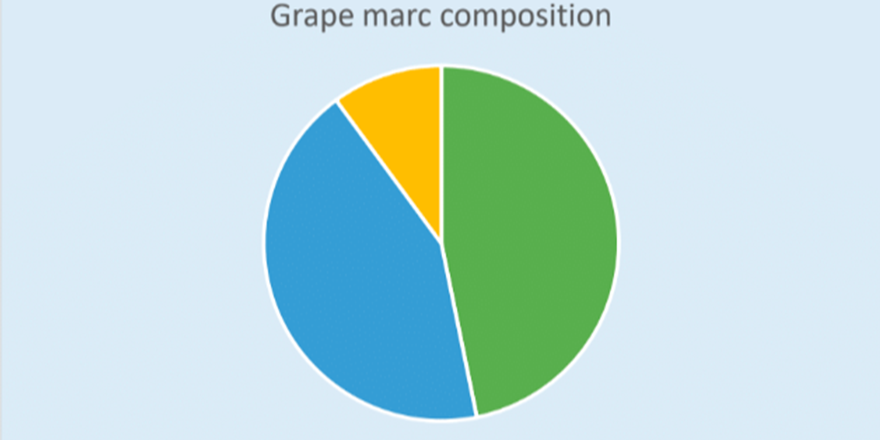
Grape marc in the Marlborough region is set to increase in production by 50% in ten years. This increase in quantity could be tolerated by the multiple types of practices that currently exist, if expansion plans are in place. Comparing Marlborough to other industries or other wine regions within New Zealand and off shore is difficult as there are many unique factors involved. Council regulations are changing, and consequence for non-compliance has recently been aggressive; a strong contributor to the need for a change in culture around the issue.

Waste disposal in any industry is of environmental concern, and sustainable practices should be clearly defined so all procedures involved in handling, storage and use will have no adverse effect on the community, environment and businesses involved. Reutilising excess materials offers an environmentally conscious solution and provides the industry with another positive story.

There is room for more research and development of technology which can help make systems easier and more effective. Collaboration between industry members, industry bodies and governing bodies is essential to the success story that is grape marc in Marlborough.

How has the financial viability of Sauvignon Blanc in Marlborough changed over the last five years in three major growing areas.

Executive Summary

The financial viability of Sauvignon Blanc in Marlborough has never been stronger, showing returns on investment for the 2015/16 season of 24.47%, now who wouldn’t chase returns like that? Growers and investors are purchasing the remaining bare flat land to develop and keep up with world demand this is seeing record prices paid for both bare land and existing vineyards.

I undertook a literature review in conjunction with interviewing three growers, I was better able to understand the characteristics of the Marlborough wine region its sub regions, and how these characteristics play out in the flavour of the wine, value of the land and the factors that are driving the current expansion.

What I wasn’t aware of before undertaking this report was just how well this industry was performing and had been over the last 5 years peaking last season as mentioned above, I quickly learned that if we suggest these things to be cyclic then it would appear to me that we are very high in the cycle right now, are we at the peak or do we still have room to move? This report will give you an understanding of where the market is today.

Growing wine grapes in an undercover system

Executive Summary

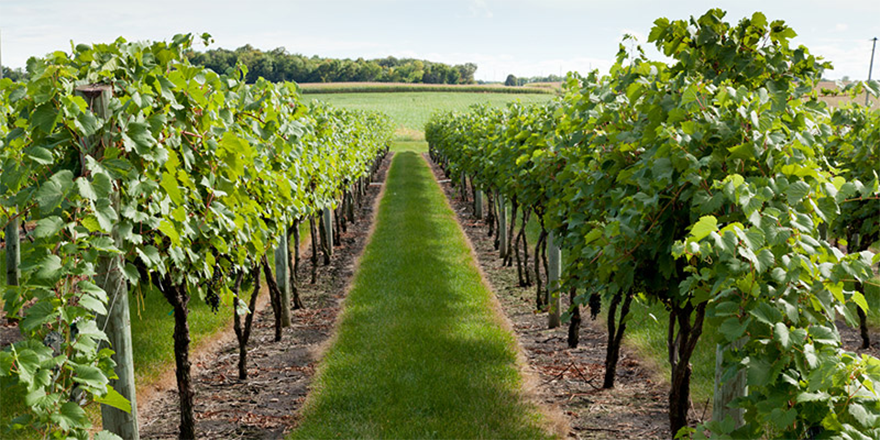
Thinking outside of the square and challenging the status quo is and will become more and more important as we see challenges to the primary industries. The changing consumer preferences and urbanisation of our communities is and will continue to erode at the traditional way of farming and growing in New Zealand, and the world over. How do we combat this and retain a highly valuable primary production systems in New Zealand.

The simplistic answer is for us to evolve and change in line with consumer preferences and what is accepted by society, we can see this happening all around us. Cage free eggs in all major supermarkets by 2027, Low alcohol wines gaining a market share from relative obscurity only a few years ago, chicken free chicken and artificial proteins becoming available to consumers, that were highly expensive prototypes at the start of the decade. But what do we need to do to evolve?

The question then lies, “how do we keep ahead of the curve” and “how do we maintain relevance in todays society.” The answer to this is complex and not straightforward, but it all starts in one place, asking questions and challenging the status quo, not being content with how things are, or how they are progressing. Always asking why.

I will use the example here of looking to grow wine grapes in a semi-protected or undercover system. I have investigated and continue to evaluate this as part of my professional role as a viticulturalist, and for the Kellogg programme. Also I will try to understand the process of thinking outside of the square, as well as provoke thought about all our systems and processes, and encourage you to always be looking forward for a new and novel solution.

The Agricultural Lure: Understanding the awareness of the red meat sector at high school level.

Executive Summary

Each of the sectors within the primary industry has an ageing population of employees. These people are going to need replaced by 2025 (as Julian Raine spoke about during the panel discussion, phase one of course 36 the Kellogg Rural Leadership Programme). The red meat sector is New Zealand’s largest manufacturing employer and provides jobs for 25,000 people.

This research looks into whether the awareness of careers within the red meat sector at high school is having an impact on the overall employment rate within the sector. Thematic analysis is used to identify different perspectives and answers – to discover the understanding across the education sector. An interview data set of 70 people was used to understand the awareness of the red meat sector at high school level.

Promotion of careers across the sector is constrained due to low overall career awareness and lack of exposure at both a teacher and student level. Awareness of the red meat sector is primarily focused at farm level and not on the big picture, as reflected in the stigma of agriculture and practical occupations. More emphasis on telling our story and pathways through the sector are needed to help clarify awareness and understanding.

As generational change continues, communication methods and resources supplied need to be considered, while continuing to be positive and confident as an industry.

The main findings from this research are

  • More emphasis on telling our story and pathways through the sector are needed to help clarify awareness and understanding.
  • We need to continue embracing changes for positive rewards and take advantage of the skill set of the next generation of workforce.
  • The stigma of agriculture and practical occupations remains. They are not seen as prestigious.

There is a need to rebrand the term ‘red meat sector,’ change the mentality of our industry, and tell our story more effectively. Educating educators and creating clearer career pathways through apprentice programmes is needed for success into the future. Collaboration for more exposure opportunities and simplifying systems and resources are key recommendations.