2026 Nuffield NZ Farming Scholarship. Apply by 17 August 2025. Read More...

Apply for 2026 Nuffield NZ Farming Scholarship by 17 August 2025. More details...

Where are our women?

Executive summary

The Women in Kiwifruit group has a goal of inspiring, connecting and elevating women in the Kiwifruit Industry. To understand the current status of the representation of women in the Kiwifruit industry this report was conducted. It aimed to answer if women are well represented across the Kiwifruit workforce (paddock to plate) through completing a ‘health check’. A literature review identifying documented benefits and barriers of women in the workplace and the greater themes of diversity and business culture. A diverse workforce is not a nice to have, it is morally, ethically, social, and financially beneficial business decision. Women contribute to increased levels of innovation, and better risk management.

A series of semi structured interviews were completed with 8 Kiwifruit industry leaders and 2 smaller forum groups. Following this a thematic analysis highlighting common themes. A lack of women was identified across senior leadership levels and certain roles like grower services and orchard management.

Although it was highlighted that the industry has greatly improved as it has grown, common barriers for women succeeding in the Kiwifruit industry were unconscious bias, lack of flexible working conditions and business culture. All leaders highlight great opportunities for change if a team or manager had a mind-set attuned for embracing change, or who personally valued diversity.

When a descriptive statistical analysis was completed on employment data from a Kiwifruit postharvest organisation it showed that at an overall staff numbers level 49-53% of the workforce was female. More women were employed in admin, HR, finance and quality roles and less in grower services, orchard, senior leadership and forklift positions.

As roles progressed in seniority and required a higher degree of leadership fewer women were seen. This was equated to;

  • The presence of unconscious bias during promotional discussions
  • Women’s role as primary caregivers not being compatible to roles that do not provide flexibility in work hours or rely on tacit knowledge.
  • Women doubting their personal ability, having a lack of confidence or fear of being authentic and vulnerable.

Recommendations to address the imbalance of women across the increase include

  • Collecting more data and monitoring to provide analytical metrics and reduce speculation on gender imbalances and pay parity.
  • Being bold with leadership decisions to create change and expect change from the team around you.
  • Encourage women to support women through connection and mentoring.
  • Cultivate diversity values from the bottom up and top down across the industry.
  • Adopt fit for purpose business cultures that values diversity and people.
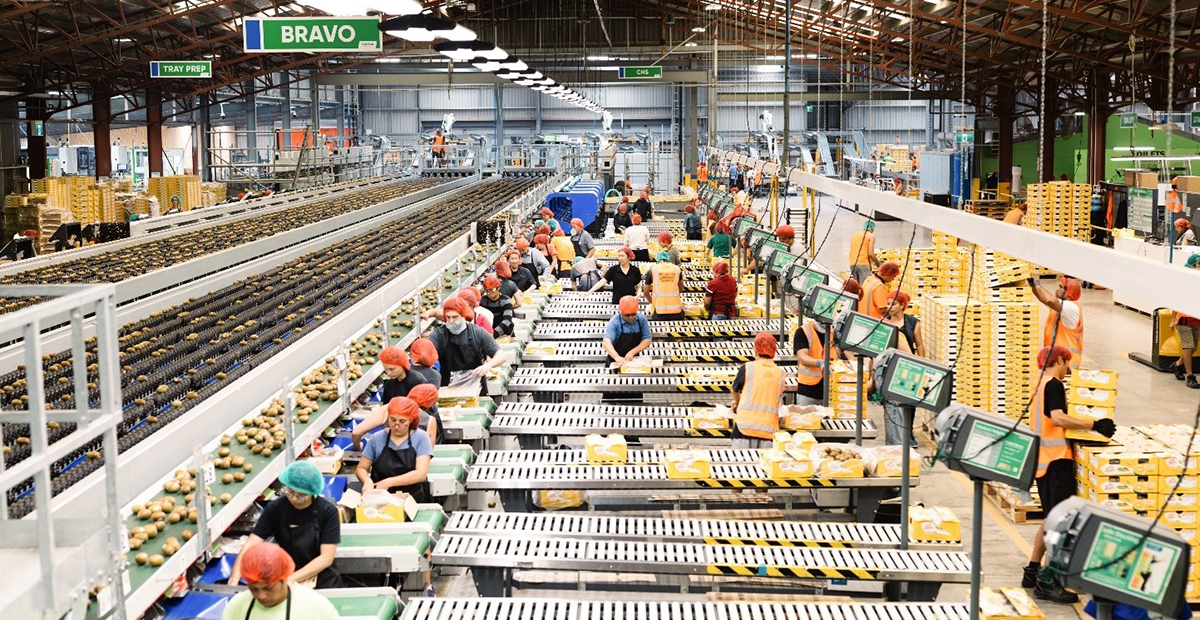
Team Building in a Seasonal Workforce.

Dustin Rothstein Kellogg report image

Executive summary

“The stubborn fact is that all great human achievement is the result of team efforts…The degree to which this fact is overlooked is alarming and is a consequence of the individualistic bias of our culture”

Seasonal horticulture work requires a group of individuals from diverse cultures, work experiences, and employment motivations to form a team in a short period of time. Often in the span of a few days, these workers are recruited, divided into teams, trained, and put to work. Their success in quickly forming a high performing
team is directly linked to the success of the harvest season.

There is no shortage of research on how to build a high performing team, but seasonal horticulture work presents a few unique challenges that makes it difficult to blindly apply these methods:

    1. Time Constraints – The entire season lasts only a few months
    2. New Employees – Most seasonal workers are new to the company and to the industry
    3. Demographics – Seasonal horticulture workers come from incredibly diverse backgrounds.

This report aims to provide recommendations on how leadership and team building models can best be adapted o suit these unique challenges.

To achieve this, a deep understanding of the demographics and cultural norms of New Zealand’s seasonal horticulture workforce was a primary research focus. This cultural understanding was then overlaid with current best practice team building, leadership, and engagement models.

Recommendations

  1. Understand Your Seasonal Workforce – The first step to building a high performing team from a collection of seasonal workers needs to be understanding who those workers are. Any process for building a high performing team with members of various cultures should acknowledge and
    respect the cultural differences amongst the team.

  2. Tailor Your Leadership Approach – Tailor your leadership style to the needs of your team. Communication is key. With a seasonal, culturally diverse work team, the leader needs to take this a step further, helping the individuals find common ground and bond as a team before they align to a common purpose. Facilitate effective communication within the team to build these personal bonds. Follow this up with clear, consistent communication to the team.

  3. Develop a Structured Team Building Plan – Understand the Forming-Storming-Norming-Performing-Adjourning model of team development. A guide to applying this for seasonal work is found in the Appendix. This should be a starting point and adapted to the unique norms of your own work team. 

A health check of women in the Kiwifruit workforce.

Yvette Jones Kellogg report

Executive summary

The Women in Kiwifruit group has a goal of inspiring, connecting and elevating women in the Kiwifruit Industry. To understand the current status of the representation of women in the Kiwifruit industry this report was conducted. It aimed to answer if women are well represented across the Kiwifruit workforce (paddock to plate) through completing a ‘health check’.

A literature review identifying documented benefits and barriers of women in the workplace and the greater themes of diversity and business culture. A diverse workforce is not a nice to have, it is morally, ethically, social and financially beneficial business decision. Women contribute to increased levels of innovation, and better risk management.

A series of semi structured interviews were completed with a variety of Kiwifruit industry leaders, followed by a thematic analysis highlighting common themes. A lack of women was identified across senior leadership levels and certain roles like grower services and orchard management.

Although it was highlighted that the industry has greatly improved as it has grown, common barriers for women succeeding in the Kiwifruit industry were unconscious bias, lack of flexible working conditions and business culture. All leaders highlight great opportunities for change if a team or manager had a mind-set attuned for embracing change, or who personally valued diversity.

When a statistical analysis was completed on employment data from a Kiwifruit postharvest organisation it showed that although on average women were well represented there was an imbalance across roles identified by industry leaders. More women were employed in Admin, HR, Finance and Quality roles and less in Grower Services, Orchard, Senior Leadership and Forklift positions. As levels of leadership were increased fewer women were seen due to a varieties of internal and external factors.

Recommendations to address the imbalance of women across the increase include collecting more data and monitoring to provide analytical metrics and reduce speculation. Being bold with leadership decisions to create change and expect change from the team around you.

Encourage women to support women through connection and mentoring. Cultivate diversity values from the bottom up and top down across the industry. Adopt fit for purpose business cultures that values diversity and people. 
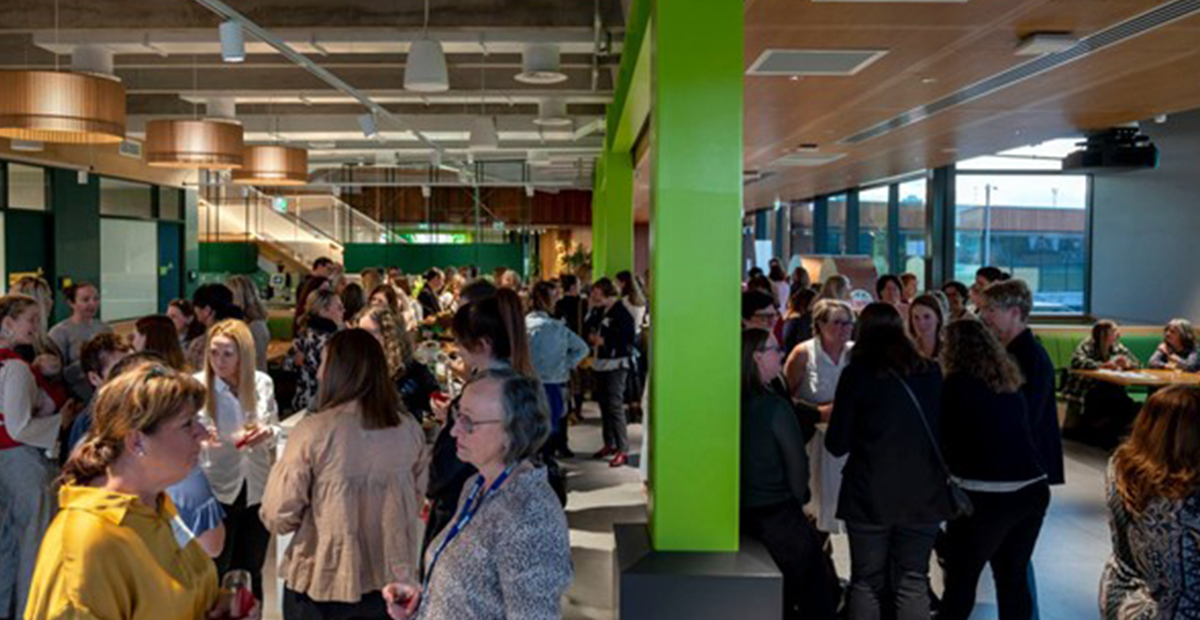
 

Opportunities to improve efficiency in the fresh produce supply chain.

Marcus Tietjen Kellogg report

Executive summary

The fresh produce sector in New Zealand produces some of the world’s greatest fruit and vegetables. There is a complex all-encompassing machine that connects the farms these products are grown on to the final consumer. This machine is the Fresh Produce Supply Chain (FPSC).

New Zealanders enjoy an excellent range of fresh fruit and vegetables that can be purchased through a variety of sales channels. The most dominant and effective channel is through supermarkets which have access to supply via fresh produce marketers and growers directly. These suppliers provide
fresh produce of good quality, at scale consistently and at a reasonable price throughout the year to meet the tastes and preferences of consumers.

This project has been completed to further understand the FPSC and seek efficiencies that can be made that reduce volatility in supply, reduce food waste and reduce the margin between what the consumer pays, and grower receives.

We aim to answer three key questions being: what are the challenges for the current fresh produce supply chain from the farm gate in New Zealand? What technology and supply chains exist today outside of fresh produce? And does a different, more efficient system fit in today’s fresh produce supply chain and would this be accepted by industry stakeholders?

The key findings were growers in NZ are aligning themselves with retailers and marketers in partnership style relationships. Growers with smaller scale struggle to compete in fragmented industries where information is less available and less direct from the consumer.

Over time there has been a shift in the paradigm from growing for the market floor auctions, to growing for consumer demand based on high information sharing from retailers and marketers. This has resulted in a more deliberate crop rotation and sustainable growing system, reducing wasted product and improving price stability.

Technology in FPSC has huge potential however supply chain participants are cautious and considerate on technology they invest in. Blockchain technology can support efficiencies by reducing reliance on trust on intermediaries. The internet of things can provide an interface between supply chain practice and software systems. This can log important information which can give retailers and consumers confidence in quality of product and appropriate handling.

Consolidation of fragmented industries will support greater efficiencies as grower scale increases and vertically integrate to control more downstream practices. We also see intermediaries investing in upstream practices such as farms and greenhouses.

Recommendations are summarised as follows:

  • Encourage vertical integration where supply chains are owned or controlled between grower and retailer. For growers that have the scale and access to capital they should build partnerships with retail entities and invest in infrastructure to reduce reliance on other supply chain participants.

  • Cooperate within sector to vertically integrate if scale is not achievable. This can be done by the establishment of regional cooperative organisations to allow smaller scale growers to pool resources, invest in infrastructure and supply direct to retailers.

  • Increase communication between FPSC participants with accurate data in fragmented product categories to share accurate crop details.

  • Drive increased consumer awareness of imported vs local produce with signage andbranding that clearly differentiates products.

  • Encourage investment in internet of things and Blockchain technology for import product to reduce volume of poor-quality import product brought to NZ consumers.

Owhaoko B&D land block.

Suzanne Hepi Kellogg report image

Executive summary

Māori land plays a critical part of Aotearoa and its history. Understanding the dynamics of Māori land ownership and the role they play to ensure their whenua is taking care of, is not as straight forward as people assume.

Māori landlocked land has influenced a change in the Te Ture Whenua Māori Act to lessen multiple barriers for Māori. This research has been conducted through a kaupapa Māori approach, for Māori by Māori.

This case study is concerned with understanding the land block, its isolated location, the barriers of access and how the trust can initiate a sustainable involvement for the owners. The report is based on semi structured interviews and analysis of secondary data.

Purpose

The aim of this report is to discuss the landlock block Owhaoko B & D with trustees and beneficiary owners. Overall, I am gathering data to build an understanding of what is occurring on this land block, trust developments and what the future aspirations could potentially be.

Key Findings

The key findings of this report have been grouped into themes and are a general understanding of the narrative around the story of the land block. It is supported by quotations from interview participants and is raw information that they have voiced.

Recommendations

  • Data – Embark on further research of this land block and internships conducted by beneficiaries or owners of this whenua with support from the trust and tertiary institutions.

  • Transformation – develop and deliver environmental programmes to help educate whānau about the importance of being kaitiaki for the land.

  • Collaboration – form a partnership with a Māori tech and digital business that could showcase the land blocks history and whakapapa digitally, to owners of the land that cannot experience it first-hand.

  • Capability development – Provide opportunities for owners to participate in projects associated on the block such as seed banking, wild game monitoring etc.

  • Leadership – Government to help support a leadership programme that is delivered partially out of the land block, informing this cohort about the change in legislation and how the land can contribute to this.

  • New initiatives – Establish other incentives for owners wanting to visit the block such as high-end accommodation, events, or annual activities etc.

  • Mātauranga Māori – Produce or deliver a wānanga based on traditional Māori practices such as rongoa, identifying native trees, land use etc.

Happy and Healthy at Work.

Executive summary

Labour and its shortage remain a critical issue that needs addressing, with the growth of horticulture predicted, coupled with on-orchard automation look ing closer to 2030. With low unemployment in New Zealand, engaging the Recognised Seasonal Employer (RSE) workforce is vital to remaining successful as an industry.

The purpose of this report is to understand and provide recommendations for the key attributes of a successful team within the seasonal RSE workforce, focusing on the kiwifruit industry. The methodology includes a literature review on the characteristics of a seasonal workforce and breaking down what a successful team looks like, followed by semi-structured interviews with ten orchard owners and pastoral care managers to gain insights from their experience with RSE teams. Themes were generated through thematic analysis to provide conclusions and recommendations.

Key findings

A family culture with a village mentality is key to the success of an RSE team and results in a team that is both happy and healthy at work. Team building and a homely living environment add to this. RSE employees’ purpose of making money to send home to their families, needs to be kept front of mind.

The RSE team needs to be well-formed with the right mix of skills, experience, and personalities with a clear and well-understood leadership structure. The team leader must be trusted and respected, creating productivity and success. Peer mentoring also adds to team success with team members supporting and encouraging one another.

The mindset of continuous improvement is essential to the success of the RSE team. Highly engaged RSE employees need development opportunities beyond their day-to-day tasks.

The relationship is symbiotic, with New Zealand employers needing to be willing to learn more about the values and culture of the Pacific Islands. All parties working together need to have a strong cultural understanding of similarities and differences, which improves team performance. Planning for continuity and succession is vital.

Recommendations

The following recommendations are made to orchardists looking to build a successful RSE team:

  • Develop a family culture, cultivating the village mentality. This is developed through having an inclusive living environment and creating a home away from home by their New Zealand employers.

  • Ensure all permanent employees have a good understanding of the similarities and differences of the Pacific Islander culture. This can be developed through developing a cultural training programme for all permanent staff.

  • Ensure RSE employees understand their purpose and motivation for being in New Zealand which is sending money home to their families. Checking in on this regularly to keep them reminded of their purpose is important to retain engagement.

  • Put in place an RSE team leader that is trusted and well-respected.
    • Create a culture of empowerment amongst the team to allow peer mentoring across team members.

  • Put in place regular team-building activities and be in regular communication with the RSE team.

  • The New Zealand employer needs to have a mindset of continuity and succession. The key to this is building a strong referral system.

  • Ensure RSE employees have access to development opportunities. The main provider of this is Vakameasina.

  • Be open to learning about the values and culture of the Pacific Islands.

What Goes In Must Come Out.

Executive summary

Social licence to operate (SLO), also known as just social licence, is an unwritten agreement between stakeholders and a business/industry on the impact that they can have on the environment and community.

As the values of the community change our SLO is going to come under increasing pressure. Stakeholders are increasingly scrutinising water usage, agrichemical and fertiliser applications, worker welfare, noise pollution and visual impacts. They want to see justification of use of the products and tangible outputs (saleable product).

The aims and objectives of this project is to investigate whether growing cherries in an intensive, indoor growing system will protect our social licence to operate. Social licence will be defined, the aspects that are important to different stakeholders explored and how we can enhance our social licence with forward thinking growing systems explained.

A literature review was conducted to gather some insight to the origins of the social licence to operate concept, define social licence, identify stakeholders and examine what businesses can do to maintain social licence.

Three levels of stakeholders were identified as being significant to cherry production operations. These were seasonal workers, the general public and regulators. Semi-structured interviews were carried out with each stakeholder group to ascertain what aspects of cherry growing operations they perceived to be most important to the social licence to operate and what of these operations put the social licence to operate most at risk. These factors were then compared through a case study between a traditional open field cherry growing system and cherries grown intensive indoor growing system.

Conclusions

  • The practices of a cherry growing operation are likely to come under the spotlight. When questioned about operational practices and use of natural resources it is important that growers can provide quantitative data on the inputs involved and demonstrate attempts to increase efficiency.
  • Industry needs to be more open to sharing the positive aspects of their operations on the environment and community. We need to get better at promoting the good stories and letting people know all the good stuff we do. This way the industry has control over the information that is shared.

  • Education and communication are key to maintaining social licence to operate. Stakeholders are more likely to accept practices if they know why they need to occur, when they will occur, justification for the practice and what measures have been put in place to minimise any risk.

  • An intensive indoor growing system will protect the social licence of cherry growing operations. It will do this by decreasing the amount of water, fertiliser and agrichemical required to grow a kilogram of cherries while minimising the amount of waste product that is produced.

Recommendations

  • An industry-led research program needs to be set up to actively identify the stakeholders of cherry production and engage with them to find out their perceptions of positive and negative aspects of production and identify the strengths and weaknesses of each part production cycle. It will also identify practices that are deemed to be acceptable and unacceptable.

  • Embark on an information sharing and education program with stakeholders. Keep them up to date with orchard activities, invite them to the orchard and use social media as an information sharing platform.

  • Investment is required by industry to implement growing systems that are more efficient, that is have higher yields, less waste and use the natural resources and synthetic inputs more efficiently.

Leadership during a crisis.

Henry McIntosh_report image

Executive summary

The Covid-19 pandemic hit New Zealand during 2020 and the horticulture sector was immediately faced with an extremely challenging situation. The sector was operating under very strict rules and experienced significant effects to the wider supply chain. But overall, the sector performed very well during 2020.

The aim of this report is to understand how the New Zealand horticulture sector successfully navigated the unknown during the initial phase of the pandemic, specifically focussing on leadership.

The question I wanted to answer was ‘what are the most effective leadership strategies during a crisis?’.

I completed a literature review to analyse some of the previous work done on crisis leadership and interviewed six senior leaders from New Zealand’s horticulture sector. These people were actively involved in directing the industry and leading their stakeholders through the early phase of the pandemic.

The clear answer to my question regarding the most effective crisis leadership strategy was to implement a people-first approach. Removing the controllable worries that people have about the situation. Keeping people busy to maintain a sense of purpose and continuing a level of social interaction are all key parts of a people-first strategy. 

With this approach, people are motivated to continue as normal and will often create better results. A lot of the interviewees reported better team engagement, efficiencies, and overall business performance during this period.

It is clear, that without this people-first approach, New Zealand’s horticulture sector would not have managed this period as successfully as it did.

Communication was also a significant part of the successful leadership strategy. There was no fear about potentially over-communicating. Getting the correct and most up to date information out to all stakeholders quickly was a focus. Many communication systems have been completely refreshed as a result.

The pandemic situation was developing so quickly, that often learnings from previous weeks or from other businesses were very useful to handle new challenges. Being conscious of the learning opportunity was challenging for businesses, but once embraced, systems and processes improved significantly.

Recommendations:

  • Cultivate a company culture that puts people first and ensure that staff can recognise this prioritisation.
  • Invest in professional development and networking opportunities to continually upskill staff and create opportunities for pan-industry connections.
  • Review and re-create the existing communication plans to ensure the best tools and strategies are being used.

Getting Plant Varieties Right

Shannon Harnett

Covid restrictions meant there would be no international travel to study my topic of choice. Luckily New Zealand is a thriving hub for primary industry innovation. My domestic research has been aimed at gaining a deep understanding of plant variety rights (PVR), value creation, and the changing rules of the game.

There are two high profile super stars in the PVR space that I am particularly interested in – Zespri Sun Gold and the Rockit Apple. I draw examples from each throughout the report.

The owner of a PVR has the exclusive right to propagate and sell the fruit, flower, or other products of the variety under PVR, or the duration of the right. For kiwifruit, this timeline can be up to 20-23 years. The PVR owner can issue licence to third parties to grow and sell the product.

A fundamental clarification is that rights and royalties do not guarantee a successful product. The protection of the Plant Variety Right, the strength of the product and the branding creates value. The key benefit of having the plant variety right is control. The control to structure supply to meet demand, now and into the future. The licencing of a PVR variety allows supply to be controlled so demand from customers continues to be in excess of supply. Thus enabling the value chain participants of the variety to be rewarded.

Branding and marketing the brand involves significant investment, with returns generated over the medium term. A successful product that has PVR and IP protection has the funding available to spend on continued marketing and branding, without the threat of competitors undercutting and driving down revenue.

Premium commodity product attributes are easily replicated. The cost of commodity innovation and research and  development not protected under intellectual property law, are worn by the first mover. The advantage is held by the fast followers.

The incorporation of sustainable Development Goals into policy and corporate values are positively driving change. They are an environmental and social guideline for governments and businesses. On a producer level the financial implications of not changing will be far reaching, from the availability of money to the availability of markets. As New Zealand producers embrace these goals, we should see a corresponding increase in  demand for our exports. Environmental and social considerations are now within the rules of the game. Environmental legislation is a complex, fast-moving area with potential for unintended consequences.

Supermarkets dominate food supply, holding an unequal share in the balance of power. As such, they have the potential to drive change for a more sustainable future. As the conduit to the consumer, supermarkets could easily demand sustainable production methods.

New Zealand is currently updating the Plant Variety Rights Act 1987 to bring its standards in line with The International Union for the Protection of New Varieties of Plants (UPOV) 1991 update. It is expected that it will give PVR holders further clarification and ability under the legislation to protect their rights. As per the requirements of the Comprehensive and Progressive Agreement for Trans-Pacific Partnership (CPTPP).

The CPTPP will open up markets for New Zealand exports to 480 million people and result in an estimated $222 million per year of tariff reductions. We will see the beneficial effect over the next 10–15 years as trade restrictions are reduced. This benefits all exports – aquiculture, forestry, horticulture including wine exports, dairy, and sheep and beef. The partnership also lowers the cost and time spent getting products into international markets with less boarder bureaucracy.

This update to the legislation is an opportunity for New Zealand to become a world leader in PVR legislation. To have fit-for-purpose legislation that incentivises the development of new varieties, and the importation of existing international varieties would create a competitive advantage. We can be world leaders in plant variety innovation, and research and development. Backed up by robust legislation that protects the IP that is created, ensuring the ability to take quick, cost effective and assertive action over infringements.

The tension between science-led and consumer-led research and development is unavoidable. There is a need for both. Successful consumer-led innovation directly produces economic value. Science for the sake of obtaining knowledge leads indirectly to economic, social, and environmental benefits.

Keywords for Search: Shannon Harnett, Shanon, Shannen, Shanen

The social impact of converting traditional agricultural land into horticultural land within my Iwi.

Executive Summary

My Iwi – Ngati Pahauwera.

Ngati Pahauwera is a confederation of clans centred on the Mohaka River in northern Hawke’s Bay. The tribe did not sign the Treaty of Waitangi, Chief Paora Rerepu sold large areas of tribal land to participate in the new economy, and supported the colonial government against anti-government Pai Marire (Hauhau) and Te Kooti fighters.

To be from Ngati Pahauwera is an honour that we all hold proudly. We are quick to advise strangers of our lineage to the region in order to take the front foot in Korero. Descendants of Pahauwera are global but we still have a common connection to our home through our whakapapa.

At the heart of Pahauwera are the Māori settlements of Raupunga and Mohaka. Mohaka being close to the Mouth of the mighty Mohaka River and Raupunga situated 20 minutes upriver, close to the Mohak a viaduct, the Tallest Railway Viaduct in Australasia.

In conversations with Pahauwera Leaders I have been told of the good old days when there were jobs for everyone. You were either a Farmer, Shearer, Ganger on the Railways, Driver for the Ministry of Works, Forestry Worker or you drove the short distance to Wairoa and worked at the Freezing works.

Most of the Jobs were hard labour intensive ones, jobs where you knew that you had done a hard day’s work, jobs that young Maori thrived at. Today those jobs seemed to have been scaled back or restructured in preparation to sell off to the highest bidder and this has come at a cost to our people.

Within the Raupunga and Mohaka area I remember growing up with a Fish n Chip Shop, Movie Theatre, 2 stores, a Post Office , a Police Station and a Pub, today we have none of these. The Urbanisation of our People has left the a reaunrecognisable. Most of people moved to either Napier/Hastings or Wairoa in search of employment or following family.

Today we have 180 house holds in the Pahauwera Catchment (Est under 1000 people), the average household income is $17,500 p.a. The Average household income for those of Pahauwera living outside of Pahauwera is $23,000 p.a

Unemployment or Low income jobs seem to be systematic for our people both within the iwi and those that have moved to the towns. Somewhere along the line some Maori as a race have lost their way. We are now seeing generations of unemployed families, Generations of unskilled labourers, Generations of families stricken with Health issues, generations of child poverty, violence and gang culture. Pahauwera is not immune to this trend and in some areas we would rank highly.

“One of the major causes of child poverty is the relative lack of jobs for parents who have limited educational qualifications, skills or work experience ” (Working Paper no 12: Expert advisory group on solutions to child poverty, pg 2, pt 9)

For me the root of some, if not most of these issues is education and employment. The Ngati Pahauwera Development Trust have a vision to increase the household income by 50%. On current figures this will take the range from $35,000 for those residing in the Iwi and $46,000 for those that are living outside the area.

“According to Statistics New Zealand, the Average household income for New Zealand rose by 11.8% to $84,462”

To do this we need to create jobs within the Iwi, jobs that have a career path and offer opportunity to upskill and personal development in an effort to breaking the cycle that I believe we are currently in.

Amidst all this doom gloom about how we are not succeeding as a people, we do have a strong heart, we are passionate about our Turangawaewae and we do have some highly motivated members of the community that have a vision for self-sufficiency for our people, and I am one of those!

The Purpose of this report is to focus on what the Social effect of having high density employment, like Horticulture will bring to the region.

This report will give you a back story to Ngati Pahauwera, before we go forward we need to know where we come from to understand why some things are how they are.

This report is not about how I plan to introduce a Multi-Million dollar Horticultural industry into Ngati Pahauwera, giving full time employment for up to 100 people, 10 months part time employment for approximately 50 people and seasonal employment for up to 300 people at its peak, this report is more about ‘why’ do we need to do it and not the ‘How’. We need to “decentralise “ our people back to their homelands, But bring them back to what? What will the Social impact be on a community who currently have an average household income that is insufficient for the needs of a modern family in New Zealand.

It is obvious that land planted with Horticultural crops (In particular Fruit trees) requires more FTE’s (Full time Employees) than a traditional Farm will and this is the basis for this report.