2026 Nuffield NZ Farming Scholarship. Apply by 17 August 2025. Read More...

Apply for 2026 Nuffield NZ Farming Scholarship by 17 August 2025. More details...

Wahine toa, Wahine ahu matua.

Sharleen Temara Kellogg report image

Executive summary

“ Whaia te iti kahurangi ki te tuohu koe me he maunga teitei, ki nga whetu rawa”

__

“Seek the treasure that you value most dearly, if you bow your head, let it be to a lofty mountain, let it be beyond the stars”.

This whakataukī is about perseverance and endurance. Refusing to let obstacles get in your way while striving to reach your goals.

This research paper looks at the need for women in leadership, the need for te ao Maori and tikanga Maori in the workplace, the current resistance to change and posits how this might change.

Traditionally and historically the leadership role has been the domain of men in Maori and mainstream organisations. Progress is happening, glacial as it feels at times.

Although there has been little research into gender bias in New Zealand, overseas studies have concluded it is prevalent at all levels.

 In 1993, Dr Sheilah Martin, Dean of the University of Calgary, “identified five commonly alleged sources of gender bias. While conceding that bias can arise in many situations and can assume a number of forms, she maintained that it typically occurs where decision makers:

  • fail to be sensitive to the differing perspectives of men and women;
  • apply double standards or rely on gender stereotypes in making decisions;
  • fail to recognise harms that are done to one group only;
  • apply laws or make decisions that exclude people on grounds of gender;
  • are gender-blind to gender-specific realities;
  • rely on gender-defined norms;
  • make sexist comments.” (New Zealand Law Commission, 2003).

AAUW (2016) report Barriers to women leadership that occurs due to the qualities of leaders are based on male models; (stereotypes) that the traits associated with leadership are viewed as masculine; men surpass women in networking to find mentors and sponsors; bias and discrimination and the lack of flexibility balancing family and work as women are viewed as the primary carer.

The purpose of this research paper is to identify potential pathways, for wahine and business, to enable Maori women with the potential to move into leadership positions.

The research has sought to understand the experiences and perspectives of successful wahine leaders and the barriers they faced.

The objectives of the research are set out in section 4.1, the methodology used in section 4.2, the findings in section 6 and the conclusions in section 8. The research provides a snapshot into the relationship Maori business and primary sectors have with the Maori economy; Explains the importance of kaupapa Maori in business and leadership; Provides an insight on the status of women and Maori women; Maori leadership, Maori women leadership and governance. Section 4.2: Research Methodology, focus on research method. Section 6 offers a brief and the voices of the Maori women who are the focus of this research. Section 7 weaves together the research by providing a discussion and interpretation of the overall findings. Section 8 presents the conclusions. Section 9 presents the recommendations.
Milk Without a Moo.

Executive summary

The NZ primary industry is no stranger to disruption and has adapted over the years to deal with changing market, environmental and economic conditions. There is a new threat on the horizon: alternative protein, sometimes called lab grown, cultured or synthetic food.

Alternative protein is not a new term and has not impacted the NZ primary industry in any major way so far. It would be easy to dismiss as a phenomenon that will happen elsewhere, that it won’t affect the pasture raised, free range, high quality products from New Zealand. Having researched this topic for a year, I do not believe this is the case – here’s why:

Dairy is the low hanging fruit for alternatives. Risk to the NZ primary industry from alternative protein is often considered in relation to the meat industry. Meat is a complex product, with many structural, textural, inconsistent aspects – different animals, cuts, types of protein etc. In contrast, milk is a homogenous product – it’s always a liquid consisting of 87% water and 13% solids. The complexity of meat will be very complicated to replicate successfully using alternative technologies, but this is not the case for milk. Dairy, and particularly dairy ingredients, are seen as the ‘low hanging fruit’ for disruption.

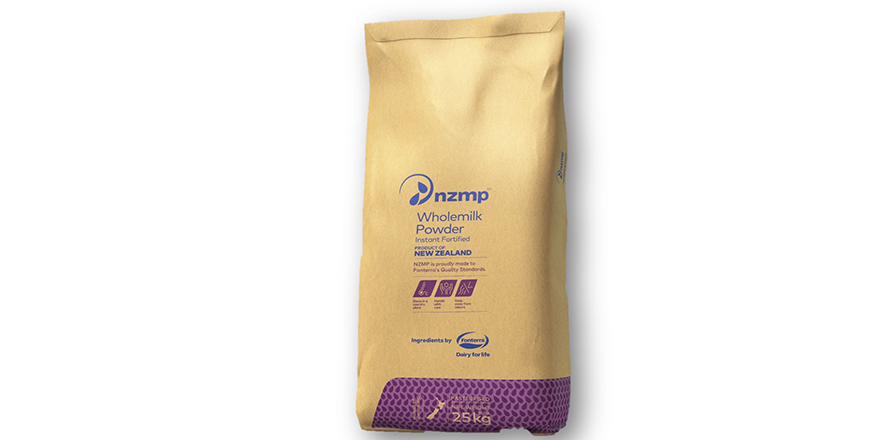
New Zealand dairy exports are mostly used as ingredients in other foods. New Zealand is the largest dairy exporter in the world, growing from $2 billion of exports to $20 billion in just thirty years. A large proportion of NZ dairy products are used as ingredients in processed food. In 2021, Fonterra made 74% of the milk they processed into ingredients. New Zealand provides 60% of the world’s whole milk powder exports, with a large proportion of this going to China to supplement their domestic milk production.

The retail market for milk powder pales in comparison to the demand for drinking yoghurt, shelf stable milk and flavoured milk drinks which are most likely what Chinese food manufacturers produce with NZ milk powder.

When dairy products become ingredients in processed food items, they are treated as commodities, comparable with the same product specification (i.e. milk powder) made all over the world and competing only on price. They lose their origin story which is what New Zealand prides itself on. Consumers don’t value the fact that the milk powder in their processed food such as a chocolate bar is made with NZ milk powder, so any competitive story associated with NZ production methods is lost.

Some of NZ’s highest earning exports are first in line for replacement. Plant-based liquid dairy alternatives such as oat and soy milk are not a threat – New Zealand only exports a small amount of liquid milk. Alternatives are aiming to disrupt the business to business ingredients industry, the very same market that NZ dairy currently thrives in.

Ingredients with the functional properties of animal ingredients are being reverse engineered from plants. Individual proteins (whey and casein) are the initial targets for precision fermentation technology. Perfect Day is producing whey commercially, and others are set to launch in the next two years. Protein exports account for 10% of New Zealand’s dairy export revenue – $2 billion in 2020. These are likely to be the first group of products which experience major disruption from alternatives. Cellular agriculture companies are developing technology to produce human breast milk for babies, could this replace infant formula made from cows?

There will be a tipping point. It’s a long, intensive process to produce a tonne of milk powder. You need to grow a cow, complete with head, bones, hooves, tail etc. You can’t milk her for the first two years until she’s had a calf. Once she’s in the milking herd, she needs enough food and water to stay alive, walk to the milking shed twice a day and produce milk. If there’s enough grass in the paddock this will form the majority of her diet, it’ll normally be topped up with supplementary feed such as hay or palm kernel expeller (PKE). The milk will be collected, driven to another location where the water (87% of milk) will be removed via spray drying, leaving just the 13% solids available to sell.

In contrast, precision fermentation technology bypasses the wasteful process above, using a tank of microbes consuming sugar to produce exactly the same molecules as milk – if they were assessed under a microscope, it would be impossible to tell whether they were from a cow or a fermentation tank. This technology has existed commercially for well over 40 years, producing components which used to be harvested from animals (insulin, rennet). It is now being leveraged at a far greater scale to produce components of milk, starting with protein.

Precision fermentation produced protein is predicted to reach price parity with traditional dairy within the next eight to ten years. The industry is not there yet though: the cost to produce insulin by precision fermentation is around $110,000/kg compared with a milk price of $9.90/kg, and precision fermentation start-up companies are signalling a bottleneck when it comes to manufacturing facilities to produce product at scale.

Large multinational companies are becoming involved to assist with scaling up – fermentation experts ADM and AB InBev are working on large scale fermentation capacity for food grade precision fermentation rather than pharmaceutical which will start to bring the cost down.
The cost and waste involved in milking cows is far greater than simply fermenting a sugar feedstock. Once price parity is reached, food manufacturers who currently value NZ dairy ingredients for their high quality, consistent, cost effective attributes will have another option. In applications where dairy is anonymously used as a functional ingredient, it’s highly likely these will move to the cheaper option which will have the additional benefit of helping meet sustainability goals and appealing to a wider variety of consumers (vegetarians and vegans). This will be the tipping point, where alternatives can displace traditional dairy.

New Zealand dairy needs to act now. This report identifies three key recommendations for the industry:

  1. Acknowledge the risk and react – Alternative dairy, especially precision fermentation, represents a significant risk to the New Zealand dairy industry due to the reliance on commodity ingredient products which will be easiest to replicate. The sooner this can be accepted and acted upon the better. Advanced economies that NZ tends to compare itself with are moving rapidly – investing in research via partnerships between government, research institutions and industry. New Zealand risks being left behind.

  2. Get involved – There’s an opportunity to play a part in this emerging industry – New Zealand has significant expertise in key areas required for alternatives to scale up. Leveraging this will ensure NZ dairy will continue to be profitable in the long term and provide capital to invest in the infrastructure required to make milk into money in different ways.

  3. Make milk into money differently – commodity ingredient products made without cows will become available at the same or better quality for the same or lower price within the next ten years. The NZ dairy industry is heavily reliant on spray drying of milk into powder; this will be one of the first products to experience disruption from alternatives. It’s imperative that dairy companies identify the elements of their product portfolio which are at risk of disruption and pivot milk towards future-proofed products.

Bioavailability and micronutrient suitability of protein sources.

Executive summary

Consumers are becoming more aware of the impacts of their food choices on their health and on the environment. Many people believe that animal source foods are detrimental to both of these factors, whilst consuming only plant source foods will alleviate these problems. In the age of technology, misinformation and disinformation are easy to access and the health and nutrition sectors are not immune from this problem.

However, the notion that global health and environmental problems will be fixed by simply eliminating a particular food group is an overly simplistic view of a complex and dynamic situation. Dispelling misinformation and disinformation is imperative to making informed dietary choices, both on an individual basis but also from a policy making point of view.

The objectives of this report were to investigate the bioavailability of protein and micronutrients from different protein sources, and to evaluate the suitability of plants source foods to provide adequate levels of protein and micronutrients to support optimal human health. A review of literature was conducted in conjunction with an interview of a leading scientist in human protein nutrition to analyse the role of protein in dietary choices. This allowed me to draw key themes, apply critical thinking to research and themes, and identify areas of crucial importance.

The gastrointestinal tract and physiology of the human body differs from herbivorous mammals; humans are not able to synthesise the entire range of amino acids and micronutrients endogenously. These amino acids and micronutrients must then be sourced from the diet to ensure optimal health.

Protein quality is characterised by the amino acid profile of the protein, and the ability for this amino acid to satisfy the amino acid requirement of the person consuming the protein. Protein quantity in a diet is irrelevant if the protein in the diet is deficient in essential amino acids; amino acid deficiencies can still occur in someone consuming more protein than required if the protein being consumed doesn’t contain sufficient quantities of the most limiting amino acid in the diet.

The ability for nutritional and medical researchers to study human nutrition has limitations due to the constraints involved with this nature of research. Large scale research relies on evidence supplied by individuals which can be subjective. Small scale, more detailed research is extremely variable as each person will respond to the same treatment in a different manner, and this is influenced by many physiological factors.

Furthermore, the research is highly invasive, and endogenous biological processes mean that it is often not 100% accurate. Nutritional research using animals also has limitations due to interspecies physiological differences. As a result of these factors, there is strong discord amongst nutritional researchers as to dietary recommendations.

The bioavailability of proteins is defined by the digestibility of the protein, the chemical integrity of the protein and the interference in the metabolism of the protein from other compounds in the food matrix. Research has found animal source proteins to have higher bioavailability than plant source proteins.

Furthermore, animal source proteins are also rich sources of micronutrients, which also have high bioavailability for humans. In plant source foods, whilst they may contain micronutrients important for human health, these micronutrients may not be in a form which can be absorbed and utilised by humans, rendering the micronutrient no use.

Micronutrient deficiencies and amino acid deficiencies are widespread in populations who rely on staple based diets. These diets are confined to a small range of nutrients due to geographical and financial constraints. The incorporation of animal source proteins in these diets would aid in alleviating malnutrition amongst these populations by providing both high quality proteins and a wide range of bioavailable micronutrients.

Recommendations:

  • Advocate for scientific verification when policy is created with respect to restrictions on food groups.
  • Invest into food security and agricultural sustainability in third world countries to allow them to be self-sufficient and free from malnutrition.
  • Understand the research accurately to ensure confounding factors don’t influence interpretation of nutritional research.
  • Reduce restrictions on productivity to ensure malnourishment and food scarcity doesn’t worsen in vulnerable populations due to policy decisions in wealthy countries.
  • Identify limitations in a diet where food groups are eliminated.
  • Advocate for accuracy on food labelling to inform consumers of true nutritional value of foods.
  • Take ownership of the promotion the wholesome benefits of our products.
  • Ensure perceived environmental benefits of dietary choices are accurate.

Rural freshwater quality. What’s perception? What’s reality?

Executive Summary


It feels in recent times public perception has been increasingly negative towards the primary Industries as a result of the water quality “showdown” between farmers, government and the general public. The urban rural divide has been perceived to be greater than ever, and social media has presented a new arena for robust debate about water quality.

However, this project discovered that:

  • Even though four out of five Kiwis rate water quality as their number 1 environmental concern 60% still feel positive about the primary industries.
  • Water quality is giving way to other key issues growing in concern for New Zealanders like climate change, greenhouse gases, recycling, ocean pollution and more.
  • New Zealanders perception on whether they feel positive or negative farming has been eroding since 2008. However, since 2017 has been improving and post Covid 19 that trend has been galvanised.
  • Negative perception towards the primary industries is still largely based around Dairy’s impact on water quality.
  • The dominate land use within a catchment has the biggest influence on water and ecosystem health.
  • Lag time between land use or system changes made now and impacts on water quality can be upwards of 50 years depending on the natural makeup of the land scape.
  • Water quality has been stable nationally over the last 10 years.
  • Northland has high Dissolved reactive phosphorus in the ground and river/stream water but low nitrogen levels.
  • Waikato has huge variances across the catchment but has pockets with high nitrogen and phosphorus levels.

As a result of these findings, I believe:

  • Farmers need to continue forming catchment groups which involve the urban community especially in highly sensitive catchments. Forming catchment management plans with all key stakeholders will improve water quality and public perceptions.
  • Industry groups need to unite as one and have one voice when lobbying central government to ensure regulation is pragmatic and has timeframes which allow for the environmental work already done on farm to take effect in water quality results.
  • The industry as a whole need to continue their environmental improvements and tell their story louder and wider to ensure those not involved in the sector can understand the sacrifices and changes being made.
  • Northland farmers need to focus on containment lost through overland flow to reduce phosphorus and sediment reaching water ways.
  • Waikato farmers need to continue improving their nutrient efficiencies to ensure any nutrients brought into the system is required and utilised at the correct time to minimise nitrogen and phosphorus lost to the environment.

Indigenous branding creating an emotional connection.

Executive Summary

Global customers are increasingly demanding authentic products and services, and indigenous branding has been recognized as a natural fit to deliver on this. Global trends observe a shift away from traditionally produced premium foods to more sustainable alternatives. This consumers is increasingly concerned of where their product comes from, the impact growing this product has had on the environment, that these people and lands are being looked after and what the indigenous stamp means.

Indigenous branding creates huge opportunity for Maori who consider that land is a living and breathing thing and part of your identity as Maori. It is an inter-generational culture with a 150 year plan, “we are a whakapapa, we are both the past, and the future.”  Maori need to wrap this up in a meaningful way as resonates with the consumer to make an emotional connection, and the whole company needs to align with these brand values.

The purpose of this study was to evaluate two things, 1) what a consumer expects when presented with an indigenous product. 2) How do we give confidence that this product is genuine. This research is carried in two parts. The first is a review of literature published between the 2005 and 2013 period and key themes that come through from this. Part two is a case study evaluating four successful Maori businesses regarding the work they are carrying out around consumer expectations and authenticity.

There was a considerable amount of literature published between 2005 and 2013 regarding indigenous branding and how it could be used to create a point of difference. A key finding of this review is that Maori branding focused on presenting a product that encompassed a set of values as important to the Maori business. The case studies determined that this focus has since been reversed, and is now focused on expressing value as determined by the consumer.

The recommendations of this report are that further research is required to position an indigenous experience to make the consumer feel good and create an emotional connection, and Maori brands need to collaborate more to ensure the market insight work is done to avoid risking market position.

Carbon sequestration rates on different land uses.

Executive Summary

Soil carbon is a key indicator for the health of the land. Arguably, the long-term agrarian wealth of a nation is determined by whether soil is being formed or lost. If soil carbon is being lost, so too is the economic and ecological foundation on which production and conservation are based. Soil carbon provides the infrastructure for micro-organisms to thrive, stabilises soil, improves nutrient and water cycling, increased biodiversity, all leading to soil resilience and improved profitability.

The purpose for my research was to understand the science related to changing soil carbon concentrations in NZ and how this has provided the framework for policy.

Approximately half of NZ’s land mass is in pastoral production and has been excluded from the emission trading scheme along with any land uses other than commercial forestry due to the science.  No research has yet been validated on how to increase soil carbon stocks in NZ, but the wider science related to carbon depletion is not so limited. Conclusive evidence is forecasted to be published in 2020. This understanding needs to be data rich and not driven by models. End goal is to include soil carbon crediting for other land uses such as pastoral and horticulture.

Silvopastoral system provides a diverse range of land uses similar to nature with livestock and trees grown in symbiosis. Not only does this diversify income, but financially rewarding. This land use qualifies for the Afforestation Grant Scheme by MPI to fund tree establishment. Further trials are necessary to substantiate the potential carbon sequestration from this land use but trials from similar conditions overseas are generating exciting results.

Exposed soil reduces soil carbon stocks via oxidation (released as CO2) and/or increased risk of soil erosion at a rate of 35kg C/ha/day leading to sediment contamination in waterways and is one of the main issues facing NZ. Disincentivise and/or educating land users from this practice will mitigate soil carbon losses providing flow on effects. Diversity has a key contribution; diverse plants have higher root biomass, leading to high storage capability contributing to increased soil carbon compared to monocultures.

The most valuable, productive soil types in NZ have the highest soil carbon losses due to intensification, particularly cultivation. The biggest potential for addressing climate change and sequestering carbon from the atmosphere is from our Brown soils that make-up 22% of our land area.

NZ soils are young and generally have high carbon content, unlike soils elsewhere. This reduces the plausibility of using overseas science to adopt in NZ emphasising the need for greater investment in this field. Society seems more interested in space than what I believe is one of the final frontiers.

How has the financial viability of Sauvignon Blanc in Marlborough changed over the last five years in three major growing areas.

Executive Summary

The financial viability of Sauvignon Blanc in Marlborough has never been stronger, showing returns on investment for the 2015/16 season of 24.47%, now who wouldn’t chase returns like that? Growers and investors are purchasing the remaining bare flat land to develop and keep up with world demand this is seeing record prices paid for both bare land and existing vineyards.

I undertook a literature review in conjunction with interviewing three growers, I was better able to understand the characteristics of the Marlborough wine region its sub regions, and how these characteristics play out in the flavour of the wine, value of the land and the factors that are driving the current expansion.

What I wasn’t aware of before undertaking this report was just how well this industry was performing and had been over the last 5 years peaking last season as mentioned above, I quickly learned that if we suggest these things to be cyclic then it would appear to me that we are very high in the cycle right now, are we at the peak or do we still have room to move? This report will give you an understanding of where the market is today.

Putting a face to the challenges of small, rural businesses in New Zealand.

Executive Summary

The school bus pulls away from the farm driveway and the already-exhausted mother sinks into a chair at the kitchen table to drink her now-cold coffee. The pet lambs have been fed, school lunches made, lost uniform items recovered, homework sorted and kids packed off to school. There’s washing to hang out, beds to make, housework to do… and she’s expected at the yards at 10 o’clock to help with the drafting. Somewhere in there, she has to do some work for her business too.

Down the road, someone else is cursing at their screen because the computer won’t load the latest orders from their company website because the internet speeds are too low and they can’t do it via mobile because their farm has no cell phone reception. Another rural business struggling to do business.

The purpose of this project was to give a more personal view of the challenges facing small rural business owners from their own experiences and perceptions. I wanted to create a greater understanding of those challenges and how those business owners felt about them.

I defined small as self-employed people with fewer than five staff (mostly working alone) and rural as being in a rural area or rural service town (and not farming). I surveyed 24 small, rural business owners under five sections–governance, operation, technology, communication and personal. After collating and analysing the results, I identified specific challenges to investigate further.

Rural areas do have their challenges, but they also have many opportunities and resources for small business development.

Rural people running non-farming businesses or urban people moving to the country to run businesses for a variety of reasons, are doing their best to overcome these challenges to create successful rural businesses. Challenges such as work-life balance and distractions, human resources, rural connectivity and general lack of business know-how.

In some cases, they are issues facing people with small businesses all over the world. But in rural New Zealand, it’s not always easy to solve them in isolation.

Comments about rules and regulations mainly came from those businesses in food production and health and safety–they have no choice but to deal with legislation being governed by their respective government departments.

For human resources, it wasn’t necessarily the lack of people to employ but the added responsibility of being an employer.

Rural connectivity was about the lack of internet coverage and cell phone coverage, not knowing the best or most appropriate software to use within their businesses and the lack of postal services. There is a great example of a community fighting to fix its internet woes and one of my survey respondents is part of that community.

Work-life balance evoked a range of emotions, especially when the family home was the place of business or the business seemed to play second-fiddle to the farm. Distractions fell into the same category, especially when the ‘distractions’ were children, farm work or house work.

I discovered the best things business owners can do is get help, ask for advice and improve their own knowledge. To quote one of the HR websites I visited: “Getting it right is so important and so cost effective. Getting it wrong is very costly.”

Knowledge is power. It doesn’t necessarily have to be your own knowledge – that’s where networking, mentors and coaches can be useful. But I would implore small, rural business owners to take the time to try to improve their knowledge – it will help them and help their business. But on the flip side, don’t be scared to pay the experts in areas of great difficulty or implications.

They need to do their homework early, involve an accountant or similar consultant early in the creation of their business, spend time researching to-do lists and business plans.

This project includes three case studies of women who started their businesses with young families in tow.

Angela Payne’s children are grown now and Agri-Lab has been in operation since 1998 , but she has a world of wisdom for someone starting out – including the need for support and her “goddess principle”. Look after yourself first.

Gretchen King and AgRecord are coping with growth – in the business and in their family. She brought forward the interview with me because of the impending early arrival of baby #2. In the middle of one conversation later, she laughed wryly, and said “Babies, toddlers and business… tell them not to do it Kate.”

The enthusiasm from Michelle Burden with her Fantail’s Nest was infectious. She smiles when she talks about what she does and all the future holds for her business and her family. That’s why we do it.

Running a small, rural business has its challenges.

But they’re worth it.

This a personal project – I know many of the people I have interviewed and surveyed and I have made personal comments in the Findings & Discussions that relate to my own small, rural business.

Rural areas present many opportunities but business people in those areas face challenges they must learn to navigate (Siemens 2010).

When urban people think rural, they often simply think farms. They think sheep and cattle, pasture and fertiliser, tractors and motorbikes. They drive through farmland to get to the beach. They drive through farmland to get from one city to another. But often the communities and the livelihoods that make rural New Zealand are not in their sights.

Rural people know how special rural New Zealand is, that’s why we fight so hard to stay out here running businesses alongside our farms or within our homes.

The time for change is now.

Executive Summary

If you talk to any vet out there, I can almost guarantee it wasn’t an offhand decision in their final year of high school that took them to vet school. The dream would have taken place years before. If you ask any vet, there will be a moment in their childhood; an experience or situation, that led them to say “I want to be a vet”. They then had to work hard at school and university to realise their dream and for the majority this became their focus and passion.

How sad is it then, that after ten years of being a vet only 60% of people are re-registering? What has happened to the fire and the passion over these years?

I surveyed 205 veterinarians and they have provided me with a lot of information about the good side and the down side to rural practice in New Zealand. I themed these up into 6 main areas:

  1. The job – the clients, the variety, after hours and job satisfaction
  2. The practice – the people, the culture and flexibility
  3. The lifestyle of a rural veterinarian
  4. The production animal industry- the changing role of rural vets
  5. Wellness – a look into stress, anxiety, mental health and wellbeing
  6. Other things that help retain vets – the side comments that I couldn’t ignore

It is up to all veterinary business owners and managers to ensure they do everything possible within their power to retain vets. Without young vets staying on and potentially they themselves investing in practices, what will the local veterinary practice look like in 30 years’ time? A few big corporate clinics over the whole country? Lay companies doing the ‘technician’ work and the odd ambulatory vet patching up the problems?
The main findings from my research were that although we cannot expect anyone to stay in their initial job after graduating there are fundamental problems within the rural veterinary profession that do need attention to help with retention issues.
Practices need to have good people work for them, who are supportive and aware and enhance the culture of the practice. There is a need for good strong leaders that also show understanding. Employers need to be innovative, flexible and adaptable; and ensure the healthy well being of all their employees.

Recruitment for the future: Making the dairy industry the industry of choice.

Executive Summary

The dairy industry has for a long time been challenged to recruit sufficient people to fill vacancies and to meet the needs created by natural attrition.

Generation Z (Gen Z) are people born after 1995. The relevance being that Gen Z are aged up to approximately 20 years (as at 2017) and are starting to join the workforce, therefore are considered the workforce of the future. Either having recently commenced their working career or still within the education system, the characteristics and priorities of Gen Z when considering employment are largely undeveloped and will evolve and mature in time.

The objective of this research project was to identify if misalignment exists in the priorities of both perspective employees (Gen Z) and employers. Surveys were used to explore and gain insights as to the characteristics of employers and Gen Z, further to understand what they each prioritised when considering employment from their respective positions.

After compiling and analysis the information there was not a lot of misalignment between what employers and Gen Z when considering Gen Z’s top three priorities for employment. However, there is misalignment between what Gen Z prioritise and the realities of a career within the dairy industry where long hours and poor rosters exist. This is creating a real barrier to the dairy industry being the career of choice.

Farm businesses and/or employment systems within the dairy industry need to change if Gen Z are to find dairy farm work more appealing.