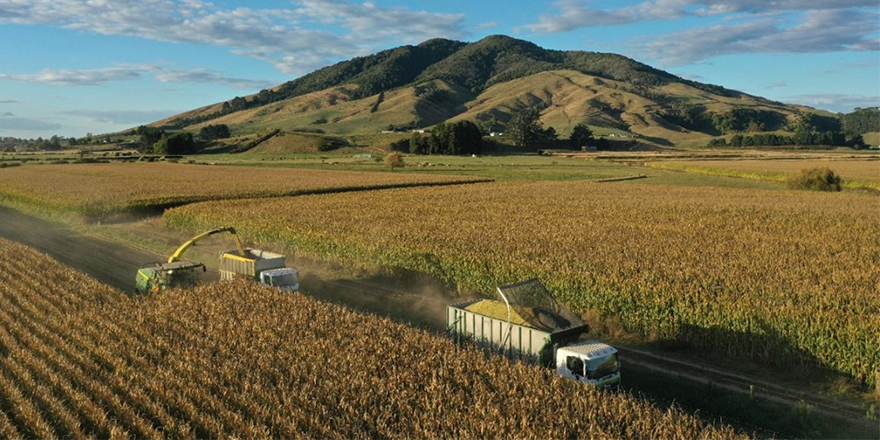

Maize forage is essential to the productivity of the New Zealand dairy sector. It is easily ensiled and provides energy and fibre, which is essential to balance a pasture-based diet.
An estimated 1,164,000 tonnes of maize forage was harvested in 2021. In the 2020/2021 season 24,500 hectares, or 45% of total maize forage planted, was grown off-farm and sold to a purchaser via a contract (Arable Industry Marketing Initiative, 2021a).
Current contracts trade maize forage on dry weight and neglect most facets of forage quality, so the purchaser is unaware of the quality of the product they are receiving. Per cow consumption of maize silage is increasing, so the quality of maize forage becomes more influential and important to the purchaser.
This report seeks to quantify the variation in maize forage quality in New Zealand and how the grower can influence it to enable trading maize forage on quality parameters.
Key findings:
- Growers can positively influence maize forage quality but are not rewarded by the purchaser, so it is not the priority in their decision-making.
- Starch is the critical influencer of maize forage quality.
- There is significant variation in maize forage quality in New Zealand. Starch content has been seen to range from 15 – 40%DM1, neutral detergent fibre from 33.4 – 50%DM and metabolisable energy from 9.5 – 11.3 MJME/kg DM2. This variation creates significant differences in production potential for the purchaser.
- Maize forage quality can be influenced by hybrid choice, agronomic management, and the environment. The environment cannot be controlled, so strategies that create resilience in the growing system are essential.
- There is limited New Zealand-based data available for growers and advisors on how to influence maize forage quality.
- The common method of sampling maize forage for analysis is unlikely to cope with paddock variation, caused by a changing climate and variable soil types.
Recommendations:
- Research and provide educative resources on how agronomic decisions affect maize forage quality. This should be conducted by maize seed wholesalers and independent industry bodies, such as the Foundation for Arable Research (FAR).
- Create independent data comparing all commercially available maize hybrids for forage quality. This should be conducted by an independent industry body such as FAR or DairyNZ.
- Calibrate and certify the use of near-infrared spectrometry (NIR) in forage harvesters as an accurate measure of whole plant dry matter and quality parameters. Allow open entry to promote competition and innovation. This will need to be proven by the manufacturers and forage contracts amended by the Forage Trading Development Group.
- Create educative resources to extend the understanding of growers and purchasers on the accuracy of NIR technology as an assessment of quality parameters. This should be an industry approach, including DairyNZ, Federated Farmers, Contractors Association, FAR and the Forage Trading Development Group.
Fraser Dymond