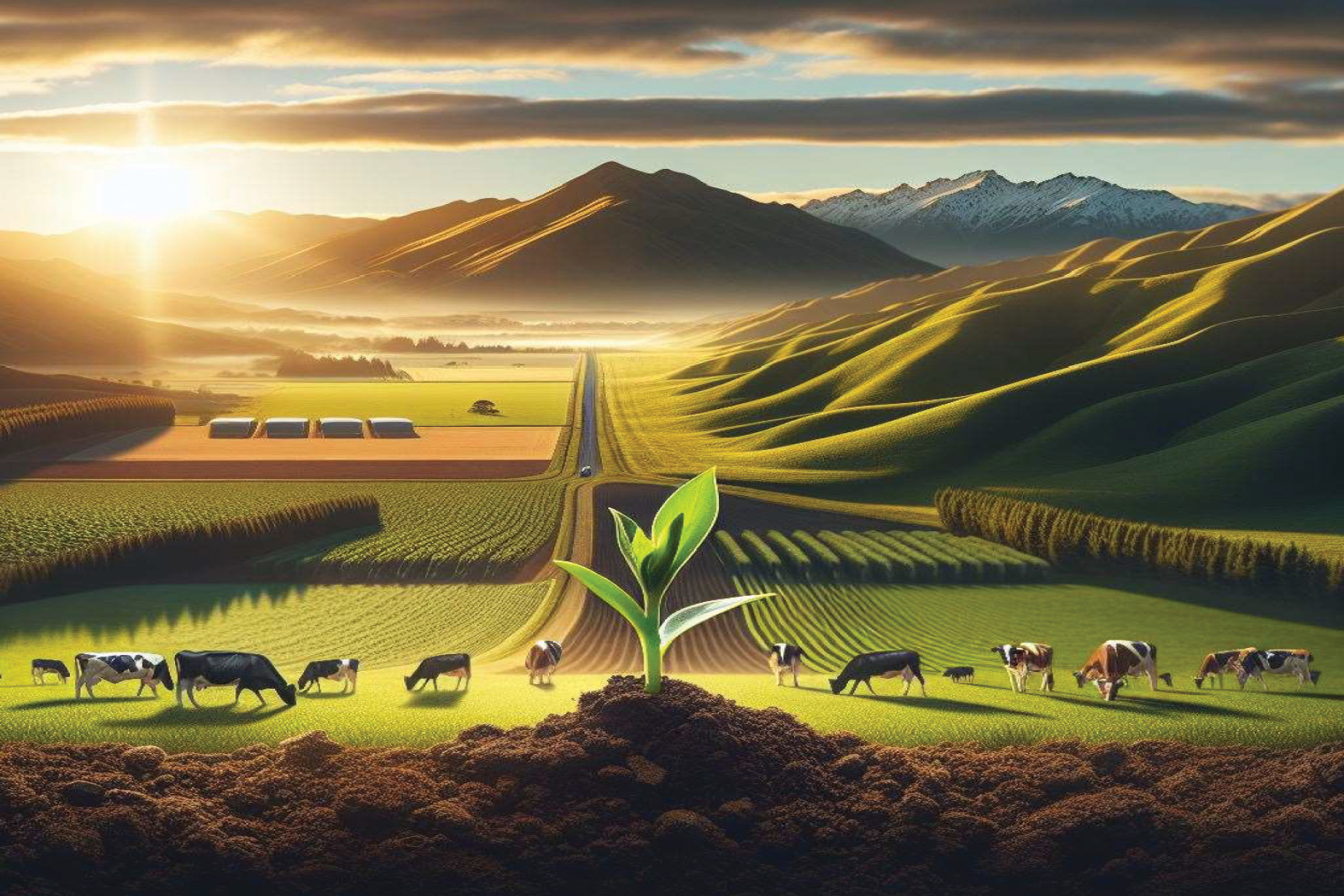

Environment protection to some degree is something that every sheep and beef farmer in the country is going to have to either deal with currently, or sometime in the near future. The degree of environmental protection will depend on the regions location and also the issues relevant to every individual farm, but it would be naive for anyone do think that doing nothing is an option.
The purpose of this project is to try and quantify some of the costs associated with environmental protection to an individual farmer and their farm. It is also about investigating whether farm policy changes or changes in management practices could generate increased income to cover the costs of environmental protection. Any changes to the farming system had to be sustainable though, and not have an increased environmental footprint.
The project focused on a case study 420 effective hectare sheep, beef, and dairy support farm in the King Country. The main costs associated with enhancing environmental protection included riparian fencing and planting, stock exclusion from native bush and wetlands, poplar pole plantings, and reticulated water system upgrades. The total cost for the farm is calculated to be $124,920, or $297/eff ha.
Scenario analysis was then conducted and different stock class policies were analysed, giving a lift in annual farm profit from current farm profits, ranging from $41,442 to $138,587. All of these scenarios required additional capital funds for capital stock purchases, ranging from $80,530 to $378,921.
All of the scenarios analysed were also modelled through computer nutrient budgeting software programme Overseer, and all scenarios either held or decreased nutrient outputs lost to water.
After comparing and contrasting all the scenarios, it was decided to implement a scenario that did not generate the highest lift in profit, but one which was relatively risk averse, and had the best fit with the vision and long term goals of the farm and farm shareholders.
In this case, it was possible to demonstrate that it was possible to enhance the level of environmental protection on a sheep and beef farm without sacrificing farm profits, however it did require stock class and policy change in order to fund this. Farms where stock class and policy change is not an option would have to look at increasing the performance of their current stock classes in order to achieve the same outcome.
Dwayne Cowin