2026 Nuffield NZ Farming Scholarship. Apply by 17 August 2025. Read More...

Apply for 2026 Nuffield NZ Farming Scholarship by 17 August 2025. More details...

How Can Technology Help Achieve Sustainable Agriculture in New Zealand?

Executive summary

This report examines the potential of disruptive innovation and emerging technologies to enhance the sustainability and resilience of New Zealand’s sheep, beef, and dairy farming systems. It also explores the drivers, barriers, and impacts of technology adoption on farms. The report draws from peer-reviewed literature and semi-structured interviews with, industry representatives and scientists.

The main findings of the report are:

  • New Zealand’s agricultural sector faces significant challenges in reducing its environmental impact, especially in terms of greenhouse gas emissions and nitrate leaching, while maintaining its economic viability and social acceptability.
  • Disruptive innovation and emerging technologies can offer solutions to these challenges by improving farm productivity, efficiency, profitability, and environmental performance.
  • The adoption of these technologies is influenced by various factors, such as cost, risk, regulation, consumer preferences, social norms, knowledge, skills, and infrastructure. These factors can act as drivers or barriers depending on the context and the stakeholder perspective.
  • The impacts of technology adoption on farms can be positive or negative depending on the type, scale, and distribution of the technology.

To facilitate the transition to more sustainable and resilient farming systems through disruptive innovation and emerging technologies, the report recommends the following actions:

  • The industry should foster a culture of innovation and collaboration among farmers, researchers, policymakers, businesses, and consumers to identify and address the needs and opportunities of the sector.
  • The industry should invest in research and development to generate evidence-based knowledge and solutions that are relevant, accessible, and applicable to New Zealand’s farming context.
  • The industry should provide farmers with education and extension services to increase their awareness, understanding, and skills in using new technologies and practices.
  • The industry should engage with stakeholders and the public to communicate the benefits and challenges of technology adoption and to build trust and acceptance of new products and processes.
  • The industry should advocate for supportive policies and regulations that enable innovation and technology adoption while ensuring environmental protection, animal welfare, food safety, and social justice.

This report aims to stimulate discussion among the policy, farming, academic, and wider communities to help shape a future that will safeguard New Zealand’s social, economic, and environmental well-being.

Kathryn Broomfield

Non-Financial Reporting: Generating Value and Improving Sustainability from Non-Financial Farm Information.

Executive summary

Background
The New Zealand agriculture industry is being challenged to prove food and fibre is produced in a way that is considered sustainable by their export markets and local community. This is leading them to question what sustainable production looks like and how they show this. Increasing levels of regulation also mean there is greater financial risk from non-compliance, and their stakeholders are asking them for more detailed non-financial information. Non-financial reporting (“NFR”) is a way to help businesses manage their nonfinancial
risk areas, meet trade requirements, and communicate effectively with stakeholders.

Aims & Objectives
The research project aimed to understand how farmers are using NFR to generate more value in their business, and how they communicate their non-financial information to stakeholders, with the research question being: “How do farmers use non-financial information to measure sustainability performance and report to stakeholders?” This is important as farmers need to be able to generate value for their business and themselves from NFR, instead of it just being an additional cost and compliance obligation.

Methodology
The methodology comprises of a literature review to provide context around the changes in NFR and the requirements of the sector, farmers, and stakeholders. This aimed to provide clearer understanding of what NFR is, why it is important for sustainable development and stakeholder relationships, and how it can be developed in a farming business. Qualitative, semi-structured interviews were used to obtain insights and findings from farmers and stakeholders concerning non-financial reporting outcomes and effectiveness, how
sustainability was defined, and whether integrated reporting would be useful.

Key Findings
Analysis of the themes arising from the literature and interviews found:

  • Non-financial information and reporting should be an important part of the business planning and strategy process, and integrating reporting with financial results can help to drive investment decisions.
  • In managing their banking relationships, farmers should also look to show their financial understanding of environmental implications and their financial investment in environmental/social sustainability in their budgets and financial results.
  • An important driver of sustainability is having good people employed on farm that understand how they contribute to farm sustainability.
  • While farmers are adapting to compulsory measures of NFR for compliance, and some are going above and beyond compliance, others are struggling to understand what these numbers mean for their business.

Recommendations for Farmers
1. Identify what non-financial Key Performance Indicators (“KPIs”) are relevant to your business and use these as part of your business planning process to help ensure these are effective.
2. Engage support from your trusted advisory team to help you implement effective non-financial reporting.
3. Provide balanced NFR alongside financial reporting to shareholders and financiers to help provide whole-farm focus in discussions around results.
4. Engage with employees effectively as part of the sustainability process, to build a sustainable culture on-farm that will help generate desired results.
5. Drive farmer-led benchmarking to understand where you sit on the sustainability bell curve.
6. Understand the cost of being an early adopter, and target investment in sustainable actions gradually that will help to set up long-term business resilience.

Recommendations for Stakeholders
1. Engage early with farmers as part of the pre-audit process to gain buy-in and engagement for compliance requirements.
2. Build advisor capability to help farmers with the sustainability journey.
3. Use technology effectively and invest in systems that reduce time and input requirements for farmers to report on sustainability efforts.
4. Support early adopters of sustainable actions, through either financial assistance, industry recognition, or market premiums.

Jemima Snook

Data sharing to achieve data interoperability

New Zealand is a country of entrepreneurs and leaders in the creation of new systems and apps that can capture on farm data. A significant opportunity to automate data collection to match the systems together and see the data holistically still remains. Each company is creative and innovative in their own right, but farmers and growers want to see the data consolidated. This is how they can make robust, science-based decisions on farm.

This is becoming increasingly important as we move into a digital world where information is accessible at consumers’ fingertips – we need farm data to be in this same realm. With the new generation coming through, it is no longer enough to have values and show what farmers stand for, we also need to prove it.

During my Nuffield year I spent four months overseas visiting different agriculture companies, farmers, and governments. I came back with a strong understanding of the risks of not integrating our data. Covid-19 has changed our world faster than ever before. There are new standards and requirements to be met that are being imposed by consumers. No longer can we afford to look at siloed data systems.

We should not be afraid of transparency because the world is demanding it. Our consumers are demanding it. If we do not do it the effect will be that we will be told how to farm because we haven’t proved we are better than 10 years ago. I believe we do farm better. But belief does not cut it anymore. For the next generation coming through we need the data and the evidence of our farms to back up our claims.

No country or system I came across has a fully integrated farm data system. In New Zealand we are well placed to try something new around data interoperability because many of our companies are co­operatives and farmer owned. We are in the premium space and need to hold our premium position. We also need to have all the information available to make the best decisions on farm and enable scenario planning and modelling. We should be able to answer questions such as:

• What happens if I put 40 kilograms less fertiliser on per hectare? What does that do to my beef production and revenue line?
• What happens if I invest in cow monitoring technology and then catch mastitis and disease earlier? What does this do to production and revenue?

Consider the emerging discipline of a farm data manager. The farm data manager will work directly with farmers and growers to determine their drivers for farming and to create a data strategy. Every farmer and grower has different needs, drivers, and reasons for being. Different data points interest different farmers. Each farm and farmer or grower require a solution that matches their driver and strategy.

Farmers and growers need a bespoke solution for them – a data manager can assist with this. It is not practicable for every farm to employ a data manager. Instead, a data manager will have a portfolio of farmers and growers they work with to give them a solution that best works for them. We need to try something different to move forward on on-farm data interoperability.

This report proposes establishing a new discipline of the farm data manager. Farmers and growers are not expected to be finance experts instead they outsource this to an accountant to support them. So why are we asking them to be data experts? Instead, a farm data manager can support them.

Keywords for Search: Lucie Douma, Lucy Duma

How does Tracing a New Zealand Mid-Micron Wool Clip Impact a Grower’s Farming System?

Christie Burn Kellogg report

Executive summary

The New Zealand mid-micron wool industry traditionally was a major contributor to the economy. Today, the wool cheque often does not cover the shearing costs. Therefore, most growers are implementing this mainstream income as a yearly farming expense.

With rising competition for cheaper apparel of plastics and synthetics, wool products have become targeted apparel for higher-end users due to price. With all this, it is putting pressure on the New Zealand wool industry, especially mid-micron, and strong wool growers.

The aim of this project is to understand the entire supply chain of mid-micron wool, and how growers adapt their business to suit this chain. The research seeks to establish if there is a premium for a traceable wool clip, and who in the chain absorbs the benefit if there is one.

Having a passion for wool, a byproduct, which is continuously decreasing in value, it seems appropriate to dissect the supply chain and understand it from a grower’s perspective and the impacts on their farming systems (positive and negative).

The literature review focuses on three main points consumer preference, supply chains, and value chains. Consumers are becoming more aware of prices, what products are made of, and where they come from. This is where the demand for traceability comes into place. The supply chain is complex and hard to trace which makes it difficult to give value back to growers.

Icebreaker is used as a case study to provide an example of a supply chain that is creating value for its farmers by meeting consumers’ demands. Interviewing industry leaders across the supply chain provided perceptions of each stage and their thoughts on the wool industry.

The recommendations aim to support farmers capture value from their mid-micron wool through tracing and adapting farm systems.

  1. Educate, educate, educate! Educating every stage of the supply chain will benefit by adding value back to growers.

  2. Educating consumers on mid-micron woollen products through wool in schools’ containers (Campaign for Wool), and marketing through social media and television.

  3. Farmers move out of their comfort zone by embracing technology and meeting consumer demands.

  4. Capturing the value and distributing it back to growers through meeting consumer demand.


Thriving Early Career Development.

Sarah McKenzie Kellogg report image

Executive summary

There is great potential and high demand for our Food and Fibre sector graduates. Even with a high focus on sector initiatives to attract and retain people, the rural talent shortage continues to challenge the industry at all levels. Businesses are facing the likelihood of more frequent new staff turnover (every 18 months – 3 years) with many direct and indirect costs that have flow-on effects. Integrating new staff into their roles as soon as possible is highly desirable to minimise disruption.

This study looked at what is important for thriving early career development for rural professionals in skilled technical support roles in agribusinesses. It aimed to understand the options and designs for early career development and the key features of a successful graduate programme. The methodology included a literature review, followed by semi-structured interviews with 12 early to mid-career employees and eight agribusiness support companies to understand expectations and perspectives from their experiences.

Key findings:

A career is a process, not a destination, with constant moving parts and balancing priorities. Early career experiences are one factor in retaining new talent or attracting them back later in their career. Support, connections, proactive development conversations and providing graduates ownership of certain tasks
are all key factors for a positive experience.

Graduate programmes can help provide structure, but it is often the individual experiences with an employer, with considerations of balancing lifestyle, development and career aims. Businesses need to look at their situation and roles to understand the specific turnover challenges, and how to address these.

Most students at university do not have clarity of their career path. They have general themes of perceived importance that can change with experience. Companies need to do more to promote options for summer work and internships to assist students with their career direction and provide examples of sample career paths.

Graduate programmes can attract new talent, but they must be well considered for talent retention. Graduate roles not part of a structured programme can be just as successful and sought out by students.

Awareness of the opportunities can be a limitation, as it is often through personal connections and word of mouth. It is important to take the time to understand what both the business and the employee need to ensure there isn’t a difference between expectations and reality. Do not overpromise and under-deliver. Companies are often pleasantly surprised by the value graduates can add to their business, regularly exceeding expectations. It is important to ensure this value is realised and that the
“new graduate” title doesn’t limit employee’s responsibilities or opportunities.

Recommendations for businesses:

  • Have proactive open conversations on career progression.
  • Describe example career pathway options, to allow employee visibility and consideration to their career aims and interest. Promote open feedback and reflection from this.

  • Invest early in learning and development in communication and soft skills as well as technical skills.

  • Undertake a strategic review of graduate roles within companies. Considering the structure, core tasks, and what else can be done for opportunities as a career package.

  • Explore options for a collaborative event for Agri-graduates and early career employees within regions to foster and support early networking, promote connections, and build relationships.

  • Investigate improved sector options for formal or informal early career employee training and consider supporting networking and providing mentoring support.

  • Align more with university courses and have early and mid-career employees participate in networking events to share experiences and potential sample career pathways.

Recommendations for early career employees:

seek out industry networking groups for stimulation and support, particularly if not receiving development or support within current role or company.

Opportunities to improve efficiency in the fresh produce supply chain.

Marcus Tietjen Kellogg report

Executive summary

The fresh produce sector in New Zealand produces some of the world’s greatest fruit and vegetables. There is a complex all-encompassing machine that connects the farms these products are grown on to the final consumer. This machine is the Fresh Produce Supply Chain (FPSC).

New Zealanders enjoy an excellent range of fresh fruit and vegetables that can be purchased through a variety of sales channels. The most dominant and effective channel is through supermarkets which have access to supply via fresh produce marketers and growers directly. These suppliers provide
fresh produce of good quality, at scale consistently and at a reasonable price throughout the year to meet the tastes and preferences of consumers.

This project has been completed to further understand the FPSC and seek efficiencies that can be made that reduce volatility in supply, reduce food waste and reduce the margin between what the consumer pays, and grower receives.

We aim to answer three key questions being: what are the challenges for the current fresh produce supply chain from the farm gate in New Zealand? What technology and supply chains exist today outside of fresh produce? And does a different, more efficient system fit in today’s fresh produce supply chain and would this be accepted by industry stakeholders?

The key findings were growers in NZ are aligning themselves with retailers and marketers in partnership style relationships. Growers with smaller scale struggle to compete in fragmented industries where information is less available and less direct from the consumer.

Over time there has been a shift in the paradigm from growing for the market floor auctions, to growing for consumer demand based on high information sharing from retailers and marketers. This has resulted in a more deliberate crop rotation and sustainable growing system, reducing wasted product and improving price stability.

Technology in FPSC has huge potential however supply chain participants are cautious and considerate on technology they invest in. Blockchain technology can support efficiencies by reducing reliance on trust on intermediaries. The internet of things can provide an interface between supply chain practice and software systems. This can log important information which can give retailers and consumers confidence in quality of product and appropriate handling.

Consolidation of fragmented industries will support greater efficiencies as grower scale increases and vertically integrate to control more downstream practices. We also see intermediaries investing in upstream practices such as farms and greenhouses.

Recommendations are summarised as follows:

  • Encourage vertical integration where supply chains are owned or controlled between grower and retailer. For growers that have the scale and access to capital they should build partnerships with retail entities and invest in infrastructure to reduce reliance on other supply chain participants.

  • Cooperate within sector to vertically integrate if scale is not achievable. This can be done by the establishment of regional cooperative organisations to allow smaller scale growers to pool resources, invest in infrastructure and supply direct to retailers.

  • Increase communication between FPSC participants with accurate data in fragmented product categories to share accurate crop details.

  • Drive increased consumer awareness of imported vs local produce with signage andbranding that clearly differentiates products.

  • Encourage investment in internet of things and Blockchain technology for import product to reduce volume of poor-quality import product brought to NZ consumers.

Early Implementation and the Future of Individual Cow Monitoring Technology in the New Zealand Dairy Industry.

Cameron Burton Kellogg report

Executive summary

The New Zealand dairy industry has a labour shortage from managers to farm assistants. This has pushed producers to look for automation options to reduce dependency on labour.

Recent and ongoing improvements have produced large-scale, commercially viable individual cow monitoring technologies that can significantly reduce the workload on farms as well as increase animal performance and health measures. Suppliers of these technologies report a positive return on investment and a reduction in labour
requirements.

The industry has seen significant growth in the uptake and implementation
of these technologies over the last 2-3 years. Implementation of emerging technologies is not always successful; challenges and limitations will exist in a commercial context that are not foreseen during the development or in early trials.
This report will explore the intended application for these technologies and how this
compares with current uptake and implementation at scale on commercial dairy farms.

It will explore areas of successful implementation and areas where obstacles have
reduced performance or prevented the technology to be utilised as expected. Current
and prospective users of the technology need to understand how different technologies in the market are likely to be implemented on their farms. This will help to make informed decisions around which technologies will achieve a more desirable outcome over the long term.

This report will help the suppliers and developers of individual cow monitoring technologies identify areas where their products are not being successfully implemented, and areas for further development to ensure the success of their technology in the New Zealand dairy industry.


A review of national and international literature was undertaken to confirm the accuracy and reliability of the technologies available to ensure they would improve or exceed the status quo of our performance in the New Zealand dairy industry. The review examined the commercial viability of these products and looked to the future of the development and application of individual cow monitoring technologies.

Qualitative, semi-structured interviews then took place with suppliers of the technologies, users, and non-users. Uptake, success and failure, and future development of the technology were examined.

Key Findings

  • The technology is highly accurate and viable for a profitable outcome in a
    commercial large-scale context.
  • All users agreed that the initial application has been successful and the return on investment has been neutral or positive.
  • There is potential for greater return on investment from ongoing training and
    implementation of the full complement of features the technology has to offer.
  • Challenges exist with the usability of the software and the sensitivity of health alerts specific to New Zealand’s outdoor grazing systems.

Recommendations

Producers

  • Develop a user-friendly interface as fast as possible, and regularly connect with users for improvements and future development.
  • Reduce the sensitivity of health alerts and integrate on-farm weather conditions with health alerts to limit false positives from weather events.
  • Ensure recruitment and the training of support staff can meet customer requirements as uptake increases. New support staff could double as sales staff to allow for early recruitment.
  • Outsource and fund third parties for technical support. Farm consultants, vets, farm advisors, and other rural professionals could be used to help educate and review the data.
  • Produce actionable reports/groups of cows from the data to minimise the interpretation and increase action taken on the farm. 

Current and future consumers

  • Prior to implementing any brand of individual cow monitoring technology, research the current and future access to after-sales support and technical specialists to ensure you will have ongoing support. Pay particular attention to your exposure to individual staff moving out of the role and limiting the technical support available.
  • Be prepared to put the time and effort into learning and understanding the software as there is an interpretation of raw data required.
  • Ensure the technology you implement is largely mainstream to ensure support from other users and increase the chances of new employees being familiar with the software.
  • Work with vets and advisors to create protocols and policies to shift from clinical diagnosis to subclinical investigation and diagnosis before clinical illness impacts production and profitability.

How do you utilise a technical sales team to grow market share?

Luke Fisher Kellogg report image

Executive summary

Technical salespeople are instrumental to organisational growth and often can be the key component of winning or losing market share. Since the introduction of technology and its systemic growth into all aspects of business, the need for customer facing salespeople to become increasingly technical has become common place.

There is now a need for increased knowledge that supersedes that of a technically connected customer. As the market moves on from the travelling salesmen model, it is now imperative for salespeople to offer highly solution focussed approaches, tailored to the consumer’s needs, at a point in time.

This technical and problem-solving ability when left isolated and misaligned from company strategies, has allowed for a high level of risk within a business as key market share holders in companies can move from organisation to organisation taking market share with them.

The aim of this report is to understand how technical sales team functions can be harnessed within an organisation and utilised to grow market share, whilst understanding the opportunities that technology integration and the forming of sales team functions can have on mitigating organisational risk and leveraging opportunity.

The methodology comprises of a literature review on sales teams and their changing functions followed by a semi structured interview process with three front line salespeople, three sales managers within the agribusiness sector and three agribusiness owner operators who are customers of technical sales teams, to gain an insight on their experiences and observations.

The analysis of these responses was the creation of codes and subsequently themes that assisted in the formation of the recommendations.

Key findings

Market share growth has become increasingly difficult to achieve with increased competition, dwindling competitive advantage and the exponential growth of resources over the internet.

Both salespeople and management highlighted the changes that the impact of Covid-19 has had on the sales environment.

There is a need for adaptability to not only mitigate risk but also to ensure relationships are maintained and where possible strengthened through the continued ability to offer the technical solutions required in real time.

This has meant the need for technology in sales teams has become vital. The alignment of the sales team and organisational strategy to this technology has become critical to maintain and develop value in the sales transaction.

Recommendations

  • Develop a sales team structure that removes isolated technical sales functions and embeds these into a sales team focussed on end consumer solutions.
  • Build a team that is resilient to changing environments and adaptable to market needs, allow processes to change and analyse performance frequently.
  • Use the technical, relationship focussed sales team members’ feedback on market insights, create a channel for the consumer voice and react to these insights.
  • Embed effective CRM technology into the sales team, ensure this technological solution is fit for purpose for each aspect of the sales team function and adds a technical advantage.
  • Utilise the data input the CRM technology offers, react to the insights gained, and leverage the market based on the data streams available.
  • Align organisational strategies to the CRM technology being used and have clear aims of the requirement for the technology.
  • Ensure your technology solution builds in data to maintain market share and embed intellectual property to mitigate personnel change and allow for succession planning.
  • Train the sales team efficiently on the technology solution, engagement is key to retention, if the right technological solution is outputting the correct data required that is in line with organisation strategy and all staff are trained and engaged then market share growth can occur.

Bringing New Zealand’s food science to the world.

Coralie de La Fage Kellogg report image

Executive summary

Background

Food science in New Zealand is an important contributor of the Science and Innovation ecosystem and helps maintain a positive international reputation in this field. However, international stakeholders are looking in, the food crisis, accentuated by a growing population, is worsening and scrutiny is increasing across every sector.

Thus, our food science sector must show clear direction, collaboration, and thought leadership. Therefore, New Zealand’s science industry needs to be reshaped to help find solutions to the pending global food crisis identified by the United Nations and other organisations.

The COVID-19 pandemic presents an opportunity to restart the clock and implement some changes. Te Ara Paerangi Future Pathways’ consultation is addressing a wide range of issues and looking at solutions while keeping an open mind and including many voices. This is an excellent step in the right direction and a welcome review of New Zealand’s research system.

Internationally, New Zealand is described as harder to justify, far away and laid back. Moreover, New Zealand faces the issue of ‘local is the new global’, meaning that when available, most stakeholders would prefer to engage with a science provider closer to them geographically.

However, commercial revenue for New Zealand’s food science sector is not only important financially, but also critical to maintain a global reputation.

Method and Focus

This report focuses on international business development and ways to better integrate New Zealand’s food science globally. The purpose of this research includes providing a clear picture of the New Zealand’s food science ecosystem and the opportunities and challenges that organisations in the industry are facing.

This research was underpinned by two components.

Firstly, a literature review to draw research, articles, industry reports and opinion pieces together to understand the current New Zealand science system, compare it with other models and identify some common challenges and opportunities.

Secondly, a crucial part of the research consisted of semi structured interviews with food science providers. A compare and contrast analysis was undertaken. The interviews formed the basis of the recommendations and shaped the vision for New Zealand’s food science strategy.

Recommendations

The recommendations have been drawn from readings and interviews, and can be summarised as:

  • Support engagement among the science industry and enhance the collective mindset to capitalise on every expertise to create greater impact.
  • Creation of a capability map to identify the focus areas and support world leading capability building.
  • Promote the transition to a single overarching science institute.
  • Leverage New Zealand’s science capability to focus on world leading expertise and attract international business, thus enhancing New Zealand’s economy.

It’s encouraging to see more and more collaborative projects in science, however this research suggests that only a whole sector change would accelerate the rate of exchange of scientific knowledge, increase the delivery outcome to answer global issues and keep New Zealand in a world leading position.

Ultimately, the aim is to draw insights and develop a bold vision and relative recommendations for the future of New Zealand’s food science, to position the country as a leading knowledge and research provider in this sector, globally.

Milk Without a Moo.

Executive summary

The NZ primary industry is no stranger to disruption and has adapted over the years to deal with changing market, environmental and economic conditions. There is a new threat on the horizon: alternative protein, sometimes called lab grown, cultured or synthetic food.

Alternative protein is not a new term and has not impacted the NZ primary industry in any major way so far. It would be easy to dismiss as a phenomenon that will happen elsewhere, that it won’t affect the pasture raised, free range, high quality products from New Zealand. Having researched this topic for a year, I do not believe this is the case – here’s why:

Dairy is the low hanging fruit for alternatives. Risk to the NZ primary industry from alternative protein is often considered in relation to the meat industry. Meat is a complex product, with many structural, textural, inconsistent aspects – different animals, cuts, types of protein etc. In contrast, milk is a homogenous product – it’s always a liquid consisting of 87% water and 13% solids. The complexity of meat will be very complicated to replicate successfully using alternative technologies, but this is not the case for milk. Dairy, and particularly dairy ingredients, are seen as the ‘low hanging fruit’ for disruption.

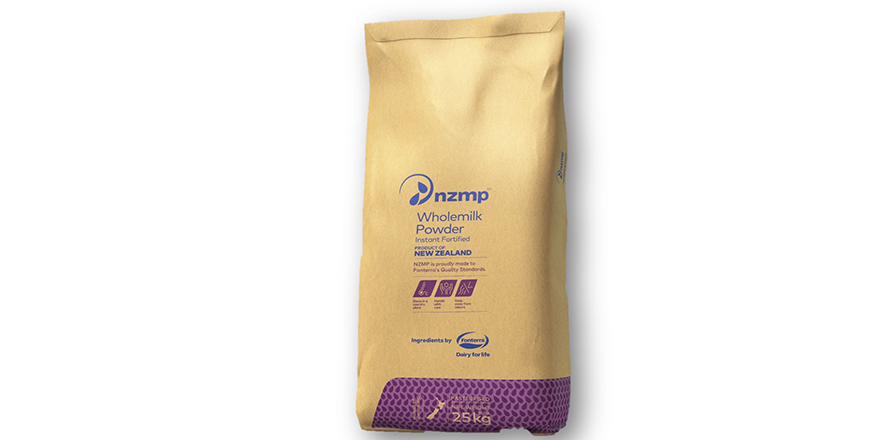
New Zealand dairy exports are mostly used as ingredients in other foods. New Zealand is the largest dairy exporter in the world, growing from $2 billion of exports to $20 billion in just thirty years. A large proportion of NZ dairy products are used as ingredients in processed food. In 2021, Fonterra made 74% of the milk they processed into ingredients. New Zealand provides 60% of the world’s whole milk powder exports, with a large proportion of this going to China to supplement their domestic milk production.

The retail market for milk powder pales in comparison to the demand for drinking yoghurt, shelf stable milk and flavoured milk drinks which are most likely what Chinese food manufacturers produce with NZ milk powder.

When dairy products become ingredients in processed food items, they are treated as commodities, comparable with the same product specification (i.e. milk powder) made all over the world and competing only on price. They lose their origin story which is what New Zealand prides itself on. Consumers don’t value the fact that the milk powder in their processed food such as a chocolate bar is made with NZ milk powder, so any competitive story associated with NZ production methods is lost.

Some of NZ’s highest earning exports are first in line for replacement. Plant-based liquid dairy alternatives such as oat and soy milk are not a threat – New Zealand only exports a small amount of liquid milk. Alternatives are aiming to disrupt the business to business ingredients industry, the very same market that NZ dairy currently thrives in.

Ingredients with the functional properties of animal ingredients are being reverse engineered from plants. Individual proteins (whey and casein) are the initial targets for precision fermentation technology. Perfect Day is producing whey commercially, and others are set to launch in the next two years. Protein exports account for 10% of New Zealand’s dairy export revenue – $2 billion in 2020. These are likely to be the first group of products which experience major disruption from alternatives. Cellular agriculture companies are developing technology to produce human breast milk for babies, could this replace infant formula made from cows?

There will be a tipping point. It’s a long, intensive process to produce a tonne of milk powder. You need to grow a cow, complete with head, bones, hooves, tail etc. You can’t milk her for the first two years until she’s had a calf. Once she’s in the milking herd, she needs enough food and water to stay alive, walk to the milking shed twice a day and produce milk. If there’s enough grass in the paddock this will form the majority of her diet, it’ll normally be topped up with supplementary feed such as hay or palm kernel expeller (PKE). The milk will be collected, driven to another location where the water (87% of milk) will be removed via spray drying, leaving just the 13% solids available to sell.

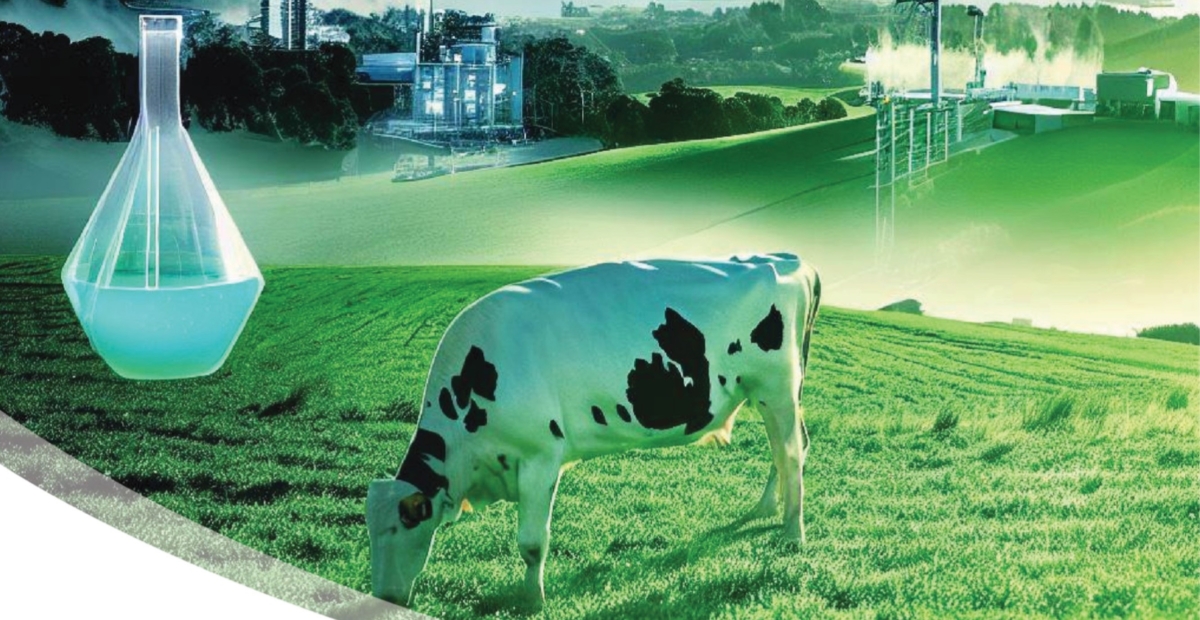
In contrast, precision fermentation technology bypasses the wasteful process above, using a tank of microbes consuming sugar to produce exactly the same molecules as milk – if they were assessed under a microscope, it would be impossible to tell whether they were from a cow or a fermentation tank. This technology has existed commercially for well over 40 years, producing components which used to be harvested from animals (insulin, rennet). It is now being leveraged at a far greater scale to produce components of milk, starting with protein.

Precision fermentation produced protein is predicted to reach price parity with traditional dairy within the next eight to ten years. The industry is not there yet though: the cost to produce insulin by precision fermentation is around $110,000/kg compared with a milk price of $9.90/kg, and precision fermentation start-up companies are signalling a bottleneck when it comes to manufacturing facilities to produce product at scale.

Large multinational companies are becoming involved to assist with scaling up – fermentation experts ADM and AB InBev are working on large scale fermentation capacity for food grade precision fermentation rather than pharmaceutical which will start to bring the cost down.
The cost and waste involved in milking cows is far greater than simply fermenting a sugar feedstock. Once price parity is reached, food manufacturers who currently value NZ dairy ingredients for their high quality, consistent, cost effective attributes will have another option. In applications where dairy is anonymously used as a functional ingredient, it’s highly likely these will move to the cheaper option which will have the additional benefit of helping meet sustainability goals and appealing to a wider variety of consumers (vegetarians and vegans). This will be the tipping point, where alternatives can displace traditional dairy.

New Zealand dairy needs to act now. This report identifies three key recommendations for the industry:

  1. Acknowledge the risk and react – Alternative dairy, especially precision fermentation, represents a significant risk to the New Zealand dairy industry due to the reliance on commodity ingredient products which will be easiest to replicate. The sooner this can be accepted and acted upon the better. Advanced economies that NZ tends to compare itself with are moving rapidly – investing in research via partnerships between government, research institutions and industry. New Zealand risks being left behind.

  2. Get involved – There’s an opportunity to play a part in this emerging industry – New Zealand has significant expertise in key areas required for alternatives to scale up. Leveraging this will ensure NZ dairy will continue to be profitable in the long term and provide capital to invest in the infrastructure required to make milk into money in different ways.

  3. Make milk into money differently – commodity ingredient products made without cows will become available at the same or better quality for the same or lower price within the next ten years. The NZ dairy industry is heavily reliant on spray drying of milk into powder; this will be one of the first products to experience disruption from alternatives. It’s imperative that dairy companies identify the elements of their product portfolio which are at risk of disruption and pivot milk towards future-proofed products.