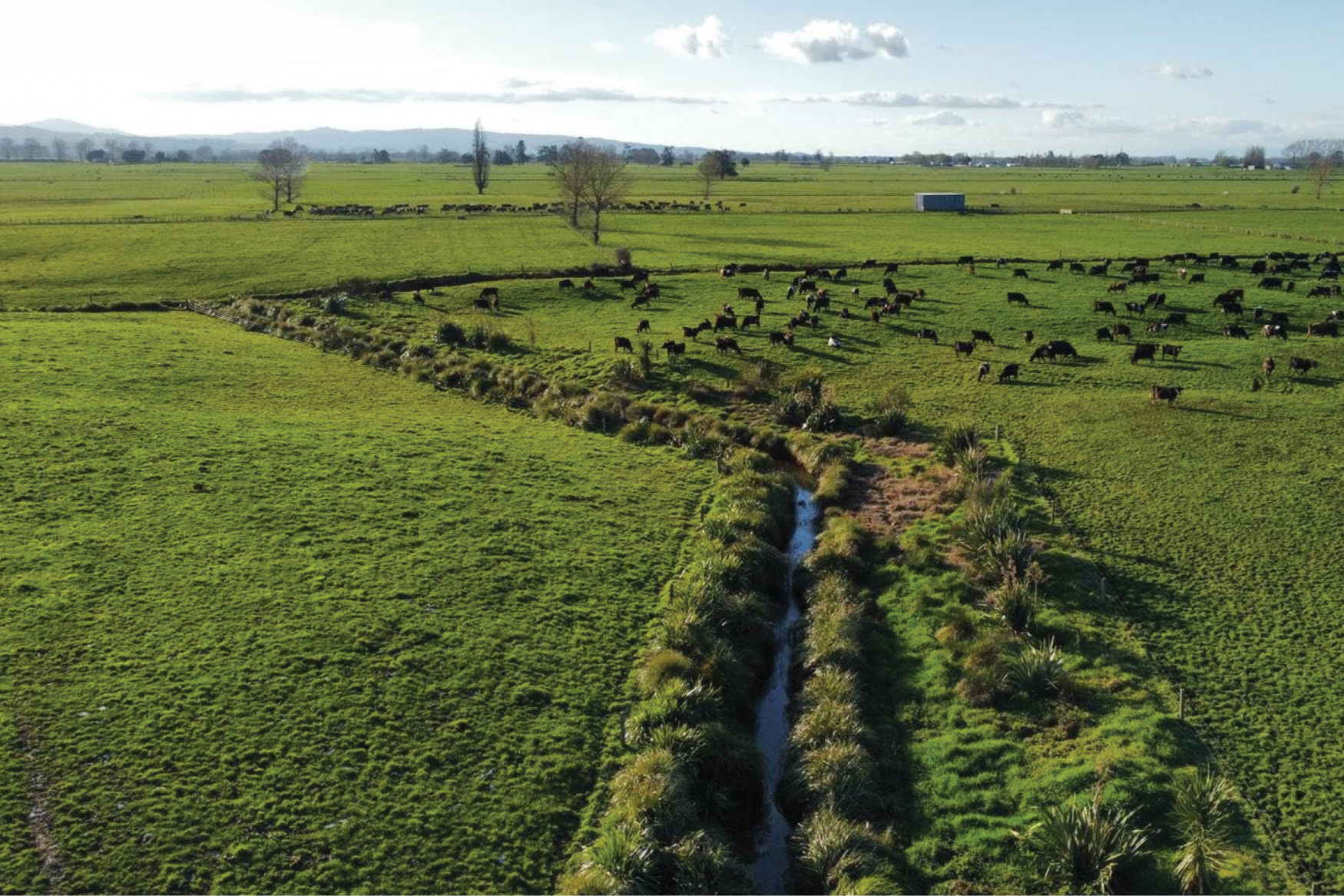

New Zealand dairy farming is globally recognised for its predominantly pasture-based, low-input systems. As individual cow monitoring technologies such as Halter and Sensehub become more prominent, questions remain about whether the aspects of the technologies originally designed for housed systems (behavioural monitoring) can deliver sufficient financial returns in New Zealand’s unique grazing environment. This research assessed the financial viability of these technologies using three large-scale case study farms, each milking more than 700 cows and performing at or above industry averages for pasture and crop harvested and reproductive performance.
Scenario modelling was undertaken for two dominant and representative players in the New Zealand market, Halter (behavioural monitoring + virtual fencing) and Sensehub (behavioural monitoring only). Financial results were calculated by applying modelled labour, reproductive, pasture utilisation, and animal health benefits against the capital and subscription costs of each system. While both technologies produced clear biological and operational improvements, none of the baseline scenarios delivered a positive financial return on investment for the case study farms, predominantly due to the baseline performance of the subject farms. Sensitivity testing showed that modest changes in cost or performance, such as a 25% reduction in hardware cost, greater improvements in animal health metrics or increased pasture utilisation, could shift several farm scenarios into positive territory, highlighting that financial outcomes are highly dependent on baseline performance and structure.
Wearable technologies offer genuine value in animal monitoring, labour efficiency, heat detection, and staff safety. However, their financial performance depends heavily on the baseline performance of each farm, the nature of existing constraints, and the extent to which labour savings can be realised within practical operational limits. For many New Zealand farms, particularly those already performing strongly, alternative investments in infrastructure, stockmanship, or system improvements may provide more reliable or higher financial returns than wearable adoption.
Key Findings:
- Financial returns were negative across all baseline scenarios for both Halter and Sensehub when applied to the three high-performing case study farms.
- Labour efficiency was the largest driver of benefit, particularly for Halter, but realworld labour restructuring is limited by minimum milking staff requirements, roster sustainability, and capability needs.
- Animal health improvements provided meaningful but not transformative gains. Early detection reduced cost and severity, but prevention (infrastructure, cow flow, staff capability) remains a more powerful driver of economic return.
- Reproductive gains were modest, largely because all farms already achieved high heat detection efficiency.
- Pasture utilisation benefits were limited to non-flat land and only for Halter; impacts were modest due to all farms already carrying out regular pasture monitoring.
- Technology costs are a major determinant of ROI. A 25% reduction in hardware cost was sufficient to shift several farm scenarios into positive outcomes in sensitivity testing.
- Wearables deliver non-financial value including improved safety, reduced cognitive load during mating, better traceability, and potential for reduced bull power. These may justify adoption for some businesses even when financial ROI is marginal.
- Farms with poorer baseline performance would likely see higher benefits, meaning ROI is strongly farm-specific rather than technology-specific.
Recommendations:
- Adopt wearable technologies only where clear, quantifiable performance gaps exist, particularly in lameness, mastitis, reproductive performance, labour efficiency, or contour-limited pasture utilisation.
- Prioritise system improvements before technology investment—for example, cow flow, races, yard surfaces, transition management, and staff competency, as these often produce higher returns than detection tools.
- Evaluate labour savings realistically, ensuring roster sustainability, minimum shed staffing, and leave cover can be maintained without compromising staff wellbeing or animal welfare.
- Compare wearables against alternative investments such as automatic cup removers, drafting improvements, additional subdivision, pasture monitoring tools, or track upgrades, which may deliver more reliable returns.
- Expect transparent sales practices from technology providers, seeking clear differentiation between product features and scientifically validated financial benefits; require scenario-based modelling using farm-specific baseline data.
- Reassess technology viability periodically, recognising that hardware cost reductions, improved algorithms, integration with other systems, and evolving labour challenges may shift ROI over time.
David March