2026 Nuffield NZ Farming Scholarship. Apply by 17 August 2025. Read More...

Apply for 2026 Nuffield NZ Farming Scholarship by 17 August 2025. More details...

Canterbury water management strategy.

Executive summary

Water and water management in New Zealand, and specifically Canterbury, has been described as a ‘wicked problem’ (‘Old Problems New Solutions’, 2011). Increased demand for water abstraction, along with issues of water quality, water storage and decision making processes that recognise cultural and social values, have resulted in ongoing debates between stakeholders and interested parties. Over time several interventions have been introduced, including resource management legislation and the formation of regional councils. With the Ministry of Primary Industries setting a goal of doubling agricultural export production by 2025, the ‘wicked problem’ will continue to challenge our communities into the future. In addition, global markets and their consumers increasingly want to know their purchased food items have been sustainably harvested and managed. To achieve these goals, we will need to learn from the past, think and operate in new ways and continue to be innovative in good management practices (Ministry of Primary Industries, 2016). 

Regions, industry, and politicians are collectively working out solutions at a national, regional, and local level to be able to achieve sustainable growth objectives and implement agreed good management practices. A new range of regionally specific implementation tools will be required to achieve these objectives and outcomes. Since the late 1990s the Canterbury Water Management Strategy (CWMS) has been a primary tool used in this region to engage and involve community, special interest groups, industry and agricultural, in the development of enduring water management policies, practices, and outcomes.

Since November 2009, the CWMS has stimulated a significant amount of community and stakeholder engagement and commitment. By resourcing dedicated positions and integrating community members alongside the Regional Council staff, this approach has led to innovative and collective solutions to water management issues. The CWMS engagement process was the centre focus to the development of a statutory regional land and water plan, now into the implementation phase. This region wide plan provided the framework to develop catchment based sub-regional plans, which CWMS was vital in delivering, as well as the identification of catchment specific non-statutory tools.

The author is a Programme Manager for CWMS (and Biodiversity and Biosecurity), and sought to understand, after seven years of implementation of the CWMS, “How do you keep community members/organisations and stakeholders actively engaged and participating in an established collaborative governance process, on regional water management?”

Collaborative community driven water management policies are not unique to Canterbury or New Zealand. An international literature review of differing collaborative community based programmes was conducted to understand the motivators for sustained community involvement. Three catchment based water management models (Murray-Darling Basin, Australia, the Fraser River Basin, Canada and the Lower Saxony, Germany), were looked at in more detail to provide a comparison to local findings from participants in the CWMS.
The required commitment to an integrated water resource management process is ongoing with no likely end point. It continually develops as do the organisations that are charged with supporting or collaborating in the process. The commitment of the region’s political leaders to the participatory process as it moves from centralised to decentralised governance, is essential. The motivators for maintaining community engagement include, wider understanding of the issues, building new networks, strengthening existing networks, and developing collaborative solutions.

The main findings from this study are:

  • Adoption of a collaborative community process requires significant commitment from the community and governance institutions. Most models allow for an iterative approach of development, implementation and review meaning these processes often have no end point.
  • Collaborative community participatory processes enables a shift from centralised decision making to decentralised governance.
  • Benefit of community driven processes includes ownership of issues and solutions, growth of community knowledge, stronger networks, wider understanding of issues and viewpoints and a greater sense of community.
  • Critical requirement that local or regional authorities fully support and implement the community derived solutions. This requires authorities to adopt solutions without modification and with sufficient dedicated resources.

Don Chittock

Communicating with our growers.

Executive summary

This report was written with the aim of finding out how we can communicate more effectively with our suppliers. By ‘we’ I mean Trevelyan’s Pack and Cool Ltd, a kiwifruit and avocado post harvest company based in Te Puke, with approximately 330 suppliers. The research methods included
  1. a literature review
  2. an interview of four other primary industry based operations
  3. an online survey of our existing suppliers
  4. an interview of four existing suppliers
Key findings included
  • A need for our company to revamp our website offering to growers
  • A need to be concise with the information we provide
  • High performing companies have a focus on reporting and payment of quality of product supplied, not only quantity of product supplied.
This report was compiled with the help of many different people from throughout primary industries within New Zealand.

Daniel Birnie

Spray Use In The Kiwi Fruit Industry: How are we communicating with our community here in the bay of plenty

Executive summary

This report provides a review of how we are communicating with our communities (grower communities and wider public) within the context of the Bay of Plenty kiwifruit industry, as a way of starting to answer the question of whether we are adequately communicating, and if there are areas we need to focus on for improvement. 

Sources reviewed included material made available by the Bay of Plenty Regional Council, Zespri, New Zealand Kiwifruit Growers Incorporated, traditional news media, alternative news media, and social media. There were also conversations held with several orchardists. The goal was to find information that would come up when a member of the public searches, and this meant that not
all sources were the newest available.

The first sources that came up in most searches were from the regional council, followed by news media and social media. Material from the kiwifruit industry tended to be further down the list unless the search terms were modified with terms related to these (such as adding “Zespri” or “NZKGI” to the search). While most sources were quite balanced, alternative media had a tendency to publish more opinion pieces which were often negatively pointed towards spraying, and social media was all negative with one or two exceptions.

How should we communicate with our communities going forward?

  • Grower education – Make sure growers understand what their responsibilities are, and what their neighbours’; expectations are. Ensure that they know how to use their products correctly.
  • Community education – Help the community understand what their rights are, so that they understand there are laws to help protect them. Inform them as to what types of products we are using, why we’re using them, how those products compare to their alternatives, and what steps we have taken as an industry to reduce the impact we have on our neighbours through spraying.

The report finds that the kiwifruit industry is in the process of developing a strong communication programme regarding orchard spraying, but that the information we want to get in front of the public isn’t necessarily being shared with them right now. The industry has made great improvements to our spray practices in the last few years, and we need to make sure we promote this to the community prior to any major spray application periods via newspapers, mailbox drops, and community meetings, to counter the negativity before it becomes a major issue.

A time limitation while working on this report has led to detailed interviews with orchardists and the public not being conducted. Some additional work needed is suggested in the “Next Steps” section for anyone wanting to go into more depth on the issue of communication regarding spraying and agrichemicals.

Craig Ward

Technology use by sheep and beef farmers.

Executive Summary

Farming is increasing in complexity. As such technology is becoming more important in businesses to understand impacts on both financial and physical performance. Top farmers typically lead effective technology adoption. However, this is not always the case. Five Wairarapa farmers along with one Central North Island Farmer were interviewed to determine how and why technology is used in farm businesses, to be a top farmer.

Past research in this area has been minimal, particularly in the sheep and beef sector. The majority of the research has been conducted with dairy industry funding. As such, little is really known about how and why top sheep and beef farmers use technology.

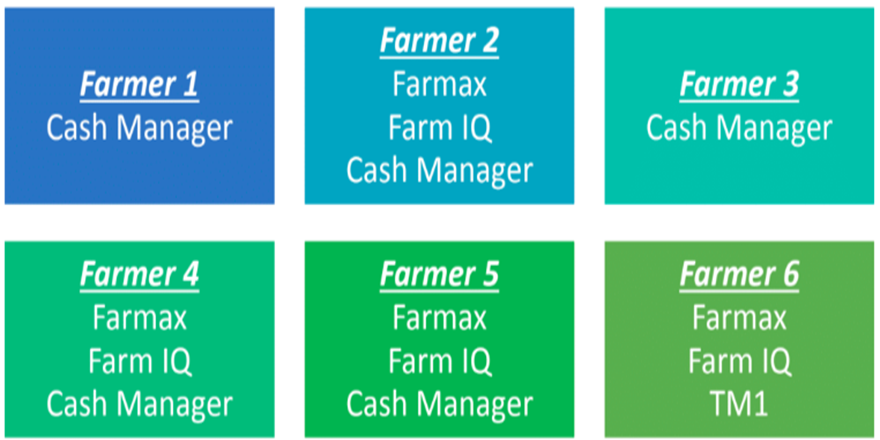
Budgeting technology was a key part of each farm business, and the only technology used by all six farmers. Farmax and Farm IQ were the two other technologies that were utilised in four of these farm businesses and were a key to their success.

Three important findings have emerged from this research. Firstly, top farmers are intrinsically successful. Technology just assists them in knowing their position to make informed decisions. Secondly, ground-truthing the results from technology with the farmers gut-feel and observations in the paddock is critical to effective decision making. Finally, technology provides some level of ‘insurance’ against events that may render the key decision maker unable to perform their duties for an extended period.

Technology use is unique to individuals, but some themes emerge time after time. Therefore, a greater understanding of these will lead to a more successful and resilient sheep and beef industry.

It is hoped this report will stimulate further discussion and investigation into technology-use on farms by farmers and industry professionals alike.

Industry crossroads.

Executive Summary

The dairy industry in New Zealand today is as important to the future of the dairy farmer as it is to the future of the New Zealand economy.

But as the industry stands, dairy is at a crossroads.

New Zealand was identified early in its colonisation as being blessed with the ideal climate and wide open spaces, ideal for pastoral farming and growing healthy livestock perfect for the production of milk. Chief Dairy Economist to the Government in 1884, William Bowron noted “The untold wealth of New Zealand lies upon the surface and the cow is the first factor in the way of securing it…..”.

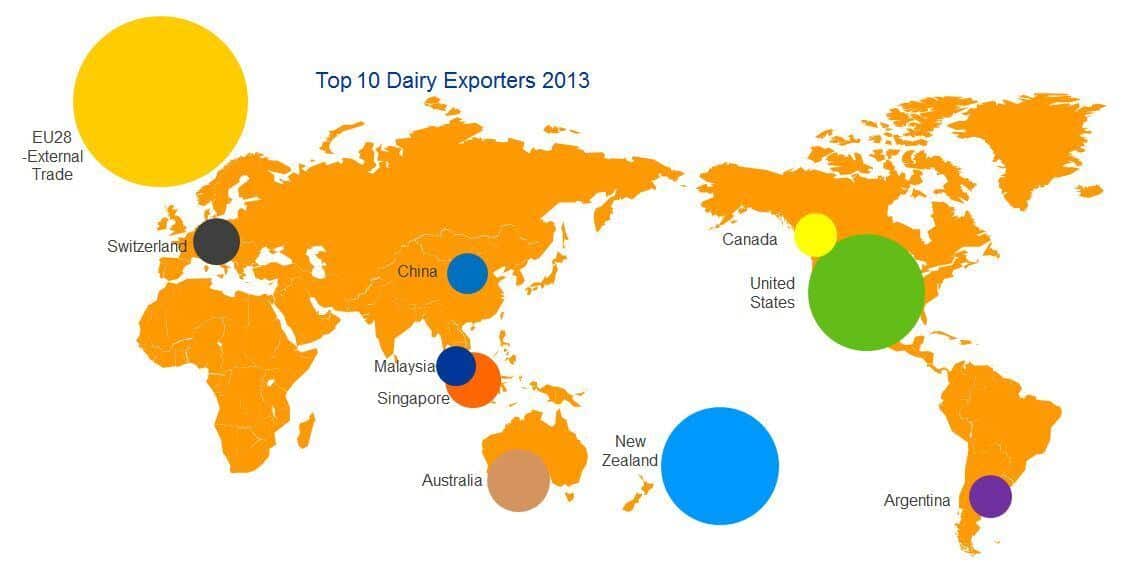
In recent years, dairy in New Zealand has experienced unprecedented growth, driven by the availability of efficient irrigation to areas that traditionally saw other land use. This growth is based on the returns from other sectors not meeting the needs in many cases to make that irrigation viable. Market signals and the reputation of our milk in emerging markets, notably China has resulted in a change, not only the supply and demand paradigm but also in the interest international corporations and governments have in New Zealand Inc and more importantly New Zealand dairy. This is seen in the purchasing of land for conversion to dairy or established dairy farms, and the building of milk processing plants by these overseas players.

Multinational companies continue to set up in New Zealand thereby increasing competition, but further fragmenting the industry. The increase in optionality for farmers and the attraction of growth through release of share capital has proved to be too tempting for many. Fonterra is still the majority co-operative but it’s market share of the New Zealand milk pool has declined in recent times.

The Dairy Industry Restructuring Act (DIRA) introduced at the inception of Fonterra, has played a key role through the past 15 years in the sectors growth and development. It also encouraged greater competition within the industry. Although this act is being reviewed and changes are to go to the select committee, there is a further need for its relevance in the current climate. It needs to be reviewed as to whether parts, if not all of it is necessary at all.

In order to protect the future of the dairy industry, we have to look to the long term. With talk of competition coming at us from less traditional means in the form of synthetic milk we need to work collaboratively in order to ensure our future prosperity as an industry and a country.

Investigating the impact of social media on the primary industry in New Zealand.

Executive Summary

Social media offers primary sector corporations the opportunity to leverage network effects. Rather than one to one interactions, groups of customers and stakeholders have the opportunity to support each other. Primary industry corporations can use social media platforms to facilitate these interactions. This results in increased efficiency, better brand awareness and improved customer relationships.

The primary industry is constantly in the public eye and put under scrutiny. Therefore, it is important for companies within the industry to have a voice, social media has proven to provide a platform for companies to share their voice.

This report identifies how social media is used both positively and negatively. Firstly, an overview of what social media is, who uses it, and different types of social media.

A literature review researching how social media can be used effectively has been outlined in Chapter 2. This highlights how social media can benefit a business when done right. Social media can be used to build direct relationships with customers, collect feedback, and identify new business opportunities.

Nine interviews were conducted with representatives from companies that are active in social media to evaluate how they use social media, and what their aims are by doing so. Respondents were asked how risk is managed within a team, to ensure that the right information is given and that responses have a positive impact. It was found that companies using social media generally attempt to increase engagement, educate their customers, stakeholders, and the general public. It is important that a company has a risk management strategy, to help manage any negative interactions on their media platforms.

To complement the information gathered through the interviews, a case study was done about a business that has a very low presence on social media. The goal was to see benefits of using a different platform to engage with suppliers. From the learnings found in the interviews with the other companies, it was obvious that there is value in having a social media presence to educate the public. However more resource is needed to manage the social media platforms to make it more effective.

The report concludes with an overview, discussion, and recommendations on how companies can use social media to their advantage, and be an effective tool adding value to their business.

Catchment groups: Fighting the water quality battle.

Executive Summary

There is no denying that New Zealand has a declining water quality issue that needs addressed sooner rather than later, there is no denying that both rural and urban communities are at fault. But what resources are out there to help mitigate the declining water quality?

The Resource Management Act 1991, as our main piece of legislation, oversees how the environment is managed. The idea is sustainable management of New Zealand’s resources and helps manage the natural and physical resources at a national, regional and local level.

The National Policy Statement for Freshwater Management is a policy that encourages New Zealander’s to have discussions about where we, the current generation, want and expect water quality to resemble for the future generations.

The way we use the land differs across New Zealand so the impacts on our fresh water, whether positive or negative, are often specific to a catchment or region. This makes it difficult to paint a national picture. It can also take decades for water (and any contaminants it contains) to cycle from the earth’s surface through the ground to aquifers, and back to surface water systems. This means some effects we see today are legacies of past activities, and the impact of our activities today, both positive and negative, may not be seen in our waters for a long time.

Leaders and organizations are acknowledging that even their best individual efforts can’t stack up against today’s complex and interconnected water quality problems. A diverse group of local leaders are putting aside self-interests and collaborating to challenge conventional wisdom and fix problems that they have a vested interest in. Often, they lack the formal authority to solve the problem and don’t have an obvious ‘plug and play’ solution. A willingness to embrace new ways of working together. This movement is yielding promising results.

Change leadership is the ability to influence and enthuse others through personal advocacy, vision and drive, and to access resources to build a solid platform for change . This is what catchment groups need to be successful.

It’s about engaging with the community; passing on information to farmers and the public about the current water quality situation and monitoring and improving water quality. Catchment management comes down to strong leadership, considering values of New Zealand’s citizens in terms of social, economic, and cultural aspects. Communication and conversations that stay ‘above the line’ creates evolved thinking to the stage of curiosity, learning, problem solving and eventually positive action.

Profitability of the kiwi dream: What are the main drivers of profitability on north island east coast sheep and beef farms.

Executive Summary

Profitability is often a challenge within many businesses. North Island East Coast Sheep and Beef farming businesses are no different, operating in a diverse and ever changing economic and climatic landscape. Currently these businesses are facing a more positive outlook, but for how long? And what are really the key drivers of profitability within these businesses? These are the questions this report has sought to answer.

In addition to identifying the common themes driving profitability from farmers and rural professional’s, answers were also sought in regards to some underlying themes in the industry being “value add”, “collaboration” and some actual hard “financial analysis” of these types of businesses.

In terms of the value add proposition for East Coast sheep and beef farmers this has some real merit. This opinion was based solely on the MPI New Zealand Sheep Industry Transformation Project however, this programme has generated some real successes for all parties involved with much of this thinking easily transferable across and in between industries.

The theme of collaboration was discussed based on the Red Meat Profit Partnership Primary Growth Partnership Programme. The conclusion from this analysis was that while the intentions seem right with the programme, the execution seems lacking in terms of providing a real benefit back to the farmers.

The financial analysis theme was data pulled directly from Beef & Lamb’s economic survey. This is a comprehensive set of data researched every year specifically targeted to regions and land classes within those regions. This set of data lined up well with the target subject of this report. The conclusions from the analysis showed that these businesses did make a financial operating profit. However, there were significant other factors to consider around the financial viability of these businesses. Debt position was a key factor to consider further.

The main successes from this report were the identification of key themes that drove profitability across East Coast sheep and beef farms. These are summarised within the conclusion of this report but can be broken down into the following areas:

  •  What is profitability actually defined as when considering North Island East Coast Sheep and Beef farming businesses? There is more than just the financials.
  • Measure, Monitor, Manage.
  • Use outside skills where appropriate, build a well
  • Rounded advisory team t o fill any knowledge gaps you do have or to explore ideas or concepts further.
  • Adopting new technologies, aids in business enhancement and profitability.
  • Good quality staff are key to business success.
  • Take the time to work on the business rather than in it.
  • Do the basics well!

In addition to identifying the above themes it is also an important part of this research to share the learnings with the target and related communities. The next steps at the end of this report conclude this well, with this likely to involve further one on one discussions and potentially tailored presentations around the content of this report.

Again, profitability is a challenge within many businesses but none are more better placed to achieve it than North Island East Coast sheep and beef farmers.

An exploration of social innovation within primary industry education.

Executive Summary

Aim: To create a social enterprise whose social mission is focused on a perceived gap in my region. That being, Maori youth prospects in the primary industries and growing economic sustainability to create stable futures for them. I propose to do this through an innovative hybrid model of education and enterprise.

The primary industries have long been searching for an effective way to encourage more people into the sector. With the number of people required to man the industry forecast to increase dramatically, this is a very real issue for the success of New Zealand’s economy. (Ministry for Primary Industries, 2014) Another concern facing New Zealand is the increasing number of Maori people in the Not in Employment, Education or Training category (NEETs).

This research paper explores the possibility of a new method of getting people into the primary industries, while tackling the issue of Maori not in employment. My literature review has focused on targeting the Maori Youth of a small semi rural community in the region of Hawkes Bay – Omahu. Interviews were conducted to discover what the barriers were to the youth gaining educations, or jobs. Focus then was put on what other training institutes are out there, and whether or not they are catering to people of this particular group.

Social innovation enterprises around New Zealand are fast gaining popularity. I looked into enterprises that were helped to succeed by the foundation, Akina – I gained an insight into what sort of social missions are important to New Zealanders, and what they are doing to achieve them. Lastly, hybrid organisations have been looked into, as being the most appropriate model to base my enterprise on. There is still little known about hybrid organisations – most people under stand a business to be either, not-for-profit, or for-profit. Hybrid is a way of combining the two, the ideal being where they are combined and neither one can survive without the other.Based on the findings in the literature review, I have come up with a hybrid enterprise model that has taken appropriate features of different organisations, the needs of my target group and my own ideals to satisfy the requirements of my aim/mission.

Deer industry leadership: design thinking for communication and engagement.

Executive Summary

The deer industry in New Zealand is renowned in the primary sector for its innovation and passion. Deer Industry New Zealand and the New Zealand Deer Farmers Association provide leadership and initiatives to grow the deer industry on behalf of their stakeholders. A vital facet of industry leadership is building capability through fostering a culture of continuous improvement. It is this spirit of striving for continuous improvement, coupled with the acknowledgement that the ability of an organisation to communicate effectively with stakeholders affects the achievement of business objectives, that inspired this project.

The aims of this project were to learn about the world of communications, discover what can be learned from other primary sector organisations, find out what farmers’ and other end users’ preferences are for communications from their industry organisation, and to provide a set of recommendations arising from this research.

The key learnings from this project are:

  • Communications both underpins and is overarching of an organisation’s strategic objectives.
  • To get the most benefit, communications needs to be a role within the organisation which sits at a high level and is performed by a professional with specific skillsets and specialist knowledge.
  • Content consumption habits and preferences of farmers are diverse and rapidly changing.
  •  The level of connectedness and engagement amongst the farming population should not be underestimated.
  • It is necessary to provide a suite of platforms for communications to provide choice to the diverse demographic of farmers/stakeholders, but start with a ‘digital first’ mentality, as this is, and will increasingly be, the dominant preference for content consumption.
  • Engagement is not the end goal of communication, but a live, ongoing relationship that needs to be nurtured, with effective communication being the enabler for this.
  • More than ever before, organisations need to understand social stresses and demands on farmers and other stakeholders, and place that forefront of mind, using a design-thinking approach to communications.

Summary and recommendations: Industry-good organisations such as Deer Industry New Zealand need to adopt communication strategies that are designed with the end user in mind. The content consumption habits of farmers and the way they prefer to receive information should be driving the way the deer industry communicates. Commissioning an independent audit of an organisation’s communications is valuable, especially for smaller organisations with a limited budget. In a world experiencing an exponential rate of change, how individuals communicate and consume content is changing rapidly. Focussed attention is needed to ensure organisations stay relevant to their stakeholders and communicate effectively in the future.