2026 Nuffield NZ Farming Scholarship. Apply by 17 August 2025. Read More...

Apply for 2026 Nuffield NZ Farming Scholarship by 17 August 2025. More details...

Short term discomfort for long term gain.

Executive Summary

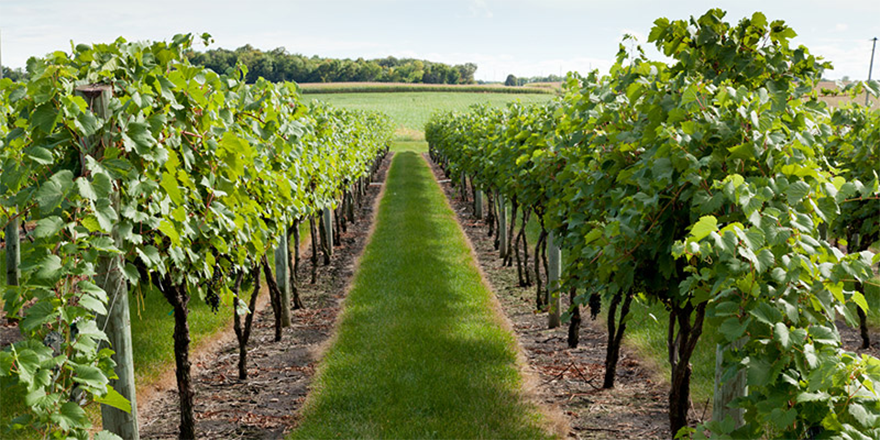
This case study looks at the changes seen over the first eight years post conversion to organic viticulture and covers the first 150 hectares of converted vineyard area on a vineyard in Marlborough, New Zealand. The motivation behind this case study has come wanting to know what changes have happened on the vineyard in question since the conversion to organic management. The best way to understand and examine these changes, is to look back to before conversion and track the changes to see if there have been any trends forming. This case study has focused on the cropping, soil and plant changes for the period of 2002 to 2017 with the process of organic conversion starting in March 2009. Not all information has been available for this length of time, however consistent information was available from before conversion with regards to all of the parameters studied. This report has not gone in to the financials of the business.
 

With continued growth in the organic sector all over the world, and the increasing restrictions on new and existing agrichemicals, the direction towards future proofing vineyards, environmental stewardship and increasing quality go hand in hand with organic production principles. These have all been implemented on the vineyard covered in this study.

Cropping data was available for total yield of each individual block and yield per hectare, from 2003 to 2017. A reduction in yield is one of the most concerning factors for growers wishing to convert to organic production, however there was no decrease in yield on the vineyards studied. The main reason for there being no decrease is that the focus on quality, from conventional to organic management, has not changed. Quality is distinctly influenced by crop load, so crop thinning is carried out in years where there is excessive crop, either by shoot thinning early in the season or bunch thinning later in the season. This has happened in every season covered in this study.

Soil data analysis for some parameters was available from 2002 to 2017, where other parameters data was only available from 2008. Analysis of the biological parameters was not undertaken. There was no change in the pH or the Bulk density over the study period, however increasing trends were observed in the CEC and Organic Matter values, starting from around the time of conversion to organic management. One of the most interesting results was the increasing trend in available K from around the time of conversion, even though no K fertilizers have been applied. Potassium can be a major limiting factor in ripening of grapes later in the season, so this increase is very encouraging. Increasing trends have also been shown in Fe, Mn, Zn, Cu and B, though the data for these results were only available from 2008, one year before the conversion to organic management.

Plant tissue analysis data was consistently available from 2007 to 2017 and shows a definite decreasing trend for petiole Nitrate-N, right down to unreportable levels. This is directly related to the pale green leaves seen across most organic vineyards. However, the pale green leaves and the reduced canopy size has had no effect on the ability of the grape vine to fully ripen the crop retained by the management. Even with the decrease in petiole Nitrate-N, the total nitrogen percentage within the leaf blade remains constant. Increasing trends have been shown in the trace elements Fe, Mn, Zn, Cu and B though results are only from 2008 to 2017.

One of the key out comes from this study does not directly relate to the analysis of the data collected, but comes from the lessons learnt on the journey through conversion to organic management. Many of the techniques used for combating weeds and pests can be used, and have been used, in the areas of the vineyard that are still considered to be under conventional management, which is a major positive outcome for environmental stewardship.

Financial rewards within a sustainable kiwifruit business.

Executive Summary

This report was written with the aim of exploring how other successful businesses within the Primary Industry can gain a higher premium on their products to give a competitive advantage and exclusive brand positioning. I wanted to see if there are any lessons that can be learnt and adopted by Zespri and Growers to gain an even higher premium on their produce for being a Sustainable supplier.

The research methods included:

  1.  A literature review
  2. An interview with three Primary Industry based operations
  3. A case study review of three Primary Industry based operations
  4. An online survey of Growers and Post-Harvest Kiwifruit entities

Key findings included:

  • Many New Zealand businesses are taking tentative steps into the world of sustainability
  • Businesses see competitive benefits from acting sustainably
  • Many leaders are aiming to seize sustainability leadership within their sectors over the medium term

This report was compiled with the help of many different people within the Primary Industries within New Zealand.

The potential role of trading systems in the allocation of nutrient discharge allowances.

Executive Summary

Trading systems, as a tool to reallocate nutrient emissions are currently underutilised in New Zealand. This is primarily due to the under development of the underlying water management policies and regulations required for a trading system to operate effectively.

Water quality must be more proactively managed if we are to reach the goal of having 90% of New Zealand’s rivers and lakes swimmable by 2040.

As water management policies are developed the use of trading systems to manage discharge allowances is expected to become more prevalent. But a trading system alone is not a viable solution. A trading system can be used as part of a wider structure for managing water quality. It is also not the only solution available to councils, but it is one that is favoured by economist due to its ability to efficient price and allocate scarce resources.

For a trading system to operate efficiently it must be designed in a way that it is fit-for-purpose and is embraced by potential users. Education plays a huge part in the success of any trading system. This education needs to encompass the underlying purpose or problem which the system is attempting to mitigate, as well as the practicalities of how the system itself operates.

The Agricultural Lure: Understanding the awareness of the red meat sector at high school level.

Executive Summary

Each of the sectors within the primary industry has an ageing population of employees. These people are going to need replaced by 2025 (as Julian Raine spoke about during the panel discussion, phase one of course 36 the Kellogg Rural Leadership Programme). The red meat sector is New Zealand’s largest manufacturing employer and provides jobs for 25,000 people.

This research looks into whether the awareness of careers within the red meat sector at high school is having an impact on the overall employment rate within the sector. Thematic analysis is used to identify different perspectives and answers – to discover the understanding across the education sector. An interview data set of 70 people was used to understand the awareness of the red meat sector at high school level.

Promotion of careers across the sector is constrained due to low overall career awareness and lack of exposure at both a teacher and student level. Awareness of the red meat sector is primarily focused at farm level and not on the big picture, as reflected in the stigma of agriculture and practical occupations. More emphasis on telling our story and pathways through the sector are needed to help clarify awareness and understanding.

As generational change continues, communication methods and resources supplied need to be considered, while continuing to be positive and confident as an industry.

The main findings from this research are

  • More emphasis on telling our story and pathways through the sector are needed to help clarify awareness and understanding.
  • We need to continue embracing changes for positive rewards and take advantage of the skill set of the next generation of workforce.
  • The stigma of agriculture and practical occupations remains. They are not seen as prestigious.

There is a need to rebrand the term ‘red meat sector,’ change the mentality of our industry, and tell our story more effectively. Educating educators and creating clearer career pathways through apprentice programmes is needed for success into the future. Collaboration for more exposure opportunities and simplifying systems and resources are key recommendations.

Balance: Successfully managing concurrent on and off-farm roles.

Executive summary

New Zealand’s increasing property prices, corporatisation of farming, improved communication and transportation infrastructure, coupled with continuously improving farm practice and rapid disruptive technological innovation, creates both increased need and opportunity for rural families to engage in on- and off-farm work concurrently. Modern work enabled by the aforementioned advancements, particularly the rate of digital technology change, is becoming increasingly accessible around the clock, which results in a progressively blurred line between work life and home life, with the concept of a work life balance under significant challenge. 

This challenge is exacerbated when farming households are engaged in pluriactivity. Pluriactivity is the situation when family members invest time off-farm, which is not a temporary situation responding to changed circumstance or shock, but rather a permanent and accepted feature of farming societies globally, that is driven by a range of diverse factors, including household, farm and spatial drivers.

The methodology employed for this research was a combination of semi-structured interviews and a detailed literature review. All interview participants were involved in both on- and off-farm work concurrently, and had professional or highly skilled off-farm employment. With the exception of one respondent, interviewees were farming sheep or beef, or grazing dairy stock, and all participants took an active/hands – on role in the farm business.

The literature research showed a strong theme that “work life balance is bunk,” and that those engaged in on- and off-farm work concurrently should rather seek “work life harmony.” Harmony was preferred on the basis that it does not create the same inherent sense of trade-offs or the over-prioritising of work in comparison to ‘life.’ Harmony was seen as a better construct to break down the element of “life” into categories of family, community and self. Taking a more granular approach to life allowed individuals to bring together a number of elements in a be spoke manner to achieve success. Respondents conveyed that work life harmony had a temporal component, i.e. the importance of work and life (self, community and family) would change over time.

The research identified that to achieve work life harmony there are three key success factors and one key change in mental state that can facilitate success, they are as follows:

1. Communication and the importance of family

A success factor identified in the research was that of placing importance on relationships with loved ones when working both on- and off-farm concurrently. A consistent, although reluctant, interview response was “happy wife is a happy life” and that you can’t participate in pluriactivity alone. Family team work was supported by a focus on communication, with application of a ‘business communication’ rather than ‘family communication’ for managing multiple work interests being key to success. Family communication involved conversations about the farm business being a planned and deliberate action, rather than an “over the fence” or “over breakfast” conversation. The need for “doing the business” was contrasted by a requirement to know when to “box off” the various work components, so as to prevent either the family farming business or the off-farm work becoming an encroachment on the important business of family.

2. Visioning: know the end for a number of games

The importance of having a documented vision was another success factor to emerge from the research, and was a key contributor to the achievement of better work life harmony. Further, documenting the vision resulted in individuals having a clearer focus on what was important and what the end point looked like, while providing the ability to monitor progress towards time-bound, regularly reviewed goals.

It was also clearly identified that for a vision to result in increased work life harmony the goals needed to be as strategic and all-encompassing as possible, with visioning not limited to the farm business, corporate career or family goals individually, but broader in considering either the “Five F’s: family, fitness, farm, finance, fun” or Freidman’s ‘Four Circles’ of work, family, community and self. The focus of any vision needs to be strategic with a range of operational planning documents, such as 1 year and 5 year farm plans and personal development plans sitting beneath a holistic and all-encompassing vision that establishes the basis, or ‘the why’, upon which to make important decisions.

 3. Simplified systems, technology and creativity

A final success factor that came through consistently was deliberate simplification of on-farm systems, through either altering stocking rates, changing stock class or outsourcing tasks. In all situations the aim was to make the on-farm work easier given significant time pressures, and the additional income coming from the off-farm activity reducing the absolute need to be achieving maximum farm efficiency. While all respondents were very busy and often managed systems to reduce the number of mundane tasks, the research and literature suggested that they should not be eliminated altogether, particularly when engaged in pluriactivity, with simple monotonous tasks often being the time “eureka” moments occur, so the value of “tractor time” for creative or entrepreneurial thinking should not be under-estimated.

Building upon these three success factors, a key change in mental state was identified with a focus on “being” rather than “doing” key for those successful in pluriactivity. To embrace these states of being there is a requirement to take on the following:

  • Be deliberate: prioritise family as a non-negotiable time commitment – make this component equivalent to your most important appointment in the other spheres of your life.
  • Be pragmatic – simplify your farm system to make it work for your individual situation
  • Be holistic and strategic: develop a vision, include four circle granularity  Be an individual
  • Be present: avoid multi-tasking – aim for integration but restrict multi-tasking to where it does not affect the primary task.
  • Be realistic, be mindful – understand that you cannot achieve all of your life goals at once, there will be a requirement for some priorities to be fulfilled sequentially rather than concurrently
  • Be a ‘geek’ – embrace technology as appropriate to make your life more harmonious

Phil Weir

Improving communication of primary industries research, science, technology and innovation.

Executive summary

By the year 2020, over $1.6 billion of New Zealand taxpayer money will be invested in science and innovation per annum. What share will Primary Industries have of this investment? 

“With the coming of the fourth industrial revolution – fundamental change to our daily personal and professional lives from the combination of physical, digital and biological technologies – the primary sector will find itself at the center of change.”

Ian Proudfoot, Global Head of Agribusiness, KPMG 2016

The aim of this project was to understand what the benefits might be of improving communication of government – funded Research, Science, Technology and Innovation related to the New Zealand Primary Industries and how this could be achieved. stakeholders from a wide range of areas in the science and innovation ecosystem were interviewed and fin dings were related to literature and initiatives already underway in New Zealand. Benefits of improving communication include:

  • Attracting science and innovation talent to the primary industries and building future capability.
  • Positive engagement with the public ensuring social licence to operate.
  • Building New Zealand’s international reputation as an innovative country – to attract skilled migrants, build partnerships with global experts, and be seen as a trusted producer of safe, premium food and fibre products
  • Improved cross-sector collaboration and learning.
  • Faster and more advanced innovation in industry from research, science and technology uptake To achieve sustainable growth in New Zealand Primary Industries, attracting and retaining a diversity of talented people is critical.

Recommendations from this report for key stakeholder groups include:

Government:

  • Improve the New Zealand Story Business Toolkit information on science and innovation.
  • Government funding agencies could publicise their science and innovation investments more.
  • Include a section on the quality of the communication plan in assessment criteria for government. science funding

Research Organisations:

  • National Science Challenges could increase their focus on engaging school children in science and innovation (and the government could incentivise or reward them for doing this)
  • Universities and Crown Research Institutes could include positive public engagement in their promotion criteria for staff (likely if the government funding criteria changes).

Primary Industries:

  • Industry associations or businesses could develop more graduate programmes with a science and innovation focus to create career pathways for attracting talented young people.
  • Businesses could sponsor employees and their research providers to visit schools to talk about science and innovation being invested in and the future career opportunities in their sector.
  • Industry could investigate how to collaborate on opportunities of the fourth industrial revolution.

Kylie Phillips

Is the dairy farm training working?

Executive Summary

Is there an issue with how dairy farm staff are being trained off farm and is this giving the results the farmers need. For the diary sector to continue to farm in New Zealand we need to make sure that our staff are well trained in all aspects of farming not just the day to day work but also financial skills and we now also need to train the soft skills of management as well as the importance of how we are perceived by the Urban sector.

Is it important to have clear roles in a business and why is this and what are the outcomes if we get this right or wrong.

In The Inescapable Laws of Organizational Structure;

  1. Fritz also argues that organizations are structured either to advance or to oscillate . Advancement is a positive move from on state to another that acts as a foundation for further advances. Fundamental to structural advancement is the concept of resolution when an outcome is achieved and a particular problem is resolved. According to Fritz (1996:6), management in an organization that is structured to advance coordinate ‘individual acts into an organizational tapestry of effective strategy.’ When all the individuals in this utopian organization are acting together, the result is synergy, allowing the achievement of ‘enormous feats.’
  2. The alternative is structural oscillation. Fritz (1996:6) explains this: ‘Oscillating behaviour is that which moves from one place to another, but then moves back towards its original position.’ So many organizations set out on some change program, full of enthusiasm and energy. But, six months later, the enthusiasm has evaporated and the program peters out leaving very little changed.

Are rural co-operatives still relevant in New Zealand.

Executive summary

This report was aimed at discussing and presenting the ideas surrounding the future of the co-operative business structure in rural New Zealand. This was achieved through a review of relevant literature and surveying key co-operative members and employees to gather their opinions on how they saw the co-operative structures relevance today and in the future. 

A brief summation of four key rural co-operatives was expanded upon throughout to build a picture of why these entities operated the way they do. The author found that all co-operatives researched had very clear business values and a simple vision. All surveyed were of the opinion that these values and visions were critical in the discussion of relevance both today and in the future and that any move away from these could lead to the demise of the business structure.

The grassroots and highly visible nature of the New Zealand farmer lends itself to the co- operative structure nicely. Farmers in New Zealand make up a very small percentage of the population but are responsible for the delivery of a large proportion of export revenues. The collaborative approach of co-operatives enables the New Zealand farmer to be represented to the wider public without fear of standing alone. As such it is the opinion of the author that the co- operative business structure in rural New Zealand remains as relevant today as it was when the first rural NZ co-operatives formed in the 1800s.

Alex Murray

Viability of establishing a sheep dairy platform on North Canterbury dry land.

Executive summary

Is now the time for bovine dominance in the milk market to be challenged? There are variable and questionable milk alternatives more readily available both locally and abroad and our New Zealand sheep dairy history would suggest the current spike in popularity will be short-lived. I disagree. In my opinion New Zealand is the ideal location to develop this budding industry. We have the operational know-how, the geography and access to reliable water sources, a tourism market that opens our primary sector to the world, a developing pool of ovine milking genetics suitable to the New Zealand environment, capacity for diversification as we investigate change in land use opportunities and a hunger to pursue an alternative farming vision with learned failures of other ventures a source of inspiration. 

“We believe that strong science, a supportive Government and industry solidarity are essential for the future success of sheep dairying in New Zealand” (Blue River Dairy)

Sheep Dairy is an industry that has experienced two substantial ‘false starts’, in both the 1970’s and 1990’s. One overarching factor was market fragility which proved too challenging and the detriment of the industry at the time. What can we learn from our chequered history? To determine a sound market before we establish supply, mitigate financial risk with comprehensive process of due diligence, a slow and steady approach to ensure long term viability and fundamental is collaboration within the sheep dairy community.

The aim of this project was to investigate viability of establishing a sheep dairy platform on North Canterbury dry land as a profitable land use alternative.

Key findings as a result of this research are that alignment of the sheep dairy community is critical to our success long term, honesty with information is vital and that although dry land sheep dairy in North Canterbury may be ambitious – nothing is impossible!

Kate Boyd

Exploring the opportunity of a holistic on-farm quality assurance program for the beef industry.

Executive summary

My project has investigated some of the current beef industry quality assurance (QA) programs which provide evidence based marketing tools to the livestock industry. The case studies have allowed me to identify key aspects of these programs which would be useful to utilize when designing a holistic QA program for the beef industry. 

The key recommendations arising from the case studies include: 

  1. The evaluate whether of how the industry could simplify the QA systems in the future using an online portal
  2. Key aspects which should be added to the industries program
  3. The benefits of having voluntary modules available to producers and processes that can be utilized as demand emerges
  4. The need to producer input in the development of new modules to ensure they are relevant and region specific
  5. The benefits of using a ‘goal setting’ component to QA systems
  6. The ability for QA systems to provide a communication tool to encourage research adoption outcomes to the industry.

I have also explored areas that may need to be added to the current industry systems to take full advantage of the marketing and educational opportunities a holist QA system can provide.

Amanda Giles