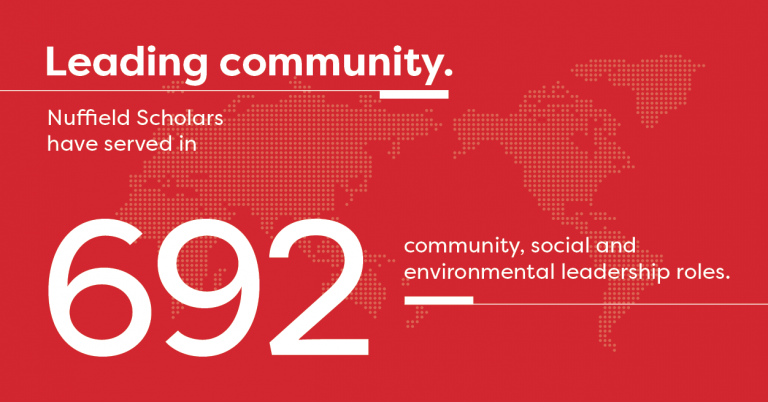
2026 Nuffield NZ Farming Scholarship. Apply by 17 August 2025. Read More...

Apply for 2026 Nuffield NZ Farming Scholarship by 17 August 2025. More details...

Two Te Puni Kōkiri Scholarships available for Kellogg Whanganui.

Te Puni Kōkiri is generously sponsoring two places on Whanganui’s Kellogg Rural Leadership Programme, May start.

This is an extraordinary scholarship opportunity, covering programme fees and giving applicants the chance to develop leadership skills closer to home.  
These scholarships are open to passionate Māori as part of their leadership journey in the Food and Fibre Sector.

Those wishing to apply for a scholarship, should include a cover letter with their application indicating why they should be selected. 

In the cover letter, evidence should be shown of leadership in Māori Food and Fibre, along with discussing how the scholarship will contribute to personal leadership development.

How to apply.

To get an application underway, prospective applicants should register their interest through the link below. They’ll receive an application form to complete. When they return this form, include a cover letter indicating intention to apply for the scholarship, at the top. 

For any questions about the scholarship please don’t hesitate to get in touch with Lisa Rogers, Programme Manager, at lisarogers@ruralleaders.co.nz 

Changing the narrative – an online Kellogg session.

Kellogg has had to adapt during the Pandemic, to a hybrid model, working both online with tools like Zoom, and in-person when it is safe to do so.

One positive thing about video calls, and for some one might be a stretch, is being able to sit on the side-lines occasionally, with mute on and video off. You get all the benefits of the call, without needing to worry about asking clever questions.

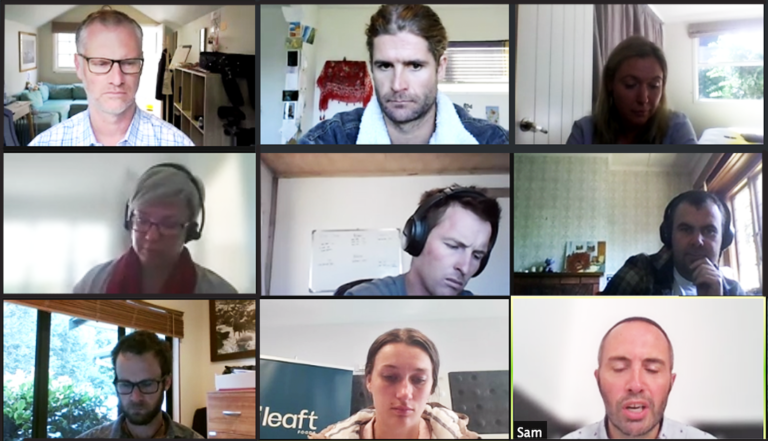
So, muted and invisible we joined Scholars on Phase Two of the Kellogg Rural Leadership Programme, to listen to Sam Halstead of Latitude Strategy and Communication. Sam works in Public Relations, focussing on the primary production sector.

Phase Two is important for Kellogg Scholars. It gives an economic, political, and environmental context. It zeroes in on how to engage and influence decision making at a local, regional, industry and central government level. And engaging means communicating effectively. Enter Sam.

The most scrutiny in a generation for the primary sector.

Sam began his presentation with a slide headed ‘The most scrutiny and pressure in a generation.’ Discussion moved easily from one example substantiating this, after another.

The next slide, ‘It’s not all bad,’ presented positive sector perception statistics, based on recent polls from UMR Market Research. The pendulum has been moving in the other direction through Covid – with a public realising New Zealand now has big bills to pay and that the primary sector might be the one to help. The numbers make interesting reading:

  • New Zealanders have a positive view of the primary sector.
  • New Zealanders remain strongly positive about horticulture (67% positive, 29% neutral, 4% negative).
  • Sheep and beef farming (58% positive, 29% neutral, 13% negative).
  • And dairy farming (55% positive, 29% neutral, 16% negative).

Changing primary sector narratives with human connection.

While sentiment is on the up, the big challenges remain. Challenges that continue to impact the way the public views the primary sector. Sam took scholars through how public relations is utilised to help address some of these.

‘Changing the narrative,’ Sam explained, is about human connection and building trust over time – to change the narrative over time. Briefly, that might mean:

  • Avoiding the echo chamber – telling our stories outside of the sector.
  • Enlisting champions, or advocates.
  • Collaborating – avoiding confrontation.
  • Better leverage of the sector’s points of difference.
  • Owning issues and improving performance – sharing those improvements.
  • Building high quality relationships.
  • Most importantly – strive for human connection.

These sessions, delivered both online and in-person, help scholars build a critical awareness mindset, build confidence, and empower scholars to create change – public relations is just one tool in the toolbox that can help.

From the Mackenzie Study: The Case for Kellogg.

Otago University

Work on the Mackenzie study continues with Professor Nathan Berg of the Otago Business School and the Department of Economics made possible with the support of the Mackenzie Charitable Foundation.

Since receiving the results on the gains attributable to participation in the Nuffield Scholarship, collation of results from the Kellogg Alumni survey has now begun.  

While more work needs to be done to present the data, we thought we would share a series of long-form responses from the Kellogg survey. These in themselves begin to paint a picture of the value of the programme to alumni, in terms of personal development, career advancement and industry influence.  

The responses have been left anonymous and any information that might reveal a respondent’s identity has been removed. 

Nearly one hundred Kellogg Alumni completed the survey. 

Searching for further motivation to complete your Kellogg Lincoln or Kellogg Whanganui application? You may find it here. 

What have been your most important accomplishments and did Kellogg play a role?

“Critical analysis of all situations. Kellogg helped solidify this process.” 

Kellogg taught me how to deal with problem situations and be able to answer questions from media reps. Kellogg also gave me confidence to address open meetings of farmers and Iwi reps.

Employment positions held. Community roles held (school board, parish, sport, and service clubs). Kellogg played a role – Yes. Improved skill base particularly around communication and leadership.

“The course helped with critical thinking and confidence.”

“My leadership career and influence. Helped me think strategically and made me match fit.” 

“Understanding myself better, how I affect others. The development of networks and doors opened by the programme. Personal brand building.” 

Contributing to strengthening capability and capacity in the agricultural sector.

“Start-up with two fellow Kelloggers – definitely a result of Kellogg.” 

“Leadership roles on boards of industry specific, or primary sector education boards plus NSO boards… Had creditability and capability having done a recognised course like Kellogg. Throughout the years the networks you form with either people who did it with you or had done it at other times was helpful to open doors and connections.” 

“Underway with a new company starting a new value chain. I completed my Kellogg project on this topic, so it very much helped.” 

“Since being a Kellogger I went onto become a Nuffield Scholar which I regard as a real accomplishment. Following that, I have started a new farm business and [have] become more involved with local industry. Kellogg… opened a lot of doors.” 

Forming a people and training team and ensuring the business had a successful part to play in sector upskilling. My Kellogg project and the learnings around it were the catalyst for this.

“Moving from hands-on farming to a corporate role. Kellogg gave me the networks and confidence to make the move.” 

“…Enjoyed widening my social and professional network and learning of other like-minded people. Having the mix across food production was great – everything from grapes to sheep to kiwifruit to Ag IT.

Kellogg helped with development of governance skills and gave me confidence to get involved in a large number of initiatives.

“Confidence and experiencing others’ opinions and ideas, and great fellowship with others on the course.” 

Kellogg helped me particularly in improving my leadership and social skillsets…”

“Networking and connecting. Having a sound understanding of the basics about how Wellington works was a highlight which I could not have done without the doors that Kellogg opened during that part of the course.” 

“I have played a significant role in building biosecurity preparedness for the primary sector and being a Kellogger has contributed to this, in part by exposing me to some inspirational people – and understanding the habits that lead to success.” 

“It helped me see that the people I viewed as leaders were not that different from me. It gave me confidence in who I am and whetted my appetite for more.” 

“I learned a great deal as a Kellogger, and that has contributed to all I have done…It made me a better person, better equipped with insights and with the ability to consider decisions. But I wasn’t completely hopeless before!” 

“Before the programme, I ran hard and fast at everything I did. This generally worked but came at a huge cost to my family life, my personal life, and my mental health. 

I still push myself every day to be better, but after hearing ways others in my cohort dealt with stress, I was able to learn to keep my mind on the rails. Mainly – I don’t need to do everything on my own. My cohort was the best – heaps of us are still in touch, helping each other along the way.”

“Respect from others for having completed Kellogg and respect between alumni.” 

Doing better by our people.

There are figures on our primary sector’s labour transience that make for alarming reading. They’re remarkably high. In case you missed them, only 29% of those entering the primary sector remain after three years.  

While factors behind the statistics are complicated, one of the simpler, often cited reasons for leaving the sector is poor workplace culture. That falls strongly into the preventable turnover basket. And preventable turnover equates to 78% of total dairy transience, meaning four out of five people who have left the sector, might’ve stayed, had we done better by them.  

Bad news, old news, good news.

It’s not just farm workplaces buckling culturally under today’s stresses either, it’s large agri-businesses too, with allegations of poor management, and unaddressed toxic cultures more common than they should be. 

In both small farms and in larger business, failure to fix a problem culture can lead to performance issues and the destruction of the relationships with the people and teams helping those operations succeed. That’s the bad news. It’s also old news and too big to wrestle with here. So, we’ll offer a couple of pieces of good news about a few people trying to make a difference instead. 

Individual farms are now leading change, enthusiastically embracing management thinking from other industries. Farm owners, exposed to high performance ideas and practises bring their learning back home, to the farm. Couple this with a wider acceptance of wellbeing philosophies (previously known as ‘that touchy-feely-stuff’) and you have individual farming operations reporting much needed decreases in staff turnover. 

Rebecca and Brent Miller: Kellogg Scholars making changes. 

At the heart of what Rebecca and Brent Miller do lies a simple idea, if you work on yourself before you work on your team, good things will follow.  

Rebecca has just won ‘Emerging Leader’ at the 2021 Westpac Champion Business Awards. It’s an award that recognises performance across all industries, not just the primary. The award blurb states, ‘recognising a leader who is ambitious in outlook and vision, one who embraces innovation, shows resilience, and who inspires and invests in others.’ All good things, so it’s worth taking a closer look for ideas worth sharing. 

“What we stand for, our values, our negotiables, and non-negotiables, are all important for us, our team, and our farm. Everything comes down to knowing our strengths, weaknesses, and how we’re likely to contribute within a collaborative framework.” 

The school of hard knocks. 

Fifteen years ago, sharemilkers Rebecca, Brent, and their young children, were at a crossroads. It’s a familiar dairying family story, 2:30am to 7:30pm, 28 days on, two days off, moving between farming positions constantly and far too many tricky experiences with farm owners – their employers. They were on the brink of breakdown. All bets were on leaving farming forever.  

“We thought something had to give. But then you realise all your skills are in dairying. It was all we knew. So, we decided to stay and really reflect on what it was we needed from our next employer.”  

“We researched farm owners who supported, coached, and mentored their staff. We knew that if we were to stay in dairying and grow, we had to find the right environment for that to happen. Sadly, at the time, they weren’t easy to find – but eventually we did.” 

“We’d put business first at all costs in the past and that approach wasn’t working for us. We now knew it had to be family first.”  

Building the trust.

The Millers found an employer who opened their books, allowing them to benchmark against over a dozen farms in the owner’s network. The power of knowing ‘the numbers’ meant better decisions could be made, and efficiencies found by gently applying the right pressure at the right time. This sharing quickly built trust between themselves and the owners.  

“Passing that on and taking care of our team, seeing them grow and succeed, became a priority for us too. We have learned that as leaders of a team, the environment we provide on the farm, the behaviour, the way we share, interact, the words we use, the decisions made, and by who, are just a few of the factors in a high trust, high-performing and connected team.”  

The Millers strongly believe in the idea of sharing what they can to help others improve their on-farm methods and culture too.  

“MilkIQ is a platform for achieving that. It’s fuelled by a passion for people and driven by a desire to help them succeed.”  

With MilkIQ the Millers have just gone out and said ‘hey, this is who we are.’ “It’s a wellbeing tool, hopefully demonstrating trust in practise.” 

Hamish Murray Bluff Station Nuffield

Hamish Murray: A Nuffielder making changes. 

In a Farmstrong article from earlier this year, Nuffield Scholar and high-country sheep and beef farmer, Hamish Murray, also acknowledged the importance of his own journey. He spent a year on his Nuffield scholarship studying businesses with high-performing team cultures, including time in Silicon Valley, and in Christchurch with the Crusaders Rugby Team. He observed their continued focus on ‘soft skills,’ and shared values. 

“Soft skills are things like the way you communicate, make decisions, reflect and feedback. If you understand each other [other’s styles], you can combine to make good decisions.” 

“We’ve also done an exercise with our team to agree on what values will drive the decisions in our business. It’s empowering everyone to move forward, and it allows me to stand back and let the others lead.” 

The results speak for themselves.

Hamish is confident this approach is paying off. One good indicator has been a reduced staff turnover. Hamish acknowledges how important it is to create an environment that allows others to flourish and one that attracts and keeps great people. A big part of that he says, is letting your ego go, getting out of people’s way and asking the questions that help others do an excellent job. To do that he says, you have to work on yourself first. 

“Sometimes it’s not until you get to breaking point that your own learning and reflection kicks in. The journey for me started at a real low, but now I look back and think I’m incredibly lucky to have had that experience.”  

Hamish is referring to the stresses created by the Marlborough and Canterbury drought of 2014/15.  

“Trying to keep everyone going when you had no control over anything was so draining … we ended up with stock on fourteen different properties. The support I’ve had from my family and my team, the groundwork we’ve done together has really given me the confidence to keep learning and growing our business.” 

It starts in your own back paddock. 

Rebecca, Brent, and Hamish have shown that one small, first step toward keeping people in primary sector, in a ‘start in your own backyard kind of way’ has to be toward yourself, then to your own ‘FarmilyTM,’ your rural community, and beyond to industry. Rebecca adds, “What we can control first is our own behaviour. When our behaviours are good, we allow others to be the same and we start creating that change.” 

Rebecca Miller did the Kellogg Rural leadership Programme in 2018. Her study topic was: Is there a need for an information platform to collaborate primary sector events? 

Brent Miller, Rebecca’s husband, did the Kellogg Programme in 2020. His study topic was: What is the true cost of transience to the New Zealand dairy industry? 

Hamish Murray is a 2019 Nuffield Scholar. Hamish’s research was Future farm workplaces. It investigated the work environment needed to attract and retain people in the primary sector.


Three Kelloggers among Zanda McDonald Awards Finalists.

Adapted from an article on the Zanda McDonald Award website. 

Judges of the Zanda McDonald Award, will crown not one but two winners for 2022 – one from each side of the Tasman. 

Now in its eighth year, the prestigious award recognises young future leaders working in agriculture and provides an impressive prize package centred around a tailored trans-Tasman mentoring programme. The eight talented finalists – include four from New Zealand, three of whom are graduates of the Kellogg Rural Leadership Programme.  

All finalists have been selected for their passion for the industry, strong leadership skills, and the contributions they’re making in the primary sector. 

The four New Zealand finalists are 2019 Kellogg Scholar Katie Vickers, Head of Sustainability and Land Use for Farmlands;  

2017 Kellogg Scholar Olivia Weatherburn, National Extension Programme Manager for Beef + Lamb New Zealand;  

2017 Kellogg Scholar Rhys Roberts, CEO of market garden and farm operation Align Farms;  

and Adam Thompson, director of Restore Native Plant Nursery, beef farmer and mortgage broker. 

Richard Rains, award chairman says whilst Covid-19 travel restrictions drove the change to two awards, it has also created an exciting opportunity. With the increase to eight finalists and two winners, the award can have a positive impact on more future leaders in Australia and New Zealand.  

“We’re thrilled to be able to invest in the future of all eight finalists, and our two winners, and help with their future career and personal development. Our judges have again been overwhelmed with the level of talent and capabilities of this years’ candidates,” said Rains. 

The Australian and the New Zealand winner will each pick up an impressive personal development package, including a personalised mentoring trip in Australia and New Zealand (when travel allows), up to $10,000 worth of tailored education or training, media coaching, and other mentoring and industry opportunities. 

Winners will be announced in November 2021. 


A rural connection

By Royna Ngahuia Fifield-Hakaraia (Ngāti Rangatahi, Ngāti Whititama)  

You might have noticed a new magazine on the stands lately. Shepherdess is a publication that offers something no other magazine does: an unapologetic celebration of women in rural Aotearoa. Published by Kristy McGregor – a twenty-nine-year-old Australian based on a dairy and beef farm at Manakau, Horowhenua – the quarterly magazine unearths stories on all matters of social and cultural life in the regions. 

Humble beginnings. 

Kristy is the first person to admit that Shepherdess has come from humble beginnings. Initially, there were a series of conversations with Claire Dunne, the founder of Australian magazine Graziher, then an Instagram page and a blog, and finally the first edition was in stores in March, 2020 – a few weeks before New Zealand’s first Covid-19 lockdown.  

“I’d known Claire for a few years and in our conversations we both recognised that there was a real opportunity for a nationwide publication that spoke to rural life,” Kristy explains. “But when Claire said to me, “How about we start the magazine?” in early 2019, I had just had my first baby and was about to dive back into my resource management job in Wellington – it definitely wasn’t the best timing. Deep down, though, I knew there was never going to be a perfect time and I really believed in what the magazine could provide for rural women, so I decided to give it a go.” 

Beating the odds. 

The journey, of course, hasn’t been without its bumps. Less than 40 per cent of start-up businesses in New Zealand survive past the first two years and Kristy faced her first big hurdle early on. She found herself at the helm of Shepherdess with no experience in publishing or running a business.

“As we were preparing the first edition and pulling everything together for the March launch, Claire’s circumstances changed and she needed to focus her energy in Australia,” says Kristy. “Suddenly, I went from working with someone who has years of publishing experience to being on my own, but I just knew that I had to give it a try.  

“I had been living in New Zealand for nearly six years and I felt that I had a bit of an understanding about the experiences and perspectives of rural New Zealand, especially with living and working on my partner’s family farm in the Horowhenua.

“Really I stumbled into the role of publisher – what I really wanted to do was connect people and I could see that the magazine could be a tool to do that.” 

Growing up in suburban Sydney.

Kristy grew up on a quarter acre block in Camden, a small, suburban area on the outskirts of Sydney. But through her father’s work as an agricultural teacher as well as invitations by extended family to go and stay at their farms, Kristy’s childhood was filled with experiences of rural life. “As a kid, I would go and stay with family friends in Jamberoo, Parkes and Canowindra,” says Kristy.

“I have memories of watching a newborn calf plop onto the ground, or visiting the local butcher where, like in many small towns, they run a tab under the family name. Some days I would sit on the enclosed veranda in the baking sun for hours, trying to avoid the flies. It was this sense of simplicity and familiarity that I really loved growing up, and as I got older these were the things I found myself gravitating towards.” 

Home in Horowhenua.

Kristy moved to New Zealand in 2014, after meeting Michael Keeling, a Kiwi who was working in western Queensland before taking over the family farm back home in Horowhenua. “My first year here was really hard,” Kristy explains.

“I was away from my friends and family and everything I had built over in Australia, and my introduction to dairy farming was a partner who worked fifteen-hour days, ate and slept and then did it all again the next day. There was very little social life, and there was a lot I had to learn. I brought home a pet lamb that first year and I quickly learnt that you don’t want to add anything to your plate during calving if you can help it!” 

Despite all the challenges, Kristy is still here and still based in the Horowhenua with Michael and their two children, Hartley, three, and Tully, one. And eighteen months after its debut Shepherdess is currently curating its eighth edition, is stocked in 400 stores nationwide and has built an online community of 15,000 and growing, with an estimated readership of 18,000 per edition.

Women from across the country write to Kristy, explaining how they had always hoped a magazine like Shepherdess would appear at their local bookstore and how much it means to them to see women like themselves reflected back in its pages and stories.  

Collaboration, connection and community.

“Collaboration is what has propelled the magazine. I remember in the few months before our first edition, sitting down with Claire Dunne and she had a whiteboard and a pen and was giving me a publishing 101 lesson because I really had no idea. I even roped in my mother-in-law to bake the cakes for the recipes in the first edition! But we were lucky to have organisations like Beef + Lamb New Zealand and Farmlands, who – bravely – endorsed us from the start. And a great team of talented women have come on board so that the magazine could become a reality.” 

Shepherdess fills a large gap in Aotearoa’s media landscape: telling stories that matter to women living in rural and regional areas and providing a space for underrepresented women’s stories to be shared; with a concerted focus on Te Reo and the experiences of wāhine Māori.  

“For me, it’s just a gut feeling that I have that I couldn’t make a publication in 2021 and not honour Te Ao Maori.

Throughout this journey, I have learnt so much about our communities and businesses. Our first editions might not have been perfect, but we strive to be better and better every time, and as a team we are continually improving and refining.

Running a business is often like a jigsaw, fitting people’s strengths to their roles and figuring out how we best work together so that we can produce the best possible experience for our readers.” 

It was in talking to other rural women that Kristy realised there was a real need for a magazine that can hold space for women who might be isolated, either socially or geographically. That other women wanted a publication that spoke to their fears and struggles as well as their sense of pride and belonging for the many wonderful things happening in rural Aotearoa.  

Shepherdess connects its readers to rural and regional Aotearoa from the comfort of their couch, kitchen table or out in the paddock if need be.

“We showcase women from all parts of the country and all areas of industry who are facing the same things as everyone else and who are trying to figure out how best to do it all.

“I think reading these stories, that are all our stories, fills us up and creates a special feeling of community. I’m really frank about knowing what it’s like for most mums out there – my office is right here on the farm with my kids underfoot, the palettes of magazines on the back of a truck, roll in right after the tanker.

“I’m doing Zoom calls while breastfeeding or checking copy and looking at design mock-ups late at night after the kids are in bed. But its also extremely rewarding to be getting these amazing stories out there. It’s exciting to have found something that I really resonate with, that feels so closely connected to me.”  

To subscribe, purchase the latest edition of Shepherdess or read more stories that have featured in the magazine, head to the website www.shepherdess.co.nz or into any one of their many stockists across the country, a list of which can also be found on the website. Use the code RURALLEADERS on the website at check out for an extra edition free with any annual subscription purchased.

The Mackenzie Study – a view of leadership

The Mackenzie Study – a view of leadership

The Otago Business School and the Department of Economics recently conducted research on behalf of The Mackenzie Charitable Foundation and The New Zealand Rural Leadership Trust.

‘The Mackenzie Study’ revealed remarkable results on the personal gains in entrepreneurial skills attributable to participation in the Kellogg and Nuffield Programmes. It is Nuffield Scholars’ broad and consistent level of achievement over time, that resonates most.

Preliminary findings are a compelling case for anyone considering applying for a 2022 Nuffield Scholarship, or looking to develop their leadership ability through the Kellogg Rural Leadership Programme.

A comprehensive survey of Nuffield Scholarship Alumni was conducted in June this year, with invitations sent to all 135 living alumni.

The study had an unusually high participation rate of over 50%, especially given the flooding in Canterbury.

We’ll be presenting more results in due course, including comparisons between alumni and current cohorts. For now, here are just some of the findings demonstrating the professional accomplishments of Nuffield Scholarship Alumni.

Each result is a strong call to potential applicants for the 2022 Nuffield Scholarships, to apply before midnight this Sunday, August 15.

Rural Leaders partners with Whanganui & Partners to build rural leadership in Wanganui region

Rural Leaders are delighted to announce our new partnership with Whanganui and Partners to help grow regional leaders and entrepreneurial capital in Whanganui’s food and fibre sector.

As part of the sponsorship, two scholarships will be granted to Whanganui residents, or those scholars who directly contribute to Whanganui’s agribusiness sector, who are undertaking a Kellogg Rural Leadership Programme or a Nuffield Farming Scholarship.

Find out more about the new partnership here.

Step up in 2021 – be part of the Kellogg Rural Leadership programme in Tai Tokerau!

Take the next step in your development and do the Kellogg Rural Leadership Programme in Tai Tokerau in 2021.

Course dates: 4 May – 21 October  

APPLY NOW
Applications close on 31 January 2021

Click here for more information on the Kellogg Tai Tokerau Course

2020 Review and look ahead to 2021 with Chris Parsons & Lindy Nelson : Sarah’s Country Interview

Chris Parsons, CEO of Rural Leaders and Lindy Nelson, Founder of Agri-Women’s Development Trust joined Sarah Perriam on Sarah’s Country to talk about the year ahead and what to expect for 2021.

Sarah’s Country Interview : 16th December 2020

Click here to watch the full Sarah’s Country show on demand.

Listen to the podcast here:

Step up in 2021 – be part of the Kellogg Rural Leadership programme in Tai Tokerau!

Take the next step in your development and do the Kellogg Rural Leadership Programme in Tai Tokerau in 2021.

Course dates: 4 May – 21 October  

APPLY NOW
Applications close on 31 January 2021

Click here for more information on the Kellogg Tai Tokerau Course

Siobhan O’Malley & Wayne Langford – Meat the Need

In our last newsletter we featured the work Siobhan O’Malley and Wayne Langford have been doing with their new charitable venture ‘Meat the Need’. 

Tune in to this podcast where Siobhan and Wayne talk about how and why they got started on the ‘Meat the Need’ charity concept.

To find out more about Meat the Need charity or to donate click here: https://meattheneed.org/

Anna Nelson’s work for King Country River Care Group

Anna Nelson, 2016 Kellogger, is currently working as the Co-ordinator for King Country River Care Group.

Anna recently featured on Sarah’s Country where she talked about the work she has been doing for the King Country River Care Group who have been awarded an $844K grant to support clean waterways in the King Country.

Click here to listen to Sarah’s Country podcast >>>

Programme partners update

logo

We were pleased to welcome LIC on board as a Programme Partner in June this year with the signing of a three-year agreement.

Our partnership with LIC helps support NZ Rural Leaders mission to grow world class leaders capable of local, national and international impact.

LIC is a herd improvement and agri-technology co-operative that empowers farmers through the delivery of superior genetics and technology.

Find out more about LIC here.

Rural Leaders are pleased to have re-signed a three year partnership agreement with GlobalHQ in July.

GlobalHQ is a data and information business supporting New Zealand Agripreneurs, including every farmer in the country. Their brands include Farmers Weekly, Dairy Farmer, Onfarm Story,  Agri HQ, Farmer’s Voice, Sarah’s Country.

We thank GlobalHQ for their continued support in helping us deliver the Kellogg and Nuffield programmes.

Find out more about Global HQ here.

NZTE Funding Assistance for Kellogg Applicants

Rural Leaders are now registered with the NZTE business Capability Scheme. applicants may be eligible to receive funding assistance up to 50% of the Kellogg course fee.

Kellogg applicants now may be eligible to receive funding assistance up to 50% of their course fee.​

Do you qualify for funding?

The following criteria will be used by the Regional Business Partners to identify whether or not your business qualifies for funding:

  • Have undergone an assessment with a Regional Business Partner (i.e. Growth Advisor)
  • Have fewer than 50 full time employees.
  • Are registered for GST in New Zealand
  • Are operating in a commercial environment.
  • Are a privately owned business, or are a Māori Trust or incorporation under the Te Ture Whenua Māori Act 1993 or similar organisation managing Maori assets under multiple ownership.
  • Demonstrate a desire to innovate and grow.

For more information or to apply for the funding available through NZTE, please visit their website.

Or click here to find out more about the new Kellogg Regional Initiatives.

To receive updates on Kellogg courses and initiatives, register your interest here:

Meat The Need NZ

New Charity launched by Wane Langford & Siobhan O’Malley

Wayne Langford and Siobhan O’Malley have just launched their new charity that allows farmers to donate fresh meat to help feed New Zealand’s most vulnerable.

Wayne joined Sarah Perriam on Sarah’s Country recently to talk about their latest venture ‘Meat The Need NZ.’

Wayne and Siobhan are both Kelloggers, Wayne completing the Kellogg Programme in 2014 and Siobhan in 2018. 

https://meattheneed.org/

Nicky Barton – Old Dogs, New Tricks

Nicky Barton’s research that she carried out on the Kellogg Rural Leadership Programme revealed ‘some interesting interactions between age and health and safety behaviours on-farm.’ Read more in this ODT article : https://www.odt.co.nz/…/rural-l…/farmer-deaths-correlate-age

Nicky is the marketing and communications media manager for Worksafe and graduated from the Kellogg Rural Leadership Programme in 2019.

Click here to read Nicky’s Kellogg research report ‘Old dogs, new tricks : An exploration of age and its influence on health and safety in New Zealand’s primary sector.’ 

Lisa Portas – Showing people what we’re about

Lisa Portas who is an Expansion Manager at Palliser Ridge, a Sheep & Beef Farm in South Wairarapa graduated from the Kellogg Rural Leadership Programme in 2019.

Her research report  ‘Farmer Storytelling : Navigating our Narrative‘ focuses on helping farmers to tell their stories to help explain to urban New Zealanders the realities of life on the land and the contribution the primary sector makes to the country. 

Lisa featured on Global HQ’s OnFarm Story this week in her video  “Showing People What We’re About.”  Click here to watch the video.

IFAMA CONFERENCE – ROTTERDAM, JUNE 2020

FoodHQ is delighted to be able to offer a limited number of scholarships for young professionals and postgraduate students with food/agriculture related interests to attend the International Food and Agribusiness Management Association (IFAMA) conference in Rotterdam in June 2020  (https://ifama2020.org/) and participate in the IFAMA Student Case Study competition. 

Click here to see if your are eligible to apply.

The case study competition is held on the Sunday, June 23rd and involves teams from all over the world working on a given case study with very relevant global food and agribusiness issues, devising various solutions to its problems and then presenting the results of their analysis, the options and their chosen strategy to a panel of judges. It is a unique experience and one that previous participants from NZ have thoroughly enjoyed being part of. The opportunity to get to know the competition and see how different geographies unbundle the same case differently is a special global experience.

We are seeking high-calibre applicants who are future leaders in agrifood from a diverse range of backgrounds.  Prof Nicola Shadbolt from Massey University and several Mentors with experience within the agrifood sector will coach the case study competition entrants as well as accompanying the group throughout their visit, providing insights and further learning as appropriate.

We will also be arranging an in-market experience consisting of visits to interesting agrifood businesses in Europe as part of the programme.  It is likely that this will consist of 3-4 days prior to the conference.  Scholarship winners will also have the option of extending their visit to Europe to pursue their own itinerary or joining some or all of the International Horticulture Immersion Programme that will be running a course in Europe and Asia starting shortly after IFAMA concludes.

The scholarship includes return flights to Europe, transport related to the in-market experience, accommodation and conference fees.  Scholarship recipients will need to be able to cover other costs (including those related to visas/passports, meals, spending money) themselves.

Attached is a guide to the scholarships and an application form.  If you or someone you know is interested then please check your eligibility using the flowchart within this document, and if you do qualify then please complete and return the application form and your CV by the 27th Jan 2020.  Please note the requirement for Young Professionals to have completed their most recent university-level studies no earlier than June 2017 and for Postgraduates to have been still enrolled in a course in Dec 2019.

Please feel free to pass this information through your networks across NZ who you think may be interested – there is no restriction on where the applicants are or have studied.

If you have any questions please contact:  Abby Thompson, 021 774 864, abby@foodhq.com.

Alice Rule: Sustainability at heart

Alice Rule, Kellogger and emerging young leader in sustainability, is researching the circular economy of glass in the New Zealand wine industry as part of her Kellogg research project. Through her work, she hopes to drive awareness about using glass made in New Zealand in the wine industry. Click here to find out more about Rule’s research project.

Learn more about the Kellogg Rural Leadership programme

NUFFIELD AGRIBUSINESS SUMMIT – MARCH 23, 2020

Nuffield International Agribusiness Summit

After our fantastically successful one day Summit alumni event in 2017 we promised you another one in three years (based on your preferred frequency). We are pleased to announce that our next Kellogg alumni event has been confirmed for 23 March 2020.

What is even more exciting is that we are combining this event with the Nuffield2020 International Event, as part of a one day International Summit being held in Christchurch and hosted by Nuffield NZ.  With a theme of Fast Forward – this is a day focused on future solutions showcasing new business models. There will be lots of discussion and debate with International and New Zealand speakers who are leaders in change and business solutions, that will inspire, provoke and challenge your thinking.

We know as Kelloggers you also love to reKonnect – so we are organising some alumni networking events around the Summit with the help of Canterbury Kellogg alumni including a cocktail function on Sunday evening. The details of other events will be announced shortly.

All we need you to do now is:

  • Diary this date – 23 March 2020
  • View the Summit Programme 
  • Get your Kellogg cohort together for a reunion
  • Register now for the Summit and get in fast to secure your accommodation
  • Follow the Social Shares below and keep up to date with what’s happening at the Summit

If you have questions about the Summit and associated Kellogg events feel free to contact us at programmes@ruralleaders.co.nz.
 
EXPERIENCE AN EVENT TO GROW | CONNECT | INSPIRE

Social licence about trust

Penny Clark-Hall is passionate about helping rural communities.

Ms Clark-Hall is the founder of New Zealand’s first social licence consultancy, helping farmers and agri-businesses earn and maintain their social licence to operate.

She is excited about speaking at the Women’s Enviro Evening in Clinton later this month, saying meaningful change had to come from grassroots, or “the ground up”.

That had a domino effect and, if everyone did their “own little bit” then it all added up to something big, she said.

The evening, which will be held in the Clinton Town Hall on Tuesday, July 30, has been organised by local woman Sandra Campbell.

Mrs Campbell, who with husband Chris is in an equity partnership on a 500-cow dairy farm between Clinton and Balclutha, attended a food and fibre conference in Christchurch a few years ago.

She left feeling enthused both about their own business and also about sustainability. The aim was of this month’s meeting was to bring top speakers back to community level and make it accessible, she said.

Click here to read more.