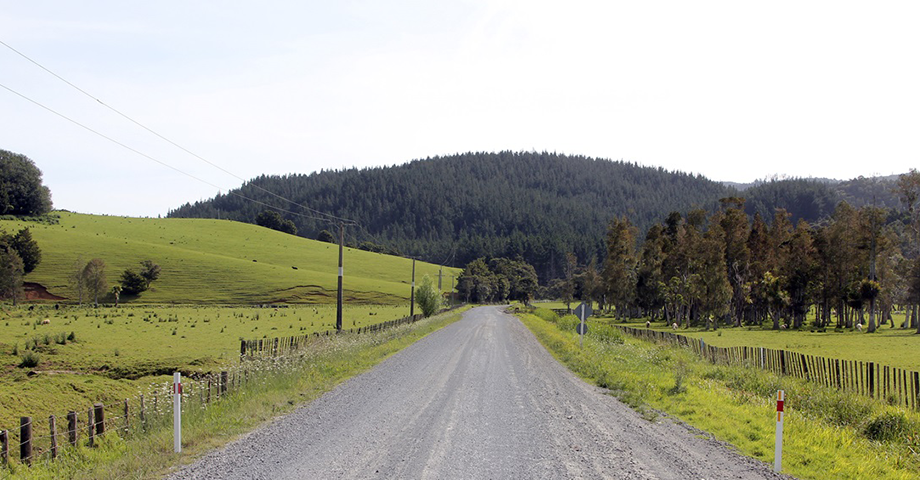
The school bus pulls away from the farm driveway and the already-exhausted mother sinks into a chair at the kitchen table to drink her now-cold coffee. The pet lambs have been fed, school lunches made, lost uniform items recovered, homework sorted and kids packed off to school. There’s washing to hang out, beds to make, housework to do… and she’s expected at the yards at 10 o’clock to help with the drafting. Somewhere in there, she has to do some work for her business too.
Down the road, someone else is cursing at their screen because the computer won’t load the latest orders from their company website because the internet speeds are too low and they can’t do it via mobile because their farm has no cell phone reception. Another rural business struggling to do business.
The purpose of this project was to give a more personal view of the challenges facing small rural business owners from their own experiences and perceptions. I wanted to create a greater understanding of those challenges and how those business owners felt about them.
I defined small as self-employed people with fewer than five staff (mostly working alone) and rural as being in a rural area or rural service town (and not farming). I surveyed 24 small, rural business owners under five sections–governance, operation, technology, communication and personal. After collating and analysing the results, I identified specific challenges to investigate further.
Rural areas do have their challenges, but they also have many opportunities and resources for small business development.
Rural people running non-farming businesses or urban people moving to the country to run businesses for a variety of reasons, are doing their best to overcome these challenges to create successful rural businesses. Challenges such as work-life balance and distractions, human resources, rural connectivity and general lack of business know-how.
In some cases, they are issues facing people with small businesses all over the world. But in rural New Zealand, it’s not always easy to solve them in isolation.
Comments about rules and regulations mainly came from those businesses in food production and health and safety–they have no choice but to deal with legislation being governed by their respective government departments.
For human resources, it wasn’t necessarily the lack of people to employ but the added responsibility of being an employer.
Rural connectivity was about the lack of internet coverage and cell phone coverage, not knowing the best or most appropriate software to use within their businesses and the lack of postal services. There is a great example of a community fighting to fix its internet woes and one of my survey respondents is part of that community.
Work-life balance evoked a range of emotions, especially when the family home was the place of business or the business seemed to play second-fiddle to the farm. Distractions fell into the same category, especially when the ‘distractions’ were children, farm work or house work.
I discovered the best things business owners can do is get help, ask for advice and improve their own knowledge. To quote one of the HR websites I visited: “Getting it right is so important and so cost effective. Getting it wrong is very costly.”
Knowledge is power. It doesn’t necessarily have to be your own knowledge – that’s where networking, mentors and coaches can be useful. But I would implore small, rural business owners to take the time to try to improve their knowledge – it will help them and help their business. But on the flip side, don’t be scared to pay the experts in areas of great difficulty or implications.
They need to do their homework early, involve an accountant or similar consultant early in the creation of their business, spend time researching to-do lists and business plans.
This project includes three case studies of women who started their businesses with young families in tow.
Angela Payne’s children are grown now and Agri-Lab has been in operation since 1998 , but she has a world of wisdom for someone starting out – including the need for support and her “goddess principle”. Look after yourself first.
Gretchen King and AgRecord are coping with growth – in the business and in their family. She brought forward the interview with me because of the impending early arrival of baby #2. In the middle of one conversation later, she laughed wryly, and said “Babies, toddlers and business… tell them not to do it Kate.”
The enthusiasm from Michelle Burden with her Fantail’s Nest was infectious. She smiles when she talks about what she does and all the future holds for her business and her family. That’s why we do it.
Running a small, rural business has its challenges.
But they’re worth it.
This a personal project – I know many of the people I have interviewed and surveyed and I have made personal comments in the Findings & Discussions that relate to my own small, rural business.
Rural areas present many opportunities but business people in those areas face challenges they must learn to navigate (Siemens 2010).
When urban people think rural, they often simply think farms. They think sheep and cattle, pasture and fertiliser, tractors and motorbikes. They drive through farmland to get to the beach. They drive through farmland to get from one city to another. But often the communities and the livelihoods that make rural New Zealand are not in their sights.
Rural people know how special rural New Zealand is, that’s why we fight so hard to stay out here running businesses alongside our farms or within our homes.