
2026 Nuffield NZ Farming Scholarship. Apply by 17 August 2025. Read More...

Apply for 2026 Nuffield NZ Farming Scholarship by 17 August 2025. More details...

How does a dwindling mohair industry in New Zealand learn to play the infinite game?

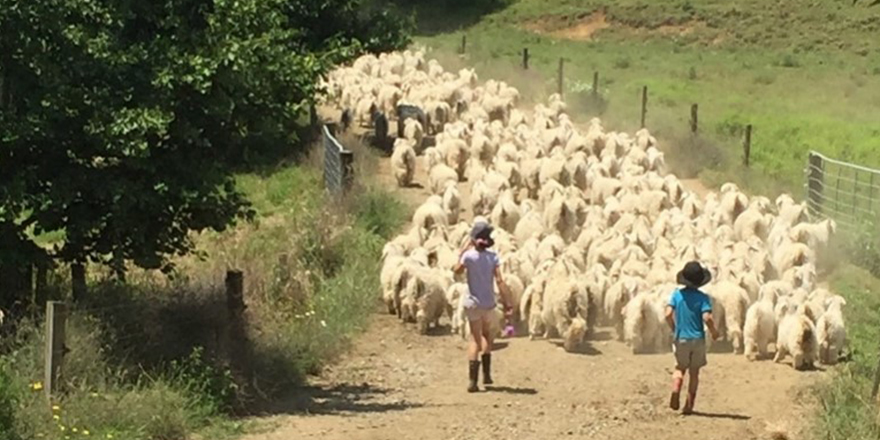
Susie Woodward Kellogg report image

Executive summary

With conscious consumerism (Nguyen, 2020) on the rise, natural fibres are making a comeback. The rise in awareness of the damage which is caused by synthetic materials on the environment has led to the growth of natural materials, including growth of natural fibres like mohair (Data Bridge Market Research, n.d.).

Mohair fibre, produced by the Angora goat is one of those natural luxury fibres that has seen a resurgence in popularity in recent years.

Unfortunately, the New Zealand Mohair Industry has been rapidly declining along with the world production of mohair fibre. New Zealand mohair production peaked in the late 1980’s, producing up to 0.6 million kilograms of greasy mohair (2.4% of world production), dropping to current levels of 0.03 million kilograms or just under 1% of world mohair production (Hunter, 2020).

This decline in production is not the basis for this report, but instead the reason for finding out how the industry can be helped to stay alive and relevant, taking advantage of the increase in demand for more natural fibres over the use of synthetic materials.

The New Zealand mohair industry is not in a place to capitalise on the global trend of increasing use of natural fibres in its current state. The industry has seen an ageing base to its producer group form. The lack of new entrants coming into the industry has meant it has struggled to remain relevant and viable.

Despite the global mohair production decline, the demand has remained very strong, especially for top-end quality fibre and prices for mohair have remained high as demand continues to exceed supply (J. Woodward, personal communication, February 10, 2022).

With this global trend playing in favour of the mohair industry, the purpose of this research project was to identify what the New Zealand Mohair Industry organisation could do to help the industry stay relevant and thriving long into the future.

Research was conducted to explore what makes other organisations and businesses successful. Interviews were conducted with leading innovators to identify the reasons for their success and how the learnings could be adapted to help the New Zealand Mohair Industry.

For the New Zealand Mohair producer’s organisation to be successful, there were several key factors identified. They included the following:

  • Leadership – having the right person(s) guiding the organisation with a meaningful vision and empowering its members to create change.
  • Innovation – finding solutions to existing problems by challenging the status quo.
  • Resilience – learning how to adapt to change and analysing past failures to be stronger in the future.
  • Collaboration – successful businesses work effectively with others both inside and outside their organisations to develop their ideas or processes.

Another key element that was identified was having the right people on board, who demonstrated courageous leadership, adopted an infinite mindset, who were able to share their vision with others and whose behaviours reflect their values.

Together, with these key factors, several recommendations were made to assist the New Zealand Mohair Industry going forward.

The recommendations from this project include:

  • Utilise the findings from the Mohair New Zealand Incorporated SWOT analysis conducted in 2018 to help guide the strategy for the organisation going forward.
  • Adopt an infinite mindset; a mindset where the members of the Mohair New Zealand Incorporated organisation challenge the status quo, looking beyond the present to remain relevant long into the future. This will improve the levels of trust, cooperation, and innovation among the members of the mohair producer’s organisation and its leaders.
  • Undertake a step change and guide Mohair New Zealand Incorporated members through that process by following John Kotter’s (2012) proven eight-step process for leading change. The three phases of the step change are as follows:

– Phase 1: Create a Climate for Change
– Phase 2: Engage and Enable the Organisation
– Phase 3: Implement and Sustain the Change

By adopting the above recommendations, the New Zealand Mohair Industry can successfully implement a step change and help turn themselves from a declining industry, into something that’s innovative and relevant long into the future.
Water resilience.

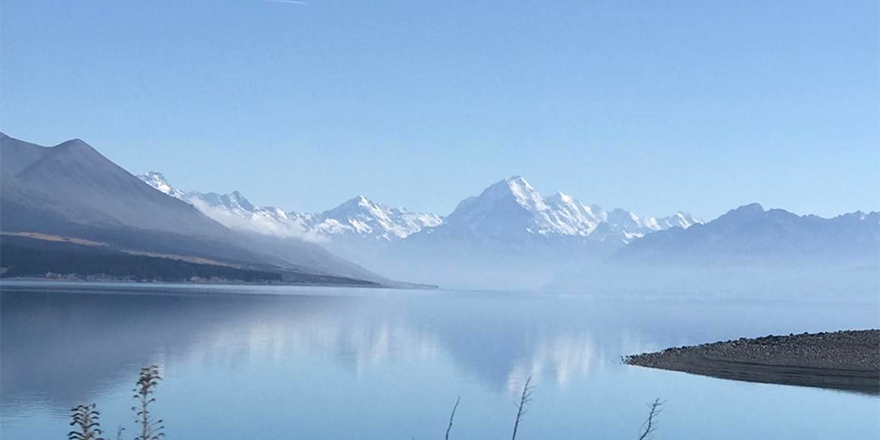
Conan Moynihan Kellogg Rural Leadership report image

Executive summary

New Zealand is extremely fortunate when it comes to natural water resources.

However, under a changing climate our water security is under threat particularly for New Zealand’s rural communities. Our freshwater resource is at the heart of our prosperity and resilience of our communities.

With increasing demand from all sectors, it is crucial that New Zealand efficiently manages our freshwater and that it is allocated to its best uses.

Water capture and storage systems have been identified as key adaptions to climate change. Future systems will need to be multi-purpose to utilise freshwater to its full potential under a Te Mana o te Wai framework (TMOTW).

How we slice the pie of water allocation within these multi-purpose systems will be critical to the success of sustainable growth for rural communities.

This report will focus on how New Zealand’s rural communities can afford to build water resilience through water capture and storage and the implementation of market-based systems to manage allocation of freshwater within catchments.

The methodology includes a literature review of current research on water resource solutions and allocation models, followed by semi structured interviews with eight sector experts to gain insights into their experiences and perceived solutions.

Key findings:

  1. There is lack of specific oversight and strategy for managing New Zealand’s freshwater resources.
  2. Current water allocation models need to go through reform at both national and local policy levels.
  3. Rights of existing users including iwi need to be addressed. Allocation reform will be unable to be successful without tackling this issue first.
  4. Current management of the resource is in silos which is inefficient and costly for both the environment and water users. Collective management of freshwater is needed to create efficient use of the resource.
  5. Costs, planning and perception of building infrastructure solutions are prohibitive to investment in development of water security infrastructure.
  6. Water capture and storage is needed to build water resilience against climate change for rural communities. Solutions will vary between catchments, but significant investment is required.
  7. Market-based systems are a tool for creating efficiency of water use and help to reallocate water to higher value uses. Collective management entities are able to easily implement market-based systems provided the system is closed (e.g. within one aquifer or reservoir etc), they have an accurate optimisation model, and real time data.

Recommendations:

  1. Ministry for the Environment to address and find resolution of iwi interest and rights in water. Allocation reform will be unable to be successful without tackling this issue first. Iwi should have a seat at the governance table of proposed national agency for freshwater management and crown entities for water management to ensure that the TMOTW framework is at a catchment by catchment level.
  2. Ministry for the Environment to establish a National Agency for Freshwater Resources similar to what overseas New Zealand’s roading infrastructure (Waka Kotahi).
  3. National Agency for Freshwater Resources to create a national strategy for water resources that works in tandem with the long-term view of TMOTW. The Agency would create Crown Entities for multi-regional water management in a similar vain to what is proposed under the Three Waters Reform Programme but with further refinement and input from stakeholders.
  4. Regional Councils to facilitate aggregate consent entities within catchments through regional plans. These will allow for the management of the overall resource and can implement market-based solutions such as trading of water allocations and/or pollutant allowances. These entities will also enable the ability to generate sufficient funds to build more efficient infrastructure and storage upgrades if required.
  5. CWME’s to quantify and understand demand requirements for individual catchments and then plan water storage and capture infrastructure accordingly. Implement staged projects so initial costs up front are not prohibitive.
  6. The national agency for freshwater resources must facilitate and define future allocation model options and provide clear classification of new water permits. Regional Councils to facilitate and undertake water allocation reform that adheres to the hierarchy of TMOTW, enables a transitional period for existing rights and undertakes investment in community education.

Greenhouse gas emission consequences of New Zealand’s urban sprawl.

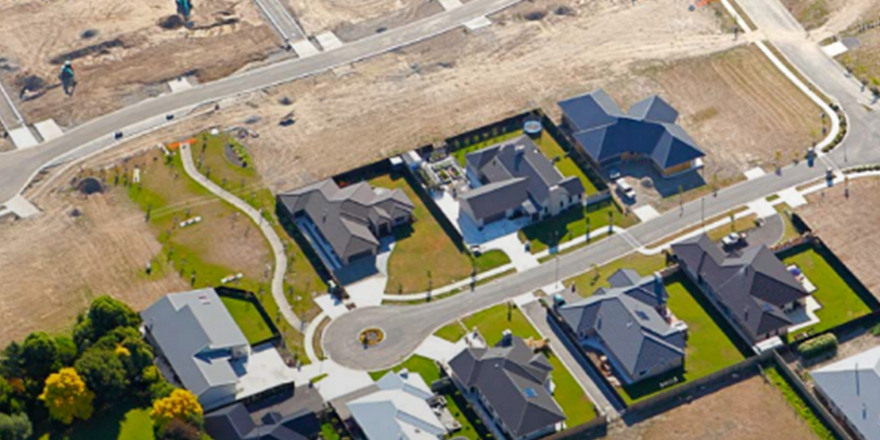
Andrew Myers Kellogg report image

Executive summary

Land use change from agriculture to urban is occurring at record rates. Stats NZ (2021) report that record numbers of stand-alone houses are being built. Emissions from the building sector increased 77% in the decade to 2017 (Stats NZ, 2019).

In contrast, pastoral farming land area is decreasing, and the emissions profile of the industry is flat to declining (Ministry for the Environment, 2021).

Legislation and numerous reports reference agriculture as New Zealand’s largest Greenhouse Gas (GHG) emitter and as the main industry targeted for emissions reduction to meet New Zealand’s GHG obligations under the United Nations Paris Agreement of 2015. The housing sector has significantly less reference within the same documents.

If agriculture is recommended to decrease land area and therefore emissions to help achieve New Zealand’s obligations (New Zealand Productivity Commission, 2018), why is that same agricultural land then allowed to be subdivided and turned into housing which emits potentially more emissions?

This is the context of the data sought for this study’s hypothesis: There isn’t a carbon footprint reason for land use change from primary to urban residential.

The results of the data analysis from a literature review suggest that the emissions from land use change to one hectare of urban subdivision are significantly higher than if the land had stayed as one hectare of primary land use.

Seven interviews with industry leaders were undertaken for discussion surrounding the hypothesis. They were thematically analysed showing the agriculture sector having concerns about the way its emissions are reported and the availability of tools to decrease emissions. This limits the industry’s potential to do what it does well, producing some of the lowest carbon footprint nutritional products in the world, for its growing population.

The housing sector has potential to improve its industry unity to lift its GHG reporting performance. Several solutions are available to reduce housing’s carbon footprint and minimise the use of agricultural land. They are too slowly being taken up for the sector to meet its emissions reductions targets.

Reporting gases on their separate warming potentials would clarify the impact of pastoral farming on the overall emissions. Reporting of land use change emissions associated with subdivisions, and emissions per dwelling should be undertaken.

Resource consent applications for land use change should consider the associated GHG consequences. More research could be undertaken to express the emissions of the civil infrastructure surrounding houses.

Paths to strategically meet our GHG reduction obligations can then be more clearly identified, and decisions made to ultimately improve the planet’s overall goal – reducing global warming.