
2026 Nuffield NZ Farming Scholarship. Apply by 17 August 2025. Read More...

Apply for 2026 Nuffield NZ Farming Scholarship by 17 August 2025. More details...

Investment Management meets Agriculture.

Emily Walker_Investment management Decision making_Kellogg report image

Executive summary

The traditional model of primary production in New Zealand is facing significant challenges from internal and external forces, which are only expected to increase over the coming years. These include water security and quality, climate change, carbon emissions, labour availability, market forces and biodiversity. To continue in business and remain sustainable for future generations, transformational change will be needed requiring sector wide strategic and capital investment programmes.

This research report attempts to provide specific support for agri-business leaders. It focuses on answering the question: Does an evidence-based approach to decision making improve outcomes for small agri-businesses in New Zealand?

Research was undertaken using an inductive approach to thematic analysis, allowing the data to determine the themes, rather than be driven by the researcher’s theoretical interest or specific questions (Braun & Clarke, 2006). The data corpus was constructed through a literature review and semi structured interviews. The outcome of the analysis was a thematic map, showing two themes: the decision maker and decision framework.

Key Findings

  • There is significant opportunity to support agri-businesses through a decision-making approach that uses evidence to consider the environmental, social, cultural, and economic impacts of their actions.

Decision Maker

  • Whilst maintaining an understanding of the current operating environment can be challenging (for decision makers), it allows business leaders to be agile and take advantage of opportunity early. The key is in knowing what topics you must be informed of, then focusing efforts on those domains.

  • Decisions must be aligned to an organisation’s purpose, else there is potential for mismatched decision making, detracting from the business’s momentum, diluting leader and team focus, and ultimately, diminishing the purpose the business is working to achieve.

  • Decision makers need to be more ambitious. The interviews found that many organisations were simply ‘playing not to lose, rather than to win.’ The case studies revealed that this could lead to the continual investment in tried and tested solutions.

Decision Framework

  • Robust analysis of the problem ensures the issue itself is being solved, rather than only managing symptoms. This avoids unintended consequences and rework, increasing the likelihood of developing an enduring solution.

  • Decision-making process matters six times more than analysis to producing impactful decisions (Health & Health, 2013). However, process should be flexible, allowing for the idiosyncrasies of individual agri-businesses, and is improved through collaboration.

  • In addition, the inclusion of testing into the decision-making process reduces risk through proof of concept, testing assumptions and bias, checking decision makers haven’t inadvertently jumped to a solution, and provides awareness of different perspectives to enable continual improvement.

  • Analysis of two options rather than just one also improves likelihood of success by a factor of six (Health & Health, 2013). Widening the set of options evaluated improves discussion and debate, increasing the probability of strategic decision making occurring.


Implementation

  • Evolutionary implementation, the compounding effects of numerous small changes, has a higher probability of creating successful, enduring change.

  • Development of a strategic plan to support implementation of the investment across the business can support accountability for action, prepare for opportunity, understand risk, measure results, and build credibility with stakeholders.

Recommendations

As a result of the findings and discussion presented in this report, the following recommendations are made to the leaders of small agri-businesses:

  • Develop and maintain an understanding of the operating environment in which the reader is acting.

  • Align all decisions with the business’s purpose and principles/values.

  • Engage a multi-skilled advisory board to collaborate on and support decision making. This board may include professional advisors, accountant, banker, lawyer, and an independent member.

  • Utilise structured processes and evidence to support decision making.

  • Prepare a strategic plan to create accountability for action, prepare for opportunity, understand risk, measure results, and build credibility with stakeholders.

Red meat traceability with blockchain.

William Halliday Kelogg report image

Executive summary

New Zealand’s agricultural industry has a reputation for being at the forefront of technological innovation.

Challenges such as nutrient deficient soils and distance to market have been met with novel fertilisers and refrigerated shipping. World renowned animal welfare standards and freedom from significant agricultural pests and diseases give our farmers significant advantages compared to their overseas counterparts.

It may be a surprise to learn, therefore, that the means of certifying products and providing assurance to global markets continues to rely on a paper-based system.

Importers must trust the paperwork provided by the exporter. Exporters must trust the paperwork provided by the producer. Producers must trust the paperwork provided by the supplier, and so on. This “one up, one down” traceability is becoming less acceptable to the global market, especially when it comes to food safety and claims of provenance.

A potential solution is to adopt blockchain technology, where a decentralised ledger allows supply-chain-wide visibility of product flows and immutable proof of claims.

While blockchain was developed for, and is still chiefly used in, the field of cryptocurrencies, it has found utility in other sectors including finance and supply chain management. The global diamond trade demands absolute proof of provenance to avoid stones mined using forced labour or where proceeds fund violence – it has found a solution to this using blockchain.

Blockchain has become a technological buzzword which has garnered plenty of attention, confusion, and misunderstanding. The purpose of this research report is to understand what a blockchain is, what it can (and cannot) do, what barriers exist to its adoption in red meat traceability, and what opportunities it presents.

Analysis of the literature and interviews with industry stakeholders leads to the general conclusion that while blockchain has some significant advantages over traditional, centralised databases, there is doubt as its maturity as a technology.

This represents significant risk to those interested in adopting it, and, coupled with the cost of replacing or upgrading systems across the supply chain, it is widely held that existing systems are fit for purpose and to make a shift to blockchain would represent an unnecessary disruption to the industry.

That said, there are potential drivers for blockchain adoption to consider. Government regulations regarding food safety and animal traceability are updated continually and can require the adoption of new technologies (the NAIT Act 2012 for example).

Import requirements are subject to change, especially in the face of food fraud and the global spread of animal and human diseases. Then there is the industry itself, which has an impressive track record of adopting and adapting technologies for the improvement of sustainability and productivity.

The convergence of blockchain with technologies such as the Internet of Things and machine learning could change the way farmers go about their business altogether.

It is therefore recommended that stakeholders in the New Zealand red meat sector keep an open mind to the possibility of adopting blockchain technology and be prepared to invest in further technological innovation as more demands are placed on existing systems. Being “blockchain-ready” will undoubtedly leave the sector better prepared for the future of global red-meat trade.

Should New Zealand be trading maize forage on quality parameters?

Fraser Dymond Kellogg report image

Executive summary

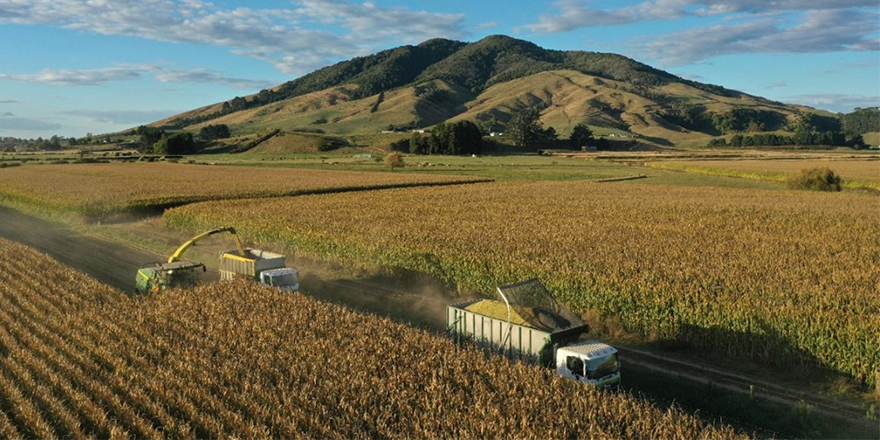
Maize forage is essential to the productivity of the New Zealand dairy sector. It is easily ensiled and provides energy and fibre, which is essential to balance a pasture-based diet.

An estimated 1,164,000 tonnes of maize forage was harvested in 2021. In the 2020/2021 season 24,500 hectares, or 45% of total maize forage planted, was grown off-farm and sold to a purchaser via a contract (Arable Industry Marketing Initiative, 2021a).

Current contracts trade maize forage on dry weight and neglect most facets of forage quality, so the purchaser is unaware of the quality of the product they are receiving. Per cow consumption of maize silage is increasing, so the quality of maize forage becomes more influential and important to the purchaser.

This report seeks to quantify the variation in maize forage quality in New Zealand and how the grower can influence it to enable trading maize forage on quality parameters.

Key findings:

  • Growers can positively influence maize forage quality but are not rewarded by the purchaser, so it is not the priority in their decision-making.

  • Starch is the critical influencer of maize forage quality.

  • There is significant variation in maize forage quality in New Zealand. Starch content has been seen to range from 15 – 40%DM1, neutral detergent fibre from 33.4 – 50%DM and metabolisable energy from 9.5 – 11.3 MJME/kg DM2. This variation creates significant differences in production potential for the purchaser.

  • Maize forage quality can be influenced by hybrid choice, agronomic management, and the environment. The environment cannot be controlled, so strategies that create resilience in the growing system are essential.

  • There is limited New Zealand-based data available for growers and advisors on how to influence maize forage quality.

  • The common method of sampling maize forage for analysis is unlikely to cope with paddock variation, caused by a changing climate and variable soil types.

Recommendations:

  • Research and provide educative resources on how agronomic decisions affect maize forage quality. This should be conducted by maize seed wholesalers and independent industry bodies, such as the Foundation for Arable Research (FAR).

  • Create independent data comparing all commercially available maize hybrids for forage quality. This should be conducted by an independent industry body such as FAR or DairyNZ.

  • Calibrate and certify the use of near-infrared spectrometry (NIR) in forage harvesters as an accurate measure of whole plant dry matter and quality parameters. Allow open entry to promote competition and innovation. This will need to be proven by the manufacturers and forage contracts amended by the Forage Trading Development Group.

  • Create educative resources to extend the understanding of growers and purchasers on the accuracy of NIR technology as an assessment of quality parameters. This should be an industry approach, including DairyNZ, Federated Farmers, Contractors Association, FAR and the Forage Trading Development Group.