2026 Nuffield NZ Farming Scholarship. Apply by 17 August 2025. Read More...

Apply for 2026 Nuffield NZ Farming Scholarship by 17 August 2025. More details...

Regenerative Agriculture: How might New Zealand benefit?

Executive summary

New Zealand agriculture is grappling with change as it seeks to find a new balance between feeding the world’s growing population while maintaining profitability and reducing negative environmental impacts.
There is a lot of doubt whether regenerative agriculture (RA) can provide a better way to address this global challenge and there is concern that it may increase emissions intensity, lower farm profitability, and struggle to feed the growing population.

RA is regarded by some as the solution to the global food crisis. Positive environmental outcomes can, in some cases, be achieved with the use of RA. High rates of carbon sequestration have been proven, albeit in depleted USA soils rather than in NZ.

RA is not well defined and there is a lack of scientific evidence backing some of its claims. Results from the system have proven to be unpredictable and highly variable. Some successful farm practices such as minimum tillage, avoiding bare ground, and using mixed pasture species are attributed to RA when in fact
they were used well before the RA concept emerged. These are already considered best management practices in a NZ conventional system.

There is evidence that greenhouse gas emissions and N leaching can be reduced on a per-hectare basis using RA. However, this appears to be achieved mainly through reducing inputs, resulting in lower production and farm profitability. When analysed per unit of production, these environmental gains were
much less apparent.

The benefits of altering soil microbiology are frequently discussed among RA communities. The claimed benefits have not been thoroughly tested and will require more research.

Some farmers using RA concepts say they are achieving similar levels of production with fewer inputs. RA systems must be tested over many years to see if any initial benefits can be maintained. For example, if high levels of soil fertility existed before changing to RA, these can be ‘mined’ for several years before production levels then crash.

This report suggests that, while there are positive aspects of RA, it is unlikely to match the productivity and profitability that can be achieved with conventional agriculture. If this is the case, RA may be able to reduce environmental impacts, but it will fail to help grow the food supply to meet the needs of the world
population increase or to maintain NZ export income.

If, as appears likely, that agricultural outputs such as meat and milk produced using RA methods have higher emissions intensity, there is a real risk for the farmers involved. Offshore customers for NZ agricultural products look very favourably at NZ’s low emissions intensity and demonstrate little interest in
NZ’s internal debate about sector-by-sector total emissions. Higher emission intensity products may be discounted in value. Further, NZ farmers will soon have to start paying more for their emissions. Improved efficiency and lower emissions intensity will be the key to viably adapting to this change.

NZ farmers and growers should note how RA has been used in marketing to obtain a “green premium”. The industry can learn from RA about leveraging these advantages.

Recommendations
1. Treat investment into regenerative agriculture with caution due to the lack of scientific evidence, and variation in its outcomes and likely reduction in farm profitability. This applies to farmers, growers, and processors.
2. Research the untested claims of regenerative agriculture. Particularly soil microbiology and the effect it has on plant growth. Such research is difficult to carry out at farmer level and will likely require input from CRIs.
3. Introduce practices such as minimum tillage, avoiding bare ground, and mixing low numbers of pasture species, to those farms that are not doing so already.
4. Develop marketing strategies for NZ food and fibre which leverage the consumer positivity associated with ‘greener’ farm practices. This will likely require input from both processors and industry-good organisations.

Kris Bailey

The Competition for Farmer Sentiment.

Executive summary

Sheep and beef farmer sentiment is profoundly negative, impacting how farmers view the world around them, how they respond to change and their mental health. The decline in farmer sentiment has coincided with a perceived increase in the competition for sentiment from industry representatives, lobby groups and advocates and has important ramifications for future industry cohesion.

This research project seeks to explore if industry leaders, representatives and lobby groups are further reinforcing and exacerbating negative sentiment by the way they are communicating with farmers and the potential future consequences of their approach.

This project first researched trends in farmer sentiment including the underlying drivers of sentiment, then sought to understand how and why industry leaders are communicating with farmers, including the use of social media. Finally, the project looks at future consequences arising from how industry organisations are competing for farmer sentiment and makes recommendations for industry leaders to consider when communicating with and attempting to influence farmers.

The methodology comprises a literature review; investigative interviews to uncover and discuss research on this topic; 16 semi-structured interviews with industry leaders, industry organisations and rural media; and an analysis of media releases and social media posts from industry organisations to understand the focus, content and engagement of their communications.

Key findings
Negative farmer sentiment is manifesting as decreased trust in government and industry representatives, increased fear and anxiety, and uncertainty for the future. Farmers feel threatened and consider they are not valued, understood, or listened to.

While industry organisations are not consciously competing, part of their approach is to use media and social media to underscore to farmers that they are being heard and supported, ensuring relevancy, attribution and ongoing financial support. This is resulting in the use of emotional language, topics and targeted campaigns that permeate fear and anxiety among farmers.

The methods and media channels used by industry organisations to influence farmers’ perceptions are conceivably exacerbating negative sentiment and distrust of these industry organisations, risking becoming counterproductive to their original objectives.

Moreover, this strategy could result in damaging consequences for the farming sector such as polarisation, cohesiveness, perception and social licence to operate.

Industry organisations are using social media platforms to connect to farmers, however, these platforms are designed to promote high levels of engagement, often through reinforcing divisiveness and polarisation. By using social media as an effective method to reach widespread audiences and contributing to messages of fear, uncertainty and anxiety for the future, industry organisations may unwittingly be creating an environment where disinformation and polarisation thrive.

Recommendations
Recommendations for industry leaders and organisations to consider when communicating with farmers to prevent further exacerbating negative sentiment and potential unintended consequences include:

• Consider the potential impact of communication on farmer sentiment.
• Model best behaviour.
• Create a safe space for industry discussion and debate.
• Develop communication strategies that bring farmers on the journey.
• Raise industry awareness of the presence and impact of mis- and disinformation.

Duane Redward

How might freshwater regulations provide certainty for farmers to innovate?

Executive summary

There has been a considerable amount of regulatory change in the freshwater space over
the last 15 years which has been difficult to implement for both regulators and farmers. Whilst
these regulations have lifted the bar on some practices impacting waterways it has also
created some uncertainty for farmers.

The purpose of this research is to investigate the relationship between changing freshwater
regulations and farmers appetite to innovate on farm to achieve freshwater improvements.

The aim of this research is to determine what impact changing regulation has had on farmers
adopting innovative freshwater management practices on farm, to understand the scope of
emerging and accepted mitigations to achieve freshwater outcomes through innovation
and to develop practical recommendations for how freshwater regulations can be drafted
to provide certainty to farmers whilst improving the quality of Aotearoa’s waterways.

The methods of this research project consisted of semi-structured interviews with dairy
farmers, a regulatory scan of current freshwater regulations under development, a thematic
analysis of interview responses and a policy assessment of options against chosen criteria
analysis to investigate how freshwater regulations can be drafted to provide certainty for
farmers to innovate.

The findings showed that further regulations for freshwater management are required to
implement the National Policy Statement for Freshwater Management 2020 within regional
plans by the end of 2024. An approach to freshwater management that meets the criteria of
flexible, enforceable, practical, and ambitious would provide certainty to farmers to
innovate and meet regulatory requirements. Three options of regulatory approaches were
analysed against these criteria: an input-based approach, a risk-based approach and a
catchment collective approach. The options analysis showed that a risk-based approach
which regulates through a farm planning regime like Freshwater Farm Plans is the most
effective way to regulate for freshwater management whilst providing certainty for
innovation. A mixed approach including input-based regulations and catchment
collectivism is likely to be needed to meet all objectives of the NPS-FM, however a risk-based
approach should be heavily relied upon by regulators.

The following recommendations were made in response to the research questions; How
might freshwater regulations provide certainty for farmers to innovate?

• Regional councils should utilise a risk-based approach to regulations including the
Freshwater Farm Plan scheme when implementing the NPS-FM 2020 in regional plans.
• Central government (in particular MPI and MFE) should support the implementation of
Freshwater Farm Plans in a way that ensures they are flexible, enforceable, practical and
ambitious.
• Political parties should avoid using freshwater regulation as campaigning tool, instead a
non-partisan approach should be taken with any further regulation required (relating to
freshwater) developed effectively outside of three-year political cycle.
• Farmers should utilise Freshwater Farm Plans to capture evidence of all mitigations
implemented on farm, including those that were innovative or early-adoption.
• Processors should continue to develop and integrate recognition programmes for good
practice and where possible provide a premium as a way to encourage and
acknowledge early adopters of innovative practice.

Anna Sing

Bridging the gap: Exploring the impact of musculoskeletal health on performance and injury risk in the Food and Fibre Sector.

Executive summary

Working in the food and fibre sector is undoubtedly renowned as a ‘manual’ career. Good musculoskeletal health is essential in allowing workers to move, without pain or restriction, in life and work. To ensure the longevity of their career, workers must have sufficient levels of musculoskeletal health to allow the physical capability and capacity to perform at work every day, now and into the future.

This research seeks to understand the nature and extent of work-related musculoskeletal disorders in the food and fibre sector and how musculoskeletal health may correlate with injury risk and performance outcomes. The aims of the research are to:

  • Review the nature and extent of work-related musculoskeletal disorders in the food and fibre sector.
  • Explore any potential correlation between musculoskeletal health, injury risk and performance outcomes.
  • Investigate sector understanding of injury risk factors.
  • Investigate how musculoskeletal injury risk is currently managed in the food and fibre sector.
  • Evaluate the potential benefits and barriers to adopting a more integrated and holistic approach to
  • managing performance and mitigating injury risk in the food and fibre sector.

The methodology comprises a literature review to form the theoretical foundation from which to compare and contrast qualitative and quantitative data collected through multi-method data collection. A three-stage process was created to engage with industry employees: an online questionnaire, enrollment on a health and wellbeing app called Symmio, and a follow-up online questionnaire. A three-stage process was created to engage with food and fibre sector leaders responsible for injury risk management, comprising of an online questionnaire, a semi-structured interview, and a post-interview follow-up online questionnaire. Data was also collected and analysed through a Functional Movement Screen in the wool harvesting industry. Results were collected and explored from the industry employees’ engagement with the Symmio app. Closed questions for the online questionnaires were analysed, and a thematic analysis approach was taken to look at the open questions from the questionnaires and the interviews.

Work-related safety is about creating a safe working environment, eliminating or minimising the risks at work that can impact a worker’s health. Data analysis shows that the proportion of work-related injuries attributed to musculoskeletal disorders is twice as high in the food and fibre sector than is demonstrated across the general population, with 60% of the overall burden of harm from work-related injury. However, work-related health is also about the way worker health may impact working safely; therefore, worker health and wellbeing are injury risk factors. Results showed the importance of musculoskeletal (MSK) health and its contributing factors in influencing future injury risks and that the presence of risk factors may have a detrimental effect on the performance and productivity of the workforce. Opportunities to design holistic and educational approaches into the workplace as standard protocol and as just part of ‘what we do’ was seen as a requirement.

Recommendations from this research were:

  • Co-investment is required from MPI, MBIE, WorkSafe NZ, ACC and industry good organisations to collaboratively resource the development of an over-arching strategy that bridges the gap between wellbeing and injury risk management. The strategy must align with the future Primary Industry Wellbeing Strategy.

To guide this strategy, further research is needed in the following areas:

  • ACC and WorkSafe should conduct research on the nature and extent of MSK health risk factors, pain, and movement dysfunction sector-wide using an evidence-based screening tool. Subsequently, objective data could be provided about sector-specific requirements.
  • Current government-funded injury risk management research projects should look to integrate evidence based screening tools into their data collection and intervention development process to provide objective evidence about the effectiveness of interventions.

Laura Hancock

How might Manawatū-Rangitīkei sheep and beef farmers futureproof their land?

Executive summary

Farmers adapt to the weather as part of their everyday decision-making on farm. Evidence suggests that, for New Zealand, the climate will change more significantly in the years between 2040 and 2090. How might Manawatū-Rangitīkei sheep and beef farmers adapt to the changing climate and futureproof their land?

The purpose of this report is to translate scientific climate modelling into practical contexts for Manawatū-Rangitīkei sheep and beef farmers and consultants.

This report aims to provide knowledge of:
1. Climate change predictions within the century.
2. What risks and opportunities are associated with climate change predictions.
3. What practical short to long-term actions could be considered that might future-proof farming businesses?

The methodology involved a literature review, followed by semi-structured interviews which formed qualitative research into futureproofing solutions.

The key findings are four climatic attribute changes to be aware of:
1. The frequency and intensity of drought.
a. By mid-century, a rainfall deficit of 50mm – 75mm per year.
2. The number of ‘hot days’ over 25oC.
a. By mid-century an increase of ‘hot days’ over 25oC, between 40% and 100% per year.
3. The frequency and intensity of adverse and compounding weather events.
a. El Niño and La Niña natural weather cycles exacerbated by climatic changes globally.
b. More severe adverse weather events, their frequency requiring more research.
4. An increase in temperature.
a. By the end of the century, an increase of 0.7oC – 3.1oC under the Representative Concentration Pathway’s (RCP) 2.6 and 8.5.

Recommendations to Manawatū-Rangitīkei sheep and beef farmers and consultants:
1. Use credible, trusted, and up-to-date sources of information to inform opinions about the changing climate.
2. Learn from advisors who collaborate closely with the scientific community and can translate data into meaningful, practical contexts.
3. Assess the current farming system concerning the top four climatic attribute changes and identify relevant, attainable, short to long-term actions, that may futureproof the business.
4. Build financial resiliency to be able to absorb hits and invest in futureproofing mitigation solutions.
5. Identify primary land use resources and their potential alternate use, if the existing system needs to change in the future.

Grace McLeay

What leadership characteristics are required for the New Zealand primary industry to achieve the transformational change required?

Executive summary

The New Zealand primary industry is operating in challenging times. There is much pressure for the primary industry to instigate change, with a level of tension not seen since the 1984 deregulation and removal of subsidies. The reality facing our industry is that time has been allowed to march on without enough progress having been made to address the global and national challenges upon us. New Zealand farmers and growers are no longer able to manage their business within the four pegs of their boundary in isolation. Instead decisions made inside the farm gate increasingly have consequences on others in our communities, district/region, and beyond.

This research considered what leadership characteristics are required to support the primary industry in bringing about change. The project explores case studies of transformational change that have been successful and/or which could have been carried out better and/or achieved more. The report also reflects on characteristics and examples of good and not-so-good leadership gained through semi-structured
interviews.

The aim and purpose of the research was to identify what leadership is and how it can facilitate or hinder transformational change. The research aimed to critically assess, compare and contrast characteristics of leadership which are displayed while undertaking transformational change. This type of reflection is important because change commonly has aspects that are unknown or ambiguous. Leadership, by virtue of its definition, is leading people to navigate ambiguity. This report provides insights and frameworks for tools to support leaders.

The methodology comprised a literature review, three case studies and semi-structured interviews analysed using a deductive approach. The research demonstrates the need to address challenging issues early in order to gain agreement as to the way forward, with collective buy in and a shared understanding around the urgency to change. For this to occur, the research demonstrates that people want to understand ‘the why’ and be ‘taken on the journey’ when being led.

Given the extent of the challenges facing famers and growers to make changes on farm, New Zealand farmers and growers deserve the best leadership. This project is important when considering the issues facing leadership within the industry, and seeks to challenge the status quo with a view to encouraging change and how we are leading our industry (across primary sectors) in these extraordinary times.

Recommendations;
1. The chair of the Board’s for Beef + Lamb New Zealand and Dairy NZ to conduct a review of their Director’s appetite to support leading change on climate emissions reductions jointly with Ministry for Primary Industries.
2. All of the primary industry levy bodies to implement a change framework, be transparent about what it is, and have accountability to achieve milestones, within a stepped process.
3. The Ministry for Primary Industries, in collaboration with levy bodies to survey farmers about what farmers and growers are seeking in terms of leadership, providing a foundation for opinions to be heard on these matters.

Brian Henderson

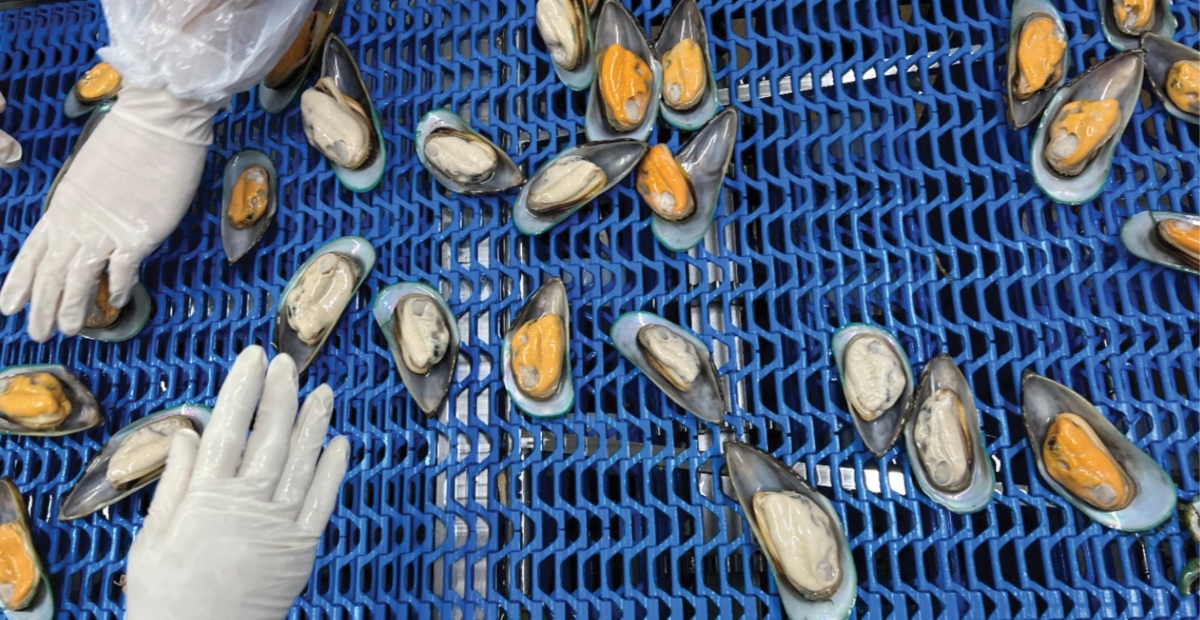
New Zealand Aquaculture Shellfish Processors and Third-Party Certifications.

Executive summary

New Zealand aquaculture shellfish processors face a deluge of options when considering whether to participate in any third-party certification programmes. There are countless third-party certifications on the market and numerous certifying bodies accredited to audit against these. It can be a difficult process to determine what, if any, third-party certifications will be most beneficial to individual New Zealand aquaculture shellfish processor operations and prove most valuable to their customers.

The aim of this report is to assist New Zealand aquaculture shellfish processors when determining what third-party certification is best for their operations based on current industry practices, consumer opinions, and by providing an overview of the most prevalent third-party certifications.

Third-party certification participation can be a costly undertaking for an operation (both monetarily, and in time and resources), and often with ambiguous return for investment.

Thematic analysis has been undertaken of customer and processor questionnaire responses, semi-structured
interview findings, and literature review.

The report identifies the most widely used certifying bodies operating in New Zealand, and explores the most prevalent and customer preferred third-party certifications. Customer opinion of third-party certifications, certifying bodies, and New Zealand base standards are evaluated. New Zealand aquaculture processor certification status is investigated, addressing why they have chosen their current certifications or do not participate in third-party certifications if that is the case.

Other processor aspects explored are satisfaction with their certifications, how these are used, approximate
costs of achieving and maintaining, and knowledge of other certifications.
Key findings:
1. Third-party certifications are not essential for a processor’s success, but customers who purchase large volumes of products annually are likely to require suppliers to hold some form of third-party certification.
2. New Zealand’s base requirements are highly regarded internationally. In many cases, customers are willing to accept company policy documents in place of third-party certification for the food safety and ethical employment aspects of a processor’s operations.
3. Most leading certifications incorporate ISO management systems principles, are Global Food Safety Initiative (GFSI) benchmarked, and many share a large portion of their requirements.
4. The cost involved and doubtful return on investment is the leading factor in a processor choosing not to participate in (or looking to change) third-party certification.
5. The decision of a processor to participate in a third-party certification and which is chosen is often driven by their customer requirements.

Recommendations (all aimed at New Zealand aquaculture shellfish processors):
1. Develop a company policy document outlining food safety systems (RMP and HACCP etc.) regularly audited by MPI.
2. Develop a company policy document stating a commitment to compliance with New Zealand employment law.
3. Before selecting any third-party certification programme processors should speak to customers to determine whether they require their suppliers to hold these.
4. If customers require third-party certification inquire what their preferred certifications are, then investigate these certifications to determine if they are suitable for the processor’s operations.
5. Consider whether individual certifications align with company values, if they will assist in achieving company objectives, and what is the organisation trying to accomplish by participating in the certification.
6. When selecting a certification standard consider what aspects of operations it covers, a certification covering multiple aspects is often a better option.
7. Seek quotes from several certifying bodies when considering adopting a certification standard as some may prove a more cost-effective option than others.

Emily Clark