2026 Nuffield NZ Farming Scholarship. Apply by 17 August 2025. Read More...

Apply for 2026 Nuffield NZ Farming Scholarship by 17 August 2025. More details...

Farmer change: Dairy farming in Northland

Executive summary

Bob Dylan’s prescience comments from some 60 years ago capture today’s environment exceptionally well with ‘the times they are a-changin’ and you’d better start swimmin’ or you’ll sink like a stone’ (Dylan, 2020).

The dairy sector is a significant contributor to Northlands regional economy and has a vital role to play in the regions social, economic, and environmental prosperity. However, change is coming down the tracks like a freight train and is likely to shape the nature of the industry for years to come, change at a scale and pace arguably not seen for over a generation.

To develop an understanding of the implications of this change – the scale and breadth of it along with the potential opportunities this report looks to develop context, perspective and a deep understanding of the subject by exploring the past, present and future of the industry, understanding what influences farmer change, work through current strategies in place and then consider some of the potential pathways ahead and finally discuss some conclusions and recommendations.

This is approached via a mix of in-depth interviews, selected readings, and critique to develop the context, perspective and deep understanding desired.

It is apparent the region and sector have already experienced significant change and, in many ways, has proven to be stubbornly resilient and adaptative. Nevertheless, there are challenges ahead with the scale and pace of change significant, more far reaching and very different from what’s been experienced before.  Amongst this change there appear to be multiple trigger points that potentially provide the opportunity to move beyond simple adaptation of a specific technology or practice towards a much deeper and enduring change of hearts and minds.

For Northland farmers, the industry and the region opportunities will exist amongst this change and a pertinent challenge for leadership is that it intentionally contributes to help shape and influence the direction of the response. Strategy, programme and project development, research and development extension, demonstration and design are all urgently needed.

The potential opportunity this change offers will not necessarily be easy and will require grit, determination and innovation, but the status quo is no longer be an option.


Can the dairy industry’s tarnished cousin reinvent itself to help with our ticking time bomb

Executive summary

The New Zealand dairy industry has a growing risk with social licence to operate due to increased pressure from both customers and the public on the practice of slaughtering between 1.8 – 2.5 million surplus calves at an early age, either as a bobby calf or euthanised on farm.

Internationally there is a significant veal market, with much of the production for this coming from surplus dairy calves. However, despite having the highest global numbers for bobby calves, New Zealand does not yet have a veal industry here to further utilise some of these.

The purpose of this report was to provide some context and further understand the issue with bobby calves and the risk to social licence to operate, and then understand what the opportunities, benefits, challenges, and implications might be at the various points of the value chain with establishing a veal industry in New Zealand as a partial solution to reducing the number of calves slaughtered early.

There were two components to this research. A review of existing literature including research, industry reports, articles and opinion pieces was used in order to evaluate the current international veal systems that exist and how these compare to the opportunity to establish a veal system in New Zealand, where the challenges may be, and what may need to be adapted to suit our country. In addition, semi-structured interviews were conducted with various value chain participants and industry voices including; dairy farmers, calf rearers, finishers, farm consultants, meat processors, dairy processors, research institutes and universities, retail and some international voices. The interviews were used to understand their views on current practices and the associated risks, and then the potential for a veal industry here in New Zealand, how it might fit our systems and what the opportunities and challenges would be.

A veal industry in New Zealand has the potential as a partial solution to help reduce the number of surplus dairy calves slaughtered at a young age. There are a range of benefits and opportunities including a reduction in bobby calves, reduced risk to social licence, improved on-farm mental welfare, improved sustainability outcomes, environmental benefits, and additional revenue for the country through exports of another red meat.

However this a complex topic and includes a number of challenges and barriers that need to be addressed in order to establish a veal industry here including developing the integrated farm systems that suit our country and result in a product that is fit for the desired veal markets, finding sufficient land to incorporate these systems, market development and consumer education, processing capability and capacity, and reduced volatility in pricing to ensure sustainability of supply chain partners.

Further, the whole transition to fewer bobby calves needs to be carefully managed to ensure the current risk to the industry is not further heightened until solutions of scale are available.

The key to any success at scale will be good collaboration between industry sectors and partners. There are a number steps that need to occur for a veal industry to be established here including significant research, modelling and development of farm systems and markets, as well as some trials to develop the supply chain systems. It appears there is movement starting to happen at both industry and commercial levels and it is likely we can expect to see some change in the near future. While there are significant challenges to overcome, I think we may see innovation within the industry and a veal supply chain in New Zealand in the future.


Regaining Control of Our Narrative

Executive summary

This research and affiliated report asks the question:

Can New Zealand Dairy farmers re-gain control of their narrative from inside the farm gate?

The dairy industry is New Zealand’s largest good exports sector, contributing 20% of total exports while bringing in $17.1 billion dollars into the New Zealand economy (NZIER, 2018). As dairy has grown in scale, the sector has increasingly become the brunt of social discontent. The current social climate places media platforms in misplaced control of narratives with the growing apprehension stemming mainly from questions around the sustainability and historical poor practice highlighted in the media. The New Zealand Ministry for Primary Industries conducted a study to explore urban and rural New Zealanders’ views of the primary sector and rural New Zealand.

The study, consisting of 1,245 New Zealanders, suggested both groups of respondents, urban and rural, showed a decline in positivity toward farming in general. Since 2008, positive perception of the dairy industry from urban respondents has dropped from 78% to 47%, with rural outlook on the industry dropping from 83% to 50% (Ministry for Primary Industries, 2017). These numbers highlight that collective trust is shifting. This decrease in trust and increase in negative public perception is having huge impacts on our industry inside farm gates filtering into mental health and wellbeing and staff attraction and retention.

Throughout my research, I have utilised cross-industry resources and publications which I have compiled into a literature review and broken down in to main themes. I have compiled information from marketing literature and social media research regarding consumer and market trends with support from psychology and philosophical theories. I have also utilised research from social licence experts which I have followed with case studies. I have used case studies to demonstrate how companies have dealt with consumer trust and the results of individual responses on the associated market. Throughout this research I have dissected two main themes, why consumer demands on New Zealand dairy farms are changing, and how.

My report aims to cover the effect changing values are having on trust in the rural sector and the impact it has on company and industry, it will break down the relationship between narrative and consumer trust and discuss why having control of your narrative is important, and discuss recommendations on how farmers can build trust and empathy; re-gaining control of their narrative from the ground up.

My main findings throughout my report have been:

  1. Change in industry Trust is driven by changing consumer values.
  2. Unconscious decisions affect the uptake of brand strategic narratives.
  3. Misinformation is a key contributor to dairy farmers loss of control over their narrative.

On the basis of my research, my recommendations are as follows

  1. Farmers to develop credibility and authenticity built on results, history and consistency.
  2. Step out of our echo chambers.
  3. Render authentically by humanising the industry.

Support credible, trusted social media platforms.

Dairy farming, climate change and farm diversification

Executive summary

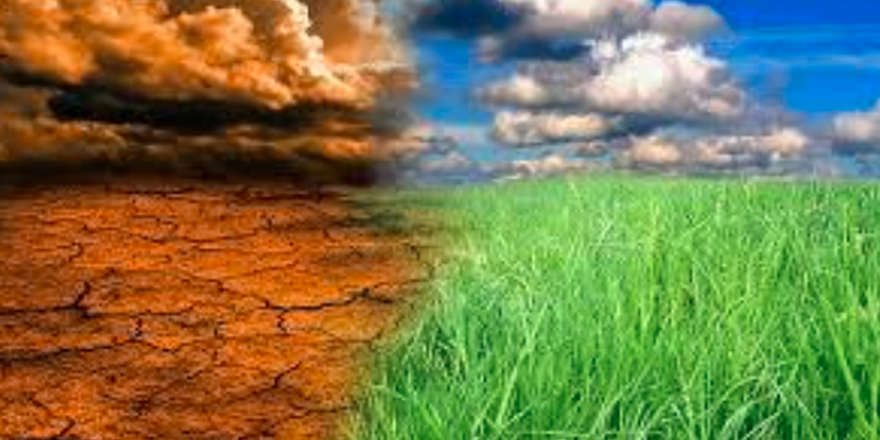
All across the world, in every kind of environment and region known to man, increasingly dangerous weather patterns and devastating storms are abruptly putting an end to the long-running debate over whether or not climate change is real. Not only is it real, it’s here, and its effects are giving rise to a frighteningly new global phenomenon: the man- made natural disaster. (Barack Obama, speech, Apr. 3, 2006)

In the race against climate change, this report explores the possibilities of the diversification of a dairy platform into horticulture. This report was not put together to come up with an answer or find a solution, the purpose of this report is to start a topic of conversation, provoke thoughts and ideas and hopefully create some positive changes for the greater good for the future of our environment.

Throughout there report, there is a lot of work referenced by many individuals and companies that are doing some world-changing research in the space of land use change.

In this report, it is essential to note that Horticulture refers to Fruits, berries, vegetables, vineyards.

Agriculture produces nearly half of New Zealand’s total greenhouse gas emissions with one-quarter of our total greenhouse gases coming from biological dairy emissions (Methane and Nitrous Oxide). 85% of the dairy sectors emissions are also made up on the farm, with the other 15% coming from agriculture transport and processing. When breaking emissions down within the agriculture sectors in 2017, around 78% of emissions come from Livestock, 21% from soils (fertiliser applications etc.) and the remaining 1% from urea and liming. (Emissions Tracker, 2019). New Zealand also has a unique greenhouse gas profile and is unusual for a developed country, we have one of the highest rates of emissions per person, and agricultural emissions dominate our emissions profile compared to the rest of the world where energy and fossil fuels dominate them. With the difference between New Zealand and the rest of the developed world, we could assume that no other country will look to combat methane or nitrous oxide, giving New Zealand a chance to show our ingenuity and become world-leading at reducing these gases.

There has been vast research on the likely impacts of climate change in the future. All of these changes will impact our environment, our lifestyle, businesses and the economy. These impacts and changes in climate impact not only the Dairy Industry but all sectors and put pressure on the food production industry as a whole.

From several studies, results have shown that land use change into horticulture will reduce emissions and ensure maintaining lower emissions is sustainable in the future. One study prepared for Motu found that to reach our emissions targets for 2050 seems possible with no additional on-farm mitigation through new technology however if achieved without a shift towards horticulture, mitigation technology or permanent forestry then reductions would be difficult to sustain as forestry expansion is limited. With development into horticulture by one million hectares, results show the emission reductions are almost identical to those emission reductions from new technologies. By achieving a reduction through a combination of horticulture increase and new technologies, emissions will be more manageable in the future. (Dorner, Djanibekov, Soliman, Stroombergen, Kerr, Fleming, Cortes-Acosta, Greenhalgh. 2018).

A study around permanent horticulture was researched as an option for low emitting land use. Modelling work was done on a pip-tree crop, where an area of a farm was taken out to grow chestnuts. With changing the land use on a dairy farm to permanent horticulture, there is a decrease in greenhouse gas emissions as well as a positive impact on the farm businesses EBIT. While a change in land use to horticulture could be an option soil types, crops and regional climates need to be taken into consideration. (AgFirst, 2019).

Horticulture is currently planted on 190,000 hectares in New Zealand, and according to statistics established, horticulture operations have higher profitability per hectare than dairy operations ranging from $5,000 to $20,000 and above. (Resigner, Clark, Journeaux, Clark, Lambert, July 2017). Dairy operations have profitability of around $2,500 per hectare. Currently, dairy is farmed on 2.6 million hectares (ha), fruits and berries 120,000ha, vegetables 70,000ha and grains 449,000ha (Stats NZ, April 2018). According to the reports referenced in this paper, the available land to go into horticulture is anywhere between 1.5million and 3.2million hectares, taken from both dairy and sheep and beef. For dairy farmers to be able to diversify their current farming platform into horticulture, information is needed to understand what could grow best on their platform. During the time this paper was put together, from what I could find, and very much out of the scope of this report, there is no mapping around best soil types, climate and growing ability to help dairy farmers understand their potential. However, if this could be achieved, combined with the work done on how climate change will affect our landscape, these tools would open up opportunities to help dairy farmers convert land use.

From a value-add point of view to the end product of what we are producing, Customers and consumers are more interested in climate change and sustainability than ever. Terms such as Sustainable, Organic, Environmentally Friendly, all gain consumer confidence and support. There is a lot of awareness of the impact on the climate and a focus for consumers on where their food comes from, how it’s produced, and consuming food that is healthy for them and healthy for the world (Philips, L. 2019).

Although the option to diversify a farm business into other primary sectors is very dependent on soil type, farm business and location. The idea of bringing sectors together onto the same sustainable platform which tells a story of bettering the environment fits into what consumers are looking for and wanting out of their produce. For example, looking into the future where we can work out what emissions come from a dairy farm, have a full understanding of what emissions come from a crop or orchard and also what sequestration is achieved from this, what are the possibilities?

Take a farm that has reduced its stocking rate, worked on pasture management and in turn reduced overall emissions from the dairy platform. With the farms reduced stocking rate, they have been able to plant an avocado orchard on the land that has been freed up and dramatically reduce further or even offset the emissions from farm activities completely. “Carbon Neutral New Zealand Produce or Carbon Positive New Zealand Produce”. How great would that look branded on the side of a bottle of milk or a bag of avocados?

In conclusion, climate change is a complex and continuously changing subject. The science and information around where climate change is today and how we are going to tackle this as a species is forever evolving as new information comes to light. There is a lot of evidence to suggest diversification into horticulture is not only beneficial to emissions but also potentially profitable. Although the research suggests these positive outcomes, it also notes that there is no one size fits all solution.

Every farm is different; every farmer is different. We range in farm size, herd size, systems, soil type, climate, profitability, infrastructure, and management.

If we can have a better understanding of what horticultural crop can be grown where, what will the emissions be from the growth of horticulture and what positive effects will come from diversifying into horticulture, the opportunity to future proof not only farm businesses in New Zealand from climate change but also the ability to market our collaboration and success of total carbon reduction could increase the value of our products further to the world.

At the moment we do know, New Zealand dairy farmers are already doing more than their bit in the reduction of greenhouse gases and will still do more to protect the environment and our planet from further damage.

There is an opportunity to come together as sectors, from the grassroots level to industry heads, to achieve this common goal and work together and support each other in how we are going tackle this “Titanic” problem.

We are the first generation to be able to end poverty and the last generation that can take steps to avoid the worst impacts of climate change. Future generations will judge us harshly if we fail to uphold our moral and historical responsibilities. (Ban, K. 2016)

When milk engineering meets consumer demands and how this could affect the NZ dairy industry.

Executive summary

“If anybody anywhere in the world can use small amounts of energy, water and nutrients to create the same quality food as we can here then why would anyone buy from New Zealand?” That’s the question that Lance Wiggs director of several New Zealand high-growth companies (www.lancewiggs.com) asked to his readers back in February 2016. Health, lifestyles, animal welfare, sustainability and environmental concerns are motivating consumers to lean towards milk alternatives. Today, there are many startups (new entrants) from Silicon Valley and from all around the world, creating food innovations every day. New companies are producing traditional agri-food locally, in non-conventional ways using less energy, water, nutrients and pesticides; and are animal-free.

New Zealand dairy companies are focused on producing high quality food and value-added products to keep, and gain more, competitive advantage in an increasingly tough global market. The truth is that without leading edge: agritech, biotechnology, environmentally friendly practices and well supported innovative businesses, it will be very challenging to stay competitive in the decades to come.

The aim of this report is to create awareness around new milk alternatives and to better understand how they could affect the New Zealand dairy industry.

“We can’t afford not to be part of the food revolution, if we are not aware of what other people are doing we can’t be an effective competitor in any market.”

This report is based on literature review, conversations with people working in the dairy sector and a survey created to assess the general knowledge around new milk alternatives.

Leading the change or being forced to change, that will be a key decision that New Zealand dairy is going to face in the years to come. The dairy industry in New Zealand must embrace new food technology so it could be prepared to take advantage of the new opportunities presented.

The findings and observation of this report are: animal’s milk substitutes like soy, almond, rice, coconut milk, etc. have steadily grown in popularity, although none of these alternatives has been disruptive to the dairy industry. Now, there are game changing new options, improved alternatives to cow’s milk making their way to the markets. Bioengineered milk, plant-based milk manufactured using Artificial Intelligence and milk made from yellow peas are all rapidly rising on the horizon (intriguingly, Silicon Valley’s horizon always seems to be brighter than others). Food-tech startups are attracting a lot of attention nowadays, money is not an issue for most of them, they could potentially disrupt dairy markets globally and change the New Zealand dairy industry as we know it.


Validating the “brand” for New Zealand’s target dairy consumers in China.

Executive summary

The New Zealand dairy industry, like many other primary industries, fuelled by market volatility is at a pseudo crossroads in its evolution. Does it look to secure its past dominance in global dairy commodity trade and optimise its investment into established commodity infrastructure? Or does it forego past heritage and investments, adopting a more singular focused strategic migration into revenue dominance from consumer value-add exports and secure the perceived provenance value of our dairy products?

Anecdotally, the view of the majority of industry stakeholders is a push for the latter. New Zealand’s dominant dairy exporter, Fonterra has made a genuine contribution in this direction to date, but by its own acknowledgement, still has a long way to go7. Other dairy exporters are now re-aligning strategies to secure their share of the potential prize and as a result, considerable media and industry discussion has evolved on what needs to be done and the urgency behind the industry need.

I saw an opportunity to understand this subject better and apply a critical analysis of existing research, market participation and industry support initiatives to understand just what focus our industry needs in order to brand our products successfully.

China is an export market that has dominated export revenues for the New Zealand dairy industry in recent years and its demand for dairy with attributes like those associated with New Zealand is forecast to continue to grow17. Fonterra have recently stated the strategic importance of the Chinese consumer market within its strategic goals7. With growing attention and market penetration within China from competing dairy export nations, there is no better time for New Zealand to form a plan, which includes identifying a target market.

A review of existing literature and research identified that the current Chinese dairy market considers food safety, freshness and authenticity when making their consumer choices for food and beverage consumables. Existing New Zealand exporter marketing had not challenged the market with anything other than satisfying these key consumer needs.

The report proposes that the target market should be the emerging upper- middle-class demographic within Chinese consumer society. These consumers had been found to be young, adventurous, well-travelled, independent thinking, while maintaining traditional Chinese benevolence and health/wellbeing values20. They display much of the same behaviours observed within their western “lifestyle consumer” peers and combined with an empowerment to now establish a generation identity, are likely to be attracted to a brand purpose rather than more sterile functional attributes.

Existing literature points toward an opportunity for either the New Zealand industry as-a-whole or individual exporters to develop a story to support product differentiation. This has been partially accomplished through the national NZ Story Group and quality assurance platforms such as inSight, but to date the story does not appear to be compelling enough to draw the market demand and premiums the industry seeks.

Past research such as that by Lincoln University’s AERU has identified generic Chinese consumer feedback on the importance of many of New Zealand’s credence attributes but fell short of being specific to dairy, the identified target market, and did not challenge survey respondents to make trade-off selections to simulate the actual rapid product-purchase process. I conducted a quantitative survey of over 500 upper-middle-class Chinese consumers using basic milk powder as a sample product and asked participants to prioritise factors I predicted would determine their purchase decision.

The results confirmed that historically understood consumer needs of Food Safety and Freshness still dominated consumer priorities, but that attitudes towards genetic modification had changed to a more negative perception. New Zealand’s traditional credence attributes of environmental stewardship and Animal Welfare best practice continued to rank as important but not critical and that what value these attributes did provide, stemmed from an association with health benefits.

It appears that the “NZ Story” New Zealanders are familiar with and associate much of their industry pride with, is either not fully understood by the target market or does not resonate. It was identified that only those consumers that associated environmental attributes with food safety benefits provided a willingness to pay a premium. My recommendation for future research is to better understand the factors within the potential NZ story that will engage the interest of these target pioneering consumers, thus creating a value behind a desire to be associated with New Zealand.

There certainly needs to be energy directed at establishing a robust channel of current market intelligence within both the Chinese retail and e- commerce markets across all aspects of consumer needs and attitudes. Such information will need to feed brand development and future functional innovation focuses.

A word of caution though, as it may just be a matter of time before this ever-modernising and westernising consumer demographic simply “catch up” with their western peers and evolve an appreciation (outside of personal health benefits) for our existing ethical product value all on their own.


Funding the flow of milk

Executive summary

Overall there is no clear picture that explains how the industry should fund future growth. However, if some simple rules that have been defined as part of this research are followed, then access to capital to grow the industry shouldn’t be a limiting factor.

The key factor is the relationship between the asset values and profitability. Therefore, capital invested in the industry needs to be allocated to growth in productivity and if asset inflation occurs it needs to be at a rate slower than the growth in profitability. Being able to focus on the factors within farmer’s control, namely management, will improve the overall access to capital for the industry.

To answer one of the key questions of this research, is the amount of debt in the industry an issue or a limitation to future growth then the answer is, it depends. Simply put, what is important is the relationship between, asset value, debt and profitability.

Hamish Fraser, Frazer