2026 Nuffield NZ Farming Scholarship. Apply by 17 August 2025. Read More...

Apply for 2026 Nuffield NZ Farming Scholarship by 17 August 2025. More details...

Bouncing Forward with Catchment Groups.

Matthew Carroll Kelllogg report image

Executive summary

As the chairman of the newly formed Pohangina Catchment Care Group I wanted to investigate the roles that catchment groups can and do play in our rural communities. The basis of this report is:

How can catchment groups create positive change and build resilient rural communities.

I investigated why catchment groups are formed, how they are formed and what they are producing. By gaining an understanding of the literature around resilience, social sense making, the social licence to farm and the legislative requirements on farmers. I aimed to seek any correlation between the above topics and catchment groups.

There is currently considerable pressure on rural communities both from legislation to social pressures, and the considerable amount of change and disruption currently being presented to farmers. I wanted to see if catchment groups are an option for building a better future for farmers and help to alleviate the pressure and manage the changes.

I interviewed six people involved with catchment groups as well as read up on the topic. The basis of the interviews was to find a correlation with the literature and catchment groups. Using thematic analysis, I scrutinised my results to get an understanding of the key themes from my interviews. This made it possible to align those themes with the literature and seek out any correlations.

What I found through my research was that social sense making has a strong correlation with catchment groups that have a positive mindset and vision and the building of social capital. Catchment groups are also building self confidence in their group members as they have a constructive environment to learn in.

Something that came through strongly in the interviews was that catchment leaders play a key role as resilient individuals to create motion in these groups and help to get them up and running. It was noted that there is a strong reliance on catchment leaders and there is a risk that too much pressure on them could cause the system to fail. Any government intervention or assistance needs to support catchment leaders and not impede on their ability to lead constructive change.

My recommendations are that catchment leaders are supported through administrative support and high-level training in strategic vision and resilience thinking. That the principles of adaptive enquiry are taught to existing and future catchment groups. Also, that catchment groups don’t do this journey alone but that they include the wider public to get them onboard with the concept of catchment groups.

Resilient individuals build groups, groups build positive social capital, positive social capital builds resilient communities.

Bioavailability and micronutrient suitability of protein sources.

Executive summary

Consumers are becoming more aware of the impacts of their food choices on their health and on the environment. Many people believe that animal source foods are detrimental to both of these factors, whilst consuming only plant source foods will alleviate these problems. In the age of technology, misinformation and disinformation are easy to access and the health and nutrition sectors are not immune from this problem.

However, the notion that global health and environmental problems will be fixed by simply eliminating a particular food group is an overly simplistic view of a complex and dynamic situation. Dispelling misinformation and disinformation is imperative to making informed dietary choices, both on an individual basis but also from a policy making point of view.

The objectives of this report were to investigate the bioavailability of protein and micronutrients from different protein sources, and to evaluate the suitability of plants source foods to provide adequate levels of protein and micronutrients to support optimal human health. A review of literature was conducted in conjunction with an interview of a leading scientist in human protein nutrition to analyse the role of protein in dietary choices. This allowed me to draw key themes, apply critical thinking to research and themes, and identify areas of crucial importance.

The gastrointestinal tract and physiology of the human body differs from herbivorous mammals; humans are not able to synthesise the entire range of amino acids and micronutrients endogenously. These amino acids and micronutrients must then be sourced from the diet to ensure optimal health.

Protein quality is characterised by the amino acid profile of the protein, and the ability for this amino acid to satisfy the amino acid requirement of the person consuming the protein. Protein quantity in a diet is irrelevant if the protein in the diet is deficient in essential amino acids; amino acid deficiencies can still occur in someone consuming more protein than required if the protein being consumed doesn’t contain sufficient quantities of the most limiting amino acid in the diet.

The ability for nutritional and medical researchers to study human nutrition has limitations due to the constraints involved with this nature of research. Large scale research relies on evidence supplied by individuals which can be subjective. Small scale, more detailed research is extremely variable as each person will respond to the same treatment in a different manner, and this is influenced by many physiological factors.

Furthermore, the research is highly invasive, and endogenous biological processes mean that it is often not 100% accurate. Nutritional research using animals also has limitations due to interspecies physiological differences. As a result of these factors, there is strong discord amongst nutritional researchers as to dietary recommendations.

The bioavailability of proteins is defined by the digestibility of the protein, the chemical integrity of the protein and the interference in the metabolism of the protein from other compounds in the food matrix. Research has found animal source proteins to have higher bioavailability than plant source proteins.

Furthermore, animal source proteins are also rich sources of micronutrients, which also have high bioavailability for humans. In plant source foods, whilst they may contain micronutrients important for human health, these micronutrients may not be in a form which can be absorbed and utilised by humans, rendering the micronutrient no use.

Micronutrient deficiencies and amino acid deficiencies are widespread in populations who rely on staple based diets. These diets are confined to a small range of nutrients due to geographical and financial constraints. The incorporation of animal source proteins in these diets would aid in alleviating malnutrition amongst these populations by providing both high quality proteins and a wide range of bioavailable micronutrients.

Recommendations:

  • Advocate for scientific verification when policy is created with respect to restrictions on food groups.
  • Invest into food security and agricultural sustainability in third world countries to allow them to be self-sufficient and free from malnutrition.
  • Understand the research accurately to ensure confounding factors don’t influence interpretation of nutritional research.
  • Reduce restrictions on productivity to ensure malnourishment and food scarcity doesn’t worsen in vulnerable populations due to policy decisions in wealthy countries.
  • Identify limitations in a diet where food groups are eliminated.
  • Advocate for accuracy on food labelling to inform consumers of true nutritional value of foods.
  • Take ownership of the promotion the wholesome benefits of our products.
  • Ensure perceived environmental benefits of dietary choices are accurate.

What are the barriers to the adoption of new technologies and innovation by the New Zealand Farmer?

Fiona Foley - Kellogg report

Executive summary

Market signals and regulation necessitates sustainably produced products that meet the expectations of the conscious consumer and society. These will require improved ways of doing what has been done before and in some cases a transformative change. This report identifies barriers facing New Zealand farmers towards innovating and taking on new technologies.

Most of New Zealand farms are small to medium enterprises. How able they are to innovate and take on new technology will determine their ability to remain profitable and keep ahead of their competitors.

The research methodology comprised of a literature review and 21 semi-structured interviews to identify key themes from the literature and farmers, agribusiness, science and political views. This allowed the author to gain a better understanding of the context that is affecting farmers directly and indirectly.

New Zealand primary production is now driven by producing more, with less input and less impact. The paradigm shift from efficient production to sustainable production is being driven top down by free trade agreement requirements and legislative change in New Zealand. Innovation and new technologies will be part of the solution.

This report finds that the New Zealand farmer is looking to innovate on farm and take on new technologies if they can demonstrate an advantage, match personal values held, are easy to use, can be tested and show results. However, resistance may still be present due to fear and the rate of change being experienced by the farming community. A financial return is critical for the farming enterprise and the need for knowledge is increasing.

Recommendations for primary industry are that farmers must:

  1. Be viewed as individuals each with their own viewpoints, systems and requirements.
  2. Engage at the local and regional level to create ‘Innovation ecosystems’ as ideas come from multiple groups working together; farmers with farmers including rural professionals and scientists.
  3. Be prepared for disruption and be the support that is needed.
  4. Learn from failures; use them, share negativities as it will build better resilience.
  5. Have realistic expectations regarding change, innovation takes time.

Animal Welfare and Climate Change in Aotearoa.

Penny Timmer- Arends report image

Executive summary

Sustainability is the hot topic for Aotearoa New Zealand’s primary industries. There is increasing regulation for farm businesses to meet especially around improved environmental outcomes. The three pillars model of sustainability include environment, economic and social values. As landowners alter their farm systems to meet legislative requirements and adapt to the already changing climate, all facets of sustainability must be considered. Animal welfare does not have the same regulatory drivers as freshwater, or the global significance of climate change. There is a risk the welfare of pastoral livestock will not be sufficiently prioritised through this period of significant change.

Based on the five freedoms, the Aotearoa Animal Welfare Act 1999 requires owners and persons in charge of animals to provide for their animals’ ‘physical, health and behavioural needs’. Since the development of the five freedoms, advances in animal welfare over the past three decades have led to the suggestion that instead of focussing on poor welfare and suffering, ideals which would act to ensure good welfare and prevent suffering should also be given consideration. Worldwide, public awareness regarding the treatment and well-being of animals continues to increase. The promotion of good levels of animal welfare is not only a moral obligation towards animals but is also essential in the sustainability of practices and the success of production systems which rely on animals.

Global warming of 1.09°C has already caused widespread impacts globally. This is due to greenhouse gas emissions from human-activities, primarily from burning fossil fuels and clearance of forest for pastoral land but also methane from ruminants and manure in agriculture. Agriculture accounts for 91% of biogenic methane emissions in Aotearoa, and 19% of other ‘long-lived’ gases specifically nitrous oxide and carbon dioxide (Climate Change Commission, 2021). Finding ways to reduce emissions is crucial for the transition to a low-emissions Aotearoa, and to maintain our reputation as a producer of high-quality food and fibre products.

Weather extremes arising from increasing climate change will directly and adversely impact the primary sector, with two significant floods on the West Coast in July 2021 and February 2022. This is coupled with indirect effects such as changes to seasonal growing patterns and the distribution of pests and diseases. As the defining issue of this century, climate change mitigation and adaptation will influence farm system changes for decades. When considering the impact of greenhouse gas mitigation policies on farm animal welfare, the sector must look beyond achieving merely neutral welfare by meeting the basic needs of animals. A ‘good life’ for animals, where they have opportunities for positive experiences must be the goal.

The aim of this report is to explore whether there are opportunities to improve animal welfare through climate change action. Beginning with a literature review of animal welfare and climate change articles, thematic analysis was then used to code common themes and compare and contrast the information. Using heat stress as an example several areas where greenhouse gas mitigation could improve animal welfare outcomes have been identified. There are more areas where the complex interactions of biological systems could lead to an improvement for animals, but without careful evaluation of the risks and benefits may also negatively impact the welfare of livestock.

As farmers make short-term changes and consider their long-term options in response to climate change and the need to reduce emissions, animal welfare must be explicitly considered as part of the decision making. To help this occur several recommendations have been identified. These recommendations state that:

  • Increase the understanding of animal welfare based on the Five Domains Model.
  • Consider the impacts on animal welfare as part of climate change advice.
  • Farmers should actively seek information about animal welfare impacts.

Can A Northland Dairy Farm Be High Input and Remain Sustainable?

Stephen Bell Kellogg Report

Executive Summary

Dairy Farming in New Zealand comes in many different forms. Every farm business has to decide what level of input is best for them to be profitable and sustainable. Historically, the primary constraint on moving to a high input system has been the financial and management ability of the farm and business operators. While this is still a significant factor, the environmental impacts of dairy farming have come under increased scrutiny.


New policies such as the National Policy Statement for Freshwater Management 2020 (NPs-FM) are designed to improve New Zealand’s freshwater quality and include a series of minimum standards for specific attributes. Regional councils must have updated freshwater plans in place by December 2024 that reflect the desired state of the region’s freshwater, with attributes being at or above the stated National Policies bottom line standards. Farms will be required to have certified Freshwater Farm Plans in place that align with the regional councils freshwater targets (Ministry For The Environment, 2020).

What do these policies mean for Northland dairy farming? And does it alter the viability of adjusting to a higher input farm system?

Analysis of financial data (2010 to 2020) in the Dairy NZ Economic Survey shows, on average, higher input systems were more profitable than medium and lower input systems with a higher operating profit/ha and higher return on dairy assets. It should be noted that while higher input systems are more profitable on average, there is a wide range of results within each system. Case studies in this report modelling high input systems highlighted this variance with a range of profitability outcomes.

Analysis of freshwater river testing in Northland comparing sample results to various standards, including bottom-line standards set out in the NPS-FW, showed that sediment in Northlands rivers is the biggest concern, along with elevated phosphorus levels resulting from sediment loss. In the majority of testing sites, nitrate and ammonia levels met the policy bottom-line standards (Stats NZ, 2020).

The implementation of Freshwater Farm Plans will result in farms putting practices in place to limit their effects on the freshwater in their catchment. If sediment and phosphorus contamination is of concern, the farm business may be required to adjust management practices, including investment in infrastructure such as standoff areas and feedpads to reduce sediment loss.

This report concluded that a Northland dairy farmer could adopt a high input system under certain circumstances. The profitability of a Northland dairy farm business is heavily influenced by the level of investment required to meet environmental standards. Increasing the system’s intensity requires a higher level of investment to meet the increasing demands of environmental regulations, potentially reducing profitability. The case studies in this report reflected this, with farms requiring a higher level of investment being at higher risk of being financially unsustainable.

Should a Northland dairy farm business choose to move to a high input system, it is recommended that they:

  • Understand the level of investment required to move to the new system and remain environmentally compliant.
  • Be aware of any further environmental impact the change will have, particularly regarding nutrient and sediment loss.
  • Understand the freshwater concerns in the catchment the farm influences and what limitations may be placed on their business.
  • Understand their current and proposed greenhouse gas emissions and factor in a potential cost to the business once the policy comes into place.

How can the NZ dairy industry design workplaces to attract the best of the next generation?

Executive Summary

In 2019, my partner Isaac and I were offered an 1100 cow contract milking job in the beautiful Bay of Plenty. We were 23 and 24 years old, I hadn’t been dairy farming full time before and Isaac had roughly 3 years experience, in primarily a farm assistant role. We received a lot of great advice prior to our first season. And what was the most common piece of advice we received?

“Cows are easy, people are hard”

After having many discussions with friends around a beer and being sick of asked “Do you guys really work eight days in a row?” or “Are you really waking up at 4am?” I began to wonder if we were doing right by our team, or if we were just accepting what had always been done.

This research project investigated what is being done in our industry and how we can learn from industry leading employers, and out of industry leaders. The question is, “Learning from global workplace trends, how can the NZ dairy industry design workplaces to attract the best of the next generation into our workforce?”

Over the past 20 years the dairy industry has seen huge expansion, with the herd size doubling in a twenty year period. As of 2018, the NZ dairy industry workforce was made up of roughly 40,000 people with 22,500 of these being employees.

Nationally 88% of employee are either satisfied or very satisfied with their jobs, and research by StatsNZ identified six key metrics driving work satisfaction. These were hour and times of work, flexibility, job security, workplace autonomy, workplace relationships and work related stress and tiredness.

From my twelve semi structured interviews with leading employers the key common themes across both in and out of industry employers were the need for clear communication, importance of developing a competitive workplace and the importance of flexibility and work life balance.

My call to action is for our industry to question current practices. The areas that I believe are worth focusing on:

  • Encourage flexible rosters and pay scales.
  • Foster leaders not managers on farm.
  • Develop safe workplaces cultures that allow autonomy and innovation.
  • A share purpose on every farm.

I have put forward many ideas in the final section, and my hope is that any farmer who reads this report considers each idea and whether they could implement one on farm. My key recommendations are:

  1. Look within.
  2. Ask your people.
  3. Try something!


From the Back Paddock to the Board Room

Executive Summary

New Zealand’s current protein production is dominated by meat and dairy. There are ongoing and increasingly growing challenges for sustainability, environmental limits, and pressure for greater efficiencies. Emergent and developing trends in plant-based proteins are creating movements and shifts in consumer demand and food production. Health and nutrition are influencing consumer demand more than ever, therefore the value proprositions in the food market have to meet this demand. The current alternative protein industry is still in its infancy in New Zealand with some sectors such as Hemp and Quinoa rapidly growing. However, in general, New Zealand is behind the main growth countries producing plant based protein like Canada and the Netherlands. This presents an opportunity to take learnings and develop potential collaborations, to advance New Zealand’s progression.

Throughout this study, a greater understanding was sought in the global positioning of alternative proteins and within the New Zealand context. This was then used to identify the considerations required to evaluate the importance of alternative proteins to the Agri-industry in New Zealand.
Key findings and discussion points raised are:

  • Food production needs to increase by 70% to feed the world population of 9.7 billion in 2050.
  • New Zealand has a natural bioeconomy as there is low fossil fuel use and more energy produced by renewable sources (80%) such as wind, geothermal, hydroand biomass, but New Zealand needs to move into a new bioeconomy charactarised by biotechnology and greater cross -sector thinking and actions.
  • The Fourth revolution is here and characterised by building on the Third, the digital revolution, that has been occurring since the middle of the last century. The fourth is combining human and machine where technology is embedded in our societies enabling artificial intelligence, renewable energy, 3D printing and autonomous vehicles.
  • Sustainability is key in all aspects of food production. Using the fourth revolution and utilising plant-based opportunities to create products that fill market gaps or outperforms the rest of the world will enable New Zealand to be a global leader in food production.
  • The steps that enable New Zelaand to be a global leader should concide with achieving goals in climate change (the Paris Agreement) and mitigating the affects of green house gases and the other pollution occurring like high nutrient loading in water bodies.
  • “Farmers are motivated by a diverse range of drivers  and constrained (and enabled) by a range of social, cultural, economic, and physical factors. Farmers will therefore react in different ways to external drivers of change and will respond differently to encouragement, incentives, and legislation aimed at influencing their farming practice.”

From the above findings and conclusions , the following recommendations have been suggested:

  • Keep monitoring consumer trends & food markets to increase awareness of markets and consumer change
  • Maintain and grow our reputation/ story of being food producers of high value and highly nutritious ingredients or wholefoods.
  • Leverage our competencies of current successful sectors especially as meat and dairy innovators
  • Seek expertise where knowledge or skills are low and empower people to become experts in new alternative proteins.
  • Encourage and develop coalitions with the government departments such as Ministry for Primary Industries, the Ministry for the Environment and farmers to provide incentives and/or support in areas where New Zealand can deliver the world’s best produce.
  • Reward and support leaders paving the way for the nation and their peers in agricultural and especially in new products or production that adds value to the New Zealand Agricultural Industry.
  • Develop a New Zealand plant-based food strategy for New Zealand agriculture
  • Create and develop a greater understanding and technical expertise in plant-based opportunities to enable greater diffusion of adoption to farmers.

What is the true cost of transience to the New Zealand dairy industry?

Executive Summary

This report investigates whether the dairy industry has an issue with labour transience and what it truly cost a business to lose and retrain a new employee. I needed to firstly find out If, when, where and how transience has become a problem in the dairy industry. Then what it truly cost a dairy farm to lose and replace an employee. Finally, I investigated the reasons people were leaving a job and was it preventable.

There were two parts to this research project 1) a literature review and 2) a survey of 23 dairy farmers to see what they thought about the cost of transience in the dairy industry.

The key findings of the literature review were:

  • New Zealand dairy farms have changed drastically throughout the last 29 years in size. They have increased in average area from 220ha to 372ha,herd size has over doubled from 170 cows to 440 cows, and production has increased from 250kgms/cow to 385kgms/cow. Resulting in more labour being required on farm.
  • The dairy industry has similar transience to all other industries in New Zealand. This means that transience is a big issue for the whole of New Zealand not just the dairy industry.
  • 21% of a dairy farms budget is from labour costs.
  • The average dairy business has quintupled its farm debt in the last 28 years.
  • Dairy farmers are working 11 hours/week longer on average than the country’s 2.7 million people work force.
  • It takes a lot of time and effort to replace an employee.
  • Inducting an employee is costly and time consuming. It takes up to 2 years to fully induct an employee to the same as where the previous person employed was, depending on the level of experience of the position. Costs involved are not only the cost of off farm training such as ITO, but also the cost of time taken from other employees/manager/owner’s day, to train/oversee the inductee until they are competent at the tasks at hand.
  • It varies on how much it costs to lose an employee depending on experience lost. 30% – 200%. There is big difference in losing an assistant position to losing a second in charge or manager. A more senior role can more easily fill in for an assistant role as they already know the job. But an assistant cannot help with 2ic role, because they have not learnt the knowledge of things like farm walks, feed budgeting etc.
  • Working on a baseline of the cost of transience. You are looking at least 30% of the persons annual salary cost to your business for one person’s turnover.
  • Not all the cost of transience is monetary. Working longer hours, the stress of filling the skill gap lost, loss of sleep worrying how to get through until a new team member can be found and trained. These do not cost the business directly monetarily, but they are very costly to the rest of a team, family and individual.
  • 7 out of 10 reasons people leaving a job could have been prevented. They are:
    • Career development – this has been the number one category for 10 straight years. Employees who are satisfied with their development are likely to stay.
    • Work-life balance – this was up 23% since 2013. Flexibility of the job, long shifts, and suitability of hours
    • Manager behaviour – General behaviour and communication have each increased (gotten worse) in the last year.
    • Job characteristics – this was the number one rising category of turnover, up 117% since 2013.
    • Well-being – to promote work-life balance consider flexitime and telecommuting, assistance with childcare/eldercare, financial counselling, and flexible leave options.
    • Compensation and benefits – many think compensation is the reason for turnover. Sometimes it is and sometimes it is not. Find out the real reasons for turnover in your organisation. 
    • Work environment – applicant selection assessments and interviewing must include person-environment and person-culture fit as company culture becomes increasingly important.
  • Preventable reasons for turnover equate to 78% of our transience if we could solve this it would change our turnover rates from 24.5% down to 5.5%. This would be an astonishing change to our businesses.

 The key findings from the survey were:

  • 96% of dairy farmers surveyed agree transience is a cost and there is a problem.
  • 70% surveyed believe it costs their business up to $20,000 to replace a staff member. Reasons stated were from loss of productivity, induction, and training costs to get the new employee up to the same level, advertising costs and the loss of time, selection and interviewing of potential candidates.
  • It takes a lot of time and effort to replace an employee.
  • That the respondents thought most of the costs for employing a new employee was in induction and training costs.
  • 5% of the respondents thought it takes at least a couple of months to induct a new employee.
  • There was no clear trend for transience from respondents.
  • 95% of the respondents indicated that they worked over 40 hours per week.
  • The reasons for people leaving a job were Lack of support, long hours, pay not good enough and management not treating them well.
  • There were three main themes for why people stayed on farm they were good culture, Good employer, progression, fair remuneration package.
  • The results from the survey did not vary to much from the position held. Be it owner, manager, share-milker, or employee.

The main conclusions of this research project were:

  • Transience has become worse because the dynamics of dairy farms have changed drastically throughout the years, with increased farm size, resulting in the need for more labour on the farm.
  • Dairy farm turnover rates on average are relativity the same as the national average.
  • That transience is costing a considerable amount both in the way of money and stress, fatigue and over work to a dairy farm business.
  • Three quarters of transience can be prevented. Which would result in considerable savings to a business turning over employees.

Recommendations:

Turning over employees is costing dairy farming business and most of the reasons they are leaving are preventable. To capture the benefits of retention each farm needs to understand why people are leaving their farming business. Each farm needs to analyse the environment they provide for their people. Is the farm inclusive, asking their people what they want in the workplace and driving it from their needs and wants? 

Next steps for the dairy farm employer:

  • Become clear why your people are leaving – remember that on an exit interview they may not give you a clear explanation.
  • Become clear on why your people are staying – what are some strengths?
  • Identify what you are doing to prevent people from leaving your business – ask yourself would you like the same working environment?
  • Look at the history of employment on farm, is there a pattern? Could some turnovers have been prevented? Was this in your control to prevent?

Next steps for industry:

  • Identify good employers in industry who have a high retention rate and showcase these.
  • What are they actively doing to prevent turnover? Can strategies be created and adopted?
  • Focus on the intangible as well as tangible drivers – people are human beings not doings.
  • Commitment five is far reaching and will need engagement at all levels to become real. It will only be driven by those employers who see the benefit in looking deeper into their own behaviour and environment they provide on farm.


The industry, the farm, and the people: Who will own our dairy farms in the future?

Executive summary

Dairy farming in New Zealand has undergone rapid growth over the last two decades. Land values have increased. This increase in value is making it difficult for progression to ownership for many who are still in the industry. The total number of available sharemilking positions has been steadily decreasing, with an increase in owner operators choosing to employ Contract Milkers to run their farms. To reach the goal of dairy farm ownership, those in the industry are becoming creative around the pathway they choose for progression.

What has not changed during this growth of the industry are the people. Those who reach the goal of dairy farm ownership have key characteristics in common and when these characteristics are examined, they become keys to success.

For this study, rural professionals were interviewed, in a semi-structured format. These rural professionals were from reputable farm advisory firms and rural banks. There were four farm advisors interviewed and four rural banks, each giving their professional opinion on the progression to dairy farm ownership. A thematic analysis was then done on the results. Four dairy farmers were interviewed, using semi-structured interviews. These dairy farmers had progressed to dairy farm ownership in the previous five years, all using different methods of progression.

The results from these interviews were analysed with a thematic methodology. Results from the rural professionals’ and farmers’ analysis were compared and contrasted, to ascertain the common links.

Those who have reached the goal of dairy farm ownership in the last five years have all exhibited:

  • Determination
  • Respectable reputations
  • Sound financial ability
  • Knowledgeable and knowledge seeking
  • Been a part of a strong team

The pathway that they undertook to reach the goal of ownership differed between all the farmers. The pathway chosen was what was best suited their individual circumstance, rather than taking the pathway that the prior generation had travelled.

Recommendations for those who are starting out in the New Zealand dairy industry, with the aspiration to own a dairy farm, are:

  • Stay focussed on your goal of dairy farm ownership.
  • Be good with your money. If you do not know how then learn to be.
  • Maintain a good reputation.
  • Knowledge is power, always take opportunities to learn.

“You can’t solve today’s problems with yesterday’s solutions”


Corporate Social Responsibility in Aotearoa Dairy Farming

Executive summary

Corporate social responsibility (C.S.R.) is maturing rapidly in modern times as a way for companies to reflect the values of its customers, employees and investors. The United Nations (U.N) begun working alongside corporate organizations to encourage C.S.R. integrity in 1999 with the most ambitious development by the U.N being the 17 sustainable development goals agreed upon by 193 member states in 2015.

Much of this maturing of C.S.R has been in response to societal pressure and consumer demand. Perhaps no industry has felt the effects of this pressure more than dairy farming. Dairy is facing rising compliance as expectations of consumers and the public grow. Society is putting more emphasis on the impact of their food purchasing decisions resulting in rapid change for Aotearoa dairy farmers.

Dairy farming in Aotearoa is a unique business in that it is non-competitive at the supplier level. Farmers are not competing with their neighbour or any dairy farm, as they are all collected by a processor. Creating an environment where some low performing businesses have been able to survive that may have not in other more competitive industries, i.e. building firms; this will change. The impact potentially will have a positive effect on the standards within the industry as top-performing farmers who are more adaptable to change in compliance and ethical standards will rise. 

The industry must prepare to exit a large number of farmers gracefully. With current debt levels and the stagnation or loss of land asset values, many farms will not have strong financial resilience for a drop in milk price (something history would suggest inevitable) while still holistically meeting their standards in C.S.R. Additionally; others will not adapt to changes in compliance and ethical responsibilities and exit the industry due to these changes. From this will be an immense opportunity for those farmers with healthy debt to asset ratios and who can operate in the top 20% of profitability.

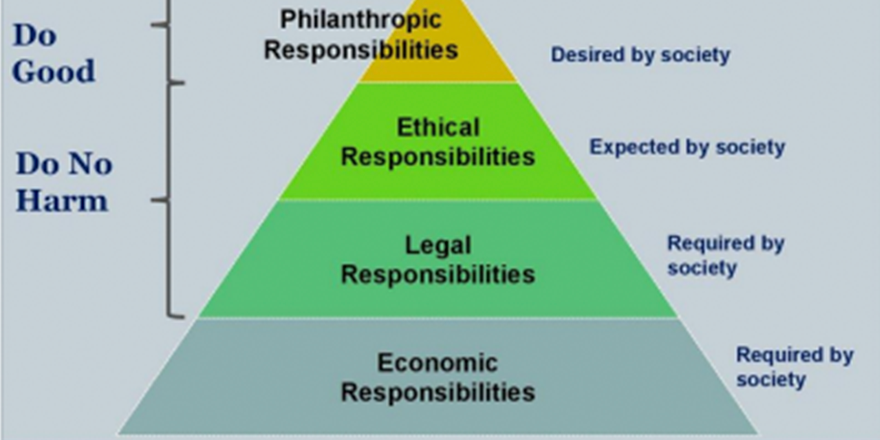
Carroll’s pyramid, a model for investigating a company’s C.S.R. requirements, was used to analyze the Aotearoa dairy industry’s current position. Dr Carroll, who was awarded a lifetime achievement award from Humboldt University, Berlin, Germany for services to corporate social responsibility has written a large amount of academic literature on C.S.R. Carroll broke the C.S.R. of a business into four pillars using a pyramid model. The four pillars are:

Philanthropic Responsibilities, voluntary or discretionary activities for the benefit of others or their environment. Farmers participate in wide and varied philanthropic activities; these acts are not undertaken for strategic reasons. There is potential to leverage these acts to improve perception and build on social license to operate.

Ethical Responsibilities, standards and expectations that reflect the concern for what consumers, employees and stakeholders regard as fair. Dairy farming has been slow to respond to ethical concerns of stakeholders, which has seen a loss of trust capital within relationships. As a result, in five years, positive perceptions of New Zealand dairy farming have slipped from 78% to 47% (U.M.R. Research, 2017). A social license to operate has become a vital topic in recent years regarding ethical responsibilities. In response to this, milk processors, have implemented several ethical agreements with their suppliers setting standards above and beyond legal compliance standards, to meet public and consumer pressure.

Legal Responsibilities, business is expected to comply with laws and responsibilities set by the Government; economic returns must be achieved within the framework of the law.  Compliance is rising, and the cost of this is high. Top farmers will rise to the challenge, and many low performers will fall out of the industry due to increasing compliance. The increase in specific laws is a result of the loss of trust in stakeholders’ views towards dairy achieving its ethical responsibilities. Ethical trust must be rebuilt with stakeholders to reduce growing legislated compliance. The industry will be held to account of its worst producer, not its best. The bobby calf scandal (Max Towle December 6, 2015) highlights this and shows the media will portray most of the industry by the actions of a minority.

Economic Responsibilities, It is essential that a successful firm be defined as one that is consistently profitable. The average return on asset of 0.5% for 2018-19 season, with a breakeven milk price returning between a $9,000 and $48,000 per 100,000Kg of milk solids, is not a worthy reward for the effort and is unsustainable long term. Capital gain on land can no longer be anticipated, operating profit is all that can be relied on, and this is volatile due to milk price. To be resilient and last long term, farms need to target the profitability performance of the current top 20% and continually improve.

To win in the future of Corporate Social Responsibility, farmers and the industry will need to achieve the following:

  1. Reinvent their business constantly, the end goal may be the same, but the tools and methods are constantly evolving. Embrace change.
  2. Removal of farmers that risk tarnishing the industry, one farmer is a danger to the reputation and acceptance of all. Milk processors and Government must take responsibility of this. This will increase ethical approval by the public.
  3. Invest with the head and not the heart to be sustainable and ensure a more acceptable return on assets and manageable debt to asset ratios. Purchasing a farm must be made as if investing in a commercial building or other investment utilizing similar financial models.
  4. Acquire greater financial skills and drive profitability. Farmers should target to perform at the level of the current top 20% of operating profit. Action by the wider industry, including milk processors, must occur around educating farmers on profitability. If they do not, farmers will struggle to meet ethical and legal expectations of the industry. These all work in harmony.
  5. Understand the “why” behind compliance better, were compliance instigates from and what it enables. Conversely, the industry must explain the reasoning behind compliance clearer and more intentionally to farmers.
  6. Formulate successful plans and models to exit a large number of farms gracefully from the industry. Support in planning and strategic decision-making is lacking at the end of many farmers careers. Banks, milk processors and industry good organizations must take accountability to support in this.