2026 Nuffield NZ Farming Scholarship. Apply by 17 August 2025. Read More...

Apply for 2026 Nuffield NZ Farming Scholarship by 17 August 2025. More details...

The Soils Gap: Interactions Between Science, Commerce and Culture

Executive summary

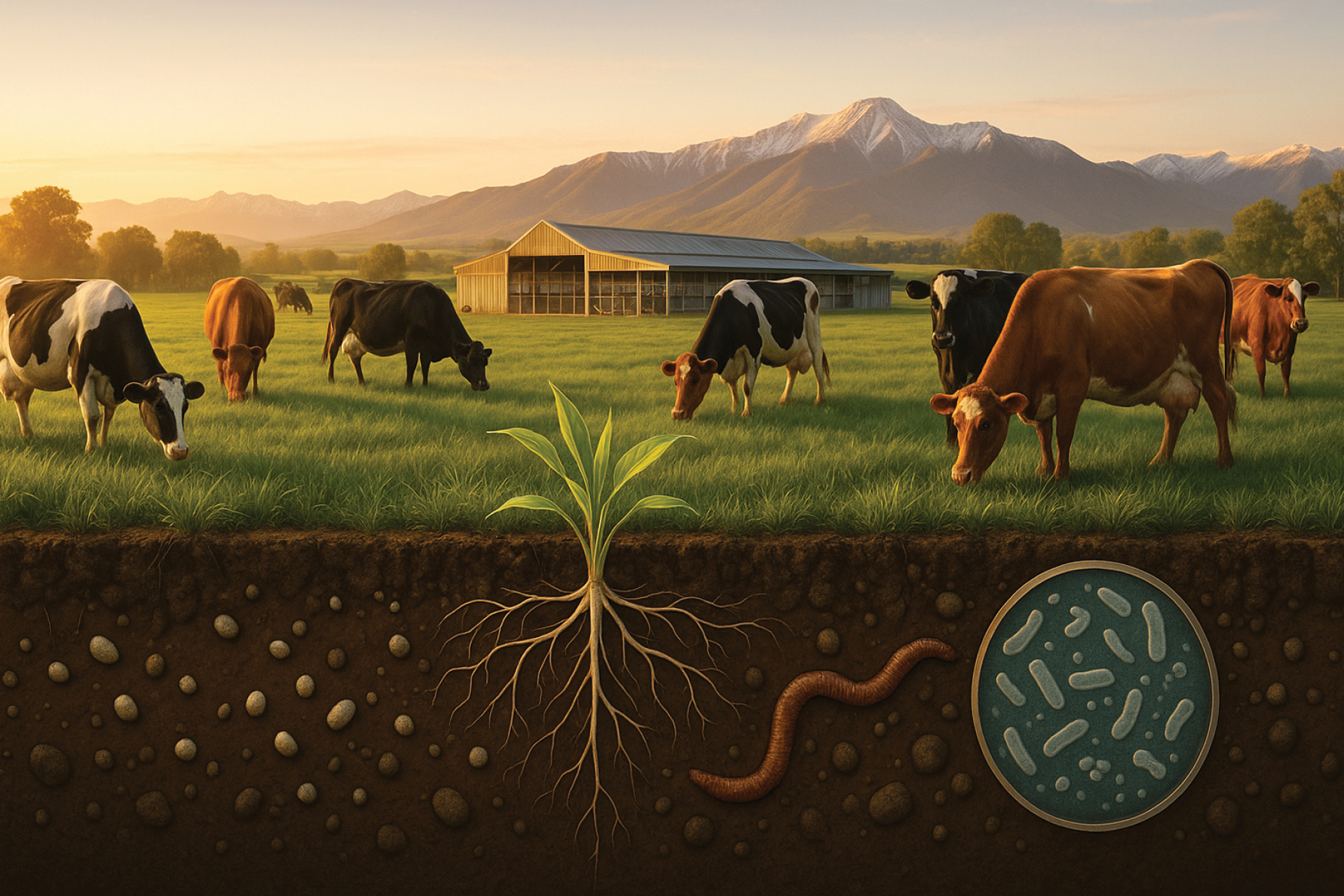
Soils lay the foundation of al farming productivity. Whether the farm is managed conventionaly or holisticaly; it al starts with soil.

How farmers manage their soil is influenced by multiple factors. Overarching al of them is our scientific space which affects farmers’ perceptions both culturally and technically.

Linear, cause and effect, output focused, studies suit fertiliser research and fit well with our commercialised scientific frameworks. This product based mentality has extended into our shift towards environmental research with productive environmental science providing solutions through this lens. Meanwhile studies on soil function have been limited, and studies on soil function relating to productivity are non-existent. With baseline biological data missing, soil biology studies related to fertiliser usage have used inconsistent rudimentary measures that have not been built on over time.

The major players within our commercialised scientific frameworks have been driven by market incentives in a way that flies by soil biology and function without stopping to investigate. Public funding is limited, private funding won’t receive a product from it and our scientists have entire careers within this framework that encourages short term thinking. So the long game of soil, unwinding its complexity and variation, falls by the wayside in spite of the possibilities it can bring.

Farmers, in an effort to do the best they can, take advice based on these scientific outputs. The science technically supports fertiliser and culturally supports linear thinking. There is no scientific basis for holistic management, because the studies have not been conducted.

Combined with political and media portrayals, an unnecessary cultural gap is created between conventional and holistic farmers. A gap that limits what conventional farmers see as viable options and leaves holistic farmers to do their own experimentation.

This paper does not make arguments for or against either strategy, but rather highlights how different farmers consider soils within their systems and the challenges they experience in managing them. Combined with the views of advisors and scientists, it tries to explain the drivers behind these challenges and perceptions.

Daniel Judd

Guardians or Executioners – Navigating the Ethics of Deer Control

Executive summary

This report investigates the ethical, ecological, and cultural complexities surrounding wild deer control in Aotearoa New Zealand. Using an autoethnographic method integrated with policy analysis and a wide-ranging literature review, it explores why deer control remains so persistently contested, despite clear evidence of the environmental damage caused by expanding feral deer populations. Framed around the central question, Guardians or executioners? Navigating the ethics of deer control, the report critically examines how ethical frameworks shape, constrain, or enable management decisions in a settler-colonial context.

Introduced in the 19th and 20th centuries, deer have shifted from protected game species to pervasive pests. Today, they occupy more than 44 percent of the country’s land area, contributing to the decline of indigenous biodiversity, impeding native forest regeneration, and affecting productive land use (Mason & Allen, 2020). Although successive governments and agencies have undertaken control efforts, reinvasion, fragmented governance, and inconsistent investment have allowed deer populations to persist or expand in many regions.

This report weaves personal experience with academic critique to expose the moral tensions at the heart of contemporary deer control. Managing sentient animals through lethal means raises discomfort, resistance, and conflict, especially in rural and Māori communities. These tensions are not just policy obstacles; they reveal deeper misalignments between dominant control paradigms and the ethical, cultural, and ecological conditions in which they are applied.

Key themes include:

  • The enduring influence of settler-colonial narratives that frame deer as either invasive threats or charismatic game animals.
  • The emotional ambivalence and cultural complexity deer represent for many communities.
  • The fragmented statutory environment that contributes to inconsistent and ineffective management across land types and jurisdictions.

Chapters 7 and 8 assess historical and contemporary control strategies, including iwi-led restoration projects, community-based catchment programmes, and commercial harvesting through Wild Animal Recovery (WARO). Chapter 9 introduces relational ethics, ecological justice, and kaitiakitanga as alternative frameworks for understanding and guiding decision-making. Chapter 10 presents six future-oriented models for deer control, each grounded in collaborative, context-sensitive practice. These chapters collectively argue for a pluralistic and adaptive strategy that reflects the diversity of New Zealand’s landscapes and communities.

Key Findings and Recommendations

The report identifies several key findings that inform a new approach to deer management in Aotearoa New Zealand. First, ethical tensions are not peripheral but foundational. For deer control to maintain public legitimacy and long-term support, it must be conducted in ways that are humane, transparent, and culturally appropriate. Public discomfort and resistance are not merely obstacles to overcome but signals of deeper ethical concerns that must be addressed through inclusive practices.

Second, co-design with Māori and rural communities is essential. Initiatives such as the Raukūmara Pae Maunga Project illustrate the potential of place-based governance that aligns with Te Tiriti o Waitangi and incorporates local knowledge, values, and aspirations. These models offer powerful alternatives to top-down approaches and help ensure that management strategies are both socially legitimate and ecologically grounded.

Third, the complexity of deer management demands multiple concurrent approaches. No single model is sufficient. Effective outcomes will require a combination of landscapescale coordination, iwi-led governance, catchment-level collaboration, and adaptive management hubs. These approaches must be responsive to different ecological conditions, land-use priorities, and community relationships.

Fourth, the way deer control is framed in public discourse has real consequences. Moving away from militaristic and adversarial metaphors toward a language of care and responsibility can create space for more constructive, pluralistic dialogue. This shift in narrative can reduce polarisation and foster broader public engagement with the ethical dimensions of environmental stewardship.

Finally, there is an urgent need for a coherent national deer strategy. Such a strategy should provide integrated direction that balances biodiversity outcomes, ethical responsibility, and Treaty obligations. Without national coordination, efforts will remain fragmented and inconsistent, limiting their long-term impact.

Ultimately, this report calls for a paradigm shift in how deer management is conceptualised and enacted. Rather than viewing it solely as a technical challenge, it must be recognised as an ongoing ethical practice rooted in care, cultural legitimacy, and ecological responsibility. Through this reframing, Aotearoa New Zealand can develop deer control systems that are not only effective but also just and enduring.

Phil Holland, 

How can we Maximize Production in our Decreasing Ewe Flock?

Executive summary

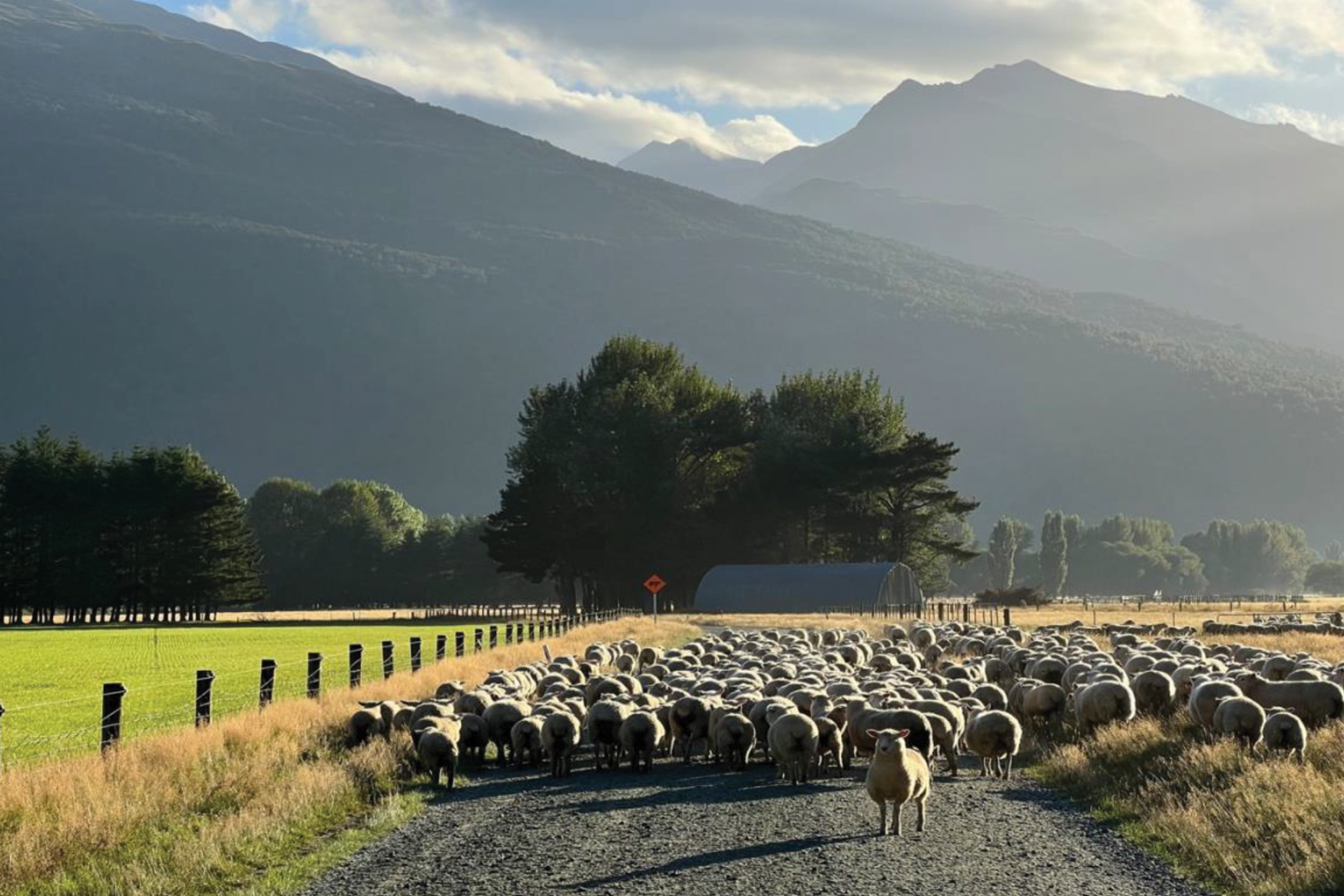
New Zealand’s sheep population has experienced a significant decline, decreasing by 21% over the past decade to reach 23.6 million as of June 2024. This trend is driven by a combination of environmental pressures, suboptimal wool returns, elevated input costs, and a transition towards a more beef-dominant system. However, the most influential factor has been the expansion of Carbon Forestry, facilitated by the Emissions Trading Scheme (ETS) policies, which has resulted in the conversion of 260,000 hectares of sheep and beef farmland into pine plantations. Since the inception of the ETS in 2007, the national sheep flock has shrunk by 40%. As lamb exports continue to generate $3.18 billion annually, optimising productivity from the remaining ewe flock is of utmost importance.

This report focuses on the significance of terminal sires, particularly emphasising the utilisation of heterosis to improve lamb carcass weights and support the industry’s sustainability in the future. This report aims to investigate the current use and effectiveness of terminal sires within New Zealand’s sheep farming systems, with an emphasis on enhancing productivity from the declining ewe flock. Acknowledging the industry’s diversity in adaptability, this report is designed to influence the middle 60% of farmers, specifically those receptive to pragmatic, evidence-based transformations. Through the implementation of a relatable Mock Farm Model and accessible analysis, this research aspires to equip this group with the knowledge to make informed, production-optimising decisions regarding terminal sire usage.

The methodology employed in this research comprised a national farmer survey, semistructured interviews, and the implementation of a Mock Farm Model. The survey collected regional and on-farm data from sheep farmers throughout New Zealand, with a particular emphasis on terminal sire usage, lamb slaughter performance, and the perceptions held by farmers. Comprehensive telephone interviews were conducted with a geneticist, a diverse group of sheep farmers, and a lamb trader to investigate the practical and commercial aspects of terminal sire application. Lastly, a Gross Margin analysis, based on a mock farm scenario, was utilised to evaluate the economic implications of heightened terminal sire adoption.

The survey findings indicate that farmers utilising higher rates of terminal sires exhibited a significantly higher percentage of lambs killed off mum at weaning. However, the insufficient availability of quality maternal ewe lambs for replacements continues to pose a primary barrier to the increased adoption of terminal sires. Apprehensions regarding lower lambing percentages and the limited integration of Breeding Values in the selection of terminal sires compound this issue.

Interviewees highlighted strategic flock selection, grouping ewes into ‘A’ and ‘B’ mobs, which enables the targeted utilisation of maternal rams for replacements and terminal rams for production enhancements. The lamb trader confirmed a premium for terminal lambs before Christmas, which contradicts certain perceptions held by some farmers. Furthermore, participants stressed the necessity to enhance the quality of terminal sires to maximise performance and improve industry outcomes.

The Mock Farm Model indicated that through increasing the utilisation of terminal sires from 10% to 50% resulted in a significant feed surplus in mid to late summer and advanced the average kill date by 13 days. This feed surplus may be allocated for baleage production, enhancing the Body Condition Scores of ewes for improved scanning results, or for fattening lambs to heavier carcass weights. Scenario modelling proposed an enhancement in Gross Margin, thereby affirming the economic viability of the strategic use of terminal sires.

To optimise production within the declining population of ewes in New Zealand, this report presents the following recommendations:

  • The flock on farm is to be segregated into two distinct groups:
    • An ‘A’ flock comprised of high-performing or younger ewes intended for breeding replacements, limited according to actual replacement requirements
    • A ‘B’ flock consisting of older or less productive ewes, which will be mated to terminal sires to leverage hybrid vigour for the production of heavier, more market-ready lambs at the time of weaning.
  • Align sire selection with breeding goals, focusing more on rams with high genetic merit. Investing in quality terminal sires is a cost-effective decision due to their considerable effect on production.

Matt Ward, Matthew

Partnerships within the Food and Fiber Sector: Do They Return Value to The Farm Gate?

Executive summary

Background

Highly productive soils are a precious and finite resource, critical for food production but also highly valued for climate regulation, water cycling, biodiversity, cultural significance, and recreation. However, research suggests that up to 75 percent (source FAO, 2020) of soils globally, are already degraded. Now more than ever, stakeholders needs to take actions that will firstly, halt further loss of highly productive soil to city expansion, and secondly protect and enhance remaining productive soils.

Methodology

A literature review was completed to understand recent research undertaken both in New Zealand and overseas that addresses the topic of soil health and specifically the importance of soil health as a measure of sustainability. Where possible, direct references to horticulture or fruit production were sought.

A series of semi-structured interviews were carried out to gather a range of perspectives from a diverse, but relatively small group of stakeholders. Thematic analysis was carried out to identify key themes.

Objectives and scope

The main objectives of this research project are to:

  • Understand the drivers that influence soil health outcomes in New Zealand
  • Understand how growers, industry bodies, researchers and government currently evaluate or manage soil health
  • Identify opportunities to improve soil health outcomes in New Zealand and how these may differ from the rest of the world

Key Findings:

Although participants in this project all recognised that soil health is important, their approach toward the management of soil varied widely.

Additional support in the form of education and extension will help to increase further adoption of sustainable practices that enhance soil health

Change in some parts of the sector is slow due to a combination of mindset and economic, or business-related headwinds that must be overcome.

Market demands and industry-led initiatives will increasingly influence grower practices and elevate the importance of soil health.

Recommendations:

  • With support, most growers will be capable of making changes to enhance soil health without increasing business risk.
  • Industry bodies and product groups should have strategies that elevate awareness of soil health.
  • Governments need to place equal emphasis on the protection of productive soils, as well as the enhancement of soil health.
  • Policy settings need to include clearly defined soil health objectives and allow local government to set regionally specific goals.

Sam Connor