2026 Nuffield NZ Farming Scholarship. Apply by 17 August 2025. Read More...

Apply for 2026 Nuffield NZ Farming Scholarship by 17 August 2025. More details...

Connection: What are the social and cultural outcomes of peri-urban catchments?

Executive Summary

This research explores the value of connection to nature and each other. It explores that state of our connection and contrasts connection with rural disconnect (often referred to as the Urban-Rural Divide).

Peri-urban catchments are catchments that pass through or border an urban centre. This report identifies these catchments as having an opportunity to connect a significant amount of people to each other and nature.

The report starts with a literature review of connection in New Zealand. The study looks at two aspects of connection; the benefits of connection and the current state of connection in New Zealand.

The literature review supports that a heightened connection to nature, food, and each other has positive outcomes for wellbeing.

The literature review shows that our current level of connection is difficult to determine. The definition of nature is an individual perception, and this adds another element to the understanding of connection to nature. It can be influenced by a multitude of aspects, the most significant being childhood experiences in nature.

To understand how these learnings can be applied in a peri-urban environment, three case studies have been observed. The case studies were:

• Volcano to Sea Project (Hawick, Auckland)
• Mangakotukutuku Stream Care Group (Peacocke, Hamilton)
• Common Unity Project Aotearoa (Lower Hutt, Wellington)

Empowering and educating a community through action was a significant theme. When people take action for something they care about, it can be powerful for wellbeing. It can also form strong relationships with others taking action. The case studies indicated that the care for nature, food and each other is a substantial cause to bring people together.

It is clear that the Primary Sector Council’s vision, ‘Taiao ora Tangata ora’ aligns and flows through all three of these projects/groups. There is an understanding that for people to be healthy, our natural world needs to be healthy. That our natural world includes nature, food production and ourselves, that we are interconnected with our natural world, this is Te Taiao.

By comparing the themes from both the literature review and the case studies, Peri-urban catchments can impact social and cultural outcomes in two ways:

1. By bringing people together to action environmental initiatives that strengthen our connection with nature, food production, and each other.
In the peri-urban space, we can take the opportunity to connect rural and urban people. Farmland in the peri-urban space has significant opportunity for ecological initiatives, and we can allow our communities to take action to enhance these. By doing this, we can expose people to food production.

2. Establishing biodiversity in peri-urban catchments so that future communities that may live there live entwined with nature and food production.

There is considerable work happening in urban, peri-urban, and rural landscapes to enhance biodiversity. In the peri-urban space, there is an opportunity to get ahead of urban development. Rather than retrospectively restore nature, nature can be established and entwined with urban living. Urban food production needs to part of this planning. Connection with nature and food production in our everyday lives will enhance our wellbeing.

This research has led to the conclusions;

• True collaboration is an outcome of connection.
• Social outcomes are as significant as ecological outcomes.

To ensure social and cultural outcomes in peri-urban communities are positive, I recommend the community groups:

1. Embrace the principles of Te Taiao.

More specifically, community groups vision should incorporate connection to one another and nature. Community groups should identify cultural and natural significance within a catchment. These should be celebrated, restored/protected and used as a cause to bring communities together. Community groups membership should not be limited to a geographical area. Any person or organisation which shares their cause and values should be embraced. This is especially significant in peri-urban spaces. Consider nature to be diverse and embrace food production and consumption as part of nature.

2. Involve youth in action and education.

3. Engage with all community, including local and central government and NGOs.
  
4. Be opened minded and be vulnerable.

To ensure social and cultural outcomes in peri-urban communities are positive, I recommend the City planners and landowners:
5. Plan long term to establish biodiversity ahead of urban development.

National Treasure: Native biodiversity on-farm

Executive Summary

Sheep and beef farms are home to a quarter of New Zealand’s total national native vegetation. This means that sheep and beef property owners make up the second largest native biodiversity land holders, second only to Public Conservation land. As such, a large part of New Zealand’s conservation effort is in their hands.

Many landowners have already taken steps to protect and enhance their slice of native bush. With appreciation for what has already been achieved it encourages more progress to be made by that person and those around them.
By nurturing this connection to the land and amplifying it through our communities we are more likely to gain long term biodiversity gains. Enhancing a culture of kaitiakitanga, guardianship or feelings of being stewards of the land.

This report endeavours to discover:

The quality of the biodiversity held within the bush blocks on New Zealand sheep and beef farms.

What challenges native vegetation faces in these blocks and how best to maintain and/or improve these areas.

Recommendations

1. Manage

Where landowners’ resources are limited a pest control management regime implementation would be a cost-effective use of capital that will produce the fastest benefits. Also changes to stock grazing practices have the potential to slow deterioration until fencing can be put in place.

The problem of funding the conservation efforts around the native bush on farms needs to be quickly addressed. This could be as simple as ensuring the carbon credits of these areas are financially recognised. With an inbuilt incentive to have them fenced off within the first 5years of this financial recognition. This would enable the conservation efforts of landowners to be more easily financed, thus ensuring ongoing pest control and maintenance of these areas.

2. Lead

We need to identify potential leaders who can pass on their knowledge, learnings and techniques to others. This would be best done with a framework in place that helps ensure these leaders are supported. This will help foster a collaborative approach to ensure biodiversity gains.

3. Research

I feel research into stocks role in conservation and how grazing could help enable native regeneration is needed to establish if there are any positive effects as the Allison H.V.A survey and Longlands case study suggests there may be. This would help to decisively answer the stock exclusion argument.

The need for all the ecological significance assessments to be presented in the same way in the H.V.A surveys is a great missed opportunity. I feel that being able to successfully compare and contrast this information over a long period of time would give clarity to how native vegetation is tracking in comparison to where it started from. This would give clearer indications to how our management practices are affecting native vegetation.

The High Value Area surveys are a great source of information. However, I feel they would benefit from having more information about the options for the H.V.A, such as QE11 covenants and a list of potential funding grants that are available to help landowners with the ongoing protection of these areas.

How might government better understand farmer perspectives?

Executive Summary

The New Zealand public service is and must continue to innovate to ensure that it understands the citizens that it serves.

It could also be doing a more robust job of understanding public perspectives, including those of farmers and rural communities.

Through my research, I have sought to understand how government institutions internationally and locally are innovating and experimenting to better understand these perspectives. The value and promise of these innovations is already being demonstrated.

I have also sought to understand farmer perspectives myself, and what matters to them. Through a range of semi- formal interviews, I captured a variety of themes. Views of government, the realities of farming, Māori agribusiness, communication and engagement and community and the importance of people were expressed.

It is this range of research and insight that has informed my recommendations: three proposed solutions that seek to disrupt the status quo of government engagement with the rural sector.

vRural NZ, Rural EQ and Rural Recruit have all been inspired by the people I have spoken to and ideas explored internationally. My aim has been to not only describe their benefits, but how the benefits could operate in a New Zealand context.

I recommend that government and the rural sector:

  • Prototype vRural NZ through the Digital Government Partnership Innovation Fund. This would be led by a government department, who would undertake the role of accountable authority to trial this idea on an issue of relevance and importance to the rural sector;
  • Pilot Rural EQ to trial and test what could work under a more
    full-scale delivery model. This pilot would distinguish what planning, resourcing and co-investment would be required to realise its potential.
  • Commence Rural Recruit through planning and engagement with tertiary institutions, to sell why this proposed solution is needed. This would include identifying which issues facing the rural sector would benefit from Rural Recruit and which agencies graduates would be best placed to join.

Despite the rate of change and challenges facing society, both globally and domestically, there are opportunities to improve the way we collaborate and tackle complex problems.

My recommendations can form the foundation of solutions that address these challenges. They also challenge the public service to innovate and experiment with ideas in the complex environment in which we operate.
If we expect others to change their behaviour, first, we must consider changing our own.

Knowledge + Skills + Networks = Confidence

Executive Summary

In today’s society there remains a stigma around money and finances, possibly originating from a fear and lack of understanding, and historically this has been thought to have hindered farmers’ ability and willingness to take control of their farming operations without understanding what the figures mean for their business.

In an ever-changing world of requirements for freshwater management, biodiversity and climate change policy changes, biosecurity threats, volatile markets due to societal trends and economic fluctuations – a profitable business and a solid balance sheet is crucial in today’s farming operations in order to be prepared for anything. Due to the numerous industry pressures that farmers are faced with, it is important to have a solid foundation of financial literacy and business management skills to complement the practical, industry specific skills in the Food and Fibre industry in order to run a profitable farming business. 

Financial literacy generally is weak for many farmers (Speight, 2018), therefore financial literacy is a crucial element in farmer training in order to pave the way for increases in productivity, income and profitability and improved livelihoods (Musungwini, 2018). The benefits of this financial knowledge and improved livelihoods will overflow into our rural communities, leading to improved mental health in our farmers and collectively contributing to a positive future for generations to come.

Farmers running their day to day farming operations, most being defined as ‘small sized businesses’ in NZ, should be running their farming operations as a ‘business’ and farmers should be treated like business owners. This means structuring farming operations like a business, with a Trusted Team around them for support and guidance, coupled with being highly skilled in areas across the board in finance and business management. This will allow farming operations to effectively plan for the future, striving to meet performance goals and being in a position to make well informed decisions at any point in time.

With the aim of helping farmers by steering them in the right direction on their journey of improving their financial and business management capabilities, this report identifies the specific areas that require focus in order for farmers to competently and confidently run their farming operations like a business. It is essential that the farming operation and farmer’s benefit is front of mind throughout the up-skilling process as this will allow control of the business operations and finances back in the farmer’s hands which will hopefully be met with willingness and curiosity from the farmer.

The benefits and value of the farmer taking control over the finances will be a turning point in the industry and confidence will be gained by the farmers to harness their new skills and take the reins of the direction of their farming operations into the future. It is evident there are a number of barriers to farmers’ willingness and ability to up-skill in their financial and business management skills. These are; cost, lack of time, resistance to change and failing to see the value benefit of what these skills could create for them and their farming business. The overarching theme within the suggested approach to improve farmers’ financial and business management capability is the need to navigate potential barriers mindfully and tailor individual farmer’s needs specifically to each farmer. This will assist in broadening their knowledge and transitioning the control over the finances with guidance and support throughout, understanding that every farmer is different.

Through an analysis of data gathered from farmers in the field, from rural advisors in the industry and by carrying out a literature review across four main topics, it is evident there is definite room for improvement to raise the financial know-how of farmers in New Zealand. The positive impact of an improvement in this area will be key, to ensure the NZ Food and Fibre industry keeps up with changing demands and for farmers to be in a position with the skills and control to make informed decisions. This will allow farmers to ride the highs and endure the lows for many generations to come. It is evident that there are already steps being made in the right direction which has lead to an increase in knowledge over the past ten years, but there is an urgent need for this to continually improve given the uncertain times we find ourselves in, in a post Covid-19 world.

It is time to break down the stigma around finances and tap into farmers’ financial and business capabilities. Research shows there is a large web of resources available already, for example the Dairy NZ website, the Beef & Lamb NZ website and the work that the Agri-Womens Development Trust (AWDT) is doing, for example facilitating the Understanding Your Farming Business (UYFB) course for farming women. There is a need to bring out farmers’ willingness and curiosity to learn and take control of their business, which when combined with adequate and relevant training via tutors or mentors will result in a higher level of knowledge across the board. The outcome will be improved confidence in our farm operators and farmers will witness first-hand the value and reap the benefits of what having strong financial and business management skills and control over their financials could create for them.

A recommendation that would hugely benefit farmers is introducing an on-farm tutor or mentor initiative to boost confidence in their financial and business capability by educating farmers step by step through what they can do to be involved in their financial and business management. When farmers are confident in completing financial tasks efficiently themselves, using suitable farm finance software and with adequate training, they will gain control over the financials and be better poised to influence and execute effective business planning and strategic discussions. This entire package will be crucial for farmers to be up to speed at any point in time, with the knowledge to make informed decisions, the skills to implement these with a supportive and trusted team behind them and the confidence to put their best foot forward when seeking finance for business growth.

Sustainable Impact Investing into New Zealand’s Horticultural Sector: Is there an Opportunity and Can We Capitalise on It?

Executive Summary

The global perspective on investment is changing from traditional financial metrics to the relatively recent idea of “impact investing”. This is where investments are made with the objectives of creating a positive impact on environmental and social matters as well as receiving financial returns. The growth in this movement has raised questions on whether there is potential within New Zealand’s horticultural industry to market its perceived sustainability and therefore access this pool of capital. With this theory in mind, this report looks to quantify the sustainability of the sector as well as analysing the ability of the investment sector in New Zealand to take advantage of impact investing theory.

To achieve this aim, this study uses an analytical framework to measure the carbon footprint of orchards and vineyards as a proxy for environmental sustainability. The model uses a case study of six different orchards and vineyards, owned by Craigmore Sustainables, to get an understanding of the variability within the sector. In addition to the carbon footprint modelling, four informal interviews of leading New Zealand primary industry investment managers and large-scale corporate farmers and foresters were performed to get an understanding of the extent to which the primary industry and its investors are concerned and report on sustainability.

Using the purpose-built carbon model, the producing orchards and vineyards were shown to have a net positive impact on the environment through large sequestration by the plants and compost. The two developing apple and kiwifruit orchards were shown to have comparatively high net emissions in their early years. It was shown that there is significant variation in the sequestration potential of different crop types (apples have the greatest potential sequestration per ha). In addition, the impact of organics was tested across the kiwifruit orchards with organic management producing less emissions overall than a conventional orchard.

Across the multiple interviews and literature reviewed, it was shown that there is significant variation in the positioning of investment funds and corporate farmers on the idea of impact investing. In general, foreign, and younger investors appeared to be further advanced in the understanding of impact investment and its opportunities. However, for the New Zealand market to fully appreciate and take advantage of impact investment opportunities that will arise in the primary industry space, there needs to be changes to the consistency and transparency of sustainability reporting and fund raising.

Although this study provides a baseline understanding of the potential sustainability of the horticultural industry, there are several recommendations that need to be considered in either further research or by leading organisations within the sector. These are:

  • Where possible, the increase in establishment and use of other quantifiable sustainability metrics in addition to carbon
  • Provide actual on-orchard data to test the strength and applicability of the carbon footprint modelling.
  • Further research into the environmental sustainability of orchards in an intensity-based approach such as kg CO2-eq per tray produced or per $

In addition, there are also recommendations for the industry’s investment sector to capture the possibilities of the impact investment movement:

  • To increase the measurement and reporting of the sustainability of the industry and therefore utilise the existing foreign impact investment interest as well as being prepared for when the domestic New Zealand investor base ultimately increase their focus on impact investment.
  • For the industry to either create a universal accredited standard of reporting and measurement for sustainability of a business or to align itself to current global reporting standards and initiatives.

These recommendations will help to increase investor confidence in the industry and therefore increase the potential uptake of the opportunity for impact investment.

Kellogg Tai Tokerau Networking Event – 1st December 2020

Join us at the Kellogg Tai Tokerau Networking Event!

Tuesday, 1st December at 6.30pm

At the Orchard, 35 Walton St, Whangarei

Hear from our Northland Kelloggers – Paul Martin and Graeme Peter about their Kellogg experience. Network with other Kelloggers!

Explore how doing the Kellogg Rural Leadership Programme in Tai Tokerau in 2021 can help you accelerate your career in the Food and Fibre Sector.

Paul Martin, 2016 Kellogger

“The Kellogg programme has been a key part in my governance journey. I’ve developed a number of networks through the course. Those networks have supported me and inspired me to continue my growth both professionally and personally.”

Paul Martin

Paul is a self-employed Agribusiness Consultant working under the Headlands banner, with clients throughout the Northland region. In addition to his consultancy work Paul is involved in a number of governance roles within the Dairy Industry and Bee Industry. Locally, Paul is the President of the Whangarei Bee Club, and a Trustee of Reconnecting Northland.

Paul’s 2016 Kellogg research topic focused on ‘How New Zealand dairy farmers can thrive in the face of milk price volatility.’

Graeme Peter, 2020 Kellogger

“The connections and learnings I have gained from doing a Kellogg are incredible. I feel very privileged to be part of the course and in particular the calibre of my cohort.”

Graeme Peter

Graeme is the Regional Food Safety and Assurance Manager for Fonterra in Northland. He works with farmers in Northland on animal welfare, food safety and assurance claims on farm.

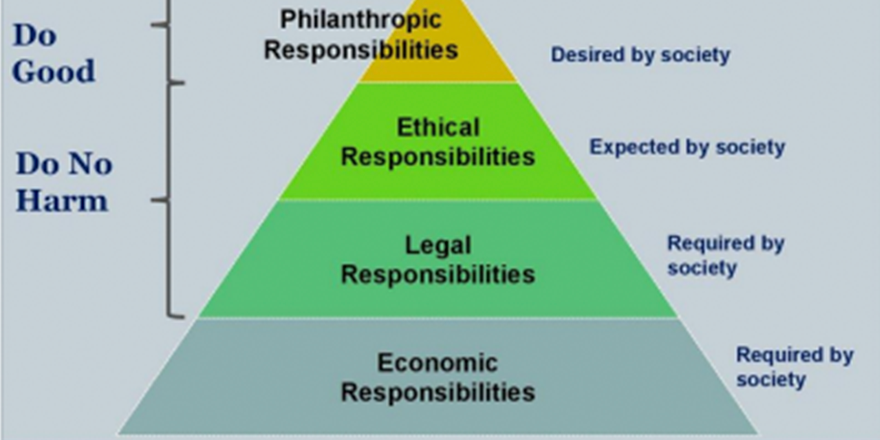
Graeme will graduate from the 2020 Kellogg Rural Leadership Programme at the end of November. His Kellogg research topic is ‘Corporate Social Responsibility of Aotearoa Dairy Farmers – the Current Situation and How We Win.’ This body of research focuses on the four pillars of corporate social responsibilities (economic, legal, ethical and philanthropic).

Graeme’s drive is to keep Aotearoa dairy farmers and their families as leaders on the world stage, in our farm systems and animal welfare. Graeme says “The Northland Dairy sector faces many challenges and my Kellogg project has helped me bring a wider New Zealand and international view to these issues and has also provided access to incredibly talented and informative people.”

Projection of beef forward marketing; building partnerships between dairy farmer and beef finishers.

Executive Summary

It is time for the dairy industry to stop sweeping the bobby calf issue under the carpet. Approximately 2 million calves are surplus to dairy requirements intended for human consumption and pet food (MPI, 2015). The bobby calf numbers are trending upwards since 2000 and is causing a lot of welfare concerns from animal activists.

I believe there is significant potential for the bobby calf to be reared as quality beef, beef farmers are struggling to source good quality calves that will finish with a profitable value, calf rearers are vulnerable within the markets volatility.  Globally beef demand is rising, and Its becoming more harder for beef finishers to purchase quality young stock to carry through. I put together a questionnaire and had a reply from 30 dairy farmers. The dairy farmers are referring the issue to being to hard and to much risk.

The following was researched

  • How to create a pathway to reduce significant numbers slaughtered at 4 days old in New Zealand.
  • History, Driving force and building trust to form relationships and successful businesses.
  • Dairy beef genetic solutions for quality milk production, ease of calving traits, high carcass weights and quality marbeling.
  • The new generation beef , the dairy- origin steer slaughtered at 10 -12 months.
  • Forward marketing beef agreements, connecting producer, rearer and finisher with marginal prices to allow profitability, build incentives to share risks and gains throughout the production line till processing.

I have considered the relevance of all factors and there is an opportunity  for a beef finisher to provide to order with a dairy farmer and a contracted calf rearer.  Building relationship with incentives along the production line, the calf to be sold at a margin price to the calf rearer at 10 days old, the calf rearer to sell onto the beef finisher at agreed marginal price at agreed weight. Below or under weight the price will differ, this embeds management procedures throughout till finishing.  At finishing every share holder will receive a percentage of the carcass.

I believe zero bobby farm systems are achievable with careful thought and planning into genetics, a focus towards building relationships.  However there may still be a small percentage of bobby calves amongst our country.

 “An increasing proportion of our beef is coming from the dairy industry and there is a growing demand coming from Asia where beef is prepared and consumed in ways that are different to our traditional markets,” Nicola Schreurs – Massey University.

Key recommendations

  • A mutual support platform, engaging individual dairy and beef interests.
  • Online auctions with forward marketing beef agreements
  • Rearing calves for profit – An online platform to connect contracted calf rearers with farmers

The Circular Economy of Glass Packaging for the New Zealand Wine Industry and the Impact of a possible Container Deposit Scheme.

Executive Summary.

Glass recycling is the perfect example of the circular economy in action, right here in New Zealand.

It is becoming increasingly obvious, that to retain New Zealand’s prized clean green image and for our primary sector to remain competitive, a circular economy is an important part of our strategy.  The success of a circular economy of glass depends upon intelligent supply chain management to ensure sustainable customer demand. 

“A circular economy is a systematic approach to economic development designed to benefit businesses, society, and the environment. In contrast to the ‘take-make-waste’ linear model, a circular economy is regenerative by design and aims to gradually decouple growth from the consumption of finite resources”(MacArthur, 2018). 

Glass is the most sustainable package on earth and is the best example of the circular economy in action in New Zealand because,

  • It is infinitely recyclable and is made purely from raw natural ingredients
  • Over a tonne of natural resources are saved for every tonne of glass recycled
  • Every tonne of glass recycled saves approximately 670kg of CO2 over virgin materials

Recovery and reuse of glass contributes to a low emissions economy, with the use of recovered glass in manufacturing. This is because recycled glass can be melted at a lower temperature than virgin materials so consequently requires less energy. For every 10% of cullet used in the manufacturing process, O-I can achieve a 5% reduction in greenhouse gas emissions.

On average, a wine bottle is made from 67% recycled content manufactured at O-I New Zealand. The availability of recycled content primarily depends on our country’s waste collection infrastructure.  The existing voluntary product stewardship scheme for glass containers managed by the Glass Packaging Forum (GPF) is working very effectively, and is on track to meet a recycling rate of 82% by 2024. The GPF is a collaboratively designed circular economy for glass, returning cullet to O-I furnaces through a network of collection hubs, services and community facilities in order to ensure the circular benefits of glass are harnessed again and again.

In the circular economy of glass we refer to closed loop application, where we all play a part in helping a glass bottle is recycled back into a new glass bottle. There are sound economic and environmental incentives for O-I to support the recovery of high value glass and should be well understood the significance O-I have in driving the circular economy. Without a manufacturing plant with a commitment to cutting carbon reduction, using high portions of recycled content, we could not have a circular economy.  A majority of the New Zealand wine bottle supply chain of glass starts, and ends at O-I.

It is important to understand the glass recovery supply chain and the role it has within the circular economy design for glass.  To date, there are two glass recovery methods;

  1. Glass separate recovery – high value cullet
  2. Co-mingled glass recovery (problematic to the supply chain) – more complex and lower quality cullet

The cost and time it takes to separate, colour sort, grind and beneficiate the glass from co-mingled collections adds significant complexity and cost to the glass recovery system. Reduced quality glass recovery through co-mingling, can still be used with no environmental degradation for sport turfs, golf bunkers and base course for roads; however cannot ever be returned back to the glass lifecycle and therefore represents a break in the circular economy of glass.  To sustain a circular economy, Auckland council should cease co-mingling glass. 

The Ministry for the Environment has a consultation process on priority product guidelines (Ministry for the Environment, 2019) which included all beverage packaging, including glass.  Before stage one of the consultation had closed,  Minister Sage further announced work toward developing a Container Return Scheme (CRS) through a Waste Minimisation Fund application project managed by Auckland and Marlborough District council on 25th of September. The list of representatives on the working group, does not include New Zealand’s only cullet purchaser.

The basic principle of a Container Deposit Scheme is that the consumer pays a deposit at the point of purchase, and the deposit is refunded when the consumer returns the empty container.

This report highlights the Minister have not considered the market demand for glass and the impact an influx of extra glass would have on the supply chain.

Container deposit schemes are not supported by the New Zealand wine industry, or those involved in the glass recovery process, because they are expensive, are only one type of capture system for glass, can create recycling inconvenience for ratepayers, are not circular in nature, and are a particularly challenging solution for the hospitality sector. Marlborough is New Zealand’s largest wine region producing 77% of the total wine production. “Wine Marlborough supported the introduction of circular waste reduction policies where they meet the criteria under the Waste Minimisation Act; yet in the case of glass we believe those criteria are not met” is cited in their submission to the proposed priority products and priority stewardship scheme guidelines. “Wine Marlborough recommend continuation of the current voluntary scheme with government support for investing in further infrastructure”.

This research concludes that there is little supporting evidence that a container deposit scheme will increase overall glass packaging recycling rates, nor provide the recyclate needed to drive a circular economy anywhere in the world. 

The countries that have the best glass recovery rates in the world do not operate a container deposit scheme (Lee, Bell, Garcia, Lee, & Harding, 2019) indicating CDS is not the best solution to increase glass recovery rates. Denmark, Sweden and Norway are exemplar countries that have container deposit schemes, which exclude glass.   

In order to maintain a circular economy for glass within the New Zealand wine industry, CDS should exclude glass.  A circular economy is not possible without strong collaboration with all glass stakeholders and it is evident this has not happened yet with CDS. Should CDS progress, I urge the Ministry for the Environment to better consolidate the glass recovery process with O-I.

New Zealand would benefit from an Extended Producer Responsibility (EPR) scheme around material flow of a specific product; in this instance glass.  The findings from my industry survey show the wine industry has expressed a keen interest to make this mandatory. This is expected to fast track GPF glass recovery efficiencies and position us as world leaders in introducing the circular economy within glass.

Economic Complexity and the New Zealand Wine Industry. Implications for Government Policy in the Primary Sector

Executive Summary

New Zealand’s (NZ) primary sectoris facing uncertainty from all angles. Brexit and the USA/China trade
war has thrown our primary sector exports in the air and we don’t know where they’ll land. Climate
change, sustainability and natural resource management ask serious questions of the sector’s
performance and its adaptability. Changing consumer preferences along with a rise of low carbon
impact lifestyles also put pressure on the sector. Global export dynamics are in flux as emerging
economies such as India and China build momentum. On top of this, a myriad of government
regulatory changes in the form of the Zero Carbon Bill, Three Waters Review, and the movement for
a living wage, to name a few, will continue to affect the primary industry sector.
New Zealand has the 51st largest global economy measured by nominal Gross National Product (GPD),
21st largest measured by nominal GDP-per capita at $41,555 (USD)). New Zealand’s GDP-per capita is
comparable to Japan, which has a population of 127 million people and is ranked 3rd in GDP but 24th
in GDP-per capita at $39,306 (USD). New Zealand’s forecast overall growth for 2019 is 2.5% which
surpasses Japan (0.9%), Australia (1.7%), the United States (2.4%) and the EU (1.2%) (IMF, 2019). Based
on these measures, New Zealand is performing well.
But there appears to be misalignment between the situation experienced by the primary sector, New
Zealand’s largest earner ahead tourism and services, and measures of the nation’s economic health.
Is this due simply to the monotony of the media’s crisis narrative as they report on the economy? Are
economists right to suggest everything is ok or are there deeper problems for primary production in
New Zealand?
There are well known limitations to GDP as a measure of economic success. For example, GDP doesn’t
account for the contribution made to the economy of people and natural resources. The NZ wine
industry’s (NZWI) performance is rolled up into a single measure of export value by economists and
other monetary observers. The dairy industry answers to only one measure which is the milk solids
price. Some argue GDP is a reductionist and reactive measure, a lagging aggregate measure of growth
that doesn’t predict how we will fare as circumstances or assumptions change. It is also not very good
at illustrating the need to simultaneously grow and be resilient. Considering current primary sector
uncertainty, these are important limitations.
To understand the economic environment of the NZWI is to understand the complex interactions of
the value chain that are required to make and sell wine. The emergence of methods to measure
economic complexity (EC) has proved to be of interest to contemporary economic researchers and
practitioners in this regard (Simoes and Hidalgo, 2011; Tacchella, et al., 2012; Battiston, et al., 2012;
Cristeli, et al., 2013; Bahar et al., 2014; Hausmann and Hidalgo, 2014; Cristeli, et al., 2015; Morrison
et al., 2017; Ortiz-Ospina and Beltekian, 2018). This is because these methods are like using a
microscope compared to the magnifying glass of GDP in its ability to measure complex interactions
and explain their value. By uncovering the actors and their connections within a value chain,
complexity analysis can tell us more about uncertainty and, more importantly, what to do about it.
This isn’t to say that GDP as a measure of the economy is useless, merely that it should be used in
conjunction with measures like EC.
Economic complexity also has the capacity to account for the productive contribution of human and
natural resources to the economy in ways that GDP can’t. But, most importantly, EC offers measures
for the economy that account for knowledge.
5
The counter to economic vulnerability and uncertainty is resilience (Briguglio, 2006). Increasing the
economy’s complexity increases its resilience which in turn reduces its vulnerability and the
uncertainty held by the industries within it. Economic complexity analysis provides insights into how
to understand, measure and build a resilient economy.

Do current extension methods cater for farmers with dyslexia?

Executive Summary

Farming has always been seen as a career for those who were never any good academically, often ridiculed as ‘dumb ‘many left school as soon as they were able and went farming. Once they became farmers they began to excel, as farming is a practical and hands on career which requires problem solving, a love of the land and little reading and writing. To gain insights on what it is like to be farming with dyslexia I undertook several interviews with farmers throughout New Zealand who were willing to share their story. From these interviews I found that most of them didn’t see their dyslexia as a disadvantage but rather an advantage as it enabled them to think differently. Many had found ways to help overcome their dyslexia. There were key themes which came out of the interviews, the main one being that the agricultural sector needs to acknowledge that dyslexia is an issue within the sector, and secondly that dyslexic people are often more creative, entrepreneurial and can see the bigger picture. Often many have the ability to look at risks and mitigate these. All those I interviewed did not see their dyslexia as a bad thing.

Many of us who work in the agricultural industry will know farmers with dyslexia. Many of whom have tried to hide it rather than embrace it. Often these are intelligent individuals, but they struggle with reading and writing and therefore could be classed as a ‘functional dyslexic’ but some dyslexics are ‘literate dyslexic’s and will persevere with reading and writing.  As a sector we need to change the way they can and do receive information and we now have the technology available to do this.

The research provides the following broad conclusions:

  • Reduce the stigma of dyslexia in the agricultural industry by having ambassadors for dyslexia and mentors to assist other farmers with dyslexia
  • Conduct research to determine the extent of dyslexia within the agricultural sector
  • Develop workshops for rural professionals to educate them about the basics of dyslexia, and how they may be able to better assist their dyslexic clients
  • Develop extension resources in dyslexic font
  • Develop more podcasts and videos on popular extension topics which don’t require dyslexic farmers to have to read to gain the information
  • Encourage Regional Council’s to provide assistance with compliance paperwork such as drop in days or help desk staff to help dyslexic farmers to complete paperwork required

I acknowledge that it isn’t going to be easy for the sector to make the changes required, as for too long this has been a topic which has been almost hidden but at the same time it is acknowledged that many farmers are dyslexic. A change in mindset will take some years to create but I believe we can do this by having an ambassador or ambassadors for dyslexia in the same way we have Doug Avery for rural mental health.

We are in both exciting and changing times in the sector. With increasing compliance and environmental changes being introduced and demands on farmers increasing, we will see some dyslexic farmers despairing and wondering how they will cope with the increase in paperwork which they already struggle with.

Dyslexia is the new stigma in the agricultural sector which needs to be broken. I hope this report helps to both challenge and change the mindset that dyslexia is something which should be embraced not ridiculed. I would love to work in this space and help bring about change in the agricultural sector and make it easier for the next generation of dyslexic farmers coming through.