2026 Nuffield NZ Farming Scholarship. Apply by 17 August 2025. Read More...

Apply for 2026 Nuffield NZ Farming Scholarship by 17 August 2025. More details...

Is the dairy farm training working?

Executive Summary

Is there an issue with how dairy farm staff are being trained off farm and is this giving the results the farmers need. For the diary sector to continue to farm in New Zealand we need to make sure that our staff are well trained in all aspects of farming not just the day to day work but also financial skills and we now also need to train the soft skills of management as well as the importance of how we are perceived by the Urban sector.

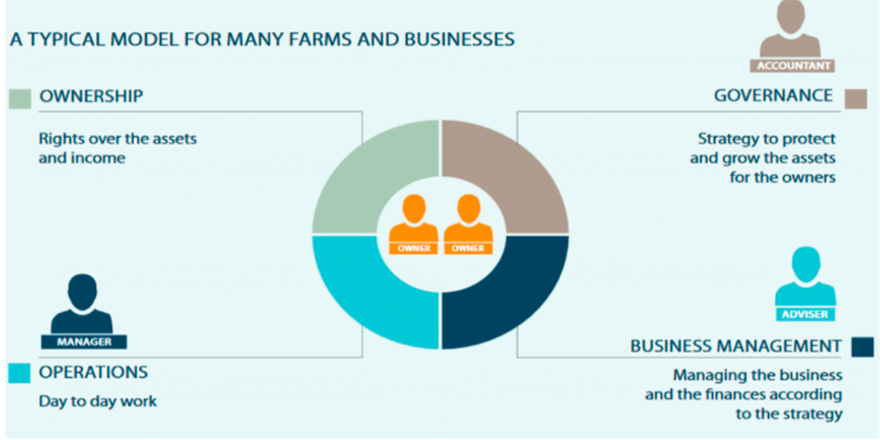
Is it important to have clear roles in a business and why is this and what are the outcomes if we get this right or wrong.

In The Inescapable Laws of Organizational Structure;

  1. Fritz also argues that organizations are structured either to advance or to oscillate . Advancement is a positive move from on state to another that acts as a foundation for further advances. Fundamental to structural advancement is the concept of resolution when an outcome is achieved and a particular problem is resolved. According to Fritz (1996:6), management in an organization that is structured to advance coordinate ‘individual acts into an organizational tapestry of effective strategy.’ When all the individuals in this utopian organization are acting together, the result is synergy, allowing the achievement of ‘enormous feats.’
  2. The alternative is structural oscillation. Fritz (1996:6) explains this: ‘Oscillating behaviour is that which moves from one place to another, but then moves back towards its original position.’ So many organizations set out on some change program, full of enthusiasm and energy. But, six months later, the enthusiasm has evaporated and the program peters out leaving very little changed.
An exploration of social innovation within primary industry education.

Executive Summary

Aim: To create a social enterprise whose social mission is focused on a perceived gap in my region. That being, Maori youth prospects in the primary industries and growing economic sustainability to create stable futures for them. I propose to do this through an innovative hybrid model of education and enterprise.

The primary industries have long been searching for an effective way to encourage more people into the sector. With the number of people required to man the industry forecast to increase dramatically, this is a very real issue for the success of New Zealand’s economy. (Ministry for Primary Industries, 2014) Another concern facing New Zealand is the increasing number of Maori people in the Not in Employment, Education or Training category (NEETs).

This research paper explores the possibility of a new method of getting people into the primary industries, while tackling the issue of Maori not in employment. My literature review has focused on targeting the Maori Youth of a small semi rural community in the region of Hawkes Bay – Omahu. Interviews were conducted to discover what the barriers were to the youth gaining educations, or jobs. Focus then was put on what other training institutes are out there, and whether or not they are catering to people of this particular group.

Social innovation enterprises around New Zealand are fast gaining popularity. I looked into enterprises that were helped to succeed by the foundation, Akina – I gained an insight into what sort of social missions are important to New Zealanders, and what they are doing to achieve them. Lastly, hybrid organisations have been looked into, as being the most appropriate model to base my enterprise on. There is still little known about hybrid organisations – most people under stand a business to be either, not-for-profit, or for-profit. Hybrid is a way of combining the two, the ideal being where they are combined and neither one can survive without the other.Based on the findings in the literature review, I have come up with a hybrid enterprise model that has taken appropriate features of different organisations, the needs of my target group and my own ideals to satisfy the requirements of my aim/mission.

Deer industry leadership: design thinking for communication and engagement.

Executive Summary

The deer industry in New Zealand is renowned in the primary sector for its innovation and passion. Deer Industry New Zealand and the New Zealand Deer Farmers Association provide leadership and initiatives to grow the deer industry on behalf of their stakeholders. A vital facet of industry leadership is building capability through fostering a culture of continuous improvement. It is this spirit of striving for continuous improvement, coupled with the acknowledgement that the ability of an organisation to communicate effectively with stakeholders affects the achievement of business objectives, that inspired this project.

The aims of this project were to learn about the world of communications, discover what can be learned from other primary sector organisations, find out what farmers’ and other end users’ preferences are for communications from their industry organisation, and to provide a set of recommendations arising from this research.

The key learnings from this project are:

  • Communications both underpins and is overarching of an organisation’s strategic objectives.
  • To get the most benefit, communications needs to be a role within the organisation which sits at a high level and is performed by a professional with specific skillsets and specialist knowledge.
  • Content consumption habits and preferences of farmers are diverse and rapidly changing.
  •  The level of connectedness and engagement amongst the farming population should not be underestimated.
  • It is necessary to provide a suite of platforms for communications to provide choice to the diverse demographic of farmers/stakeholders, but start with a ‘digital first’ mentality, as this is, and will increasingly be, the dominant preference for content consumption.
  • Engagement is not the end goal of communication, but a live, ongoing relationship that needs to be nurtured, with effective communication being the enabler for this.
  • More than ever before, organisations need to understand social stresses and demands on farmers and other stakeholders, and place that forefront of mind, using a design-thinking approach to communications.

Summary and recommendations: Industry-good organisations such as Deer Industry New Zealand need to adopt communication strategies that are designed with the end user in mind. The content consumption habits of farmers and the way they prefer to receive information should be driving the way the deer industry communicates. Commissioning an independent audit of an organisation’s communications is valuable, especially for smaller organisations with a limited budget. In a world experiencing an exponential rate of change, how individuals communicate and consume content is changing rapidly. Focussed attention is needed to ensure organisations stay relevant to their stakeholders and communicate effectively in the future.

Farming in the family with positive succession planning and governance.

Executive Summary

The fundamental drive behind completing this research is to identify various key procedures and initiatives that successful New Zealand family businesses instrument to ensure their achievements and wealth are passed down through the generations successfully. I was also concerned in clearly recognizing some of the common issues which arise in family succession strategies and methods in which these matters may be avoided.

This project will benefit the rural community to hopefully provide an insight into farming families to think about the big picture and long-term viability of their business. I want the project to benefit farming families and professional advisors by also providing some context around governance and effective structures which have been planned. I hope the rural industry will relate to this report and understand that all families are different and not one plan will work for everyone. I want this report to provide guidance around communication and when and how to remove the elephant in the room, leading to successful conversations and positive outcome for all parties involved.

Succession planning is the progress of a strategy that ensures transition of the family farm, from one generation to another with minimal disruption. Succession planning can often be a living document to safeguard all family relationships and future ownership of assets, aspirations and involvement in the farm. Rushed or poorly planned and implemented succession strategies can have major impacts on family relationships along with extreme financial implications on the business.

What I relished most about putting this research paper together and gathering the required data was the chance to spend time with farming families who had extremely successful industry knowledge; and sit around the kitchen table with them and speak openly about their own businesses and experiences. They each happily shared with me the issues and barriers they had challenged along the way, and what they had learnt along the way from any mistakes. These people have been there and done it and could share their real stories with passion; their experiences and knowledge in my opinion, is considerably more valued than any other material source obtainable. I enjoyed this part of my research to be extremely exciting, and it reiterated to me how much I enjoy the Agriculture industry and what a joy it is to be involved in.

From gathering my data for this literature report I have made three recommendations for effective and successful farm succession of the family farm.

  1. Start early with conversations to avoid any assumptions or expectations which members of the family may have. These discussions should start at an early age, as young people’s interests do change, along with abilities and skill set. A poorly executed plan and approach can often be put together at short notice with damaging effects to family relationships.
  2. Open communication to stimulate a range of sophisticated thinking throughout the farm succession process will help to get an enhanced understanding of all family members’ idea and vision for the family farm. In my opinion both farming and non-farming family and spouses should be involved in this communication. It is also essential to seek independent advice from a succession facilitator, and have other trusted advisors involved including Bank Manager, Accountant, Lawyer, and Farm consultant.
  3. Document everything with a completed business plan which is handed to all family members. Consider including minutes from meetings, farm succession strategy including timeframes, roles and responsibilities, goals, and updated wills.