2026 Nuffield NZ Farming Scholarship. Apply by 17 August 2025. Read More...

Apply for 2026 Nuffield NZ Farming Scholarship by 17 August 2025. More details...

Developing a provenance strategy for premium exports: connecting consumer with producer.

Executive Summary

In a knowledge driven world, changes to the buying behaviour of consumers is shaping the need for New Zealand exporters to pivot towards a consumer centric model. This requires us to shape the way we produce and market New Zealand products to fit the demands of the discerning consumer.

Changing consumer buying behavior and the increasing threat from alternative protein products means that we must reposition New Zealand exports to capture the premium market. Putting a focus on building trust with the end consumer is imperative.

A fast-moving consumer market requires products that are fresh, convenient, nutritious and safe to eat, while making the consumer feel good about their purchase.

Provenance is the ability for an end consumer to form an understanding of where products they purchase come from and how the key attributes of that product aligns with their own values. These key attributes include answering the questions; Is this product safe to consume? Where has this product come from? Was it produced in a sustainable and ethical manner?

Our provenance strategy is made up of three key features; brand, supply chain transparency and social licence to operate. Brand represents the way we tell the story of our products to the end consumer, while supply chain transparency provides the evidence. Social licence to operate is achieved through the approval of the end consumer in the way that we produce our products.

For years New Zealand has leveraged off the clean green image as a key brand attribute for our products by creating a vision of sustainable and ethical production. With the rise of digital platforms, trust in the information available to consumers is decreasing. As a result, we can no longer just tell the consumer our story through brand alone, the consumer now demands that we prove it.

Providing authenticated data from across the supply chain in a comprehensive format provides evidence to the consumer that from creation to consumption, that product is aligned with their values. Tools such as Blockchain technology seek to deliver to the consumer a single source of truth of a products lifecycle. Trust in a brand has never been more important. We must seek to find new ways to demonstrate the value of our products to the consumer.

In order to successfully implement our provenance strategy, we need to make changes to our business practices. This research will look at the key demands of the premium consumer and how that effects the way we produce our products behind the farm gate.

This work will be vital for all industry stakeholders who are reliant on exports of our food and fibre products as a means of income. It will also identify key changes that we need to make to our business practices in order to successfully penetrate the premium market.

This research uses a combination of in-depth literature review and qualitative analysis. Including interviews with key industry stakeholders and leaders. This allowed me to develop critical thinking, draw conclusions on our provenance strategy and the effect it has on New Zealand farmers.

From this research, the three key recommendations include the need to move to a consumer-centric model, implement minimum standards for the way we produce our products on farm and the need for rapid uptake of digital recording from behind the farm gate.

In implementing minimum food production standards across all sectors, a framework will allow us to ensure we are lifting the operating standards of all New Zealand producers and mitigating the risk of damage to the national brand. Processor driven incentive schemes will encourage producers to lift the bar on best practice production standards.

Essentially, for us to contribute information about the lifecycle of a product from behind the farm gate we require NZ producers to provide information relating to it. Adoption of on farm digital recording is imperative in order to capture data to contribute to the value chain. More work is required to understand how we can generate the resources required to lift the level of digital literacy of New Zealand farmers.

With change, comes the opportunity to evolve our market strategy and return further value to New Zealand farmers for their efforts.
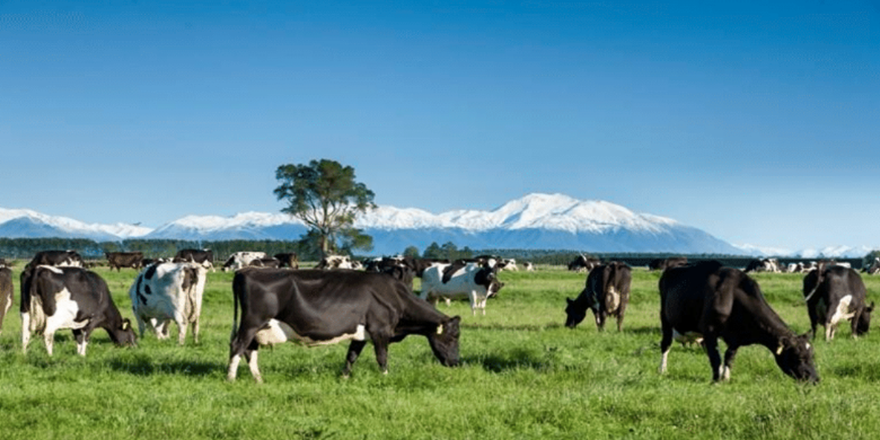
The struggle is real- attracting and retaining young New Zealanders into dairying.

Executive Summary

For as long as I can remember the dairy industry has struggled to attract and retain people. There are varying reasons for this and these have all culminated in the position the dairy industry currently finds itself in. I am hugely passionate about the dairy industry and have experienced firsthand these staffing issues. This is what has led me to investigate this issue.

The chosen focus for this report is to understand why the dairy industry struggles to attract and retain young New Zealanders. Looking at this from an urban point of view, a short online survey was conducted in four different high schools, to gain insight into what their perception is of dairy farming, how they feel about dairy farming, and would they consider a job in dairy farming.

One of the major themes to come through from the survey was that students had little to no knowledge of what was involved in a dairy farming career. While this was disappointing, it was identified as an area of opportunity. With the correct strategy, real in roads can be made in this area. A surprising result from the survey, was that 22% of respondents would consider a job in dairy farming. This was a surprise given the survey was taken in urban high schools.

A change in attitude towards rosters and hours of work was identified as being an important part of making dairy farming attractive. Moving towards a five days on two days off roster will help to reduce the hours worked each week and make the dairy industry much more appealing.

Changing how employment packages are structured was also identified as being a great way to make the dairy industry very attractive. Valuing all additional benefits, such as accommodation, at market rates will make employment packages far more attractive and competitive.

Attracting and retaining young New Zealanders to the dairy industry will require changing traditional attitudes behind the farm gate towards employment and embracing a new way of thinking when it comes to managing people working on dairy farms. Without change, the industry will be doomed to repeat the mistakes of the past.

People capability in the New Zealand primary industries.

Executive Summary

Major global agri-food trends and changes to the workforce in the future are expected to have an impact on people capability needed in the New Zealand primary industries. With New Zealand’s reliance on exports and competing in international markets, it is recognised that the skills and knowledge will need to keep pace with the evolving demands of society, advances in technology and changing consumer preferences across the global agri-food industry. These are expected to transform the way business is done and in particular how individuals and society interact.

In addition the current government’s focus on sustainability and the environment has also meant there has been a greater emphasis for the primary industries to transition from commodity based agricultural products to high value.  People capability, in particular skills that are required post farm gate, is a core asset that will underpin the success of gaining more value out of the products produced and adapting to the accelerating pace of change.

Focusing on the primary industries people capability requirements post farm gate, in particular concentrating on those that add value to agriculture commodities and/or creating high quality premium products and services, the aim of this research project was to:

  1. Gain an understanding of international agribusiness and workforce trends to identify how these may impact on New Zealand primary industries and the people capability required in future.
  2. Discuss the people capability requirements in relation to the primary industries post farm gate and identify core people capability themes and skill sets required by those adding value to agriculture commodities and/or creating high quality premium products and services
  3. Discuss people capability initiatives currently being undertaken by organisations/sectors in the primary industries in relation to post farm gate requirements.
  4. Identify ways to attract and build talent at a post farm gate level.

Key findings from this research project:

  • It is expected by that there will be many changes to business and within the primary industries in the next 10 years, more so than that has occurred historically. Much of this will be driven by consumer demands and technology advancements. Adapting to these while transitioning to value added export will require different skill sets and capabilities to those needed today.
  • While it is expected that by 2025 around 230,000 people out of a workforce of 369,700 will be required post farm gate, many of the current industry initiatives tend to focus on attracting and building people capability within the farm gate and at a production level rather than having a view to what skills are needed in order to gain more value out of the products produced at other levels along the value chain.
  • Many of the technical skills and qualifications that were thought to be needed post farm gate for those that add value and/or create high quality products/services were customer and market focussed. The importance of the capabilities required to develop markets internationally came through strongly given New Zealand relies on exporting the majority of what is produced by the primary industries. A review of industry people capability initiatives indicates that there is currently only a small focus on this.
  • Although a qualification and/or background in food production or the primary industries is useful, transferable ‘soft’ skills are recognised as being most important given the pace change businesses are experiencing. Agility and adaptability, attitude, communication, empathy and understanding, building relationships were rated as the top skills needed now and in future.
  • There has been a big effort to incorporate agriculture in education and engage youth with the primary industries. However there does not seem to be a supporting or coordinated industry wide approach that captures or connects the pool of potential talent that has been previously building, potentially undoing the work of these initiatives.  This occurs in particular at the post farm gate level.
  • People capabilities post farm gate require a range of skills and qualifications not specific to the primary industries and can be gained through a number of institutions. Currently sectors seem to limit post farm gate talent pool with many focusing on qualifications or specific degrees in relation to agricultural subjects received from a select few institutions.
  • Overwhelmingly the perception of the primary industries is seen as one of the biggest challenges with attracting and building people capability not just at post farm gate, but also within the farm gate. In order to attract the people capability required for the future, it was identified that a consistent overarching story/message that is exciting, relevant, inspiring, that resonates and connects the industry to food rather than the term ‘primary industries’ is fundamental.

The following recommendations are points that warrant further investigation:

  1. Determine and develop an overarching industry wide story to create a consistent message that links sectors and the industry to food more clearly.
  2. Provide increased focus on attracting and developing the skills required post farm gate at differing levels. In particular initiatives to help build international and in-market experience.
  3. Create a central platform to capture and connect the talent that is being built by current initiatives engaging with youth.
  4. Target a wider skill base than the narrow group that is currently being targeted and promoted to by current initiatives.
  5. Further investigate future workforce design and apply this to the post farm gate businesses as a way of attracting, developing and retaining talent in the industry.

There are broader aspects to this subject that have been explored but not elaborated on.  Overall it is hoped that this research project will offer insights and provide discussion points to what is needed in terms of attracting and building people capability post farm gate going forward.

Mechanised silviculture: Opportunities and challenges for the NZ forest industry.

Executive Summary

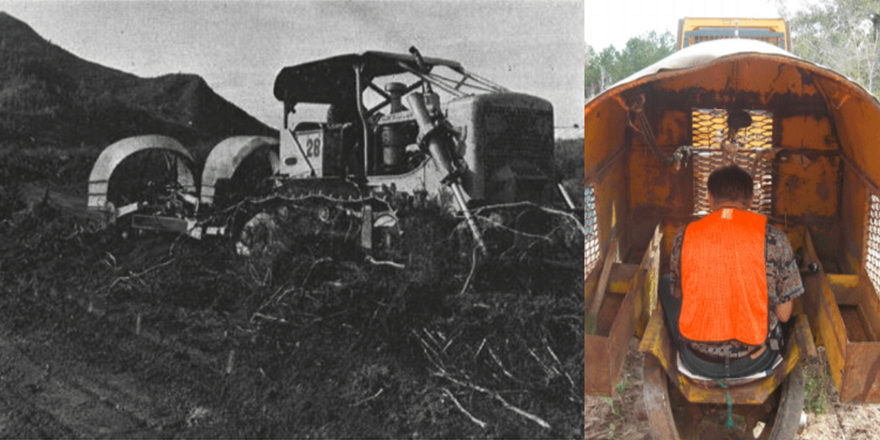
The New Zealand plantation forest industry currently relies on manual labour to carry out silviculture operations, particularly planting, waste thinning and pruning. However, the industry is currently experiencing significant labour shortages. This is likely to be exacerbated for silviculture operations, particularly for planting in the short-term, with the commencement of the New Zealand Government’s ‘1 Billion Tree’ programme. A potential strategy to overcome the issues of labour shortages for silviculture operations is through mechanisation.

The aim of this study is to provide an insight into the opportunities and challenges of mechanised silviculture for the New Zealand forest industry, with a particular focus on planting, waste thinning and pruning. A review was carried out of the historical and current use of mechanised silviculture in New Zealand and internationally. A survey was also conducted of members of the New Zealand forest industry to attain their views on mechanisation of silviculture.

The review of current technologies showed that for:

  • Planting, there are machines in Sweden, Finland, Canada and South Africa which have potential, though they would likely require adaption to operate effectively and efficiently in New Zealand conditions. Timberlands Ltd is currently trialling one of these machines in Kaingaroa forest.
  • Waste thinning, there are currently some machines in operation in New Zealand, but they are limited to relatively gentle topography. There does not seem to be any other suitable technologies available, particularly for steeper terrain.
  • Pruning, there does not seem to be any technologies that could be readily adopted for use in New Zealand forest conditions.

The results of the survey showed that:

  • Over 90% of respondents had some or significant issues obtaining suitable labour or contractors for planting and thinning.
  • Nearly 60% of respondents believed development and/or implementation of mechanisation for thinning was important for their organisation within the next 5 years. For planting and pruning, this figure was 45%.
  • Over 63% of respondents thought a significant mechanised research and development programme should be developed for either planting, thinning or pruning within the next 5 years.
  • The main benefit of mechanised silviculture for the New Zealand forest industry is that it could reduce the health and safety risk for workers, particularly on steep terrain.
  • The most significant challenge for mechanised silviculture is operating machines on steep and variable terrain, as well as dealing with physical impediments (e.g. slash/logs).

The results of the review and survey indicate that the New Zealand forest industry has two options for implementing mechanisation of silviculture, particularly on steep terrain:

  • Adapt some of the existing mechanised silviculture technologies to enable them to operate effectively and efficiently in New Zealand conditions.
  • Investigate research and development of new technologies.

Implementation considerations include challenges and risks of technology development, the effect of potential labour supply changes on the viability of mechanisation, and social impacts.

It is recommended that the results of this study are presented to the Forest Owners Association’s (FOA) Forest Research Committee to initiate discussion and determine the desire and feasibility of a forest industry mechanised silviculture research and development programme.

Opportunities for the NZ pork industry to compete with imports.

Executive Summary

The aim of this report is to identify opportunities for the NZ pork producers to compete with continued and increase imported pork. The three main areas I have investigated are “WHY?” we need to compete. I investigate the reasons for the increase concentrating on pork production in relation to population data. I studied the imported product, its origin and its form and where it is used. I look at the “WHAT?” we need to compete on. Looking at the drivers for purchase and finally I analyse the attributes of pork, such as price quality, welfare and sustainability to see if we “CAN” compete imports.

The main findings of the report are:

  • Increased population growth
  • Forecast population growth
  • Stagnant domestic pork production
  • Lack of convenient pork products
  • Pork is an affordable protein option
  • Need to find alternative pig feed solutions

My initial thoughts were that this report was always going to be a price comparison and that because imported pork is considered cheaper NZ produced pork would never be able to compete. I have been surprised to find the strong correlation of population growth to increased consumption of imported pork. It has been a positive to see the reliability of predicted population forecasts. I believe this offers NZ pork producers real certainty if they choose to make a positive change.

The aspect of convenience is an area that producers have much less ability to impact but it is an area of particular significance, if they can offer a convenient and affordable product to millennial consumers. NZ pork producers must find ways to form strong relationships with processors, manufacturers and the hospitality sectors.

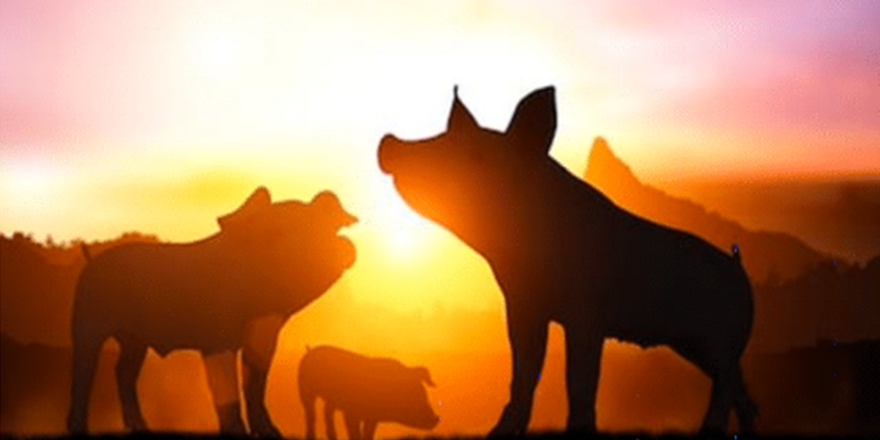
At times it has been daunting to look at the volume of domestic pork production that is needed to maintain the current position let alone improve it. It is imperative that the industry moves forward and strengthen its position. Pork producers can be positive when they look at this problem as solid progress has been made in welfare, quality and sustainability. There are traceability capabilities within the supply chain and the NZ consumer wants NZ pork. The pig is an animal that has the fantastic ability to turn products that humans can’t eat into something they can. Pig productivity whilst continually improving is not be enough to solve this problem. In the future NZ pork producers must become a more significant industry. With that they will become a significant threat if biosecurity is not maintained at the borders and rather than the industry that can be sacrificed it will be one to be protected. So NZ pork industry you maybe a small group of producers but you are powerful.

Around 95 NZ pork producers:

  • Feed 1.963 million people
  • On average feed over 20,000 New Zealanders each
  • Produce over 82 million meals each year

My recommendation is for the industry to work together and grow. Grow in size, grow in numbers and become an industry that grows rural New Zealand and grows New Zealand.

Indigenous branding creating an emotional connection.

Executive Summary

Global customers are increasingly demanding authentic products and services, and indigenous branding has been recognized as a natural fit to deliver on this. Global trends observe a shift away from traditionally produced premium foods to more sustainable alternatives. This consumers is increasingly concerned of where their product comes from, the impact growing this product has had on the environment, that these people and lands are being looked after and what the indigenous stamp means.

Indigenous branding creates huge opportunity for Maori who consider that land is a living and breathing thing and part of your identity as Maori. It is an inter-generational culture with a 150 year plan, “we are a whakapapa, we are both the past, and the future.”  Maori need to wrap this up in a meaningful way as resonates with the consumer to make an emotional connection, and the whole company needs to align with these brand values.

The purpose of this study was to evaluate two things, 1) what a consumer expects when presented with an indigenous product. 2) How do we give confidence that this product is genuine. This research is carried in two parts. The first is a review of literature published between the 2005 and 2013 period and key themes that come through from this. Part two is a case study evaluating four successful Maori businesses regarding the work they are carrying out around consumer expectations and authenticity.

There was a considerable amount of literature published between 2005 and 2013 regarding indigenous branding and how it could be used to create a point of difference. A key finding of this review is that Maori branding focused on presenting a product that encompassed a set of values as important to the Maori business. The case studies determined that this focus has since been reversed, and is now focused on expressing value as determined by the consumer.

The recommendations of this report are that further research is required to position an indigenous experience to make the consumer feel good and create an emotional connection, and Maori brands need to collaborate more to ensure the market insight work is done to avoid risking market position.

Has monitoring of financial objectives improved with improved technology.

Executive Summary

New Zealand farmers have often looked to adopt technology to use in their farming business to increase productivity. The use of technology throughout the entire farm business has increased as modern day farming techniques become more complex and large scale investment in the rural sector increases.

Sheep & beef farmers in New Zealand have benefited from recent sustained increased returns. This report focuses the Tararua and Wairarapa regions as a sample of New Zealand sheep and beef farmers who, like the rest of the industry, have the opportunity to utilise the increased returns to achieve their financial objectives.

Historically, budgeting and monitoring of financial objectives amongst sheep and beef farmers has been low. Using a survey of rural professionals and farmers, the aim of this project was to investigate whether financial monitoring has improved with improved technology.

When analysed, the data quickly showed monitoring of financial objectives had not improved. The barriers to technology – use identified in the survey by rural professionals, could be seen as barriers to financial monitoring as much as technology. Subjective barriers such as fear of technology seems to be a defence for lack of financial knowledge or a perceived shortfall in some areas of financial knowledge. Time was disregarded as a direct barrier, as programmes that are available today are quick and easy to use. Therefore, time issues were considered a lack of defined return on investment for the time invested.

A number of recommendations have been made as part of this report. These included:

  • Encourage farmers to investigate ways of binging technology into their financial monitoring in a way that fits their approach.
  • Rural professionals to put financial considerations as the first issue in succession plans.
  • Farmers to set small goals that fit within the larger financial objectives so that the sense of achievement is realised along the way.
  • Farm businesses identify and monitor critical financial performance measurements that are important to them and their individual goals.

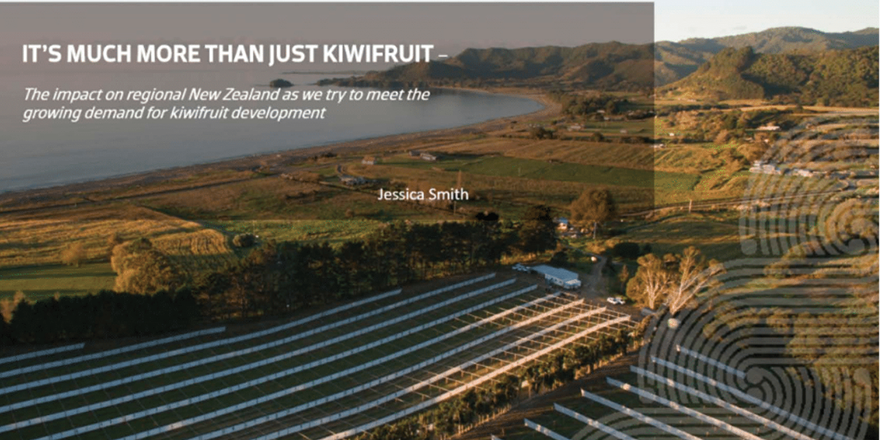
Its more than just Kiwifruit: The impact on regional New Zealand as we try to meet the growing demand for Kiwifruit development – Te Kaha case study.

Executive Summary

  1. If our regions are not thriving the prosperity of our people declines. Half of New Zealand’s population live in the regions. It is our regions that generate our economic output through the primary industry. Kiwifruit is the largest horticultural economic contributor and is targeted for significant growth.
  2. This research is about the impact on regional New Zealand as we try to meet the growing demand for kiwifruit development. In my opinion, very little research exists about the impact of kiwifruit development that is people centric and flavoured with regional perspectives.
  3. The Government’s regional economic strategy to foster regional prosperity aligns with global growth opportunities in Kiwifruit, Zespris growth strategy and market demand. The common denominator is that the regions are key to achieving their strategy.
  4. 52 individuals participated in the survey over a three month period. A combination of in-person interviews, postal and online surveys were conducted. All respondents were located in Te Whanau Apanui, a thriving kiwifruit community north of Opotiki. The survey questions were designed to capture demographic data for regional context; and gain personal insights about the impact of kiwifruit development on their community.
  5. The people centric approach that I have undertaken has enabled me to gain, on the ground personal insights which will be used to help guide industry thinking about kiwifruit development in our regions, particularly the more remote areas.
  6. Three key themes emerged from the research that captured the essence of the voices of the people in this region:
    • the impact on our People;
    • the impact on our Land;
    • the importance of Social Investment
  7. The following recommendations have been prepared to guide and support key industry stakeholders about working in our regional kiwifruit communities.

THAT a multifaceted strategy is required when growing industries in our regions. This will require collective involvement from the communities, industry and Government. MULTIFACETED STRATEGY

THAT the voice of the people is critical in the development of any strategy, therefore any strategy needs to include and allow time for meaningful engagement. MEANINGFUL ENGAGEMENT.

THAT a knowledge gap currently exists in our regional communities about on-orchard kiwifruit practices. INFORMATION COMMUNICATION

THAT a Maori grower participation strategy needs to be developed to increase participation within the kiwifruit industry. MAORI PARTICIPATION

Preparing a team to manage a severe storm/flood across multiple dairy units: How do you prepare your business.

Executive Summary

Severe storms and flooding are occurring in New Zealand more with more impact to our people and environment. How prepared for an Emergency is critical to how an event impacts your business is significant to a profitable farming system. Methods used for this report is a comprehensive analysis into regional emergency response giving the understanding of the complexity’s involved in levels of response, process behind declaration of local state of emergencies, structure and roles of decision makers. Analysis also looked at industry bodies recommendations giving this report trends of common themes in response plans.

Research into the regional response system highlighting structure and roles within community’s emergency response such as the (CIMS) model to build a robust business plan show that with reoccurring weather events Household emergency plans, Personal workplace emergency plans and thorough reviewing the plans with staff and updating getaway survival kits is key to being prepared in your household and your business.

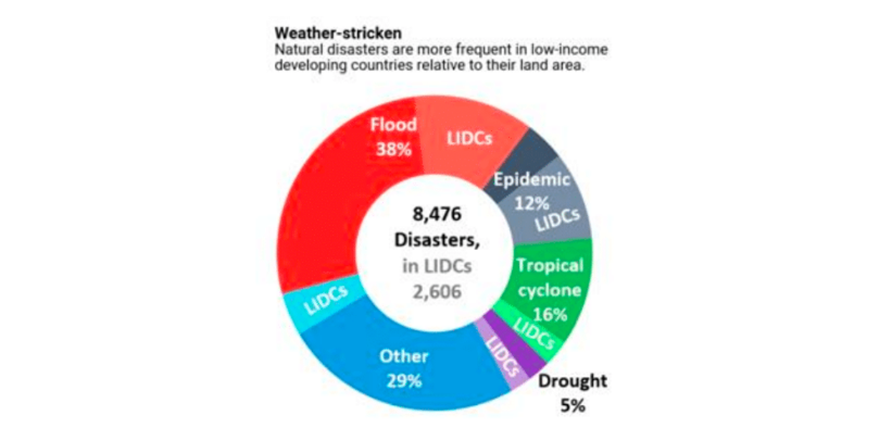
With research that extreme weather events are becoming much more common not only in New Zealand but across the world, between 1990 and 2014 there were more than 8,000 weather related disasters with floods, hurricanes and epidemics being the most common. (IMF Blog insights and analysis on economic and finance- climate change) shows 25 years of research proves 38% of natural disasters are severe floods with 16% Tropical cyclones.

Declaring state of local emergencies is made up of a number of Authorities or Mayor and Local Councillor. A state of Emergency is declared when the special powers within the Civil Defence Emergency Management (CDEM) Act 2002 are required to coordinate the emergency. The special powers can only be used if the event meets the definition of an emergency as defined in the Act. The CDEM defines an emergency situation where flooding, storms, tornados earthquakes and many other natural disasters. Also where there is significant risk to injury or life or in any way endangers the safety of the public or property in New Zealand.

There are five levels of response with level one being a local incident or response activities dealt with by an emergency service, Local Authority or other responsible organisation without the activation of an EOC (Emergency Operations Centre).
Level 5 being National Coordination with a regional level response being activated to direct, coordinate and support incidents with regional or national implications at the National Crisis Management Centre (NCMC).
Analysis of industry recommendations has picked up the trend of three key areas Preparation, Response, Recovery. Under the Health and Safety in Employment Act, businesses have an obligation to be prepared for an emergency. Workplace Emergency Plans which includes communicating my get home plan, work get home group, my get home plan, personal and family information are a successful way to prepare your teams and need to be communicated frequently so all staff understand what the plan is when preparing for a storm or flooding.

Safety of stock is protecting a significant asset to your property when preparing for weather event some common trends through analysis have been stock on highest ground, shelter is extremely important as stock lose body temperature when wet, access to fresh stock water.

Response during a severe storm of flood it is highly recommended by industry bodies and Civil Defence to listen to your local radio stations as emergency management officials will be broadcasting advice for your community and situation. Filling bathtubs, sinks and storage containers with clean water in case water becomes contaminated, consider using sandbags to keep water away from your home, ensuring you and your staff have household emergency plans in place, do not attempt to drive or walk through floodwaters unless it is absolutely essential.

Recovery from a severe storm or flood can be a significant job. Making sure family, staff and neighbours are all ok is priority. Checking and securing stock with fresh stock water and report any power or phone faults. If power is out, look for trees over lines, fallen poles. Treat all lines as live. Check farmbuildings and infrastructure including roads and races.

Research suggests long term mitigation strategies on your property such as strategic planting of willows or poplars, having adequate supplementary feed on hand, having all pumps above flood levels, having an older styled telephone that doesn’t require power, having a car charger if you have a cell phone, having stock in good condition as healthier stock are more resilient which gives you more management options during difficult times, reviewing your insurance cover regularly, is it economical to buy a generator? Potentially in partnership with one or two neighbours.

So how Prepared is your Business?

Pathways to farm ownership.

Executive Summary

Changes in dairy farm ownership and overall industry growth has occurred at a rapid pace in the past 25 years . This has largely occurred due to strong returns from dairy farming driving a “dairy boom” in most regions of New Zealand. The dairy boom has been particularly evident in the South Island where farmers and investors have converted dry-land sheep and cropping farms to irrigated dairy making use of a supportive banking sector and low interest rates, availability of reliable water for irrigation and a statutory requirement on Fonterra to collect all new supply.

The dairy boom and the conversion of farm land to dairy has led to significant wealth creation through a change in land values (e.g., from dry-land sheep and cropping to irrigated dairy) that exceeded the cost of conversion. These one-off gains are tax-free and despite the high levels of debt that many took on, there was, in general, an expectation that land values would continue to rise long enough to resolve the low equity position that many farmers had during this period.

Some regions have proven more popular with dairy farm investors than others. There are a number of reasons for investor preference however, high debt levels (financial risk) were managed by investing in areas with reliable production and lower business risk. Essentially, areas that could reliably grow enough high quality feed each season (such as irrigated Canterbury and Southland) were favoured over regions with more variable performance. Demand for farms in the premium regions continued to rise over other regions and this demand was reflected in price premiums.

Since 2008 farm gate milk prices have been volatile and included periods of low payouts when most farmers ran their farms at a loss. Those farm businesses with high debt levels had to manage costs and production very carefully or risk breaching bank loan covenants. The down turn also increased dairy farm debt levels. In the ten years from 2007 to 2017 dairy farm debt increased from $18.8 billion to $41.2 billion as a period of land development, business growth and investment in farm conversion was followed by record low milk prices. The graphs below depict the effects of the dairy boom and dairy downturn on rural debt and scale of growth in the dairy industry and equates to $22 a kilogram of milksolids (Woodford, 2017).

During the recent downturn, bank lending to the dairy sector increased by $5 billion or 15 percent, mainly for working capital purposes. Farms also borrowed almost $400 million through Fonterra Co-operative Support Loans. With leverage in the dairy sector already high, this growth in debt has left the sector more vulnerable to another period of low dairy prices.

The dairy boom also saw a change to the type of investor in the industry. Corporate and institutional “type” investors were attracted by the strong returns from the tax-free capital gains that were available through the change in land use, from land development and from farming cash flows. This interest increased the demand for existing dairy farms and their support farms and also for those farms with potential to convert to dairy helping to underpin the market for farmland.

While there is no official data on the proportion of New Zealand farmland that is now owned by “corporate” type companies (vs traditional family owner operated farms), Foregin Direct Investment (FDI) can be used as an indicator for this type of investment activity. NZIER reported in 2016 that FDI in New Zealand almost doubled between 2001 and 2015 from $55 billion to $100 billion and while FDI in farmland represented only 5.9 % of all FDI in 2015 , this share has risen from 1.3% in 2001. Th is represents an increase of 16% per annum and is above rate of the 13.5 % annual rise in farmland values over a similar period (Gawith, Andrew, New Zealand Herald 2010). Since 2001, 15% of agriculture and forestry transactions have involved some form of FDI of which 58% was forestry (ANZ Agrifocus December 2017).

Historically, dairy farming has provided viable pathways for farmers to create wealth over time enabling many to achieve farm ownership. The development of the industry over the past 20 years has increased land values at a faster pace than cow values and, as a consequence, is reducing the use of traditional structures such as 50/50 share-milking favouring instead the use of other arrangements such as equity partnerships, contract milking and variable-order sharemilking. The low milk prices of 2015 and 2016 seasons added impetus to this trend as farm owners were forced to consider all options to reduce operating costs. This has included a move away from sharemilking to directly employing farm managers and contract milkers. The table below shows that there are approximately 800 less sharemilking jobs (from 4.044 to 3,208) in New Zealand than 10 years ago. O her data from DairyNZ shows that in 2017 82% of all sharemilking job were on farms of less than 3 600 cows, indicating that farm owners prefer straight management roles for large scale farms. Anesdotal evidence also suggests that large scale farms are preferred by corporate investors.

The changes outlined above meant that herd owing share-milkers lost ground to land owning farmers on a proportion of asset value that was contributed to a traditional share-milking partnership and could no longer expect to share in 50% of the milk income ( less their costs ). Historically sharemilkers had been able to grow their equity at over 30 % per year (DairyNZ Economic Survey 2017). This compared with owner-operators return on equity (from 2008 – 2017) averaging 6%. More recent entrants to the industry are having to work with land owners to develop new models for wealth creation to achieve farm ownership. For others, farmland values have reached such high levels that the goal of farm ownership seems attainable and have exited the industry.

While farm ownership through dairy farming is becoming harder in high land value regions and where the dairy land development cycle is at a mature stage, there are regions that have suitable land for dairy farming although have attracted less interest from corporate investors. One such region is the West Coast of the South Island. Land values on the West Coast haven’t reached the same levels as in premium regions such as Canterbury on a per hectare and per kg milksolids basis. There are a number of reasons for the difference and this study seeks to identify how this has affected investment returns for investors and emerging farm owners.

Understanding and comparing investment returns for both Canterbury (as an example of a high value region) and the West Coast (as an example of low value region) is important to farmers exploring new ways to create wealth in the dairy industry. As a recent entrant to the dairy industry (less than 10 years) it is an area of particular interest to me and I hope that this study will contribute to the pool of knowledge for many other farmers in a similar position.