2026 Nuffield NZ Farming Scholarship. Apply by 17 August 2025. Read More...

Apply for 2026 Nuffield NZ Farming Scholarship by 17 August 2025. More details...

How does New Zealand ensure we do not get complacent in long-term disease control, specifically Bovine Tuberculosis?

Executive summary

Bovine Tuberculosis (TB) has been a persistent concern for New Zealand’s agricultural sector since the 1880’s and is still ongoing today in some parts of the country. While considerable progress has been made in reducing the prevalence of bovine TB, complacency in both farmers and industry representatives poses a threat to its effective control and eradication.

New Zealand Inc. must be bold in the fight for TB freedom. Eradicating Complacency looks at the historical journey New Zealand has been on with the disease, the efforts taken to reduce possum numbers and infected herd numbers, and what the current state of play of the disease is currently at in 2023.

This report, Eradicating Complacency, investigates the current perception and understanding of Bovine TB with farmers and industry, to gauge if there is a level of complacency happening with the disease in NZ. The aims of this study were to:

– Investigate the current perception and knowledge of Bovine TB and the TBfree programme with farmers and industry in NZ.
– From the above findings, determine what is needed to make TB visible in regions where there aren’t infected herds or wildlife.
– Review what story telling has already been done with farmers and industry representatives that have been impacted by TB in the past.
– Determine a people centred strategy going forward to ensure complacency does not occur with farmers and industry, and efforts are sustained the closer we get to eradication of TB in herds by 2026.

To carry this out a literature review was done on the international efforts of eradication of Bovine TB in other countries, the stories that have already been told of those impacted by the disease and how story telling can impact recovery in adverse events. A digital survey focusing on knowledge and perception of the TBfree programme was created and had 71 responses from farmers and industry professionals around NZ. A thematic analysis was used to theme the perception responses. One interview with a Senior Vet from OSPRI NZ was conducted to understand how the TBfree programme has evolved over time.

The research highlights that farmers and industry have a relatively sound understanding of the TBfree programme, however farmers feel there are not enough stories being told on the human and farming impacts of being TB infected. More literature reviews were conducted on the impacts of storytelling in recovery from adverse events.

Recommendations to eradicate complacency, the closer we get to Bovine TB eradication are:

– Human centred communications focusing on the people impacts, alongside the technical information.
– Increase story telling of impacted farmers and industry professionals to help make TB visible in non-visible areas of NZ.
– Education with younger generations, lifestylers on impacts of TB, and what it means to be TB free in New Zealand.

Eradicating Complacency shows valuable insights into what the next few years could look like as we move closer to 2026. It’s human-centred and has the people in the industry at its core.

Tessa Appleby

Dairying horizons. Exploring the potential for New Zealand’s dairy expansion in Nigeria.

Executive summary

In the face of market volatility and increasing uncertainty in international trade, New Zealand as an exporting nation, must adopt forward-thinking strategies to protect its interests. Market diversification within the dairy industry holds significant impacts on New Zealand dairy farmers, processors, and the wider economy. This report analyses the potential for expanding New Zealand’s dairy partnership with Nigeria, a market with untapped opportunities.

Report objectives:

  • Investigate the current landscape of Nigeria to set the context in which the dairy sector operates.
  • Analyse the structure and dynamics of the Nigerian dairy sector.
  • Examine the relationship between demographic factors, economic growth, urbanisation, and the political landscape on the demand for and consumption patterns of dairy products in Nigeria.
  • Propose recommendations for New Zealand dairy exporters to explore further growth between New Zealand and Nigeria.

The research methodology involved a situational analysis through a comprehensive literature review to assess the current state of Nigeria and the structure of its dairy sector. Semi-structured interviews with key stakeholders were conducted to gain an understanding of the consumption trends and drivers.

Critical analysis of the literature review and interviews revealed four drivers impacting the growth of Nigerian dairy consumption these were: the force of population growth and demographic shifts, economic recovery, political stability, and rate of urbanisation.

As Nigeria’s population continues to grow, urbanise, and the working age demographic expands the demand for dairy products is projected to substantially increase. This increased demand is driven by an emerging middle class, youthful and urban population. However, the Nigerian dairy market’s potential hinges on the country’s political stability and sustained economic recovery. Given global market uncertainties and geopolitical dynamics, New Zealand’s commitment to diversification is paramount. Underscoring the significance of engagement with Nigeria to ensure that future growth opportunities remain open.

Recommendations for New Zealand’s engagement with Nigeria:

  1. Establish relationships:
    The Ministry of Foreign Affairs and Trade to proactively build relationships in Nigeria and West Africa. Through establishing representation across the country to prepare for future growth opportunities.
  2. Cultivate market familiarisation:
    New Zealand Trade and Enterprise to invest in building expertise and knowledge to gain a greater understanding of the Nigerian market. Enabling New Zealand to make informed decisions.
  3. Prioritise Nigeria as a long term future trading partner:
    The Ministry of Foreign Affairs and Trade to develop a strategic plan to build engagement with Nigeria by dedicating resources and diplomatic presence.
  4. Facilitate exchange and capacity building:
    Industry bodies to facilitate the exchange of knowledge and expertise. By bringing Nigerian dairy stakeholders to New Zealand to familiarise themselves with New Zealand dairy processes, quality standards and market dynamics.
  5. Diversify commodity offerings:
    Encourage New Zealand dairy processors to consider expanding their product range to include Fat Filled Milk Powder to target a broader and growing consumer base.

Anna Gower-James

What are the impacts on germplasm importers if regulations get harder to comply with and what are the consequences for NZ?

Executive summary

New Zealand is an exporting nation with its primary sectors being some of the biggest contributors. There is a lot to protect ourselves from in the way of biological incursion that could crush our primary industries, in particular, horticulture.

Protecting our country is done in the way of border controls and monitoring what is entering the country through government created biosecurity systems. The new germplasm import pathways has its own biosecurity system which for users is fraught with complex and multi-layered challenges, all with the primary goal of protecting New Zealand from biological incursions.

This report aims to help support ongoing work in the germplasm import industry and to find beneficial solutions for importing pathways while keeping New Zealand safe from biological threats. This report will explore three key research questions.

  • What is the history of the quarantine system in New Zealand, and how does the system now work?
  • What are the most common barriers to entry of new plant germplasm material into New Zealand?
  • What are the solutions to assist with the simplification of the import process?

The methodology comprises a literature review to provide context around the key barriers faced with the importation of germplasm. A thematic analysis is then conducted from ten anonymous semi-structured interviews of four people from fruit and vine, two that work across multiple horticultural production sectors, one from the ornamental sector, one from the arable sector and two from a non-governmental organisation. The questions were grouped into five high-level themes:

  • Business involvement with plant germplasm
  • Introduction of new plant germplasm
  • The impact and understanding of import barriers
  • Challenges, improvements and impacts
  • Other opinions brought to light

After analysing various themes related to import systems, four major discussion areas emerged from the literature. These areas include the need for simplified operational processes to improve the import system’s usability, economic feasibility to address the potential implications of increased import costs, and New Zealand’s competitive advantage in both domestic and international markets for horticultural products.

Recommendations to improve import pathways for New Zealand and the users:

  • Plant importers, NGO’s and the government need to implement better collaboration between themselves for the improvement of importation frameworks and legislation.
  • To build better capability with MPI and provide comprehensive training for biosecurity officers and relevant personnel involved with the import processes.
  • The need to streamline and standardise New Zealand’s import processes to reduce inconsistency between imports and decrease time delays.
  • Industry and government’s continual investment in advanced diagnostic technologies to reduce testing time and cost.

Jake Kitson, Jacob

Farmer learning preferences around pasture and homegrown feed.

Executive summary

The most profitable farm businesses in New Zealand value the utilisation of pasture and homegrown forage first and foremost. They understand the importance of feed grown and eaten at home, and they farm to get the most from this cheapest form of feed.

But what do we know about the learning preferences of our farmers to efficiently grow and harvest homegrown feed in their farm systems? The purpose of this report was to provide pastoral agribusiness with key insights, including feedback from farmers, around learning preferences and how they make decisions. Pastoral farmers are defined as those who primarily use animals to harvest homegrown forage from their land, turning this into saleable protein, that will ultimately be sold off farm.

Specifically, this report looked to address two research objectives:

  1.  To identify a clear and deep understanding of how and from whom (or what) New Zealand pastoral farmers learn about pasture and homegrown feed for their farm system(s).
  2. Understand the main learning preferences and what is important to the New Zealand pastoral farmer making forage related decisions on farm.

The research used a literature review, fourteen semi-structured interviews (seven red meat sector farmers and seven dairy sector farmers), as well as an example of farmer learning through extension in a three-pronged approach to address the research objectives.

The literature review gave a theoretical base to current knowledge, focusing on research around learning preferences of farmers and how the social aspects of relationships, people and trust play into learning.

From the interviews, a thematic analysis of responses identified that there are two broad pillars (aspects) around farmer learning. Firstly, a pure learning aspect, and secondly a social aspect. Within each of these key themes were identified in the learning aspects Awareness, Information and Decision making, and in the social aspects People and Trust. The people theme is closely tied up with farmer networks.

For learning to occur, awareness of a concept, idea or management practice is always the first step. Awareness can often lead to ‘seeking of more information’ and/or a ‘give it a go’ approach, as our farmers are practical people. Other people/ networks play a major role in farmer learning, and most farmers prefer to learn from others and/or use other people or trusted networks to gain awareness, learn more and help make decisions. Trust over arches nearly all of learning. Farmers must trust in aspects such as information, people, companies, and the science – to be open to learn. And information presented must be relevant to farmers/farm systems, with many farmers preferring science or and data driven information.

Key recommendations for pastoral agribusiness to foster farmer learning are:

  • To aim first to create an awareness of the forage related concept or practice.
  • Ensure information provided is science-based or verified
  • Know who the target audience(s) is/are, be clear on this. Break them into groups, ask questions, listen, deeply understand regional or system challenges and quirks.
  • Information must be relevant to the target audience.

With this in mind, create a fostered learning environment, potentially through closed on-farm groups or any system that brings farmers together. Deeply understand that trust must be gained in order to succeed, that it takes time for this to build, but being part of this inner network is a golden place to be, and provides an opportunity for long-lived learning relationships.

Jen Corkran

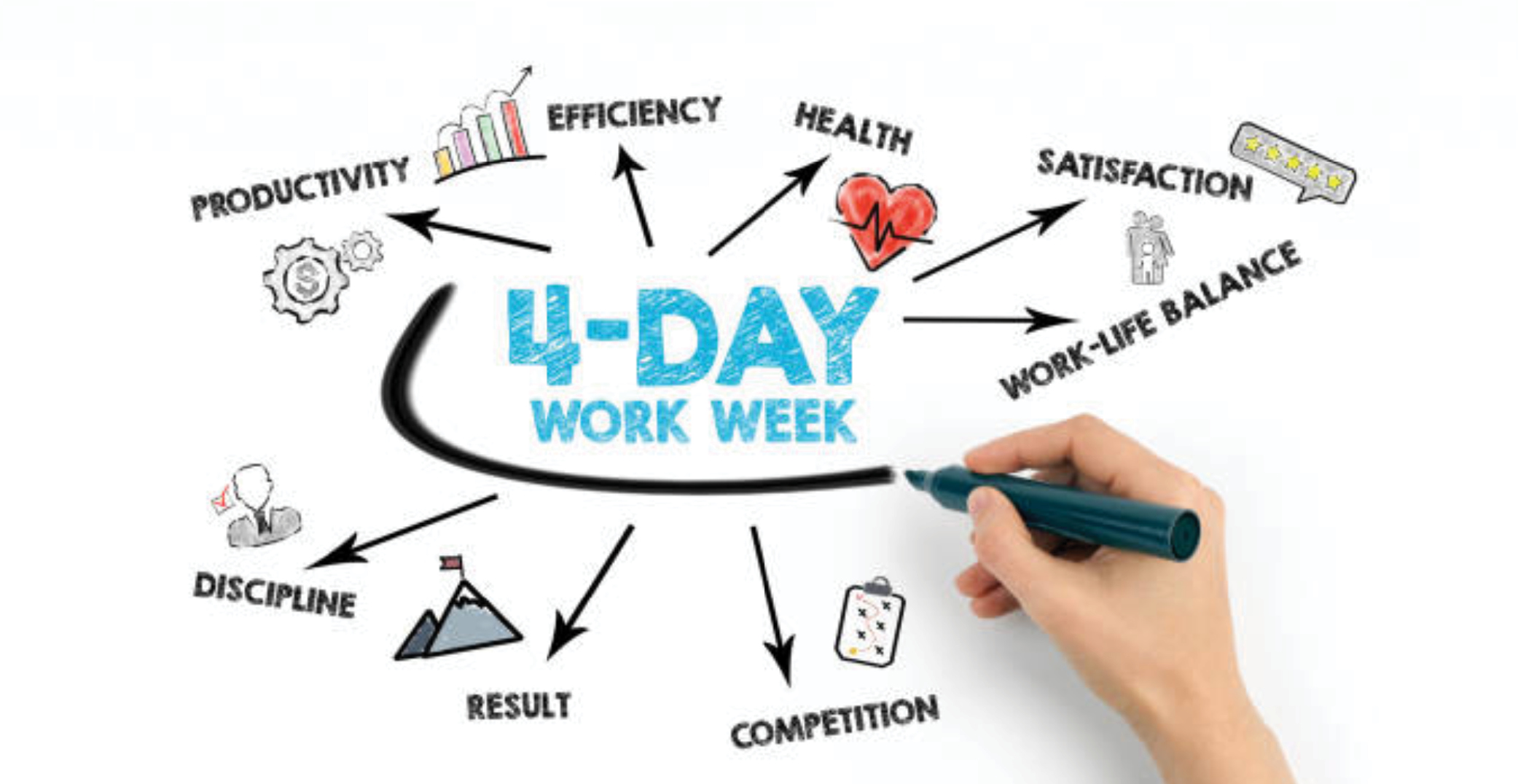
Balancing life and work until the cows come home. The potential for a four-day week in the New Zealand dairy industry.

Executive summary

In the time of the ‘great resignation’ in a post COVID-19 world, finding and retaining top talent is an ongoing and costly concern for businesses. As the employee value proposition evolves, employers may wish to use a change in the structure of the work week as a distinguishing factor for them as an employer.

This research investigates the efficacy of a four-day week amongst the office-based knowledge workers of the New Zealand dairy industry workforce. The key aims of this study were to identify the benefits that a four-day week could provide, establish the barriers to said four-day week, and to recognise how COVID-19 impacted the evolution of workplace norms. The research was undertaken by reviewing existing literature and conducting semi structured interviews employees in the dairy industry.

Thanks to COVID-19 and changes in the use of technology as an accepted modality within the business world, the line between work and home has continued to become increasingly permeable. This impacts work-life balance for employees and subsequently satisfaction in both life and work. An opportunity is presented for a reset of worker culture to benefit the mental health and wellbeing of the employee, increase employee engagement within their personal communities, all while simultaneously benefiting the company through more engaged employees and potential increases to productivity.

Employees have benefited greatly from the increased flexibility that has been normalised following COVID-19. There may be further advantages to both employers and employees by formalizing a four-day week variation. This could see further benefit to employee wellbeing and enhanced engagement within their community. However, implementing a four-day week might be difficult due to anecdotal reports that many employees are regularly working over their contracted hours. Others admitted to working to appear like they are still productive, but they admit to idly filling in time until it is socially acceptable to leave the office. As such, feasibility will depend on the team itself and specific circumstances, such as stakeholder availability or time zone cross over.

Transitioning from the current model straight to a four-day week is not the best approach, but instead opting for a four-day week variant would help to smooth the transition and address/overcome the key barriers.

Interviews with 12 current employees of the New Zealand dairy industry found that the key obstacles to a four-day week were perception (of shareholders, and other employees), and maintaining availability to an employee’s respective stakeholders. This reiterates the nuances that exist in each team. These would need to be accounted for in any change to the structure of the working week. Another important recurring theme that manifested was the importance of bidirectional trust between employees and their manager/company. Bidirectional trust enables managers to not have to time-keep their employees, while the employees feel empowered to complete the requirements of their role. Trust on both sides empowers the respected privilege of a four-day week variation.

The key recommendations from this study for a dairy company considering a four-day week are:

  • Acknowledge the difference between task-oriented workers and knowledge workers within their employee base and structure workplace change specific to each worker type.
  • Use a formalised process/framework and support from senior leaders within the company to overcome any negative stigmatism from current workplace attitudes towards long hours.
  • Establish clear performance measures for both business and employee to ensure adequate outputs; and
  • Allow individual teams to devise their own implementation plan within set boundaries to adequately consider team-specific nuances.

Daniel Brocx

Reducing New Zealand’s livestock methane emissions.

Executive summary

Climate change is a global issue with local influence. It will both impact New Zealand’s agricultural systems and be impacted by them. New Zealand farmers face significant agricultural emissions reduction targets. Achieving these will be heavily influenced by how agricultural methane emissions can be reduced. The methane from farmed livestock in New Zealand accounts for 76 per cent of all of the biogenic methane New Zealand produces.

This report seeks to understand the potential options for New Zealand livestock farmers to decrease their methane emissions. It considers the unique circumstances faced in New Zealand and assesses some of the drivers and impacts which should be considered in their uptake.

To understand the potential options for New Zealand farmers and the impacts they may have, several questions needed to be answered:

  • What are the drivers pushing New Zealand farmers to decrease methane emissions?
  • Where New Zealand agriculture has got to on reducing methane, and how it got to this point?
  • What are the reduction options for New Zealand farmers to consider?

The methodology comprises of a conducting a stocktake of emission reduction targets faced by farmers to understand how the timing and intensity of these targets have changed. Datasets from peer reviewed, government, and industry, published sources were extracted to produce a time-series view of the livestock sector and enable interlinkages to be explored. Finally, a review of existing peer-reviewed and grey literature and a thematic analysis was conducted. This both identified possible options for New Zealand farmers and considered the implications for New Zealand farming systems of the options.

Each themed option was explored to understand:

  • What the option is.
  • The methane emissions reduction impact.
  • How applicable the option is for New Zealand farmers.
  • The cost of implementing the option on a farm.
  • When the option will be available for New Zealand farmers.

While government targets have historically been the main driver for agricultural emissions reduction, industry and businesses are now bringing in commitments. These will need to be met by farmers or they may face challenges selling their products.

New Zealand’s agricultural sector is a dynamic mosaic. It is constantly changing to adjust to outside pressures and its methane emissions have grown and shrunk over time. It’s mosaic nature also means different parts of the sector are further through realising methane reductions than others. Beef, sheep and dairy all face the same challenge, but are at different stages of responding to it. Not all options can be applied equally.

Farmers already have some tools to hand which can be used to reduce methane emissions. These need to be embraced early if methane is to be reduced in time. Some technologies are under development for the future, which may be easier to implement, have lower costs, or achieve greater reductions, but they are also still unproven. Significant research is still required for these to become useable options for New Zealand farmers.

It is recommended that:

  • All groups work together to ensure methane reduction options are adopted on farm as early as possible.
  • Farmers consider the full impact of methane reduction options on all emissions and the wider environment, how the different options may fit with their farm, and how they will operate in a changing operating environment.
  • Government and industry work together to encourage and enable farmers to reduce their methane emissions as rapidly as feasible.

There is still significant progress to be made on reducing methane, but some change has already occurred. Each year, new ideas and technologies become a reality, so the options for farmers needs to be regularly reviewed. There is a low methane future for New Zealand’s farmers.

William Aitkenhead

Women in governance. Food and fibre have a way to go.

Executive summary

The glass ceiling has long been smashed by women, but in recent times there has been ever slowing progress made in achieving gender diversity in board rooms in the New Zealand food and fibre sector.

The aim of this research report is to examine the current state of women in governance in the New Zealand food and fibre sector, and to build understanding as to why there is still a short fall when it comes to gender diversity on the boards of so many organisations in the sector. The main question this report addresses is, how can gender diversity be increased on governance boards in the New Zealand food and fibre sector?

The methodology is made up of a literature review, to provide base knowledge in order to perform thematic analysis along with eight semi-structured interviews to provide real world context of women in governance in the New Zealand food and fibre sector. From this, three high level themes which included nine insights were distilled:

  • Societal Factors
    • Workplace Culture
    • Food and Fibre Gender Roles
  • Support and Representation
    • Mentoring and Role Models
    • Personal Relationships
    • Unconscious Bias
  • Gender Equality in the Workplace
    • Role Availability
    • Pay Gap
    • Experience and Competency
    • Talent Management

Analysis of these themes and insights, whilst also taking in consideration the literature review, provided 3 main areas of discussion around the value of women, looking future forward to continue making positive progress, while also recognising some unintended consequences of aiming for a perfect 50/50 split of gender diversity in the board room.

The recommendations made following this are for those who are in governance in the New Zealand food and fibre sector and see the need to increase gender diversity in the sector.

  • Know the current workforce that New Zealand Food and Fibre Sector have available for development
  • Raise awareness and have the conversation with peers about the benefit and need for gender diversity
  • Implement gender diversity recommendations in the relevant boards corporate governance codes
  • Create inclusive workplace culture
  • Training for all levels of people throughout business workforce
  • Create an accessible, supportive network of mentors for women interested in governance.

Kirsten Holmes

Governance in family farming businesses. How well is it understood and what is the potential?

Executive summary

Family farming businesses make up a large proportion of agriculture production in New Zealand. The size and scale of these businesses have been steadily increasing. They have now become medium-scale businesses with large financial commitments and a mountain of compliance and regulation to contend with.

In the corporate world, the concept of governance is spoken about often, but how well is good governance understood in the family farming business, and, if required, could a better understanding of governance provide opportunities?

The research project’s first aim was to investigate what literature had already been researched about governance and its application in agriculture. Then the next aim was to understand what current family farming businesses understood of the concept of governance and whether it was being practised. The ultimate objective was to uncover if improved governance was something that family farming businesses required, and if so, how could it be implemented.

The methodology comprises a literature review to gain a deeper understanding of the concept of governance and how might it be applied in agriculture. From the literature, questions were raised to uncover the attitude and understanding of governance in family farming businesses. Semi-structured interviews were undertaken on family farming businesses and the answers and information gathered were analysed to find the key themes. These key themes identified were then reviewed in conjunction with the literature reviewed to explore possible solutions.

Key findings

  • While agency theory is the oldest and most widely recognised theory of corporate governance it may not be applicable to family farming businesses as owners and managers are the same people.
  • Resource dependency theory, stewardship theory and stakeholder theory are corporate governance models that uncover opportunities to help family farming businesses grow and thrive.
  • Family farming businesses interviewed were only accountable to themselves and considered themselves the key people. They focused on management as opposed to governance and lacked documented plans for their businesses. They rely heavily on insurance as a contingency and have concerns about the future. Last but not least they need to see value from the cost of a third party helping with governance.

Recommendations

  • A possible family farming governance model has been designed which is primarily based on resource dependency theory but also incorporates stewardship and stakeholder theories.
  • The directors and shareholders of the family farming business (referred to as “Mum and Dad”) continue to run the business as good stewards.
  • An advisory board is introduced which includes the accountant, vet and farm consultant already used by the business but with more structure.
  • The Advisory board provides advice, counsel, and knowledge to “Mum and Dad” while in return, concerns, ideas, and intricacies of the management of the business are fed back up to the advisory board.
  • Information is provided to stakeholders to keep them informed relative to where they fit into the business.

Bryce Devane

Wellbeing in the seasonal workforce – a technology based solution.

Executive summary

New Zealand is a nation heavily reliant on its primary industries. Many horticulture organisations within the primary industries operate seasonally, relying on a changing workforce each year. This presents unique challenges which the horticulture industry has struggled to overcome and as a result, there is room to improve seasonal staff retention and productivity.

This report was written to investigate how rostering technology can improve the wellbeing, and therefore the retention and productivity, of New Zealand’s seasonal workforce and to establish what this technology would look like. Through a comprehensive literature review, initial assumptions were validated:

  • There is a problem with retaining good seasonal workers in the horticultural industry
  • Current seasonal work practices in the horticulture industry contribute to negative staff wellbeing.
  • Improving seasonal worker wellbeing will improve retention and productivity for organisations.

A series of nine semi-structured interviews were conducted with key seasonal employers to understand what factors employers considered important for staff wellbeing and how organisations are currently contributing positively to staff wellbeing. Thematic analysis of these interviews demonstrated several tangible pathways to improve seasonal staff wellbeing.

These pathways are focused on:

  1. Reducing fatigue within the staff pool
  2. Giving staff clearer expectations on working hours
  3. Considering staff’s physical environment

A competitor feature analysis of existing rostering software revealed that few had any features which utilised these tangible pathways to improve wellbeing, and so a conceptual software solution was developed. The proposed software would assign each employee a ‘ready to work’ score which accounts for several wellbeing factors and this is used to generate optimal rosters.

Based on the conclusions of this report, the recommended next steps are:

  • Seasonal employers in the horticulture space including post-harvest and orchard management companies should improve the wellbeing of their seasonal staff because it improves financial and ethical outcomes.
  • A business plan should be created to commercialise the proposed software solution – the right organisation or individual to do this will be technology-forward, business smart, and have a strong understanding of the horticultural industry.
  • The aforementioned employers should adopt wellbeing-focused automated rostering software such as the one described here.

Businesses that improve their staff’s wellbeing see financial and ethical benefits, and this report provides the industry with a pathway to achieve this.

Laura Black

Genetic technologies. The next steps for modernising New Zealand’s policy framework.

Executive summary

New Zealand stands at a pivotal crossroads, amidst growing calls from various stakeholders, to reevaluate its approach to how genetic modification technology is regulated. This report serves as a resource for policymakers tasked with the responsibility of reevaluating New Zealand’s biotechnology regulations. It offers historical context, explains the current situation, and outlines the fundamental principles that should guide the development of a new approach.

Key recommendations are provided for developing a bespoke policy framework that addresses the values and priorities of all New Zealanders while leveraging international best practices.

The HSNO Act of 1996, which forms the basis of New Zealand’s current regulatory framework, was enacted over 20 years ago. Since then, there have been substantial technological advancements that present new opportunities for New Zealand, but also new concerns. The existing approach is viewed by some researchers as overly cautious and cost prohibitive to engage with, and there is concern that New Zealand is falling behind trading partners and competitors.

Genetic modification has historically been a controversial topic in New Zealand, resulting in a lack of comprehensive national discourse since the Royal Commission on Genetic Modification report in 2001.

Concerns have focussed on the potential impact on the environment, health, and agricultural exports, while the effect on cultural values holds special significance for Māori. However, with growing understanding of the potential benefits for genetic technologies, New Zealand has a fresh opportunity to engage in this essential conversation and ensure that it leads to a modern, fit-for-purpose approach.

The methodology for writing this report began by identifying a primary research question – Is New Zealand’s current policy settings for the regulation of genetic technologies fit for purpose? Finding that it wasn’t led onto secondary questions of what a modern approach would look like for New Zealand and how this should be developed.

A wide range of sources were used to research these questions, from academic papers, primary sources such as government legislation, and publicly available reports written by scientific organisations and government departments. This research was supported by eight semi-structured interviews which aimed to gain a deeper understanding of the topic, test assumptions, and provide a range of expert views.

Key areas were identified for deeper research using peer reviewed papers. This included a focus on understanding Māori views towards genetic technologies and comparison of international regimes. Of particular interest for this report was international partners who had recently reviewed and updated their policies and the public views on this change.

New Zealand has the opportunity to develop a New Zealand-specific approach to genetic modification regulation, by taking learnings from the international context and incorporating key New Zealand values. This report outlines the principles that should underpin the development of a new regulatory regime and provides suggestions on how to proceed. It is crucial to understand that these are not exhaustive recommendations; the objective is to outline a process that should be followed and principles that should be included in any updated policy.

The initial step in this process should be gaining a deep understanding of the core values of New Zealanders. By creating a draft regulatory framework that aligns with these values, the Government can foster constructive discussions and develop a distinctively New Zealand approach that effectively balances both risks and opportunities.

This report recommends that the New Zealand Government:

  • Review in detail the international context, taking learnings from what works well and what doesn’t and use these findings to develop a draft policy for consultation.
  • Build on and test the work that has already done to understand the values that are important to New Zealanders with special regard to Māori views.
  • Develop a New Zealand-centric policy towards the use of genetic technologies that address the priorities and incorporates the values of all New Zealanders.
  • Explain how these values have been incorporated into any draft policy for consultation.
  • Communicate clearly what risks have been identified and how they have been addressed, as well as the opportunities a new approach would provide.
  • Develop a strong engagement package that aims to minimise the contentious nature of previous engagements. This includes the use of communicators trusted by the sector of society that you are aiming to reach.

Nicholas Jolly